
A present-day campus view locates the presidency’s educational setting, not a movement meeting.
Credit: Pinakpani · CC BY-SA 4.0 · source
Historical portrait of a key Andhra conference organiser, distinct from president B. N. Sarma.
Credit: surya patrika · Public domain · source
Present-day campus architecture illustrates the enduring institution founded in 1926.
Credit: Adityamadhav83 · CC BY-SA 4.0 · source
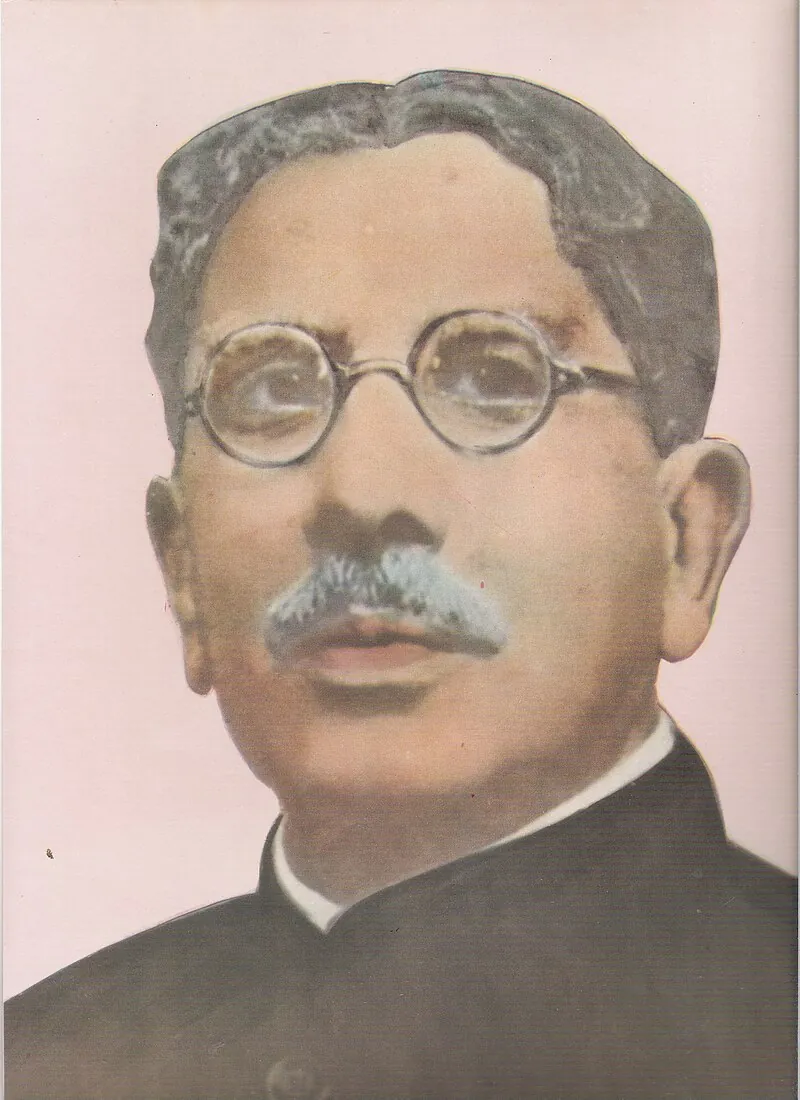
Portrait of Andhra University’s founder Vice-Chancellor.
Credit: Vara Naveen Reddy · CC0 · source
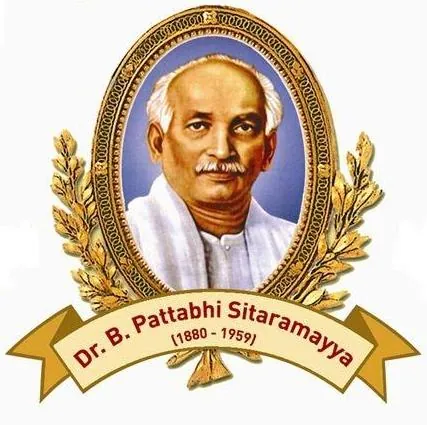
Historical portrait of a leader associated with the Sri Bagh negotiations.
Credit: Biowriter9999 · Public domain · source

A distinct campus view at Visakhapatnam supplies context for Sri Bagh’s educational concerns, not evidence of fulfilment of all its terms.
Credit: Adityamadhav83 · CC BY-SA 4.0 · source
1. Roots: making language a claim to representation
The Andhra movement developed within the multilingual Madras Presidency, where Telugu-speaking activists connected cultural recognition with practical demands for education, public employment and a stronger voice in government. Language offered a means of communicating across district boundaries and arguing that administration should be closer to the people it governed. Newspapers, reading circles and public associations helped turn scattered concerns into a regional political programme. This was a modern mobilisation within colonial institutions, not the simple recovery of an ancient state with fixed borders.
Regional aspirations and Indian nationalism could reinforce one another: a Telugu province was generally sought within a larger Indian political community rather than as an independent country. Yet linguistic identity did not erase differences of locality, resources or social position. Claims that Telugu interests received insufficient attention must be presented as arguments made by movement participants, not as proof of collective wrongdoing by another language group. A careful account distinguishes the public appeal of regional representation from any assumption that all Telugu speakers held identical political preferences.
- Setting: Telugu districts of Madras Presidency, especially coastal Andhra and Rayalaseema.
- Major concerns: education, employment, administrative accessibility and representation.
- Telangana’s Hyderabad State setting followed a different political trajectory.
Timeline
1913
First Andhra conference at Bapatla under B. N. Sarma.
1917–1918
Congress recognition and working organisation of a separate Andhra unit.
1920
Nagpur Congress strengthened linguistic party organisation.
1926
Andhra University constituted under Madras legislation.
16 November 1937
Sri Bagh Pact negotiated coastal Andhra–Rayalaseema assurances.
1948
Dhar Commission considered linguistic provinces.
April 1949
JVP report advised caution and a conditional Andhra settlement.
19 October–15 December 1952
Potti Sriramulu’s fast ended with his death; widespread unrest followed.
19 December 1952
Union announced Andhra State without Madras city.
7 February 1953
Wanchoo submitted his report on implementing separation.
14 September 1953
Date of the Andhra State Act.
1 October 1953
Andhra State established with its capital at Kurnool.
December 1953–1955
SRC announced and subsequently reported on wider reorganisation.
1 November 1956
Andhra Pradesh formed through the later Andhra–Telangana settlement.
2. Bapatla and the Andhra Mahasabha: building a constituency
The first Andhra conference met at Bapatla in 1913, presided over by B. N. Sarma. It brought the proposal for a Telugu province into an organised public forum, but debate within the gathering cautions against treating it as an instant declaration accepted by everyone. Supporters needed to persuade other leaders, sustain district connections and make a practical case for separation. The university demand also featured in this early programme, showing that the conference concerned educational opportunity as well as the eventual boundaries of government.
The Andhra Mahasabha conference network made repeated discussion possible beyond a single meeting. Resolutions and continuing contact helped transform an educated public’s concerns into a more durable provincial demand. Its importance lies in this process of political organisation: the proposed region acquired spokespeople and forums through which disagreements could be negotiated. The Madras-based Andhra conferences must not be confused with the later Andhra Mahasabha in Hyderabad State. Similar names reflected a shared linguistic vocabulary, but the organisations operated under different governments and addressed different immediate political conditions.
- Bapatla, 1913: first Andhra conference; president B. N. Sarma.
- A founding conference was not equivalent to legal state formation.
- Separate the Madras Andhra conference movement from Hyderabad’s Andhra Mahasabha.
How the demand became a functioning state
- 1. Language-based grievances entered public debate through print and associations.
- 2. Conferences, Congress organisation and a university strengthened regional institutions.
- 3. Sri Bagh negotiations sought consent through regional development assurances.
- 4. Committee caution and the Madras dispute delayed implementation.
- 5. The crisis of December 1952 accelerated the Union’s decision for Andhra without Madras city.
- 6. Technical inquiry and parliamentary legislation enabled inauguration at Kurnool in October 1953.
3. Congress organisation and Andhra University: two partial victories
Congress recognition of a separate Andhra organisational circle in 1917 gave linguistic aspirations an important place within the national movement. The working organisation associated with 1918 explains the appearance of both years in accounts of its development. Congress’s wider reorganisation on linguistic lines at Nagpur in 1920 strengthened the argument that communication in regional languages could broaden political participation. However, a provincial party committee was neither a legislature nor a government: party recognition demonstrated organisational feasibility without transferring territory or creating provincial administrative powers.
Andhra University, constituted through Madras legislation in 1926, addressed the educational side of the movement. C. R. Reddy was its founder Vice-Chancellor. Its early headquarters at Vijayawada and later location at Waltair, Visakhapatnam, also reveal that the distribution of institutions could provoke debate within the Telugu region itself. A university could enlarge opportunities for scholarship and regional intellectual life without settling the demand for statehood. Together, party organisation and higher education provided institutional foundations for the movement while exposing the difference between cultural recognition and control over government.
- 1917 recognition and 1918 organisation refer to stages of a Congress unit.
- Nagpur, 1920: broader linguistic reorganisation of Congress.
- 1926: Andhra University; founder Vice-Chancellor C. R. Reddy.
| Forum or instrument | Date | Central function | What it did not do |
|---|---|---|---|
| Bapatla Andhra conference | 1913 | Provide a public forum for regional demands | Create a province by law |
| Andhra Congress organisation | 1917–1918 | Recognise a linguistic party unit | Establish a state government |
| Andhra University | 1926 | Meet a regional higher-education demand | Settle the statehood question |
| Sri Bagh Pact | 1937 | Negotiate internal regional assurances | Become an automatically implemented statute |
| Dhar Commission | 1948 | Assess linguistic provinces with administrative and economic caution | Establish Andhra State |
| JVP Committee | 1949 | Offer political advice, including a conditional Andhra opening | Approve Andhra with Madras city unconditionally |
| Wanchoo inquiry | 1953 | Examine implementation and financial implications | Replace parliamentary legislation |
| Andhra State Act | 1953 | Provide the statutory framework for separation | Merge Telangana into Andhra |
| States Reorganisation Commission | 1953–1955 | Review reorganisation across India | Treat language as the sole consideration |
4. Rayalaseema concerns and the Sri Bagh Pact, 1937
The Sri Bagh Pact of 16 November 1937 sought agreement between coastal Andhra and Rayalaseema leaders over the proposed province. Rayalaseema concerns centred on whether a common government would distribute educational opportunities, irrigation investment and major institutions fairly. These questions were not objections to linguistic identity itself; they concerned the terms on which regional cooperation would be acceptable. The pact is therefore evidence that a linguistic movement also required internal bargaining. A shared language supplied a basis for association, but could not by itself guarantee balanced development.
The understanding envisaged university centres at Waltair and Anantapur, priority for irrigation benefiting Rayalaseema and Nellore for ten years or longer if necessary, and a choice for Rayalaseema between the capital and the High Court. Dispersing institutions was intended to prevent excessive concentration of advantages. These were negotiated political assurances, not a statute immediately establishing universities, courts or a new government. Their later relevance to Kurnool’s selection should be explained without claiming that every undertaking was automatically implemented. Sri Bagh concerned coastal Andhra–Rayalaseema relations, not the separate Andhra–Telangana settlement of 1956.
- Date: 16 November 1937.
- Education, irrigation and institutional location formed a connected package.
- The irrigation assurance was not an absolute ten-year ceiling.
- Read regional concerns as questions of equity, not collective hostility.
5. Dar Commission and JVP: why independence did not settle the issue
The Linguistic Provinces Commission under S. K. Dhar, also rendered Dar in syllabus summaries, examined linguistic reorganisation in 1948. National leaders faced the aftermath of Partition, integration of princely states and urgent administrative reconstruction. The commission preferred administrative and economic considerations to immediate redivision on language alone. Its position should be understood within this concern for consolidation rather than described simply as indifference to regional culture. Nevertheless, postponement disappointed supporters who believed that the national movement’s linguistic commitments should now shape the institutions of independent India.
The Congress committee of Jawaharlal Nehru, Vallabhbhai Patel and Pattabhi Sitaramayya took its familiar name, JVP, from its members. Its April 1949 report generally advised postponing linguistic provinces, while allowing a conditional Andhra settlement if the claim to Madras city was relinquished. It was a party committee, not the later States Reorganisation Commission and not a parliamentary law. The distinction is essential: a political recommendation could influence government policy without itself creating a state. The conditional opening also shows that the disagreement concerned practical boundaries and consent, not merely the abstract merits of language.
- Dhar/Dar: Linguistic Provinces Commission, 1948.
- JVP: Nehru, Patel and Pattabhi Sitaramayya; report in April 1949.
- JVP’s Andhra opening was conditional, not unconditional approval.
- Neither body created Andhra State by its report.
6. Madras city: attachment, infrastructure and a contested capital
Madras, now Chennai in Tamil Nadu, was both the presidency’s administrative centre and a city with substantial multilingual social and commercial connections. Some Andhra leaders sought it as the proposed state’s capital, invoking Telugu connections and the practical value of its established institutions. Tamil political opinion opposed its transfer. The disagreement should be presented as a conflict of territorial claims within a shared urban history, rather than as a contest in which cultural attachment alone established exclusive ownership. Possessing historical links to a city did not settle its constitutional future.
The city question made implementation harder because the provincial demand became entangled with access to offices, professional institutions and administrative infrastructure. In its decision announced on 19 December 1952, the Union separated the issues: an Andhra State would be created, but Madras city would not be included. Nehru’s parliamentary statement of 25 March 1953 reaffirmed this basis. The outcome meant that statehood could proceed without granting every territorial claim made during the agitation. It also made the selection and preparation of an administrative centre within Andhra territory an immediate task.
- Madras city remained outside Andhra State.
- Distinguish claims advanced during mobilisation from the settlement actually adopted.
- A new capital involved infrastructure and regional consent as well as symbolism.
7. Potti Sriramulu and the political crisis of 1952
Potti Sriramulu began his fast in Madras on 19 October 1952 in pursuit of Andhra statehood. He died on 15 December 1952, conventionally described as the fifty-eighth day of the fast. These events belong within the political history of a prolonged and unresolved movement. Respect for his place in public memory does not require presenting self-starvation as an exemplary or necessary method of political action. Historical explanation should instead examine the failure to reach an agreed settlement, the pressure generated by protest and the responsibilities of political institutions.
His death was followed by widespread demonstrations, strikes and serious disorder, including police firing. The crisis sharply increased the urgency of a decision, and on 19 December the Union announced its intention to establish Andhra State without Madras city. The announcement was a major turning point, but it did not instantly produce a functioning administration. Sriramulu’s role was that of a decisive catalyst in a campaign already sustained by conferences, party organisation and regional negotiations. Reducing the entire movement to the fast would obscure both its earlier foundations and its subsequent constitutional implementation.
- 19 October 1952: fast began; 15 December: Sriramulu died.
- 19 December 1952: Union decision announced, excluding Madras city.
- Explain consequences without romanticising dangerous protest methods.
- Avoid unsupported casualty totals and graphic descriptions.
8. From decision to government: Andhra State, 1 October 1953
The Union entrusted Justice K. N. Wanchoo with examining the financial and other implications of separation. He submitted his report on 7 February 1953, a date recorded in Nehru’s parliamentary statement of 25 March. This phase matters because recognising a linguistic claim left difficult questions about services, resources, jurisdiction and administrative continuity. Technical inquiry translated political acceptance into options for implementation. The Andhra State Act, dated 14 September 1953 and brought into force on 1 October, supplied the statutory framework for territorial and institutional change.
Andhra State came into existence on 1 October 1953 with Kurnool as its capital and Tanguturi Prakasam as its first Chief Minister. Nehru inaugurated the state. Its territory was separated from Madras; Telangana remained part of Hyderabad State. Kurnool’s selection connected the new administration to the earlier effort to accommodate Rayalaseema, rather than making the largest concentration of existing facilities the sole criterion. State formation also required continuity in courts, legislatures and public services. The Act’s provisions show why inauguration must be distinguished from the detailed work of establishing and operating institutions.
- Wanchoo report: 7 February 1953; not the date of the March parliamentary statement.
- Act: 14 September 1953; formation and commencement: 1 October 1953.
- Capital: Kurnool; first Chief Minister: Tanguturi Prakasam.
- Hyderabad was not Andhra State’s capital in 1953.
9. Significance: a linguistic precedent, not a complete formula
Andhra’s creation established a major post-independence precedent for translating linguistic mobilisation into a new state within the Union. It strengthened the case that regional-language aspirations could be accommodated constitutionally rather than treated as inherently separatist. At the same time, the Madras dispute and Sri Bagh negotiations demonstrated that language did not automatically settle boundaries, capital location or development priorities. The achievement lay in adapting federal arrangements to organised demands while retaining parliamentary implementation. Its significance was therefore both democratic and administrative, not simply a symbolic recognition of cultural identity.
The States Reorganisation Commission, announced in December 1953, widened the inquiry from one settlement to the country’s territorial structure. Its 1955 report considered language alongside national unity, administrative requirements and economic viability. It did not simply prescribe the immediate merger of Andhra and Telangana: it favoured a separate Telangana arrangement for the time being, with a conditional possibility of later union. Andhra Pradesh nevertheless emerged on 1 November 1956 through a subsequent political and legal settlement. That later formation must remain distinct from Andhra State in 1953, even when both are discussed as stages in linguistic federalism.
- Use “post-independence linguistic precedent”, not an unqualified claim of the first linguistic province ever.
- Language was a major organising principle, not the only criterion.
- SRC: announced in December 1953; report in 1955.
- Andhra Pradesh: 1 November 1956, a different formation from Andhra State.
Real-world case studies
Sri Bagh: consent within a linguistic region
Rayalaseema’s concerns show why cultural affinity alone was insufficient to secure agreement. Educational centres, irrigation priority and the distribution of the capital and High Court addressed the geography of future opportunities. For Mains, use the pact to distinguish recognition of a language community from the separate task of distributing public investment fairly. Its political importance should not be confused with automatic statutory enforceability.
Madras: separating statehood from a disputed claim
The settlement excluded Madras city while accepting Andhra State. This separated the broad case for linguistic administration from a contested capital demand. It illustrates how federal accommodation may require compromise rather than the acceptance of every movement claim. Analyse the city as a shared urban setting with competing political attachments, not as the exclusive cultural possession of one community.
Reading the 1953 settlement through different sources
Nehru’s March parliamentary statement records the Wanchoo report and unresolved implementation tasks; the Andhra State Act supplies the legal framework. Conference histories explain mobilisation, while Sri Bagh reveals negotiations within the proposed state. Reading these sources together prevents a single-event account: the crisis accelerated policy, but organisation, regional consent and legal administration made the settlement possible.
Previous year questions
No source-linked PYQ is available here yet. Use the practice questions below.
Practice questions
Practice MCQ 1 · Easy
Which pairing correctly identifies the first Andhra conference?
- Bapatla — 1913 — B. N. Sarma
- Kurnool — 1926 — C. R. Reddy
- Madras — 1937 — S. K. Dhar
- Hyderabad — 1953 — Tanguturi Prakasam
Practice MCQ 2 · Moderate
Which statement best describes the Sri Bagh Pact?
- It merged Telangana and Andhra in 1937.
- It negotiated educational, irrigation and institutional-location assurances between coastal Andhra and Rayalaseema leaders.
- It awarded Madras city to Andhra State.
- It created Andhra University for the first time.
Practice MCQ 3 · Moderate
Consider these statements: 1. JVP was a Congress committee. 2. Its members included S. K. Dhar. 3. Its Andhra opening depended on relinquishing the Madras city claim. Which are correct?
- 1 only
- 2 and 3 only
- 1 and 3 only
- 1, 2 and 3
Practice MCQ 4 · Moderate
Which sequence is chronologically correct?
- Andhra State inaugurated → Sriramulu’s death → Wanchoo report
- Wanchoo report → Sriramulu’s death → Union announcement
- Union announcement → Andhra State inaugurated → Sriramulu’s death
- Sriramulu’s death → Union announcement → Wanchoo report → Andhra State inaugurated
Practice MCQ 5 · Easy
Which statement about Andhra State at its formation is correct?
- It included Telangana and had Hyderabad as capital.
- It had Kurnool as capital and Tanguturi Prakasam as its first Chief Minister.
- It included Madras city as a permanent joint capital.
- It was constituted by the SRC report of 1955.
Practice MCQ 6 · Moderate
Consider these statements: 1. Andhra University preceded Andhra State. 2. The SRC report preceded Andhra State. 3. Andhra Pradesh’s formation in 1956 was distinct from Andhra State’s formation in 1953. Which are correct?
- 1 and 3 only
- 1 and 2 only
- 2 and 3 only
- 1, 2 and 3
Mains practice · Explain how the Andhra movement converted linguistic identity into a demand for representative government.
- Locate the movement in the multilingual Madras Presidency and explain education, employment and representation concerns.
- Assess the organising role of Bapatla and the Andhra Mahasabha conference network.
- Distinguish Congress organisational recognition from constitutional statehood.
- Discuss Andhra University as an institutional gain before state formation.
- Conclude that language required organisation, negotiation and legislation to become an administrative unit.
Mains practice · “The Andhra movement required accommodation within the proposed region as well as agreement with the Union.” Discuss with reference to Sri Bagh and the Madras question.
- Explain Rayalaseema concerns without stereotyping either region.
- Analyse Sri Bagh’s educational, irrigation and capital/High Court assurances.
- Contrast internal distributive bargaining with the contested claim to Madras city.
- Explain JVP’s conditional approach and the Union decision excluding Madras.
- Evaluate negotiated consent and practical compromise as conditions of workable statehood.
Mains practice · Assess the role of the 1952 crisis in Andhra State’s formation and explain its significance for linguistic reorganisation.
- Establish the movement’s earlier organisational foundations and reasons for post-independence delay.
- State Sriramulu’s fast and death dates respectfully, analysing the crisis rather than endorsing the method.
- Distinguish the December announcement, Wanchoo inquiry, statute and October inauguration.
- Explain Kurnool, Prakasam and Telangana’s exclusion from the 1953 state.
- Relate the Andhra precedent to the SRC while retaining administrative and economic qualifications.
- Differentiate Andhra State in 1953 from Andhra Pradesh in 1956.
Further reading
- https://teluguhistory.org/en/themes/andhra-movement/
- https://www.andhrauniversity.edu.in/about/au-profile.html
- https://nehruarchive.in/events/sri-bagh-pact
- https://nehruarchive.in/documents/death-of-potti-sriramulu-16-december-1952-7qp7l
- https://nehruarchive.in/documents/proposed-inauguration-of-andhra-state-25-march-1953-1golg6
- https://www.indiacode.nic.in/handle/123456789/2176?locale=en
- https://www.mha.gov.in/files/commissions_committees_documents/State_20Reorganisation_20Commisison_20Report_20of_201955_270614.pdf
- https://www.tandfonline.com/doi/full/10.1080/14736489.2014.964629
Preparing for APPSC Group 1 or Group 2? See the APPSC Groups coaching course at Pragnya IAS Academy for fees, batches and registration.
Long study hours taking a toll? Try the free breathing exercise and self check-in in Pragnya’s student wellness programme for UPSC aspirants.