

Shaniwar wada (pune)
Credit: Samrudhi shelagaonkar · CC BY-SA 4.0 · source

Pune City
Credit: NishantAChavan · CC BY-SA 3.0 · source
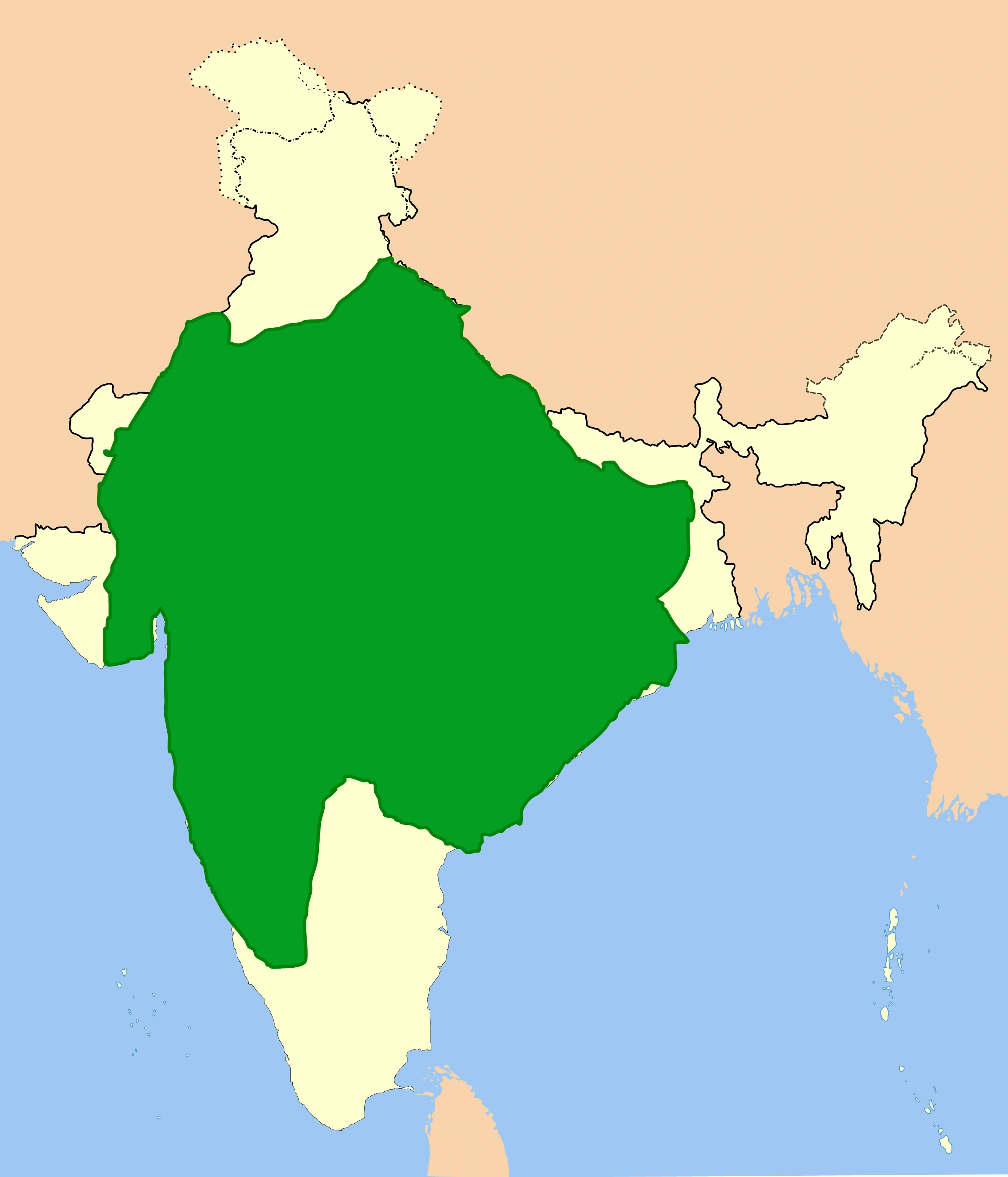
Map study
Maratha power around 1760: confederate influence was not identical to uniform central administration.
- Read the source date and legend before interpreting territorial extent.
- Compare core regions, neighbouring powers and geographic barriers; historical borders and influence are approximate and changed over time.
Credit: Ayunipear · CC0 · sourceConverted to WebP on an opaque white background; proportionally resized without cropping. Original cartography and legend retained.
1. Origins: from ministerial office to political leadership
Peshwa, a title of Persian origin, designated the principal minister in the Maratha state. Under Shivaji, the Peshwa belonged to the Ashtapradhan, or council of eight ministers, and assisted in general administration. These ministers were royal appointees, not a modern cabinet collectively responsible to a legislature. The later dominance of the Peshwas should therefore not be projected backwards onto Shivaji’s reign.
After Aurangzeb’s death in 1707, Shahu’s release from Mughal custody intensified the contest with Tarabai over Maratha leadership. Balaji Vishwanath helped Shahu consolidate his position by negotiating with influential chiefs and managing competing interests. Appointed Peshwa in 1713, he established the political foundations of his family’s ascendancy. His dealings with the Sayyid Brothers secured imperial grants in 1719 recognising important Maratha claims, including rights to collect chauth and sardeshmukhi in the six Mughal subahs of the Deccan.
Baji Rao I succeeded his father in 1720, making the office effectively hereditary. Its growing authority rested on military leadership, fiscal management and control over patronage. After Shahu’s death in 1749, the Peshwa’s predominance became clearer. Nevertheless, the Chhatrapati at Satara remained the formal sovereign: the Peshwas exercised effective power without simply replacing the royal title.
Timeline
1713
Shahu appoints Balaji Vishwanath as Peshwa.
1719
Imperial grants recognise major Maratha claims, including chauth and sardeshmukhi rights in the six Deccan subahs.
1720–1740
Baji Rao I leads rapid Maratha expansion; the Palkhed campaign takes place in 1728.
14 January 1761
Maratha defeat at the Third Battle of Panipat during Balaji Baji Rao’s tenure.
1761–1772
Madhavrao I leads the post-Panipat recovery.
1775–1782
First Anglo-Maratha War, concluded by the Treaty of Salbai.
31 December 1802
Baji Rao II signs the Treaty of Bassein.
1818
Baji Rao II surrenders; the Peshwaship is abolished.
2. Expansion under Baji Rao I and Balaji Baji Rao
Baji Rao I used highly mobile cavalry, rapid marches and attacks on enemy supplies rather than relying exclusively on sieges or pitched battles. At Palkhed in 1728, he outmanoeuvred the Nizam of Hyderabad and compelled a settlement. His campaigns strengthened Maratha influence in Malwa, Gujarat and Bundelkhand. Assistance to the Bundela ruler Chhatrasal also opened opportunities in Bundelkhand. A march towards Delhi in 1737 demonstrated how vulnerable Mughal authority had become.
Expansion depended on commanders who developed territorial and fiscal bases of their own. The Scindias became influential in the Gwalior region, the Holkars around Indore, the Gaekwads in Gujarat and the Bhonsles at Nagpur. These houses were not merely salaried provincial officials. Their military resources, negotiated obligations and regional interests gradually produced a confederate political structure in which the Peshwa’s leadership required bargaining.
Balaji Baji Rao, known as Nanasaheb, succeeded in 1740. Maratha influence expanded substantially, but northern commitments brought conflict with Ahmad Shah Abdali, also called Ahmad Shah Durrani. At Panipat in 1761, the Maratha army under Sadashivrao Bhau suffered a devastating defeat. Extended supply lines, inadequate local support and difficulties sustaining a large army contributed to the disaster. The Peshwa himself was not the battlefield commander; his son Vishwasrao died in the battle.
From royal minister to dependent ruler
- 1. Chief minister serves the Maratha Chhatrapati
- 2. Balaji Vishwanath consolidates Shahu’s rule
- 3. Hereditary succession and military expansion strengthen the Peshwa
- 4. Regional chiefs develop powerful territorial bases
- 5. Succession disputes enable Company intervention
- 6. Bassein establishes British subsidiary protection
- 7. War and surrender end the Peshwaship in 1818
3. Administration, revenue and the Maratha confederacy
Pune emerged as the principal centre of Peshwa administration, with Shaniwar Wada symbolising its authority. The administration maintained extensive correspondence and accounts, often in Marathi using the Modi script. Officials, accountants, bankers and military intermediaries connected the central establishment with districts and villages. Hereditary local functionaries, including patils and kulkarnis, remained important in village management and revenue collection.
Land revenue from directly administered territory must be distinguished from chauth and sardeshmukhi. Chauth was conventionally a claim to one-fourth of an assessed revenue demand; sardeshmukhi was an additional one-tenth associated with a superior hereditary claim. Their bases and collection varied in practice. Rights to these levies did not necessarily mean uniform occupation or direct administration, and they should not be treated as ordinary taxes imposed identically throughout Maratha-controlled regions.
Military service was supported partly through assignments of revenue, often described as saranjams. Such arrangements enabled expansion without a uniformly centralised bureaucracy, but also strengthened chiefs controlling local resources. The term Maratha confederacy captures this negotiated structure, not a modern federation with a written constitutional division of powers. Especially in the later eighteenth century, common leadership coexisted with rivalry over territory, tribute and succession.
| Peshwa | Tenure | Key association |
|---|---|---|
| Balaji Vishwanath | 1713–1720 | Consolidation under Shahu; imperial grants of 1719 |
| Baji Rao I | 1720–1740 | Palkhed; expansion into northern and central India |
| Balaji Baji Rao | 1740–1761 | Nanasaheb; expansion followed by Panipat |
| Madhavrao I | 1761–1772 | Post-Panipat restoration of Maratha strength |
| Madhavrao II | 1774–1795 | Sawai Madhavrao; ministerial politics involving Nana Fadnavis |
| Baji Rao II | 1796–1818, with a brief interruption | Bassein; British protection; abolition of the office |
4. Society, economy and cultural life
Peshwa rule operated within a predominantly agrarian society structured by caste, hereditary rights and unequal access to resources. The prominence of a Chitpavan Brahmin ruling family increased opportunities for particular administrative and patronage networks. However, Maratha power depended on a much broader social base: cultivators, cavalrymen, local landed groups, artisans, merchants and banking houses. Caste hierarchy and restrictions affecting subordinated communities remained significant features of social life.
Village economies combined cultivation with hereditary service arrangements, including the balutedari system, under which service and artisan groups received customary shares or payments. Commercial activity and credit were essential to military mobilisation. Bankers financed campaigns and transferred funds, while growing urban demand sustained crafts and markets. Pune’s expansion generated new peths, or urban quarters, and supported merchants, service providers and religious establishments.
Elite patronage supported temples, Sanskrit learning, religious festivals and residential architecture, especially the courtyard-based wada. Cultural history also includes wider Marathi devotional and performance traditions rather than court culture alone. Women’s experiences differed sharply by status, caste and household position. Elite women sometimes exercised influence over property, succession and diplomacy, but such examples should not obscure the broader patriarchal organisation of society.
5. Recovery, factionalism and British intervention
Madhavrao I, Peshwa from 1761 to 1772, restored authority after Panipat through improved administration and campaigns against regional rivals. Maratha forces returned to Delhi and restored Shah Alam II there in 1772. This recovery shows why Panipat should be understood as a major setback rather than the final destruction of Maratha power. Madhavrao’s early death, however, reopened conflicts within the ruling family.
Narayanrao’s murder in 1773 and Raghunathrao’s claim to power produced a succession crisis. Raghunathrao sought Bombay Company support through the Treaty of Surat in 1775, helping trigger the First Anglo-Maratha War. A ministerial coalition associated with Nana Fadnavis supported the infant Madhavrao II. The Treaty of Salbai in 1782 ended the war without British control over the Peshwa’s government, although the Company retained Salsette.
The decisive shift came after Holkar defeated the forces of Baji Rao II and Scindia near Pune in 1802. Baji Rao II accepted British subsidiary protection through the Treaty of Bassein on 31 December. Resistance by Scindia and the Nagpur Bhonsle contributed to the Second Anglo-Maratha War of 1803–1805. During the Third Anglo-Maratha War of 1817–1818, the Company defeated the Peshwa. He surrendered in June 1818, was pensioned at Bithur, and his office was abolished. The outcome reflected British military-fiscal strength as well as divisions within the confederacy.
Real-world case studies
Palkhed, 1728: operational mobility
Baji Rao I’s campaign against the Nizam illustrates the value of mobility and logistical pressure. Rather than confronting the enemy’s strengths directly, Maratha movements threatened supplies and constrained the Nizam’s options. The resulting settlement strengthened Shahu’s position and Maratha revenue claims in the Deccan.
Bassein, 1802: protection at the cost of autonomy
After losing control of Pune, Baji Rao II accepted a British subsidiary force and territorial assignments for its maintenance, together with restrictions on external relations. British assistance restored him to Pune in 1803, but his dependence undermined his standing among other Maratha chiefs. The treaty linked a regional succession and power struggle to the expansion of Company paramountcy.
Previous year questions
No source-linked PYQ is available here yet. Use the practice questions below.
Practice questions
Practice MCQ 1
Consider the following statements: 1. The Peshwa was originally a minister under the Maratha ruler. 2. Balaji Vishwanath’s appointment immediately abolished the Chhatrapati’s office. 3. Pune became the principal political centre of the Peshwas. Which of the statements given above are correct?
- A. 1 and 2 only
- B. 1 and 3 only
- C. 2 and 3 only
- D. 1, 2 and 3
Practice MCQ 2
Which one of the following pairs is incorrectly matched?
- A. Baji Rao I — Palkhed campaign
- B. Balaji Baji Rao — Peshwa during the Third Battle of Panipat
- C. Madhavrao I — Treaty of Bassein
- D. Balaji Vishwanath — Imperial grants of 1719
Practice MCQ 3
With reference to Maratha fiscal arrangements, consider the following statements: 1. Chauth conventionally represented a claim to one-fourth of an assessed revenue demand. 2. Sardeshmukhi was an additional claim conventionally calculated at one-tenth. 3. Collection rights over these levies necessarily established direct Maratha administration. Which of the statements given above are correct?
- A. 1 only
- B. 2 and 3 only
- C. 1 and 2 only
- D. 1, 2 and 3
Mains practice · The political arrangements that facilitated Maratha expansion under the Peshwas also limited central consolidation. Discuss. Answer in 250 words.
- Introduce the transformation of the Peshwa from chief minister to effective political leader.
- Explain cavalry mobilisation, negotiated revenue rights and assignments supporting military service.
- Show how regional commanders enabled expansion while acquiring autonomous resource bases.
- Distinguish the Chhatrapati’s formal sovereignty from the Peshwa’s effective authority.
- Discuss Panipat alongside Madhavrao I’s recovery to avoid a linear decline narrative.
- Connect succession disputes and inter-chief rivalry with British intervention and Bassein.
- Conclude by balancing internal institutional tensions with the Company’s military, financial and diplomatic advantages.
Further reading
- NCERT, Our Pasts–II, Eighteenth-Century Political Formations.
- Satish Chandra, History of Medieval India.
- Stewart Gordon, The Marathas 1600–1818, The New Cambridge History of India.
- Maharashtra State Gazetteers, Poona District Gazetteer, history sections.
- Bipan Chandra, History of Modern India, sections on British expansion and the Anglo-Maratha wars.
Preparing for UPSC Civil Services? Get classroom teaching, answer-writing evaluation and mentorship at Pragnya IAS Academy, Ashok Nagar — see why aspirants choose us for IAS coaching in Hyderabad.