
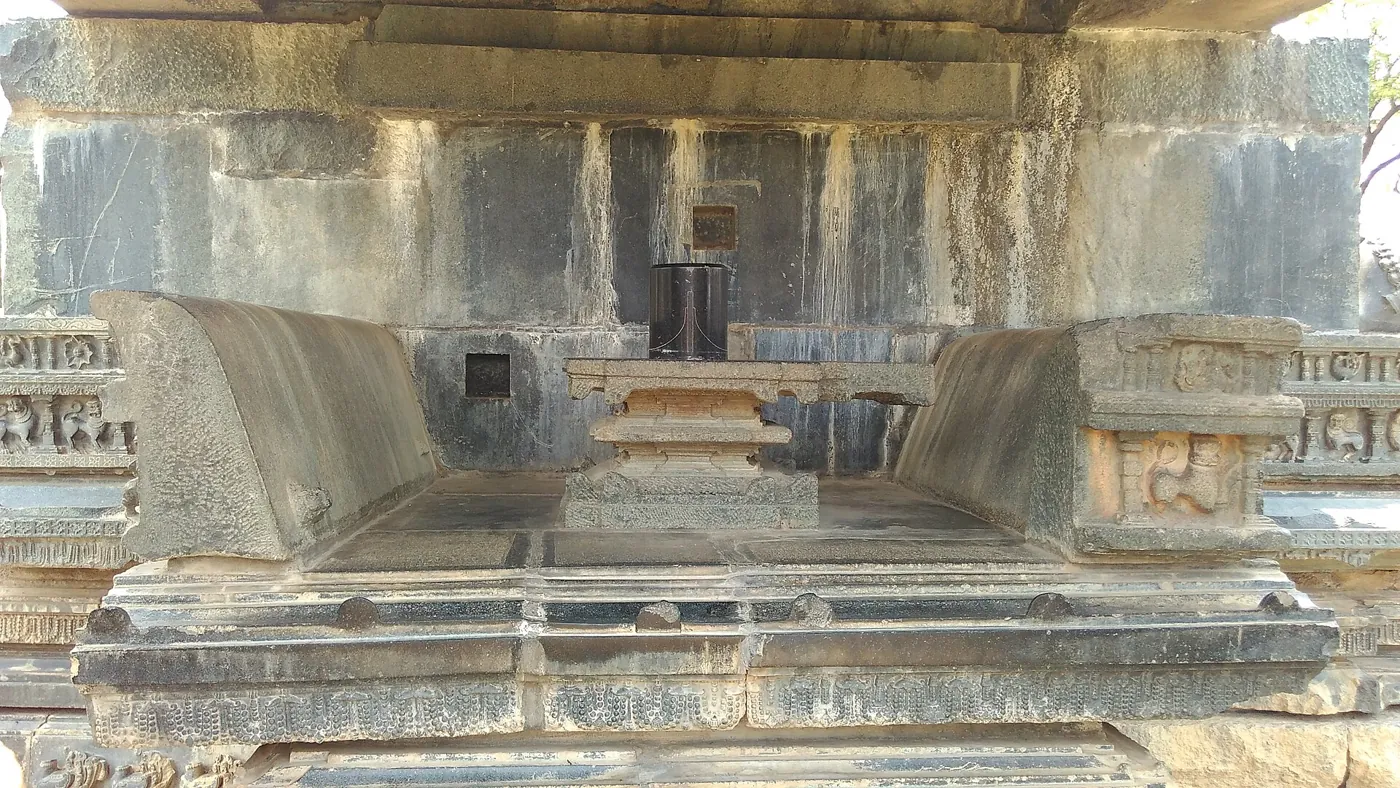
Warangal: the former Kakatiya stronghold in Telangana.
Credit: Arnav chatterjee · CC BY-SA 4.0 · source
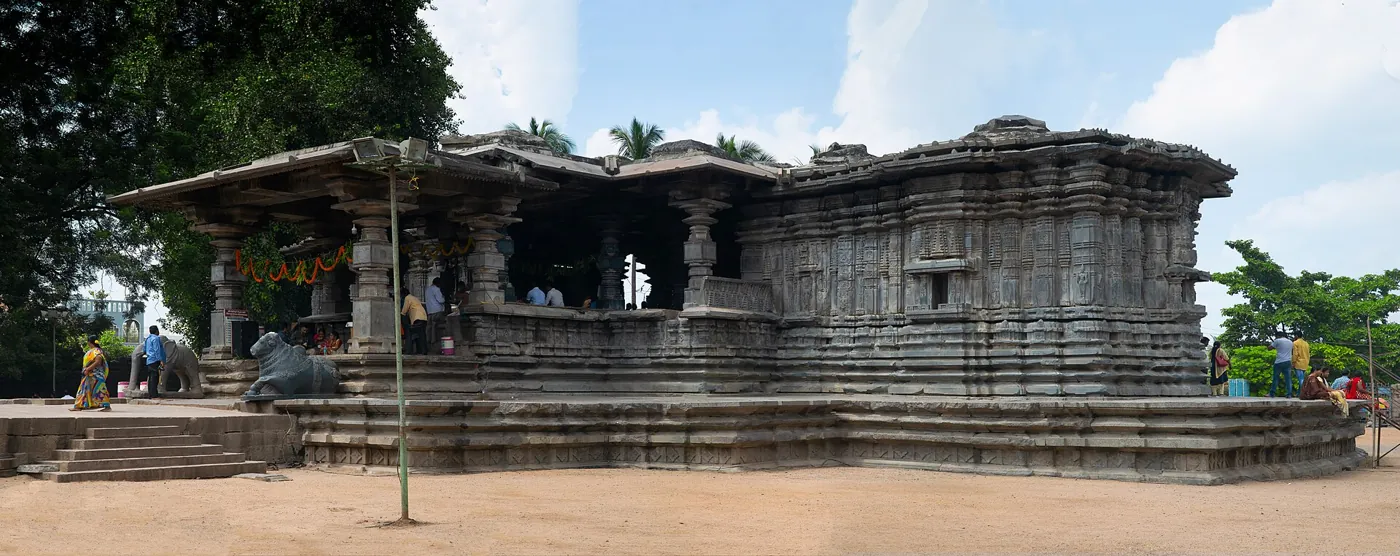
Hanamkonda: surviving architecture of the pre-1323 political world.
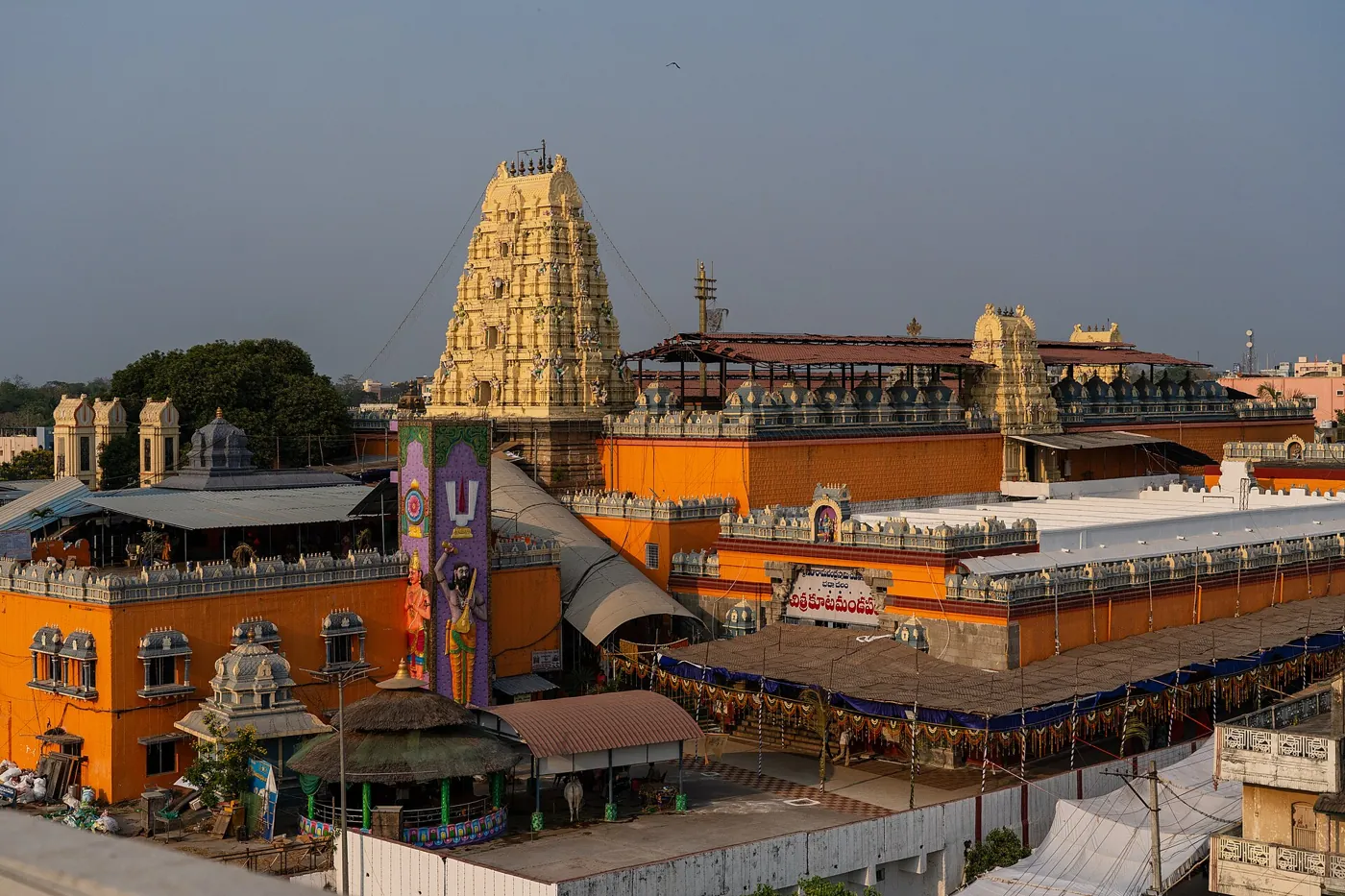
Bhadrachalam: the Godavari valley where Musunuri power took shape.
Credit: WithShivaram · CC BY-SA 4.0 · source
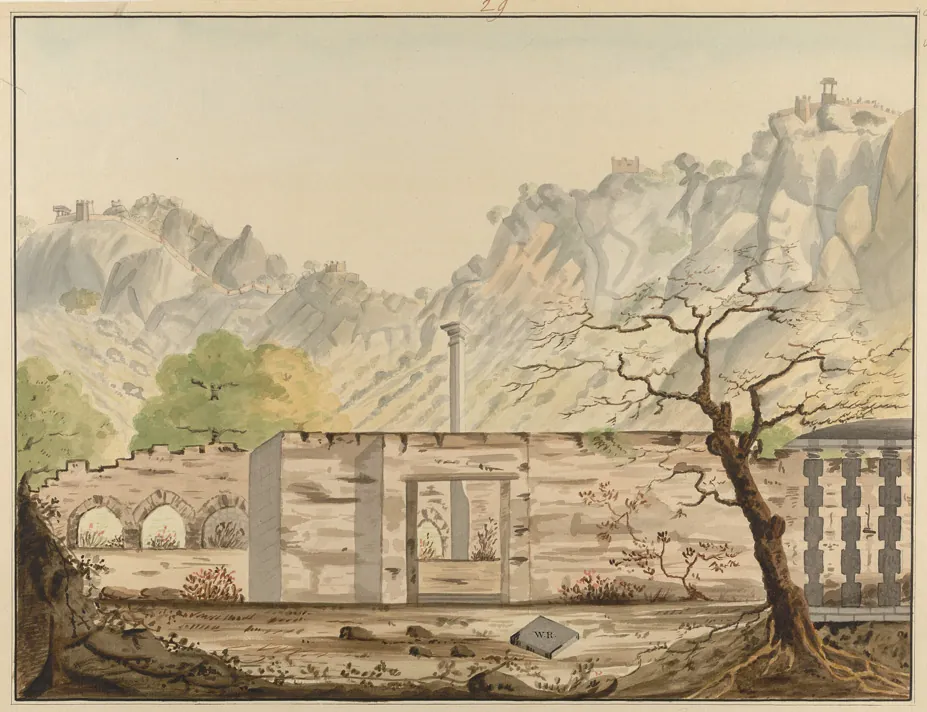
Kondaveedu: hill-fort landscape of the principal Reddi centre.
Credit: R., William (fl. 1784-1816) · Public domain · source
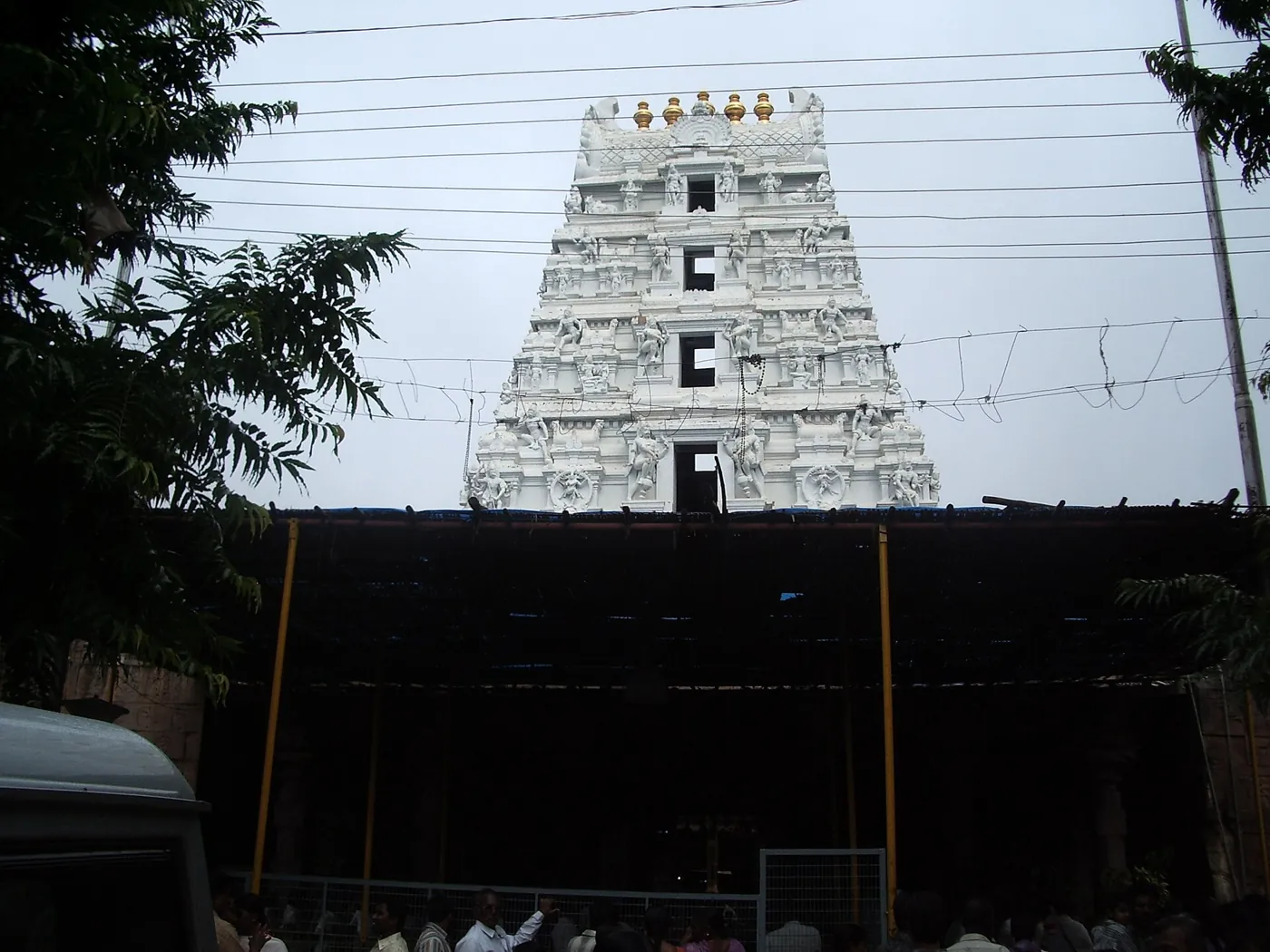
Srisailam: a pilgrimage centre within Reddi patronage networks.
Credit: Chintohere · Public domain · source
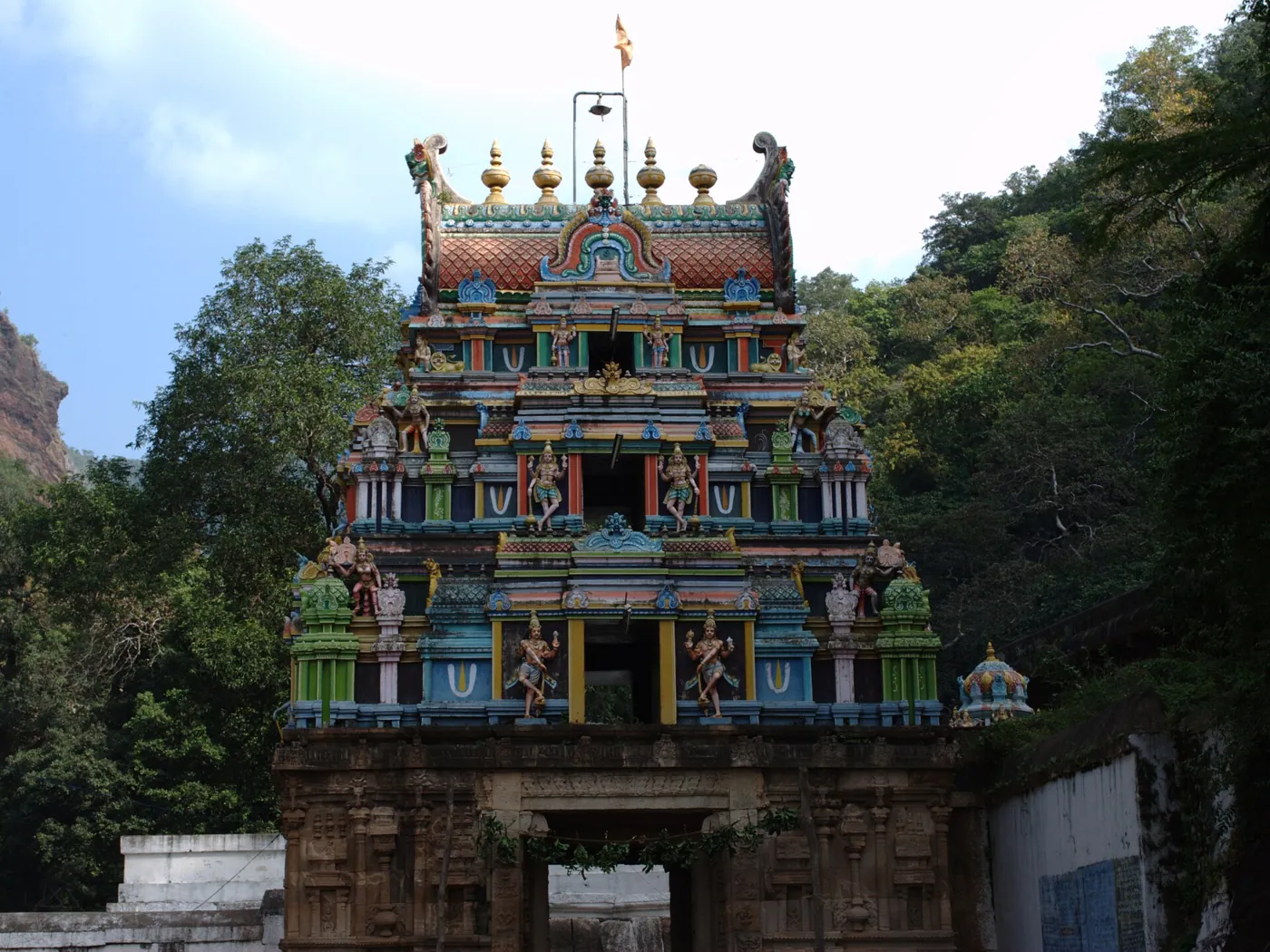
Ahobilam: sacred landscape linked with Reddi-era patronage.
1. Conquest, resistance and the problem of political succession
The capture of Warangal in 1323 destroyed the sovereignty of the Kakatiya monarchy, not every institution through which the countryside had been governed. Ulugh Khan led the Delhi army under Ghiyasuddin Tughluq and became Muhammad bin Tughluq only later. The distinction matters because it separates a prince’s campaign from his subsequent reign. Military households, local landed interests, cultivated areas and fortified positions remained available to new leaders. The weakening of Delhi’s effective control therefore opened opportunities for regional state formation rather than producing a complete administrative blank.
Resistance was neither a single coordinated campaign everywhere nor a guarantee of lasting unity. Musunuri chiefs became prominent in the Godavari and Warangal settings, while Prolaya Vema Reddi established a separate coastal centre. Recherla chiefs subsequently competed for the same wider inheritance. For an analytical answer, connect the difficulties of distant imperial control with the survival of local resources and leadership. Avoid calling these medieval movements modern national organisations: their claims concerned kingship, protection, entitlement and regional authority, even when later memory celebrated them in broader terms.
- Locate Warangal in present-day Telangana while explaining its wider medieval reach.
- Distinguish resistance to Delhi from later rivalry among successor houses.
- Use continuity of resources to explain how new states became viable.
Timeline
1323
Ulugh Khan’s army captures Warangal and ends Kakatiya sovereignty.
About 1325
Conventional beginning of Prolaya Vema Reddi’s coastal kingdom.
About 1330
Usual editorial placement of Musunuri Prolaya’s undated Vilasa charter.
About 1336–37
Common dating of Kapaya’s recovery of Warangal.
1347
The Bahmani kingdom emerges in the western Deccan.
About 1368
Kapaya’s defeat marks Recherla ascendancy.
About 1386–1402
Kumaragiri’s reign combines spring-festival patronage with political tension.
Late fourteenth century
Kataya Vema’s eastern authority develops into a distinct Reddi centre.
About 1402
Peda Komati Vema acquires Kondaveedu from Kumaragiri.
About 1424
Conventional end of the principal Kondaveedu Reddi line.
1434
Kapilesvara establishes the Gajapati line that expands into coastal Andhra.
About 1448
Conventional end of the eastern Reddi kingdom.
1515
Krishnadevaraya captures Kondaveedu in the later Gajapati campaigns.
2. Musunuri leadership and the evidentiary value of the Vilasa grant
Musunuri Prolaya Nayaka is associated with Rekapalli on the Godavari and with the Vilasa copper-plate grant. This ruler must not be confused with Prolaya Vema Reddi. The charter is undated and is generally placed about 1330 by editors. Its narrative presents conquest as disorder and the donor’s rule as the recovery of a proper social and religious order. Such language reveals how a new chief sought legitimacy. The document is especially useful when its political preamble is read together with its actual grant provisions and geographical information.
Kapaya Nayaka extended the Musunuri story to Warangal, whose recovery is commonly dated about 1336–37, although reconstructions from narrative sources differ. His career also illustrates the instability of diplomatic advantage: dealings with the emerging Bahmani power did not prevent later conflict. Recherla Anapota’s victory over him, conventionally placed about 1368, ended Musunuri predominance. A strong assessment credits the recovery of regional authority while recognising the limits of the resulting coalition. It should not assume a centrally organised union of all Telugu chiefs or repeat unverified numerical claims about its membership.
- Treat about 1330 as an assigned date, not an explicitly recorded issue year.
- Use charters as transactions and arguments for legitimacy.
- Keep Kapaya’s recovery and his eventual defeat as separate chronological anchors.
From Kakatiya collapse to a new coastal political order
- 1. Conquest removed the Kakatiya monarchy but left military and agrarian networks available to local chiefs.
- 2. Regional leaders used forts, landed support and restoration claims to establish authority.
- 3. Distinct courts mobilised resources for armies, grants, literature and ceremonial display.
- 4. Succession conflicts and shifting alliances exposed small kingdoms to larger neighbours.
- 5. Imperial absorption changed overlordship without erasing every local institution or cultural tradition.
3. Addanki, Kondaveedu and the construction of Reddi kingship
Prolaya Vema Reddi’s rise is conventionally placed about 1325, although the earliest stages of the dynasty’s chronology have been debated. Addanki was an early seat, and Kondaveedu became the principal fortified centre. The new kingdom drew strength from the relationship between defensible uplands and the cultivated coastal plains. Temple support, grants and the protection of established institutions helped convert military success into recognised rulership. This combination explains why the dynasty should be studied through political geography and patterns of patronage, rather than through a list of battles alone.
The principal succession runs from Prolaya Vema through Anavota and Anavema to Kumaragiri, followed by Peda Komati Vema and Racha Vema. Similar names make sequence questions deceptively difficult: Anavota and Anavema were different kings. The dynasty’s fortunes also show the tension between delegated command and central authority. Expansion required trusted relatives and officers, but their control of resources could become politically independent during succession disputes. Kondaveedu’s later fragmentation was therefore not merely the outcome of an external invasion; it also reflected the internal organisation of regional power.
- Memorise the ruler sequence before attaching contested reign boundaries.
- Explain forts in relation to nearby land, routes and supplies.
- Connect grants and pilgrimage patronage with claims to legitimate kingship.
| Person or house | Political centre or association | Contribution | Caution |
|---|---|---|---|
| Musunuri Prolaya | Rekapalli and Vilasa | Restoration claims after the conquest | Not Prolaya Vema Reddi |
| Kapaya Nayaka | Warangal | Recovery of a major capital | Defeated by the Recherlas about 1368 |
| Prolaya Vema Reddi | Addanki and Kondaveedu | Foundation of the main Reddi state | Foundation date conventionally about 1325 |
| Kumaragiri | Kondaveedu | Vasantotsavams and courtly patronage | Cultural prestige did not prevent displacement |
| Kataya Vema | Eastern country and Rajahmundry | Provincial command and regional kingship | Eastern authority preceded a distinct branch |
| Allada’s sons | Rajahmundry | Allaya Vema and Virabhadra continued the eastern court | Do not merge Allada with Allaya Vema |
| Anapota and Mada | Rachakonda and Devarakonda | Related Recherla fortified centres | Both sites are in Telangana |
| Errapragada | Prolaya Vema’s patronage setting | Completion of the remaining Aranya Parva portion | Kavitrayam poets did not share one court |
| Srinatha | Several Reddi and other patrons | Courtly and devotional Telugu composition | Later biography requires source criticism |
4. Kumaragiri’s spring court and the purposes of cultural expenditure
Kumaragiri’s reign, usually placed about 1386–1402, is remembered for Vasantotsavams, the spring celebrations associated with his court. The title Vasantaraja expresses that cultural reputation. Festivals brought performance, honour and the distribution of resources into the public representation of kingship. Their significance lies not simply in entertainment but in the ruler’s ability to assemble specialists and reward service. The court presented itself as prosperous and cultivated, making ceremonial expenditure one instrument through which political standing could be displayed to other elites and to wider audiences.
This cultural brilliance needs to be placed beside the practical demands of government and warfare. Kataya Vema, Kumaragiri’s minister, commander and brother-in-law, exercised authority in the eastern country. Delegation helped sustain a large political field but also created a durable regional base outside Kondaveedu. Kumaragiri ultimately lost control of the principal centre to Peda Komati Vema around 1402. Festivals should therefore not become a substitute for explaining his political difficulties. Nor should descriptions of courtly abundance be used to claim that every cultivator or artisan enjoyed the same level of prosperity.
- Vasantotsavam denotes a spring festival, not a separate religious sect or dynasty.
- Relate royal display to the mobilisation and redistribution of resources.
- Evaluate cultural achievement independently from a reign’s political durability.
5. Rajahmundry and the eastern Reddi political trajectory
The eastern kingdom developed around Rajahmundry, now Rajamahendravaram, in the lower Godavari region. Kataya Vema’s authority there originated within Kumaragiri’s wider kingdom. Accounts often use about 1395 as a convenient beginning for the separate branch, but his eastern activities are attested earlier, making the transition gradual rather than a single uncontested founding event. The fertile riverine country, temple towns and routes along the northern coast supplied a distinct material and political setting. Rajahmundry should thus be treated as a regional court with its own history, not merely another name for Kondaveedu.
After Kataya Vema’s death, Allada Reddi defended the eastern state, and his sons Allaya Vema and Virabhadra subsequently exercised authority. Their relationships complicate a simple list of isolated monarchs and show the importance of family connections in maintaining claims. The eastern court also became a setting for Srinatha’s patronage; Kasikhandam is associated with Virabhadra. The dynasty survived beyond the end of the principal Kondaveedu line, disappearing around the mid-fifteenth century as Gajapati expansion transformed the coast. About 1448 is the conventional terminal date, not a reason to force every local change into one simultaneous event.
- Identify Allada as the father of Allaya Vema and Virabhadra.
- Separate early eastern command from the later emergence of an autonomous court.
- Contrast the eastern ending about 1448 with Kondaveedu’s ending in the 1420s.
6. Recherla centres and the changing politics of the Deccan
The Recherla Nayakas, conventionally described in the syllabus as Velamas, established important fortified centres at Rachakonda and Devarakonda, both in present-day Telangana. Singama belongs to the family’s earlier rise, while Anapota and Mada are associated with the consolidation of the two centres. Their defeat of Kapaya demonstrates that the regional powers which challenged Delhi did not remain permanently united. The label Velama should be used as a conventional historical designation without assuming that later community boundaries, identities or political interests existed unchanged in the fourteenth century.
Recherla relations with the Reddis and the Bahmanis shifted with territorial opportunity and danger. Cooperation with a larger neighbour could be useful against a regional rival but did not prevent later pressure on the chiefs’ own forts. The same political field included Vijayanagara, conventionally founded in 1336, and the Bahmani kingdom, founded in 1347. In the fifteenth century, Kapilesvara’s Gajapati dynasty, beginning in 1434, became a decisive coastal force. Analyse these relationships through resources, routes, succession and the unequal scale of power, rather than through permanent religious blocs or a timeless division between communities.
- Distinguish Rachakonda from Devarakonda and locate both correctly.
- Discuss Sarvajna Singabhupala as part of the later courtly tradition without merging repeated royal names.
- Separate Kapilesvara’s Gajapati line from earlier Odisha dynasties.
- Explain why alliances could become hostilities as the balance of power changed.
7. Telugu literature, translation and mobile patronage
Errapragada occupies a precise place in the history of the Telugu Mahabharata: he completed the unfinished portion of Aranya Parva associated with Nannaya’s earlier work. Tikkana had supplied the later books, and the three poets are remembered together as the Kavitrayam. Their grouping is literary, not evidence that they lived at one court or in one century. Errapragada’s association with Prolaya Vema and the dedication of Harivamsam connect inherited epic composition with the new Reddi patronage environment. Such work involved creative choices in Telugu rather than merely mechanical substitution for Sanskrit words.
Srinatha represents another major aspect of the period’s literary achievement. Srungara Naishadham, Haravilasam, Bhimakhandam and Kasikhandam reveal a range extending across courtly adaptation and religious geography. His career also demonstrates that poets could move between patrons rather than depend exclusively on a single king. Bhimakhandam’s association with Draksharama offers a concrete way to connect literature with the sacred landscape of Andhra. At the same time, poetic descriptions of splendour and later stories about a poet’s life require critical evaluation before being used as direct evidence for specific political or economic events.
- Pair Errapragada with the Aranya Parva gap, not with the entire epic translation alone.
- Pair Srinatha with Srungara Naishadham and a network of patrons.
- Distinguish textual evidence, praise and later biographical tradition.
8. Forts, agrarian society and maritime connections
The productive countryside sustained the courts discussed in this chapter. Cultivators supplied the surplus from which rulers supported armies, officers and religious beneficiaries, while craft labour and exchange contributed goods and services. Kondaveedu’s political importance depended on its relationship with the plains as much as its defensive terrain. A hill fort required access to water, storage, supplies and labour; it was not an economically self-sufficient island. Surviving walls also belong to long histories of repair and occupation, so a modern photograph cannot by itself assign every structure to a single Reddi ruler.
Motupalli places the regional economy within a longer history of coastal commerce stretching across several dynasties. Merchant protection and royal interest in exchange helped connect inland authority with maritime networks. Temples and Brahman settlements received land and resources, supporting ritual and learning while also embedding social distinctions in the distribution of wealth. These institutions should neither be reduced to purely devotional activity nor treated as proof of universal welfare. Sources speak most clearly for donors and beneficiaries; the historian must acknowledge that the daily experiences of poorer cultivators, artisans and labourers are less directly documented.
- Connect military sites to revenue, water and communications.
- Use Motupalli as evidence of continuity across dynastic changes.
- Do not invent fixed tax rates, trade volumes or kingdom-wide prosperity figures.
- Assess religious patronage as devotion, redistribution and political legitimation.
9. Different endings and the survival of a cultural legacy
The Reddi kingdoms did not disappear in one common final battle. Racha Vema was the last ruler of the principal Kondaveedu line, whose end is conventionally placed about 1424. The Rajahmundry court survived into the 1440s, with about 1448 commonly used to mark its disappearance amid Gajapati expansion. Succession disputes and divided loyalties made regional kingdoms vulnerable, while the growing ambitions of Vijayanagara and the Gajapatis altered the scale of competition. Explanation therefore requires the interaction of internal fragmentation with external pressure, not a single moral judgement about the qualities of the final ruler.
Kondaveedu remained valuable after the Reddi dynasty had ended. Krishnadevaraya’s capture of the fort in 1515 belongs to his struggle with the Gajapatis, not a campaign against Racha Vema or an independent Reddi monarchy. The distinction between a dynasty’s lifespan and a fort’s changing possession is essential for both objective questions and chronological essays. Cultural consequences likewise need separate treatment: poems continued to circulate, sacred places attracted patronage and local institutions adapted to new rulers. Political absorption changed the distribution of sovereignty without necessarily erasing the literary achievements or regional networks formed under earlier courts.
- Keep 1420s, about 1448 and 1515 attached to different historical developments.
- Separate immediate causes from structural vulnerabilities.
- End a mains answer by distinguishing political discontinuity from cultural continuity.
Real-world case studies
Reading restoration in the Vilasa charter
The Vilasa plates provide a useful exercise in reading one document at two levels. As a grant, they record a particular transfer of entitlement; as a political narrative, they present the donor as a restorer after conquest. The assigned date about 1330 must not be mistaken for an explicit issue year. In a mains answer, the charter can establish the language of legitimacy while its rhetorical account of universal disorder remains open to comparison with other evidence.
A fort survives the dynasty that made it famous
Kondaveedu illustrates why site history and dynastic chronology must be kept apart. The principal Reddi line ended in the 1420s, but the fortress remained an object of competition for larger kingdoms. Its capture by Krishnadevaraya in 1515 belongs to the Vijayanagara–Gajapati struggle. Photographs of its present remains should be read in the same layered way: later occupation and rebuilding prevent every surviving wall from being attributed automatically to the Reddi founder.
The spring festival as a political institution
Kumaragiri’s Vasantotsavams connect cultural history with the analysis of state power. Honours, performance and conspicuous expenditure could gather service groups around the court and display royal resources. Yet the festival’s reputation neither proves that every subject prospered nor explains away succession conflict. Comparing cultural achievement with political fragility produces a more balanced assessment than either celebrating the court without qualification or dismissing its patronage as irrelevant luxury.
Previous year questions
No source-linked PYQ is available here yet. Use the practice questions below.
Practice questions
Practice MCQ 1 · Moderate
Consider the following statements: 1. The Vilasa grant is associated with Musunuri Prolaya Nayaka. 2. Its date about 1330 is an editorial assignment rather than an explicit issue year. Which is correct?
- 1 only
- 2 only
- Both 1 and 2
- Neither 1 nor 2
Practice MCQ 2 · Easy
Which sequence correctly orders the early Kondaveedu Reddi rulers?
- Anavema, Anavota, Prolaya Vema
- Prolaya Vema, Anavota, Anavema
- Anavota, Kumaragiri, Prolaya Vema
- Kumaragiri, Anavema, Anavota
Practice MCQ 3 · Moderate
Which set is entirely correctly matched?
- Kumaragiri—spring festivals; Errapragada—Aranya Parva completion
- Kapaya—Vasantotsavams; Srinatha—Reddi foundation
- Kataya Vema—Warangal conquest of 1323; Allada—Bahmani foundation
- Singama—Srungara Naishadham; Prolaya Vema—Gajapati foundation
Practice MCQ 4 · Easy
Rachakonda and Devarakonda, the principal Recherla centres, lie in which present-day state?
- Andhra Pradesh
- Odisha
- Karnataka
- Telangana
Practice MCQ 5 · Moderate
Which statement correctly separates Reddi dynastic history from later imperial campaigns?
- Both Reddi kingdoms ended during the 1323 conquest
- Racha Vema fought Krishnadevaraya in 1515
- The main Kondaveedu line ended in the 1420s, long before Krishnadevaraya captured the fort
- The eastern Reddi kingdom ended before Prolaya Vema’s rise
Practice MCQ 6 · Difficult
Which interpretation is best supported by the changing diplomacy of the regional kingdoms?
- All alliances followed permanent religious blocs
- Local chiefs never fought each other after resisting Delhi
- Every Bahmani ally remained permanently subordinate
- Territorial interests and succession disputes could change alliances
Mains practice · Examine how the successor states after 1323 combined inherited institutions with new claims to political legitimacy.
- Begin with the distinction between the fall of the Kakatiya monarchy and the survival of local resources.
- Compare Musunuri restoration claims with Reddi temple and grant patronage.
- Explain the role of forts, military households and agrarian surplus.
- Use the Vilasa charter with an explicit note on its rhetorical character.
- Conclude that regional recovery produced several competing centres rather than permanent unity.
Mains practice · Assess the cultural achievements of the Reddi courts without separating them from their social and economic foundations.
- Explain the patronage environment of Errapragada and the completion of the Telugu epic project.
- Discuss Srinatha’s range and movement among patrons.
- Analyse Kumaragiri’s Vasantotsavams as ceremony, redistribution and royal display.
- Connect expenditure with farming, crafts, trade and institutional endowments.
- Acknowledge source bias and avoid equating courtly abundance with universal welfare.
Mains practice · Why did the Reddi kingdoms decline at different times? Discuss their place in the wider Deccan balance of power.
- Distinguish Kondaveedu in the 1420s from Rajahmundry about 1448.
- Discuss succession conflict, divided authority and the autonomy of regional commands.
- Explain changing Recherla, Bahmani and Vijayanagara relationships.
- Place Kapilesvara’s Gajapati expansion in the fifteenth-century coastal setting.
- Separate the end of the dynasties from the 1515 capture of Kondaveedu and from continuing cultural influence.
Further reading
- https://archive.org/stream/dli.ernet.15087/15087-History%20Of%20The%20Reddi%20Kingdoms%20%281948%29_djvu.txt
- https://mcrhrdi.gov.in/images/land/TEL%20-Vol%202%20-%20pg%201-404%20-%20%2005.01.2023%20-%20for%20MCRHRDI%20website.pdf
- https://en.wikipedia.org/wiki/Reddi_Kingdom
- https://en.wikipedia.org/wiki/Recherla_Nayakas
- https://en.wikipedia.org/wiki/Yerrapragada
- https://en.wikipedia.org/wiki/Srinatha
Preparing for APPSC Group 1 or Group 2? See the APPSC Groups coaching course at Pragnya IAS Academy for fees, batches and registration.
Long study hours taking a toll? Try the free breathing exercise and self check-in in Pragnya’s student wellness programme for UPSC aspirants.