

Tweet Text: RT @DM_Bhadrak: #OdishaPrepared4Fani CycloneFani Bhadrak Evacuation in #Basudevpur #CycloneShelter #OSDMA
Credit: Government of Odisha · CC BY 4.0 · source
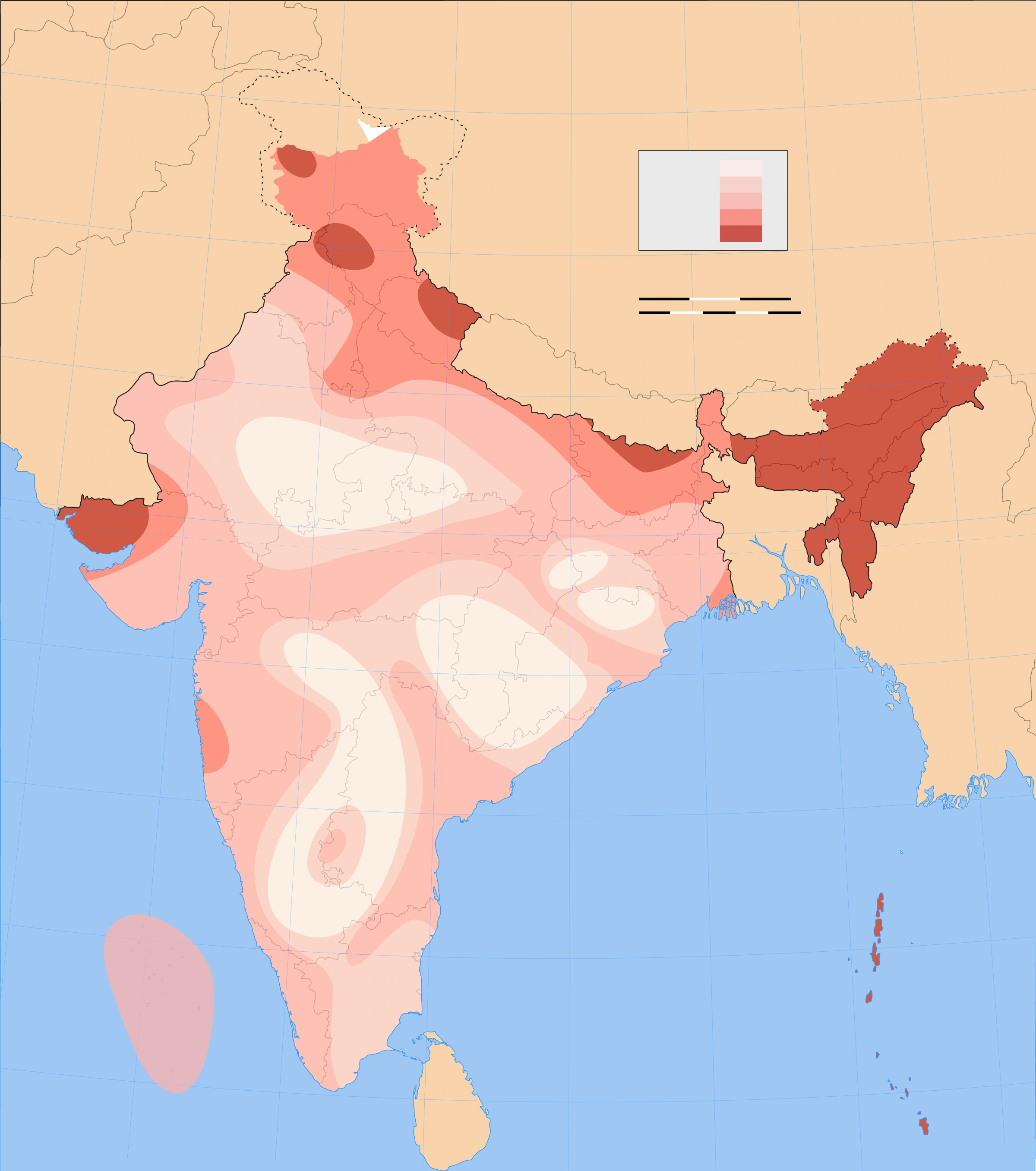
Map study
India seismic reference zones: compare the Himalayan belt, northeast and peninsula. Consult current BIS and official local guidance for engineering or safety decisions.
- Read the source legend and reference date before interpreting the map.
- Use spatial patterns to support topic revision; verify current official boundaries, designations and warnings separately.
Credit: Planemad · CC BY-SA 3.0 · sourceConverted to WebP on an opaque white background; proportionally resized without cropping. Original cartography and legend retained.
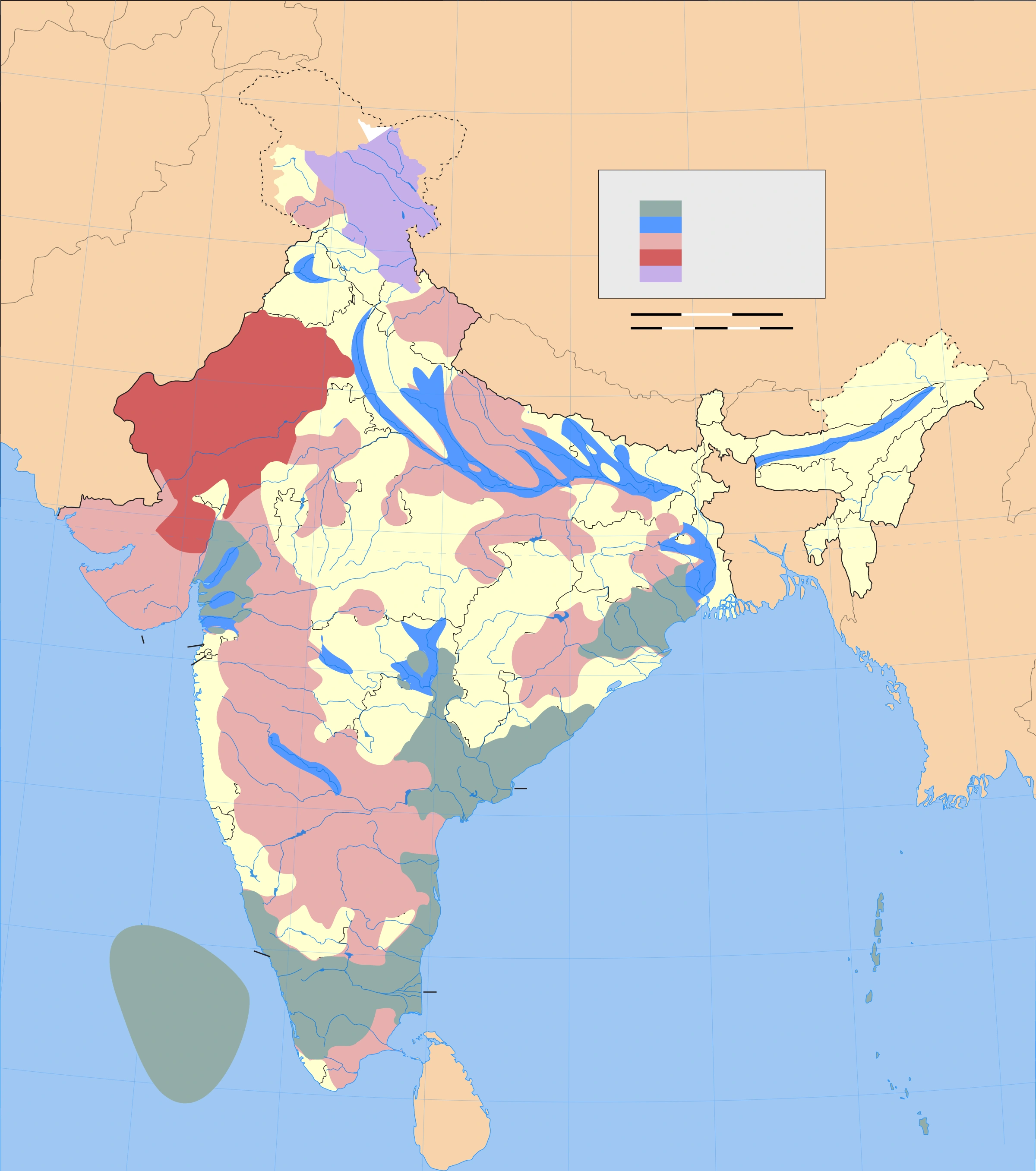
Map study
Broad climatic disaster-risk regions: compare flood, drought and cyclone patterns. Historical conceptual reference, not a real-time warning or site-specific assessment.
- Read the source legend and reference date before interpreting the map.
- Use spatial patterns to support topic revision; verify current official boundaries, designations and warnings separately.
Credit: Saravask; Planemad; Nichalp · CC BY-SA 3.0 · sourceConverted to WebP on an opaque white background; proportionally resized without cropping. Original cartography and legend retained.
1. Concept and place in the disaster cycle
Community resilience concerns a place-based group’s ability to manage shocks and stresses without losing essential functions, dignity or development gains. A community may be a coastal village, urban neighbourhood, tribal settlement or informal workers’ cluster. It is not socially uniform: caste, class, gender, disability, age, migration status and land tenure influence who faces danger, receives assistance and participates in decisions.
Disaster risk arises from the interaction of hazards, exposure and vulnerability, moderated by capacities. Communities cannot prevent an earthquake or cyclone, but they can avoid unsafe construction, protect evacuation routes, diversify livelihoods and organise assistance. Resilience therefore complements vulnerability reduction rather than replacing it. A settlement that repeatedly survives floods but remains indebted and displaced is coping, not necessarily becoming resilient.
Across the disaster cycle, prevention avoids new risks; mitigation reduces existing risks; preparedness develops readiness; response saves lives; and recovery restores and improves living conditions. These phases overlap rather than follow a rigid sequence. Community feedback during relief can improve future preparedness, while reconstruction offers an opportunity to relocate critical services, strengthen housing and secure livelihoods.
Three capacities are useful analytically: absorptive capacity enables immediate coping, such as emergency savings; adaptive capacity changes practices, such as flood-compatible cropping; and transformative capacity changes underlying systems, such as secure housing and drainage for an underserved settlement. Resilience must cover slow-onset stresses, including drought and salinisation, as well as sudden disasters.
2. Foundations of resilient communities
Social capital enables collective action. Bonding ties support assistance among relatives and neighbours; bridging ties connect different social groups; and linking ties connect residents with government, banks and technical agencies. Strong internal solidarity alone can exclude outsiders. Inclusive committees and transparent beneficiary selection are therefore essential to ensure that migrants, tenants and marginalised hamlets receive protection.
Physical and ecological resilience depend on safe homes, accessible shelters, reliable drinking water, drainage, sanitation and continuity of electricity and communications. Critical facilities should be assessed for hazard exposure and structural safety. Wetlands, mangroves, dunes and healthy catchments can moderate particular hazards, but their protection must supplement, not substitute for, evacuation planning and appropriate engineering.
Economic resilience requires diversified income, accessible savings, social protection, risk-sensitive credit and suitable insurance. Households dependent on one crop, one employer or daily earnings may suffer prolonged losses after a short disruption. Protecting livestock, tools, boats, documents and market access is often as important to recovery as repairing buildings. Insurance can transfer some financial risk but cannot prevent injury or replace public investment.
Human and institutional capacities include risk literacy, first aid, public-health awareness, psychosocial support and trusted local leadership. Schools, self-help groups, youth clubs, ASHAs and Anganwadi workers can connect preparedness with everyday services. Their responsibilities should be supported with training, equipment and remuneration where appropriate, rather than assuming unlimited unpaid labour, especially from women.
Community-based disaster risk management
- 1. Mobilise an inclusive local group
- 2. Assess hazards, exposure, vulnerabilities and capacities
- 3. Prioritise risks and prepare a locally owned plan
- 4. Assign responsibilities, funding and institutional links
- 5. Implement mitigation, warnings and preparedness
- 6. Conduct drills and monitor outcomes
- 7. Review experience and update the plan
3. Participatory assessment, planning and preparedness
Community-based disaster risk management begins with participatory hazard, vulnerability and capacity assessment. Residents identify past disaster footprints, seasonal stresses, unsafe structures, isolated households, livelihood dependencies and available resources. Participatory maps and transect walks should be checked against flood records, seismic zonation, weather information and relevant technical studies. Historical experience alone is insufficient where climate change, urbanisation or upstream interventions alter risk.
A usable community plan specifies who does what, when and with which resources. It identifies safe shelters, accessible routes, transport arrangements, alternative communications, emergency stocks and arrangements for animals. It should connect with Gram Panchayat or urban local body plans and the district disaster management plan. Named responsibilities, an updated contact list and a funded action calendar make it more useful than a lengthy document.
Early warning must be end-to-end and actionable. A technically accurate forecast achieves little unless it reaches people, is understood, trusted and followed by feasible action. Messages should specify the expected impact, affected area, timing and protective steps. Local languages, public announcements, sirens, radio, mobile alerts and door-to-door communication provide redundancy. Electricity failure, weak networks and inaccessible formats must be anticipated.
Regular drills test actual capabilities, including evacuation of persons with disabilities, children, older people and hospital patients. Volunteers need clear safety limits; hazardous rescue requires trained professionals. After drills and real events, communities should review missed households, route failures and shelter problems. Sensitive household information must be protected while ensuring that those needing assistance can be reached.
| Phase | Community action | Enabling public support |
|---|---|---|
| Prevention and mitigation | Identify unsafe sites; maintain local drainage and ecosystems | Risk-sensitive land-use regulation, engineering and finance |
| Preparedness | Map assistance needs; conduct drills; maintain contact lists | Reliable forecasts, accessible shelters and volunteer training |
| Response | Relay warnings; support safe evacuation and first aid | Professional rescue, healthcare, relief logistics and coordination |
| Recovery | Identify losses; monitor assistance; restore collective livelihoods | Resilient reconstruction, social protection and grievance redress |
4. Indian institutions and implementation pathways
The Disaster Management Act, 2005, establishes national, state and district-level responsibilities. Under Section 41, local authorities have duties concerning staff training, resource readiness, compliance of construction with applicable safety standards, and relief, rehabilitation and reconstruction. Panchayats and municipalities are therefore important operational institutions, not merely channels for distributing relief. District administrations must connect local plans with technical support and emergency services.
India’s National Disaster Management Plan, 2019, aligns with the Sendai Framework and emphasises social inclusion and shared responsibility. Sendai’s four priorities are understanding disaster risk, strengthening risk governance, investing in resilience, and enhancing preparedness while building back better in recovery. These priorities support a shift from relief-centred administration towards prevention embedded in development decisions.
The NDMA’s Aapda Mitra initiative develops community volunteer capacity for disaster response, while the National Cyclone Risk Mitigation Project has supported cyclone-risk reduction through measures including shelters and warning-related infrastructure. Local implementation can converge with livelihood programmes, health systems, self-help group networks and permissible MGNREGS works such as water conservation. Such convergence must follow scheme rules and site-specific technical assessment.
5. Inclusion, accountability and measuring progress
Participation becomes tokenistic when meetings exclude landless workers, women or minority settlements, or when communities receive responsibilities without funds. Informal settlements may be omitted from official maps, and digital-only warning systems can deepen exclusion. Resilience policy must address unsafe land use, insecure tenure and service deficits rather than attributing disaster losses to a supposed lack of community awareness.
Recovery should build back better through safer construction, restored services, livelihood assistance and psychosocial care. Relocation, where necessary, requires consultation, secure tenure, access to employment and maintenance of social networks. Moving people away from a hazard while destroying their livelihood can transfer rather than reduce vulnerability. Transparent assistance criteria and grievance redress help prevent elite capture.
Assessment should track outcomes rather than only inputs: warning reach and comprehension, evacuation time, shelter accessibility, water-service downtime, livelihood recovery and the distribution of assistance. Indicators must be disaggregated by gender, disability, income and location. Independent review, social audits and repeated exercises create learning institutions. The central test is whether the most vulnerable face lower risk and recover with fewer irreversible losses.
Real-world case studies
Odisha: community institutions and cyclone preparedness
Odisha’s experience after the 1999 Super Cyclone demonstrates the combined value of state capacity and local participation. Multipurpose cyclone shelters, community shelter-management arrangements, trained volunteers and improved forecasting supported mass evacuation during Cyclone Phailin in 2013. Much lower mortality than in 1999 reflected multiple improvements, not community action alone. Continuing damage to housing, electricity and livelihoods shows why successful evacuation must be complemented by resilient infrastructure and economic recovery.
Kerala floods, 2018: fisherfolk as local responders
During the 2018 Kerala floods, fisherfolk deployed boats and navigation skills to rescue stranded residents, complementing official response teams. The episode illustrates the importance of recognising locally available capabilities before disaster strikes. Pre-disaster boat inventories, coordination arrangements, safety equipment, communication support and compensation for damaged equipment can make such participation safer and more effective without transferring the State’s rescue obligations to volunteers.
Previous year questions
UPSC Mains 2019 · GS-III
Vulnerability is essential to understanding disaster impacts and threats to people. How can disaster vulnerability be characterised? Discuss its different types with reference to disasters.
- Distinguish vulnerability from hazard and exposure.
- Explain physical, social, economic, environmental and institutional dimensions.
- Illustrate differential impacts on informal settlements, livelihood-dependent households and persons with disabilities.
- Connect participatory assessment and inclusive capacity-building with vulnerability reduction.
Practice questions
Practice MCQ 1
With reference to community resilience, consider the following statements: 1. Restoration of pre-disaster conditions always constitutes building back better. 2. Linking social capital connects communities with formal institutions. 3. Livelihood diversification can strengthen adaptive capacity. Which statements are correct?
- A. 1 and 2 only
- B. 2 and 3 only
- C. 1 and 3 only
- D. 1, 2 and 3
Practice MCQ 2
Which arrangement best represents an end-to-end, community-centred early warning system?
- A. Publishing an accurate forecast on a technical website
- B. Installing sirens without conducting public awareness exercises
- C. Connecting risk knowledge and forecasting with accessible messages and feasible protective action
- D. Issuing warnings only after evacuation begins
Practice MCQ 3
Under Section 41 of the Disaster Management Act, 2005, which of the following are responsibilities of local authorities? 1. Training their officers and employees for disaster management. 2. Maintaining disaster-management resources ready for use. 3. Ensuring that construction under their jurisdiction conforms to applicable disaster-prevention and mitigation standards. Select the correct answer.
- A. 1 only
- B. 1 and 2 only
- C. 2 and 3 only
- D. 1, 2 and 3
Mains practice · Community resilience requires more than volunteer mobilisation during emergencies. Discuss and suggest an inclusive framework for strengthening resilience in Indian settlements. Answer in 250 words.
- Define resilience through absorptive, adaptive and transformative capacities.
- Cover safe infrastructure, social capital, livelihoods, ecosystems and functioning public services.
- Explain participatory risk assessment, accessible warnings, local planning and regular drills.
- Link local authorities and district institutions with trained volunteers and funded responsibilities.
- Use Odisha and Kerala to illustrate complementary community and state roles.
- Conclude with disaggregated outcome indicators, social audits and accountable recovery.
Further reading
- UNDRR: Sendai Framework for Disaster Risk Reduction 2015–2030 and disaster risk reduction terminology.
- NDMA: National Disaster Management Plan, 2019.
- India Code: Disaster Management Act, 2005, particularly Section 41.
- NDMA: Aapda Mitra Scheme guidelines and official programme material.
- Odisha State Disaster Management Authority: cyclone preparedness and multipurpose cyclone shelter resources.
- Government of Kerala, United Nations, World Bank and European Union: Kerala Post Disaster Needs Assessment, Floods and Landslides, 2018.
Preparing for UPSC Civil Services? Get classroom teaching, answer-writing evaluation and mentorship at Pragnya IAS Academy, Ashok Nagar — see why aspirants choose us for IAS coaching in Hyderabad.