

Tweet Text: RT @DM_Bhadrak: #OdishaPrepared4Fani CycloneFani Bhadrak Evacuation in #Basudevpur #CycloneShelter #OSDMA
Credit: Government of Odisha · CC BY 4.0 · source

Aelbert Cuyp River-view with drinking Cows
Credit: Aelbert Cuyp · Public domain · source
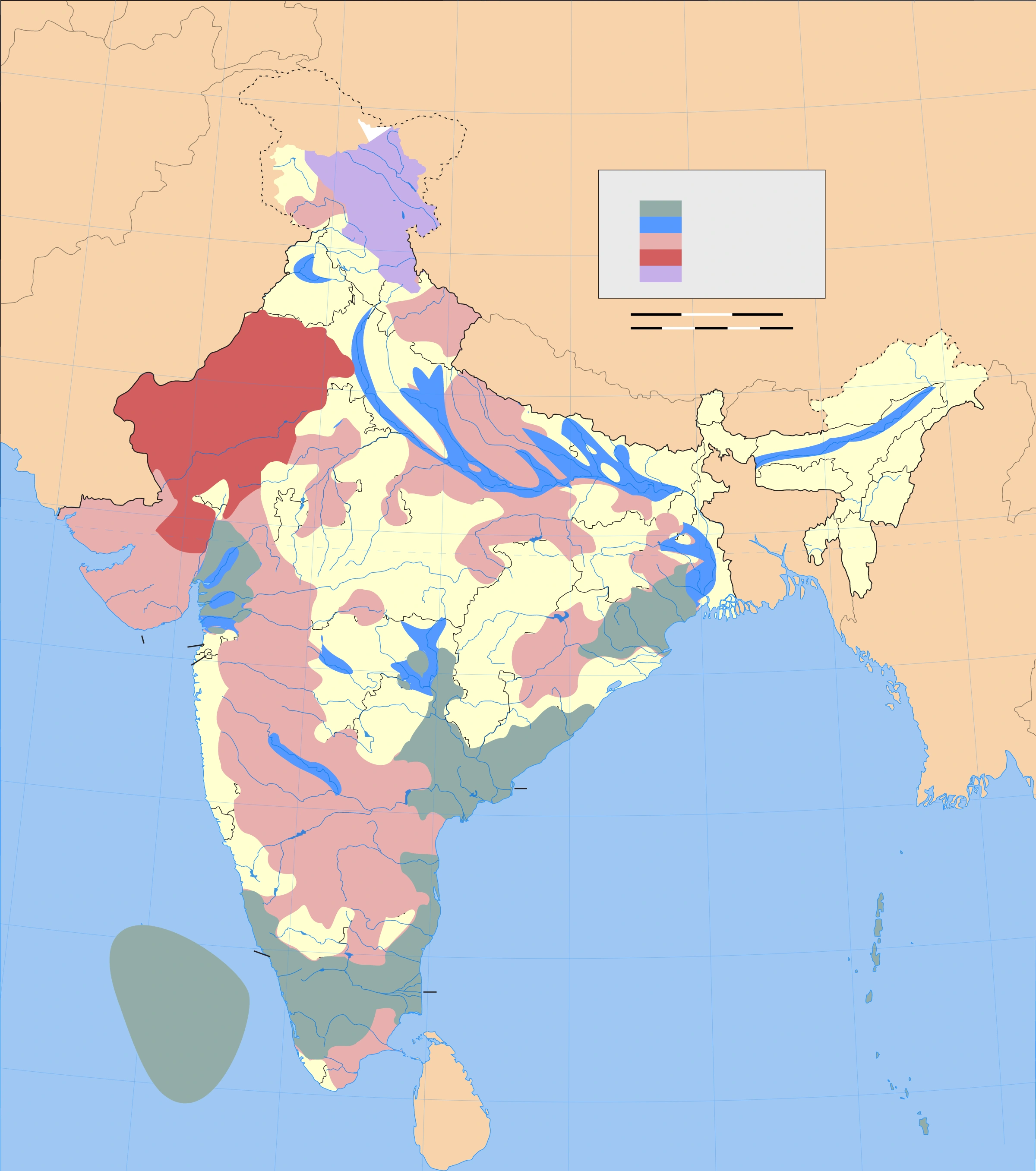
Map study
Broad climatic disaster-risk regions: compare flood, drought and cyclone patterns. Historical conceptual reference, not a real-time warning or site-specific assessment.
- Read the source legend and reference date before interpreting the map.
- Use spatial patterns to support topic revision; verify current official boundaries, designations and warnings separately.
Credit: Saravask; Planemad; Nichalp · CC BY-SA 3.0 · sourceConverted to WebP on an opaque white background; proportionally resized without cropping. Original cartography and legend retained.
1. Meaning and place in the disaster cycle
Mitigation comprises sustained actions that reduce disaster losses before a hazardous event occurs or before the next event recurs. Examples include earthquake-resistant construction, floodplain regulation, slope stabilisation and restoration of coastal vegetation. Its purpose is not merely to control physical hazards, which may be impossible, but to reduce exposure and vulnerability while strengthening coping capacity.
Prevention seeks to avoid disaster risk altogether, such as prohibiting new construction in a highly hazardous zone. Mitigation limits adverse impacts where complete avoidance is impracticable. Preparedness develops the ability to anticipate and respond through contingency plans, drills, supplies and evacuation arrangements. These categories overlap: a cyclone shelter is a mitigation asset, while rehearsing evacuation to it is preparedness.
The disaster cycle is therefore not a rigid sequence. Mitigation operates before disasters, during reconstruction and through routine development decisions. Building back better after a disaster uses recovery expenditure to correct pre-existing vulnerabilities rather than reconstruct them. A rebuilt school, for example, should incorporate safer design, accessible exits and suitable siting.
- Prospective risk management prevents new risk through safer land-use and investment decisions.
- Corrective risk management reduces existing risk through retrofitting, relocation or ecosystem restoration.
- Compensatory risk management addresses residual risk through financial protection and preparedness.
2. Assessing risk and selecting mitigation priorities
Effective mitigation begins with a multi-hazard risk assessment. Hazard mapping identifies the probable location, intensity and frequency of earthquakes, floods, cyclones, landslides or industrial accidents. Exposure inventories locate people, housing, crops, utilities and economic assets. Vulnerability assessment examines building quality, poverty, disability, age, gender, insecure tenure and dependence on climate-sensitive livelihoods.
Risk assessment must consider cascading impacts. An earthquake may damage a dam or chemical installation; urban flooding may disable substations, hospitals and telecommunications simultaneously. Protecting individual structures is insufficient if the roads, water supply or electricity on which they depend remain vulnerable. Critical infrastructure therefore requires redundancy, safe siting and continuity planning.
Prioritisation should combine expected loss reduction, cost-effectiveness, equity, environmental effects and feasibility. Protecting a small settlement with high mortality risk may be more urgent than protecting assets with greater monetary value. Historical records should be supplemented by climate projections because rainfall extremes, heat and coastal hazards are changing. Maps require periodic revision and local validation rather than treatment as permanent predictions.
- Useful inputs include India Meteorological Department observations, Central Water Commission flood information, Geological Survey of India landslide studies and seismic zoning standards.
- Community mapping can identify blocked drains, unsafe access routes and vulnerable households missed by coarse-resolution datasets.
Planning a mitigation programme
- 1. Identify hazards and cascading threats
- 2. Map exposure, vulnerability and capacities
- 3. Consult communities and prioritise risks
- 4. Compare engineering, regulatory and ecological options
- 5. Assign responsibilities, finance and implement
- 6. Maintain assets, monitor outcomes and update assessments
3. Structural, non-structural and ecosystem-based measures
Structural mitigation uses engineering to improve physical safety. It includes seismic retrofitting, cyclone-resistant roofs, flood-compatible drainage, slope drainage and protective works. Earthquake safety depends on sound design, detailing, materials and workmanship, not merely a claim that a building is earthquake-proof. Relevant Indian standards include IS 1893 for earthquake-resistant design criteria and IS 13920 for ductile detailing of reinforced concrete structures.
Non-structural mitigation changes decisions and behaviour through land-use regulation, building permissions, safety audits, public education and incentives. Urban master plans should protect drainage channels and avoid incompatible construction in hazardous areas. Enforceable development controls, trained masons and accessible compliance procedures are often as important as technically sophisticated building codes.
Ecosystem-based measures include conserving wetlands for flood storage, restoring mangroves along suitable coastlines and protecting catchment vegetation. These can provide biodiversity and livelihood benefits alongside risk reduction. However, performance depends on local ecology, hazard intensity and available space; vegetation cannot replace evacuation planning or engineered protection where these are essential.
- For heat, mitigation includes shaded public spaces, cool roofs, ventilation and urban greening; alerts and emergency medical arrangements complement these measures.
- For drought, watershed treatment, groundwater budgeting and suitable cropping patterns reduce vulnerability.
- Avoid maladaptation: embankments may transfer flood risk downstream, while poorly designed retaining walls or hill cutting can worsen slope instability.
| Function | Main objective | Example |
|---|---|---|
| Prevention | Avoid creating disaster risk | Prohibit new settlement in an identified high-risk zone |
| Mitigation | Reduce potential adverse impacts | Retrofit an existing hospital |
| Preparedness | Develop readiness for effective action | Conduct evacuation drills |
| Response | Meet immediate disaster-related needs | Search, rescue and emergency medical care |
| Resilient recovery | Restore services while reducing future risk | Rebuild damaged schools to improved safety standards |
4. Indian institutions, policy and financing
The Disaster Management Act, 2005 provides the principal statutory framework. The National Disaster Management Authority lays down national policies and guidelines, while state and district authorities support planning and coordination at their respective levels. Municipalities, panchayats and development departments are crucial because construction permissions, drainage maintenance and local infrastructure determine much of everyday risk.
The National Policy on Disaster Management, 2009 and the National Disaster Management Plan, first issued in 2016 and revised in 2019, support a prevention- and mitigation-oriented approach. The Sendai Framework reinforces understanding risk, strengthening risk governance, investing in resilience and improving preparedness while building back better. It is a voluntary, non-binding international framework rather than a treaty creating enforceable domestic duties.
The Fifteenth Finance Commission recommended allocating 20 per cent of national and state disaster risk management funds to mitigation, with the remaining 80 per cent allocated to response funds. The National Disaster Mitigation Fund and State Disaster Mitigation Funds provide dedicated financing channels. These should complement risk-sensitive expenditure within roads, housing, health, irrigation and urban development budgets.
- The National Cyclone Risk Mitigation Project combined protective infrastructure with warning and institutional capacity improvements in participating coastal states.
- The Coalition for Disaster Resilient Infrastructure, launched in 2019, promotes resilience of infrastructure systems internationally.
5. Implementation challenges and the way forward
India's implementation gap arises from weak enforcement, fragmented departmental responsibilities, outdated exposure data and inadequate local technical capacity. Informal settlements often occupy hazardous locations because safer land and housing are unaffordable. Relocation without secure tenure, livelihoods and essential services can exchange physical danger for social and economic vulnerability.
A practical strategy is to embed risk screening in project appraisal, master plans and public procurement. Hospitals, schools, bridges and lifeline utilities should undergo prioritised safety assessments and phased retrofitting. Maintenance budgets are indispensable: a blocked drain, deteriorated shelter or non-functional floodgate can undermine an otherwise sound investment.
Mitigation should be participatory, inclusive and measurable. Residents must help identify feasible measures, while designs should accommodate children, older persons and persons with disabilities. Monitoring should track reduced exposure, compliance with safety standards, infrastructure downtime and distribution of benefits rather than expenditure alone. Independent technical review and public disclosure can improve accountability. Ultimately, development is resilient only when it avoids creating fresh risk while reducing inherited vulnerability.
- For Mains answers, connect each hazard to a specific vulnerability, an appropriate intervention and an accountable institution.
- Conclude with risk-informed development, local capacity and protection of the most vulnerable rather than relying only on large engineering projects.
Real-world case studies
Odisha: cyclone shelters and resilient infrastructure
Following the devastating 1999 super cyclone, Odisha expanded multipurpose cyclone shelters, evacuation connectivity and community-based disaster arrangements. During Cyclone Phailin in 2013, these assets supported large-scale evacuation. The lesson is that mitigation infrastructure works best alongside accurate warnings, drills and trusted local institutions; lower mortality cannot be attributed to shelters alone.
Netherlands: Room for the River
The Room for the River programme reduced river flood risk through measures such as relocating dikes, lowering floodplains and creating additional channels. It illustrates a shift from relying exclusively on higher barriers towards providing space for floodwaters. Indian applications require basin-level planning, suitable land availability, compensation and protection of affected livelihoods.
Previous year questions
UPSC Mains 2018 · GS-III
Describe various measures taken in India for Disaster Risk Reduction before and after signing the Sendai Framework for DRR (2015–2030). How is this framework different from the Hyogo Framework for Action, 2005?
- Before Sendai: Disaster Management Act, 2005, institutional framework, national policy and cyclone-risk mitigation initiatives.
- After Sendai: National Disaster Management Plan, 2016 and greater emphasis on risk-informed development.
- Compare Hyogo's five priorities with Sendai's four priorities and seven global targets.
- Explain Sendai's stronger emphasis on managing disaster risk, measurable outcomes and broader stakeholder responsibility.
Practice questions
Practice MCQ 1
Which of the following is the clearest example of corrective disaster risk management?
- A. Retrofitting an existing seismically vulnerable hospital
- B. Distributing food immediately after a cyclone
- C. Conducting search and rescue after a landslide
- D. Establishing a temporary relief camp
Practice MCQ 2
Consider the following statements: 1. Embankments may transfer flood risk to other locations. 2. Ecosystem restoration eliminates the need for evacuation planning. 3. Building-code enforcement is a non-structural mitigation measure. Which statements are correct?
- A. 1 and 2 only
- B. 2 and 3 only
- C. 1 and 3 only
- D. 1, 2 and 3
Practice MCQ 3
Under the Fifteenth Finance Commission's recommended disaster risk management funding structure for 2021–26, what share was allocated to mitigation funds?
- A. 10 per cent
- B. 20 per cent
- C. 40 per cent
- D. 80 per cent
Mains practice · Disaster mitigation is primarily a development-governance challenge rather than merely an engineering task. Discuss with Indian examples. Suggest measures to institutionalise risk-informed development. (250 words)
- Define mitigation and connect disaster risk with exposure and vulnerability.
- Discuss land use, building-code enforcement, poverty, ecosystems and infrastructure interdependence.
- Use Odisha's cyclone infrastructure and urban floodplain encroachment as examples.
- Recommend risk screening, local technical capacity, dedicated finance and participatory planning.
- Recognise maintenance, maladaptation and residual risk.
- Conclude with measurable, inclusive resilience outcomes.
Further reading
- India Code: Disaster Management Act, 2005.
- NDMA: National Policy on Disaster Management, 2009.
- NDMA: National Disaster Management Plan, 2019.
- UNDRR: Sendai Framework for Disaster Risk Reduction 2015–2030.
- Fifteenth Finance Commission Report for 2021–26: Disaster Risk Management.
- Bureau of Indian Standards: National Building Code of India, 2016.
Preparing for UPSC Civil Services? Get classroom teaching, answer-writing evaluation and mentorship at Pragnya IAS Academy, Ashok Nagar — see why aspirants choose us for IAS coaching in Hyderabad.