
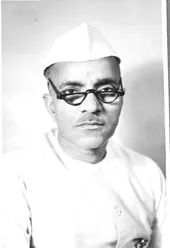
K. V. Ranga Reddy: The former Deputy Chief Minister supported the students’ statehood argument; this portrait predates the agitation.
Credit: Photo Division, Government of India · Public domain · source
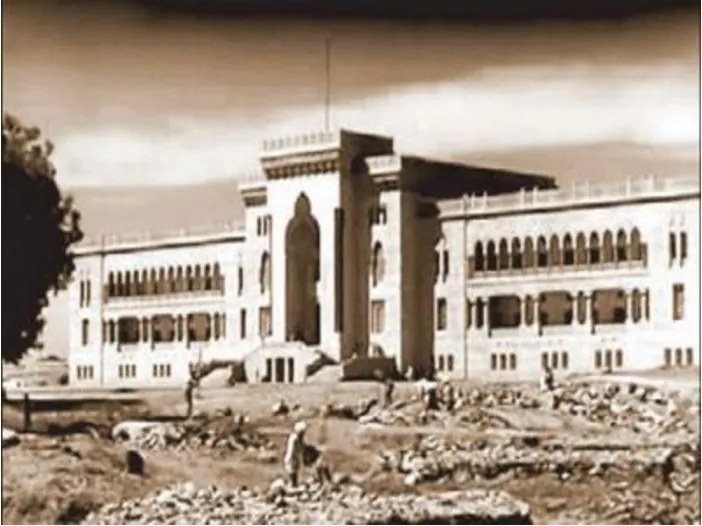
An archival view of the institution that later became a major centre of student mobilisation; not a photograph of the 1969 protests.
Credit: Unknown photographer · Public domain · source
Institutional context for distinguishing the Bhargava financial inquiry from the Wanchoo jurists’ work; a later architectural photograph.
Credit: Pinakpani · CC BY-SA 4.0 · source
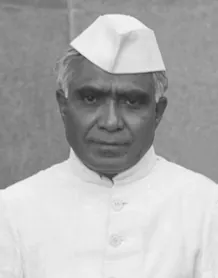
Burgula Ramakrishna Rao: Hyderabad State’s elected leadership before the merger provides the background to Telangana’s safeguards debate.
Credit: Photo Division, Government of India · Public domain · source
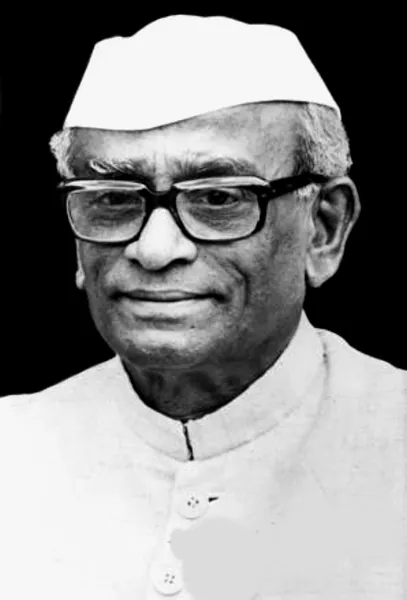
Neelam Sanjiva Reddy: Andhra Pradesh’s first Chief Minister; a later portrait illustrating the post-merger political setting.
Credit: Bhavanajagat , Neelam Sanjiva Reddy · CC BY-SA 4.0 · source
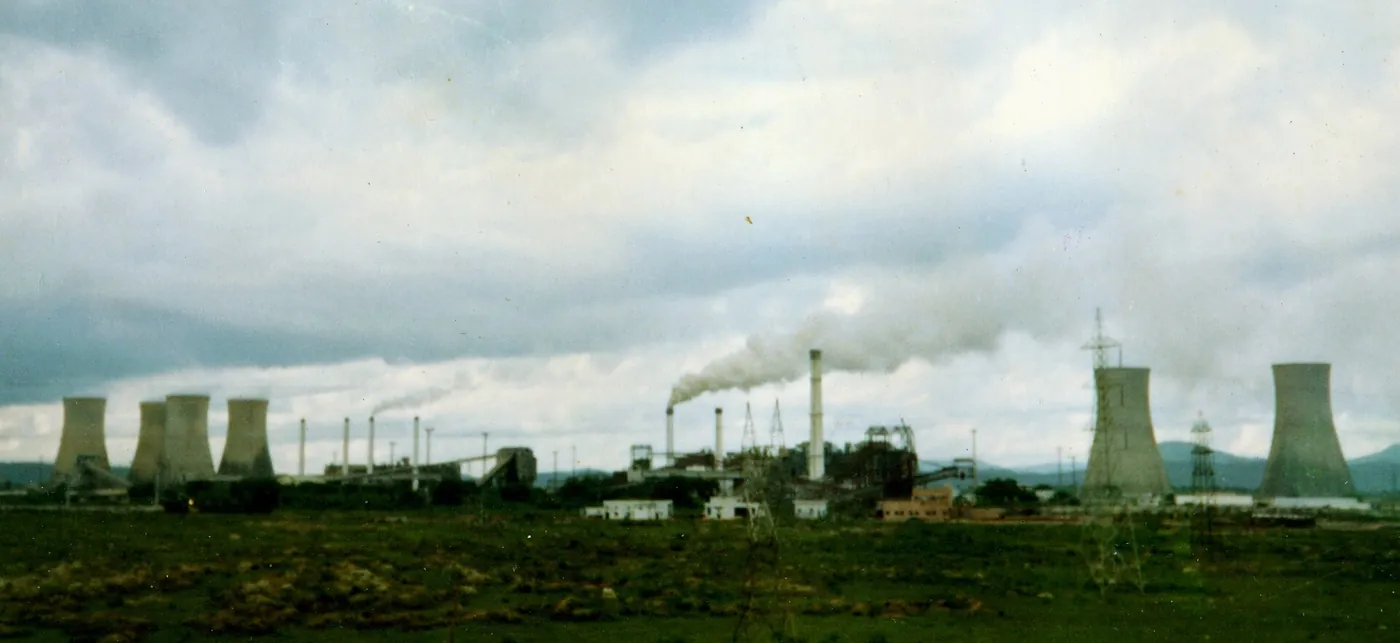
Kothagudem Thermal Power Station: A later view of the Paloncha industrial setting associated with employment grievances, not evidence of a particular staffing count.
Credit: Adityamadhav83 · CC BY-SA 4.0 · source
1. A merger bargain loses credibility
The movement arose from a dispute about the practical terms of integration, rather than from language alone. When Telangana joined Andhra State in 1956, safeguards were intended to accommodate different educational, administrative and economic starting points. Regional protection was therefore part of the political justification of the merger, not an incidental concession. By the late 1960s, activists increasingly judged employment decisions, development expenditure and political representation against that original understanding. Dissatisfaction became especially potent when official assurances appeared more reliable on paper than in administration.
The central analytical issue is institutional credibility. A negotiated promise can reconcile regional interests only when citizens expect it to be implemented and violations to receive effective remedies. Telangana’s regional machinery had limited authority over several important fields, while employment and financial complaints required action by wider state institutions. This produced a growing argument that regional interests lacked dependable enforcement. A mains answer should distinguish the existence of safeguards from their adequacy and implementation, and should attribute allegations of discrimination rather than assigning collective blame to a regional population.
- Explain the merger bargain before listing grievances.
- Connect jobs, finances and representation through enforcement.
- Do not assume that linguistic unity eliminated regional inequalities.
Timeline
1956
The merger bargain established the safeguards framework later contested by Telangana activists.
8 January 1969
Commonly recorded beginning of Ravindranath’s Khammam fast.
18–19 January 1969
All-party discussions addressed jobs and regional surplus accounting.
21 January 1969
G.O. 36 attempted corrective action in protected employment.
28 March 1969
A. V. S. Narasimha Rao invalidated the Telangana statutory residence arrangement.
March 1969
Convention politics and TPS organisation consolidated the statehood platform.
11 April 1969
Indira Gandhi announced the Eight-Point Plan.
22 April 1969
The Union appointed the Bhargava committee on revenue surpluses.
10 June–16 July 1969
TNGO strike interval recorded by Telangana Today.
17 June 1969
TPS women’s satyagraha observance recorded in the same account.
1971
TPS won ten Lok Sabha seats; its main leadership subsequently joined Congress.
30 September 1971
P. V. Narasimha Rao assumed the chief ministership.
3 October 1972
The Supreme Court upheld continuity of the older Mulki rules.
21 September 1973
The Six-Point Formula offered a later common-state safeguards framework.
2. Employment and surplus funds: related grievances, different evidence
Government employment occupied a special place in the grievance structure because it represented security and upward mobility for educated youth. Students approaching the labour market and employees concerned with recruitment and service conditions could therefore recognise a common interest. Residence requirements were intended to protect particular opportunities, but their coverage and legal basis were contested. The Srikrishna report records a demand concerning about six thousand employees in its historical narrative. This should not be inflated into a verified count of every irregular appointment or equated with larger totals circulated in popular summaries.
The financial issue asked how Telangana’s revenue should be related to expenditure for its development. Kumar Lalit’s audit inquiry and the later Bhargava committee addressed this accounting controversy. Secondary accounts commonly associate ₹34.10 crore with Lalit and ₹28.34 crore with Bhargava, but differ in describing the former figure. These are not a reliable minimum–maximum range for one identically defined loss. The years covered, allocation of common costs and treatment of development expenditure matter. Wanchoo’s committee must be kept separate: its concern was legal employment protection, not another calculation of regional surplus.
- Treat employee demands and verified appointment violations as different categories.
- Attach methodology and attribution to financial estimates.
- Separate the Lalit–Bhargava financial strand from Wanchoo’s legal strand.
How a safeguards dispute became a statehood campaign
- 1. Regional guarantees created expectations of fair opportunity.
- 2. Employment and financial disputes weakened confidence in enforcement.
- 3. Local protest and student networks made grievances a mass political issue.
- 4. Legal setbacks and confrontation strengthened separatist arguments.
- 5. Central packages and electoral accommodation changed strategy without granting statehood.
- 6. Institutional changes and public memory preserved the regional question.
3. Local triggers and the spread of student organisation
The immediate crisis connected industrial employment disputes with student expectations. Paloncha–Kothagudem made public-sector recruitment a concrete regional question rather than an abstract safeguard. The Srikrishna Committee links the opening agitation to a High Court ruling excluding the Electricity Board from the relevant residence legislation. Exact workforce and retrenchment totals in derivative accounts are less secure than this underlying dispute. A careful explanation therefore identifies the institutional controversy without turning every circulated number into an established fact or treating industrial recruitment as the movement’s only cause.
Ravindranath’s hunger strike in Khammam, commonly dated to 8 January 1969, gave these grievances a public focus. Student networks, prominently those associated with Osmania University, helped carry the issue beyond its local setting. Early participants did not all agree on the remedy: some wanted effective safeguards within Andhra Pradesh, while others demanded separation. Meetings and action committees both coordinated protest and clarified these differences. Later political leadership should not be projected backwards as the sole author of a mobilisation already being shaped by local initiative and campus organisation.
- Use long-term causes to explain support and immediate triggers to explain timing.
- Locate Khammam, Paloncha–Kothagudem and Hyderabad without inventing a march route.
- Distinguish safeguards advocates from the early separatist current.
| Actor or instrument | Principal role | Do not confuse with |
|---|---|---|
| Kumar Lalit inquiry | Regional financial accounting | A verified universal count of illegal appointments |
| Bhargava committee | Central assessment of Telangana revenue surpluses | Wanchoo’s legal inquiry |
| Wanchoo committee | Constitutional employment safeguards | Another surplus-funds estimate |
| G.O. 36 | Executive employment-repatriation action | A constitutional amendment |
| A. V. S. Narasimha Rao | Statutory sub-state residence requirements | The entire older Mulki regime |
| Ananthula Madan Mohan | Founding TPS presidency | Chenna Reddy’s later dominance |
| Marri Chenna Reddy | Political consolidation and later accommodation | Sole initiation of every January protest |
| Eight-Point Plan | Corrective finance, development and employment measures | An immediate statehood commitment |
| 1971 TPS result | Ten parliamentary victories | National indispensability or automatic bifurcation |
4. The January accord, G.O. 36 and constitutional limits
Chief Minister Kasu Brahmananda Reddy’s all-party meeting on 18–19 January attempted to answer the employment and financial complaints together. The settlement envisaged repatriation of affected employees and examination of Telangana’s surplus revenue. G.O. 36 followed on 21 January, directing that specified non-domicile employees be relieved from protected posts by 28 February. For the government, administrative correction offered an alternative to division. For participants, however, the usefulness of that promise depended on whether the legal framework could sustain the proposed action against challenges by affected employees.
In A. V. S. Narasimha Rao on 28 March 1969, the Supreme Court held the Telangana-related provision of Section 3 of the 1957 residence Act and the relevant rule unconstitutional. The issue concerned a residence requirement for part of a state under Article 16(3). This was not a blanket invalidation of every older Mulki rule. The 1972 Director of Industries case separately considered the constitutional continuity of the pre-existing regime, including Article 35(b). Keeping the legal foundations distinct prevents the misleading claim that the Court simply reversed one identical ruling three years later.
- A political accord could not override constitutional limitations.
- Remember order date, implementation deadline and judgment date separately.
- Compare the statutory residence scheme with pre-Constitution Mulki continuity.
5. Confrontation, conventions and a political platform
Police action changed the emotional and political meaning of the campaign. The Srikrishna report identifies firing on 20 January as an important escalation point, followed by wider unrest. Regional accounts remember Shankar of Sadashivpet among the early martyrs, but a firing date must not automatically be treated as the date of a later death. The report also notes that estimates of loss of life varied. Respectful historical writing can explain sacrifice and public anger without presenting an unsupported exact casualty total or reproducing communal and regional accusations as established collective responsibility.
Conventions helped turn dispersed protest into a recognisable programme and connected student participants with established public figures. The March Reddy Hostel convention occupies an important place in regional narratives. Telangana Today dates the conversion of the People’s Convention into the Telangana Praja Samithi to 25 March 1969 and identifies Madan Mohan as its first president. Chenna Reddy’s subsequent prominence belongs to a later leadership phase. The TPS supplied organisation and negotiating capacity, but its emergence also introduced questions about the relationship between mass initiative, party strategy and the authority to settle a movement’s demands.
- Distinguish confrontation, casualty and commemoration dates.
- Attribute the precise TPS organisational milestone to its source.
- Preserve the difference between founding presidency and later leadership.
6. The Eight-Point response and the May–June peak
Indira Gandhi’s announcement in the Lok Sabha on 11 April offered a programme for correcting grievances without accepting bifurcation. Its financial and developmental components included surplus assessment, remedial resources and stronger planning and implementation arrangements. Its employment strand envisaged legal examination of constitutional safeguards and attention to service grievances. Bhargava’s financial committee and Wanchoo’s jurists illustrated the two different kinds of expertise required. Yet a package could address policy substance while missing the desired political remedy: many separatists now regarded a new state, rather than another implementation mechanism, as the necessary guarantee.
The continuing mobilisation reached an intense phase in May and June. Employee action widened its leverage beyond campuses, while women’s satyagraha broadened its public character. Telangana Today describes the TNGO strike as lasting from 10 June to 16 July, or 37 days, and records a TPS Women’s Day programme on 17 June. These are attributed contemporary-history claims rather than statutory holiday notifications. Named days coordinated participation and remembrance, but lists of other campaign labels differ. Arrests, income losses and interrupted education simultaneously reduced participants’ capacity to sustain indefinite confrontation.
- Analyse the gap between corrective policy and a territorial demand.
- Include women and employees without erasing earlier participation.
- Do not treat every movement-day label as an official holiday.
7. The 1971 mandate and the limits of parliamentary bargaining
The TPS’s ten Lok Sabha victories in 1971 demonstrated that the statehood campaign possessed substantial electoral support. The New Indian Express’s archival account situates those victories within Telangana’s fourteen parliamentary constituencies and discusses G. S. Melkote’s Hyderabad success. Some general summaries give inconsistent candidature totals, so the secure ten-seat result should be distinguished from the number a party is said to have contested. More importantly, an election result is evidence of political support, not a self-executing constitutional direction to create a state. The route from mandate to territorial legislation still required national decisions.
Indira Gandhi’s strong national majority limited TPS leverage because the Union government did not depend on its support to survive. The main leadership’s accommodation with Congress in September 1971 therefore occurred in an unequal bargaining environment. P. V. Narasimha Rao became Chief Minister on 30 September, the first Andhra Pradesh Chief Minister from Telangana. This altered regional representation at the top but did not meet the demand for separate institutions. Participants could reasonably interpret the same development differently, as pragmatic gain, leadership retreat or incomplete fulfilment, without those interpretations becoming interchangeable historical facts.
- Separate regional legitimacy from coalition leverage.
- Ten wins are firmer than inconsistent candidature summaries.
- A Telangana Chief Minister was not equivalent to a Telangana state.
8. Immediate defeat, institutional outcomes and historical memory
A multi-causal explanation is stronger than a verdict based on one individual’s intentions. The Centre resisted division; detention disrupted coordination; prolonged action strained households, employees and students; and different constituencies did not always agree on tactics or compromise. Later leadership accommodation reduced separatist pressure from the principal political platform. These factors help explain failure in the immediate territorial objective without implying that support had vanished everywhere. The movement’s visible student and urban centres should also not be used to make unsupported claims that every rural group either participated fully or remained wholly unaffected.
The Srikrishna report identifies consequences including a stronger regional committee, attention to surplus accounting, educational expansion and industrial incentives. Meanwhile, the October 1972 judgment upheld the older Mulki rules on their distinct legal foundation, contributing to the subsequent Jai Andhra crisis. The Six-Point Formula of September 1973 sought another common-state settlement rather than creating Telangana. In long-term perspective, 1969 supplied memories of sacrifice, arguments about enforceable safeguards and lessons about organisation. A balanced conclusion recognises both these continuities and the contingency of later mobilisation, rather than treating eventual statehood as an automatic outcome already guaranteed in 1969.
- Define the measure of success before judging failure.
- Use institutional outcomes alongside the territorial outcome.
- Distinguish continuity of a regional claim from inevitability of later success.
Real-world case studies
One employment question, two legal foundations
The March 1969 case and the October 1972 case are a useful test of legal precision. The first concerned the post-1957 statutory scheme and residence in part of a state under Article 16(3). The second examined the continuing validity of the older Mulki rules, including their protection under Article 35(b). Describing this merely as invalidation followed by reversal hides the difference between the instruments. In a mains answer, use the pair to show that executive promises require a legally sustainable institutional foundation.
A regional mandate without decisive national leverage
The TPS won ten Lok Sabha seats in 1971, a major demonstration of regional electoral support. Congress’s commanding national position nevertheless meant that TPS votes were not necessary for Union government survival. The example separates three propositions: a demand may have substantial electoral legitimacy; its party may still lack coalition leverage; and its leadership may subsequently favour accommodation. None of these propositions alone proves either the disappearance of the demand or the inevitability of statehood.
A women’s programme is not an official calendar
The attributed account of the TPS’s 17 June women’s satyagraha identifies an organiser, a date and a demand. It therefore supports an account of organised participation. It does not establish that government declared a holiday, that women had never participated before, or that every later list of movement observances is equally reliable. This small example shows how source criticism can enrich social history while preventing an examination chronology from acquiring unsupported claims.
Previous year questions
No source-linked PYQ is available here yet. Use the practice questions below.
Practice questions
Practice MCQ 1 · Easy
Which committee was concerned with constitutionally permissible employment safeguards?
- Wanchoo committee
- Bhargava committee
- States Reorganisation Commission
- Lalit inquiry
Practice MCQ 2 · Easy
Which date correctly identifies G.O. 36?
- 11 April 1969
- 21 January 1969
- 3 October 1972
- 21 September 1973
Practice MCQ 3 · Difficult
Consider the 1969 and 1972 Supreme Court cases. Which statement is correct?
- Both concerned only financial accounting
- Both created a separate state
- They examined different legal foundations of residence protection
- The 1969 case decided the Six-Point Formula
Practice MCQ 4 · Moderate
Which was not a commitment of the Eight-Point Plan?
- Regional surplus assessment
- Development monitoring
- Examination of employment safeguards
- Immediate creation of Telangana
Practice MCQ 5 · Moderate
Which pairing correctly distinguishes TPS leadership roles?
- Madan Mohan—founding president; Chenna Reddy—later dominant leader
- Wanchoo—founding president; Bhargava—election organiser
- Indira Gandhi—TPS founder; Rao—student committee secretary
- Chenna Reddy—sole initiator of every January protest
Practice MCQ 6 · Moderate
Why did ten TPS parliamentary victories not compel statehood in 1971?
- Parliament had ceased to exist
- Congress did not depend on TPS support nationally
- No regional party could contest elections
- The election itself created Telangana
Mains practice · The 1969 Telangana agitation was a crisis of confidence in safeguards as much as a dispute over resources. Discuss.
- Explain the political logic of the 1956 protective bargain.
- Connect employment, educational opportunity and fiscal accounting.
- Examine institutional limits and the legal vulnerability of corrective action.
- Trace how safeguards advocacy and separatism interacted.
- Conclude with the importance of credible enforcement in regional integration.
Mains practice · Evaluate the Centre’s response to the 1969 movement, with reference to the Eight-Point Plan.
- Locate the plan after the escalation and March judgment.
- Group its financial, developmental and employment components.
- Differentiate the Bhargava and Wanchoo remits.
- Explain why substantive corrective measures did not meet a territorial demand.
- Avoid treating announcement, implementation and political acceptance as identical.
Mains practice · Assess the immediate limitations and long-term significance of the Jai Telangana movement of 1969.
- Use central resistance, detention, fatigue and strategic differences rather than one cause.
- Explain the gap between the 1971 regional mandate and national leverage.
- Identify institutional and educational outcomes noted by the Srikrishna report.
- Discuss martyr memory and later mobilisation without assuming inevitability.
- Distinguish the 1972 Mulki ruling and 1973 formula from state formation.
Further reading
Preparing for TGPSC Group 1 or Group 2? See the TGPSC Groups coaching course at Pragnya IAS Academy for fees, batches and registration.
Long study hours taking a toll? Try the free breathing exercise and self check-in in Pragnya’s student wellness programme for UPSC aspirants.