
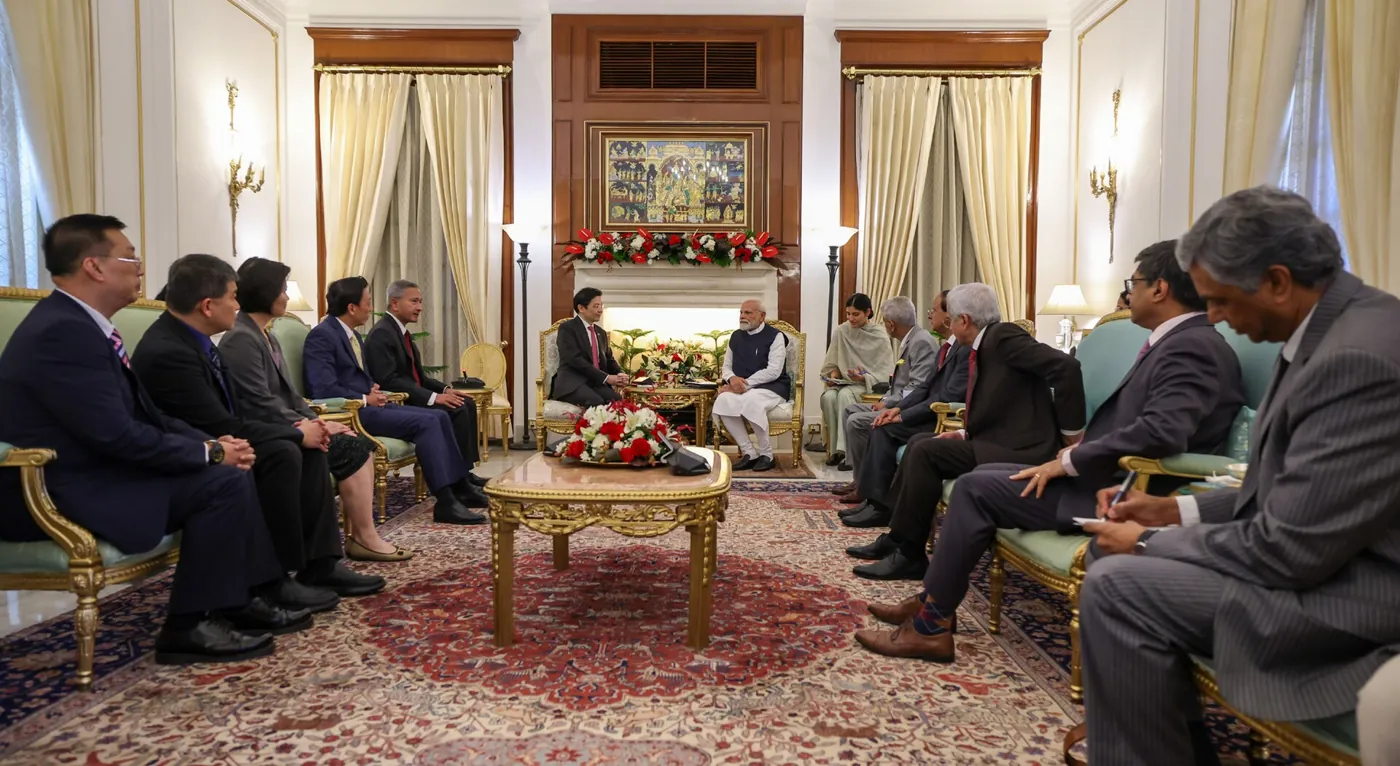
Hyderabad House: The Delhi venue of the negotiations, shown in a later photograph rather than a photograph of the signing.
Credit: Prime Minister’s Office, Government of India · CC BY 4.0 · source
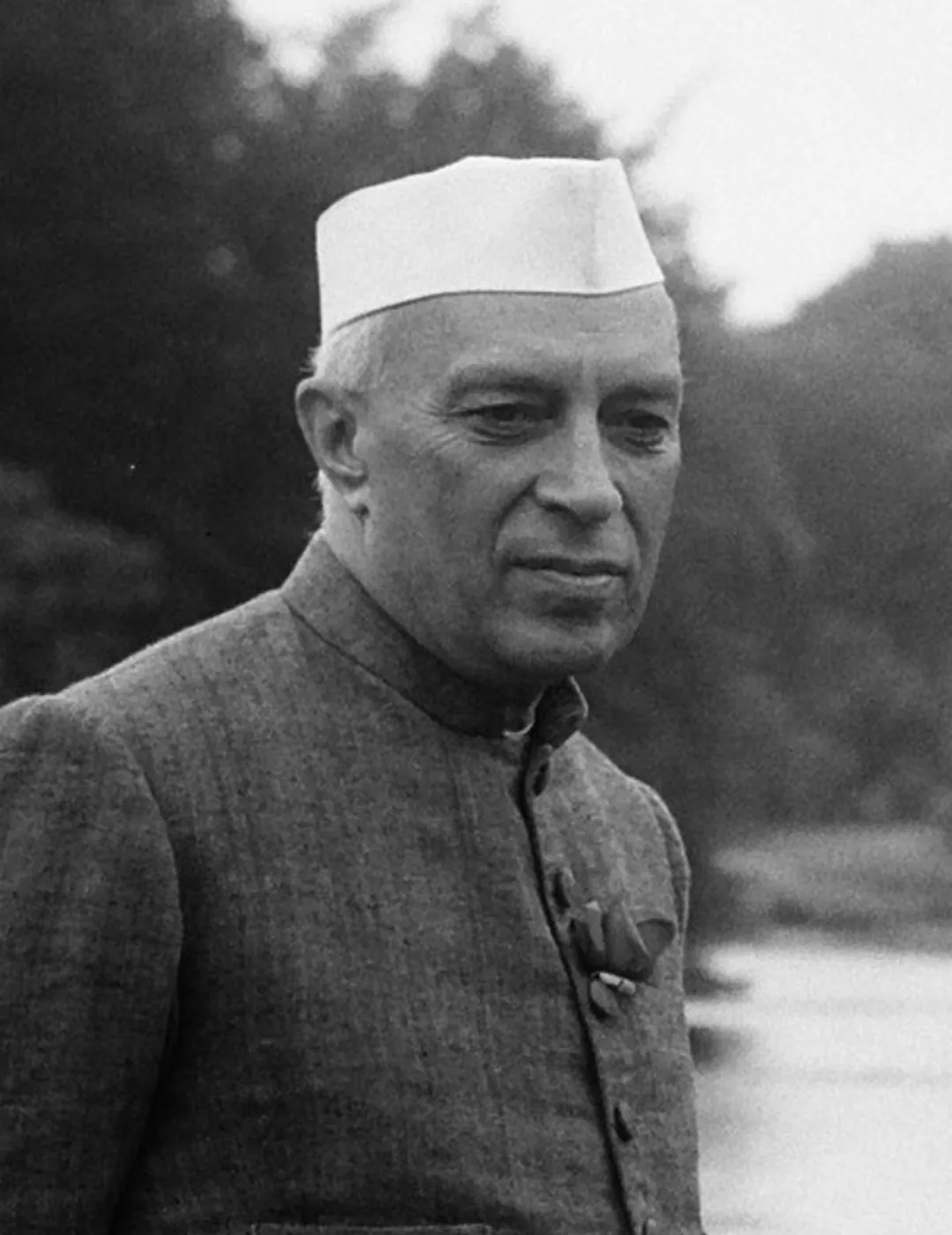
Jawaharlal Nehru: Prime Minister during the negotiations and formation of Andhra Pradesh.
Credit: Harry Pot · CC0 · source
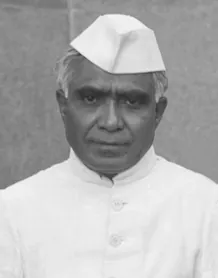
Burgula Ramakrishna Rao: Hyderabad State’s Chief Minister and a Telangana signatory.
Credit: Photo Division, Government of India · Public domain · source
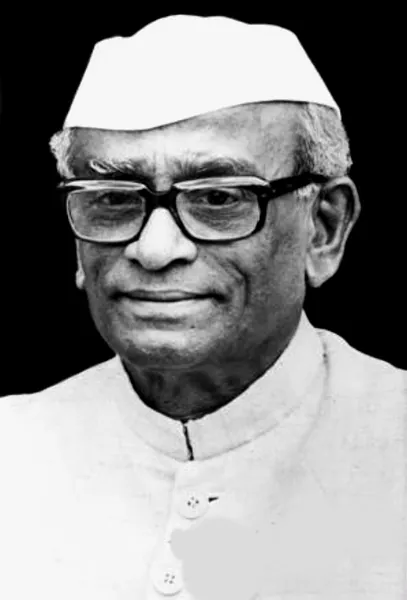
Neelam Sanjiva Reddy: Andhra signatory who became the enlarged state’s first Chief Minister.
Credit: Bhavanajagat , Neelam Sanjiva Reddy · CC BY-SA 4.0 · source
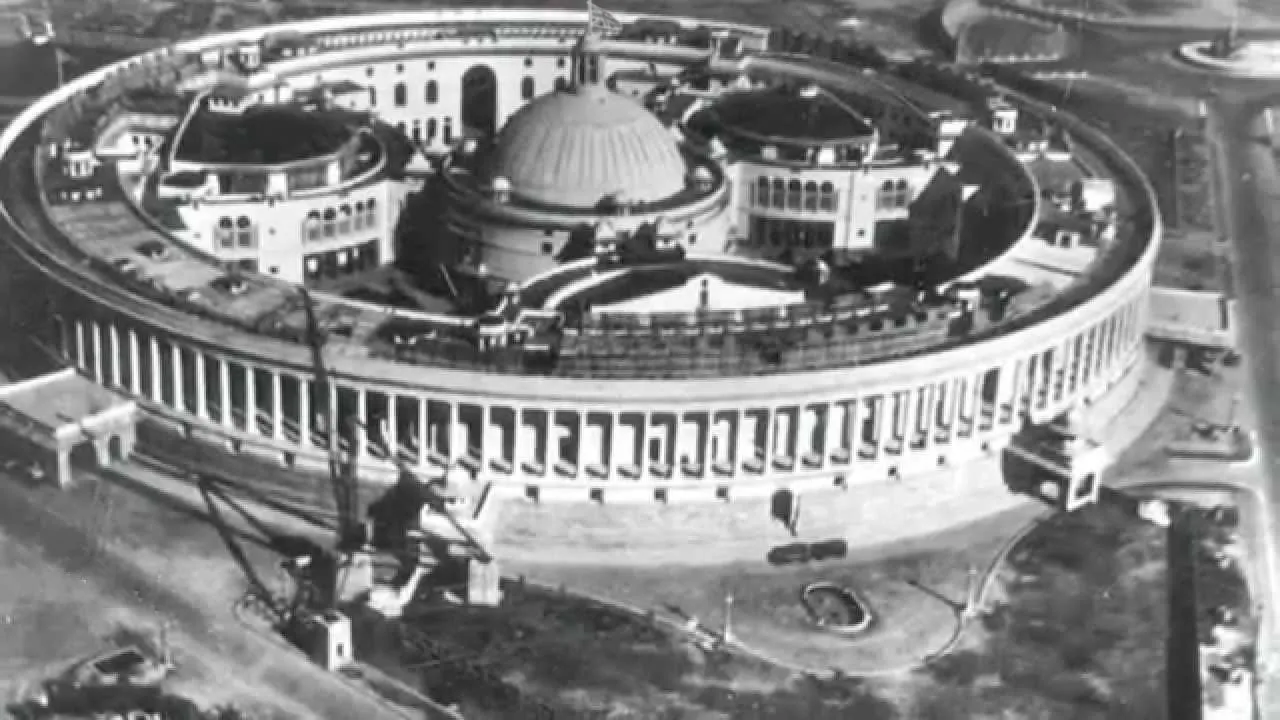
The Union safeguards note on Telangana was placed before Parliament here in 1956.
Credit: British India · CC0 · source
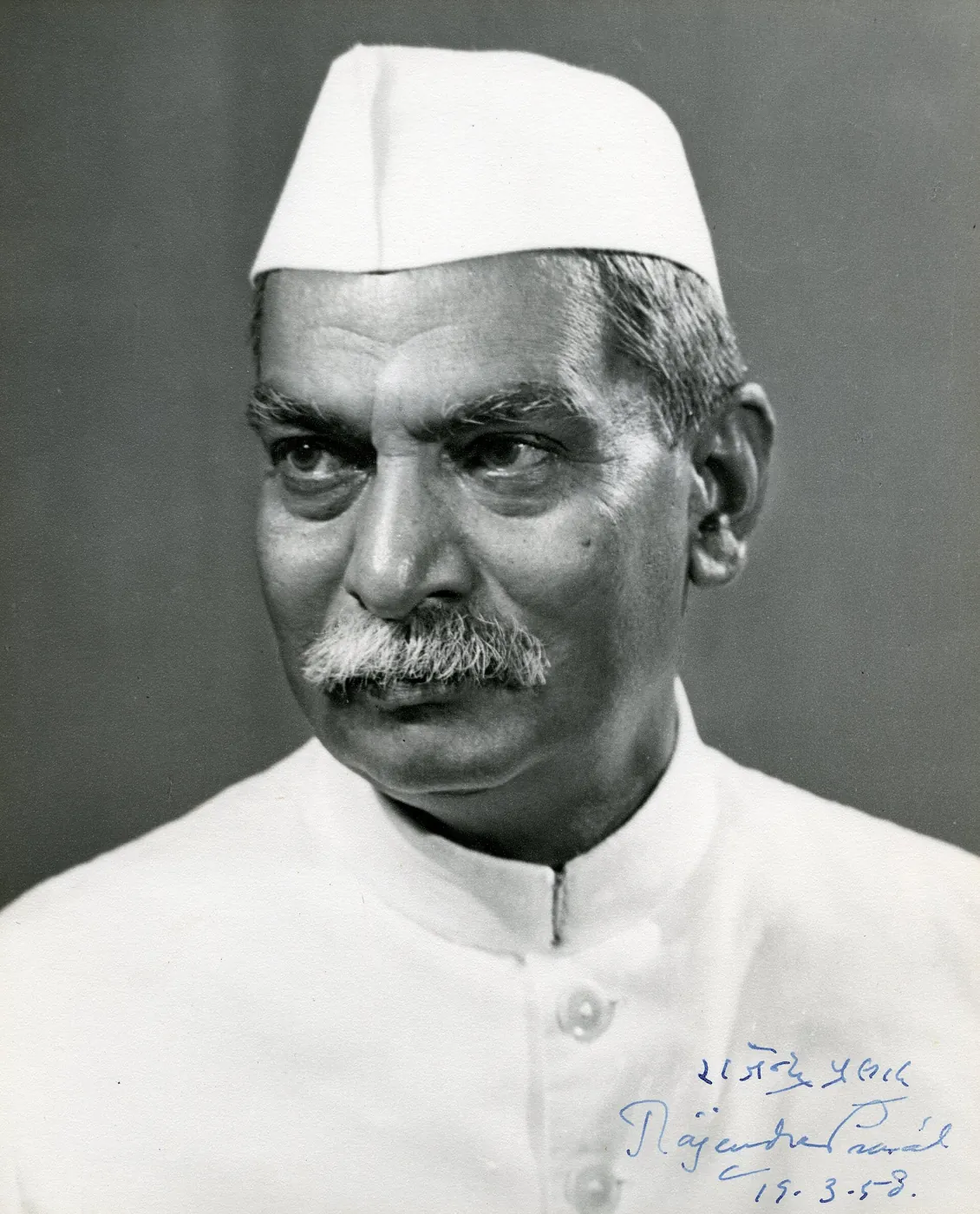
Rajendra Prasad: President during the Seventh Amendment and the 1958 Regional Committee Order.
Credit: Archives New Zealand from New Zealand · CC BY-SA 2.0 · source
1. Why safeguards became the price of immediate merger
The 1956 bargain emerged from a choice between immediate linguistic union and a period of separate regional consolidation. Andhra State already existed, while Telangana remained within multilingual Hyderabad State. The SRC recognised advantages in a larger Telugu-speaking state but worried about unequal educational and administrative starting points. It preferred a separate Telangana unit initially, leaving later unification dependent on a two-thirds legislative decision after elections expected around 1961. The Gentlemen’s Agreement provided a political alternative: attempt immediate merger while protecting the weaker region through explicit undertakings.
The eight representatives who negotiated at Hyderabad House on 20 February 1956 were not conducting a referendum. Telangana’s delegation comprised Burgula Ramakrishna Rao, K. V. Ranga Reddy, Marri Chenna Reddy and J. V. Narsinga Rao; Andhra’s comprised Bezawada Gopala Reddy, Neelam Sanjiva Reddy, Gouthu Latchanna and Alluri Satyanarayana Raju. Their authority was political and representative, rather than a substitute for legislative state formation. For analysis, ask whether safeguards could make a shared state credible where a common language did not ensure equal capacity to compete.
- Locate the agreement in the debate over immediate versus deferred union.
- Remember the two four-person delegations separately.
- Do not mistake a leadership compact for a direct vote of the population.
Timeline
1 October 1953
Andhra State was established without Telangana, with Kurnool as capital.
1955
The SRC preferred an initial separate Telangana state with a conditional later merger option.
20 February 1956
Regional leaders reached the Gentlemen’s Agreement in New Delhi.
10 August 1956
The Union safeguards note was placed before the Lok Sabha.
1 November 1956
Andhra Pradesh was formed; the first ministry did not include the promised Telangana Deputy Chief Minister.
1 February 1958
The Presidential Regional Committee Order created the regional legislative mechanism.
13 March 1958
The state Gazette reproduced the central notification with procedural modifications.
1959
Rules under the Public Employment Act prescribed a fifteen-year residence qualification for specified Telangana posts.
1960–1962
K. V. Ranga Reddy served as Deputy Chief Minister under D. Sanjivayya.
22 April 1969
The Union appointed the Bhargava Committee to determine Telangana surpluses.
7 March 1970
The committee’s remit and financial scrutiny were enlarged by Presidential amendment.
1971–1973
P. V. Narasimha Rao headed united Andhra Pradesh.
1973–1974
The Six-Point Formula and subsequent constitutional settlement displaced the earlier safeguard framework.
2. Reading the political compact and its legal translation
The agreement should be treated as a set of political commitments that required implementation through several channels. Its text did not itself appropriate money, amend recruitment law or create a constitutionally autonomous Telangana administration. The Union placed a safeguards note before the Lok Sabha on 10 August 1956, but tabling a statement was not equivalent to enacting the entire bargain. The States Reorganisation Act supplied the territorial settlement, while the Seventh Amendment substituted Article 371 and enabled the President to establish a regional legislative mechanism through an order.
This layered legal character explains why a promise could be politically significant yet lack a direct remedy in its original wording. Cabinet-sharing assurances depended heavily on political practice; committee powers depended on the terms of the Presidential Order; employment protections involved separate statutes, rules and judicial interpretation. The common reproduced February document records fourteen agreed points, followed by two subsequently discussed questions concerning the state’s name and a High Court bench. Calling all sixteen items settled safeguards removes an important distinction between an agreement and a record of continuing disagreement.
- Identify the legal instrument before making an enforceability claim.
- Distinguish the Union safeguards note from parliamentary enactment.
- Keep fourteen agreed points separate from the two unresolved questions.
How a safeguard dispute becomes a legitimacy crisis
- 1. Merger joins regions with unequal starting conditions.
- 2. Leaders negotiate protections to secure confidence.
- 3. Implementing instruments narrow or leave ambiguity in the bargain.
- 4. Appointments and accounts produce disputes that lack trusted remedies.
- 5. Regional scrutiny supplies evidence but does not guarantee correction.
- 6. Demands shift from better implementation towards a different constitutional settlement.
3. Resources and opportunity: finance, colleges and public employment
The financial undertaking sought to reserve Telangana’s remaining income for its development after proportionate contributions to common administration. It therefore protected a calculated balance rather than every rupee of gross regional receipts. Review after five years, and possible continuation for another five at the wish of Telangana legislators, made monitoring central to the design. Without agreed attribution of shared expenses and credible information on development outlays, the clause could not produce a mutually trusted answer. Its administrative demands were substantial even though its political principle appeared straightforward.
Education and employment protections addressed the opportunity side of regional inequality. The agreement sought to secure existing Telangana educational facilities and improve them, offering local admission protection or one-third statewide access, whichever benefited Telangana students more. These were alternatives, not automatically cumulative entitlements. Future service recruitment was linked to regional population, while unavoidable retrenchment was to be proportionate. An answer should distinguish access to new posts from the treatment of staff already in service, and access to institutions from control over the education sector as a whole.
- Define surplus after agreed charges, not as gross revenue.
- The finance review period differed from the institutional review period.
- Separate admission alternatives, recruitment shares and retrenchment protections.
| Field | 1956 assurance | Implementation issue or distinction |
|---|---|---|
| Finance | Regional income balance for Telangana development | Agreed accounting and expenditure attribution were indispensable. |
| Education | Protect local facilities or secure advantageous statewide access | Admissions protection differed from control of the whole higher-education sector. |
| Language | Preserve Urdu temporarily; defer the Telugu test | Transition periods should not be confused with permanent language exclusion. |
| Residence | Domicile protection, with twelve years given illustratively | Inherited Mulki and later residence rules used a different legal framework and fifteen-year condition. |
| Regional body | Statutory Council with twenty elected members plus ministers | The 1958 body was an Assembly committee with a narrower remit. |
| Executive share | 60:40 cabinet composition and important portfolios | Numbers, departmental authority and leadership pairing were separate safeguards. |
| CM–Deputy CM | Leaders from opposite regions | The deputy office was omitted initially and applied intermittently. |
| Employment | Population-based recruitment and protection against unequal retrenchment | Recruitment, integration, promotion and pay required different rules. |
4. Language, domicile and agricultural land
Transitional language protection reflected differences between the inherited administrations. Urdu’s existing position in Telangana’s administrative and judicial structures was to continue for five years, followed by regional review. Knowledge of Telugu was not to be insisted on at recruitment, but a prescribed test was to be passed within two years after appointment. The purpose was adjustment without an immediate barrier to entry. Neither clause made Urdu the exclusive language of the whole new state, nor did the agreement permanently remove language qualifications from government employment.
The domicile and land provisions require especially careful reading. The February text suggested a residence rule, using twelve years illustratively, whereas the inherited Mulki framework and the later 1959 residence rules involved a fifteen-year condition. These figures do not describe a single unchanged provision or the universal lifespan of an Act. Agricultural land sales in Telangana were assigned to regional control under the proposed Council. That political assurance cannot, without reference to applicable law and transaction records, establish either an absolute prohibition on outside purchasers or the illegality of every subsequent sale.
- Distinguish a residence qualification from the duration of a safeguard.
- Do not convert regional land supervision into a blanket ban.
- Use the language clauses to explain a managed administrative transition.
5. The promised Council and the ministry safeguards
The proposed Regional Council was intended to give Telangana an institutional voice in development, irrigation, industry and recruitment relating to the region. Its twenty elected places followed a nine-plus-six-plus-five arrangement: district Assembly representatives, members of the Assembly or Parliament selected by Telangana legislators, and persons outside the Assembly. Telangana ministers were also to belong, and the Telangana Chief Minister or Deputy Chief Minister would chair it. Differences with the state government were to go to the Government of India, making the proposed design more than an ordinary informal consultative meeting.
Executive influence was protected through another set of assurances. The cabinet was to follow Andhra–Telangana proportions of sixty to forty, with a Muslim minister in the Telangana contingent. Telangana ministers were to receive two of five specified important portfolios, while the Chief Minister and Deputy Chief Minister would come from opposite regions. These provisions show that the negotiators understood representation as authority as well as numbers. A ministry might satisfy a headcount without providing important departmental influence, and an occasional deputy appointment could not establish continuous adherence to the pairing convention.
- Do not apply the cabinet ratio to Assembly seats or all public jobs.
- Council composition differed from later committee membership.
- Assess offices, portfolios and continuity separately.
6. The Regional Committee: a real institution with a narrower remit
The Andhra Pradesh Regional Committee Order was issued on 1 February 1958 under Article 371(1) as it then stood. The state Gazette reproduced the notification on 13 March with procedural modifications. The body operated within the common Assembly and drew its regional representation from Telangana legislators, rather than reproducing the Council’s elected-member formula. K. Achyuta Reddy is identified as its first chairman. Scheduled matters included local government, health, school education, admissions, prohibition, agricultural land sales, small industry, agriculture and planning within the state framework, not unrestricted jurisdiction over regional administration.
The limits mattered as much as the list. General service matters were missing initially, and financial restrictions constrained the scope for proposals. The committee could scrutinise and recommend, but did not possess a separate treasury or government. Following the 1969 crisis, the Presidential amendment of 7 March 1970 added specified employment matters, university education and medium and heavy industry. Regional financial columns and progress reporting improved oversight. The Governor’s role in disagreements and reporting connected the arrangement to constitutional supervision, without turning the committee into an autonomous regional legislature.
- Use the historical Article 371(1), not Article 371D, for 1958.
- Separate the central Order date from state Gazette reproduction.
- Explain the difference between scrutiny and independent executive power.
7. The record: disputed surpluses, services and representation
The surplus controversy joined an accounting problem to the credibility of the development promise. In Vithal’s retrospective comparison, Kumar Lalit’s estimate for 1956–1968 is about ₹34.09 crore, often rounded to ₹34.10 crore, while the Bhargava exercise gives ₹28.34 crore. Presenting an approximate ₹28–34 crore range with attribution is safer than treating either number as an uncontested transfer outside Telangana. Justice Vashisht Bhargava’s committee was appointed on 22 April 1969. Differing treatment of shared costs and capital expenditure explains why an agreed method was essential to any financial remedy.
Employment discontent also contained several questions rather than one. Local eligibility concerned entry into covered posts; service integration required the equation of posts and preparation of seniority lists; promotions and pay followed further rules. Teachers’ grievances connected these administrative questions to educational expansion. The committee repeatedly complained about recruitment implementation and raised integrated seniority. At executive level, the first ministry’s omission of a Telangana Deputy Chief Minister was a visible departure. Ranga Reddy’s service under Sanjivayya and later restorations showed intermittent compliance, not an unbroken convention. P. V. Narasimha Rao’s appointment in 1971 changed representation without automatically settling the other disputes.
- Attribute competing fiscal estimates and never add them together.
- Recruitment, promotion, pay and integration need distinct evidence.
- Avoid unsupported aggregate claims about teachers or disputed appointments.
8. Historical assessment and an answer-writing framework
The Srikrishna report preserves more than one evaluation of the Regional Committee. Vithal’s reading emphasised professional expenditure scrutiny and reports comparable in some respects to financial committees of a legislature. Other assessments stressed narrow powers, uneven vigilance and political dependence. These positions are not resolved by calling the institution either wholly successful or wholly useless. It could document grievances and secure some scrutiny while failing to guarantee implementation or public confidence. Periodisation is necessary because the expanded post-1970 remit differed materially from the earlier arrangement.
The wider lesson concerns the credibility of negotiated federal accommodation. Andhra Pradesh’s formation on 1 November 1956 created a common territorial unit, but did not erase unequal educational opportunities or administrative legacies. When visible power-sharing promises and technical employment or budget safeguards appeared unreliable, demands for implementation could become demands for a different constitutional future. For a mains conclusion, link confidence to precise legal powers, transparent regional accounts, independent review and effective remedies. The later settlement should be noted as an outcome of accumulated conflict, not projected backwards as the legal basis of the 1956 compact.
- Organise answers as promise, instrument, evidence, consequence and remedy.
- Use both institutional achievements and limits in evaluation.
- Avoid collective blame and distinguish contemporary allegations from established departures.
Real-world case studies
A promised deputy and the credibility of consent
The first Andhra Pradesh ministry omitted a Telangana Deputy Chief Minister despite the cross-regional pairing assurance. K. V. Ranga Reddy’s later appointment under Sanjivayya showed that implementation was possible, but discontinuity made the safeguard dependent on political choice. The case illustrates how an easily visible departure can undermine confidence beyond the immediate office concerned.
Surpluses: arithmetic is not enough
Vithal’s comparative account gives approximately ₹34.09 crore for Kumar Lalit and ₹28.34 crore for Bhargava for 1956–1968. The difference is not a reason to add the figures or to select one without explanation. It demonstrates why common-cost allocation, capital expenditure and the accounting period must be stated before using a fiscal estimate as evidence of a broken development promise.
Stronger scrutiny after conflict
The 1970 expansion added employment matters, university education and larger industry to the Regional Committee’s scope and improved regional budget presentation. These changes indicate institutional learning, but their timing also exposed earlier limitations. The case supports a balanced argument: the committee was neither a sovereign regional government nor an entirely empty institution.
Previous year questions
No source-linked PYQ is available here yet. Use the practice questions below.
Practice questions
Practice MCQ 1 · Easy
Which event occurred first?
- Formation of Andhra Pradesh
- The Gentlemen’s Agreement
- The Regional Committee Order
- The 1970 expansion of committee powers
Practice MCQ 2 · Easy
Which pair correctly identifies the pre-merger Chief Ministers among the signatories?
- Burgula Ramakrishna Rao—Hyderabad State; Bezawada Gopala Reddy—Andhra State
- Neelam Sanjiva Reddy—Hyderabad State; Burgula Ramakrishna Rao—Andhra State
- Govind Ballabh Pant—Andhra State; Bezawada Gopala Reddy—Hyderabad State
- K. Achyuta Reddy—Andhra State; J. V. Narsinga Rao—Hyderabad State
Practice MCQ 3 · Moderate
Consider the original cabinet assurances: 1. Telangana would receive forty per cent of cabinet places. 2. The Telangana contingent would include a Muslim minister. Which is correct?
- 1 only
- 2 only
- Both 1 and 2
- Neither 1 nor 2
Practice MCQ 4 · Moderate
Which constitutional provision supported the 1958 Regional Committee Order?
- Article 371D as it stands today
- The then Article 371(1)
- Article 368 alone
- Article 280
Practice MCQ 5 · Difficult
Which distinction about employment safeguards is accurate?
- The twelve-year example and fifteen-year condition belong to different documents.
- The compact permanently waived the Telugu test.
- The proposed Regional Council independently decided every pay appeal.
- Residence qualification and the life of a statute are the same period.
Practice MCQ 6 · Moderate
What is the soundest interpretation of rival Telangana surplus estimates?
- They should always be added together.
- They establish identical annual losses.
- Their source, period and accounting method must be specified.
- They automatically prove every agricultural land sale unlawful.
Mains practice · The Gentlemen’s Agreement attempted to reconcile linguistic unity with regional inequality. Discuss.
- Explain the distinct Andhra and Telangana administrative legacies.
- Locate the pact against the SRC’s conditional later-union option.
- Organise safeguards into resources, opportunities and political influence.
- Separate the political compact from the legal instruments that followed.
- Conclude with the conditions needed for credible consent within a larger state.
Mains practice · Evaluate the Telangana Regional Committee as an instrument of regional protection.
- Contrast the proposed Council with the 1958 Assembly committee.
- Identify the original subject and financial limitations.
- Explain the value of reports, expenditure scrutiny and a regional legislative voice.
- Assess the enlarged remit and budget provisions of 1970.
- Distinguish official retrospective evidence from differing scholarly judgments.
Mains practice · How did finance and employment disputes erode confidence in the 1956 settlement?
- State the surplus and recruitment assurances precisely.
- Explain the need for consistent revenue and capital accounting.
- Distinguish local recruitment from service integration, seniority, promotions and pay.
- Connect committee limitations and delayed remedies to public mistrust.
- Avoid unverified totals and collective blame; conclude with institutional accountability.
Further reading
Preparing for TGPSC Group 1 or Group 2? See the TGPSC Groups coaching course at Pragnya IAS Academy for fees, batches and registration.
Long study hours taking a toll? Try the free breathing exercise and self check-in in Pragnya’s student wellness programme for UPSC aspirants.