
India–Nepal Engagement: Connectivity, Hydropower and Disaster Diplomacy
Revise the static topic: UPSC International Relations notes
In short: India and Nepal have intensified diplomatic engagement ahead of Prime Minister Balendra Shah’s reported visit to India from November 22 to 24, 2026. Foreign Secretary Vikram Misri’s Kathmandu meetings focused on potential outcomes in connectivity, hydropower, trade and other areas, while Nepal acknowledged India’s flood assistance. The visit offers an opportunity to strengthen Neighbourhood First through practical cooperation while managing the unresolved boundary dispute.
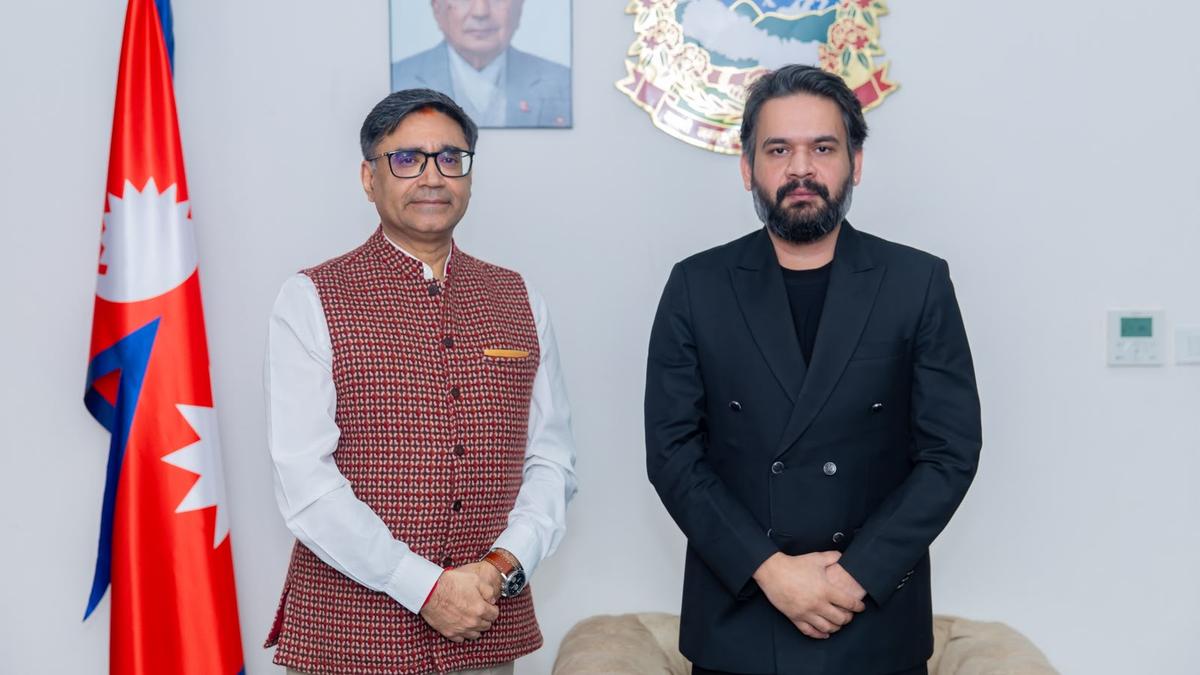
Photo from the source report: India–Nepal Engagement: Connectivity, Hydropower and Disaster Diplomacy
Image: The Hindu
Why in news
Foreign Secretary Vikram Misri met Prime Minister Balendra Shah in Kathmandu on November 5, 2026, during a preparatory visit. The Indian Express reports that Shah’s forthcoming India visit will be his first bilateral visit since assuming office in March.
3 days
Reported duration of Shah’s India visit
2 days
Misri’s preparatory Nepal visit
Background
India and Nepal share an open border, extensive social and cultural links, and interconnected Himalayan river systems. Nepal is landlocked, making transport access and transit arrangements central to its economic relations with India. The Treaty of Peace and Friendship provides an important historical framework for bilateral ties. Cooperation spans trade, development, energy and people-to-people exchanges, but boundary disagreements and sensitivities concerning sovereignty require sustained diplomatic management. India’s Neighbourhood First approach provides the policy context for prioritising such engagement.
What has happened—and what remains prospective
Misri’s engagements covered Nepal’s political leadership, foreign ministry and economic ministries. Talks with Foreign Secretary Amrit Bahadur Rai reviewed the partnership, while discussions with Prime Minister Shah examined possible outcomes and initiatives for the forthcoming India visit.
The Indian Express reports that Shah responded positively to Prime Minister Narendra Modi’s invitation and sought a result-oriented visit. This indicates a renewed emphasis on high-level engagement after earlier diplomatic hesitation.
The supplied reports describe preparatory consultations, not concluded summit agreements. They do not announce new hydropower contracts, connectivity projects, financial commitments or a boundary settlement.
- Established areas discussed included commerce, development cooperation, hydropower, physical connectivity, energy and people-to-people ties.
- Water resources, trade, transit and aviation were also identified as subjects of regular bilateral meetings.
- Digital connectivity and artificial intelligence featured as emerging areas of discussion.
Infographic
Political trust
Respect sovereignty and sustain high-level dialogue.
Connectivity
Join physical links with smoother trade and transit procedures.
Hydropower
Align generation, transmission, trade and safeguards.
Disaster resilience
Move from emergency relief towards shared preparedness.
Dispute management
Continue boundary dialogue without freezing wider cooperation.
AI-assisted infographic by Pragnya IAS Academy, based on the cited sources.
Neighbourhood First: credibility through delivery and respect
A first bilateral visit to India would carry political significance, signalling the importance Nepal’s leadership attaches to the relationship. For India, the opportunity is to demonstrate that Neighbourhood First produces visible benefits rather than merely frequent diplomatic exchanges.
The relationship must be assessed through Nepal’s development priorities and sovereign choices, not only through strategic competition. Reliable project execution, respectful consultation and accessible cross-border services can build more durable goodwill than symbolic announcements.
- Translate high-level engagement into jointly agreed deliverables with clear institutional responsibility.
- Maintain parliamentary, official and societal channels so that cooperation does not depend solely on individual leaders.
- Avoid interpreting closer engagement as evidence that all political differences have been resolved.
Connectivity and hydropower: building productive interdependence
For landlocked Nepal, improved physical connectivity and smoother transit can widen market access and reduce logistical uncertainty. For India, better links can support border-region commerce and deepen regional economic integration. Infrastructure must therefore be accompanied by efficient customs procedures, dependable maintenance and coordination among implementing agencies.
Hydropower cooperation can connect Nepal’s river-based generation potential with electricity markets across the border. However, generation projects alone are insufficient: transmission capacity, predictable trading arrangements, financing and environmental safeguards must develop together.
Digital connectivity could complement physical infrastructure, but the reports identify it only as a discussion area. Any future initiatives should address interoperability, cybersecurity and data-governance concerns rather than treating technology as an automatic solution.
- Assess connectivity by actual movement of goods and people, not only by completion of infrastructure.
- Link hydropower planning with transmission readiness, seasonal electricity availability and local benefit-sharing.
- Incorporate cumulative river-basin impacts and disaster resilience into infrastructure appraisal.
Disaster assistance and the boundary question: cooperate without conflating
Nepali leaders acknowledged India’s humanitarian and technical assistance following the Bhotekoshi floods. Such assistance illustrates how geographic proximity and operational capacity can make India a valuable emergency partner. The next policy step should be to move from episodic relief towards jointly designed preparedness.
Flood forecasting, timely hydrological information, resilient infrastructure and agreed emergency procedures could strengthen cross-border disaster cooperation. These are recommended priorities, not arrangements newly announced in the supplied reports.
The Lipulekh–Kalapani–Limpiyadhura dispute remains a political constraint. The Hindu reports that Shah had sought involvement by the United Kingdom and China, whereas India favours bilateral resolution. Boundary dialogue should continue through agreed channels without making all development cooperation contingent on an immediate settlement.
- Distinguish routine border management from the negotiation of territorial claims.
- Keep humanitarian assistance needs-based and sensitive to the recipient country’s consent.
- Use technical cooperation to build confidence without suggesting that it settles sovereignty questions.
| Area | What the sources establish | Recommended priority |
|---|---|---|
| Connectivity and trade | Physical connectivity, trade, transit and aviation are part of bilateral engagement. | Combine infrastructure delivery with smoother border procedures and reliable maintenance. |
| Hydropower and energy | Hydropower, energy and water resources featured in discussions. | Coordinate generation, transmission, trading arrangements and environmental safeguards. |
| Disaster cooperation | Nepal acknowledged India’s humanitarian and technical flood assistance. | Develop shared preparedness, timely warning dissemination and emergency protocols. |
| Boundary issues | Territorial differences persist, and India favours bilateral resolution. | Sustain diplomatic dialogue while protecting cooperation in other sectors. |
| Digital cooperation | Digital connectivity and artificial intelligence were discussed as emerging areas. | Identify feasible applications with cybersecurity and data-governance safeguards. |
- 1. Jointly identify vulnerable river stretches, settlements and critical infrastructure.
- 2. Agree on timely exchange of relevant rainfall and river-level information.
- 3. Translate forecasts into actionable local warnings and evacuation plans.
- 4. Pre-arrange assistance requests, border clearances and emergency coordination.
- 5. Conduct joint reviews and strengthen resilient reconstruction.
September 2025
According to The Hindu, a Gen-Z uprising led to the ouster of Nepal’s previous government.
March 2026
Balendra Shah assumed office as Nepal’s Prime Minister.
June 2026
The Indian Express reports that ruling-party leader Rabi Lamichhane visited New Delhi and met Indian leaders.
August 2026
Nepal experienced destructive flash floods; Shah subsequently thanked India for its prompt assistance.
September 2026
Finance Minister Swarnim Wagle visited India as diplomatic engagement gathered momentum.
November 4–5, 2026
Misri held preparatory discussions in Kathmandu and met Prime Minister Shah.
November 22–24, 2026
Reported schedule for Shah’s forthcoming India visit; visit outcomes remain prospective.
Significance, challenges & way forward
Significance
- The proposed visit offers a chance to convert renewed political engagement into practical outcomes under Neighbourhood First.
- Improved connectivity can support Nepal’s market access and economic activity in adjoining Indian regions.
- Hydropower cooperation can align Nepal’s development opportunities with cross-border electricity needs.
- Disaster assistance demonstrates the human-security value of close neighbourhood relations.
- Sustained engagement can help prevent boundary disagreements from overwhelming the wider partnership.
Challenges
- Boundary claims and sovereignty sensitivities can constrain political space for compromise.
- A broad summit agenda may generate expectations that exceed implementation capacity.
- Hydropower cooperation requires coordination across financing, transmission, trading rules and environmental appraisal.
- Himalayan infrastructure must account for flood, landslide and other terrain-related risks.
- Digital cooperation requires compatible standards and credible safeguards for sensitive information.
- Disaster cooperation can remain reactive unless technical information reaches vulnerable communities in time.
Way forward
- Prioritise a manageable set of mutually agreed outcomes rather than an expansive list of announcements.
- Assign clear implementing responsibilities and jointly review progress on agreed projects.
- Develop connectivity as an integrated package of infrastructure, procedures and maintenance.
- Align hydropower development with transmission planning, transparent arrangements and community safeguards.
- Institutionalise consent-based disaster preparedness, warning dissemination and emergency coordination.
- Maintain bilateral boundary dialogue while preserving cooperation in trade, energy and humanitarian assistance.
- Support parliamentary and people-to-people engagement to broaden the constituency for stable relations.
Key terms
- Neighbourhood First
- India’s policy approach of prioritising engagement and cooperation with neighbouring countries.
- Transit
- Movement of goods or people through another country to reach a destination.
- Cross-border electricity trade
- Exchange of electricity across national boundaries through interconnected grids and agreed commercial rules.
- Disaster diplomacy
- The influence of disaster-related assistance and cooperation on relations between states.
- River-basin approach
- Planning water use, infrastructure and risk management across an interconnected river system.
- Border management
- Administration of cross-border movement and security, distinct from settling disputed territorial claims.
Link with static syllabus
Prelims practice MCQs
Q1. With reference to the India–Nepal engagement reported in November 2026, consider the following statements: 1. Hydropower and physical connectivity were among the subjects discussed. 2. Digital connectivity and artificial intelligence were identified as emerging areas of engagement. 3. A final boundary settlement was announced during Foreign Secretary Misri’s visit. Which of the statements given above are correct?
Q2. Consider the following statements about Nepal: 1. Nepal is a landlocked country. 2. Nepal shares land boundaries with India and China. 3. Nepal’s rivers have no hydrological connection with the Ganga basin. Which of the statements given above are correct?
Q3. With reference to cross-border hydropower cooperation, consider the following statements: 1. Electricity generation capacity alone is sufficient for cross-border electricity trade. 2. Transmission infrastructure and agreed trading arrangements are necessary complements to generation. 3. Seasonal river flows can affect hydropower availability. Which of the statements given above are correct?
Q4. Which of the following best distinguishes border management from boundary settlement?
Mains practice questions
GS 2 · 15 marks · 250 words
India–Nepal relations require development interdependence to be combined with sensitivity to sovereignty. Discuss with reference to connectivity, hydropower and cross-border disaster cooperation.
Frequently asked questions
When is Balendra Shah expected to visit India?
The Indian Express reports a visit from November 22 to 24, 2026. As of this edition, the visit and its substantive outcomes remain forthcoming.
Were new hydropower or connectivity agreements signed during Misri’s visit?
The supplied reports describe discussions on cooperation and possible outcomes for Shah’s visit. They do not announce new project agreements or financial commitments.
Why is flood assistance important for India–Nepal relations?
Nepal acknowledged India’s humanitarian and technical assistance after the Bhotekoshi floods. Such cooperation can build trust and provides a basis for deeper preparedness and early-warning coordination.
Has the India–Nepal boundary dispute been resolved?
No settlement is reported in the supplied material. The Hindu states that India favours bilateral resolution of the dispute concerning the Lipulekh–Kalapani–Limpiyadhura area.
Sources
- The Hindu: Foreign Secretary Misri sets stage for Nepal PM’s upcoming India visit
- Indian Express: In first bilateral trip, Nepal PM Balendra Shah to visit India from November 22
- Indian Express: India-Nepal step up engagement ahead of Balen Shah’s maiden visit
Analysis prepared by the Pragnya IAS Academy current-affairs desk with AI assistance from the cited reports. Verify figures with the original sources.
Turn current affairs into marks
Join Pragnya IAS Academy's mentorship for daily answer-writing evaluation on stories like this — classroom programmes from a trusted name in IAS coaching in Hyderabad.