
India’s COP31 Stand on EU CBAM: Climate Equity, Trade and Energy Security
Revise the static topic: UPSC Environment notes
In short: India reportedly plans to oppose the European Union’s Carbon Border Adjustment Mechanism at COP31 while maintaining that fossil fuels remain necessary for its energy needs. The dispute centres on whether border carbon pricing prevents carbon leakage or shifts an inequitable share of transition costs onto developing economies.
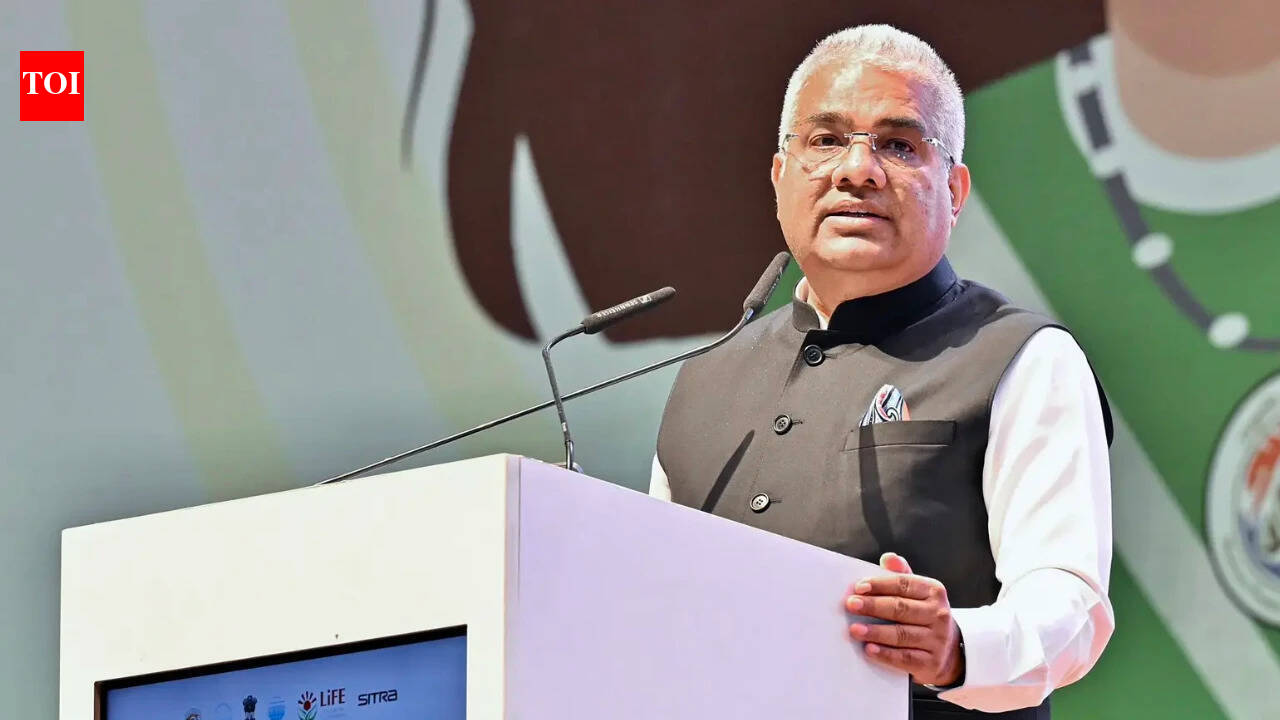
Reference image accompanying reporting on India’s planned opposition to the EU’s Carbon Border Adjustment Mechanism at COP31, a dispute over climate equity, trade and energy security.
Image: Times of India
Why in news
The supplied Times of India headline reports India’s intention to oppose the EU carbon tax at COP31 and defend fossil-fuel use for its energy needs. The supplied extract does not provide the detailed negotiating position, official statements or estimates of economic impact.
Background
The UN Framework Convention on Climate Change recognises equity and common but differentiated responsibilities and respective capabilities as foundations of climate cooperation. The Paris Agreement carries these principles forward in the light of different national circumstances, with countries communicating nationally determined contributions. The EU’s Carbon Border Adjustment Mechanism links the carbon cost of covered imports to its domestic emissions-pricing framework. It seeks to address carbon leakage, but also raises questions about development space, market access and the distribution of decarbonisation costs.
What India’s reported position means
The reported position brings together two concerns: opposition to a unilateral border carbon measure and preservation of flexibility in India’s energy transition. It should not be read as a rejection of climate action or as evidence that a formal trade dispute has already been initiated.
COP31 provides a platform to raise questions of equity, development space and international climate cooperation. It is not a forum that can adjudicate a WTO dispute or directly repeal EU legislation.
- The immediate issue is a reported negotiating intention, not an agreed COP outcome.
- India’s diplomatic opposition and any legal challenge would involve distinct processes.
- The source does not establish a sector-wise impact estimate, a compensation demand or a proposed exemption.
Infographic
Climate equity
Recognise unequal responsibilities, capabilities and transition costs.
Trade fairness
Seek transparent, non-discriminatory design and implementation.
Energy security
Align decarbonisation with reliability, affordability and development.
Industrial readiness
Improve emissions data, verification and low-emissions production.
International support
Connect transition ambition with finance and technology access.
AI-assisted infographic by Pragnya IAS Academy, based on the cited sources.
How CBAM works and why the EU uses it
CBAM is designed to attach a carbon cost to emissions embedded in covered goods imported into the EU. Its pricing logic is linked to the EU Emissions Trading System, which places a carbon constraint on covered domestic production.
The underlying concern is carbon leakage: production may shift to jurisdictions with weaker carbon constraints, or domestic output may be displaced by more emissions-intensive imports. The EU’s rationale is to reduce this incentive and prevent domestic climate policy from being undermined.
Calling CBAM a carbon tax is convenient shorthand, but it is more precisely a border carbon adjustment involving emissions accounting and compliance obligations. EU importers have the formal compliance role, while foreign producers may face demands for emissions data, cleaner production or price concessions.
- Embedded emissions concern emissions associated with producing a good, not merely transporting it across a border.
- The EU ETS is a cap-and-trade system, rather than a conventional fixed-rate carbon tax.
- Under CBAM rules, a qualifying carbon price effectively paid in the country of origin can be relevant to the adjustment.
Climate equity and the limits of unilateral pricing
The equity objection is that a common border carbon cost operates across economies with unequal historical responsibilities, financial resources, technology access and development needs. Formal equality at the border can therefore produce unequal adjustment burdens.
CBDR-RC supports differentiation in climate responsibilities and capabilities. However, it does not automatically exempt developing-country exports from every foreign environmental measure. Conversely, an environmental objective does not by itself establish that a trade measure is equitable or legally valid.
The central policy test is whether CBAM rewards genuine emissions reductions without imposing avoidable barriers, and whether its implementation is accompanied by credible support for developing-country decarbonisation.
- Historical responsibility matters when assessing who should bear transition costs.
- Verified producer-level emissions can better distinguish cleaner firms from national averages.
- Climate finance, technology cooperation and recognition of credible domestic efforts can reduce the equity deficit.
Trade competitiveness and India’s energy transition
Indian suppliers of covered goods may face both carbon-related costs and the administrative burden of measuring, reporting and verifying emissions. Buyers may transmit these costs through lower procurement prices or more demanding supply conditions. The extent of the impact depends on product coverage, actual emissions intensity, applicable rules and firms’ ability to decarbonise.
India’s transition must balance reliable electricity, affordable energy, industrial development and emissions reduction. Fossil-fuel dependence in existing infrastructure cannot be eliminated merely through a trade signal; cleaner electricity, grids, storage, industrial innovation and affordable capital must become available.
The strategic response should therefore combine resistance to inequitable implementation with domestic competitiveness reforms. An open-ended defence of emissions-intensive production would risk carbon lock-in, while an externally imposed transition pace could create affordability and employment pressures.
- Smaller firms can face disproportionate compliance burdens because technical capacity and verification costs are harder to absorb.
- Lower-emissions production can become a source of export competitiveness.
- A just transition must protect affected workers and communities alongside industrial upgrading.
Legal and diplomatic routes must remain distinct
A WTO assessment would examine the measure’s design and application against relevant trade obligations, including non-discrimination. Environmental exceptions may be relevant, but their conditions also matter, including safeguards against arbitrary or unjustifiable discrimination and disguised restrictions on trade.
India can use climate negotiations to strengthen the political case for equity and international support, while using bilateral engagement to address emissions accounting, verification and implementation concerns. Any trade-law claim would require a separate, evidence-based legal assessment.
- CBAM is not automatically WTO-inconsistent simply because it affects developing-country exports.
- Its environmental purpose does not automatically establish WTO compatibility.
- Diplomacy, technical cooperation and legal preparedness should proceed together.
| Issue | EU policy rationale | Concern for India | Balanced response |
|---|---|---|---|
| Carbon leakage | Prevent emissions from shifting outside domestic carbon constraints | Border costs may burden producers with limited transition capacity | Combine credible carbon accounting with transition support |
| Competitiveness | Align carbon-cost exposure of covered imports and domestic production | Indian suppliers may face margin pressure and compliance costs | Improve energy efficiency and access to low-emissions production |
| Emissions verification | Establish the carbon content of covered imports | Complex verification can disadvantage smaller exporters | Build accredited verification capacity and shared technical services |
| Climate differentiation | Apply a product-linked carbon-cost framework | Uniform pricing may overlook unequal responsibilities and capabilities | Seek equitable implementation, finance and technology cooperation |
| Institutional route | Implement an EU climate-related trade measure | Climate and trade rules overlap but have different mandates | Use COP diplomacy, bilateral dialogue and WTO analysis appropriately |
- 1. A covered product is imported into the EU.
- 2. Its embedded emissions are determined under applicable accounting and verification rules.
- 3. The relevant carbon-cost obligation is calculated, including eligible adjustments.
- 4. The EU importer fulfils applicable compliance obligations.
- 5. Purchasing decisions and cost negotiations create incentives for suppliers to reduce emissions.
Significance, challenges & way forward
Significance
- The dispute tests whether climate-related trade measures can reconcile environmental ambition with differentiated development responsibilities.
- It connects export competitiveness with electricity systems, industrial technology and access to finance.
- It highlights the growing interaction between climate institutions and international trade rules.
- It gives India an opportunity to advocate equitable implementation while strengthening domestic low-emissions manufacturing.
Challenges
- Inconsistent emissions data and limited verification capacity can weaken exporters’ ability to demonstrate cleaner production.
- Costly capital and uneven access to low-emissions energy can slow industrial decarbonisation.
- Smaller firms may struggle to absorb recurring measurement and compliance costs.
- Climate diplomacy cannot by itself resolve the legal questions surrounding a trade measure.
- Unqualified opposition may overlook legitimate carbon-leakage concerns, while uncritical acceptance may overlook unequal transition burdens.
Way forward
- Build a product-level evidence base on export exposure, embedded emissions and compliance costs before advancing quantified claims.
- Seek transparent methodologies, fair treatment of verified emissions and recognition of qualifying carbon prices already paid.
- Create shared emissions-accounting and verification support for smaller exporters.
- Prioritise reliable clean electricity, energy efficiency and commercially suitable low-emissions industrial processes.
- Link demands for equity with concrete proposals for affordable finance, technology access and industrial partnerships.
- Maintain a coordinated strategy across climate negotiations, India–EU dialogue and trade-law preparedness.
- Support affected workers and regions so that competitiveness reforms contribute to a just transition.
Key terms
- Carbon Border Adjustment Mechanism
- An EU mechanism designed to apply a carbon cost to embedded emissions in covered imports.
- Carbon leakage
- A shift in production or associated emissions to jurisdictions with weaker carbon constraints in response to climate policy.
- Embedded emissions
- Emissions associated with producing a good, calculated within the boundaries of the applicable methodology.
- CBDR-RC
- Common but differentiated responsibilities and respective capabilities, recognising shared climate duties alongside unequal responsibilities and capacities.
- EU Emissions Trading System
- The EU’s cap-and-trade framework under which covered entities account for emissions through allowances.
- Measurement, reporting and verification
- Processes used to quantify emissions, disclose them consistently and check their reliability.
- Just transition
- A transition towards a sustainable economy that addresses its consequences for workers, communities and vulnerable groups.
Link with static syllabus
Prelims practice MCQs
Q1. With reference to the EU’s Carbon Border Adjustment Mechanism, consider the following statements: 1. It seeks to address carbon leakage associated with differences in carbon constraints. 2. Embedded emissions refer only to emissions from transporting goods across borders. 3. Its carbon-pricing logic is linked to the EU Emissions Trading System. Which of the statements given above are correct?
Q2. Consider the following statements regarding CBDR-RC: 1. It recognises differences in countries’ responsibilities and capabilities. 2. It grants developing-country exports an automatic exemption from all foreign environmental measures. 3. It is relevant to evaluating the distribution of climate-transition burdens. Which of the statements given above are correct?
Q3. Which of the following best describes the institutional distinction between climate negotiations and WTO dispute settlement?
Q4. With reference to emissions trading and border carbon measures, consider the following statements: 1. A cap-and-trade system uses tradable emissions allowances. 2. A border carbon measure’s environmental objective alone conclusively establishes its WTO compatibility. Which of the statements given above is/are correct?
Mains practice questions
GS 3 · 15 marks · 250 words
The EU’s Carbon Border Adjustment Mechanism brings climate ambition into tension with climate equity. Examine its implications for India and suggest a balanced response.
Frequently asked questions
Has India already secured a decision against CBAM at COP31?
The supplied material reports an intention to oppose the EU carbon tax, not an agreed COP decision. It does not establish that a formal legal challenge has been filed.
Is CBAM simply a tax paid directly by Indian exporters?
Not precisely: EU importers have the formal compliance role under the mechanism. Indian suppliers can nevertheless face indirect costs through procurement terms, emissions-data requirements and pressure to decarbonise.
Does CBDR-RC make CBAM automatically illegal?
No. CBDR-RC is central to climate equity, but the trade-law assessment requires examining the measure’s design and application against relevant WTO obligations and exceptions.
What is India’s most practical response?
India should combine equity-based diplomacy and legal preparedness with better emissions accounting, exporter support and affordable industrial decarbonisation. This protects development interests while preparing firms for increasingly carbon-conscious markets.
Sources
- Times of India: India to oppose EU carbon tax at COP31, firms on fossil fuel use for its energy needs
Analysis prepared by the Pragnya IAS Academy current-affairs desk with AI assistance from the cited reports. Verify figures with the original sources.
Turn current affairs into marks
Join Pragnya IAS Academy's mentorship for daily answer-writing evaluation on stories like this — classroom programmes from a trusted name in IAS coaching in Hyderabad.