
India’s G20 and Quad Priorities: Indo-Pacific Cooperation and Inclusive Diplomacy
Revise the static topic: UPSC International Relations notes
In short: External Affairs Minister S. Jaishankar is expected to attend G20 and Quad Foreign Ministers’ meetings in Atlanta during October 29–31, according to The Hindu; the Ministry of External Affairs had not announced the visit at the time of reporting. The engagements would prepare forthcoming leaders’ meetings and advance maritime surveillance, critical minerals and energy cooperation, while the reported U.S. exclusion of South Africa raises questions about inclusive multilateralism.
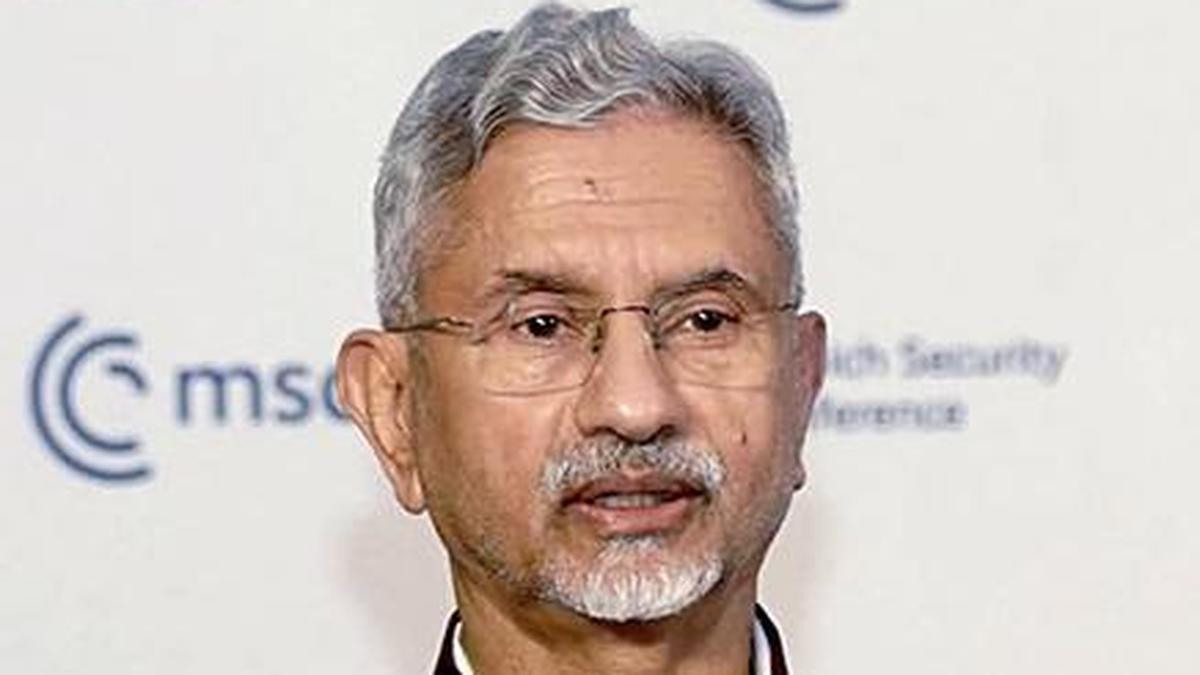
Photo from the source report: India’s G20 and Quad Priorities: Indo-Pacific Cooperation and Inclusive Diplomacy
Image: The Hindu
Why in news
The reported Atlanta meetings precede a planned Quad leaders’ meeting in Manila in November and the U.S.-hosted G20 Summit in December. They bring together India’s Indo-Pacific partnerships and its commitment to an inclusive G20 amid geopolitical tensions.
3
Quad initiatives identified for follow-up
4th
Reported U.S. visit by Jaishankar this year
Background
The G20 is an informal forum for international economic cooperation involving major economies, the European Union and the African Union. It operates through a rotating presidency and consensus-based cooperation rather than a treaty-based supranational authority. The Quad brings together India, Australia, Japan and the United States for cooperation in the Indo-Pacific; it is not a collective-defence alliance. India participates in both to shape global rules, support developing-country priorities and pursue practical partnerships while retaining strategic autonomy.
What is reported, and what remains prospective
According to The Hindu, diplomatic sources confirmed plans for Jaishankar to visit Atlanta for G20 and Quad Foreign Ministers’ meetings hosted by U.S. Secretary of State Marco Rubio. As of the report, the MEA had not formally announced the visit. The engagements should therefore be treated as reported plans, not completed diplomatic outcomes.
The report places the Quad leaders’ meeting in Manila on the sidelines of the ASEAN–East Asia summits in mid-November, rather than at a standalone summit in India. If held as planned, it would be the first Quad leaders’ meeting in a non-Quad country. The G20 leaders’ summit is reported to be scheduled for December 14–15 in the United States.
- Ministerial meetings are intended to prepare leaders’ discussions and advance existing cooperation.
- The report identifies scheduling difficulties as the context for the planned Manila meeting.
- A summit venue outside the Quad does not imply an expansion of its membership.
Infographic
Inclusive G20
Protect participation from bilateral political disputes.
Global South
Connect representation with development priorities.
Maritime cooperation
Improve awareness and respond to regional needs.
Resilient supply chains
Advance critical-mineral and energy cooperation.
Strategic autonomy
Build partnerships without automatic bloc alignment.
Implementation
Turn ministerial initiatives into measurable delivery.
AI-assisted infographic by Pragnya IAS Academy, based on the cited sources.
Quad priorities: From strategic convergence to practical cooperation
Officials are reportedly working to advance the Indo-Pacific Maritime Surveillance Initiative, the Quad Critical Minerals Framework and the Quad Initiative on Indo-Pacific Energy Security, identified as outcomes of the May ministerial meeting in Delhi. Their common strategic logic is to connect regional security with economic resilience.
For India, maritime surveillance can support better awareness of activities at sea, while critical-mineral cooperation can help address vulnerabilities affecting clean energy and advanced manufacturing. Energy cooperation can support reliable and affordable supplies. These are analytical implications of the initiatives; the supplied report does not specify their operational rules, financing or implementation targets.
- Maritime cooperation should support a rules-based maritime order and respond to regional partners’ needs.
- Critical-mineral partnerships should address processing, technology and supply diversification, not merely access to deposits.
- Energy-security cooperation should reconcile supply reliability, affordability and the clean-energy transition.
- Measurable delivery would strengthen the Quad’s credibility beyond summit declarations.
G20 priorities: Global South representation and institutional inclusion
The report states that the United States has excluded South Africa from this year’s G20 engagements because of bilateral tensions. It also records criticism from Russia and a call by German Chancellor Friedrich Merz to reverse the decision. India had not publicly commented on the specific controversy, although an official reiterated its support for an inclusive G20.
The central issue is whether a host’s bilateral dispute should determine participation in a collective forum. Exclusion can weaken representativeness, undermine trust in the rotating presidency and make consensus harder. The report does not establish that South Africa has formally ceased to be a G20 member; exclusion from participation must not be conflated with expulsion.
For India, defending inclusion is consistent with advocating a stronger Global South voice. A constructive agenda could connect participation with development concerns such as debt vulnerability, climate finance, food and energy security, and reform of international financial institutions. These are relevant policy priorities, not a confirmed agenda for the Atlanta meeting.
- The African Union’s G20 membership broadens African representation but does not make South Africa’s participation interchangeable with it.
- A collective forum’s legitimacy depends on predictable participation as well as substantive outcomes.
- India can defend institutional principles without endorsing every policy of the excluded country.
India’s diplomatic balance: Complementarity without bloc politics
The G20 and Quad serve different purposes. The G20 brings together countries with divergent strategic positions to address shared economic challenges; the Quad enables more focused cooperation among Indo-Pacific partners. India’s participation in both illustrates issue-based diplomacy rather than an obligation to adopt a single geopolitical alignment.
Holding the Quad meeting alongside ASEAN-related summits could preserve leaders’ engagement despite scheduling constraints. However, proximity to ASEAN events does not itself establish ASEAN endorsement. Respect for ASEAN centrality requires consultation, responsiveness to regional priorities and avoidance of arrangements that compel smaller states to choose sides.
The wider backdrop of the West Asia conflict and major-power tensions makes diplomatic dialogue valuable, but also risks crowding out development priorities. India’s task is to preserve space for practical cooperation without allowing either forum to become solely an arena for geopolitical contestation.
- Use the G20 for broad-based economic coordination and the Quad for targeted Indo-Pacific cooperation.
- Preserve independent positions while expanding partnerships on specific issues.
- Treat summit attendance as an opportunity for implementation, not a substitute for it.
| Dimension | G20 | Quad |
|---|---|---|
| Institutional character | Informal forum for international economic cooperation | Informal Indo-Pacific partnership |
| Participation | Major economies, the European Union and the African Union | India, Australia, Japan and the United States |
| Principal policy space | Global economic coordination and development | Practical cooperation in the Indo-Pacific |
| Focus in the supplied report | Summit preparation and South Africa’s reported exclusion | Maritime surveillance, critical minerals and energy security |
| India’s analytical priority | Inclusive participation and a stronger developing-country voice | Regional public goods and resilient partnerships |
| Institutional caution | Host-country exclusion is not automatically formal loss of membership | Cooperation does not create a collective-defence obligation |
- 1. Identify shared priorities and consult regional partners on their needs.
- 2. Translate ministerial initiatives into clearly defined work programmes.
- 3. Secure leaders’ guidance and identify implementing institutions.
- 4. Establish financing, safeguards and coordination arrangements.
- 5. Review delivery and publish appropriate progress updates.
2024 onwards
According to the report, India’s turn to host the Quad leaders’ summit has remained pending since 2024.
May 2026
Quad Foreign Ministers met in Delhi; the report identifies maritime surveillance, critical minerals and energy security as key outcomes.
October 28, 2026
For this edition, the Atlanta engagements remain reported plans; the source states that the MEA had not announced Jaishankar’s visit.
October 29–31, 2026
Jaishankar’s reported U.S. visit is expected to include G20 and Quad Foreign Ministers’ meetings in Atlanta.
Mid-November 2026
A Quad leaders’ meeting is planned in Manila alongside ASEAN–East Asia summits.
December 14–15, 2026
The U.S.-hosted G20 leaders’ summit is scheduled, according to the report.
Significance, challenges & way forward
Significance
- The engagements connect India’s global economic diplomacy with its Indo-Pacific partnerships.
- Maritime surveillance cooperation can improve awareness of security risks and activities at sea.
- Critical-mineral and energy cooperation can strengthen resilience in strategically important supply chains.
- An inclusive G20 provides a wider platform for developing countries to influence global economic priorities.
- A successful Manila meeting could maintain Quad leaders’ engagement despite difficulties in scheduling a standalone summit.
Challenges
- Using bilateral disputes to restrict summit participation can erode confidence in a host’s stewardship of a collective forum.
- India must balance its support for inclusion with its important partnership with the United States.
- Major-power rivalry and the West Asia conflict could overshadow development and economic coordination.
- The supplied report provides no implementation details, financing commitments or delivery benchmarks for the Quad initiatives.
- Maritime information-sharing requires trust, safeguards for sensitive data and sensitivity to partners’ sovereignty.
- Regional partners may be cautious if Quad cooperation appears to demand geopolitical alignment rather than provide practical benefits.
Way forward
- India should distinguish its principled support for inclusive participation from bilateral disagreements involving other members.
- G20 members should build shared expectations that a rotating presidency will facilitate participation rather than restrict it over bilateral disputes.
- India should connect Global South representation with concrete proposals on development finance, debt vulnerability and food and energy security.
- Quad partners should identify implementing agencies, resources and review mechanisms for the reported initiatives.
- Maritime and energy projects should be developed through consultation with Indo-Pacific partners and respect for ASEAN centrality.
- Critical-mineral cooperation should support diversified sourcing, responsible processing, recycling and technology partnerships.
- India should sustain dialogue across competing power centres while evaluating partnerships through national interests and practical outcomes.
Key terms
- Global South
- A broad political and developmental grouping of developing countries, rather than a strictly geographical category.
- Minilateralism
- Cooperation among a small group of countries on a focused set of shared interests.
- Strategic autonomy
- The capacity to make independent foreign-policy choices without automatic alignment with a power bloc.
- ASEAN centrality
- The principle that ASEAN should retain a central role in the regional diplomatic and institutional architecture.
- Maritime domain awareness
- Understanding activities and developments at sea that affect security, safety, the economy or the environment.
- Critical minerals
- Minerals whose economic or strategic importance and exposure to supply disruption make reliable access a policy priority.
- Exclusionary summit diplomacy
- The use of summit participation restrictions to pursue political objectives, potentially affecting a forum’s inclusiveness.
Link with static syllabus
Prelims practice MCQs
Q1. With reference to the G20, consider the following statements: 1. Both the European Union and the African Union are members. 2. It has a rotating presidency. 3. It is a treaty-based supranational authority whose decisions automatically become domestic law in member countries. Which of the statements given above are correct?
Q2. Which of the following groups correctly identifies all Quad members?
Q3. Consider the following statements about Indo-Pacific cooperation: 1. Maritime domain awareness concerns understanding activities at sea relevant to security, safety and other interests. 2. ASEAN centrality refers to ASEAN’s central role in the regional diplomatic architecture. 3. Participation in the Quad creates an automatic collective-defence obligation. Which of the statements given above are correct?
Q4. According to the supplied report, which of the following were identified as Quad initiatives for follow-up at the forthcoming ministerial meeting? 1. Indo-Pacific Maritime Surveillance Initiative 2. Quad Critical Minerals Framework 3. Quad Initiative on Indo-Pacific Energy Security Select the correct answer using the code below.
Mains practice questions
GS 2 · 15 marks · 250 words
India’s engagement with the G20 and Quad reflects complementary rather than contradictory diplomatic priorities. Discuss, highlighting the implications of exclusionary summit diplomacy.
Frequently asked questions
Has Jaishankar’s Atlanta visit been officially announced?
The supplied report says diplomatic sources confirmed the planned visit, but the MEA had not announced it at the time of reporting. It should therefore be described as an expected engagement.
Why does South Africa’s reported exclusion matter for India?
It raises questions about inclusive participation and the responsibilities of a rotating G20 presidency. India had not commented publicly on the specific decision, although an official reiterated support for an inclusive G20.
Does the planned Manila meeting make the Philippines a Quad member?
No. The Philippines would be the venue for the reported meeting; Quad membership remains India, Australia, Japan and the United States.
How do the G20 and Quad complement each other for India?
The G20 supports broad economic coordination and developing-country representation, while the Quad enables focused Indo-Pacific cooperation. India can engage both through independent, issue-based foreign-policy choices.
Sources
Analysis prepared by the Pragnya IAS Academy current-affairs desk with AI assistance from the cited reports. Verify figures with the original sources.
Turn current affairs into marks
Join Pragnya IAS Academy's mentorship for daily answer-writing evaluation on stories like this — classroom programmes from a trusted name in IAS coaching in Hyderabad.