
Maharashtra SIR: Form 6, Wrongful Voter Deletion and the Limits of Oral Assurances
Revise the static topic: UPSC Polity notes · UPSC Governance notes
In short: The Supreme Court orally assured voters deleted during Maharashtra’s Special Intensive Revision that merely filing Form 6 for re-registration would not invite prosecution. The hearing highlights safeguards against wrongful deletion, difficulties faced by temporarily displaced residents, and the distinction between an oral judicial assurance and an enforceable court order.
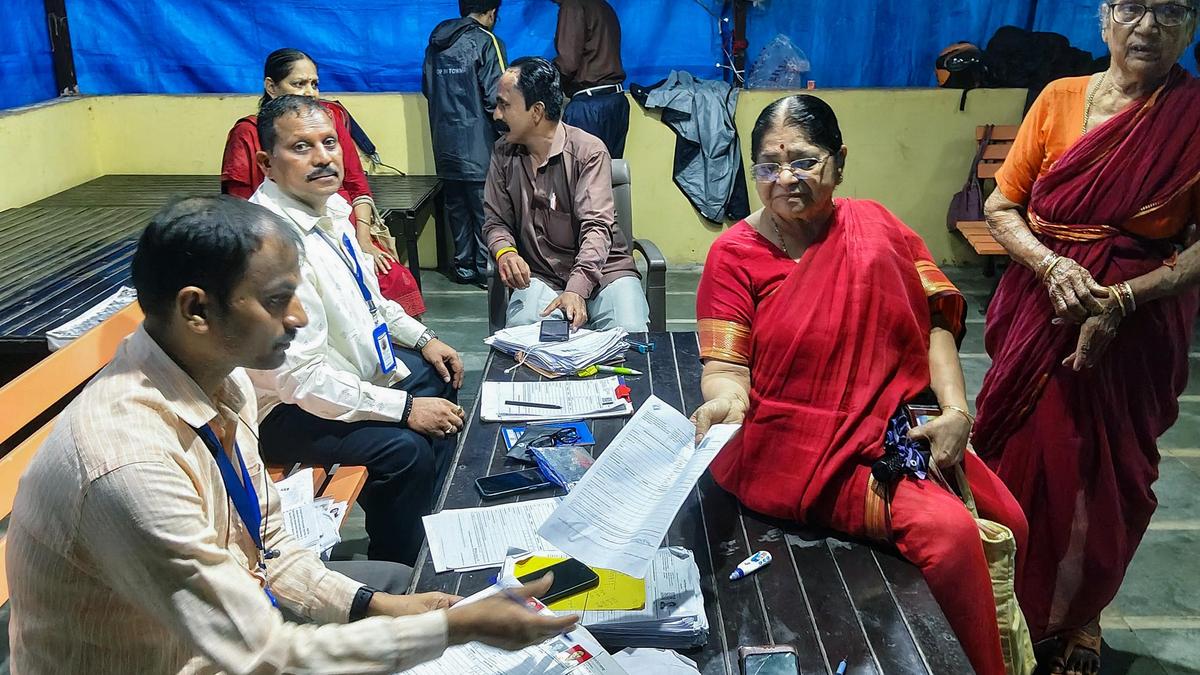
Reference image, not a photograph of the hearing: the Supreme Court orally assured deleted voters that filing Form 6 alone would not invite prosecution. An oral assurance is distinct from an enforceable court order.
Image: The Hindu
Why in news
According to the supplied report, on October 26, 2026, the Supreme Court agreed to hear a challenge to Maharashtra SIR deletions urgently on November 5. The petitioner alleged that redevelopment-related displacement had led to voters being marked absent and subsequently deleted.
3,500
Mumbai redevelopment projects cited by petitioner’s counsel
1,500
Pune redevelopment projects cited by petitioner’s counsel
Background
Article 324 vests the superintendence, direction and control of electoral-roll preparation and the conduct of specified elections in the Election Commission of India. Article 325 provides for one general electoral roll for each territorial constituency and prohibits exclusion on grounds only of religion, race, caste or sex, while Article 326 establishes adult suffrage for Lok Sabha and State Assembly elections, subject to constitutional and legal conditions. The Representation of the People Act, 1950 governs electoral registration, including ordinary residence, correction, deletion and inclusion; the Registration of Electors Rules, 1960 prescribe procedural requirements and forms.
What happened: an oral assurance, not a reported final adjudication
A Bench headed by Chief Justice of India Surya Kant heard submissions that residents displaced by redevelopment in Mumbai and Pune had been marked absent during the SIR and later removed from electoral rolls. These were allegations presented by the petitioner’s counsel, not findings established by the Court in the supplied report.
Counsel argued that requiring previously registered voters to use Form 6, associated with new-voter registration, could expose them to allegations of misrepresentation. The Chief Justice orally assured that nobody would be prosecuted, and the Court agreed to take up the challenge on November 5.
The petitioner also sought a separate form for voters deleted during the SIR. The report does not establish that such a form was notified, that deleted entries were restored, or that the claims-and-objections deadline was extended.
- The assurance concerned merely applying for re-registration; it should not be presented as blanket immunity for knowingly false declarations.
- October 26 was identified by counsel as the final date for claims and objections concerning the draft roll.
- The redevelopment-project figures were submissions by counsel, not independently verified judicial findings.
Infographic
Residence
Temporary absence is not automatic loss of ordinary residence.
Fair procedure
Verify facts and provide a meaningful opportunity to respond.
Accessible remedy
Use the applicable inclusion and appeal mechanisms.
Truthful declarations
Clarify prior registration without making inaccurate statements.
Legal certainty
Distinguish reported oral assurances from operative court orders.
AI-assisted infographic by Pragnya IAS Academy, based on the cited sources.
Ordinary residence: physical absence is not automatic ineligibility
Electoral registration is linked to ordinary residence, not merely property ownership or physical presence during a verification visit. Section 20 of the Representation of the People Act, 1950 expressly recognises that temporary absence does not, by itself, terminate ordinary residence.
Redevelopment-related displacement therefore requires an individual assessment. A person temporarily relocated from an existing home cannot automatically be treated as having permanently ceased to reside in the constituency; equally, continued registration at the old address cannot be assumed where the facts establish a genuine change of ordinary residence.
Under Section 22, deletion on grounds such as ceasing to be ordinarily resident or otherwise being ineligible requires proper verification and a reasonable opportunity of being heard. A failed doorstep visit should trigger further inquiry rather than substitute for the statutory determination.
- Distinguish temporary displacement from permanent relocation.
- Use meaningful notice and an opportunity to respond before adverse action on residence or eligibility grounds.
- Maintain a traceable record of verification, the voter’s response and the decision.
Form 6 and remedies against wrongful deletion
Form 6 is the prescribed application for inclusion of a name in an electoral roll. Section 23 provides the statutory route for inclusion, while Section 24 provides an appeal mechanism against specified registration decisions. The appropriate procedure depends on the voter’s actual roll status and whether the issue is deletion, an incorrect entry or a genuine shift of residence.
Section 31 addresses knowingly false written statements or declarations connected with electoral-roll preparation, revision, correction, inclusion or exclusion. The mere fact that an applicant was previously registered does not, by itself, establish this offence; the contents of the declaration and the applicant’s knowledge matter.
An affected voter should check the current entry, preserve evidence of earlier registration, obtain the deletion decision where available, and truthfully disclose the relevant history when seeking relief. Administrative guidance must ensure that the prescribed application does not pressure previously registered voters into inaccurate declarations.
- Use the applicable claims, inclusion or appeal procedure within the relevant deadlines.
- Seek clarification from the Electoral Registration Officer where the form’s declarations do not fit the voter’s circumstances.
- Do not assume that filing an application automatically restores the name or establishes eligibility to vote.
- Judicial review remains subject to constitutional limits, including restrictions on interrupting the electoral process.
Oral observations versus binding orders
Oral observations can explain a Bench’s concerns, reassure litigants or signal its tentative approach. They should not, without a corresponding judicial direction in the order, be treated as creating enforceable immunity, extending a deadline or deciding the merits of a dispute.
Article 141 makes the law declared by the Supreme Court binding on all courts. Not every courtroom remark constitutes such a declaration. An operative interim order can nevertheless bind the parties and authorities within its scope even before final judgment; finality and enforceability are distinct questions.
For this case, the official order is essential to determine whether any protection against coercive action was formally recorded, whom it covers and how long it operates. The supplied report establishes an oral assurance, not the text or scope of a written protective direction.
- Separate counsel’s arguments, judicial observations, operative directions and final holdings.
- Check the official order before claiming a stay, immunity or extension.
- Avoid presenting an oral exchange as a settled precedent on Form 6 liability.
| Issue | Relevant safeguard | Important limit |
|---|---|---|
| Absence during verification | Section 20 recognises that temporary absence alone does not end ordinary residence. | Ordinary residence remains a fact-specific determination. |
| Deletion for loss of residence or eligibility | Section 22 requires verification and a reasonable opportunity of being heard. | A registration entry does not guarantee permanent eligibility at the same address. |
| Name missing from the roll | Section 23 provides a route to seek inclusion through the prescribed procedure. | Submitting an application does not itself restore the entry. |
| Adverse registration decision | Section 24 provides statutory appeals against specified decisions. | The applicable procedure and deadlines must be followed. |
| Concern over false declarations | Section 31 requires the statutory elements of a knowingly false declaration. | Earlier registration alone neither establishes an offence nor excuses a false statement. |
| Courtroom assurance | An operative judicial direction can provide enforceable protection. | The reported oral assurance should not be equated with a written protective order. |
- 1. Verify the current electoral-roll entry and obtain the deletion reason or order where available.
- 2. Gather evidence of earlier registration, ordinary residence and any temporary redevelopment-related displacement.
- 3. Use the applicable claims or inclusion procedure with truthful disclosure and retain acknowledgement.
- 4. Seek a reasoned decision from the Electoral Registration Officer.
- 5. Use the statutory appeal route where applicable and within the relevant deadline.
- 6. Where judicial relief is pursued, verify the operative order rather than relying only on reported oral remarks.
During Maharashtra SIR, before the reported hearing
The petitioner alleged that redevelopment-displaced voters were marked absent and subsequently deleted.
October 26, 2026
The Supreme Court orally assured against prosecution merely for filing Form 6 for re-registration and agreed to an urgent hearing.
October 26, 2026
Counsel identified this as the final date for claims and objections concerning the draft electoral roll.
November 5, 2026
The Court agreed to take up the challenge; the supplied report contains no outcome of that future hearing.
Significance, challenges & way forward
Significance
- Accurate electoral rolls require both removal of ineligible entries and protection against exclusion of eligible citizens.
- Temporary urban displacement exposes the limits of verification methods based solely on presence at an old address.
- Accessible remedies help prevent administrative errors from becoming effective disenfranchisement.
- Clear differentiation between oral observations and judicial orders improves legal certainty and responsible public communication.
Challenges
- Redevelopment can make notices sent only to the old address ineffective.
- Confusing forms or declarations may discourage eligible voters from seeking inclusion.
- A common claims deadline can leave affected voters little time to obtain documents and contest deletion.
- Roll-cleaning measures must prevent duplicate registration without treating every mobile resident as ineligible.
- The supplied report does not establish the exact number of deleted voters or the contents of any written protective order.
Way forward
- The Election Commission should issue clear instructions distinguishing restoration-related inclusion, first-time registration and genuine shifting of residence.
- Authorities should use reasonable alternative contact methods where redevelopment makes service at an old address ineffective.
- Electoral Registration Officers should document verification and provide meaningful hearing opportunities before residence-based deletions.
- Help desks and accessible status-tracking should assist affected voters in identifying the correct remedy and meeting deadlines.
- Any need for a dedicated form should be examined through the prescribed rule-making process; meanwhile, guidance should prevent inaccurate declarations.
- Where protection from prosecution is considered necessary, its beneficiaries, conditions and duration should be clearly recorded in the judicial order.
Key terms
- Special Intensive Revision
- An intensive exercise to verify and update electoral rolls under the applicable electoral framework.
- Ordinary residence
- The statutory residence connection relevant to enrolment in a constituency; temporary absence alone does not terminate it.
- Form 6
- The prescribed application for inclusion of a name in an electoral roll.
- Electoral Registration Officer
- The statutory officer responsible for preparing and revising the electoral roll for the assigned constituency.
- Natural justice
- Procedural fairness, including a meaningful opportunity to respond before specified adverse decisions.
- Oral observation
- A courtroom remark that should not automatically be treated as an operative direction or binding declaration of law.
- Operative order
- The part of a judicial decision that specifies the relief, directions or obligations imposed.
Link with static syllabus
Prelims practice MCQs
Q1. With reference to ordinary residence for electoral registration, consider the following statements: 1. Temporary absence from a place necessarily terminates ordinary residence there. 2. Ownership of a dwelling house alone is sufficient to establish ordinary residence there. 3. Redevelopment-related displacement requires examination of the relevant facts. Which of the statements given above is/are correct?
Q2. Consider the following pairs: 1. Article 324: Superintendence, direction and control of electoral-roll preparation and specified elections 2. Article 325: One general electoral roll for each territorial constituency 3. Article 326: Adult suffrage for Lok Sabha and State Assembly elections How many of the above pairs are correctly matched?
Q3. Regarding Supreme Court proceedings, consider the following statements: 1. Every oral observation made during a hearing is binding law under Article 141. 2. An operative interim order may bind parties before final disposal of the case. 3. A reported oral assurance, by itself, establishes that a statutory deadline has been extended. Which of the statements given above is/are correct?
Q4. With reference to the Representation of the People Act, 1950, consider the following statements: 1. Section 23 provides for inclusion of names in electoral rolls. 2. Section 24 provides appeals against specified electoral-registration decisions. 3. A person’s previous registration alone proves an offence under Section 31 when that person seeks inclusion again. Which of the statements given above are correct?
Mains practice questions
GS 2 · 15 marks · 250 words
Electoral-roll integrity requires protection against wrongful exclusion as much as removal of ineligible entries. Discuss with reference to temporarily displaced voters, registration remedies and the legal significance of judicial assurances.
Frequently asked questions
Did the Supreme Court restore all voters deleted during Maharashtra’s SIR?
The supplied report does not establish any blanket restoration. It reports an oral assurance against prosecution merely for applying through Form 6 and an agreement to hear the challenge on November 5.
Does redevelopment-related absence automatically justify deletion?
No. Temporary absence alone does not end ordinary residence, but the voter’s actual residential circumstances must be examined through the applicable statutory procedure.
Is filing Form 6 after deletion automatically a criminal offence?
No. Previous registration alone does not establish an offence; Section 31 concerns knowingly false statements or declarations, making truthful disclosure essential.
Can voters treat the oral assurance as an extension of the claims deadline?
No. The supplied report does not establish an extension, and the scope of any enforceable protection must be verified from the official judicial order.
Sources
Analysis prepared by the Pragnya IAS Academy current-affairs desk with AI assistance from the cited reports. Verify figures with the original sources.
Turn current affairs into marks
Join Pragnya IAS Academy's mentorship for daily answer-writing evaluation on stories like this — classroom programmes from a trusted name in IAS coaching in Hyderabad.