
Nepal’s Loss and Damage Fund Allocation: Access, Adequacy and Climate Justice
Revise the static topic: UPSC Environment notes
In short: The Fund for Responding to Loss and Damage has earmarked $21.6 million for Nepal following its August 2026 floods, marking its first country-specific allocation. This is not yet a disbursement: Nepal must submit a funding request for further Board approval. The decision tests whether the Fund can provide timely, adequate support for climate-related losses rather than operate mainly through slow project-financing procedures.
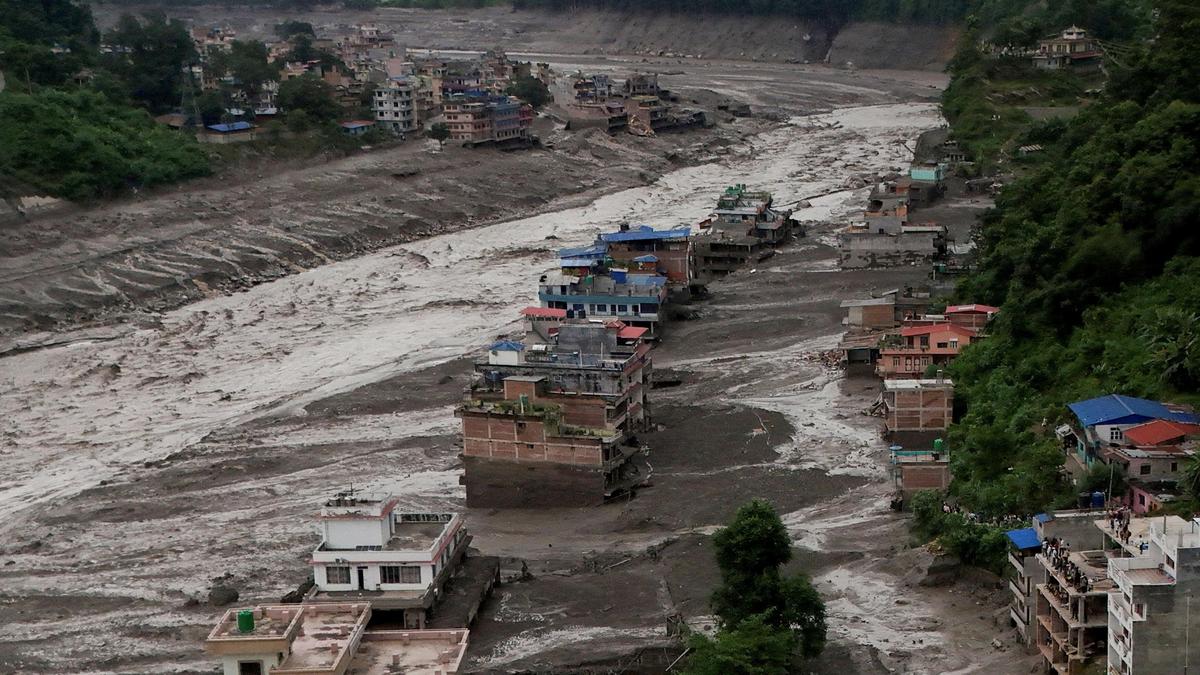
Photo from the source report: Nepal’s Loss and Damage Fund Allocation: Access, Adequacy and Climate Justice
Image: The Hindu
Why in news
At an extraordinary virtual meeting on October 22, 2026, the Fund’s Board approved Nepal’s allocation and an exceptional route to submit a request outside the closed funding window. The decision comes ahead of COP31 in Turkiye.
$21.6 million
Nepal allocation, including oversight fees
$1.6 million
Oversight fees within Nepal allocation
$822.06 million
Pledges as of March 15, 2026
$629.70 million
Reported grant contributions on that date
$2.8 billion
Value of first-call funding requests
At least $4.71 billion
Nepal’s estimated recovery needs
Background
Loss and damage refers to adverse climate impacts that are not avoided through mitigation and adaptation, including economic losses and non-economic harms. Governments agreed to establish the Fund for Responding to Loss and Damage at COP27 in 2022, and adopted its Governing Instrument at COP28 in 2023. It operates under the UNFCCC financial mechanism to support developing countries particularly vulnerable to climate change, covering extreme weather and slow-onset events. The World Bank serves as its interim trustee. Article 8 of the Paris Agreement recognises the importance of averting, minimising and addressing loss and damage; the accompanying COP decision specifies that this does not provide a basis for liability or compensation.
What the Nepal decision actually authorises
On August 26, 2026, an ice-and-rock avalanche triggered flooding along the Bhotekoshi–Trishuli–Narayani river system. Experts cited in the report link the event to human-induced warming. Nepal estimates economic losses of at least $2.69 billion and recovery needs of at least $4.71 billion.
The Board has earmarked $21.6 million, including $1.6 million in oversight fees paid to implementing organisations for supervising expenditure. Nepal has been invited to submit a funding request for consideration at the Board’s December meeting in Manila; release of money remains conditional on that approval.
The key distinction is between allocation and disbursement. The October decision establishes a country-specific commitment and an exceptional access route, but it does not establish that funds have already reached Nepal.
- This is the Fund’s first country-specific earmarking.
- The approved amount includes oversight costs and should not be treated entirely as reconstruction expenditure.
- The reported recovery-needs estimate is distinct from the estimate of economic losses already incurred.
Infographic
Milestone
First country-specific earmarking: $21.6 million.
Access
Exceptional application route, not a standing emergency window.
Delivery
Further approval required before disbursement.
Adequacy
Nepal’s recovery needs are at least $4.71 billion.
Justice
Additional grants should address economic and non-economic harm.
Distinction
Addressing losses complements, rather than replaces, adaptation.
AI-assisted infographic by Pragnya IAS Academy, based on the cited sources.
Access mechanisms: flexibility without a standing emergency window
The Fund’s first call received 176 requests from 119 countries, collectively seeking about $2.8 billion. In July, the Board deferred decisions on those requests to December. Nepal’s case therefore required permission to seek funding outside the closed submission window.
The Board agreed to pilot this approach during the start-up phase. Further out-of-window submissions will require separate Board decisions, while the Secretariat will assess lessons for the long-term model. Thus, Nepal’s access route is an exception, not an automatic entitlement available to all affected countries.
The central institutional tension is between rapid support and fiduciary scrutiny. A climate-finance specialist cited in the source describes the regular funding cycle as involving eleven steps. Such procedures may support accountability, but disaster-affected administrations can struggle with sequential reviews when recovery needs are urgent.
- A funding window is the period during which applications are accepted; it is not the same as immediate access to cash.
- The Nepal pilot demonstrates procedural flexibility but does not itself create a permanent rapid-response mechanism.
- Simplified access should retain transparent eligibility, expenditure tracking and safeguards.
Adequacy: pledges are not the same as available cash
As of March 15, 2026, 27 countries had pledged $822.06 million, with $629.70 million reported in grant contributions. The Fund’s start-up allocation is $342 million, with at least half reserved for small island developing States and least developed countries. These dated figures should not be presented as an updated October cash balance.
Funding demand already exceeds the start-up allocation: the first call alone sought about $2.8 billion. Nepal’s allocation is also modest against its estimated recovery needs of at least $4.71 billion. The Fund can contribute to recovery, but the approved support cannot be read as financing Nepal’s entire reconstruction requirement.
The source reports no public statement establishing the Fund’s cash holdings beyond signed contributions. Disbursement depends on donors honouring pledges. Political uncertainty compounds this problem: the United States had pledged $17.5 million, but its representatives were withdrawn from the Board in January 2025.
- Assess finance through separate stages: pledge, contribution, allocation and disbursement.
- Predictable replenishment matters as much as headline announcements.
- The reserve for especially vulnerable country groups promotes equity but does not resolve overall scarcity.
Climate justice and the boundary with adaptation finance
Mitigation addresses the causes of climate change, adaptation reduces exposure and vulnerability, and loss-and-damage finance addresses harms that are not avoided. Early-warning systems and flood-resilient infrastructure principally serve adaptation; assistance for climate-related destruction, livelihood disruption and irreversible losses falls within the loss-and-damage agenda.
The boundary is functional rather than absolute. Reconstruction can restore destroyed assets while also making them safer against future hazards. Such overlap requires transparent accounting, not the relabelling of existing adaptation support as new loss-and-damage finance.
The climate-justice case rests on unequal historical responsibility, unequal capacity and unequal vulnerability. Grant-based support can prevent recovery from adding to debt burdens. However, the Fund is a climate-finance mechanism, not a judicial compensation scheme; the justice argument must be distinguished from an automatic legal right to damages.
- Non-economic losses, such as harm to cultural heritage and social ties, cannot be addressed through infrastructure spending alone.
- New loss-and-damage resources should complement, rather than displace, mitigation and adaptation finance.
- Communities should help define recovery priorities because national financial estimates may miss local and non-economic harms.
| Dimension | Mitigation | Adaptation | Loss and damage |
|---|---|---|---|
| Core objective | Reduce emissions or enhance greenhouse-gas sinks | Reduce vulnerability to actual or expected climate impacts | Address climate harms that are not avoided |
| Illustrative intervention | Renewable energy deployment | Flood early-warning systems | Recovery support after climate-related destruction |
| Principal focus | Drivers of climate change | Risk reduction and resilience | Economic and non-economic losses |
| Important qualification | Does not eliminate the need for adaptation | Cannot prevent every loss | Does not replace adaptation or establish automatic legal compensation |
- 1. Climate-related disaster generates losses and recovery needs.
- 2. The Board earmarks funding and permits an out-of-window application.
- 3. Nepal submits its funding request.
- 4. The Board considers the request at its scheduled December meeting.
- 5. Money can be released only after approval and subject to funding availability.
- 6. Implementing organisations supervise expenditure, while the Secretariat assesses lessons from the access pilot.
2022
COP27 agreed to establish the Loss and Damage Fund.
2023
COP28 adopted the Fund’s Governing Instrument.
January 2025
The United States withdrew its representatives from the Fund’s Board.
March 15, 2026
Reported pledges stood at $822.06 million from 27 countries, with $629.70 million in grant contributions.
July 2026
The Board deferred decisions on first-call funding requests to December.
August 26, 2026
An ice-and-rock avalanche triggered flooding along Nepal’s Bhotekoshi–Trishuli–Narayani river system.
October 22, 2026
The Board earmarked $21.6 million for Nepal and authorised an exceptional out-of-window request.
December 2026, scheduled
The Board is to consider Nepal’s funding request at its meeting in Manila; release remains conditional on approval.
Significance, challenges & way forward
Significance
- The first country-specific allocation moves the Fund towards practical support for an affected developing country.
- The exceptional submission route demonstrates that access rules can respond to disasters occurring outside normal funding windows.
- Nepal’s experience highlights Himalayan climate risks within a financing debate that also prioritises small islands and least developed countries.
- The case makes timeliness, accessibility and actual disbursement central tests of climate-finance credibility.
- Recognition of economic and non-economic harm broadens recovery beyond the replacement of physical assets.
Challenges
- Country-by-country exceptions can make access uncertain for other disaster-affected states.
- Further proposal approval creates a gap between announcing support and making money available.
- Available allocations remain modest relative to submitted requests and Nepal’s recovery needs.
- Unfulfilled pledges and unclear cash availability can undermine predictable disbursement.
- Application and oversight requirements can burden administrations already managing disaster response.
- Relabelling adaptation or development assistance as loss-and-damage finance would weaken additionality and accountability.
Way forward
- Create a standing rapid-response window with published eligibility rules and clear decision timelines.
- Use proportionate appraisal and phased approvals so urgent recovery support need not await every element of a longer reconstruction programme.
- Publish separate, regularly updated figures for pledges, signed contributions, cash received, allocations and disbursements.
- Secure predictable, additional grant finance without reducing existing mitigation and adaptation commitments.
- Provide application support and strengthen nationally owned implementation to reduce access barriers.
- Include affected communities in recovery planning, recognise non-economic losses and retain transparent oversight of implementing costs.
Key terms
- Fund for Responding to Loss and Damage
- A fund under the UNFCCC financial mechanism supporting developing countries particularly vulnerable to climate-related economic and non-economic losses.
- Adaptation
- Adjustment to actual or expected climate effects to reduce harm or take advantage of beneficial opportunities.
- Non-economic loss
- Climate-related harm not readily captured by market prices, including loss of cultural heritage and social ties.
- Slow-onset event
- A climate-related process developing gradually, such as sea-level rise or glacier retreat.
- Disbursement
- The actual release of approved money, distinct from a pledge or earmarked allocation.
- Additionality
- The principle that new climate-finance commitments should add to, rather than merely relabel or displace, existing support.
- Fiduciary oversight
- Supervision intended to ensure that funds are managed responsibly and used for approved purposes.
- Common but differentiated responsibilities and respective capabilities
- The climate-regime principle recognising shared responsibility alongside differences in national responsibility and capacity.
Link with static syllabus
Prelims practice MCQs
Q1. With reference to the Fund for Responding to Loss and Damage, consider the following statements: 1. Governments agreed to establish it at COP27. 2. Its Governing Instrument was adopted at COP28. 3. Its mandate is restricted to economic losses caused by sudden extreme-weather events. Which of the statements given above are correct?
Q2. Regarding the Fund’s October 2026 decision on Nepal, consider the following statements: 1. The earmarked amount includes oversight fees. 2. Money can be released only after further approval of Nepal’s funding request. 3. All future out-of-window submissions can proceed without separate Board decisions. Which of the statements given above are correct?
Q3. Which of the following best distinguishes adaptation finance from loss-and-damage finance?
Q4. Consider the following statements: 1. The World Bank serves as the Fund’s interim trustee. 2. At least half of the Fund’s start-up allocation is reserved for small island developing States and least developed countries. 3. A donor pledge necessarily means that an equivalent amount is immediately available for disbursement. Which of the statements given above are correct?
Mains practice questions
GS 3 · 15 marks · 250 words
Nepal’s allocation from the Fund for Responding to Loss and Damage reveals both progress and limitations in operationalising climate justice. Examine its access and financing challenges, distinguishing loss-and-damage finance from adaptation funding.
Frequently asked questions
Has Nepal already received the approved money?
No disbursement is established by the supplied report. The Board earmarked $21.6 million, but Nepal must submit a funding request for further approval before money can be released.
How is loss-and-damage finance different from adaptation finance?
Adaptation finance reduces climate risks and vulnerability, while loss-and-damage finance addresses harms that are not avoided. Reconstruction may overlap with adaptation when damaged assets are rebuilt more resiliently.
Does Nepal’s decision create a permanent emergency-access mechanism?
No. It pilots an exceptional out-of-window application route, and further such submissions require separate Board decisions.
Why is the allocation a climate-justice issue?
It concerns how countries with limited capacity receive support for climate harms linked to unequal historical emissions. Justice depends not only on recognising losses but also on delivering timely, adequate and additional resources.
Sources
Analysis prepared by the Pragnya IAS Academy current-affairs desk with AI assistance from the cited reports. Verify figures with the original sources.
Turn current affairs into marks
Join Pragnya IAS Academy's mentorship for daily answer-writing evaluation on stories like this — classroom programmes from a trusted name in IAS coaching in Hyderabad.