
Private Participation in Nuclear Energy: AERB Oversight and Safety Accountability
Revise the static topic: UPSC Science & Technology notes
In short: Atomic Energy Regulatory Board Chairperson A.K. Balasubrahmanian has said that private participation in India’s nuclear energy sector will not involve dilution of safety or regulatory requirements. The policy shift makes independent oversight, clear operator accountability and adequate regulatory capacity essential to expanding reliable, low-carbon electricity.
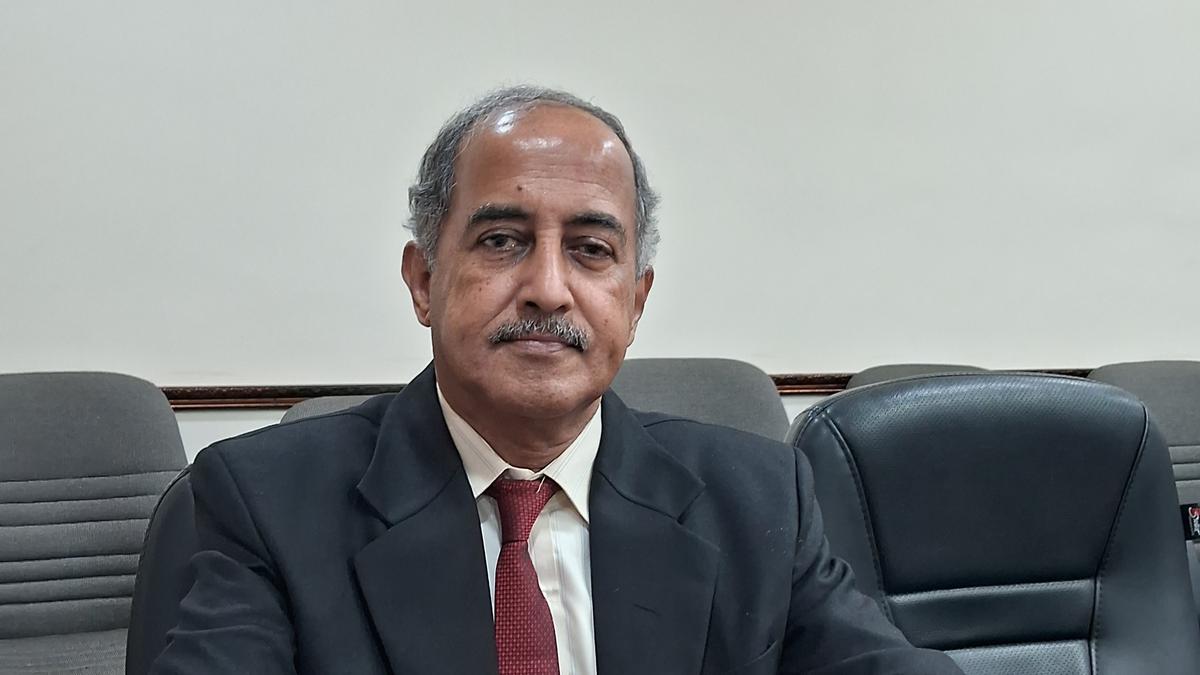
AERB Chairperson A.K. Balasubrahmanian says private participation in India’s nuclear energy sector will not dilute safety or regulatory requirements.
Image: The Hindu
Why in news
The Hindu reported on November 05, 2026 that the AERB Chairperson assured an enabling environment for private players without compromising safety. The report places these remarks in the context of the SHANTI Act and the Union government’s decision to welcome private participation.
Background
Nuclear fission releases energy that can be used to generate electricity, but radioactive materials and residual heat require stringent controls throughout a facility’s life. India’s nuclear governance has historically centred on the Atomic Energy Act and public institutions, with the AERB responsible for nuclear and radiation safety regulation. Private participation makes the distinction between promoting nuclear power, operating installations and independently regulating safety especially important. Nuclear electricity is low-carbon, but this does not eliminate obligations relating to accident prevention, radioactive waste and decommissioning.
What the report establishes—and what it does not
The AERB Chairperson linked opening the sector to India’s emerging electricity requirements. His central assurance was that the regulator would facilitate private participation without diluting regulatory or safety requirements.
The supplied report mentions the SHANTI Act but does not reproduce its provisions. It therefore does not establish the precise scope of private participation, changes to the AERB’s legal status, or arrangements for nuclear liability and compensation.
- The confirmed development is the regulatory assurance accompanying the policy opening, not a detailed account of the new legal framework.
- An enabling environment should mean clear procedures and predictable scrutiny, rather than weaker safety thresholds.
- Claims about ownership limits, licensing exemptions or altered liability rules require the relevant legal text.
Infographic
Independent oversight
Insulate safety decisions from promotional and commercial pressure.
Capable regulation
Match expansion with specialist staff, inspections and enforcement.
Operator accountability
Keep primary safety responsibility explicit despite outsourcing.
Lifecycle protection
Cover operation, emergencies, waste and decommissioning.
Credible expansion
Build low-carbon electricity capacity through public trust and safety.
AI-assisted infographic by Pragnya IAS Academy, based on the cited sources.
Why private entry changes the regulatory challenge
Private capital and specialised capabilities could support nuclear expansion, but the benefits are conditional on project viability and credible governance. New entrants may have different levels of nuclear operating experience, while commercial deadlines and cost pressures can create incentives to defer maintenance or compress testing.
Ownership alone does not determine safety: public and private operators both require rigorous oversight. A more diverse industry makes consistent standards, supplier traceability and adequate inspection capacity particularly important.
- Scrutiny should cover an applicant’s technical competence, organisational readiness and financial capacity.
- Quality assurance should extend to equipment suppliers, contractors and safety-critical documentation.
- Technology-specific assessments should operate within a common framework of safety objectives.
- Regulatory staffing and expertise should expand alongside the number and complexity of regulated facilities.
Regulatory independence must accompany facilitation
The key institutional question is whether the regulator can make safety decisions insulated from project promoters, commercial interests and pressures to meet generation targets. Independence requires more than formal status: it depends on resources, technical competence, conflict-of-interest safeguards and credible enforcement powers.
Facilitation and independence are compatible when facilitation means accessible guidance and transparent decision-making. They conflict if the regulator becomes responsible for ensuring a project’s commercial success or treats commissioning deadlines as substitutes for safety evidence.
- Clearly separate sector-promotion objectives from safety assessment and enforcement.
- Ensure secure access to specialised personnel, independent technical advice and adequate funding.
- Provide effective authority to require corrective action, restrict operations or halt unsafe activities.
- Publish reasoned decisions and appropriate safety information while protecting sensitive security details.
Safety accountability must cover the entire lifecycle
A foundational nuclear-safety principle is that primary responsibility rests with the operator; regulatory permission does not transfer that responsibility to the regulator. This principle should remain explicit even when design, construction, maintenance and other functions are contracted out.
Safety regulation and civil liability serve different purposes. Regulation seeks to prevent harm and control hazards; liability determines responsibility for compensation after damage. The source does not establish whether the new framework changes liability arrangements.
Oversight must extend beyond commissioning to ageing management, spent fuel, radioactive waste and decommissioning. Emergency preparedness also requires coordination between the operator, public authorities, health services and surrounding communities.
- Require demonstrable safety culture, reliable incident reporting and protection for personnel raising safety concerns.
- Clarify responsibility across operators, contractors and suppliers without allowing outsourcing to obscure accountability.
- Ensure credible financial arrangements for long-term waste management and decommissioning.
- Integrate nuclear safety, physical security and cybersecurity without treating them as interchangeable.
Clean-energy gains depend on institutional credibility
Nuclear power can provide firm, low-carbon electricity and complement variable renewable generation. Private participation could widen financing and delivery capabilities, but it cannot by itself resolve capital intensity, lengthy development processes, waste obligations or public concerns.
Strong oversight is therefore an enabling condition for sustainable expansion rather than merely a compliance cost. Credible regulation supports public confidence and reduces the risk that safety failures, disputes or unresolved liabilities undermine the wider energy programme.
- Assess nuclear projects within integrated electricity planning rather than as a substitute for renewable energy, storage or efficiency.
- Distinguish low-carbon generation from claims of being risk-free or waste-free.
- Evaluate project success through safe lifecycle performance as well as electricity output.
| Issue | Risk to address | Safeguard |
|---|---|---|
| Regulatory facilitation | Approval pressure displaces technical scrutiny | Clear procedures without dilution of safety evidence |
| Commercial incentives | Cost-cutting affects safety-critical functions | Inspections, quality assurance and effective enforcement |
| Contracting chains | Responsibility becomes fragmented | Explicit operator accountability and supplier traceability |
| Long-term obligations | Waste and closure costs remain inadequately funded | Credible lifecycle funding arrangements |
| Public confidence | Secrecy or poor communication weakens trust | Accessible safety information and emergency preparedness |
- 1. Assess the applicant’s technical competence, organisational readiness and financial capacity.
- 2. Evaluate site suitability, design safety and environmental requirements.
- 3. Verify construction quality and commissioning evidence before operation.
- 4. Maintain operational inspections, incident reporting and emergency preparedness.
- 5. Oversee spent fuel, radioactive waste and adequately funded decommissioning.
November 05, 2026
The Hindu reported the AERB Chairperson’s assurance that welcoming private players would not dilute nuclear safety or regulatory requirements.
Significance, challenges & way forward
Significance
- Private participation could broaden the capital and technical capabilities available for nuclear energy expansion.
- Firm, low-carbon nuclear electricity can complement variable renewable generation.
- The policy opening creates an opportunity to strengthen the separation between nuclear promotion, operation and safety regulation.
- Credible safety governance can improve public confidence and the predictability of project development.
Challenges
- Regulatory capacity may be stretched if industry expansion outpaces specialist recruitment and training.
- Commercial schedules can conflict with the time needed for safety assessment, testing and corrective action.
- Complex contracting arrangements can obscure responsibility for equipment quality and operational failures.
- Radioactive waste and decommissioning create obligations that extend beyond a project’s revenue-generating life.
- Transparency must be balanced with legitimate protection of security-sensitive information.
- The supplied report is insufficient to determine the SHANTI Act’s implications for regulatory status or liability.
Way forward
- Explain the applicable legal framework clearly, including permitted private activities, regulatory powers and accountability arrangements.
- Strengthen functional regulatory independence through adequate resources, technical autonomy and conflict-of-interest safeguards.
- Scale inspection capacity and independent technical support before substantially expanding the regulated industry.
- Apply consistent safety objectives to public and private operators while assessing technology-specific risks.
- Make lifecycle responsibilities explicit, including waste management, decommissioning and financial preparedness.
- Institutionalise public communication, emergency exercises and coordination with local authorities.
- Provide procedural predictability through clear guidance, not automatic approvals or relaxed safety requirements.
Key terms
- AERB
- The Atomic Energy Regulatory Board is India’s body for nuclear and radiation safety regulation.
- Regulatory independence
- The ability to take and enforce regulatory decisions without improper political, promotional or commercial influence.
- Defence in depth
- Multiple layers of prevention, protection and mitigation designed to prevent failures from escalating into harmful releases.
- Safety culture
- Organisational values and practices that give safety priority in decisions and everyday work.
- Civil nuclear liability
- The legal framework governing responsibility and compensation for nuclear damage.
- Decommissioning
- The controlled process of retiring a nuclear facility and managing its radioactive hazards.
- Firm electricity
- Electricity that can be supplied reliably when required, subject to plant availability and operating constraints.
- Regulatory capture
- A situation in which a regulator advances regulated entities’ interests instead of its public-interest mandate.
Link with static syllabus
Prelims practice MCQs
Q1. With reference to private participation in nuclear energy, consider the following statements: Statement I: Regulatory permission transfers primary responsibility for nuclear safety from the operator to the regulator. Statement II: Outsourcing safety-related activities should not remove the operator’s primary safety responsibility. Which of the statements given above is/are correct?
Q2. Which of the following best describes defence in depth in nuclear safety?
Q3. Consider the following statements about nuclear energy: Statement I: Nuclear electricity is low-carbon, but radioactive waste management remains necessary. Statement II: Civil nuclear liability and preventive safety regulation perform identical functions. Which of the statements given above is/are correct?
Q4. Which arrangement is most consistent with an enabling yet independent nuclear regulator?
Mains practice questions
GS 3 · 15 marks · 250 words
Opening nuclear energy to private participation requires stronger regulation, not lighter regulation. Discuss with reference to AERB independence, safety accountability and India’s clean-energy needs.
Frequently asked questions
What has the AERB said about private participation in nuclear energy?
Its Chairperson has said that the regulator will provide an enabling environment for private players without diluting safety or regulatory requirements.
Does private participation necessarily make nuclear power less safe?
No. Safety depends on operator competence, safety culture, engineering safeguards and effective independent oversight; both public and private operators require rigorous regulation.
Does the supplied report explain changes under the SHANTI Act?
No. It mentions the Act as context but does not provide provisions on ownership, regulatory independence, licensing or liability.
Why is nuclear power relevant to clean-energy expansion?
It can supply firm, low-carbon electricity alongside renewable energy. This benefit must be assessed together with project costs, safety requirements and long-term waste obligations.
Sources
Analysis prepared by the Pragnya IAS Academy current-affairs desk with AI assistance from the cited reports. Verify figures with the original sources.
Turn current affairs into marks
Join Pragnya IAS Academy's mentorship for daily answer-writing evaluation on stories like this — classroom programmes from a trusted name in IAS coaching in Hyderabad.