
Urea Overuse in 169 Districts: Subsidy Design, Diversion Risks and CAG Scrutiny
Revise the static topic: UPSC Agriculture notes · UPSC Economy notes
In short: A Times of India report flags urea overuse in 169 districts and says the Comptroller and Auditor General is probing possible diversion of subsidised fertiliser, including suspected movement across borders. The issue highlights the need to distinguish genuine agricultural demand from excessive application and leakage, while assessing whether subsidy expenditure supports balanced plant nutrition.
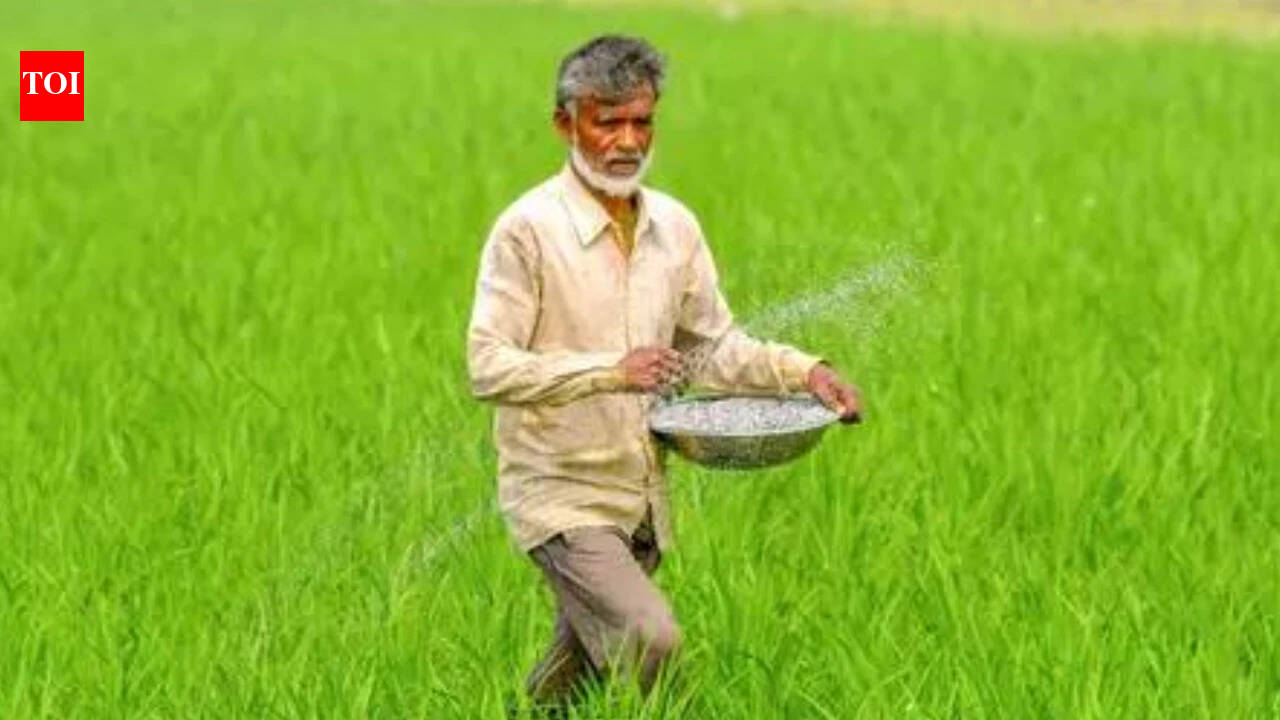
Reference image accompanying the Times of India report on urea overuse in 169 districts. Reported CAG scrutiny concerns possible diversion; overuse alone does not establish leakage or cross-border movement.
Image: Times of India
Why in news
The report links unusually high urea use in 169 districts with concerns about subsidy diversion. The supplied material does not establish the extent of leakage or provide completed CAG findings.
169
Districts with reported urea overuse
Background
Urea is a nitrogenous fertiliser, while balanced plant nutrition requires nitrogen, phosphorus, potassium and other nutrients according to crop needs and soil conditions. India supports fertiliser affordability through subsidies. Urea has an administered retail-price framework, whereas the Nutrient Based Subsidy scheme covers eligible phosphatic and potassic fertilisers and excludes urea. This difference in subsidy architecture can distort relative prices and encourage farmers to favour nitrogen over other nutrients. Fertiliser policy must therefore reconcile affordability, productivity, soil health and fiscal accountability.
What the report establishes—and what remains unproven
The supplied report identifies urea overuse in 169 districts and states that the CAG is probing diversion. It also raises the possibility that subsidised fertiliser is moving out of India through border states.
These are grounds for scrutiny, not proof of diversion. The excerpt does not disclose district-level consumption data, the benchmark used to define overuse, the quantity allegedly diverted or a final audit conclusion.
- High recorded sales may reflect intensive cultivation, multiple cropping or purchases serving neighbouring areas.
- Excessive application on farms and diversion away from agriculture are distinct problems requiring different responses.
- Border proximity is a risk indicator for investigation, not evidence of wrongdoing by itself.
Infographic
Affordability
Protect timely access for genuine cultivators.
Balanced nutrition
Align prices, soil advice and application with crop needs.
Traceable delivery
Reconcile stocks and transactions; verify suspected leakage.
Outcome accountability
Use audit and legislative follow-up to improve expenditure quality.
AI-assisted infographic by Pragnya IAS Academy, based on the cited sources.
How subsidy design can encourage nutrient imbalance
Subsidies protect farmers against high input costs and support agricultural production. However, when urea is relatively inexpensive compared with other fertilisers, farmers may substitute additional nitrogen for a balanced nutrient package.
Crop response depends on the availability of all essential nutrients. Additional urea cannot compensate indefinitely for deficiencies of phosphorus, potassium or micronutrients. Nutrient recommendations must be crop- and location-specific rather than based on a universal application ratio.
- Assess subsidy performance through nutrient-use efficiency and crop outcomes, not merely fertiliser volumes sold.
- Combine price-policy reform with soil testing, extension and reliable availability of complementary nutrients.
- Protect affordability during reform so that correcting overuse does not create under-application among vulnerable cultivators.
Why overuse and diversion require separate policy tools
Agronomic overuse occurs when fertiliser application exceeds crop requirements or is poorly timed and placed. Nitrogen that is not absorbed can be lost through ammonia volatilisation, nitrate leaching or nitrous oxide emissions, creating economic and environmental costs.
Diversion occurs when subsidised fertiliser moves away from its intended agricultural use or beneficiary. A price difference between subsidised agricultural supplies and alternative markets can create arbitrage incentives. The report raises this concern but does not establish its scale.
- On-farm overuse calls for better nutrient advice, application practices and price signals.
- Non-agricultural diversion calls for supply-chain reconciliation and targeted enforcement.
- Suspected cross-border leakage requires corroboration through distribution records, transport evidence and enforcement information.
CAG scrutiny: From expenditure verification to agricultural outcomes
Article 148 establishes the constitutional office of the Comptroller and Auditor General. Article 149 provides for its duties and powers to be prescribed by Parliament, while Article 151 governs submission and legislative placement of audit reports. The CAG's Duties, Powers and Conditions of Service Act provides the statutory framework for its audit mandate.
Audit can examine whether subsidy claims and distribution records are supported by evidence and whether expenditure achieves economy, efficiency and effectiveness. For fertilisers, this means connecting financial scrutiny with questions about delivery, targeting and the government's monitoring of agricultural outcomes.
The CAG is an auditor, not a prosecuting agency. Audit findings can support legislative scrutiny, including examination by the Public Accounts Committee, while administrative correction and criminal investigation belong to the competent authorities.
- Compare dispatches, stocks and retail transactions with agricultural demand estimates.
- Adjust district comparisons for crop mix, irrigated area, cropping intensity and seasonal demand.
- Test suspicious transactions before attributing losses or recommending punitive action.
- Examine whether earlier control weaknesses were addressed and whether corrective action improved outcomes.
| Possible explanation | Evidence required | Appropriate response |
|---|---|---|
| Genuine agricultural demand | Crop area, cropping intensity, irrigation and purchases serving nearby areas | Ensure timely supply and avoid arbitrary restrictions |
| Excessive on-farm application | Soil tests, crop-specific recommendations and farm-level application evidence | Strengthen extension, balanced nutrition and efficient application |
| Diversion from intended use | Stock discrepancies, unsupported transactions and corroborated movement records | Undertake targeted enforcement and recover irregular payments where established |
- 1. Flag unusual district-level urea sales or consumption patterns.
- 2. Estimate legitimate demand using crop area, soil conditions and cultivation practices.
- 3. Reconcile dispatch, stock and retail transaction records.
- 4. Verify anomalies through field checks and examination of suspected diversion routes.
- 5. Separate genuine demand, agronomic overuse and substantiated leakage.
- 6. Apply targeted corrections and assess whether delivery and nutrient-use outcomes improve.
Significance, challenges & way forward
Significance
- The issue shifts attention from the size of fertiliser expenditure to the quality of its agricultural outcomes.
- Balanced nutrient management can improve fertiliser efficiency and reduce avoidable input expenditure.
- Reducing nitrogen losses can limit water pollution, air pollution and greenhouse gas emissions.
- Evidence-based audit can protect public resources without treating legitimate farm demand as suspicious.
- Legislative follow-up can convert audit observations into stronger administrative accountability.
Challenges
- The supplied excerpt provides no methodology for identifying overuse, limiting conclusions about individual districts.
- District sales are an imperfect proxy for application because purchases and cultivation may occur in different locations.
- Relative-price reform can raise cultivation costs unless affordability and transition support are addressed.
- Soil testing has limited value when results do not translate into timely, practical advice and accessible inputs.
- Digital transaction records can improve traceability but cannot independently prove final on-farm use.
- Blunt purchase restrictions may exclude tenant farmers or disrupt supply during peak agricultural operations.
Way forward
- Publish a transparent, crop-adjusted methodology for identifying abnormal fertiliser demand before imposing restrictions.
- Gradually reduce distortions between nutrient prices while protecting access for small and vulnerable cultivators.
- Link Soil Health Card recommendations with local extension, demonstrations and dependable availability of required nutrients.
- Promote the right nutrient source, rate, time and placement rather than blanket fertiliser-reduction targets.
- Use risk-based inspection and stock reconciliation to investigate suspected diversion without burdening all farmers.
- Evaluate subsidy outcomes through delivery reliability, nutrient-use efficiency, crop performance and environmental indicators.
- Ensure timely legislative examination of audit findings and documented follow-up by the responsible departments.
Key terms
- Nutrient Based Subsidy
- A subsidy framework for eligible phosphatic and potassic fertilisers based on their nutrient content; urea is outside this scheme.
- Nutrient-use efficiency
- The effectiveness with which nutrient inputs are converted into crop uptake or agricultural output.
- Nutrient imbalance
- A mismatch between nutrient supply and crop requirements, involving excesses or deficiencies.
- Subsidy diversion
- Movement of a subsidised input away from its intended use or beneficiary.
- Arbitrage
- Profiting from price differences between markets, which can create incentives to divert subsidised goods.
- Performance audit
- An examination of whether public programmes operate economically, efficiently and effectively.
Link with static syllabus
Prelims practice MCQs
Q1. With reference to fertiliser subsidy policy in India, consider the following statements: 1. Urea is covered under the Nutrient Based Subsidy scheme. 2. Differences in relative fertiliser prices can influence farmers' nutrient choices. Which of the statements given above is/are correct?
Q2. Consider the following pairs: 1. Article 148: Office of the Comptroller and Auditor General 2. Article 149: Duties and powers of the Comptroller and Auditor General 3. Article 151: Audit reports Which of the pairs given above are correctly matched?
Q3. With reference to nitrogenous fertilisers, consider the following statements: 1. Nitrogen not absorbed by crops may be lost through nitrate leaching. 2. Additional nitrogen necessarily compensates for a deficiency of potassium. 3. Application timing and placement can influence nutrient-use efficiency. Which of the statements given above are correct?
Q4. Which of the following best describes a performance audit of a fertiliser subsidy programme?
Mains practice questions
GS 3 · 15 marks · 250 words
Fertiliser subsidies must be assessed not merely by affordability, but also by nutrient balance and expenditure outcomes. Discuss with reference to reported urea overuse and the role of CAG scrutiny.
Frequently asked questions
Does reported urea overuse in 169 districts prove subsidy diversion?
No. The supplied report raises concerns and mentions CAG scrutiny, but does not provide completed findings; crop patterns, sales movements and actual application must be examined.
Why can inexpensive urea contribute to nutrient imbalance?
Its relative affordability may encourage greater nitrogen application while other essential nutrients remain deficient. Balanced fertilisation must follow crop requirements and soil conditions.
Can the CAG prosecute fertiliser diversion cases?
No. The CAG audits and reports findings; prosecution and criminal investigation are functions of the competent authorities.
Should abnormal district sales automatically trigger purchase limits?
No. Sales should first be assessed against legitimate agricultural demand and verified through records and field checks, since blanket restrictions can harm genuine cultivators.
Sources
Analysis prepared by the Pragnya IAS Academy current-affairs desk with AI assistance from the cited reports. Verify figures with the original sources.
Turn current affairs into marks
Join Pragnya IAS Academy's mentorship for daily answer-writing evaluation on stories like this — classroom programmes from a trusted name in IAS coaching in Hyderabad.