
EC Appointment Law: Supreme Court to Examine Recall Plea on Split Verdict
Revise the static topic: UPSC Polity notes · UPSC Governance notes
In short: The Supreme Court has agreed to examine a plea seeking recall of a split verdict concerning the Election Commission appointment law. The development raises distinct questions about judicial procedure and the constitutional safeguards needed to secure the Election Commission’s independence; it does not itself establish that the verdict has been recalled or the law invalidated.
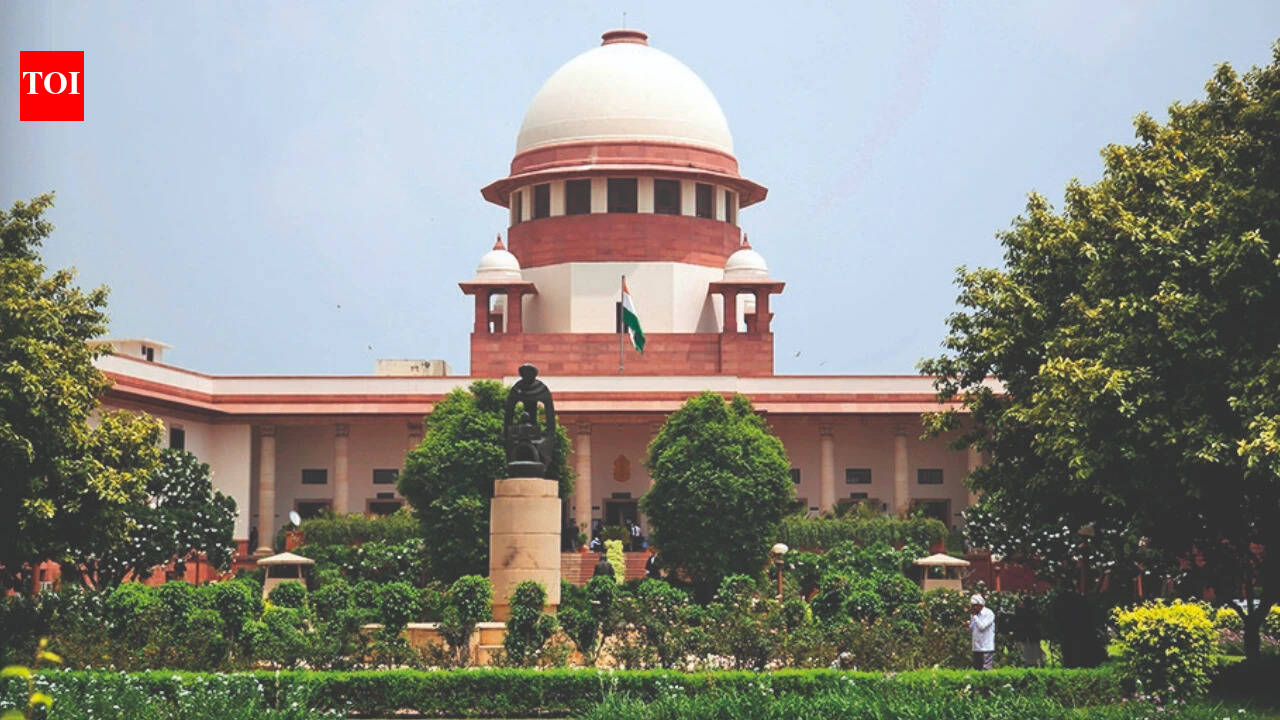
Image: Times of India
Why in news
The supplied report states that the Supreme Court will examine a recall plea concerning a recent split verdict on the EC appointment law. The available excerpt does not disclose the precise issue on which the judges differed, the grounds for recall or the operative directions.
Background
Article 324 vests the superintendence, direction and control of elections to Parliament, State Legislatures, and the offices of President and Vice-President in the Election Commission of India. It provides for the President to appoint the Chief Election Commissioner and other Election Commissioners, subject to any law made by Parliament. In Anoop Baranwal v. Union of India, the Supreme Court prescribed an interim selection arrangement involving the Prime Minister, the Leader of Opposition in the Lok Sabha and the Chief Justice of India, pending parliamentary legislation. Parliament subsequently enacted the Chief Election Commissioner and Other Election Commissioners (Appointment, Conditions of Service and Term of Office) Act, establishing a statutory appointment mechanism.
What the reported development establishes
The immediate development is procedural: the Supreme Court has agreed to examine a request for recall. Agreement to examine a plea must be distinguished from allowing it, reconsidering the merits of the constitutional challenge or granting interim relief.
The supplied excerpt is insufficient to determine whether the underlying disagreement concerned the law’s validity, an interim application or another procedural question. Conclusions about the outcome or legal effect of that disagreement would therefore be premature.
- Do not treat the reported split as either a conclusive validation or invalidation of the appointment law.
- The operative judicial order, rather than the headline alone, determines the immediate legal consequences.
Infographic
Constitutional mandate
Article 324 establishes electoral authority and permits appointment legislation.
Selection design
Executive participation and opposition representation shape the appointment process.
Institutional autonomy
Tenure protection, resources and impartial functioning sustain independence.
Judicial scrutiny
Legislative authority remains subject to constitutional review.
Procedural clarity
Recall, review and resolution of a split serve different purposes.
AI-assisted infographic by Pragnya IAS Academy, based on the cited sources.
Constitutional and statutory appointment framework
Article 324 expressly allows Parliament to legislate on appointments to the Election Commission. The President remains the appointing authority, while the statutory selection committee comprises the Prime Minister, a Union Cabinet Minister nominated by the Prime Minister, and the Leader of Opposition in the Lok Sabha. Where no Leader of Opposition is recognised, the statutory definition accommodates the leader of the largest opposition party in the Lok Sabha.
The Act also provides for a search committee headed by the Union Law Minister to prepare a panel for consideration. The selection committee may consider persons outside that panel. Consequently, the quality of selection depends not only on committee membership but also on the criteria, scrutiny and reasons informing its recommendations.
- The Chief Justice of India is not a member of the statutory selection committee.
- The earlier judicial arrangement was expressly temporary, pending a parliamentary law.
- Parliament’s legislative authority does not exclude judicial review of the resulting law.
Institutional independence: appointment and tenure
The principal institutional concern is that the Prime Minister and the nominated Cabinet Minister give the executive a numerical majority in the selection committee. Opposition participation introduces a non-executive voice, but cannot by itself ensure agreement across political divides. This creates a legitimate question about safeguards against partisan selection, not proof that every appointment is compromised.
The constitutional counterpoint is that Article 324 does not expressly require judicial participation in appointments. The appropriate inquiry is whether the institutional design adequately protects an impartial election authority while respecting Parliament’s law-making role.
Independence also depends on protections after appointment. The Chief Election Commissioner can be removed only in the same manner and on the same grounds as a Supreme Court judge, and the conditions of service cannot be varied to the incumbent’s disadvantage after appointment. Other Election Commissioners cannot be removed except on the Chief Election Commissioner’s recommendation.
- Free and fair elections are integral to constitutional democracy and the basic structure.
- Executive involvement in selection is not automatically equivalent to executive control over decisions.
- Transparent appointments, protected tenure and administrative capacity must be assessed together.
Split verdict, recall and review: distinct judicial routes
A split verdict occurs when judges on a bench disagree. Where an evenly divided bench has no majority on a disputed issue, the disagreement does not produce a majority ruling on that issue. Ordinarily, the matter is placed before the Chief Justice of India for appropriate bench constitution or reference; the precise route depends on the proceedings and directions already issued.
Recall generally addresses a fundamental defect in the judicial process, such as denial of a necessary hearing, fraud affecting the proceeding or a jurisdictional defect. It is not ordinarily a substitute for challenging the correctness of a reasoned decision. Review under Article 137, governed by applicable law and Supreme Court Rules, permits reconsideration on limited grounds, including an error apparent on the face of the record.
A disagreement between judges does not, by itself, establish a ground for recall. Nor does filing a recall or review petition automatically suspend the operation of legislation or an existing order; any such effect depends on the applicable judicial directions.
- Recall asks whether a serious procedural defect warrants setting aside the affected order.
- Review asks whether a decision requires correction within the narrow limits of review jurisdiction.
- Reference following a split seeks an authoritative resolution of the disputed issue.
| Mechanism | Purpose and limitation |
|---|---|
| Recall | Addresses fundamental defects affecting the proceeding or order; not ordinarily a fresh merits hearing. |
| Review | Limited reconsideration under Article 137 and applicable rules; not an appeal in disguise. |
| Reference after a split | Enables resolution of judicial disagreement through an appropriately constituted bench. |
| Stay | Temporarily restrains the operation of a law or order through a specific judicial direction; filing a petition does not itself grant a stay. |
- 1. Judges record divergent opinions on an issue.
- 2. The operative directions identify the unresolved matter and any interim arrangement.
- 3. The matter is placed before the Chief Justice of India for appropriate bench constitution or reference.
- 4. The designated bench hears and resolves the issue within the scope of the reference.
Significance, challenges & way forward
Significance
- An impartial Election Commission protects electoral competition and public confidence in representative government.
- The dispute tests how parliamentary authority over appointments can coexist with constitutional safeguards for institutional independence.
- Procedural clarity helps distinguish an unresolved judicial disagreement from a binding majority determination.
- The eventual reasoning may inform wider debates on appointments to independent constitutional institutions, depending on the issues actually decided.
Challenges
- Executive predominance in selection can create concerns about perceived neutrality even without evidence of improper conduct.
- Opposition membership may have limited practical influence when the selection process does not require consensus.
- Judicial participation in selection is not an express constitutional requirement and must not be treated as the only possible independence safeguard.
- Using recall to reargue substantive disagreement could undermine the distinction between recall, review and appeal.
- The incomplete source excerpt prevents a reliable assessment of the petition’s specific grounds or the split verdict’s operative effect.
Way forward
- Assess the controversy against the complete judicial opinions, operative order and recall petition before drawing case-specific conclusions.
- Strengthen objective eligibility assessment, meaningful deliberation and reasoned selection while protecting legitimate confidentiality.
- Ensure that opposition participation is substantive through timely access to relevant candidate information.
- Evaluate appointment safeguards alongside tenure protection, administrative autonomy and institutional resources.
- Resolve procedural questions expeditiously while preserving electoral continuity and the independence of the Commission.
Key terms
- Split verdict
- Divergent judicial opinions within a bench; an evenly divided bench lacks a majority determination on the disputed issue.
- Recall petition
- A request to set aside an order, generally because a fundamental procedural or jurisdictional defect affected the proceeding.
- Review jurisdiction
- The Supreme Court’s limited power under Article 137 to reconsider its judgments or orders subject to applicable law and rules.
- Institutional independence
- An institution’s capacity to exercise its constitutional functions without improper external influence.
- Basic structure doctrine
- The principle that Parliament’s constitutional amending power cannot destroy the Constitution’s foundational features.
- Operative order
- The part of a judicial decision containing the directions that determine its immediate legal effect.
Link with static syllabus
Prelims practice MCQs
Q1. With reference to Election Commission appointments, consider the following statements: Statement I: The President appoints the Chief Election Commissioner and other Election Commissioners, subject to any law made by Parliament. Statement II: Article 324 expressly requires the Chief Justice of India to participate in the selection process. Which of the statements given above is/are correct?
Q2. Which of the following correctly describes the selection committee under the statutory framework for appointing the Chief Election Commissioner and other Election Commissioners?
Q3. Consider the following statements about removal safeguards: Statement I: The Chief Election Commissioner can be removed only in the same manner and on the same grounds as a Supreme Court judge. Statement II: Other Election Commissioners cannot be removed except on the recommendation of the Chief Election Commissioner. Which of the statements given above is/are correct?
Q4. With reference to judicial procedure, consider the following statements: Statement I: Filing a recall petition automatically stays the operation of the challenged law. Statement II: An evenly divided bench produces a binding majority ruling on the issue over which its judges disagree. Which of the statements given above is/are correct?
Mains practice questions
GS 2 · 15 marks · 250 words
The independence of the Election Commission depends on more than the composition of its appointment committee. Discuss with reference to the constitutional framework and the role of judicial review.
Frequently asked questions
Has the Supreme Court recalled the split verdict or struck down the EC appointment law?
The supplied report establishes only that the Court has agreed to examine a recall plea. It does not establish that recall has been granted or the law invalidated.
Is the Chief Justice of India part of the statutory EC selection committee?
No. The statutory committee comprises the Prime Minister, a nominated Union Cabinet Minister and the Leader of Opposition in the Lok Sabha; judicial participation belonged to the earlier interim arrangement.
How does recall differ from review?
Recall generally addresses a fundamental defect affecting the judicial proceeding or order. Review is limited reconsideration of a judgment or order under Article 137 and applicable rules.
Does a split verdict automatically suspend the appointment law?
No. Its immediate effect depends on the operative directions, including any interim relief; disagreement alone does not automatically suspend legislation.
Sources
Analysis prepared by the Pragnya IAS Academy current-affairs desk with AI assistance from the cited reports. Verify figures with the original sources.
Turn current affairs into marks
Join Pragnya IAS Academy's mentorship for daily answer-writing evaluation on stories like this — classroom programmes from a trusted name in IAS coaching in Hyderabad.