

Chilika Lake Odisha
Credit: Hellohappy · CC BY-SA 4.0 · source

This photograph was taken for HDR demonstration.
Credit: Biswarup Ganguly · CC BY 3.0 · source
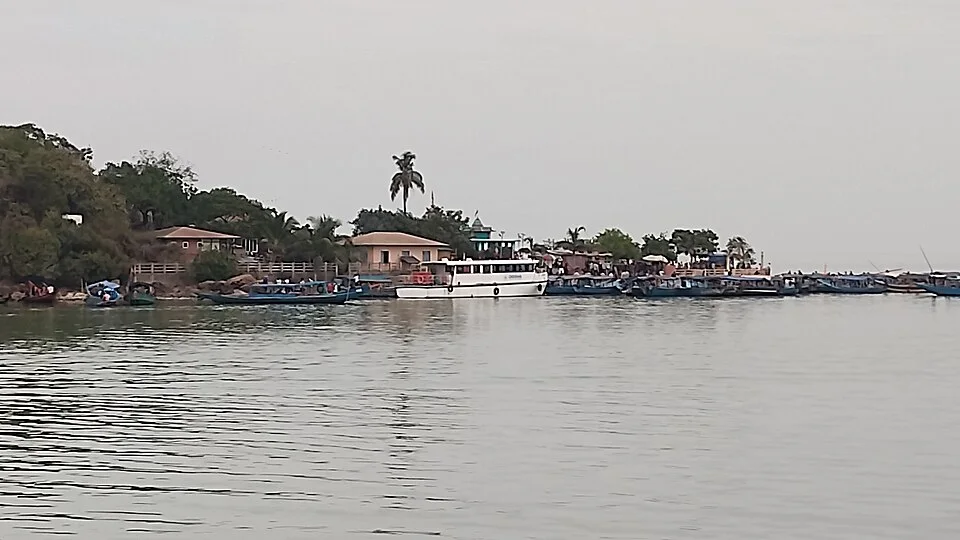
Chilika Lake, Odisha: an Indian Ramsar wetland.
Credit: Hellohappy · CC BY-SA 4.0 · sourceResized and converted to WebP; uncropped.
1. Meaning, scope and ecological importance
The Convention on Wetlands, commonly called the Ramsar Convention, is an intergovernmental treaty for wetland conservation and wise use. Although its original title highlights waterfowl habitat, its modern scope covers wetland ecosystems, biodiversity, hydrological functions and human well-being. A Ramsar site is a wetland included in the List of Wetlands of International Importance following designation by the country concerned. The Ramsar Secretariat is based in Gland, Switzerland.
The Convention defines wetlands broadly: areas of marsh, fen, peatland or water, whether natural or artificial, permanent or temporary, with static or flowing water that may be fresh, brackish or salt. Its definition includes marine water whose depth at low tide does not exceed six metres. Designated sites may also incorporate adjacent riparian and coastal zones, islands and deeper marine waters lying within the wetland. Therefore, Ramsar sites are not confined to freshwater lakes or untouched wilderness.
Wetlands store and regulate water, moderate floods, trap sediments, support fisheries and provide feeding or breeding grounds for migratory birds. Some support groundwater recharge, while others receive groundwater discharge; the relationship is site-specific. Peatlands and coastal wetlands can store substantial carbon. Nevertheless, wetlands also naturally emit methane, so their climate role should not be reduced to a universal claim that every wetland is a net greenhouse-gas sink.
Indian examples illustrate this diversity: Chilika is a brackish coastal lagoon, Wular is a freshwater lake, East Kolkata Wetlands is a human-managed wastewater-fed wetland system, and Sundarban Wetland contains extensive mangrove habitats.
Timeline
1971
Convention adopted at Ramsar, Iran, on 2 February.
1975
Convention entered into force.
1981–1982
Chilika and Keoladeo designated in 1981; Convention entered into force for India on 1 February 1982.
1990
Montreux Record established.
2002
Chilika Lake removed from the Montreux Record.
2017
India notified the Wetlands (Conservation and Management) Rules, 2017.
2. Treaty commitments and wise use
The Convention rests on three pillars: wise use of all wetlands; designation and effective management of internationally important wetlands; and international cooperation over shared wetlands, river basins and species. Its obligations therefore extend beyond the sites appearing on the Ramsar List. On joining, a country must designate at least one suitable wetland for inclusion in that list.
Wise use means maintaining a wetland’s ecological character through ecosystem approaches within the context of sustainable development. Ecological character refers to the combination of ecosystem components, processes and benefits or services that characterise a wetland at a given time. Wise use does not require excluding every human activity. Fishing, grazing, tourism or traditional resource collection may remain compatible where their scale and methods do not undermine ecological character.
Contracting Parties are expected to plan for wetland conservation and report when the ecological character of a listed site has changed, is changing or is likely to change because of technological development, pollution or other human interference. Cooperation is particularly important for migratory waterbirds and transboundary catchments, because pressures outside a designated boundary can alter water availability and quality within it.
Ramsar designation creates international commitments and visibility, but it does not transfer sovereignty, ownership or management to an international organisation. Nor does it automatically make a site a UNESCO World Heritage property or an IUCN protected-area category. Implementation depends on domestic institutions, laws, management plans and community participation.
From identification to effective conservation
- 1. Identify and delineate a wetland and assess its ecological character.
- 2. Evaluate eligibility against the nine Ramsar criteria.
- 3. Prepare the Ramsar Information Sheet and map through the national authority.
- 4. Complete designation and inclusion in the Ramsar List.
- 5. Implement integrated management with local participation.
- 6. Monitor ecological character and report relevant changes.
3. Nine designation criteria: what to remember
A proposed wetland needs to satisfy at least one of the nine Ramsar criteria, not all nine. Criterion 1 concerns a representative, rare or unique example of a natural or near-natural wetland type within the appropriate biogeographic region. The other eight criteria concern international importance for conserving biological diversity.
Criteria 2–4 address threatened species and ecological communities, species important for maintaining regional biological diversity, and support during critical life-cycle stages or refuge during adverse conditions. Consequently, an important breeding area or drought refuge may qualify even without exceptionally large bird congregations.
Criteria 5 and 6 are frequently tested numerical thresholds. Criterion 5 requires regular support for 20,000 or more waterbirds. Criterion 6 requires regular support for at least 1% of the individuals in a population of one species or subspecies of waterbird. The denominator is the relevant population, not necessarily the species’ entire global population.
Criteria 7 and 8 concern fish diversity and ecological functions. Criterion 7 addresses a significant proportion of indigenous fish diversity and associated life-history stages, interactions or populations. Criterion 8 concerns an important food source, spawning ground, nursery or migration path on which fish stocks depend. Criterion 9 requires regular support for at least 1% of the individuals in a population of one species or subspecies of wetland-dependent non-avian animal.
Designation is supported by a Ramsar Information Sheet describing boundaries, wetland types, qualifying criteria, biodiversity, threats and management. The Ramsar Sites Information Service is the authoritative reference for these site-level details.
| Instrument or designation | Core meaning | Prelims caution |
|---|---|---|
| Ramsar List | Wetlands of international importance | At least one of nine criteria must be met. |
| Montreux Record | Listed Ramsar sites facing actual or likely human-induced ecological change | Entry does not cancel Ramsar status. |
| Ramsar wise use | Maintenance of ecological character within sustainable development | Applies to all wetlands, not only listed sites. |
| National park or wildlife sanctuary | Domestic statutory wildlife protection | Not automatically created by Ramsar designation. |
| Wetlands Rules, 2017 | Indian wetland regulatory framework | Its scope is not identical to the Convention’s wetland definition. |
4. Indian legal framework and institutional responsibilities
India implements wetland conservation through several overlapping legal and administrative arrangements. The Wetlands (Conservation and Management) Rules, 2017 were notified under the Environment (Protection) Act, 1986, replacing the 2010 rules. They establish State and Union Territory Wetlands Authorities and provide for identifying wetlands, defining boundaries and zones of influence, determining permitted activities and preparing integrated management plans.
The 2017 Rules cover Ramsar wetlands and wetlands notified through the prescribed domestic process, subject to their applicability provisions. They exclude specified categories, including river channels, paddy fields and certain purpose-built water bodies. Wetlands within areas covered by specified forest, wildlife and coastal regulation instruments are governed through those corresponding legal provisions. Importantly, the Convention’s broad wetland definition and the domestic Rules’ regulatory scope are not identical.
For wetlands governed by the Rules, prohibited activities include conversion to non-wetland uses, encroachment, establishment or expansion of industries, dumping of solid waste and discharge of untreated wastes or effluents. Permanent construction is restricted within fifty metres of the mean high flood level observed over the preceding ten years, with specified exceptions such as boat jetties.
Ramsar status must not be confused with a national park, wildlife sanctuary, conservation reserve or community reserve under the Wild Life (Protection) Act, 1972. A site can have overlapping designations, as Keoladeo does, but Ramsar listing alone does not create one of those statutory protected-area categories.
5. Montreux Record, threats and effective management
The Montreux Record is a register of Ramsar sites where ecological character has changed, is changing or is likely to change because of technological development, pollution or other human interference. Established in 1990, it helps prioritise attention and remedial action. It is neither a list of all threatened wetlands nor a mechanism for automatically removing sites from the Ramsar List.
Keoladeo National Park and Loktak Lake are Indian sites on the Montreux Record. Chilika Lake was placed on it in 1993 and removed in 2002 following restoration and improved management. These distinctions are more important for Prelims than memorising an undated national site count, which changes with new designations.
Major threats include catchment degradation, altered environmental flows, sewage, agricultural nutrient runoff, encroachment, invasive alien species and unsustainable resource extraction. Management must therefore extend beyond beautification or dredging. Priority measures include restoring hydrological connectivity, treating pollution at source, protecting seasonal water regimes and monitoring biodiversity alongside livelihood outcomes.
A practical management plan combines a reliable ecological baseline, community participation, coordination between departments and periodic assessment of ecological character. Increasing the number of listed sites is useful, but conservation success ultimately depends on maintaining ecosystem functions rather than designation alone.
Chilika: Ramsar Conservation Beyond Site Designation
Chilika Lake in Odisha is a brackish-water coastal lagoon and a Ramsar site, making it a directly relevant Indian example. Its ecological character depends on interactions among freshwater inflows, exchange with the sea, sediment movement and salinity. These processes sustain varied habitats and fisheries, illustrating why wetland conservation must address the wider catchment and hydrological connections rather than only a mapped boundary. The supplied metadata identifies Chilika but does not establish the photograph’s date, precise location or ecological conditions.
Ramsar designation recognises international importance; it does not automatically make a wetland a national park or wildlife sanctuary under Indian law. Management should maintain ecological character while supporting wise use, rather than presume that every human activity must cease. Chilika also illustrates the distinction between the Ramsar List and the Montreux Record: it was placed on the latter because of ecological change and subsequently removed following restoration measures. Removal from the Montreux Record did not mean loss of Ramsar status. For Mains, the case connects hydrological restoration, livelihood dependence, scientific monitoring and participatory governance.
- Designation: A wetland must satisfy at least one of nine Ramsar criteria; bird abundance is not the only qualifying basis.
- Governance: Ramsar recognition and domestic legal protection are distinct; assess applicable Indian wetland rules and other statutory protections separately.
- Evidence: A site photograph cannot demonstrate successful restoration; ecological assessment requires information on hydrology, water quality, habitats and species over time.
Real-world case studies
Chilika Lake, Odisha: restoring hydrological connectivity
Sedimentation and restricted exchange with the sea contributed to ecological deterioration in Chilika. A new mouth opened in 2000 improved tidal exchange and salinity conditions, supporting ecological recovery and fisheries. Catchment treatment, scientific monitoring and stakeholder engagement complemented the intervention. Removal from the Montreux Record in 2002 illustrates restoration without losing Ramsar status.
East Kolkata Wetlands, West Bengal: conservation with livelihoods
Designated in 2002, this wetland system supports wastewater-fed fisheries and agriculture. Its managed ecological processes recover nutrients and sustain livelihoods, illustrating why wise use need not mean excluding people. However, these services do not justify unrestricted pollution; encroachment and unsuitable effluents threaten the system.
Previous year questions
UPSC Prelims 2014
If a wetland of international importance is included in the Montreux Record, what does this imply?
- A. Its ecological character has changed, is changing or is likely to change because of technological development, pollution or other human interference.
- B. It must be given World Heritage status and a five-hundred-metre buffer free from exploitation.
- C. Its survival depends on cultural practices of nearby communities, whose cultural diversity must therefore be protected.
- D. It has been declared a World Heritage Site.
Practice questions
Practice MCQ 1
Consider the following statements: 1. Artificial wetlands can qualify as Ramsar sites. 2. A wetland must satisfy all nine Ramsar criteria. 3. Ramsar wise-use commitments extend beyond listed sites. Which statements are correct?
- A. 1 and 2 only
- B. 2 and 3 only
- C. 1 and 3 only
- D. 1, 2 and 3
Practice MCQ 2
Which pair correctly matches a Ramsar criterion with its threshold?
- A. Criterion 5 — regular support for at least 10,000 waterbirds
- B. Criterion 6 — regular support for at least 1% of a population of one waterbird species or subspecies
- C. Criterion 8 — a minimum wetland area of 20,000 hectares
- D. Criterion 9 — regular support for at least 10% of the global population of any plant
Practice MCQ 3
Consider the following statements: 1. Ramsar designation automatically creates a wildlife sanctuary under Indian law. 2. Removal from the Montreux Record necessarily removes a wetland from the Ramsar List. Which is correct?
- A. 1 only
- B. 2 only
- C. Both 1 and 2
- D. Neither 1 nor 2
Mains practice · International recognition is a starting point, not a guarantee of wetland conservation. Discuss with reference to Ramsar sites in India. Suggest measures to maintain their ecological character. (250 words)
- Explain Ramsar designation, ecological character and wise use.
- Distinguish treaty commitments from domestic statutory protection.
- Examine hydrological alteration, pollution, encroachment and institutional fragmentation.
- Use Chilika and East Kolkata Wetlands as examples.
- Recommend catchment-based planning, environmental flows, pollution control and livelihood-sensitive management.
- Emphasise ecological monitoring and outcomes rather than site counts alone.
Further reading
- Convention on Wetlands official website: Convention text, wise use, designation criteria and Montreux Record.
- Ramsar Sites Information Service: Indian site descriptions and Ramsar Information Sheets.
- MoEFCC: Wetlands (Conservation and Management) Rules, 2017 and implementation guidelines.
- Wetlands of India Portal: wetland inventories and management resources.
- NCERT Biology, Class XII: Biodiversity and Conservation.
- https://commons.wikimedia.org/wiki/File:Chilika_Lake_(17819).jpg
Preparing for UPSC Civil Services? Get classroom teaching, answer-writing evaluation and mentorship at Pragnya IAS Academy, Ashok Nagar — see why aspirants choose us for IAS coaching in Hyderabad.