
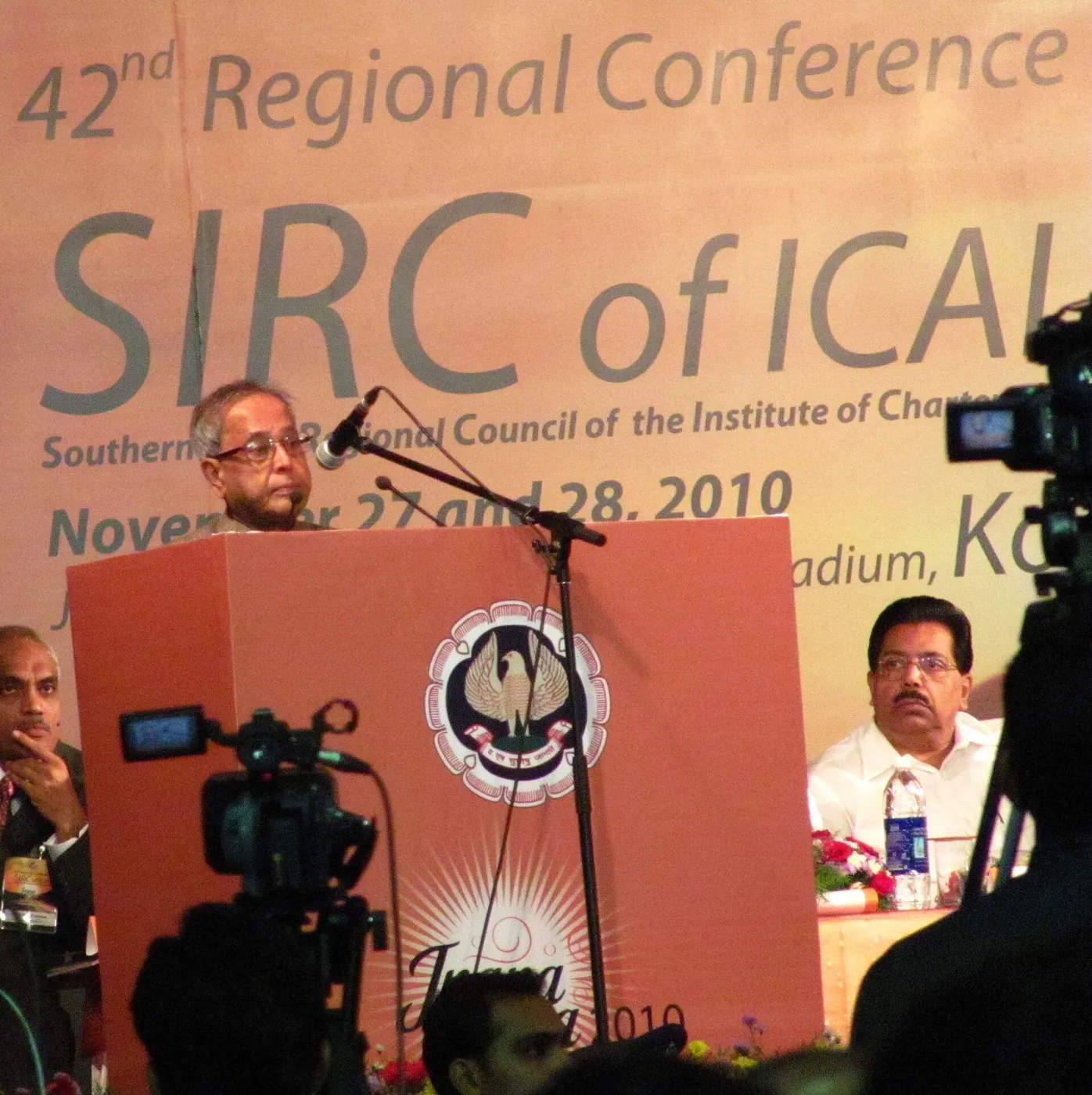
Presidential assent: portrait of the President who assented to the Act on 1 March 2014.
Credit: Vishnu Nair · Public domain · source

Charminar at Hyderabad, India
Credit: DidierTais · CC BY-SA 3.0 · source

Hyderabad’s urban setting: a present-day landscape photograph.
Credit: iMahesh · CC BY-SA 4.0 · source
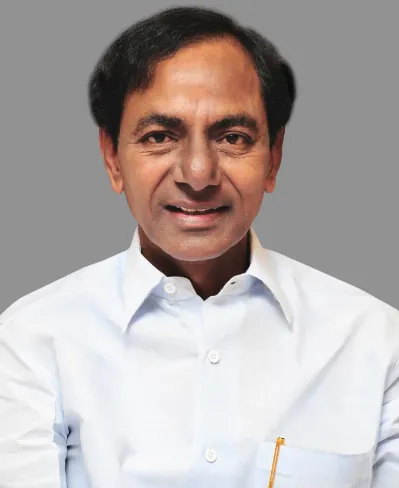
Telangana’s executive: portrait of its first Chief Minister; section 8 required consultation with Telangana’s Council of Ministers.
Credit: Digital Media Telangana Government · CC BY-SA 4.0 · source

Lok Sabha: portrait of the Speaker during the parliamentary passage of the 2014 legislation.
Credit: Kumar Amar · CC BY-SA 2.0 · source
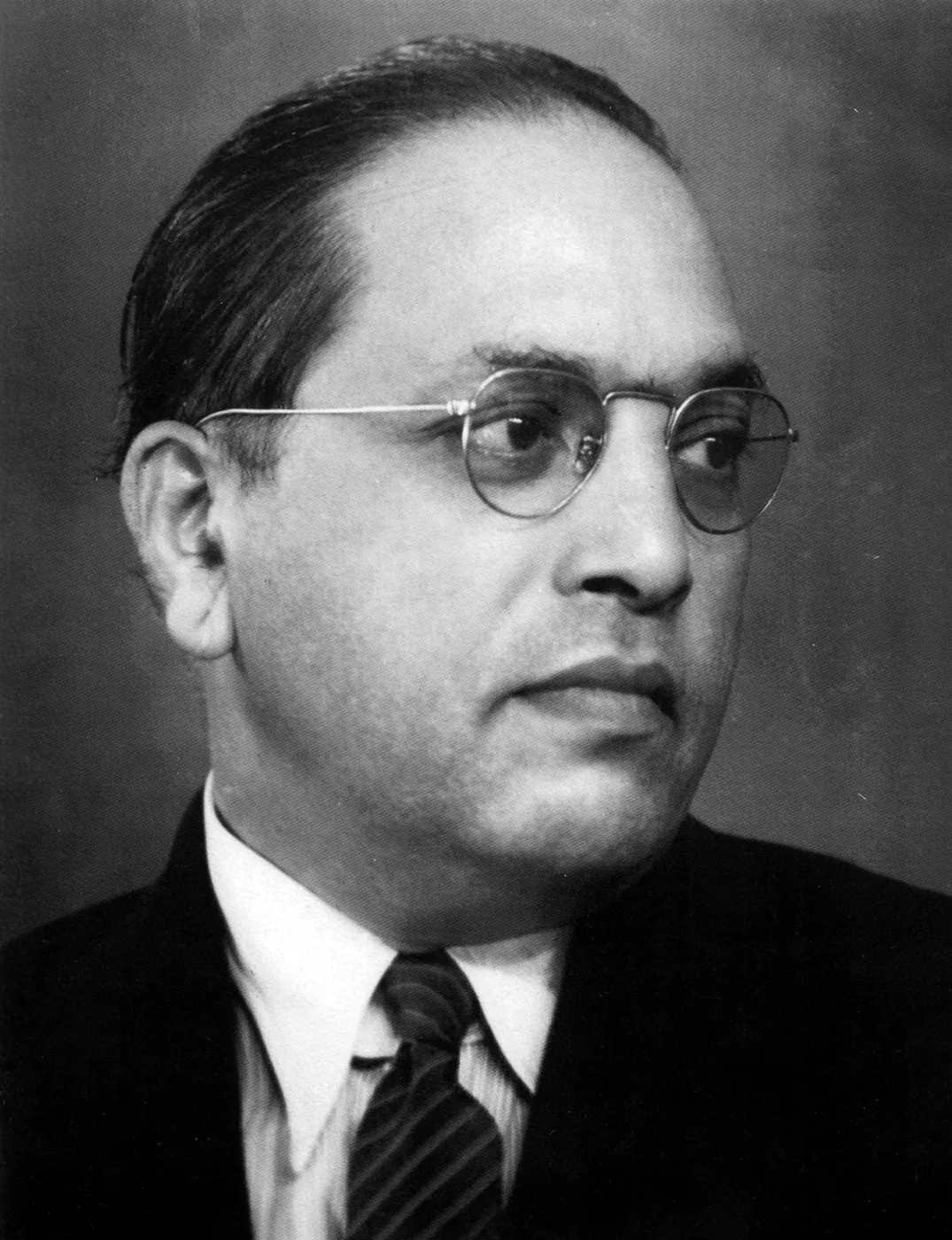
B. R. Ambedkar: chair of the Drafting Committee; the Constitution’s representation framework underlies the Act’s delimitation and SC/ST provisions.
Credit: Unknown photographer · Public domain · source
1. Part I: preliminary provisions and the method of reading the Act (sections 1–2)
The Act is both a state-formation law and a transition framework. Part I supplies its title and definitions, including the appointed day, successor State and population ratio. These definitions prevent important mistakes: the date of presidential assent is not the date on which Telangana began functioning as a State, and a reference to the existing State ordinarily means undivided Andhra Pradesh immediately before the appointed day. Read each later provision through these definitions rather than substituting present-day administrative boundaries or institutional arrangements.
A sound legal reading separates three layers. First is the original enactment, which establishes rights, duties and transitional mechanisms. Second are amendments that change that text, such as the territorial changes in 2014 and the Andhra Pradesh Council increase in 2015. Third are implementation measures, including notifications, allocation orders, agreements and funding decisions. Parliamentary assurances form a further political context but cannot automatically be treated as statutory sections. For TGPSC answers, identify which layer supports a claim before discussing its fulfilment or violation.
- Act number: 6 of 2014.
- Assent: 1 March 2014; appointed day: 2 June 2014.
- Defined population ratio runs AP first, Telangana second.
- A statutory duty and a political assurance require different evidence.
Timeline
20 February 2014
Prime Minister Manmohan Singh announces a package in Parliament, including five years of Special Category Status for successor Andhra Pradesh.
1 March 2014
Presidential assent to Act 6 of 2014.
4 March 2014
Notification S.O. 655(E) appoints 2 June 2014 as the appointed day.
May 2014
An ordinance introduces territorial changes associated with Polavaram; subsequent legislation replaces it.
2 June 2014
Telangana is formed and the Act’s principal transitional arrangements begin.
July 2014
Parliament passes the territorial amendment concerning areas in seven Khammam mandals.
30 March 2015
The 2015 amendment receives assent, providing an Andhra Pradesh Council increase from 50 to 58.
June 2024
The ten-year horizon from the appointed day is reached; capital, admissions and development clauses require separate legal assessment rather than a single blanket conclusion.
2. Part II: territories, Hyderabad and the Governor (sections 3–11)
Part II constitutes Telangana and identifies the territory remaining with Andhra Pradesh. The formation provision names the ten then-existing Telangana districts, subject to the legally specified Khammam exclusions; it must not be read through later district reorganisation. Section 5 places the common-capital arrangement within the then-notified Greater Hyderabad Municipal Corporation area for a period not exceeding ten years. Hyderabad remained in Telangana. Shared use as a capital did not confer shared sovereignty or make the city a Union territory, and the arrangement did not create a permanent Andhra Pradesh right to it.
Sections 6–9 manage the administrative sensitivities of separation. An expert committee was to consider alternatives for Andhra Pradesh’s capital; a common Governor was provided for a period determined by the President. Section 8 gives the Governor special responsibility for protecting residents of the common capital, with consultation of Telangana’s Council of Ministers and individual judgment in the specified functions. Two centrally appointed advisers assist this responsibility. Security assistance and training arrangements complement the transition. Sections 10–11 address the constitutional territorial entry and preserve State powers over internal administrative divisions.
- Section 3: Telangana; section 4: residual Andhra Pradesh.
- Common capital was time-limited, not joint ownership.
- The common Governor’s tenure depended on the President, not automatically on the capital period.
- Internal district changes are distinct from altering an interstate boundary.
From enactment to accountable implementation
- 1. Identify the statutory provision, its beneficiary, conditions and responsible authority.
- 2. Apply the appointed-day framework and any later amendment before describing the legal position.
- 3. Inventory assets, services, projects and financial obligations; issue the required allocation orders and notifications.
- 4. Use boards, advisory bodies, Union–State coordination and interstate negotiation to operate shared arrangements.
- 5. Compare dated evidence of funding, construction and institutional functioning against the particular statutory duty.
- 6. Resolve remaining disagreements through the designated legal route and publish reasoned progress reports.
3. Part III: representation, delimitation and protected lists (sections 12–29)
Part III distributes representative institutions between the successor States. Telangana receives seven Rajya Sabha and seventeen Lok Sabha seats, while Andhra Pradesh receives eleven and twenty-five. The Assemblies are constituted with 119 and 175 seats respectively. Council provisions originally specify ceilings of forty for Telangana and fifty for Andhra Pradesh. The latter figure belongs to the original enactment: Parliament increased it to fifty-eight in 2015. An answer that gives fifty without a historical qualifier, or attributes fifty-eight to the original Act, collapses two different legal moments.
Section 26 envisages Assembly strength increasing to 153 in Telangana and 225 in Andhra Pradesh, expressly subject to Article 170. It should not be presented as an automatic increase implemented on the appointed day. The Part also handles sitting members, legislative officers, procedure and delimitation orders, allowing representation to continue through institutional separation. Sections 28–29 amend the Scheduled Castes and Scheduled Tribes Orders through the Act’s Fifth and Sixth Schedules. Those schedules must not be confused with the Constitution’s similarly numbered schedules dealing with tribal-area administration.
- Telangana/AP: RS 7/11; LS 17/25; Assembly 119/175.
- Council ceilings in 2014: 40/50; AP later changed to 58.
- Proposed Assembly increases are conditional, not the formation allocation.
- The Act’s schedules and the Constitution’s schedules are different instruments.
| Institution or rule | Telangana | Andhra Pradesh | Legal qualification |
|---|---|---|---|
| Rajya Sabha | 7 | 11 | Section 12 |
| Lok Sabha | 17 | 25 | Section 14 |
| Assembly at formation | 119 | 175 | Section 17 |
| Legislative Council: original ceiling | 40 | 50 | Section 22 as enacted in 2014 |
| Council: effect of 2015 amendment | 40 unchanged | 58 | Later amendment, not the original figure |
| Assembly increase envisaged | 153 | 225 | Section 26, subject to Article 170; not the formation allocation |
| Population ratio under section 2(h) | 41.68 | 58.32 | Ratio used where the relevant clause provides; not a universal division rule |
4. Parts IV–V: courts, spending and revenue (sections 30–46)
Part IV, sections 30–43, provides a common High Court at Hyderabad until a separate Andhra Pradesh High Court is established. Judicial separation therefore follows its own legal process rather than occurring automatically on state formation or on the end of the common-capital period. The provisions address judges, jurisdiction, advocates, practice, appeals and transfer of proceedings. This design protects access to justice and the continuity of pending cases while providing for separate constitutional courts. A common institution during transition is not evidence that either successor State lacks separate statehood.
Part V, sections 44–46, prevents a fiscal vacuum. Section 44 permits temporary authorisation of expenditure from Telangana’s Consolidated Fund for a period not extending beyond six months from the appointed day, pending legislative sanction. Section 45 handles earlier audit reports and related expenditure issues. Section 46 apportions the Thirteenth Finance Commission award using population and other parameters, and provides for separate consideration by the Fourteenth Finance Commission. Its grants and development-package provisions should be read precisely: they do not themselves create an express Special Category Status clause.
- Part IV: 30–43; Part V: 44–46.
- Court separation and capital sharing have different legal triggers.
- Temporary spending authority does not replace legislative financial control.
- Finance Commission transfers differ from project-specific assistance.
5. Part VI: dividing assets and liabilities (sections 47–67)
Part VI does not impose one universal division formula. It combines location, purpose, population, special schedules and negotiated adjustment. Land and goods ordinarily follow territorial location, but headquarters and common-use assets require attention to the detailed exceptions. Cash balances are apportioned by population ratio through accounting adjustments, not by physically dividing currency in every treasury. Tax arrears, recoverable loans, investments and commercial undertakings each have their own clauses. Consequently, the claim that every institution or debt must be split 58.32:41.68 is legally unsound even though that ratio is central to several provisions.
The liabilities provisions address public debt, floating loans, refunds, deposits, provident funds, pensions, contracts and actionable wrongs. Pensions are governed through the Eighth Schedule, not merely the residence of an individual pensioner. Sections 65–66 permit equitable adjustment and provide for central resolution in specified circumstances. Section 47 gives the Comptroller and Auditor-General a role in advising on financial adjustments incidental to apportionment; it does not make the CAG the sole final adjudicator of every asset dispute. Effective settlement depends on inventories, valuation, accounts and reasoned decisions that both States can scrutinise.
- Read the specific asset or liability clause first.
- Population ratio is important but not universal.
- Location of headquarters alone may not settle an undertaking’s division.
- Separate audit advice, negotiated adjustment and statutory decision-making.
6. Parts VII–VIII: corporations, employees and commissions (sections 68–83)
Part VII, sections 68–75, concerns specified corporations and related institutional arrangements. The Ninth Schedule identifies companies and corporations, whereas section 75 and the Tenth Schedule concern continued facilities in listed State institutions. These categories must not be treated as interchangeable lists of property for immediate sale or equal division. Road transport permits and institutional continuity receive specific attention because people and economic networks continue to cross the new border. Electricity questions also require Part X and the Twelfth Schedule; they cannot be answered solely from the corporation provisions.
Part VIII, sections 76–83, separates All India Services cadre arrangements from other service allocation. Central allocation, provisional continuity, advisory mechanisms and protection of service conditions help prevent administrative disruption. Employees of State undertakings are addressed separately from ordinary State government staff. Section 83 deals with public service commissions: the existing commission serves Andhra Pradesh, while Telangana’s commission follows the constitutional establishment process. This was not an automatic division into two identical bodies. For analysis, balance employee fairness and local administrative needs with the obligation to maintain uninterrupted services for citizens.
- Part VII: 68–75; Part VIII: 76–83.
- Ninth Schedule corporations differ from Tenth Schedule institutions.
- Service allocation is not determined by personal preference alone.
- Use TGPSC for the exam body in present-day study notes.
7. Part IX: water boards, adjudication and Polavaram (sections 84–91)
Shared river systems turn territorial separation into a continuing federal relationship. Section 84 creates an Apex Council chaired by the Union water-resources minister with both Chief Ministers as members. Section 85 provides for the Godavari and Krishna River Management Boards, with headquarters prescribed in Telangana and Andhra Pradesh respectively. Their functions include regulating notified projects and supplies with reference to tribunal awards and applicable arrangements. Sections 86–88 address staffing, jurisdiction and regulations. A board is an operational institution under the Act, not an unrestricted substitute for a water-disputes tribunal.
Section 89 extends the Krishna tribunal’s task to project-specific allocation where necessary and an operational protocol during deficit flows, while recognising binding project-specific awards already made. The Act does not itself enact a permanent numerical Krishna split between the two States. Section 90 declares Polavaram a national project, deems Telangana’s consent and assigns execution and requisite clearances to the Union under its terms. Environmental protection and rehabilitation obligations remain relevant; deemed consent is not a waiver of all safeguards. Section 91 provides continuity of the successor States’ role on the Tungabhadra Board.
- Apex Council: section 84; boards: section 85.
- Board operation, tribunal adjudication and project approval are distinct.
- No permanent Telangana/AP Krishna volume split is specified in the Act.
- Polavaram’s national-project status does not remove rehabilitation duties.
8. Part X: energy, development and the Thirteenth Schedule (sections 92–94)
Part X brings together energy principles and development measures rather than merely distributing existing property. Section 92 links coal, oil, natural gas and electricity arrangements to the Twelfth Schedule. Section 93 directs central measures under the Thirteenth Schedule for progress and sustainable development within ten years from the appointed day. Section 94 concerns fiscal measures, backward-area development and assistance for Andhra Pradesh’s essential capital infrastructure. Development provisions address the asymmetric consequences of bifurcation, but their beneficiaries and operative wording must be identified clause by clause rather than assumed to be identical for every proposal.
The Thirteenth Schedule mixes different kinds of action: establishing institutions, expanding infrastructure and examining the feasibility of specified projects. Treating every listed proposal as an unconditional guarantee of a completed facility misreads these differences. Conversely, a feasibility requirement still creates a subject for reasoned administrative examination rather than indefinite silence. A mains answer should classify the provision, identify the responsible authority, and then assess dated evidence of approvals, finance, construction and operation. The ten-year statutory horizon is relevant to accountability, but it is not proof that every measure was completed or automatically extinguished in 2024.
- Twelfth Schedule: energy principles; Thirteenth Schedule: development measures.
- Section 93 specifies a ten-year implementation horizon.
- Distinguish establishment duties from feasibility examination.
- Special Category Status must be traced to the PM’s statement, not invented as a section.
9. Parts XI–XII: education, legal continuity and federal implementation (sections 95–108)
Part XI consists of section 95. It continues existing admission quotas in government and private, aided and unaided higher, technical and medical educational institutions under Article 371D, and continues the existing common admission process for ten years. The provision addresses transitional access rather than permanent merger of the States’ education systems. Part XII, sections 96–108, handles constitutional and statutory amendments, territorial continuity of laws, adaptation, interpretation and pending proceedings. Article 371D is adjusted for both successor States. A change of State boundaries therefore does not instantly cancel the laws or institutional obligations governing daily life.
Legal continuity and federal negotiation are the chapter’s concluding themes. Adaptation powers allow inherited laws to work in the new territorial setting, while provisions on proceedings prevent litigants from losing their remedies because an office or boundary changed. The overriding and difficulty-removal clauses assist transition but are not unlimited authority to rewrite the constitutional settlement. For unfinished commitments, distinguish a statutory obligation, an executive implementation choice and an assurance made in Parliament. Assess documented progress and remaining disputes separately, and propose transparent inventories, regular interstate meetings, published decisions and lawful adjudication instead of attributing every delay to a single actor.
- Part XI: section 95 alone; Part XII: 96–108.
- Ten-year education protection is distinct from common-capital sharing.
- Existing laws continue territorially until lawfully altered or adapted.
- Use dated evidence before calling a particular promise unfulfilled.
Real-world case studies
Polavaram and the seven-mandal shorthand
The 2014 territorial amendment concerned areas in seven mandals of the former Khammam district so that Andhra Pradesh could address Polavaram rehabilitation, resettlement, contiguity and administration. The familiar phrase ‘seven mandals transferred’ should not be read as proof that every village in each mandal moved: the amended territorial description contains exceptions. This amendment must be distinguished from section 90, which already declared Polavaram a national project. The federal issue combines project execution with the rights of affected residents, especially displacement, rehabilitation and access to administration. Avoid unsupported village totals or treating territorial transfer as proof that rehabilitation obligations were fulfilled.
Krishna sharing: management is not final adjudication
A dispute over releases during low flows demonstrates why the Act separates functions. The Krishna River Management Board regulates supplies from notified projects within the statutory framework; the Apex Council provides political coordination and negotiation; the tribunal addresses the allocation questions assigned to it. Section 89 specifically recognises the problem of project-wise releases during deficit flows. No permanent numerical Telangana/AP water split is enacted here, so a later working arrangement must not be quoted as an immutable section of the Act. Better implementation requires reliable joint measurements, agreed operating procedures and a lawful route for contested allocation claims.
Special Category Status: assurance versus enacted provision
On 20 February 2014, Prime Minister Manmohan Singh announced five years of Special Category Status for successor Andhra Pradesh for purposes of central assistance. This was a parliamentary assurance, not an express Special Category Status provision in Act 6 of 2014. Sections 46 and 94 and the Thirteenth Schedule separately concern grants, development, fiscal measures and infrastructure. The later debate over packages and status therefore requires two assessments: compliance with enacted obligations and accountability for the additional assurance. Neither political importance nor inclusion in a debate automatically converts an announcement into statutory language.
Previous year questions
No source-linked PYQ is available here yet. Use the practice questions below.
Practice questions
Practice MCQ 1 · Easy
Which date was notified as the appointed day under the Act?
- 20 February 2014
- 1 March 2014
- 2 June 2014
- 30 March 2015
Practice MCQ 2 · Easy
Which pair correctly states Telangana’s Rajya Sabha and Lok Sabha allocation?
- 11 and 25
- 7 and 17
- 17 and 7
- 7 and 25
Practice MCQ 3 · Moderate
Which statement about Legislative Councils is correct?
- The original Act provided AP with 58 members.
- The original Act abolished Telangana’s Council.
- The original AP ceiling was 50 and a 2015 amendment increased it to 58.
- Both States originally had a ceiling of 40.
Practice MCQ 4 · Easy
Which provision concerns Polavaram’s national-project status?
- Section 26
- Section 46
- Section 75
- Section 90
Practice MCQ 5 · Moderate
Which statement best describes asset division?
- All property is divided equally.
- Every asset follows population without exception.
- Different clauses apply location, population and special rules to different categories.
- The CAG is the sole final adjudicator of every dispute.
Practice MCQ 6 · Moderate
Which claim must be traced to the Prime Minister’s statement rather than an express provision of the Act?
- Formation of Telangana
- Polavaram as a national project
- Special Category Status for five years for successor Andhra Pradesh
- Constitution of river management boards
Mains practice · ‘State formation was an event; implementation of reorganisation is a continuing federal process.’ Examine with reference to Act 6 of 2014.
- Begin with assent and appointed day as distinct dates.
- Explain differentiated rules for assets, liabilities and employees.
- Use river boards and the Apex Council to illustrate interdependence.
- Distinguish original duties from amendments and executive measures.
- Recommend transparent accounts, regular coordination and designated dispute resolution.
Mains practice · How should unfinished promises associated with the Andhra Pradesh Reorganisation Act be assessed without confusing law and political assurance?
- Classify enacted duties, conditional feasibility measures and parliamentary assurances.
- Compare sections 46, 93 and 94 with the Thirteenth Schedule.
- Locate Special Category Status in the PM’s statement.
- Use dated evidence and distinguish sanction, expenditure, completion and operation.
- Assess the ten-year horizon without assuming either universal completion or automatic lapse.
Mains practice · Discuss the federal and social challenges of managing shared rivers after bifurcation, with particular reference to Krishna and Polavaram.
- Separate board operation from tribunal adjudication.
- Explain Apex Council coordination and section 89’s deficit-flow protocol.
- Avoid attributing an unprovided permanent numerical split to the Act.
- Discuss section 90 alongside the later territorial amendment.
- Integrate rehabilitation, environmental safeguards and affected communities’ rights.
Further reading
- https://www.indiacode.nic.in/handle/123456789/2123?locale=en
- https://prsindia.org/files/bills_acts/acts_parliament/2014/the-andhra-pradesh-reorganisation-act,-2014.pdf
- https://www.mha.gov.in/files/acts_rules_documets/APRegACT2014_0_0.pdf
- https://prsindia.org/files/bills_acts/acts_parliament/2015/the-andhra-pradesh-reorganisation-(amendment)-act,-2015.pdf
- https://www.pib.gov.in/newsite/PrintRelease.aspx?lang=2®=48&relid=104025
- https://prsindia.org/media/media-updates/-prs-parliament-diary-budget-session-day-6-july-14th-2014
Preparing for TGPSC Group 1 or Group 2? See the TGPSC Groups coaching course at Pragnya IAS Academy for fees, batches and registration.
Long study hours taking a toll? Try the free breathing exercise and self check-in in Pragnya’s student wellness programme for UPSC aspirants.