
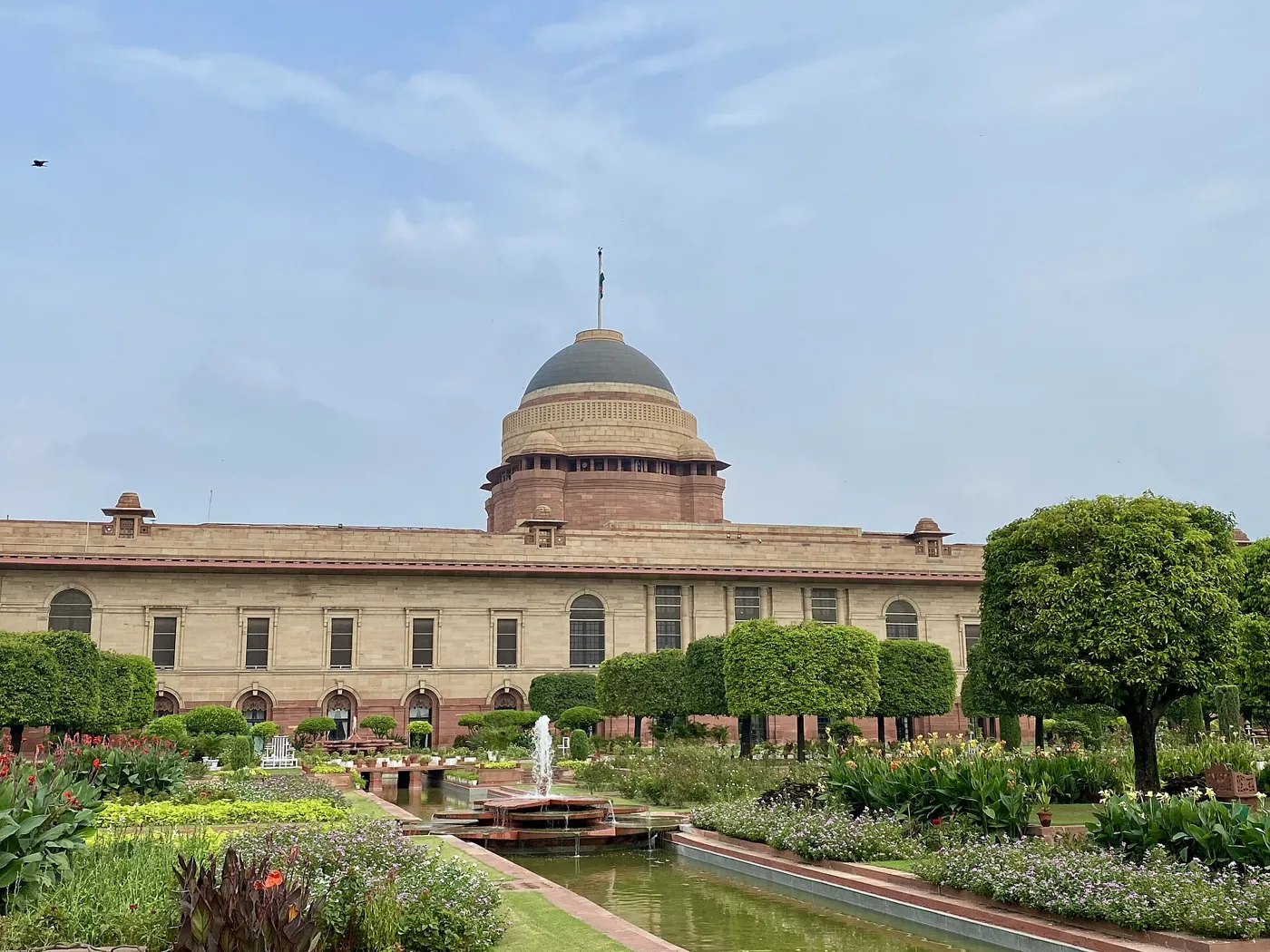
Presidency: institutional setting for the President’s constitutional role.
Credit: Tamjeed Ahmed · CC BY-SA 4.0 · source
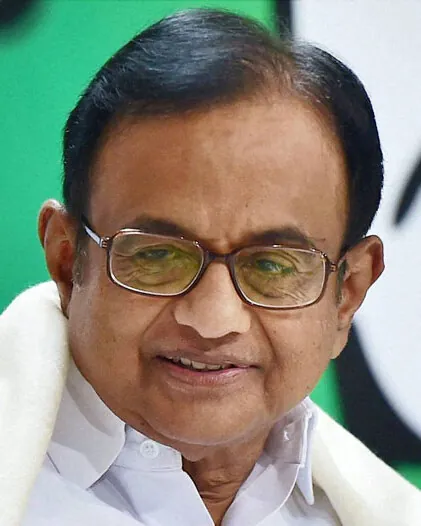
Union Home Minister: issued the December 2009 statements.
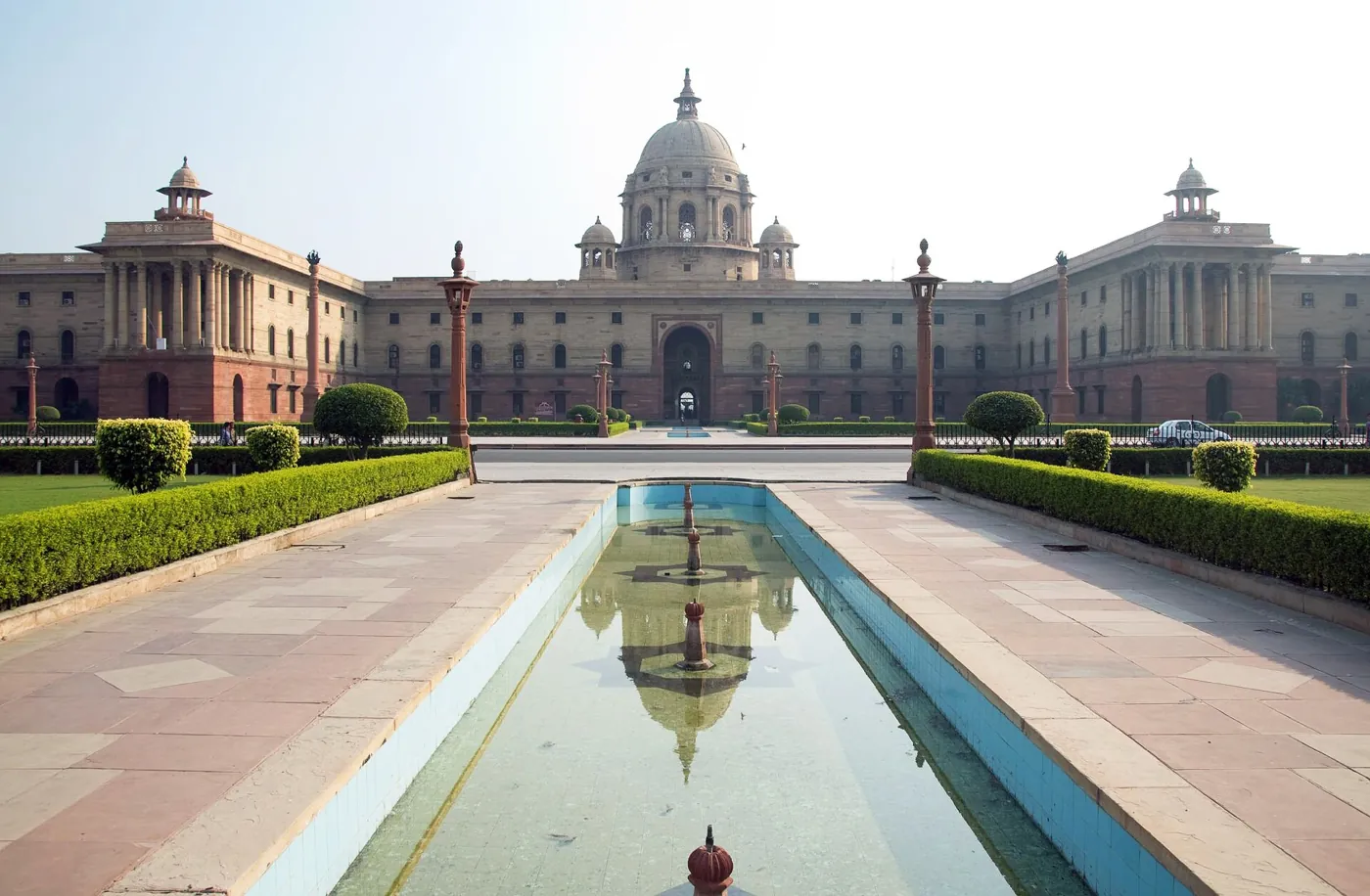
Delhi India Government
Credit: Laurie Jones aka ljonesimages on Flickr · CC BY-SA 2.0 · source
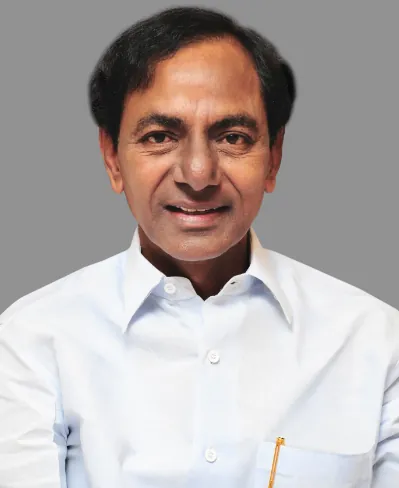
TRS: a participant in the statehood consultations.
Credit: Digital Media Telangana Government · CC BY-SA 4.0 · source

Aerial view of Durgam cheruvu and Hitech CIty
Credit: iMahesh · CC BY-SA 4.0 · source
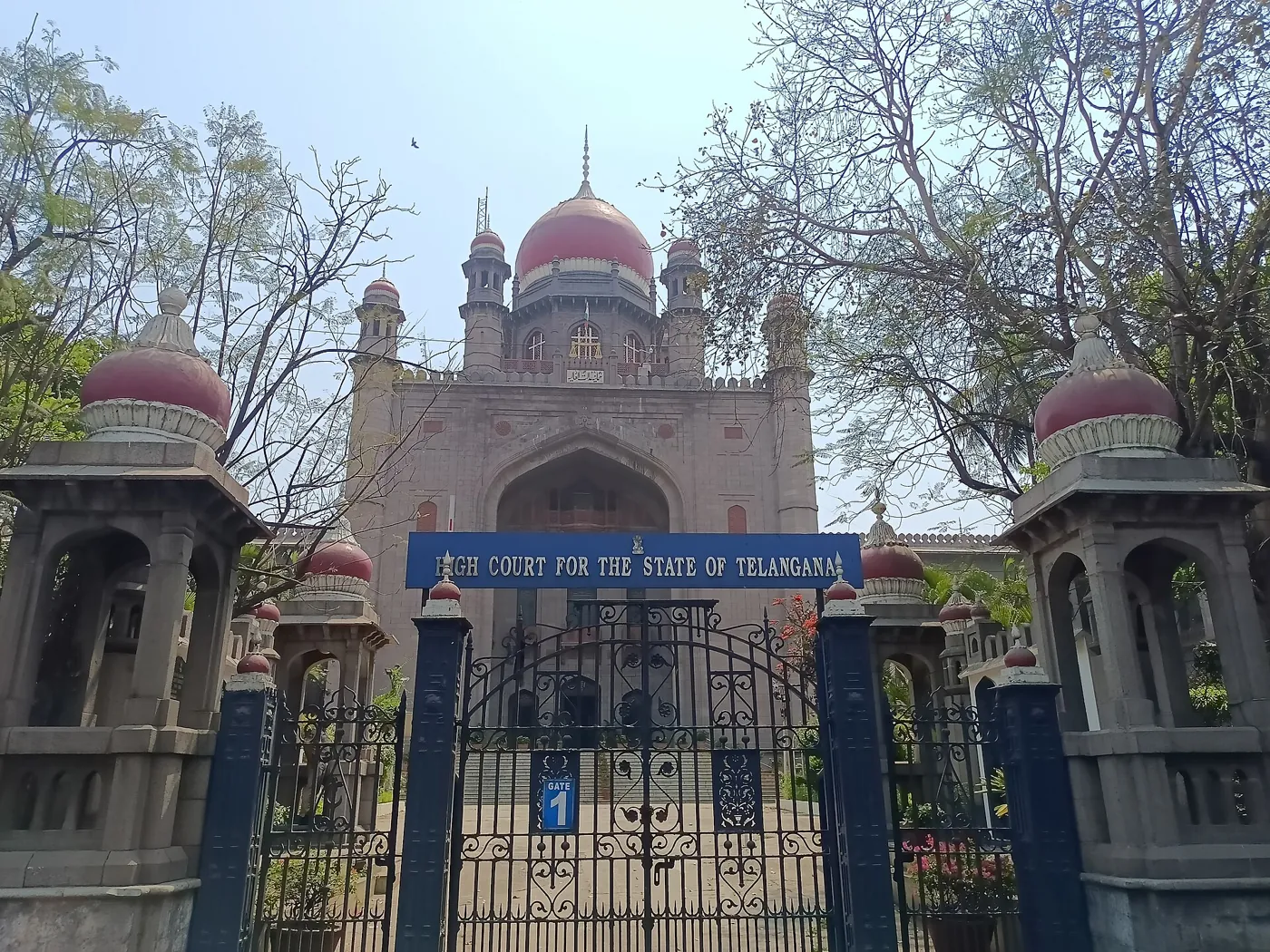
Historical court building: Hyderabad premises housed the Andhra Pradesh High Court in 2011.
Credit: Tarunsamanta · CC BY-SA 4.0 · source
1. Article 3: consultation within a Union-led process
Article 3 enables Parliament to create a new state and alter the area, boundaries or name of an existing state. Its proviso establishes procedural safeguards: a Bill needs the President’s recommendation, and a proposal affecting an existing state must be referred by the President to its legislature for views within a specified or extended period. That opportunity must be provided, but approval need not be secured. This distinction explains how Telangana could emerge despite opposition expressed by the majority in the undivided Andhra Pradesh Assembly.
This power illustrates a distinctive feature of Indian federalism: constituent states do not possess an absolute right to preserve their existing territory. Article 4 permits associated supplemental, incidental and consequential provisions; the resulting reorganisation law is not treated as a constitutional amendment under Article 368 merely because it changes the relevant constitutional schedules. For a TGPSC Mains answer, distinguish legal competence from democratic legitimacy. Parliament may have the authority to act while still bearing a political responsibility to hear affected regions, explain its choices and design a fair transition.
- Consultation is constitutionally necessary; consent is not.
- The President’s recommendation is different from the President’s later assent.
- Article 3 authorises reorganisation; Article 4 supports consequential arrangements.
Timeline
9 December 2009
The Union announces initiation of the Telangana formation process.
23 December 2009
A further Union statement stresses broader consultation after political reactions.
5 January 2010
Chidambaram convenes an all-party meeting without achieving consensus.
3 February 2010
The five-member Srikrishna Committee is constituted.
30 December 2010 / 6 January 2011
Report submitted, then public report released; confidential material remains controversial.
23 March / 25 April 2011
Single judge orders disclosure of confidential material; Division Bench subsequently stays the direction.
28 December 2012
Shinde chairs another all-party meeting.
30 July / August 2013
CWC supports statehood; Congress establishes the Antony Committee to hear concerns.
3 / 11 October 2013
Cabinet approves proceeding with formation; Shinde chairs the GoM’s first meeting.
5 / 12 December 2013
Cabinet approves draft Bill; President refers it to the State Legislature.
30 January 2014
Andhra Pradesh Assembly adopts a resolution rejecting the draft.
13 / 18 / 20 February 2014
Bill introduced in Lok Sabha, passed there, then passed in Rajya Sabha.
1 March 2014
Presidential assent makes the Bill Act 6 of 2014; President’s Rule is separately approved.
2 June 2014
Telangana comes into existence on the appointed day notified on 4 March.
2. December 2009 and the search for a consultative route
On 9 December 2009, Union Home Minister P. Chidambaram announced that the process of forming Telangana would be initiated and that an appropriate resolution would be moved in the State Assembly. This was an executive announcement of intention, not the enactment of a new state. The statement became a major political turning point because it appeared to convert a long-running regional demand into an actionable governmental commitment. Telangana supporters therefore treated subsequent delay as a question of credibility as well as a question of constitutional procedure.
The statement of 23 December responded to the altered political situation, including protests and resignations in coastal Andhra and Rayalaseema, by stressing wider consultation. The meeting of 5 January 2010, convened by Chidambaram, did not produce agreement among the participating parties. Another all-party meeting on 28 December 2012 was chaired by Home Minister Sushilkumar Shinde and also exposed continuing differences. These meetings were political consultation, not substitutes for the formal Article 3 reference. Neither unanimity among parties nor a favourable Assembly resolution was an independent constitutional precondition for statehood.
- 9 December: announcement of initiation.
- 23 December: wider consultation emphasised.
- 5 January 2010 and 28 December 2012: separate all-party meetings.
- Do not date the second meeting to a combined 27–28 December session.
Article 3 in practice: Telangana’s constitutional route
- 1. Executive preparation: the October 2013 Cabinet decision and GoM work lead to Cabinet approval of the draft on 5 December.
- 2. Presidential reference: on 12 December the draft is sent to the affected State Legislature for views within the specified period.
- 3. State consultation: debate and representations culminate in the Assembly’s 30 January rejection resolution after an extension; consent is not required.
- 4. Parliamentary stage: with the President’s recommendation, the Bill is introduced on 13 February and passed by the Lok Sabha on 18 February and Rajya Sabha on 20 February.
- 5. Assent: the President assents on 1 March, creating the Andhra Pradesh Reorganisation Act, 2014.
- 6. Implementation: the Central Government’s 4 March notification fixes 2 June 2014 as the appointed day.
3. The Srikrishna Committee: membership, mandate and evidence
The Union constituted the Committee for Consultations on the Situation in Andhra Pradesh on 3 February 2010. Retired Supreme Court judge B. N. Srikrishna chaired it; former Union Home Secretary Vinod Kumar Duggal served as member-secretary. The other members were Ranbir Singh, Abusaleh Shariff and Ravinder Kaur. The report identifies Singh with National Law University, Delhi, not NALSAR. This was a consultative expert body rather than a legislature or a court deciding entitlement to statehood. Its remit included both the demand for Telangana and the case for retaining a united Andhra Pradesh.
The committee examined development, employment, education, water, Hyderabad and social concerns through representations, consultations and regional analysis. It submitted its report on 30 December 2010, and the public report was released on 6 January 2011. Its evidence matters, but an expert report should not be read as a binding constitutional command or as an uncontested account of every grievance. A strong analytical answer separates measurable inequalities, disputed interpretations of development and the political demand for self-government. Aggregate growth can coexist with perceptions of exclusion, uneven access and loss of institutional trust.
- Five members, including the chairperson and member-secretary.
- Report submission and public release occurred on different dates.
- Consultative findings did not bind Parliament.
- Membership: Srikrishna, Duggal, Singh, Shariff and Kaur.
| Option | What it proposed | Committee’s assessment |
|---|---|---|
| 1 — Status quo | Retain the existing state without a major structural settlement. | Least favoured; unlikely to resolve the underlying demand sustainably. |
| 2 — Hyderabad Union Territory | Separate Telangana and Seemandhra; Hyderabad as a Union Territory; both states develop capitals. | Not considered practicable; Hyderabad’s separation posed serious political objections. |
| 3 — Rayala-Telangana | Combine Telangana and Rayalaseema with Hyderabad; create a separate coastal Andhra state. | Not likely to be acceptable across the regions; limited support. |
| 4 — Enlarged Hyderabad Union Territory | Create Telangana and Seemandhra alongside an enlarged Hyderabad metropolitan Union Territory with regional connectivity. | An alternative to consider, but involving substantial political and territorial difficulties; not the preferred solution. |
| 5 — Telangana with Hyderabad | Divide on the regional basis; Hyderabad capital of Telangana, with a new Seemandhra capital. | Second-best; recommended only if the united-state route proved unworkable, with an amicable settlement. |
| 6 — Unity with empowered safeguards | Retain Andhra Pradesh with constitutional or statutory safeguards and an empowered Telangana Regional Council. | Preferred as the most workable way to combine development with regional empowerment. |
4. Six options and the limits of technocratic settlement
Chapter 9 presented six possible routes, but the committee did not endorse them equally. Its preferred course was continued unity accompanied by constitutional or statutory safeguards and an empowered Telangana Regional Council. It regarded a separate Telangana with Hyderabad as its capital as the second-best route, to be considered if unity could not be secured. The alternatives also included status quo, Hyderabad as a Union Territory, Rayala-Telangana and a larger Hyderabad Union Territory. The table below distinguishes each proposal from the committee’s evaluation rather than treating the list as six recommendations of identical standing.
The committee’s ranking did not settle the political question. Telangana advocates questioned whether another safeguards arrangement could overcome the record of earlier assurances, while supporters of unity emphasised economic integration, shared institutions and Hyderabad’s regional importance. The eventual settlement resembled option 5 in its broad territorial logic, but the 2014 Act contained its own transitional arrangements and detailed provisions. It is therefore inaccurate to say that Parliament simply implemented the committee’s preferred recommendation. The episode demonstrates that expert advice informs democratic choice without replacing the authority or responsibility of elected institutions.
- Option 6: preferred qualified-unity route.
- Option 5: second-best separation route.
- Option 3 was Rayala-Telangana, not Telangana alone.
- Option 4’s enlarged Union Territory differed from option 2’s Hyderabad Union Territory.
5. Confidential material, the High Court and public reasoning
The withholding of material associated with Chapter 8, dealing with law and order and internal security, generated a controversy distinct from the six options in Chapter 9. Former MP M. Narayan Reddy challenged the non-disclosure. On 23 March 2011, Justice L. Narasimha Reddy of the Andhra Pradesh High Court directed disclosure and criticised aspects of the confidential material and supplementary note. The judge also made clear that the decision did not express a view on which statehood alternative should be chosen. Judicial scrutiny of secrecy was not a judicial grant of Telangana.
The procedural sequel is essential: on 25 April 2011, a Division Bench stayed the single judge’s disclosure direction. It is therefore unsafe to repeat the reference’s simple claim that the court case resulted in the chapter being made public. Public reporting of extracts, judicial discussion and formal release are different things. For Mains, the controversy raises the tension between legitimate security confidentiality and the public’s ability to evaluate advice on a major constitutional change. Security predictions must be attributed as assessments or allegations, not converted into established descriptions of any region or community.
- Chapter 8 controversy: secrecy and security assessments.
- Chapter 9: options for the political settlement.
- Single-judge direction and appellate stay must be read together.
- Do not reproduce inflammatory predictions as verified facts.
6. The 2013 decision: party commitment and governmental preparation
The Congress Working Committee resolved in favour of Telangana on 30 July 2013, providing a decisive political opening within the ruling party. It envisaged the Telangana region with Hyderabad and a transitional common-capital arrangement. Yet a party resolution could neither redraw state boundaries nor displace the constitutional process. Opposition to division intensified in Seemandhra, where concerns included access to Hyderabad, employment, educational opportunities, water, revenues and the costs of constructing a new capital. Recognising these concerns does not negate Telangana’s demand for self-government; it identifies the distributive questions that any settlement had to address.
In August 2013, Congress established an A. K. Antony-led committee with M. Veerappa Moily, Ahmed Patel and Digvijay Singh to hear concerns. This party body must be distinguished from the Union’s Group of Ministers. On 3 October 2013, the Union Cabinet approved proceeding with Telangana and the creation of a GoM. The Shinde-led GoM held its first meeting on 11 October and coordinated work on issues requiring resolution across ministries and the State Government. Its responsibilities connected the political decision to practical provisions on institutions, resources, services, security and transitional administration.
- CWC: political decision, 30 July 2013.
- Antony Committee: Congress consultation, August 2013.
- Cabinet: governmental approval, 3 October 2013.
- GoM: Shinde-led inter-ministerial preparation, not the Srikrishna Committee.
7. The draft Bill and an adverse State Legislature response
The Union Cabinet approved the draft reorganisation Bill on 5 December 2013. The President referred it to the Andhra Pradesh Legislature on 12 December for its views; it was placed before the two Houses on 16 December. The original period for returning views ran to 23 January 2014 and was extended to 30 January. The reference was thus a formal constitutional stage rather than an informal opinion poll. Describing the draft as being before the State Legislature is more accurate than saying that the state was legislating to divide itself.
On 30 January 2014, the Assembly adopted by voice vote a resolution moved by Chief Minister N. Kiran Kumar Reddy rejecting the draft and requesting that it not be recommended for introduction in Parliament. This was politically consequential but not legally decisive. The Assembly was expressing its views under the Article 3 process, not exercising a power to defeat a parliamentary Bill. For balanced analysis, explain both dimensions: Telangana advocates could invoke Parliament’s competence, while opponents could argue that the adverse response showed the need for fuller accommodation of regional apprehensions and transitional costs.
- 5 December approval is distinct from 12 December reference.
- 16 December: placement before the State Legislature.
- 30 January: rejection resolution, not a binding veto.
- Do not invent a numerical division from a voice vote.
8. Parliament, assent and the appointed day: authority and legitimacy
The Andhra Pradesh Reorganisation Bill, 2014 was introduced in the Lok Sabha on 13 February by Sushilkumar Shinde. It passed that House on 18 February and the Rajya Sabha on 20 February. President Pranab Mukherjee assented on 1 March, producing Act 6 of 2014. Approval of President’s Rule in undivided Andhra Pradesh on the same date was a separate constitutional development, not a stage mandated by Article 3. India Code records the appointed-day notification as dated 4 March; it fixed 2 June 2014 for the reorganisation to take effect.
Babulal Parate v. State of Bombay supplies an important interpretive foundation. Decided on 28 August 1959, though reported in AIR 1960, it rejected the proposition that parliamentary changes to the reorganisation proposal required a fresh state reference of the kind demanded in that litigation. The State Legislature’s views were not binding on Parliament. Applied analytically to Telangana, this supports a distinction between mandatory consultation and mandatory agreement. A balanced conclusion should defend constitutional procedure while asking how transparent debate, minority protection within regions, financial fairness and continuing inter-state cooperation can strengthen the legitimacy of a legally valid territorial settlement.
- 13 February: introduction; 18 and 20 February: passage.
- 1 March: assent; 2 June: appointed day.
- Babulal Parate is not a judgment delivered in 2014.
- Hyderabad’s common-capital arrangement was for a period not exceeding ten years.
- The Act’s transitional provisions were distinct from a permanent Hyderabad Union Territory.
Real-world case studies
Confidential advice and an incomplete disclosure narrative
The Chapter 8 litigation tested whether security-related advice underlying a major public decision could be withheld. Justice L. Narasimha Reddy ordered disclosure on 23 March 2011 in M. Narayan Reddy’s petition and criticised the confidential material, without choosing among statehood alternatives. A Division Bench stayed that direction on 25 April. The correct lesson is the need to scrutinise claims of secrecy while respecting the actual procedural history: a disclosure order, reported extracts and completed official release are not interchangeable.
The Assembly said no, but Parliament could proceed
On 30 January 2014, the Andhra Pradesh Assembly adopted a resolution rejecting the draft reorganisation Bill. Parliament nevertheless passed the Bill in February. This sequence did not by itself violate the Article 3 proviso: the constitutional requirement was to provide the affected legislature an opportunity to express views, not to obtain approval. The episode also shows why legal validity and political reconciliation require separate analysis. Authority to legislate does not remove the need to address the concerns of those opposing the settlement.
Babulal Parate: a precedent, not a Telangana-specific verdict
The Supreme Court’s judgment of 28 August 1959, reported as AIR 1960 SC 51, concerned the Bombay reorganisation proposal. It explained the consultative character of the state’s role and rejected the claimed requirement of a fresh reference for parliamentary alterations in that case. Use it to explain Parliament’s constitutional position, not as proof that the Court approved every procedural event in the Telangana legislation. Constitutional precedents supply principles; applying them to later events requires attention to facts and the text of Article 3.
Previous year questions
No source-linked PYQ is available here yet. Use the practice questions below.
Practice questions
Practice MCQ 1 · Easy
Under the Article 3 proviso, what is the affected State Legislature required to provide?
- Binding consent
- Its views within the specified or extended period
- Ratification by a special majority
- A referendum result
Practice MCQ 2 · Moderate
Which Srikrishna Committee option was preferred by the committee?
- Status quo without safeguards
- Hyderabad as a Union Territory with separate state capitals
- A united state with empowered Telangana safeguards
- Rayala-Telangana and coastal Andhra
Practice MCQ 3 · Easy
Which sequence correctly describes the final parliamentary stages?
- Rajya Sabha passage, Lok Sabha passage, assent
- Assent, Lok Sabha passage, appointed day
- Lok Sabha passage, Rajya Sabha passage, assent
- Assembly consent, assent, parliamentary introduction
Practice MCQ 4 · Moderate
Which pairing is correct?
- Antony Committee — independent judicial commission
- Srikrishna Committee — parliamentary select committee
- Shinde-led GoM — Congress party grievance committee
- Antony Committee — Congress consultation mechanism
Practice MCQ 5 · Difficult
Which statement most accurately describes the confidential-chapter litigation?
- The High Court ordered state formation
- The single-judge disclosure direction was subsequently stayed by a Division Bench
- The Supreme Court adopted option 6
- Chapter 9 was the confidential law-and-order chapter
Practice MCQ 6 · Easy
Which date marks Telangana’s appointed day rather than assent or parliamentary passage?
- 1 March 2014
- 20 February 2014
- 4 March 2014
- 2 June 2014
Mains practice · Telangana’s formation illustrates both the flexibility and tensions of Indian federalism. Discuss with reference to Article 3 and Babulal Parate.
- Explain presidential recommendation and time-bound reference for state views.
- Distinguish mandatory consultation from consent and discuss the Assembly’s rejection resolution.
- Use Babulal Parate’s 1959 judgment, reported in 1960, for the advisory character of state views and the treatment of parliamentary alterations.
- Contrast Parliament’s constitutional competence with requirements of transparent and inclusive deliberation.
- Conclude with fair resource arrangements and post-formation inter-state cooperation.
Mains practice · Evaluate the contribution and limitations of the Srikrishna Committee in the Telangana statehood process.
- Set out its consultative mandate covering separation and unity.
- Explain multidisciplinary evidence and attention to Hyderabad and regional concerns.
- Compare preferred option 6 with second-best option 5, rather than treating all options equally.
- Discuss the confidential-material controversy with the appellate stay included.
- Explain why expert findings could inform but not replace democratic and parliamentary choice.
Mains practice · Trace the conversion of the 2013 political decision on Telangana into state formation in 2014, distinguishing institutions and constitutional stages.
- Begin with the CWC decision and distinguish it from governmental action.
- Separate the party’s Antony Committee from the Union’s Shinde-led GoM.
- Explain Cabinet approval, presidential reference and the Assembly’s adverse views.
- Give the parliamentary passage, assent and appointed-day sequence.
- Assess Telangana’s self-government aspirations alongside Seemandhra concerns over Hyderabad, resources and transition.
Further reading
Preparing for TGPSC Group 1 or Group 2? See the TGPSC Groups coaching course at Pragnya IAS Academy for fees, batches and registration.
Long study hours taking a toll? Try the free breathing exercise and self check-in in Pragnya’s student wellness programme for UPSC aspirants.