
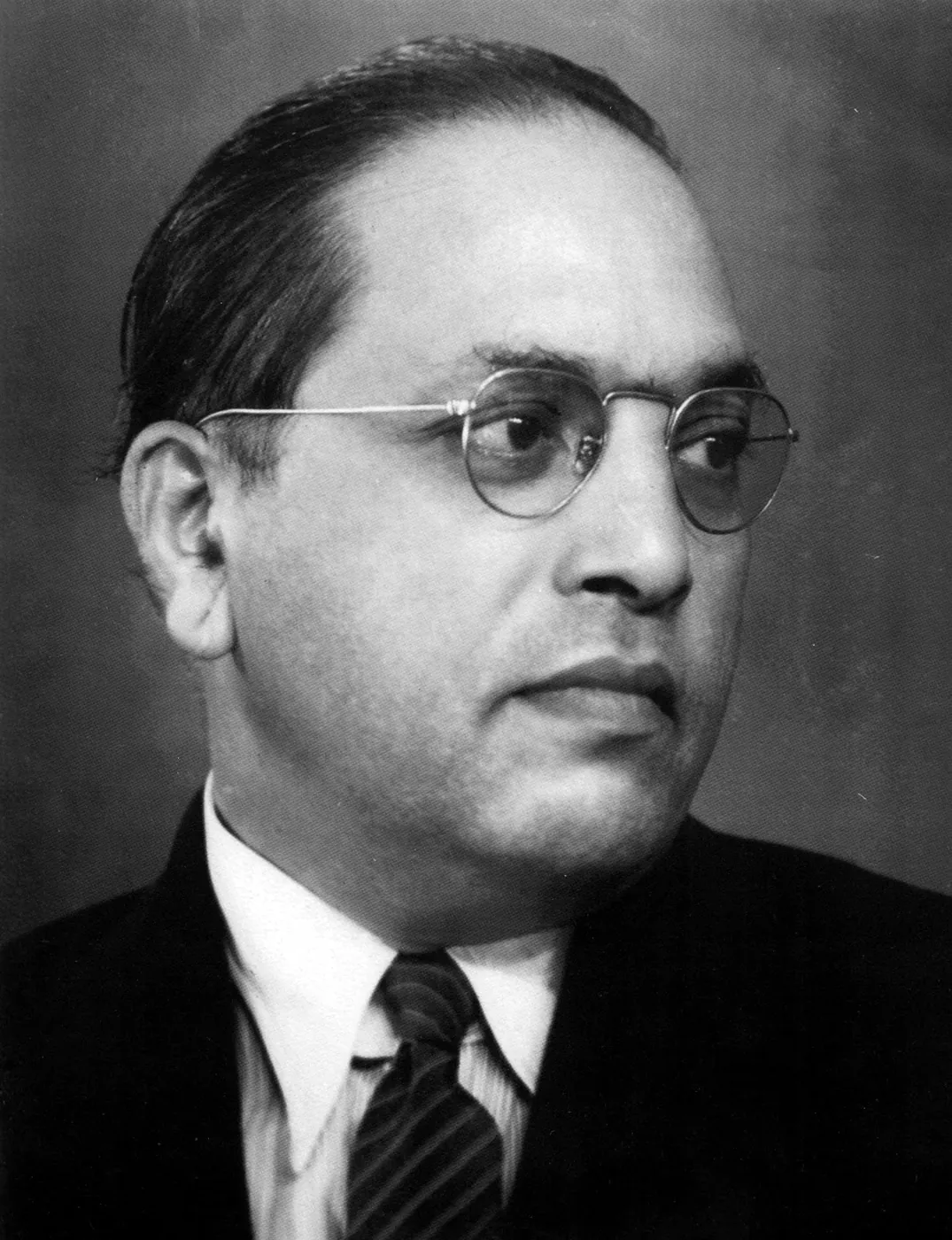
B. R. Ambedkar: Scholar, anti-caste leader and chairman of the Constitution’s Drafting Committee.
Credit: Unknown photographer · Public domain · source
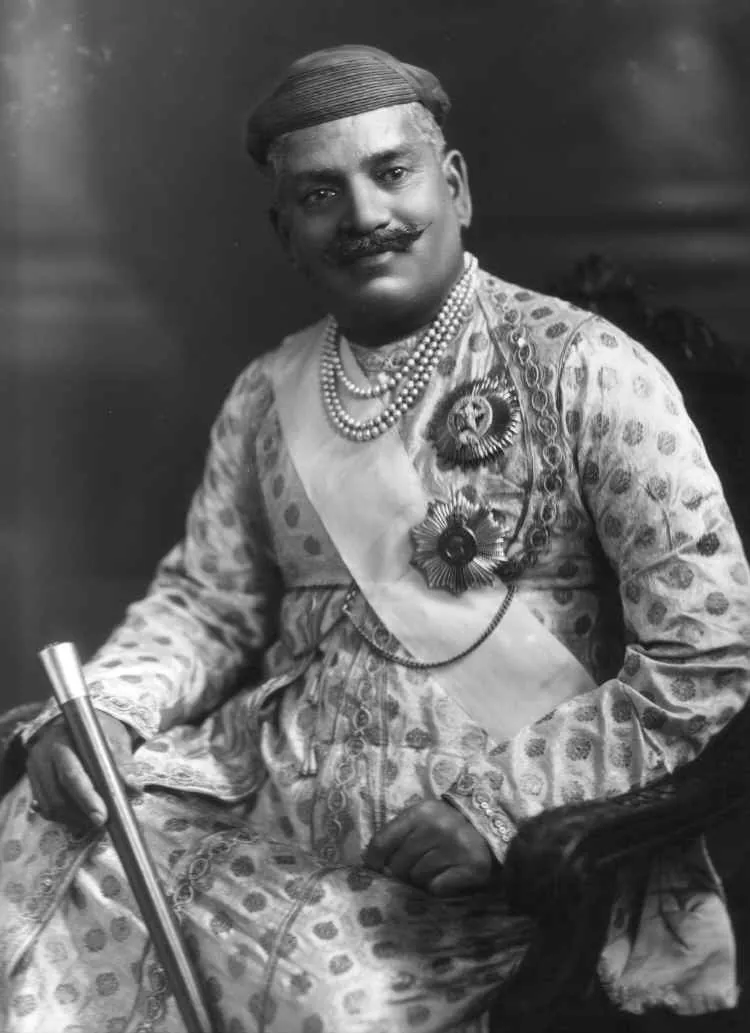
Sayajirao Gaekwad III: The Baroda ruler whose scholarship supported Ambedkar’s Columbia education.
Credit: Lafayette · Public domain · source
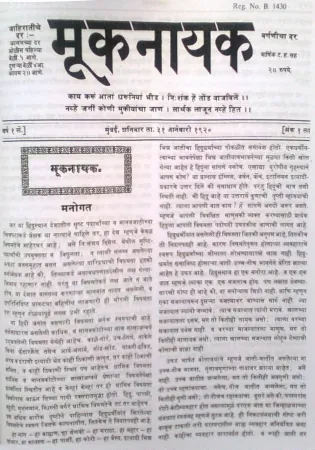
Mooknayak: The early newspaper documents Ambedkar’s effort to build an independent public voice.
Credit: Unknown photographer · Public domain · source
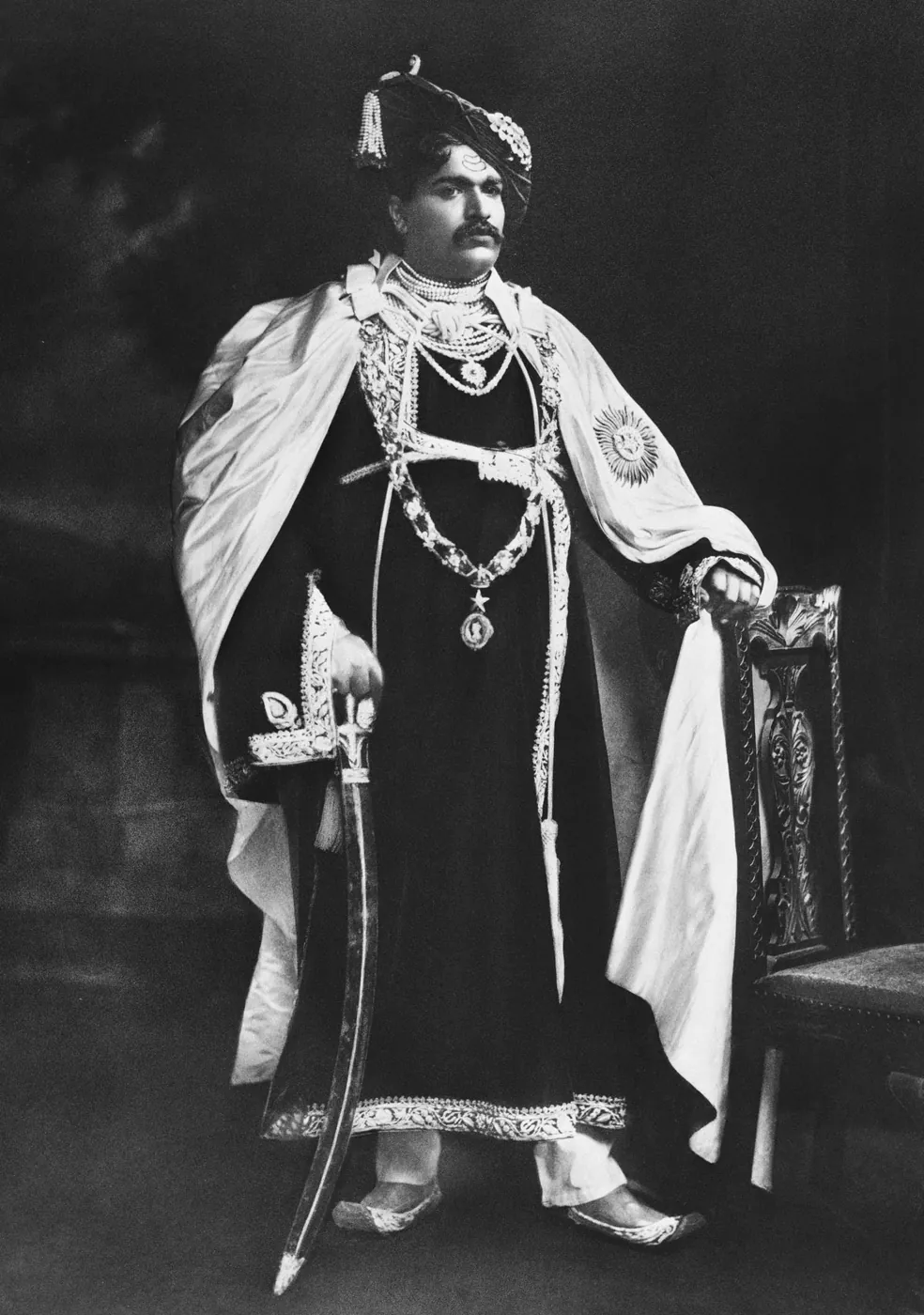
Shahu Maharaj: A supporter of the launch of Mooknayak.
Credit: Devare & Co. : Bombay · Public domain · source
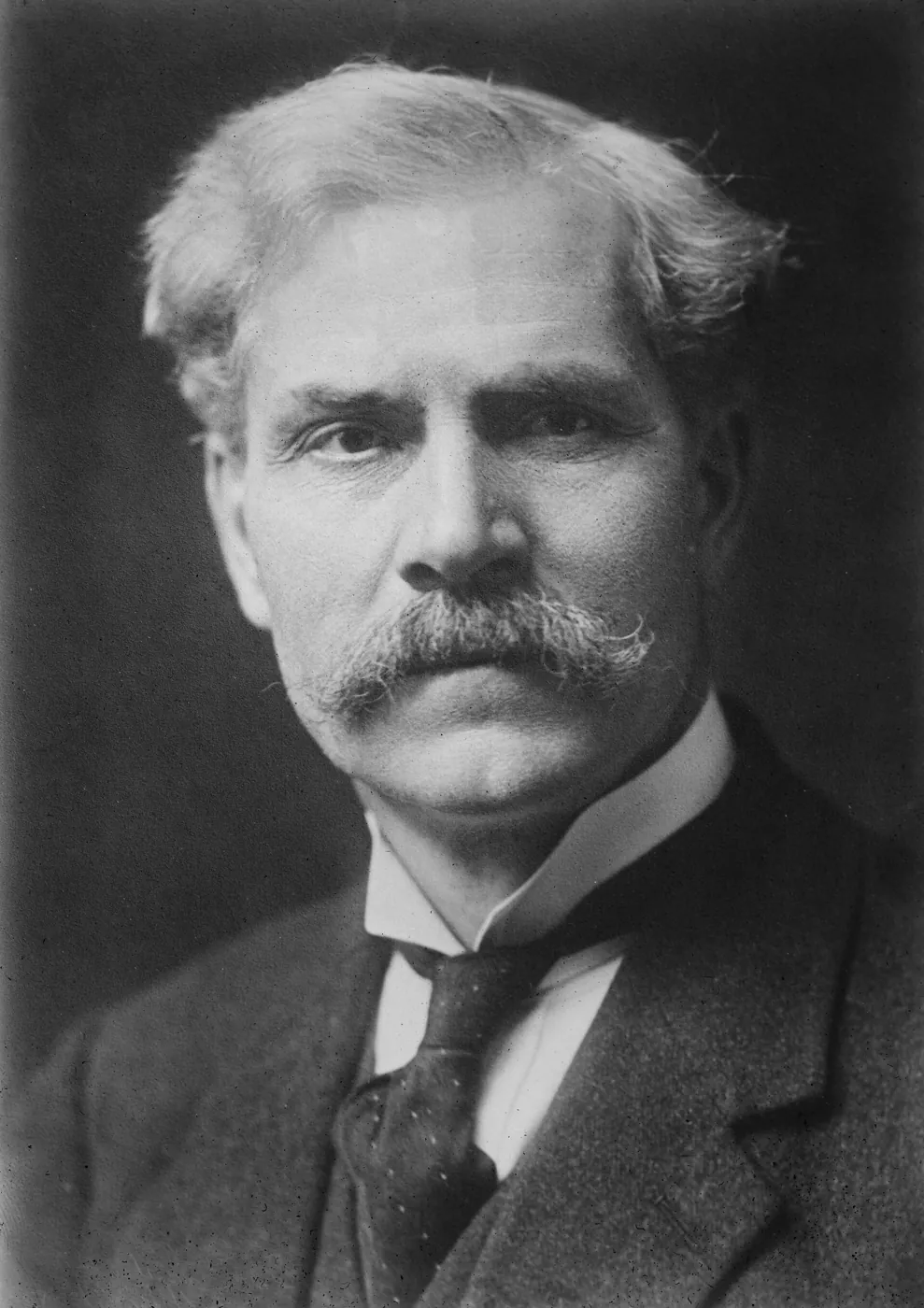
Ramsay MacDonald: British Prime Minister who announced the Communal Award in 1932.
Credit: Walter Stoneman · Public domain · source
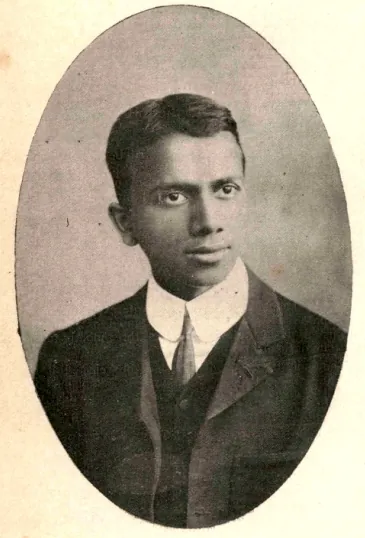
B. N. Rau: Constitutional Adviser whose contribution illustrates the collective character of constitution-making.
Credit: The Modern Review · Public domain · source
1. Social exclusion and the search for effective citizenship
Ambedkar’s arguments about states belong to a larger inquiry into the conditions of equal citizenship. Born at Mhow on 14 April 1891, he encountered caste discrimination while acquiring advanced training in economics and law. His education included Columbia’s MA in 1915, a London doctorate in 1923 and Columbia’s PhD in 1927. These qualifications mattered not as ornamental achievements but as resources for analysing institutions. He approached social power through questions about public resources, representation, legal remedies and the capacity of subordinate people to act independently.
Public mobilisation and constitutional work were therefore complementary rather than mutually exclusive phases of his career. The Mahad struggle challenged exclusion from public water, while newspapers and political organisations created platforms outside established hierarchies. As Law Minister and Drafting Committee chairman, he worked within national institutions without assuming that political independence would automatically destroy caste dependence. For statehood debates, the implication is important: proximity to a capital and the existence of elections must be judged by whether they expand substantive opportunity for people who have historically lacked power.
- Link biography to an institutional argument rather than merely listing degrees.
- Mhow is in present-day Madhya Pradesh, not Maharashtra.
- Distinguish formal citizenship from the practical ability to exercise rights.
Timeline
14 April 1891
Birth at Mhow.
1915
Columbia MA awarded.
1923
London doctorate; The Problem of the Rupee published.
1927
Columbia PhD awarded; Mahad mobilisation.
24 September 1932
Poona Pact concluded.
1936
Annihilation of Caste published; Independent Labour Party established.
1942
Scheduled Castes Federation established.
29 August 1947
Drafting Committee appointed, with Ambedkar as chairman.
23 April 1953
Need for Checks and Balances appeared.
1955
Thoughts on Linguistic States published.
6 December 1956
Ambedkar died.
1 March 2014
Reorganisation Act received presidential assent.
2 June 2014
Telangana came into existence.
2. Writing, representation and constitutional responsibility
Ambedkar reached different audiences through different forms of public action. The Problem of the Rupee appeared in 1923, Annihilation of Caste in 1936 and Thoughts on Linguistic States in 1955. Marathi journalism, including Mooknayak, Bahishkrit Bharat and Janata, helped sustain a counter-public concerned with the experience of exclusion. The Independent Labour Party and Scheduled Castes Federation organised electoral interventions. These activities should not be collapsed into a catalogue: scholarship explained structures, journalism circulated arguments, and political organisation attempted to convert grievances into bargaining power.
The representation dispute surrounding the Poona Pact demonstrates the stakes of institutional design. The Communal Award of 16 August 1932 offered separate electorates for the Depressed Classes. The agreement of 24 September substituted reserved seats within joint electorates, with a primary-election procedure, and increased provincial reserved representation from 71 to 148 seats. Ambedkar later chaired the Drafting Committee appointed on 29 August 1947. His major role must be acknowledged alongside the Assembly’s collective deliberation, other committee members and Constitutional Adviser B. N. Rau; constitution-making was neither an individual manuscript nor an impersonal process.
- Separate newspapers, books and parties in objective questions.
- The Poona Pact altered both electoral mechanism and provincial seat numbers.
- The Buddha and His Dhamma was published posthumously in 1957.
- The Republican Party’s formal establishment followed Ambedkar’s death.
Build a defensible statehood analysis
- 1. Establish the historical region and define the grievance.
- 2. Assess language alongside administrative access and regional needs.
- 3. Examine revenue obligations, resources and institutional capacity.
- 4. Test the effects on minorities and the risk of new local domination.
- 5. Explain the Article 3 procedure separately from the political justification.
- 6. Evaluate implementation and inclusion after state formation.
3. The 1955 intervention: language as a means, not a complete answer
Thoughts on Linguistic States was an independent response to the reorganisation debate, not an official SRC document. Ambedkar accepted that linguistic cohesion could assist public communication and democratic life. He nevertheless challenged the inference that every speaker of a language must belong to one government. In his reasoning, linguistic association could coexist with several states because political administration involves more than cultural identification. The distinctive question was not simply which language predominated, but what territorial arrangement would make government workable without placing vulnerable people under overwhelming social power.
His summary supplied four express considerations for dividing a linguistic population: administrative efficiency, the needs of different areas, their sentiments, and the proportion between majority and minority. This is more precise than treating population, area and economic self-reliance as a quotation of his supposedly fixed three tests. Those three categories can organise study, but they do not replace the explicit list. His preference for unilingual units was also a normative political proposal, not a constitutional rule depriving linguistic minorities of rights or declaring every multilingual state unlawful.
- One state, one language does not entail one language, one state.
- Four explicit division considerations appear in the essay’s summary of principles.
- Distinguish a historical prescription from the Constitution’s actual requirements.
| Issue | Ambedkar’s argument or historical fact | Qualification for an answer |
|---|---|---|
| Linguistic organisation | Several states can share a language. | A shared language does not settle every regional claim. |
| Division criteria | Efficiency, needs, sentiments and majority–minority ratio. | Do not replace the explicit four with a falsely attributed three-test quotation. |
| Northern units | UP three; Bihar two; MP two. | Tentative 1955 proposals, not the 1956 settlement. |
| Maharashtra | Bombay city-state plus three regional units. | Count four when the city-state is included. |
| Capital proposals | Warangal in 1953; Hyderabad cluster in 1955. | State headquarters and a national second seat are different proposals. |
| Minorities | Smaller units plus electoral safeguards. | A new boundary is not an automatic guarantee of justice. |
| Article 3 | Parliamentary power subject to recommendation and reference requirements. | State legislature’s views are not binding consent. |
| 2014 | Assent on 1 March; appointed day on 2 June. | An enacted law and its commencement need not coincide. |
4. Size, fiscal capacity and North–South balance
Ambedkar objected to a pattern in which very large northern units remained intact while southern linguistic populations were organised into smaller states. In his contemporary tables, Uttar Pradesh exceeded six crore people and Bihar approached four crore. The figures belong to the 1955 debate and cannot be compared casually with later census totals. He feared that concentration of political weight, combined with southern distance from national institutions, would undermine confidence in the federation. His answer was to reduce disproportion among units rather than encourage separate northern and southern sovereign countries.
Population and area entered this reasoning through administrative workload, distance and relative scale. His approximate two-crore population benchmark for proposed Uttar Pradesh units was contextual, not a permanent constitutional ceiling. Likewise, viability did not mean that the smallest possible state was always desirable or that each unit must be fiscally isolated. The essay’s finance discussion examined capacity to bear taxation and willingness to tax. A sound contemporary evaluation must therefore investigate revenue sources, expenditure obligations, transport and administrative institutions instead of inferring prosperity or failure directly from territorial size.
- Use figures from a common period and identify the territorial unit.
- His concern was federal cohesion, not endorsement of a North–South rupture.
- Fiscal viability requires policy analysis; area alone is not a balance sheet.
5. The division proposals and their historical limits
The proposed northern division had a clear numerical pattern: Uttar Pradesh into three units, Bihar into two and Madhya Pradesh into two. For Uttar Pradesh he suggested Meerut, Cawnpore and Allahabad as capitals; the last two are now known as Kanpur and Prayagraj. For Bihar he suggested Patna and Ranchi. These proposals expressed the possibility of several states within one broad linguistic population. They must not be presented as a list of capitals established by the 1956 reorganisation law or as a legal command binding subsequent governments.
Maharashtra received a different four-part treatment: a Bombay city-state and Western, Central and Eastern Maharashtra. The count becomes misleading if Bombay is omitted without explanation. His concern for Central Maharashtra included Marathwada’s disadvantaged educational and economic position, showing that regional inequality could survive a shared language. Later creations such as Jharkhand and Chhattisgarh can be compared with his willingness to divide large states, but comparison is not identity. Their boundaries, movements and settlements require independent historical evidence; no later map should be retroactively assigned to the 1955 essay.
- Remember three, two and two for the northern proposals.
- The Maharashtra total is four including Bombay.
- Treat proposed capitals as proposals, not enacted administrative changes.
- Do not reconstruct boundaries from city points on a schematic map.
6. Minority security: why boundaries are not enough
A central distinction in Ambedkar’s political analysis separates an open political majority from a majority rooted in inherited social membership. The first can be assembled and altered through persuasion and association; the second may reproduce a hierarchy that vulnerable people cannot simply choose to leave. Caste, landholding and economic dependence can influence elections even when the law formally treats votes as equal. A linguistic state may therefore possess cultural cohesion while reproducing domination within its population. Majority rule and democratic freedom are related but cannot be treated as interchangeable concepts.
Smaller units were one safeguard in this argument, accompanied by a proposed system of multi-member constituencies with cumulative voting. The electoral suggestion was not a description of the system generally implemented in independent India. Nor should his argument be converted into a mathematical law that every territorial reduction increases every minority’s share. Actual effects depend on settlement patterns and the chosen boundary. A balanced assessment asks whether division improves access, political bargaining and rights enforcement, while recognising that new local elites can inherit old inequalities in a smaller administrative space.
- Boundary change and electoral protection address different dimensions of power.
- Minority share must be calculated, not assumed from area.
- Distinguish Ambedkar’s proposed reforms from existing reservation arrangements.
7. Hyderabad, Warangal and the problem of retrospective attribution
Two interventions must be kept apart. In Need for Checks and Balances, published on 23 April 1953, Ambedkar examined the proposed Andhra State’s fiscal and capital difficulties and considered Warangal as a possible capital. Warangal then belonged to Hyderabad State. In the 1955 book, he instead discussed a second national capital comprising Hyderabad, Secunderabad and Bolarum under a Chief Commissioner’s Province. The first addressed a particular state’s proposed headquarters; the second concerned national access, facilities, contemporary security calculations and reassurance to the South.
Neither discussion can simply be recast as a blueprint for Telangana’s 2014 settlement. Ambedkar died on 6 December 1956, and his national second-capital scheme was not adopted. His rejection of compulsory linguistic consolidation nevertheless offers a coherent intellectual resource for later Telangana arguments: shared Telugu need not silence claims concerning regional opportunity or representation. The strongest interpretation identifies that relevance while admitting historical distance. A critical answer should resist both dismissing all later applications as illegitimate and treating every political assertion made in his name as a documented statement of his own.
- Warangal belongs to the 1953 Andhra-capital discussion.
- Hyderabad’s proposed national role belongs to the 1955 essay.
- The second-capital scheme did not make Hyderabad a Union Territory in 2014.
- Later intellectual relevance is not direct authorship of a later statute.
8. Article 3, Telangana and the distinction between justification and power
Article 3 gives Parliament power to form new states and alter existing states’ areas, boundaries or names. A Bill requires the President’s recommendation. Where a proposal affects a state in the specified ways, the President must refer it to that state’s legislature for views within a stated period, which must expire before introduction. The legislature’s consent is not a veto. Article 4 permits necessary schedule changes and consequential provisions, and excludes such laws from the Article 368 amendment procedure. Legal flexibility therefore coexists with a prescribed consultative process.
The Andhra Pradesh Reorganisation Act, 2014 received presidential assent on 1 March, while Telangana came into existence on the appointed day, 2 June. Section 5 provided for Hyderabad as common capital for a period not exceeding ten years, followed by its role as Telangana’s capital. This transitional arrangement differed from Ambedkar’s second-national-capital scheme. In mains writing, distinguish the merits of statehood from the authority to enact it: language, fairness and minority security can justify an argument, but the legal creation of a state requires the constitutional procedure and an operative parliamentary law.
- Views are constitutionally distinct from binding approval.
- Assent and the appointed day are separate legal events.
- An Article 3 demand does not create an automatic entitlement to a new state.
- Discuss post-division inclusion as well as the achievement of statehood.
Real-world case studies
Two Telugu-speaking states: compatibility without prophecy
A demand for Telangana need not deny cultural links with other Telugu-speaking regions. Ambedkar’s distinction permits several governments within one linguistic population when regional conditions justify them. The analytical move is to examine representation, opportunity and administration rather than claim that language alone proves or disproves statehood. This establishes intellectual compatibility, not documentary proof that Ambedkar prescribed the exact 2014 settlement.
Bombay and the limits of a linguistic monopoly
The proposed Bombay city-state shows that Ambedkar’s attention extended beyond a simple language map. His four-part Maharashtra scheme combined an urban unit with three regional units and considered minority refuge and uneven development. Because the proposal was not implemented as designed, use it to explain his reasoning rather than as evidence of an enacted administrative arrangement.
A capital provision is not a second national capital
Section 5 of the 2014 Act created a time-limited common-capital arrangement for two successor states. Ambedkar’s 1955 scheme concerned a second seat for the Union government. Both involve Hyderabad, but the institutions, territorial arrangements and purposes differ. The comparison illustrates why identical place names do not establish continuity between two legal or political projects.
Previous year questions
No source-linked PYQ is available here yet. Use the practice questions below.
Practice questions
Practice MCQ 1 · Easy
Which proposition best captures Ambedkar’s linguistic-state distinction?
- Every language requires exactly one state.
- A language can be shared by several states.
- Language minorities lose constitutional protection.
- Language alone fixes all boundaries.
Practice MCQ 2 · Moderate
Which is absent from the four explicit division considerations in the essay’s summary?
- Administrative efficiency
- Regional sentiments
- Majority–minority proportion
- A compulsory identical tax rate in all states
Practice MCQ 3 · Moderate
How is the four-unit Maharashtra proposal correctly counted?
- Four units excluding Bombay
- Three regional units plus a Bombay city-state
- Two units plus Hyderabad and Delhi
- One state with three foreign territories
Practice MCQ 4 · Moderate
Which chronology is correct?
- Hyderabad national-capital proposal—1953; Warangal discussion—2014
- Warangal discussion—1953; Hyderabad national-capital proposal—1955
- Warangal discussion—1955; Telangana appointed day—1956
- Hyderabad national-capital proposal—2014; essay—1985
Practice MCQ 5 · Moderate
Under Article 3, which statement about the affected state legislature is correct?
- Its rejection creates an absolute veto.
- It must conduct a referendum.
- It receives a reference for its views in the specified cases.
- It alone can introduce the Bill in Parliament.
Practice MCQ 6 · Easy
Which pair correctly distinguishes the reorganisation law from the new state’s commencement?
- Assent—2 June 2014; appointed day—1 March 2014
- Assent—1 March 2014; appointed day—2 June 2014
- Assent—26 January 1950; appointed day—1 November 1956
- Assent and appointed day—24 September 1932
Mains practice · Critically examine Ambedkar’s view that smaller states could strengthen democracy and protect minorities.
- Explain his distinction between political and inherited communal majorities.
- Connect linguistic organisation to administrative scale and social power.
- Discuss cumulative voting and multi-member constituencies as proposed safeguards.
- Qualify any automatic relationship between smaller area and minority share.
- Conclude with rights enforcement and risks of new local dominance.
Mains practice · Explain the relevance and limits of Thoughts on Linguistic States for understanding Telangana’s formation.
- Identify the essay and its 1955 context.
- Apply the permission for several states sharing one language.
- Separate regional opportunity from cultural affinity.
- Distinguish the 1953 and 1955 capital proposals.
- Avoid retrospective claims about a precise 2014 blueprint.
- Explain the separate statutory route through Articles 3 and 4.
Mains practice · How does the constitutional procedure for creating states balance Union authority and consultation?
- Describe Parliament’s Article 3 powers.
- Explain presidential recommendation and reference for views.
- Distinguish consultation from binding state consent.
- State Article 4’s treatment of schedule and consequential changes.
- Use the 2014 assent and appointed day to distinguish enactment from commencement.
Further reading
- https://archive.org/stream/Dr.BabasahebAmbedkarWritingsAndSpeechespdfsAllVolumes/Volume_01_djvu.txt
- https://www.mea.gov.in/ambedkar
- http://c250.columbia.edu/c250_celebrates/remarkable_columbians/bhimrao_ambedkar.html
- https://www.constitutionofindia.net/articles/article-3-formation-of-new-states-and-alteration-of-areas-boundaries-or-names-of-existing-states/
- https://www.constitutionofindia.net/articles/article-4/
- https://www.indiacode.nic.in/handle/123456789/2123?locale=en
Preparing for TGPSC Group 1 or Group 2? See the TGPSC Groups coaching course at Pragnya IAS Academy for fees, batches and registration.
Long study hours taking a toll? Try the free breathing exercise and self check-in in Pragnya’s student wellness programme for UPSC aspirants.