
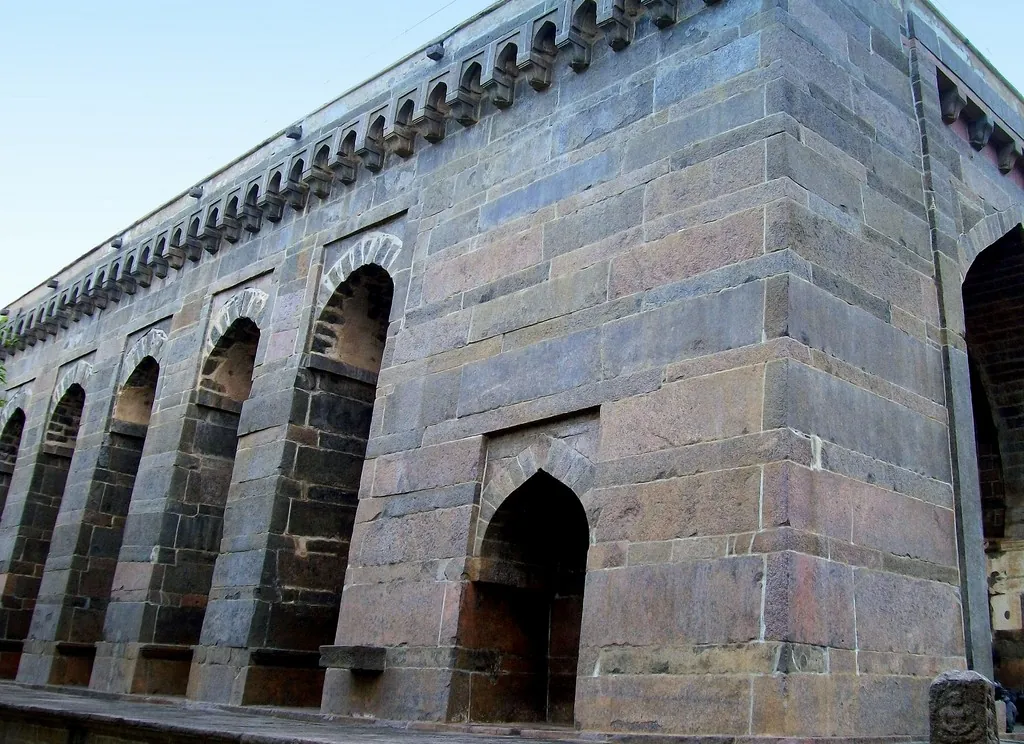
Historic architecture at Warangal illustrates the region’s layered past, not an unbroken Telugu state.
Credit: Bornav27may · CC BY-SA 3.0 · source
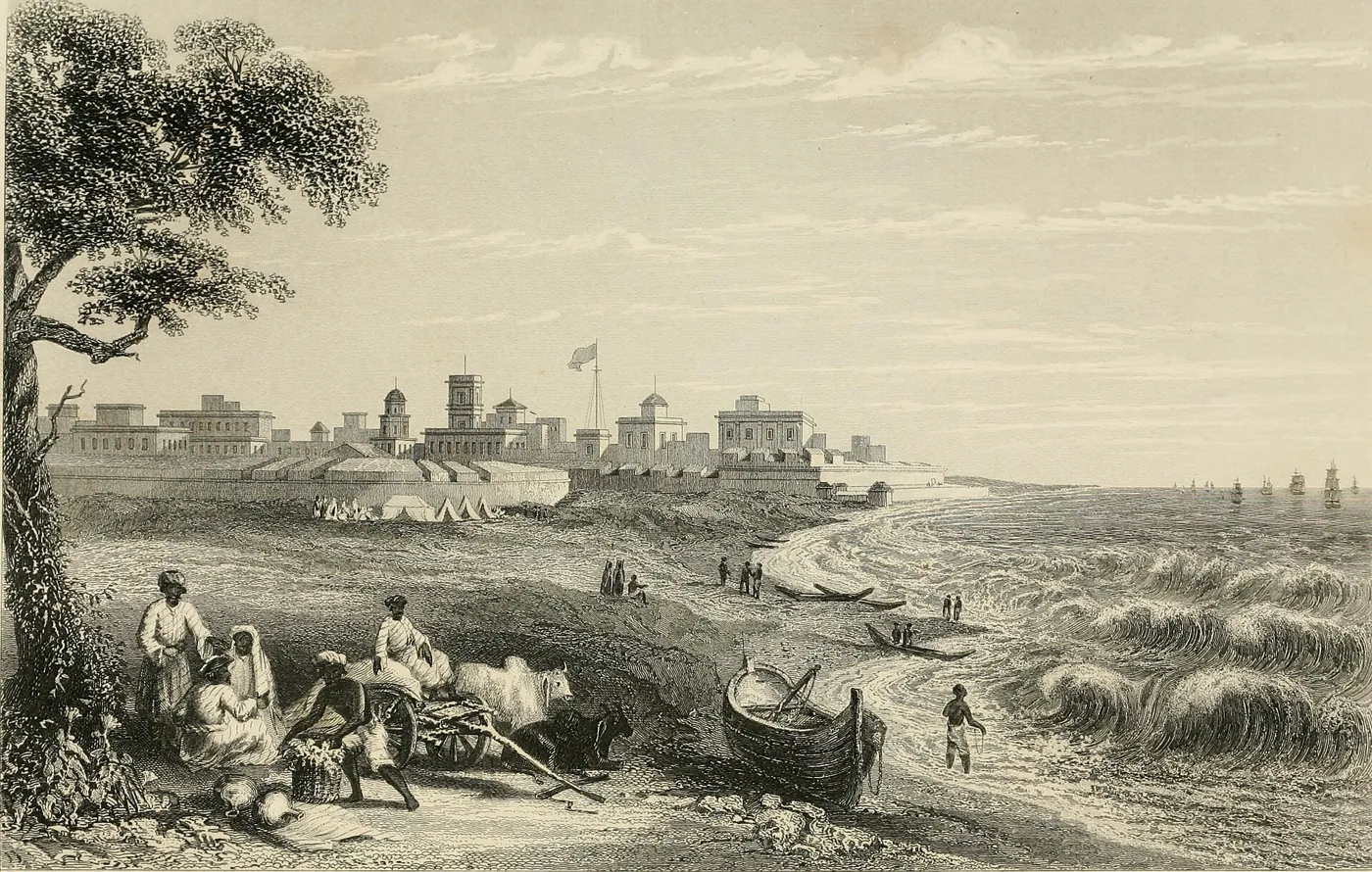
A nineteenth-century illustration of the Madras administrative setting, not a photograph.
Credit: Internet Archive Book Images · No restrictions · source
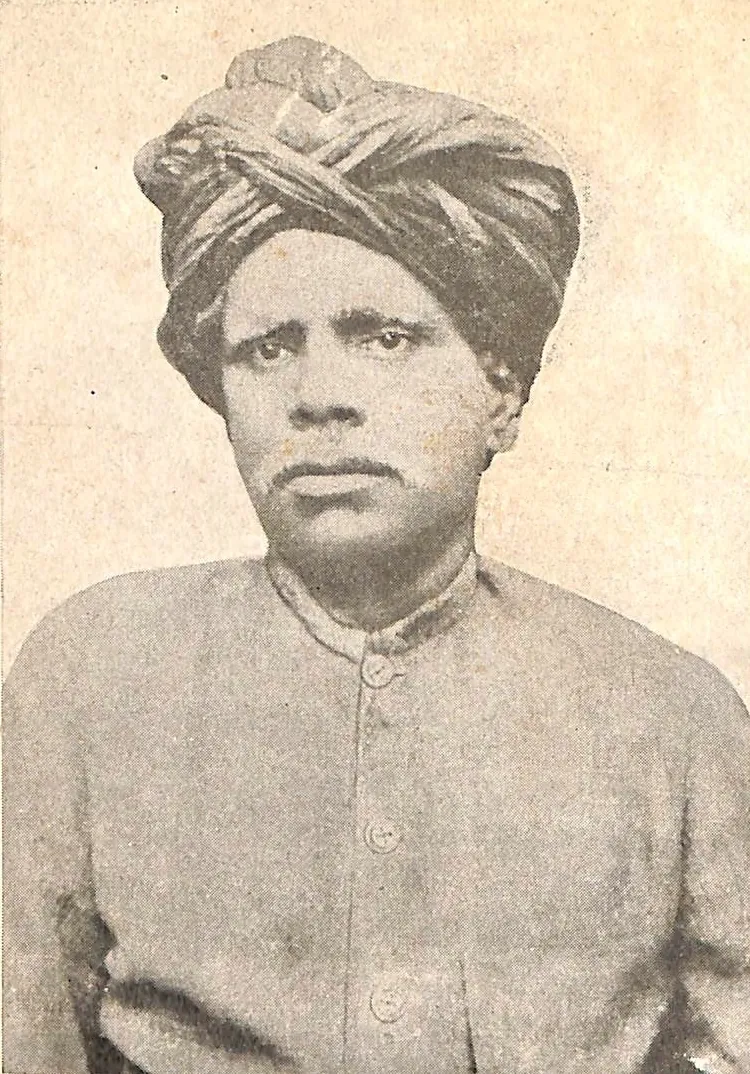
Kandukuri Veeresalingam: Social reform and vernacular public discussion formed part of the background to political awareness.
Credit: Unknown photographer · Public domain · source
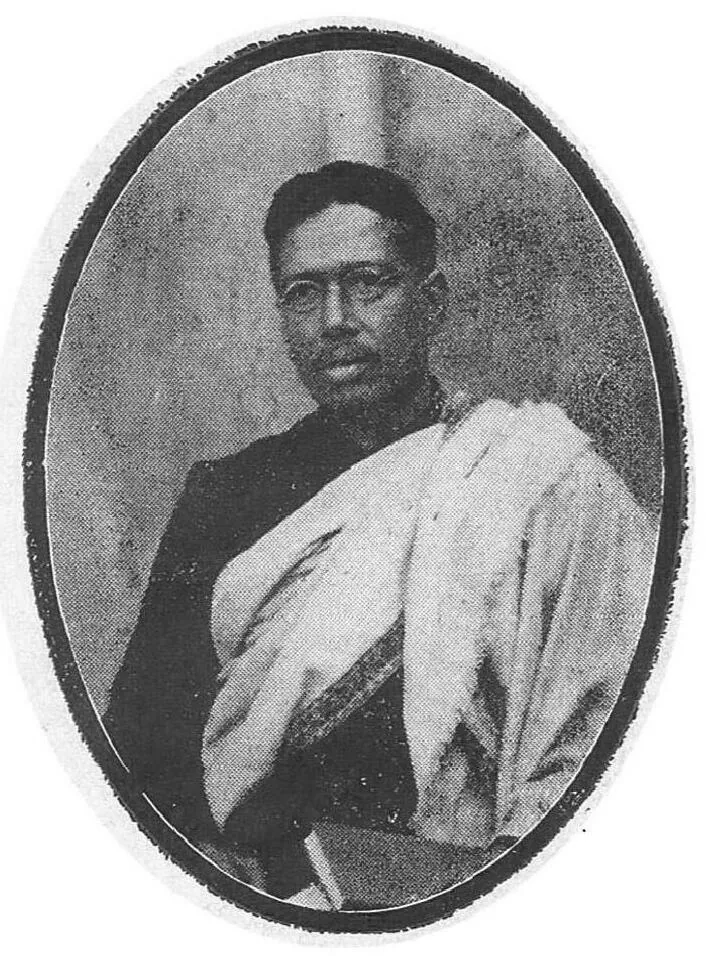
Bipin Chandra Pal: A Swadeshi-era nationalist whose public activity provides the wider political context.
Credit: Andhra Patrika editors · Public domain · source
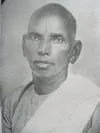
Konda Venkatappayya: An organiser of the Andhra movement and president of the Nellore conference.
Credit: surya patrika · Public domain · source
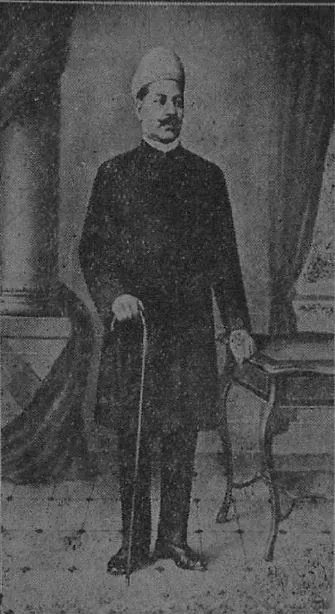
Raja of Panagal: President of the Visakhapatnam conference in 1915.
Credit: K. S. Muthiah & Co., Madras · Public domain · source
1. A linguistic public was made, not inherited intact
Andhra State resulted from the conversion of cultural connections into an organised claim to provincial government. Telugu literature and historical memory provided a vocabulary of belonging, but they did not supply an unchanged territorial unit awaiting restoration. Telugu-speaking communities had lived under different political authorities, and earlier kingdoms were neither linguistically exclusive nor coterminous with modern states. The important historical question is therefore how activists persuaded people that language should organise representation, education and administration under the conditions of modern public politics.
The distinction between Madras and Hyderabad is central to a Telangana-focused account. The principal Andhra provincial campaign developed in the Telugu districts of Madras Presidency, where associations, newspapers and representative institutions shaped public argument. Telangana belonged to Hyderabad State and experienced a different administrative and political environment. Cultural affinity could support visions of a larger Telugu community, but it did not by itself establish the timing, boundaries or safeguards of a merger. The Andhra State created in 1953 must consequently be studied separately from Andhra Pradesh formed in 1956.
- Distinguish linguistic affinity from continuous territorial unity.
- Do not project modern state borders onto medieval kingdoms.
- Keep Madras-based mobilisation and Hyderabad political developments analytically distinct.
Timeline
1913
Bapatla opened the annual conference campaign.
1914–1917
Vijayawada, Visakhapatnam, Kakinada and Nellore continued the sequence.
1917–1918
Congress recognition and organisation provided a regional party platform.
1926
Andhra University was constituted.
16 November 1937
Sri Bagh provided a framework of coastal–Rayalaseema accommodation.
17 June 1948
The Linguistic Provinces Commission was appointed.
April 1949
JVP reported, leaving a conditional Andhra opening.
August–September 1951
Swami Sitaram undertook his prolonged fast.
19 October–15 December 1952
Sriramulu’s final fast ended in his death.
19 December 1952
The Union announced Andhra State without Madras city.
7 February 1953
Wanchoo submitted his implementation report.
14 September 1953
The Andhra State Act received assent.
1 October 1953
Andhra State was inaugurated at Kurnool.
1 November 1956
Andhra Pradesh emerged through merger with Telangana.
2. Print, nationalism and the conference method
The early movement drew strength from an expanding vernacular public sphere. Newspapers and local associations enabled educated activists to compare concerns about schooling, employment and political influence across district boundaries. Swadeshi widened the repertoire of public meetings, cultural assertion and collective action. These connections did not make regional mobilisation inevitable: organisers still had to turn complaints into a common programme. Claims of inadequate representation should be understood as arguments made by participants, rather than converted into blanket judgements about another language community or supported by untraceable numerical ratios.
Bapatla in 1913 gave this developing public an important common platform under B. N. Sarma. Rather than assuming immediate consensus, its leaders continued discussion of the provincial question. The subsequent sequence of Vijayawada in 1914, Visakhapatnam in 1915, Kakinada in 1916 and Nellore in 1917 demonstrates how repetition sustained a movement. Conference politics allowed resolutions, leadership networks and regional persuasion to reinforce one another. Its significance lay not merely in passing demands but in constructing a constituency capable of claiming to speak for a proposed province.
- Remember the first five venues in chronological order.
- The initial conference did not immediately produce a separate province.
- Do not confuse these conferences with the later Hyderabad Andhra Mahasabha.
Build a causal answer in five steps
- 1. Explain cultural resources and representational grievances.
- 2. Show how conferences, party organisation and education sustained mobilisation.
- 3. Analyse regional accommodation through Sri Bagh and delays after independence.
- 4. Connect Sriramulu’s death and mass protest to the December decision.
- 5. Conclude with implementation, law and the limits of the 1953 settlement.
3. Party recognition and a university were different victories
Congress recognition gave the Andhra demand an organisational foothold within Indian nationalism. Approval at the Calcutta session in 1917 and the working organisation associated with 1918 explain why historical summaries use both years. Congress’s broader linguistic reorganisation at Nagpur in 1920 strengthened the legitimacy of regional party units. Yet a provincial Congress committee remained a party institution, not a government established by territorial legislation. The distinction matters because it shows how a movement could gain practical experience and symbolic recognition while continuing to lack the administrative autonomy it sought.
Andhra University addressed another part of the regional programme. Constituted in 1926 under Madras legislation, it had C. R. Reddy as founder Vice-Chancellor; Sarvepalli Radhakrishnan succeeded him in 1931. Its initial headquarters at Vijayawada and subsequent location at Visakhapatnam belong to different institutional stages. Educational provision demonstrated that the movement concerned opportunities and public investment as well as boundaries. At the same time, the location of facilities could generate regional disagreement within the proposed linguistic unit, anticipating the distributive concerns later addressed through the Sri Bagh Pact.
- 1917 approval and 1918 organisation are related stages, not rival statehood dates.
- 1926 marks the university, not a new territorial government.
- C. R. Reddy preceded Radhakrishnan as Vice-Chancellor.
| Instrument or event | Task or result | Do not confuse with |
|---|---|---|
| Andhra conferences, from 1913 | Build public support and pass resolutions | A statutory provincial legislature |
| Congress organisation, 1917–18 | Recognise a regional party platform | Legal separation from Madras |
| Andhra University, 1926 | Expand higher-education institutions | A territorial government |
| Sri Bagh, 1937 | Negotiate safeguards within the proposed Andhra unit | The 1956 Andhra–Telangana agreement |
| Dhar, 1948 | Assess linguistic provinces; prioritise viability | The later SRC |
| JVP, 1949 | Political review and conditional Andhra opening | An unconditional nationwide linguistic settlement |
| Wanchoo, 1953 | Assess financial and administrative implementation | The Act that created the legal framework |
| Andhra State Act, 1953 | Provide for formation and transitional arrangements | The 1956 Telangana merger |
4. Sri Bagh: securing cooperation within the proposed state
The Sri Bagh Pact of 16 November 1937 reveals the limits of treating language as a complete political solution. Coastal and Rayalaseema leaders needed an agreement because a common province could still concentrate advantages unevenly. Meeting at Kasinathuni Nageswara Rao’s Madras residence, they negotiated assurances involving education, irrigation, representation and institutional location. University centres at Waltair and Anantapur were envisaged, while Rayalaseema and Nellore were to receive irrigation priority for ten years or longer according to need. These provisions addressed the distribution of future state benefits.
The arrangement also sought to disperse major institutions and gave Rayalaseema a choice between the capital and the High Court. Its significance was political rather than equivalent to a statutory division of powers: the pact did not itself create a state or automatically implement every undertaking. Nevertheless, it supplied a language of regional entitlement that influenced the later capital debate and the selection of Kurnool. For a mains answer, Sri Bagh illustrates negotiated consent within a linguistic movement; it should not be confused with the Andhra–Telangana safeguards negotiated in 1956.
- Sri Bagh joined coastal and Rayalaseema interests in 1937.
- Irrigation priority was not expressed as an inflexible maximum of ten years.
- The capital question was part of a wider distributive settlement.
5. Dhar and JVP: caution after independence
Independence changed the institutional arena but did not immediately settle the Andhra claim. Partition, national integration and administrative reconstruction made the Union leadership wary of opening multiple boundary disputes. The President of the Constituent Assembly appointed the Linguistic Provinces Commission on 17 June 1948 under S. K. Dhar, with Panna Lal and Jagat Narain Lal as members. Its December report gave precedence to administrative and economic considerations over immediate linguistic redivision. This position reflected the perceived requirements of consolidation, but it did not remove the popular aspirations that had generated the inquiry.
Congress then considered the matter through Jawaharlal Nehru, Vallabhbhai Patel and Pattabhi Sitaramayya, whose names supplied the initials JVP. Their April 1949 report generally favoured postponement, while leaving a conditional route to an agreed Andhra province without Madras city. Calling this either an unconditional acceptance or a permanent rejection would obscure its political reasoning. The city dispute was especially difficult because administrative infrastructure, commercial importance and competing attachments converged there. A workable separation required agreement on practical arrangements, not simply a declaration that Telugu districts deserved recognition.
- Dhar was appointed in June 1948, not January.
- JVP was a Congress political committee, distinct from Dhar’s commission.
- The conditional Andhra opening depended especially on abandoning the Madras claim.
6. The fasts and the change in political urgency
Swami Sitaram’s protest exposed the distance between accepting Andhra in principle and implementing it. The Nehru Archive records a 35-day fast in August–September 1951 that ended after Vinoba Bhave’s persuasion. Exact opening dates vary in secondary accounts, so an unsupported precise day should not displace the better-attested duration and period. Nehru’s correspondence expressed concern while resisting administrative decisions compelled through fasting. He argued for an agreed scheme covering disputed questions. The episode demonstrates that moral pressure could sustain a movement without itself resolving its institutional obstacles.
Potti Sriramulu began fasting at Bulusu Sambamurti’s house in Madras on 19 October 1952 and died on 15 December, conventionally counted as the 58th day. His death provoked widespread agitation, including strikes, attacks on public property and police firing. No uncertain casualty total is needed to establish the political turning point. On 19 December Nehru announced that Andhra State would be established without Madras city. Sriramulu’s sacrifice was thus a decisive catalyst within a much longer movement, rather than a substitute for the organisational history or subsequent legal process.
- Sitaram ended his fast; Sriramulu died during a separate fast the next year.
- Distinguish 15 December’s death from 19 December’s announcement.
- Explain the immediate crisis alongside the accumulated strength of the provincial movement.
7. Wanchoo and the legal machinery of separation
The Union’s decision required an implementation programme. Justice K. N. Wanchoo, then Chief Justice of Rajasthan High Court, was asked to examine financial and other consequences of separation. Nehru’s parliamentary statement of 25 March 1953 explicitly records that Wanchoo submitted his report on 7 February. The statement is particularly useful because it separates an inquiry’s findings from decisions taken by government. Services, finance and institutional arrangements required further detailed work; the existence of a linguistic majority could not answer every question about a new administration’s resources, personnel or transitional obligations.
The Andhra State Act received assent on 14 September 1953 and provided the legal basis for the October formation. Its scope extended beyond naming a new state: it addressed legislative representation, courts, financial provisions, legal continuity and services, as well as territory transferred from Madras to Mysore. References to eleven Telugu districts are useful shorthand but should not erase the Act’s detailed treatment of Bellary-area territory. A strong answer therefore follows the sequence from popular claim to political acceptance, technical inquiry and statutory implementation, rather than treating all stages as one event.
- Wanchoo’s report date is 7 February, not a March announcement date.
- A report advises; legislation establishes the operative legal framework.
- The Act also altered Mysore’s territory and provided transitional arrangements.
8. Kurnool and the meaning of the Andhra precedent
Jawaharlal Nehru inaugurated Andhra State at Kurnool on 1 October 1953. T. Prakasam became Chief Minister, Neelam Sanjiva Reddy Deputy Chief Minister and C. M. Trivedi Governor. The capital’s location embodied a negotiated regional balance rather than an inevitable consequence of language. A separate Andhra High Court was established at Guntur in 1954, so it should not be dated automatically to inauguration day. Telangana still belonged to Hyderabad State: Hyderabad was not the capital of Andhra State in October 1953.
Andhra’s formation demonstrated the capacity of linguistic mobilisation to reshape independent India’s internal map and sharpened the need for wider reorganisation. Its significance should nevertheless be stated carefully: Odisha had already become a separate linguistic province in 1936, making an unqualified claim that Andhra was India’s first linguistic province misleading. Nor did success in separating from Madras automatically legitimise every proposal for uniting Telugu-speaking areas. Andhra Pradesh emerged through the distinct merger with Telangana on 1 November 1956, raising additional questions about consent, development and safeguards that shared language alone could not settle.
- 1953: Andhra State, Kurnool and Prakasam.
- 1954: separate High Court at Guntur.
- 1956: Andhra Pradesh and Hyderabad after the Telangana merger.
- Use linguistic federalism as an explanation, not as an assumption of unanimous regional consent.
Real-world case studies
Sri Bagh as negotiated regional consent
A linguistic community was not a uniform distributional interest. Sri Bagh responded to fears that a common state would favour some districts over others by linking cooperation to irrigation, education and institutional location. Its value for comparative analysis lies in showing that regional safeguards may be necessary within, not merely between, linguistic units.
Wanchoo: from moral urgency to administrative capacity
The crisis of December 1952 supplied political urgency, but it could not divide staff, allocate liabilities or organise courts. Wanchoo’s inquiry demonstrates the separate role of administrative expertise. Distinguishing his February report, Nehru’s March statement and the October inauguration prevents a narrative of protest from obscuring how a functioning state was established.
Why 1953 did not settle Telangana
The Andhra settlement changed the map of Madras State without incorporating Telangana. Hyderabad’s different institutional history and the later debate about regional safeguards remained relevant. The case warns against using a shared language or one region’s successful statehood demand as sufficient evidence of another region’s consent to merger.
Previous year questions
No source-linked PYQ is available here yet. Use the practice questions below.
Practice questions
Practice MCQ 1 · Easy
Which sequence correctly orders the first three Andhra conference venues?
- Bapatla, Vijayawada, Visakhapatnam
- Vijayawada, Bapatla, Nellore
- Visakhapatnam, Kakinada, Bapatla
- Nellore, Bapatla, Kakinada
Practice MCQ 2 · Easy
Which statement about Andhra University is correct?
- It was constituted in 1953.
- Its founder Vice-Chancellor was C. R. Reddy.
- Radhakrishnan preceded C. R. Reddy.
- It legally separated Andhra from Madras.
Practice MCQ 3 · Moderate
The Sri Bagh Pact primarily addressed which relationship?
- Andhra and Telangana in 1956
- Madras and Mysore after 1953
- Coastal Andhra and Rayalaseema in 1937
- Hyderabad and the Union in 1948
Practice MCQ 4 · Moderate
Which pairing of inquiry and purpose is correct?
- Dhar—1953 allocation of Andhra services
- JVP—foundation of Andhra University
- Wanchoo—drafting of the 1937 pact
- Wanchoo—financial and other implications of Andhra State
Practice MCQ 5 · Moderate
Which event occurred on 19 December 1952?
- The Union announced its Andhra State decision.
- Andhra State was inaugurated.
- Sriramulu began his fast.
- The Act received assent.
Practice MCQ 6 · Difficult
Consider the claims: Telangana joined Andhra State in 1953; Kurnool was Andhra State’s capital; a separate Andhra High Court was established at Guntur in 1954. Which are correct?
- Only the first
- Only the second and third
- All three
- Only the first and third
Mains practice · Explain how cultural mobilisation became a demand for provincial government in the Andhra movement.
- Distinguish cultural affinity from continuous statehood.
- Discuss print, associations and Swadeshi.
- Trace the conference sequence and party recognition.
- Examine higher education as a component of regional opportunity.
- Conclude with the need for regional negotiation, not language alone.
Mains practice · Evaluate the importance of regional accommodation and national caution in the formation of Andhra State.
- Explain Rayalaseema’s distributive concerns.
- Analyse Sri Bagh’s institutional and development assurances.
- Place Dhar and JVP in the consolidation context.
- Discuss Madras city as an obstacle to agreement.
- Assess Kurnool’s selection as a negotiated outcome.
Mains practice · Potti Sriramulu’s death was a catalyst, not the entire cause of Andhra State. Discuss with reference to implementation in 1953.
- Establish the decades-long organisational background.
- Distinguish the fasts of 1951 and 1952.
- Trace death, agitation and the December announcement.
- Explain Wanchoo’s inquiry and the September Act.
- Separate Andhra State in 1953 from Andhra Pradesh in 1956.
Further reading
- https://www.indiacode.nic.in/handle/123456789/2176?locale=en
- https://nehruarchive.in/documents/proposed-inauguration-of-andhra-state-25-march-1953-1golg6
- https://nehruarchive.in/events/sri-bagh-pact
- https://nehruarchive.in/people/swami-sitaram
- https://andhrauniversity.edu.in/about/au-profile.html
- https://aphc.gov.in/aboutus.php?abt=hc
- https://teluguhistory.org/en/themes/andhra-movement/
- https://www.tandfonline.com/doi/full/10.1080/14736489.2014.964629
Preparing for TGPSC Group 1 or Group 2? See the TGPSC Groups coaching course at Pragnya IAS Academy for fees, batches and registration.
Long study hours taking a toll? Try the free breathing exercise and self check-in in Pragnya’s student wellness programme for UPSC aspirants.