
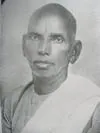
Konda Venkatappayya: An organiser associated with the early Andhra provincial movement.
Credit: surya patrika · Public domain · source
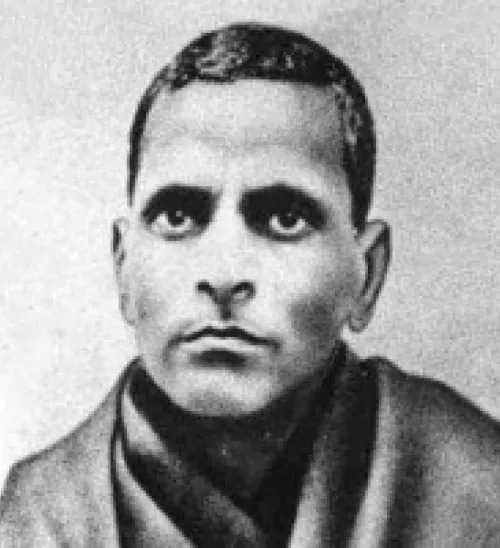
Potti Sreeramulu: His campaign belongs to Andhra State’s formation, not a Telangana vote on merger.
Credit: Unknown photographer · Public domain · source
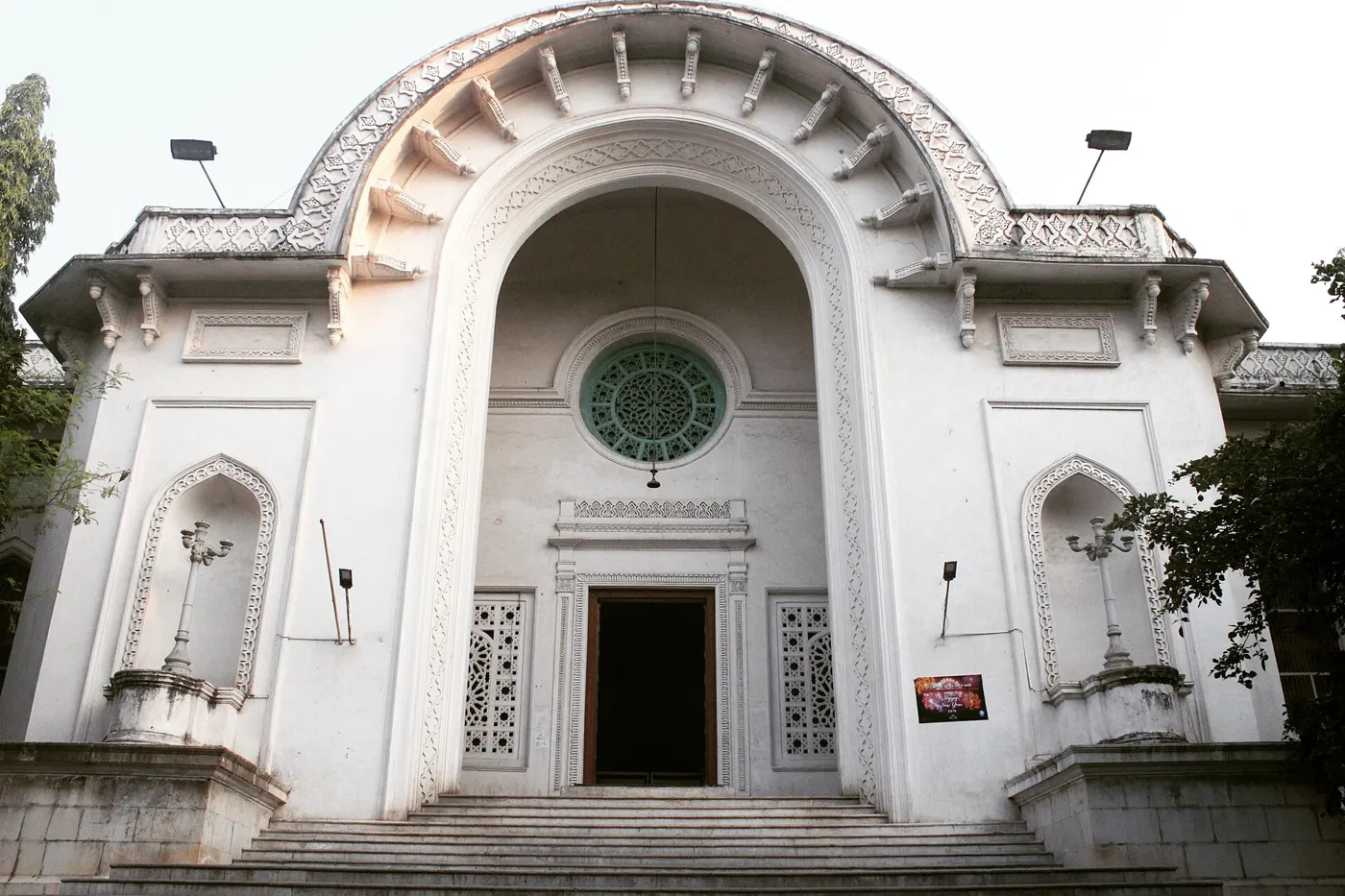
State Central Library: A historic institution illustrating the reading culture surrounding public debate; not an identified Visalandhra meeting venue.
Credit: Adbh266 · CC BY-SA 3.0 · source
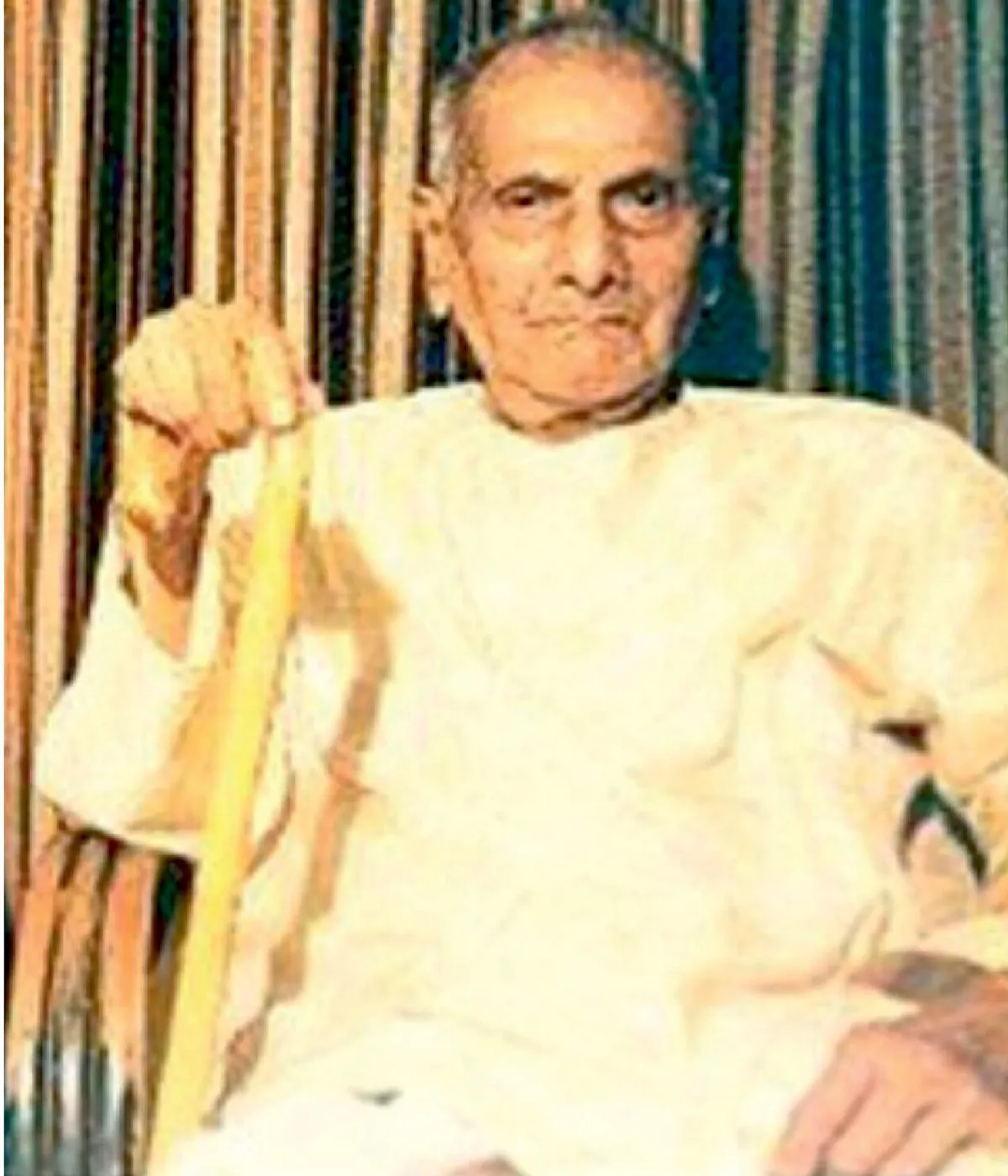
Ravi Narayana Reddy: A Telangana peasant leader and parliamentarian associated with Communist politics.
Credit: Unknown photographer · CC BY-SA 4.0 · source
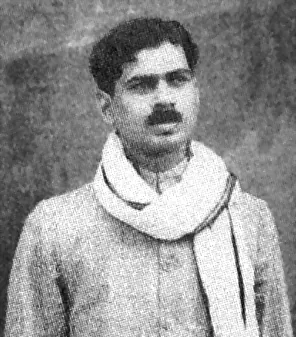
Bezawada Gopala Reddy: Andhra’s Chief Minister during the post-SRC safeguard debate.
Credit: Malyadri · CC BY-SA 3.0 · source
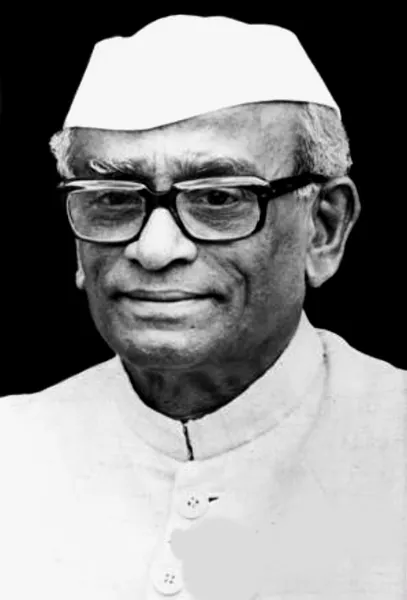
Neelam Sanjiva Reddy: An Andhra leader involved in the political transition to the merged state.
Credit: Bhavanajagat , Neelam Sanjiva Reddy · CC BY-SA 4.0 · source
1. Two territorial questions, not one
The Andhra provincial movement challenged the position of Telugu-speaking districts within Madras, whereas Visalandhra raised the additional question of combining those districts with Telangana. Bapatla’s first Andhra Conference in 1913 belongs to the earlier mobilisation. Congress’s adoption of linguistic provincial organisation in 1920 gave language a recognised political vocabulary, but a party’s organisational map was not automatically a plan for state boundaries. In particular, political activity within British-administered Madras and cultural organisation within princely Hyderabad operated under different institutions and constraints.
Andhra State’s establishment on 1 October 1953 resolved one part of the problem without deciding Telangana’s future. Telangana continued within Hyderabad State, which also contained Marathi- and Kannada-speaking territories. The resulting debate therefore involved at least two choices: whether the multilingual state should be reorganised, and whether its Telugu-speaking region should immediately join Andhra. Agreement about the first did not logically establish consent to the second. A strong answer should identify the relevant territory and decision-maker before describing any resolution as a mandate.
- Distinguish Andhra State from Andhra Pradesh in every chronology.
- Linguistic affinity crossed an existing political boundary.
- Hyderabad State and Telangana were not interchangeable geographical terms.
Timeline
1913
Bapatla hosts the first Andhra Conference.
1920
Congress adopts linguistic provincial organisation at Nagpur.
1934
Golconda Kavula Sanchika documents Telangana’s literary contribution.
March 1946
The English first edition of Sundarayya’s Vishala Andhra appears.
1949–1950
Organised Visalandhra campaigning develops through the Mahasabha and public conferences.
1 October 1953
Andhra State is formed without Telangana.
1955
The SRC recommends initial separation with a conditional later-union option.
25 November 1955
Andhra Assembly endorses merger with assurances for Telangana.
Late 1955
Hyderabad’s legislature debates the competing arrangements.
20 February 1956
Leaders reach the Gentlemen’s Agreement.
5 March 1956
Pingle records Nehru’s merger announcement at Nizamabad.
1 November 1956
Merger takes effect and Andhra Pradesh comes into existence.
2. Print, conferences and the making of a campaign
Visalandhra became politically effective because the idea circulated through writing, public meetings and organisational networks rather than remaining an abstract cultural sentiment. Sundarayya’s Vishala Andhra supplies a particularly secure contemporary anchor: its English first edition appeared in Bombay in March 1946. Its contents connected a proposed Telugu political unit with peasant demands, industrial regeneration and democratic government. Reading the publication this way is more useful than memorising a title alone, because it reveals the social programme that a prominent Communist attached to linguistic unity.
Accounts of the organised campaign also identify the Visalandhra Mahasabha associated with Ayyadevara Kaleswara Rao in 1949 and meetings at Warangal in 1950 and Hyderabad in 1954. These milestones indicate sustained advocacy across the regional divide, not a measured plebiscite. A conference could demonstrate organisational energy and public visibility while leaving the breadth of its representative authority uncertain. Likewise, the existence of a pamphlet establishes that an argument was made, but does not independently show how widely its readers accepted immediate merger or the safeguards later offered.
- Use the March 1946 edition as primary evidence of Sundarayya’s programme.
- Conference resolutions express participants’ adopted positions.
- Do not identify every organisation called Andhra Mahasabha as the same body.
From linguistic aspiration to the choice of institutions
- 1. Identify the broader Telugu claim beyond Andhra’s separation from Madras.
- 2. Assess the capital, resource and administrative arguments for union.
- 3. Test Telangana’s fiscal, educational and political reservations.
- 4. Compare the SRC’s conditional later-union proposal with immediate merger.
- 5. Trace the safeguard bargain and parliamentary implementation separately.
- 6. Evaluate consent, benefit-sharing and the credibility of protection.
3. Communists: ideology, organisation and the power interpretation
Communist support for Visalandhra should be situated in both linguistic mobilisation and agrarian politics. Sundarayya’s programme preceded the formation of Andhra State and linked the territorial claim to economic and democratic transformation. In Hyderabad, Communist-supported candidates used the People’s Democratic Front as an electoral vehicle in the early democratic period. Their strength made future political control a serious issue for other parties. However, an electoral front, a party organisation and a governing majority across the entire multilingual state are analytically different things.
The interpretation sometimes called the power theory emphasises calculations about whether a larger Telugu state would increase Communist prospects. Burgula’s reproduced assessment to Congress president U. N. Dhebar attributes strategic reasoning to the Communists, making it evidence of a contemporary opponent’s political judgement. It is not proof that all Communist supporters shared one exclusive motive. Congress’s success in the 1955 Andhra election also cautions against treating Communist victory as inevitable. For mains, discuss ideology, organisational strength and electoral expectations as interacting explanations rather than choosing one unsupported total explanation.
- Use CPI, not CPI(M), for the pre-1956 party context.
- Attribute the electoral-power explanation to its source.
- Regional strength cannot be equated with a whole-state majority.
| Issue | Case for immediate union | Case for initial separation | Analytical test |
|---|---|---|---|
| Language | A shared Telugu public sphere | Shared culture need not require immediate union | Does affinity establish consent? |
| Capital | Hyderabad offers established facilities | A capital’s assets do not settle regional authority | Who controls administration? |
| Economy | Food and coal complement each other | Unequal capacities can distribute gains unevenly | Who receives investment and opportunities? |
| Water | Fewer jurisdictions can ease selected projects | Telangana may lose influence over priorities | Who determines sequencing and allocation? |
| Revenue | Pooling can support larger plans | Dependable regional receipts may be redirected | Are regional allocations protected? |
| Employment | A larger administration may create openings | Differences in education can favour some applicants | Are access rules sensitive to unequal preparation? |
| Land | Integration may encourage investment | Unequal purchasing power can weaken local control | What protections govern transfers? |
| Timing | Negotiate safeguards and merge now | Develop consent and reconsider union later | Are assurances credible and enforceable? |
4. Andhra’s positive case: a capital, complementarity and scale
The SRC took the advantages of Visalandhra seriously. Hyderabad and Secunderabad offered a substantial urban centre suited to the role of permanent capital, while the new Andhra State faced the challenge of consolidating its administration. Kurnool was already functioning as its capital, so the correct argument concerns the attractiveness of an established alternative, not the absence of any government headquarters. The commission also identified complementary resources: Andhra normally supplied surplus food, while Telangana offered coal from Singareni. These were reciprocal claims about a prospective larger economy.
River planning strengthened the coordination argument. A single administration could reduce one jurisdictional barrier in the eastern parts of the Krishna and Godavari basins and align some irrigation and power decisions. The SRC nevertheless acknowledged that neither basin could be completely unified within the proposed state. Administrative scale might lower some costs and simplify selected projects, but it did not automatically settle allocation or regional priorities. Analyse the case as a claim about possible efficiency gains, then ask which institutions would convert those gains into broadly distributed benefits.
- Hyderabad’s capital suitability appears in SRC paragraph 371.
- River coordination did not mean ownership of complete basins.
- Complementarity was a potential advantage, not a guarantee of equal gains.
5. Telangana’s counter-case: different resources and unequal capacities
Telangana’s fiscal objection was compatible with acknowledging its educational disadvantages. The SRC observed that comparatively dependable revenue sources could make a separate unit financially viable, even while many residents lacked the educational preparation available elsewhere. A region’s treasury and its population’s capabilities are not the same measure of development. Paragraph 379’s estimate of about ₹17 crore referred to current-account revenue receipts. Relabelling it a net surplus would omit expenditure commitments and distort the financial reasoning behind the case for a separate state.
Employment and irrigation brought these abstract concerns into everyday politics. Better-qualified competitors might gain earlier access to a common recruitment system, while larger fiscal pools could redirect expenditure from Telangana’s priorities. River projects created a similar distinction between coordinated planning and influence over the order of investment. Land-market vulnerability added a concern about unequal purchasing and bargaining capacity; the later safeguard bargain addressed control over agricultural land sales. These fears should be explained as anticipated institutional effects of unequal starting conditions, not as negative generalisations about residents of either region.
- SRC paragraphs 376–379 connect finance, water and public opportunities.
- Hyderabad city’s institutions did not measure educational access in every district.
- Separate statehood was offered as a means of controlling priorities, not a rejection of cooperation.
6. Identity, journalism and divisions within Congress
Telangana’s public voice drew on a history of literary recovery and regional self-respect within the Telugu cultural sphere. Suravaram Pratap Reddy’s Golconda Kavula Sanchika of 1934 assembled work by 354 poets and challenged the marginalisation of the region’s literary contribution. Such activity demonstrates that regional assertion and attachment to Telugu were compatible. It is therefore misleading to present the dispute as a choice between possessing and rejecting a common language. The question was whether that language outweighed differences in institutions, opportunity and political experience.
The press and Congress organisation reflected the debate’s changing character. Pingle describes Golkonda Patrika moving from support for Visalandhra in 1954 to a separate-Telangana position in 1955. He also identifies K. V. Ranga Reddy, M. Chenna Reddy and J. V. Narsing Rao as important opponents of immediate merger. Other Congress figures supported union, and some positions shifted. Treat party labels and newspaper titles as starting points for enquiry: a sound historical explanation dates a position and identifies the constituency behind it instead of assuming permanent unanimity.
- Literary assertion was not identical to a constitutional statehood resolution.
- Date a newspaper’s editorial position before using it as evidence.
- Congress contained pro-merger and separate-state arguments.
7. What legislative debates and resolutions establish
Andhra’s Assembly resolution of 25 November 1955 combined support for merger with assurances for Telangana. This combination matters: safeguards implicitly acknowledged that the larger-state ideal did not remove concerns about development and access to opportunities. Yet the resolution expressed Andhra’s institutional position, not a decision by Telangana’s population. It also did not enact the territorial change. Keeping these levels separate helps explain why political negotiations continued after a strongly pro-merger legislature had already declared its preference and offered reassurance to the other region.
The Hyderabad debate presents an additional source problem. Later narratives commonly classify 147 participating members as 103 for Visalandhra, 29 for separate Telangana and 15 neutral. These are reported position counts, not certified division figures reproduced in this chapter; Pingle states that no formal vote was taken. The legislature also included representatives from Marathi- and Kannada-speaking regions. Their preferences about dismembering Hyderabad State could not simply substitute for Telangana’s own consent. Avoid false numerical precision about total membership or party-by-region subcounts where the underlying records have not been established.
- Separate an adopted resolution from a parliamentary enactment.
- Describe 103–29–15 as attributed debate positions, not a referendum result.
- Distinguish a multilingual legislature from a Telangana-only electorate.
8. Burgula, Nehru and the difference between judgement and consent
Burgula Ramakrishna Rao eventually supported the merger settlement, but his reproduced communication to U. N. Dhebar reveals substantial reservations in Telangana. He estimated that a majority would prefer remaining separate while explicitly acknowledging the difficulty of accurate assessment under time pressure. This makes the document valuable evidence of a Chief Minister’s perception, not a statistically representative survey. Its reproduced form also warrants caution over exact dating. The chapter therefore uses the substance of the assessment without assigning an unsupported day or claiming an exact percentage of public support.
Nehru’s movement from caution to acceptance likewise illustrates political decision-making rather than a simple application of linguistic doctrine. Pingle records the public announcement at Nizamabad on 5 March 1956. Assurances of fair treatment belonged to the process of making union acceptable, but a reported marriage analogy or promise of future reconsideration cannot itself create a legal right of unilateral separation. Nor should Burgula’s decision be explained as proven personal ambition or caste pressure without corroborating evidence. Distinguish the documented final position from interpretations of why the actor adopted it.
- A leader’s assessment is not a popular vote.
- The Nizamabad announcement belongs to March 1956, not the legal commencement date.
- Political reassurance must not be relabelled a constitutional exit clause.
9. The SRC alternative and the significance of the final bargain
The SRC’s preferred immediate arrangement was a separate Telangana unit that could be known as Hyderabad State. It left room for later union after general elections expected in or about 1961, provided two-thirds of that residuary legislature favoured it. The formula was neither permanent prohibition of merger nor automatic merger on a calendar deadline. Its logic was to allow institutions and public opinion to develop before making an irreversible political commitment. The identity of the deciding legislature is crucial: it was not the whole old Hyderabad Assembly or the Andhra Assembly.
The eventual political settlement took a different route. The Gentlemen’s Agreement of 20 February 1956 sought to address regional anxieties through assurances within a common state, and merger took effect on 1 November 1956 under parliamentary reorganisation. The immediate consequence was a shift from postponement with conditional choice to integration with promised protection. Its wider historical significance lies in the difficulty of reconciling linguistic identity with regional inequalities and credible consent. An effective conclusion should assess that institutional trade-off without treating subsequent conflict as an inevitable outcome already proved in 1955.
- Compare conditional later union with immediate merger plus safeguards.
- Treat the agreement, the Act and commencement as distinct stages.
- Use consent, distribution and enforceability as the final analytical tests.
Real-world case studies
The capital is not the whole region
Hyderabad’s established institutions made it attractive to merger advocates. The SRC could recognise that advantage while also recording educational disadvantage in Telangana’s districts. The apparent contradiction disappears once urban infrastructure, government revenue and household opportunity are treated as separate variables. This case helps explain why capital suitability could support union while unequal access supported regional safeguards.
One river argument, two institutional conclusions
Supporters argued that removing one jurisdiction would facilitate projects in the eastern Krishna and Godavari basins. Telangana critics asked whether the same change would reduce their influence over project priorities. Both arguments concerned governance rather than a disagreement about the existence of the rivers. Coordination and equitable allocation are separate achievements, and a common government does not automatically deliver both.
Why a reported count is not a mandate
The commonly repeated 103–29–15 classification should be read beside Pingle’s statement that no formal vote was taken. Even an accurate classification of speeches would describe the old multilingual legislature rather than Telangana alone. The historical lesson is to identify the action counted, the territory represented and the source’s evidentiary status before turning numbers into claims of consent.
Previous year questions
No source-linked PYQ is available here yet. Use the practice questions below.
Practice questions
Practice MCQ 1 · Easy
Which distinction between the 1953 and 1956 settlements is correct?
- Andhra State in 1953 excluded Telangana; the 1956 merger included it
- Both settlements created the same territorial unit
- Telangana joined Madras in 1953
- Hyderabad State was created from Andhra in 1956
Practice MCQ 2 · Moderate
Which statement correctly describes the SRC’s proposed later union?
- It was automatic in 1961
- It required a simple majority in Andhra’s Assembly
- It depended on two-thirds support in residuary Hyderabad’s legislature after elections expected in or about 1961
- It depended on a Hyderabad municipal motion
Practice MCQ 3 · Moderate
The SRC’s approximate ₹17 crore figure denoted which of the following?
- The cost of relocating the capital
- Guaranteed net surplus after all expenditure
- A fixed irrigation grant
- Estimated current-account revenue receipts
Practice MCQ 4 · Easy
Which pair is correctly matched?
- Golconda Kavula Sanchika—1934
- Vishala Andhra first English edition—1969
- Andhra State formation—1 November 1956
- Gentlemen’s Agreement—1913
Practice MCQ 5 · Moderate
Consider the claim that merger would place both complete river basins under one state. Which assessment is correct?
- The SRC treated complete basin unity as certain
- The SRC acknowledged that complete unification of either basin was not possible
- The claim concerned only the Musi
- The SRC excluded rivers from its reasoning
Practice MCQ 6 · Difficult
Which is the most defensible interpretation of the reported 103–29–15 figures?
- They are certified referendum results from Telangana
- They are the constitutional threshold for merger
- They are reported debate-position counts, distinct from a formal division
- They show the geographical composition of every constituency
Mains practice · Examine the argument that the dispute before 1956 concerned the terms and timing of integration as much as linguistic identity.
- Distinguish the Andhra provincial demand from Visalandhra.
- Explain the capital and resource advantages recognised by the SRC.
- Assess educational, fiscal and irrigation anxieties without stereotyping regions.
- Compare conditional later union with immediate merger plus safeguards.
- Conclude with consent and credible institutional protection.
Mains practice · Critically assess the use of legislative and press evidence in reconstructing Telangana’s opinion before merger.
- Identify the constituency represented by each legislature.
- Separate resolutions, speeches, divisions and enactments.
- Qualify the 103–29–15 figures and cite the no-vote scholarly account.
- Date changing newspaper positions, including Pingle’s account of Golkonda.
- Distinguish a leader’s assessment from a scientific survey.
Mains practice · Did economic complementarity adequately answer the separate-Telangana case? Discuss with reference to capital, jobs, revenue and water.
- Explain reciprocal food and coal advantages.
- Recognise Hyderabad’s attraction without generalising its facilities to every district.
- Distinguish fiscal viability from household prosperity.
- Separate coordinated river planning from regional influence over allocation.
- Evaluate safeguards as a response to unequal starting capacities.
Further reading
- https://mha.gov.in/files/commissions_committees_documents/State_20Reorganisation_20Commisison_20Report_20of_201955_270614.pdf
- https://www.epw.in/journal/2010/08/special-articles/historical-context-andhra-and-telangana-1949-56.html
- https://www.revolutionarydemocracy.org/archive/Sundarayya.pdf
- https://en.wikisource.org/wiki/Hyderabad_CM_Burgula_Views_about_merger
- https://www.indiacode.nic.in/handle/123456789/1680
- https://archive.org/details/in.ernet.dli.2015.391718
Preparing for TGPSC Group 1 or Group 2? See the TGPSC Groups coaching course at Pragnya IAS Academy for fees, batches and registration.
Long study hours taking a toll? Try the free breathing exercise and self check-in in Pragnya’s student wellness programme for UPSC aspirants.