
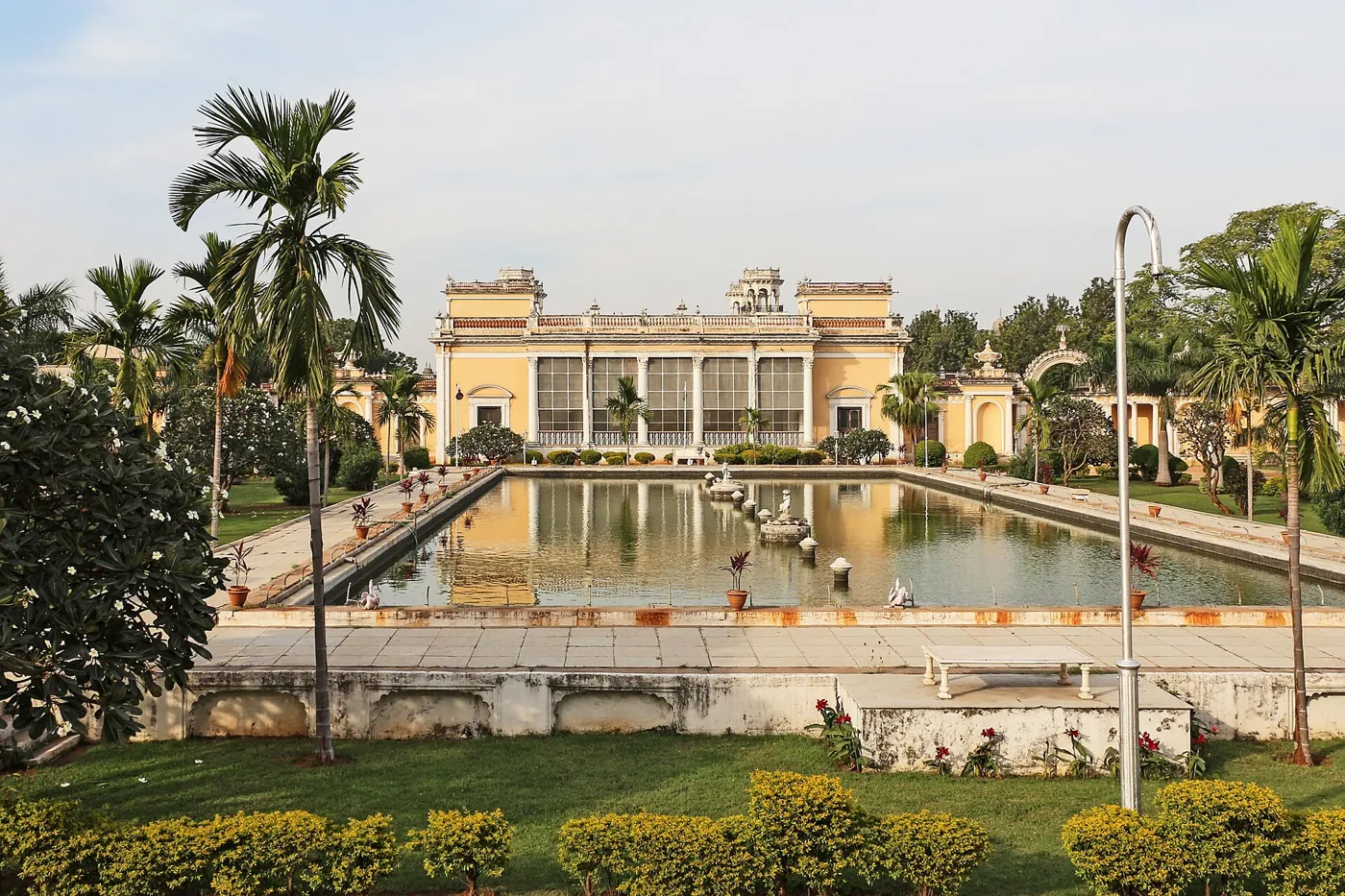
Chowmahalla Palace, Hyderabad — capital of a state with Telugu, Marathi and Kannada regions
Credit: Bernard Gagnon · CC BY-SA 3.0 · source
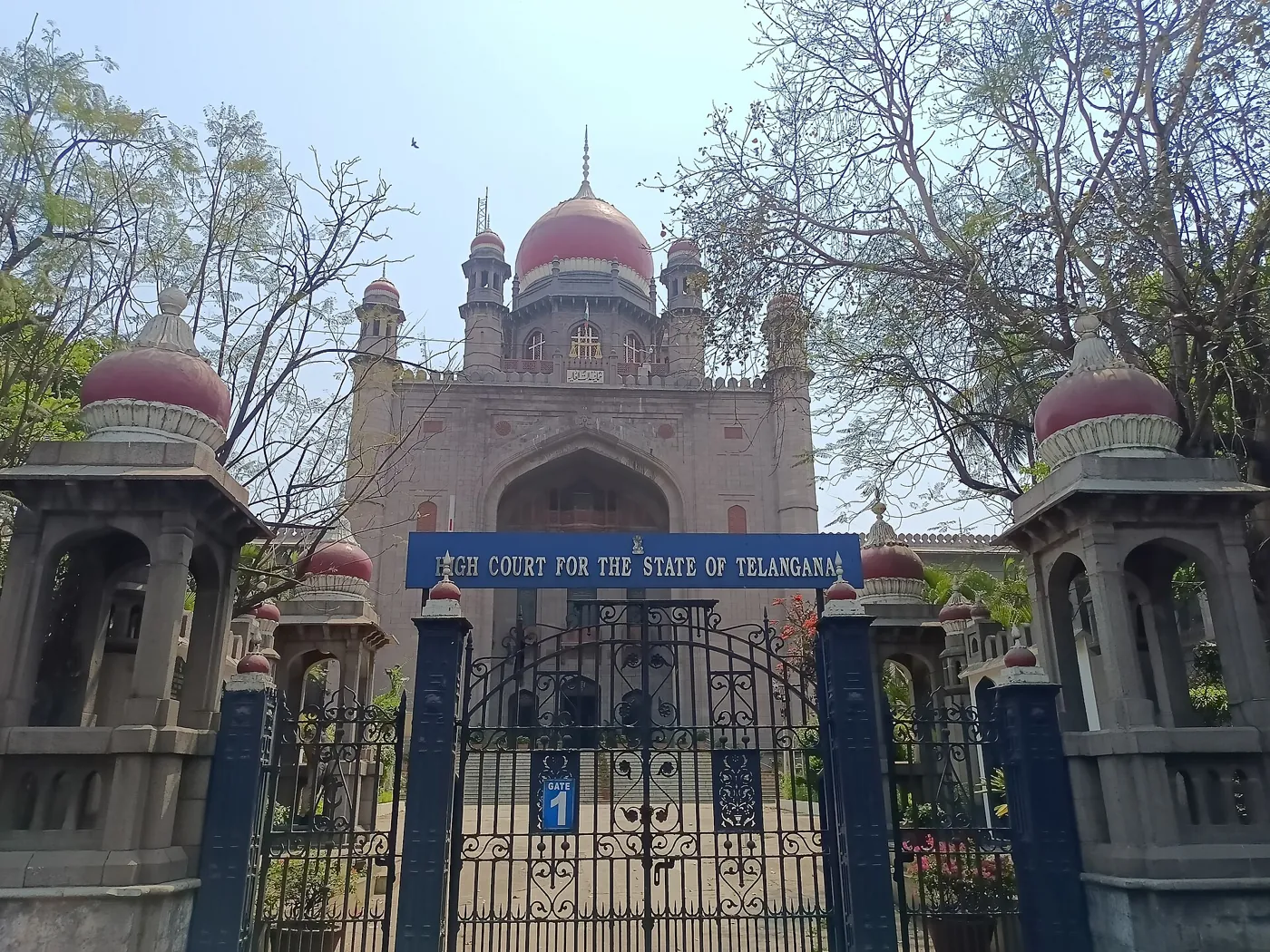
The High Court building (1920) on the Musi, Hyderabad
Credit: Tarunsamanta · CC BY-SA 4.0 · source
Swami Ramananda Tirtha, leader of the Hyderabad State Congress
Credit: Facebook · CC BY-SA 4.0 · source
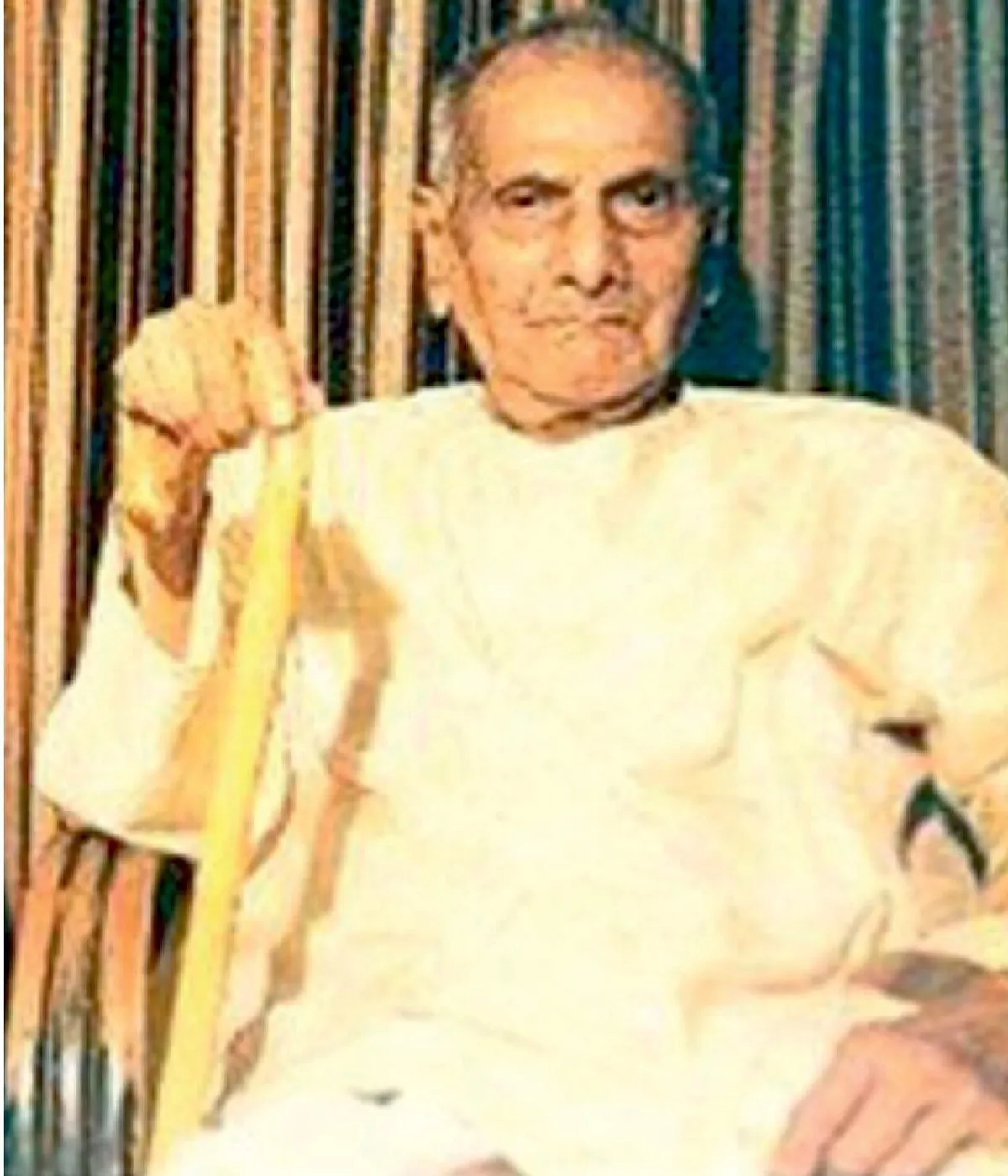
Ravi Narayan Reddy, Communist leader of the People’s Democratic Front
Credit: Unknown photographer · CC BY-SA 4.0 · source
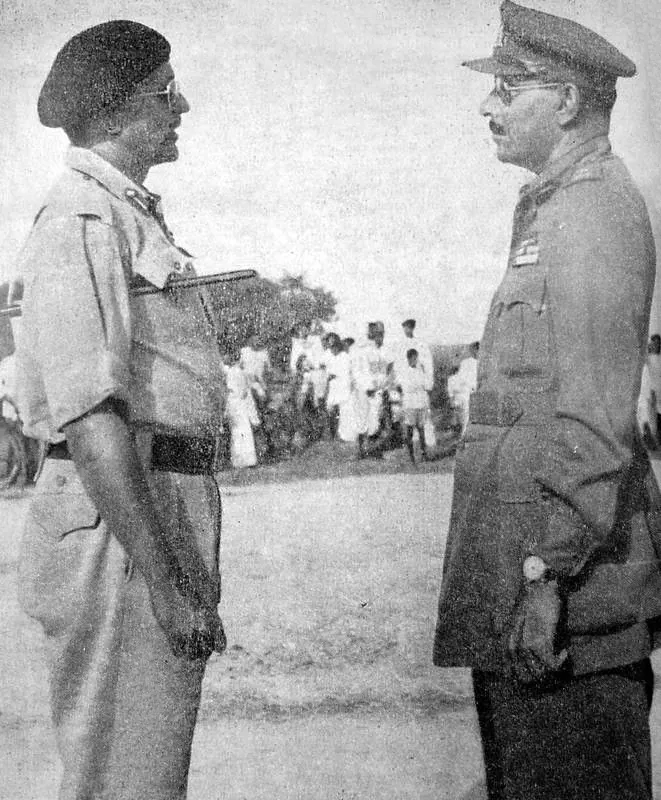
J.N. Chaudhuri (left) accepts El Edroos’s surrender; he then governed Hyderabad as Military Governor until December 1949
Credit: Unknown photographer · Public domain · source
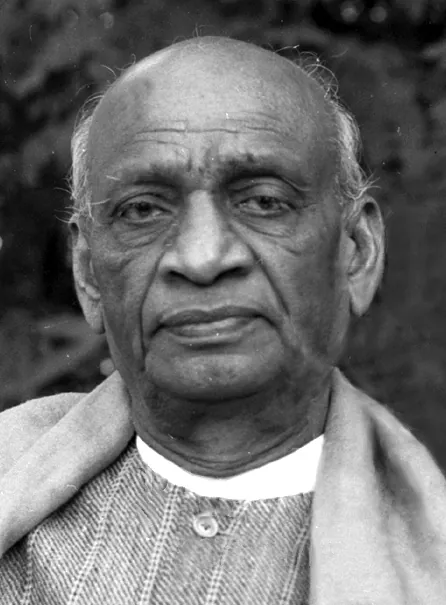
Sardar Patel, under whose Home Ministry Hyderabad was administered
Credit: Government of India work · Public domain · source
1. A multilingual state rather than an enlarged Telangana
The Hyderabad inherited by the Indian Union was a territorial and administrative system embracing several linguistic societies. Its eastern Telugu-speaking region, Telangana, shared a capital and institutions with Marathi-speaking Marathwada and the Kannada-speaking western region. These descriptions identify broad concentrations, not communities separated by perfectly sharp boundaries. Hyderabad city itself illustrates the limitations of a single-language account. For a mains answer, the central distinction is between the history of an entire state and the particular interests of one region within it: the two overlapped without being identical.
District arithmetic must also be tied to a date. The earlier sixteen-district arrangement comprised eight Telangana districts, five in Marathwada and three in the Kannada region. Telangana’s eight were Hyderabad, Medak, Nizamabad, Mahbubnagar, Nalgonda, Warangal, Karimnagar and Adilabad. The Marathwada units were Aurangabad, Parbhani, Nanded, Osmanabad and Bhir, now commonly called Beed; the western units were Gulbarga, Raichur and Bidar. Khammam separated from Warangal in October 1953. Historical district headquarters help orient this geography, but modern district boundaries cannot substitute for the much larger earlier units.
- Use sixteen districts for the earlier framework and seventeen after Khammam’s creation.
- Sangareddy locates the headquarters of historical Medak district; it is not an additional historical district.
- Use Bombay and Mysore when naming the successor states in 1956, not their later names.
- Distinguish regional summaries from the detailed taluk transfers specified in reorganisation law.
Timeline
September 1948
Operation Polo was followed by military administration under J.N. Chaudhuri.
29 November–21 December 1948
The Sundarlal delegation visited Hyderabad, according to its reproduced report.
1949
Jagir abolition initiated a structural attack on intermediary authority.
December 1949
The administration moved from military leadership towards a civilian head.
26 January 1950
Hyderabad became a Part B state; Vellodi’s constitutional chief ministership began.
1950
The Hyderabad Tenancy and Agricultural Lands Act established its original statutory framework.
October 1951
The Communist armed campaign was withdrawn before the general election.
1952
Congress secured 93 of 175 Assembly seats; the PDF secured 42.
6 March 1952
Burgula Ramakrishna Rao assumed office as elected Chief Minister.
1 October 1953
Khammam district was separated from Warangal.
1954
Amendment developed the tenancy legislation further.
1 November 1956
Hyderabad’s territorial reorganisation took effect after Burgula’s ministry ended.
1956–1962
Burgula served successively as Governor of Kerala and Uttar Pradesh.
21 June 1962–2 April 1966
Burgula served in the Rajya Sabha.
2. Military integration and the problem of legitimate authority
Operation Polo ended the Nizam’s attempt to maintain Hyderabad’s separate political position in September 1948. The campaign’s conclusion did not immediately produce representative government. Under J.N. Chaudhuri, military authority became the basis of an interim administration that had to disarm private forces, maintain district offices and establish control over contested countryside. His tenure extended from September 1948 to December 1949. This arrangement should be analysed as a distinct form of government: it possessed the capacity to command but did not rest on a mandate from an elected Hyderabad Assembly.
The contemporary administration report is useful precisely because it sets out the government’s own account of reconstruction. It describes a nominated cabinet and records the replacement of the Military Governor by a civilian head in December 1949. Such official reporting explains institutional intentions, but it is not a complete account of how coercion was experienced. Continued Communist resistance, agrarian disputes and communal insecurity complicate a purely administrative success story. A balanced answer therefore asks how authority was consolidated, whose rights were protected and which conflicts survived the transition out of military rule.
- Separate the end of military hostilities from the end of military administration.
- Read official administrative reports as institutional accounts with a particular perspective.
- Do not confuse a nominated cabinet with an elected ministry.
- Assess state capacity alongside civilian protection and political accountability.
Five linked transitions, not a frictionless progression
- 1. Military intervention displaced the former sovereign executive in 1948.
- 2. Interim reconstruction combined coercive consolidation with early agrarian restructuring.
- 3. The Constitution and appointed civilian administration reframed authority in 1950.
- 4. The general election created an accountable ministry alongside organised opposition in 1952.
- 5. Unresolved regional claims and linguistic reorganisation reshaped the territorial state in 1956.
3. Civilian suffering and the Sundarlal delegation
The goodwill delegation led by Pandit Sundarlal provides an indispensable counterpoint to narratives concerned only with military victory or constitutional settlement. Along with Qazi Abdul Ghaffar and Maulana Abdulla Misri, he collected testimony about extensive violence, looting and failures of protection. The report reproduced by Frontline dates the visit from 29 November to 21 December 1948 and describes travel through nine of the state’s sixteen districts. Its mission was concerned with restoring intercommunal confidence; it should not be retrospectively presented as a statutory judicial commission with powers and procedures it did not possess.
The delegation’s frequently cited estimate of 27,000–40,000 deaths must retain both attribution and scope. It concerns wider violence associated with the intervention and its aftermath, with particular attention to Muslim civilian suffering; it is not an exact enumeration of soldiers or Razakars killed. Evidence concerning perpetrators, institutional failures and acts of rescue requires specific treatment rather than collective blame. The document’s publication history also needs care. Frontline printed excerpts in 2001, so renewed public attention in 2013 cannot justify claiming that no part of the report was public before that year.
- Distinguish military casualties, civilian deaths and an estimated range.
- Attribute the death estimate to the delegation rather than calling it a settled census total.
- Recognise both the evidentiary value and incomplete coverage of interviews and field visits.
- Use the report to examine accountability, not to assign blame to entire religious communities.
| Institution or measure | Period | Principal significance | Common confusion to avoid |
|---|---|---|---|
| Chaudhuri’s military administration | September 1948–December 1949 | Interim executive consolidation | Not an elected ministry |
| Rajpramukh | 1950–1956 | Constitutional headship held by the Nizam | Not continued independent sovereignty |
| Vellodi’s constitutional ministry | January 1950–March 1952 | Appointed civilian administration | Not Hyderabad’s first elected government |
| Burgula’s ministry | March 1952–October 1956 | Assembly-based Congress executive | Not the origin of every post-1948 reform |
| Jagir abolition regulation | 1949 | Removal of intermediary authority | Not automatic ownership for every cultivator |
| Tenancy and Agricultural Lands Act | 1950 and later amendments | Statutory regulation and protection of cultivation | Consolidated provisions need individual dating |
| Sundarlal delegation | Late 1948 | Goodwill mission documenting violence | Not a comprehensive judicial census |
| States reorganisation | November 1956 | Redistribution among three successor states | Not wholesale transfer of every historical district intact |
4. Part B status, Vellodi and administrative reconstruction
The Constitution introduced a new basis for Hyderabad’s place within India on 26 January 1950. As a Part B state it had a constitutional head, the Rajpramukh, a position occupied by Mir Osman Ali Khan. The former ruler’s continued presence did not preserve independent sovereignty or make him the head of an elected cabinet. M.K. Vellodi’s constitutional chief ministership began on the same date and continued until March 1952. The earlier December 1949 administrative handover and the January 1950 constitutional milestone should be distinguished instead of forcing every account into one undifferentiated starting date.
Civilianisation altered the form of authority without immediately resolving problems of local legitimacy. Reconstruction relied partly on personnel with experience outside Hyderabad, while local aspirants questioned recruitment practices and the application of Mulki safeguards. Mulki eligibility was not simply Telugu identity: Hyderabad’s local public included several linguistic and religious communities. The administrative question involved the relationship between expertise, procedure and access to employment. These tensions help explain why the later 1952 agitation cannot be treated as an isolated disturbance unrelated to policies and expectations formed under preceding administrations.
- The Part A–D constitutional classification began in 1950, not on Independence Day 1947.
- Vellodi was an appointed Chief Minister; Burgula was the first elected Chief Minister.
- The Rajpramukh and Chief Minister were separate constitutional roles.
- Evaluate appointments through staffing needs, legal qualifications and fair procedure together.
5. From agrarian mobilisation to the first general election
Post-integration politics did not divide neatly between supporters and opponents of India. Congress leaders competed over organisation and government while sharing a broad integrationist position. Communists retained networks built through rural mobilisation, even after withdrawing their armed campaign in October 1951. With the CPI banned in Hyderabad, electoral activity proceeded through the People’s Democratic Front. Socialists, the Scheduled Castes Federation and the Peasants and Workers Party represented additional currents. The shift to elections therefore changed the institutional expression of conflict without removing the social interests that had made agrarian and representative politics contentious.
The 1952 Assembly result combined Congress predominance with substantial opposition. Congress secured 93 seats, the PDF 42, Socialists 11, the Peasants and Workers Party 10, the Scheduled Castes Federation five and independents fourteen. These figures sum to 175 and should not be mixed with Lok Sabha results. The Assembly’s members came from 142 constituencies: 109 returned one member each and 33 returned two. Congress thus possessed an overall majority, but that aggregate does not establish uniform dominance across every district or negate the continuing influence of agrarian opposition.
- Congress crossed the majority threshold of 88 seats in a 175-member house.
- The PDF’s success demonstrates the durability of organisation after a change in political methods.
- Thirty-three two-member constituencies contributed sixty-six members, not thirty-three.
- Keep party alliances, separately recorded party seats and parliamentary contests distinct.
6. Jagir abolition and tenancy protection: related but different reforms
Agrarian change began before the elected ministry and cannot be attributed entirely to Burgula’s years in office. The Hyderabad jagir abolition regulation of 1949 addressed intermediary authority and the administration of revenue-bearing estates. The contemporary government report records its promulgation in August 1949. Removing a layer of intermediary control did not mean that every person cultivating the land immediately acquired ownership. Compensation, administration and the settlement of claims remained separate questions. The historical importance of abolition lies in its attack on an institutional structure of landed privilege, not in an assumption of instantaneous and universal redistribution.
The Hyderabad Tenancy and Agricultural Lands Act, 1950 approached rural inequality through the legal relationship between cultivator and landholder. Rent regulation, restrictions on termination and protected-tenant rights created a framework for enforceable claims, while later amendments developed that framework further. Implementation depended on records, recognition of status and access to administrative remedies. The present consolidated statute includes provisions introduced after its original enactment, making amendment history essential. A mains assessment must consequently distinguish intermediary abolition, security of cultivation and transfer of ownership, then examine how local power could either obstruct or enable each kind of change.
- Date the jagir regulation to 1949 and the original tenancy Act to 1950.
- Protected tenancy was a statutory status, not a label for every agricultural labourer.
- Burgula’s ministry continued implementation and legislative development, including the 1954 amendment.
- Do not backdate every provision in today’s consolidated law to 1950.
- Distinguish legal entitlement from actual possession and effective bargaining power.
7. Burgula’s ministry and the limits of a statewide mandate
Burgula Ramakrishna Rao entered office on 6 March 1952 after winning an Assembly seat from Shadnagar and securing leadership of the Congress ministry. He remained Chief Minister until 31 October 1956. His government represented an important democratic change because executive office now rested on electoral representation rather than military command or administrative appointment. Yet the inherited agenda remained demanding: tenancy rights needed enforcement, local employment claims required a credible response and the government had to administer regions with different languages and political networks. Electoral legitimacy expanded accountability without automatically reconciling these competing expectations.
The creation of Khammam district in 1953 illustrates administrative adaptation within this elected phase. The broader question of linguistic reorganisation involved a more fundamental redistribution of territory and authority. From 1 November 1956, Telangana joined Andhra State to form Andhra Pradesh, Marathwada entered Bombay State and Kannada-speaking areas entered Mysore State. These broad directions should not conceal adjustments involving parts of historical districts. For an analytical answer, language explains an important organising principle, but concerns about employment, resources, representation and safeguards explain why agreement on a common language did not by itself settle every political question.
- Do not mistake election from Shadnagar for direct statewide election as Chief Minister.
- The 1952 Mulki agitation exposed tensions within the representative phase itself.
- Hyderabad State ended through territorial reorganisation, not a routine change of ministry.
- Distinguish Andhra State, formed earlier, from Andhra Pradesh created in November 1956.
8. Burgula beyond the ministry: constitutional service and literary culture
The disappearance of Hyderabad State did not end Burgula’s public career. Kerala Raj Bhavan records his governorship there from 22 November 1956 to 1 July 1960, followed by Uttar Pradesh from 1 July 1960 to 15 April 1962. The Rajya Sabha Secretariat records his upper-house membership from 21 June 1962 to 2 April 1966. These offices involved different kinds of responsibility from chief ministership: the leader of an elected ministry, a constitutional governor and a parliamentarian should not be collapsed into a generic category of national leadership. Their sequence also places Hyderabad’s regional political personnel within the wider institutions of the Republic.
Burgula’s intellectual reputation included poetry, essays and translation across a multilingual literary environment. Krishna Shatakam and Saraswata Vyasa Mukta Vali are associated with his writings, although English transliterations vary and unsupported publication years should be avoided. His career encourages an interpretation of literary activity as part of public leadership rather than a decorative addition to it. Source comparison remains necessary even for commemorated figures: Kerala Raj Bhavan gives his birth date as 13 March 1899, while the Rajya Sabha biographical compilation prints 14 March. Where a precise birthday is not required, 1899 avoids concealing that documentary discrepancy.
- Remember Kerala before Uttar Pradesh, followed by Rajya Sabha membership.
- Use the official parliamentary record for the precise Rajya Sabha term.
- Treat variant romanisations of literary titles as spelling differences, not automatically separate works.
- Avoid unverified translation titles, publication dates and claims of sole authorship of government reforms.
Real-world case studies
Constituencies versus members: a numerical source check
A statement that Hyderabad had 142 single-member constituencies and 33 double-member constituencies cannot produce a 175-member Assembly. The verified distribution is 109 single-member plus 33 two-member constituencies: 142 constituencies returning 175 members. The error illustrates why a plausible-looking historical statistic should be checked through arithmetic as well as citation.
Khammam: why an accurate number needs a date
Khammam’s separation from Warangal on 1 October 1953 transformed the earlier Telangana eight-district framework into nine districts. Consequently, sixteen and seventeen can both describe Hyderabad’s district total at different points in the period. An examination answer should state the relevant date rather than choosing one total as valid throughout 1948–1956.
The Sundarlal estimate: evidence without false precision
The delegation’s 27,000–40,000 death range conveys the reported scale of a humanitarian catastrophe but is neither an exact count nor a military casualty list. Its interviews and visits permit serious examination of violence and failures of protection while leaving limits of coverage. Responsible use combines attribution, an explanation of scope and refusal to infer collective guilt.
Previous year questions
No source-linked PYQ is available here yet. Use the practice questions below.
Practice questions
Practice MCQ 1 · Moderate
Consider the following: 1. Hyderabad became a Part B state in September 1948. 2. The Nizam served as Rajpramukh under the Constitution. Which is correct?
- 1 only
- 2 only
- Both 1 and 2
- Neither 1 nor 2
Practice MCQ 2 · Moderate
Which combination correctly explains Hyderabad’s Assembly strength in 1952?
- 142 single-member and 33 two-member constituencies
- 175 single-member and 33 two-member constituencies
- 109 single-member and 33 two-member constituencies
- 109 single-member and 66 two-member constituencies
Practice MCQ 3 · Easy
Which sequence places Hyderabad’s administrations in chronological order?
- Chaudhuri, Vellodi, Burgula
- Vellodi, Chaudhuri, Burgula
- Burgula, Vellodi, Chaudhuri
- Chaudhuri, Burgula, Vellodi
Practice MCQ 4 · Moderate
Which statement correctly distinguishes the two main agrarian measures?
- Both laws originated after 1952
- Jagir abolition immediately gave ownership to all cultivators
- The tenancy Act dealt only with princely pensions
- The 1949 regulation addressed intermediaries; the 1950 Act regulated tenancies
Practice MCQ 5 · Easy
Which party-seat pairing is correct for Hyderabad’s 1952 Assembly election?
- Congress—42
- People’s Democratic Front—42
- Socialist Party—14
- Scheduled Castes Federation—10
Practice MCQ 6 · Easy
Which statement about Burgula’s career is correct?
- He governed Uttar Pradesh before Kerala
- He became Military Governor in 1948
- He served in the Rajya Sabha before his Hyderabad chief ministership
- His Kerala governorship preceded his Uttar Pradesh governorship
Mains practice · Hyderabad’s transition between 1948 and 1956 changed the basis of authority without immediately resolving social conflict. Discuss.
- Distinguish military command, appointed civil administration and an elected ministry.
- Locate the Constitution’s commencement between integration and electoral government.
- Use the Sundarlal report to discuss civilian protection and accountability.
- Connect agrarian mobilisation, the PDF and employment grievances to continuing conflict.
- Conclude with reorganisation as a further settlement rather than a simple administrative renaming.
Mains practice · Assess the significance and limitations of jagir abolition and tenancy reform in post-integration Hyderabad.
- Explain the difference between intermediary authority and landlord–tenant relations.
- Establish the 1949 and 1950 chronology before Burgula’s elected ministry.
- Identify protected status, rent regulation and security as distinct from universal ownership.
- Discuss records, recognition, procedure and local power in implementation.
- Avoid backdating later provisions in the consolidated statute.
Mains practice · Explain how the 1952 election and the 1956 reorganisation reveal different dimensions of representation in Hyderabad State.
- Show how adult-franchise elections created a Congress majority and substantial opposition.
- Use the 93 and 42 seat totals without mixing Assembly and Lok Sabha evidence.
- Distinguish a statewide majority from identical preferences in all regions.
- Discuss language alongside employment, resources and safeguards.
- Identify the three successor states and acknowledge detailed boundary adjustments.
Further reading
Preparing for TGPSC Group 1 or Group 2? See the TGPSC Groups coaching course at Pragnya IAS Academy for fees, batches and registration.
Long study hours taking a toll? Try the free breathing exercise and self check-in in Pragnya’s student wellness programme for UPSC aspirants.