
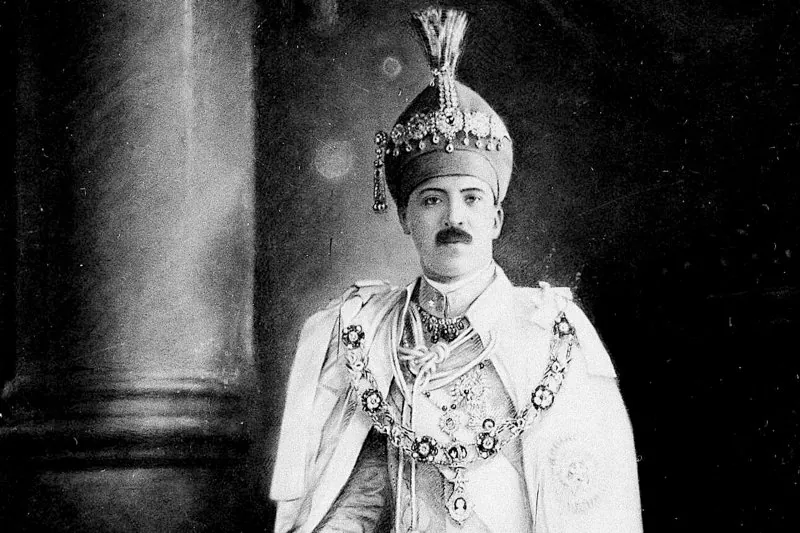
Mir Osman Ali Khan, the seventh Nizam, who sought independence in 1947
Credit: Bourne & Shepherd · Public domain · source
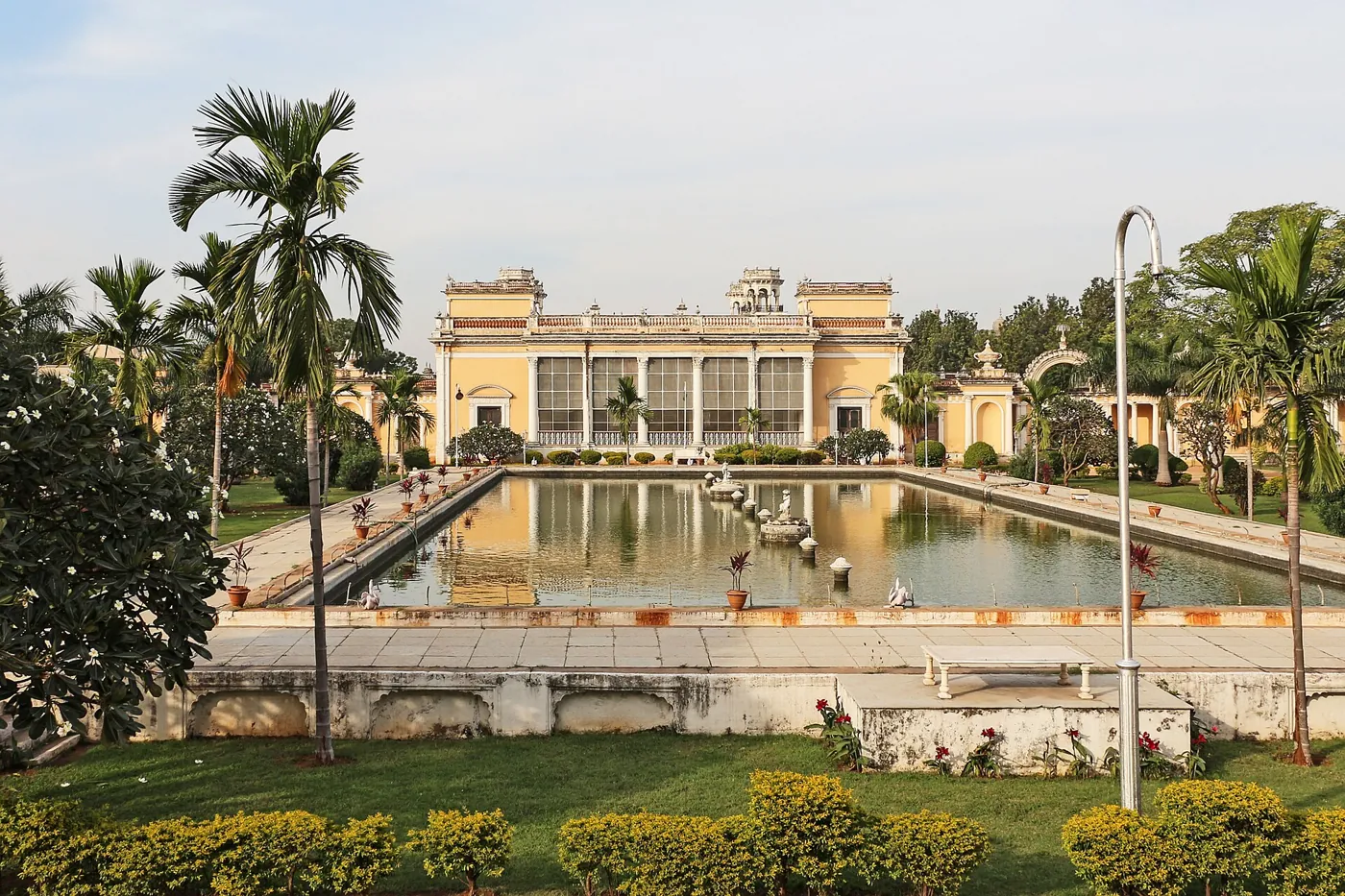
Chowmahalla Palace, ceremonial seat of the Nizam’s court
Credit: Bernard Gagnon · CC BY-SA 3.0 · source
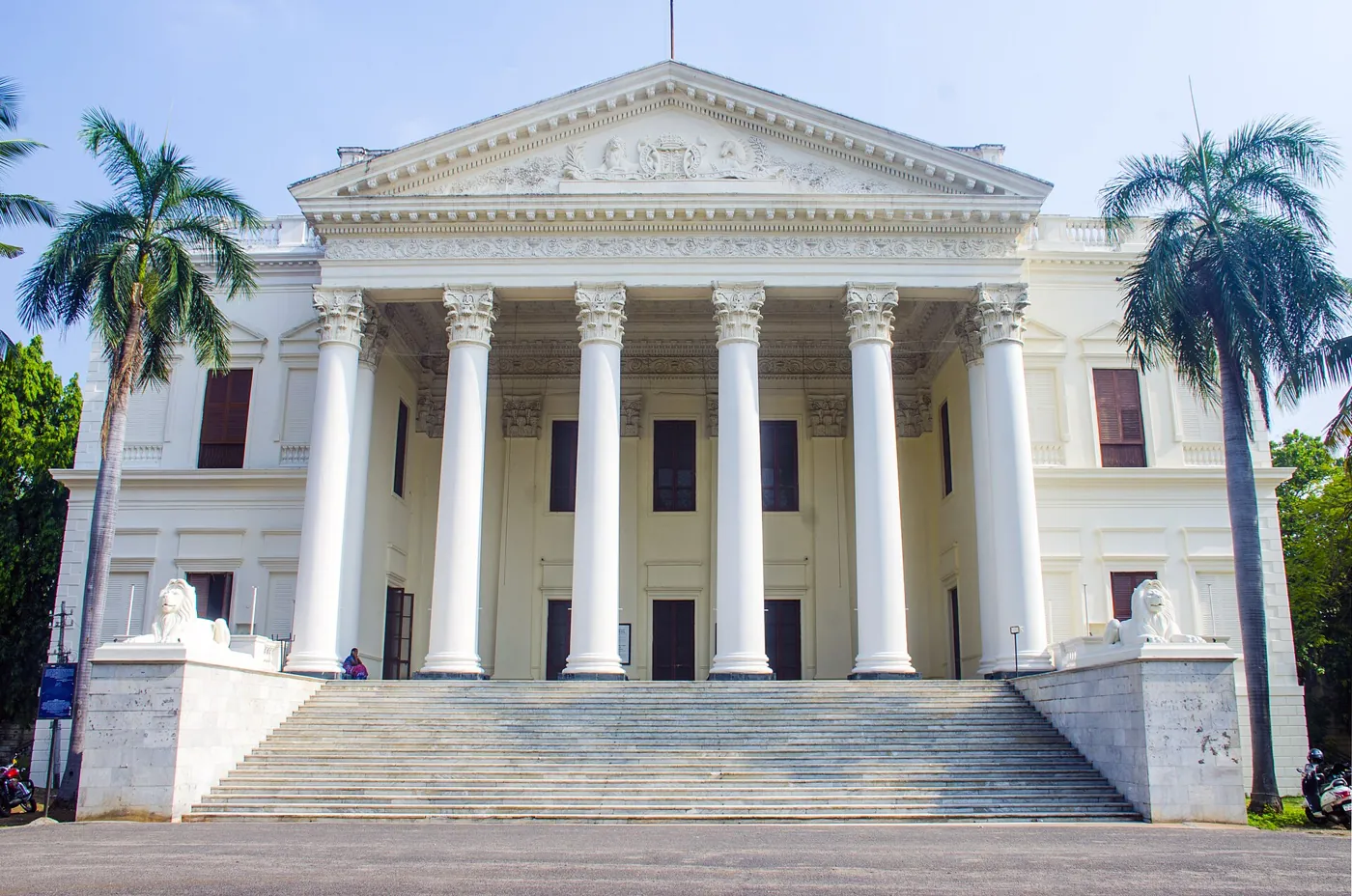
The Residency building, symbol of paramountcy that lapsed in August 1947
Credit: Rangan Datta Wiki · CC BY-SA 4.0 · source
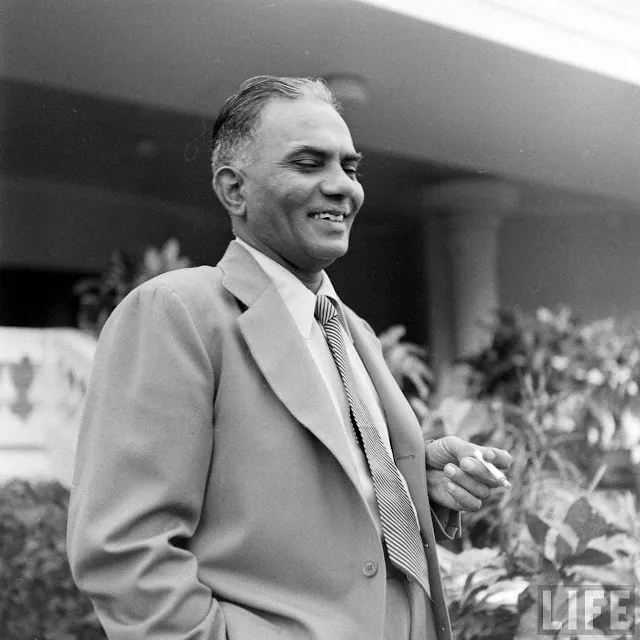
Mir Laiq Ali, the Nizam’s Prime Minister from November 1947
Credit: Unknown photographer · Public domain · source
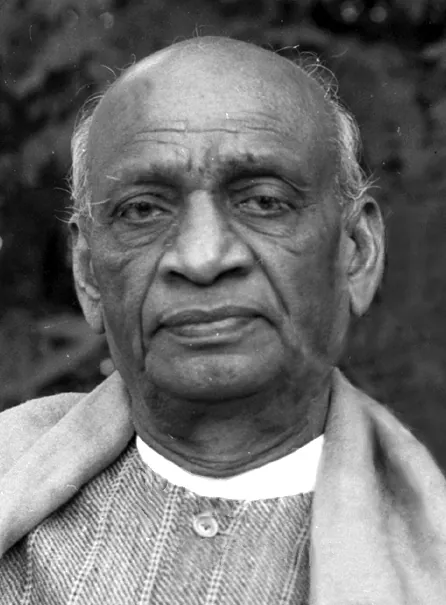
Sardar Vallabhbhai Patel, Home Minister, who pressed for Hyderabad’s accession
Credit: Government of India work · Public domain · source
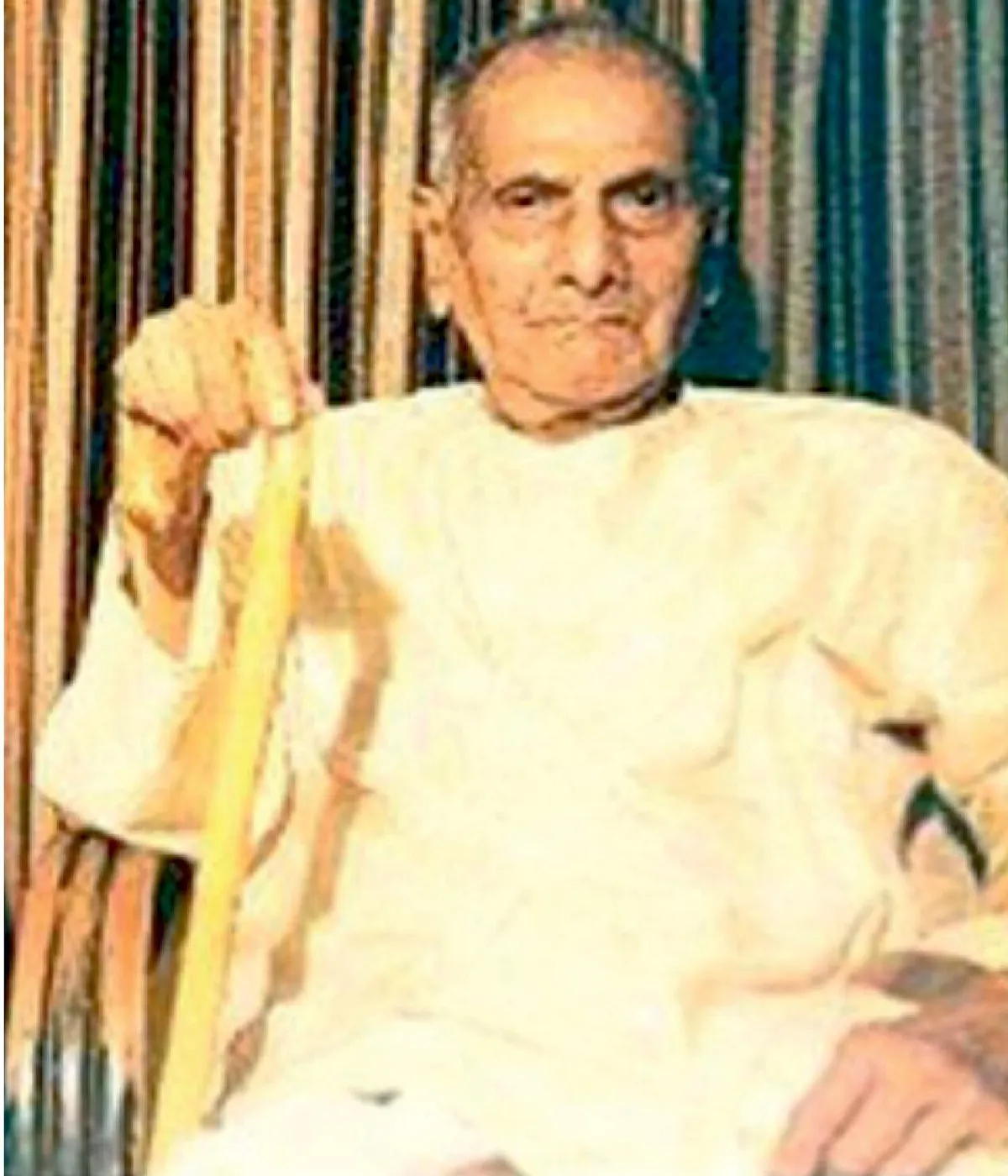
Ravi Narayan Reddy, Andhra Mahasabha and Communist leader of the armed struggle
Credit: Unknown photographer · CC BY-SA 4.0 · source
1. Competing claims after the end of paramountcy
The Hyderabad crisis concerned the future of a princely state rather than the creation of Telangana’s present boundaries. Mir Osman Ali Khan hoped to preserve a separate sovereign position after British paramountcy ended in 1947. His multilingual territory occupied a strategically important position in the Deccan. India’s leadership opposed the prospect of a separate state in its interior, while residents sought different forms of political and social change. The Nizam’s preference must therefore be distinguished from the wishes of the population and from the Indian government’s integration policy.
Hyderabad possessed distinctive administrative institutions, but these did not remove its dependence on connections through surrounding Indian territory. Communications, supplies and commercial relationships made the sovereignty dispute a practical problem as well as a constitutional one. A mains answer should explain this structural setting before turning to the military decision. Geography helps explain India’s concern, but it cannot by itself justify every action taken during the transition. Political consolidation, accountable government and civilian protection remain separate questions against which the outcome should be assessed.
- Distinguish princely Hyderabad from modern Telangana.
- Separate the court’s claim from popular consent.
- Treat geography as a structural factor, not a complete explanation.
Timeline
4 July 1946
Komaraiah’s killing at Kadavendi becomes a rallying point for armed agrarian mobilisation.
7 August 1947
Join Indian Union mobilisation begins.
15 August 1947
India becomes independent while Hyderabad’s political future remains disputed.
29 November 1947
India and Hyderabad sign the one-year Standstill Agreement.
4 December 1947
Pawar’s bomb attempt near King Kothi fails.
August 1948
Hyderabad seeks international consideration as the crisis intensifies.
22 August 1948
Widely commemorated date of Shoebullah Khan’s murder.
13 September 1948
Operation Polo begins.
17 September 1948
The Nizam orders resistance to end and makes his broadcast.
18 September 1948
El Edroos formally surrenders to Chaudhuri.
October 1951
The Communist-led armed struggle is withdrawn.
1952
An elected ministry is formed under Burgula Ramakrishna Rao.
2. Popular mobilisation and the agrarian question
Hyderabad State Congress linked union with India to responsible government. Swami Ramanand Tirth was a central leader, and the Join Indian Union campaign began on 7 August 1947. Satyagraha, flag demonstrations and local organisation challenged the Nizam’s separate-state policy. Networks beyond the state helped sustain activity under repression. These initiatives show why integration should not be narrated exclusively through negotiations between officials and rulers. They also require a distinction between a regional political organisation, the all-India Congress leadership and the Government of India itself.
Communist-led mobilisation addressed forced unpaid labour, eviction, arbitrary exactions and landlord domination. Village sanghams and Andhra Mahasabha networks supplied organisational foundations, while armed dalams developed as conflict escalated. Doddi Komaraiah’s killing at Kadavendi on 4 July 1946 became a conventional marker for the armed phase. Nalgonda and Warangal were important historical district settings, including areas now associated with Khammam. Because armed conflict continued after September 1948 and was withdrawn in October 1951, a change of sovereign authority cannot be equated with the immediate achievement of agrarian emancipation.
- State Congress emphasised union and responsible government.
- Peasant organisations pursued land, labour and village-level change.
- Do not project current district boundaries onto the 1940s.
- The 1946–51 armed struggle outlasted Operation Polo.
Integration as a sequence rather than a single-day transformation
- 1. British paramountcy ends while the Nizam seeks separation.
- 2. Popular mobilisation and agrarian resistance challenge existing authority.
- 3. Standstill preserves dealings but leaves sovereignty unresolved.
- 4. Negotiation fails amid violence and escalating allegations.
- 5. The September campaign ends resistance and establishes Indian control.
- 6. Civilian protection, administrative transition and elected government remain subsequent tasks.
3. Militia power, resistance and dissent
Qasim Razvi’s leadership of the Razakar mobilisation strengthened armed resistance to union with India and increased coercion against political opponents and rural communities. The militia was associated with the Majlis-e-Ittehadul Muslimeen, but it was not identical to Hyderabad’s regular army under S. A. El Edroos. Nor can its actions be assigned collectively to Muslim residents. Distinguishing institutions, leaders, perpetrators and civilians is indispensable to accurate history. It also prevents a political conflict with social and agrarian dimensions from becoming a simplified account of opposed religious communities.
Bairanpally and Gundrampally remain important sites in accounts of village attacks and resistance. Their local casualty totals require identified sources and careful attention to whether neighbouring incidents are combined. The murder of Imroz editor Shoebullah Khan, widely commemorated on 22 August 1948, illustrates the danger faced by critics of Razakar politics. His support for union makes political diversity within Muslim society especially visible. An examination answer can use this example to connect press freedom, civil liberties and resistance without graphic description or an unsupported generalisation about any community.
- Razvi’s militia role differed from El Edroos’s army command.
- Shoebullah Khan’s journalism challenges a simple communal binary.
- Preserve village experiences without inventing exact casualty totals.
| Actor or institution | Primary role or objective | Necessary distinction |
|---|---|---|
| Nizam | Separate sovereign position | The ruler’s preference was not universal popular consent. |
| Hyderabad State Congress | Union and responsible government | Not the Communist agrarian organisation. |
| Communist-led sanghams | Agrarian change | Their struggle continued after integration. |
| Patel and States Ministry | Integration policy and negotiation | Political authority was not field command. |
| Rajendrasinhji | Southern Command direction | Higher command differed from leading the principal strike formation. |
| Chaudhuri | Principal strike commander; military governor | Operational and later administrative roles. |
| El Edroos | Regular army command | Not the leader of the Razakars. |
| Razvi | Militia mobilisation | Not a representative of every Muslim resident. |
4. An interim agreement without a final settlement
The Standstill Agreement of 29 November 1947 continued specified existing arrangements for one year while the political dispute remained unsettled. It was not an Instrument of Accession, a final recognition of independence or an immediate guarantee of elected government. India objected to arms procurement, financial dealings with Pakistan and worsening security. Hyderabad protested economic restrictions and pressure on supplies. The agreement’s provisions, allegations of non-compliance and the historian’s evaluation must be separated. Merely listing accusations as established legal conclusions obscures the central problem: the temporary arrangement did not overcome incompatible political objectives.
Diplomacy coexisted with other forms of action. Narayana Rao Pawar’s failed attack on the Nizam’s car near King Kothi on 4 December 1947 represented militant opposition distinct from State Congress satyagraha. Hyderabad later sought Security Council consideration, but international discussion produced no effective settlement before the military outcome. Nehru’s telegram to Munshi dated 18 September refers to the Nizam’s broadcast the previous day and instructions not to press the UN appeal. This contemporary document anchors the broadcast more securely than unsupported claims about a complete absence of international discussion.
- Memorise 29 November 1947, not an independence-day signing.
- Standstill postponed rather than settled the political question.
- The failed bomb attempt and the UN appeal were distinct initiatives.
- An appeal did not automatically confer recognition or protection.
5. Campaign geography and the two surrender dates
Operation Polo began on 13 September 1948, with the principal striking force advancing from the Sholapur direction through the western approaches, including Naldurg. Another major thrust approached from Bezwada, now Vijayawada, through the Suryapet direction. The chapter’s arrows represent broad operational axes rather than exact roads, daily unit positions or a complete order of battle. Armour, infantry and supporting air operations contributed to a rapid military outcome. However, the speed of the advance does not explain the preceding political deadlock or measure the safety of civilians during the wider transition.
Command responsibilities existed at different levels. Lieutenant General Rajendrasinhji headed Southern Command; Major General J. N. Chaudhuri led the principal striking force. El Edroos commanded Hyderabad’s regular forces, while Razvi led the militia movement. On 17 September the Nizam accepted the outcome, ordered resistance to cease and broadcast his changed approach. El Edroos’s formal surrender ceremony to Chaudhuri took place on 18 September. Separating the decision from the ceremony reconciles the conventional campaign dates of 13–17 September with photographs and reports dated to the following day.
- Police Action was political terminology, not proof of police-only deployment.
- Bezwada is the older name for Vijayawada.
- Distinguish Southern Command direction from strike-force command.
- 17 September marks cessation; 18 September marks the formal ceremony.
6. Civilian loss and the Sundarlal evidence
The transition was accompanied by grave communal violence, particularly against Muslim civilians, in parts of the former state. A goodwill delegation associated with Pandit Sundarlal, Kazi Abdul Ghaffar and Maulana Abdulla Misri gathered testimony late in 1948. The report reproduced by Frontline estimated approximately 27,000–40,000 deaths in the wider violence. This range must be explicitly attributed and its evidentiary limits acknowledged. It is not an exact census of victims, a military casualty roll or a count confined to Hyderabad city and the five days of the campaign.
The report described killings, looting and abuses involving armed civilians and some security personnel, while also recording protection across community lines. Historical responsibility requires neither collective blame nor silence about documented suffering. Battlefield losses, village incidents and wider communal deaths differ in geography, period and counting method. They cannot be added mechanically or used interchangeably. Recognition of later attacks on Muslim civilians does not erase earlier victims of Razakar violence; equally, earlier crimes cannot justify reprisals against people who were not responsible for them.
- Attribute the 27,000–40,000 estimate to the Sundarlal report.
- Keep wider communal deaths separate from battlefield casualties.
- Recognise protection and rescue alongside abuses.
- A brief campaign does not demonstrate a bloodless transition.
7. Administrative change and contested remembrance
Chaudhuri headed military administration after the campaign. A civil administration under M. K. Vellodi followed before the elected ministry headed by Burgula Ramakrishna Rao after the 1952 election. The Nizam’s later role as Rajpramukh shows that ending autonomous royal government did not immediately remove every constitutional role associated with him. The continuing peasant conflict likewise demonstrates that integration and social transformation followed different timetables. These stages should be explained separately, rather than describing September 1948 as the instant arrival of fully representative government and settled rural relations.
Different experiences explain competing interpretations of 17 September. Liberation foregrounds the ending of autocratic rule and Razakar coercion; integration emphasises consolidation of the Indian Union. Critical accounts using annexation or occupation stress the use of force and its aftermath, while peasant perspectives highlight unfinished agrarian change. Explain what each interpretation reveals and omits instead of treating a commemorative label as an exhaustive history. Finally, distinguish integration in 1948 from the 1956 linguistic reorganisation, when Telangana joined Andhra State to form Andhra Pradesh. Political unity and equal civilian protection should be evaluated together.
- Military, civil and elected administration were successive stages.
- 1948 integration was distinct from 1956 reorganisation.
- Attribute contested interpretations and test them against evidence.
- Read participant narratives alongside inquiry reports and local experiences.
Real-world case studies
A date conflict resolved by identifying the event
A photograph captioned 18 September need not contradict the standard campaign dates. The Nizam ordered resistance to end and broadcast on the 17th; the formal El Edroos–Chaudhuri ceremony followed on the 18th. Nehru’s dated telegram offers a contemporary cross-check for the broadcast.
Military success is not a measure of civilian safety
The Sundarlal mission shows why the duration of fighting cannot substitute for evidence about the transition. Its attributed range concerns a wider geography and period than the campaign. Before comparing totals, ask who was counted, where, when and by which method.
Shared opposition, different programmes
State Congress demands and Communist-led agrarian objectives overlapped in opposition to autocracy without becoming identical. The continuation of peasant armed conflict after September 1948 demonstrates that changing sovereign authority did not automatically settle land, labour and local power.
Previous year questions
No source-linked PYQ is available here yet. Use the practice questions below.
Practice questions
Practice MCQ 1 · Easy
Which event occurred on 29 November 1947?
- Signing of the Standstill Agreement
- Beginning of Operation Polo
- Formal military surrender
- Formation of Andhra Pradesh
Practice MCQ 2 · Moderate
The Telangana peasant armed struggle began before Operation Polo and continued after it. Which assessment is correct?
- Only the first part is correct
- Only the second part is correct
- Both parts are correct
- Neither part is correct
Practice MCQ 3 · Easy
Which pairing correctly distinguishes institutions?
- Razvi—regular army; El Edroos—State Congress
- El Edroos—regular army; Razvi—Razakar militia
- Munshi—Nizam; Menon—militia
- Patel—Hyderabad army; Chaudhuri—prime minister
Practice MCQ 4 · Moderate
How should the Sundarlal casualty range be characterised?
- An exact battlefield roll
- A militia strength estimate
- An attributed estimate of wider communal deaths
- A census confined to Hyderabad city
Practice MCQ 5 · Moderate
Which sequence is chronologically correct?
- Standstill—Join Indian Union—campaign
- Campaign—bomb attempt—Standstill
- Join Indian Union—Standstill—campaign
- Surrender—Standstill—independence
Practice MCQ 6 · Difficult
Which statement correctly distinguishes 17 and 18 September 1948?
- The campaign began on the 18th
- Both dates refer to the 1952 election
- The formal ceremony preceded the ceasefire decision
- The end-of-resistance decision preceded the formal surrender ceremony
Mains practice · Explain why Hyderabad’s integration cannot be understood solely as a dispute between the Nizam and the Government of India.
- Introduce the sovereignty issue after paramountcy.
- Explain State Congress demands and mobilisation.
- Analyse agrarian grievances and Communist organisation.
- Discuss militia coercion and dissent across communities.
- Connect popular politics to negotiation and intervention.
Mains practice · Assess the political significance and human consequences of Operation Polo.
- State the campaign dates and separate the formal surrender ceremony.
- Explain territorial consolidation and the end of autonomous princely government.
- Trace military, civil and elected administration.
- Attribute the Sundarlal estimate and explain its scope.
- Consider continuing agrarian conflict and civilian protection.
Mains practice · Why is 17 September remembered differently? Discuss with historical evidence.
- Begin with established chronology.
- Explain liberation and integration interpretations.
- Identify the focus of critical annexation accounts.
- Include agrarian continuity and diverse civilian experiences.
- Avoid collective blame and distinguish the 1956 reorganisation.
Further reading
Preparing for TGPSC Group 1 or Group 2? See the TGPSC Groups coaching course at Pragnya IAS Academy for fees, batches and registration.
Long study hours taking a toll? Try the free breathing exercise and self check-in in Pragnya’s student wellness programme for UPSC aspirants.