
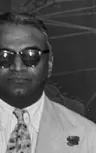
M.K. Vellodi, the civil-service Chief Minister whose administration drew officials from outside the state
Credit: Photo Division, Government of India · Public domain · source
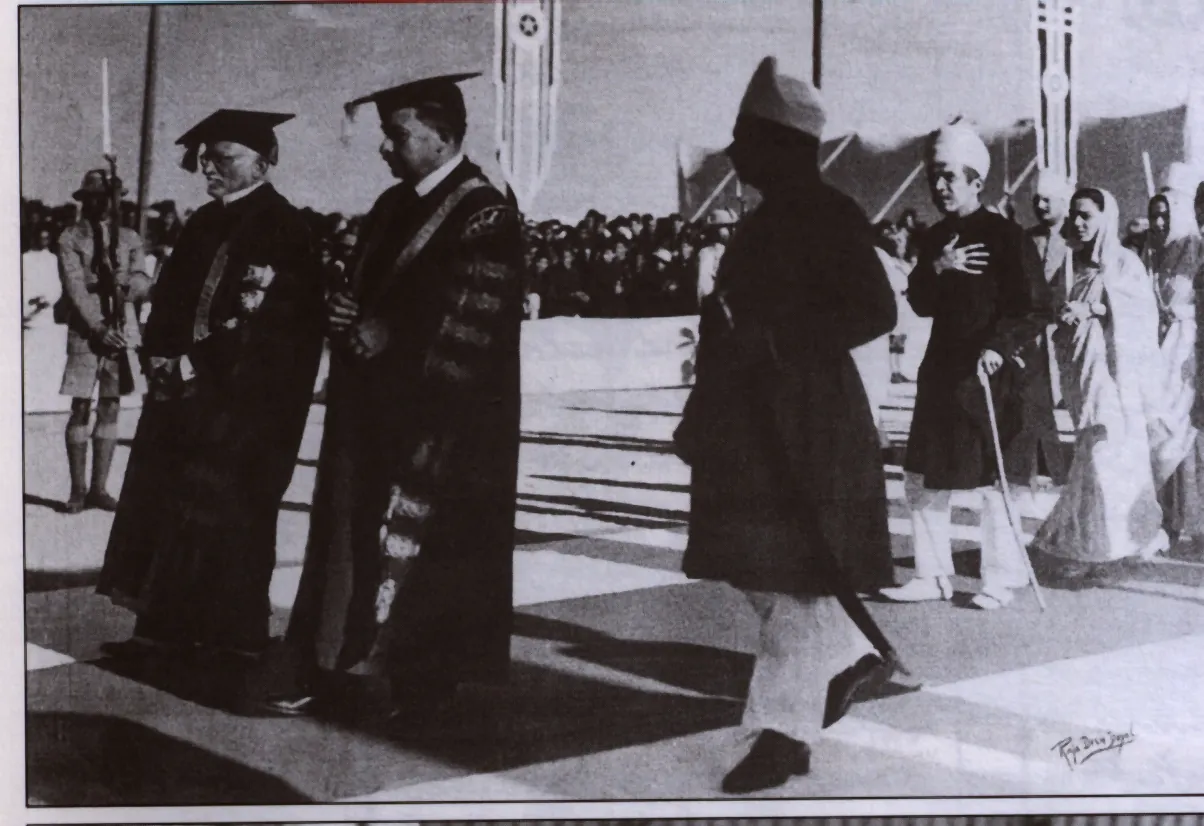
Osmania University’s Arts College at its 1937 inauguration; its graduates led the 1952 protests over jobs
Credit: Nayeem · Public domain · source
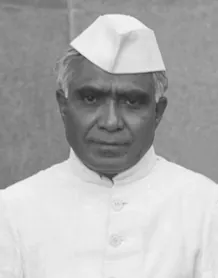
Burgula Ramakrishna Rao, Chief Minister, who answered the non-Mulki questions in 1952
Credit: Photo Division, Government of India · Public domain · source
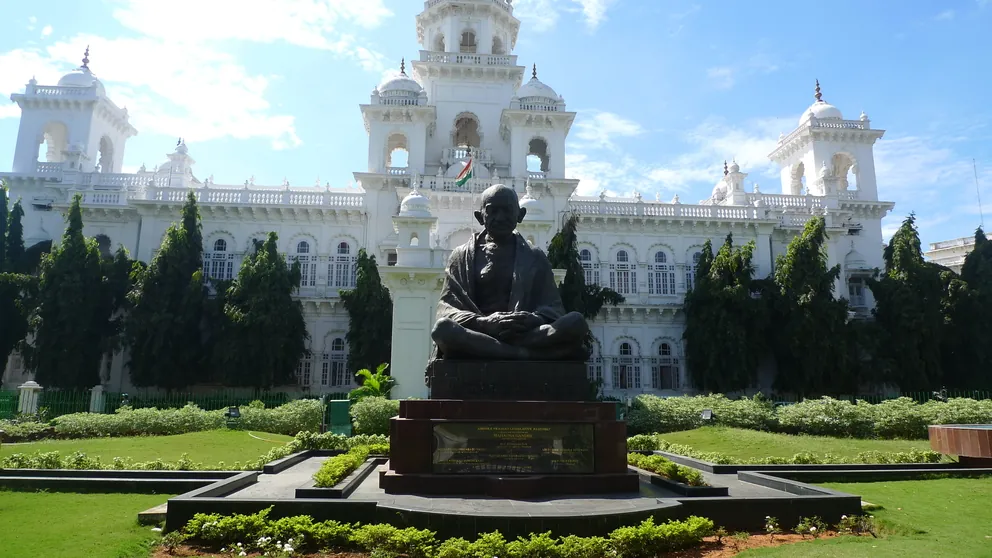
The Assembly building at Public Gardens, Hyderabad, where non-Mulki appointments were questioned in 1952
Credit: Sissssou · CC BY-SA 2.0 · source
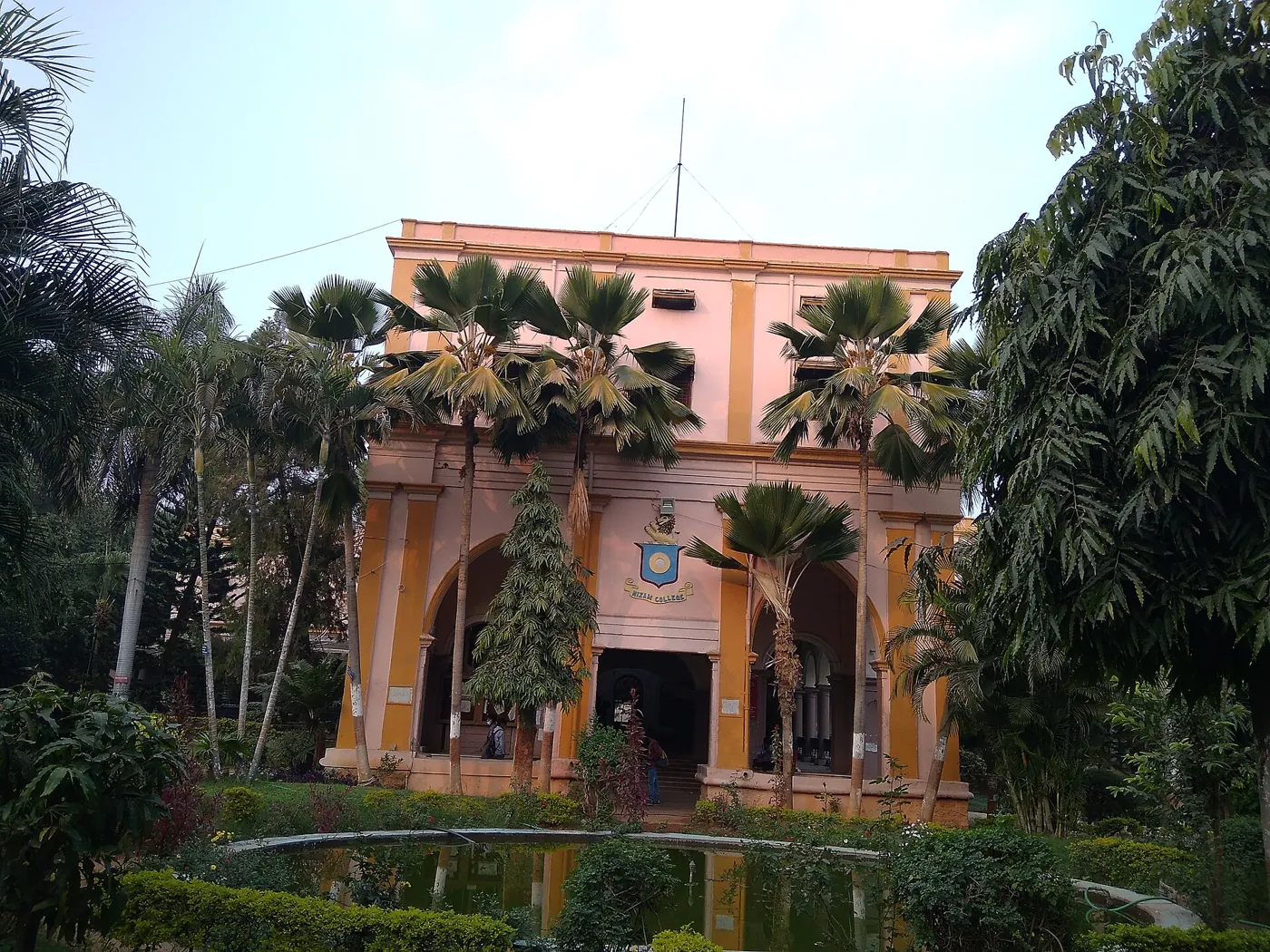
Nizam College, Hyderabad — local graduates watched the share of posts going to non-Mulkis
Credit: Adbh266 · CC BY-SA 4.0 · source
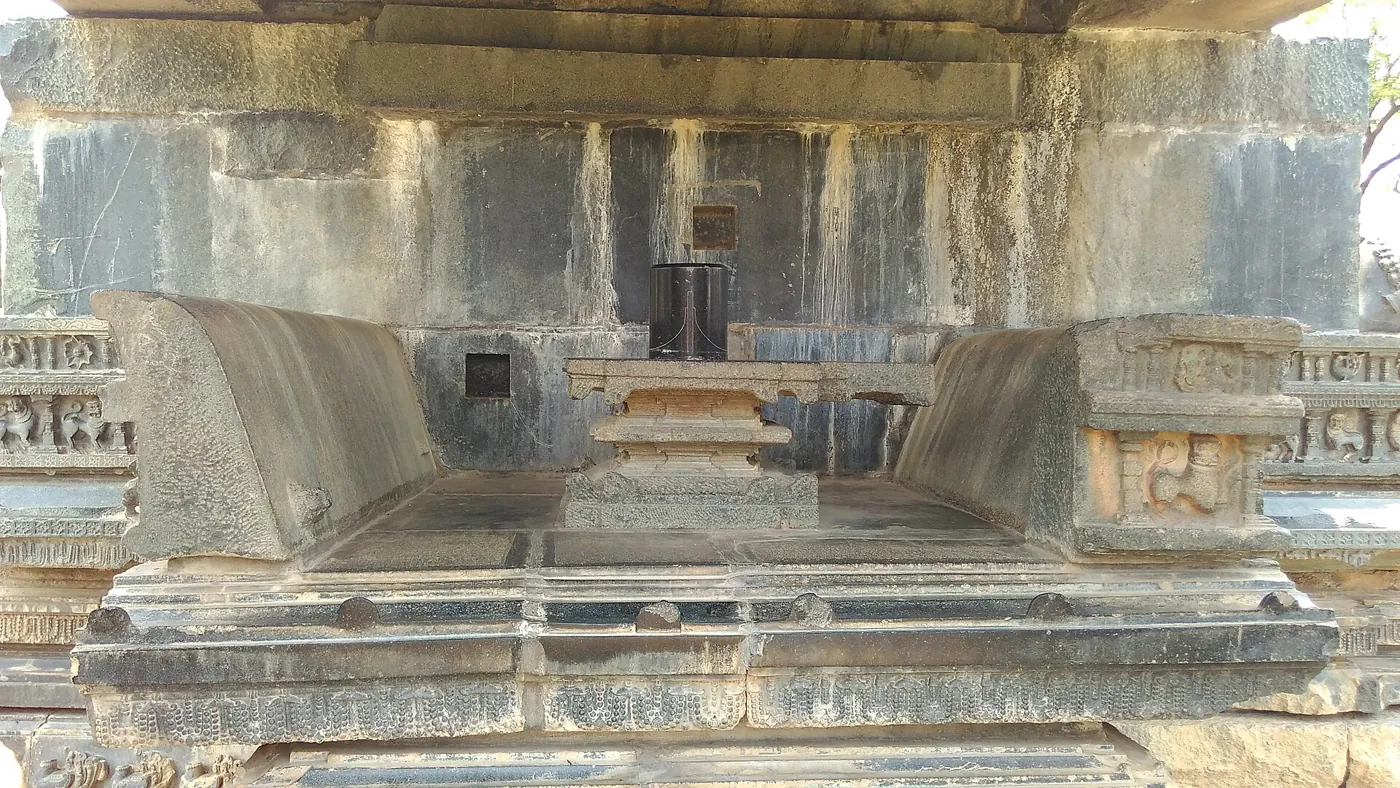
Warangal, where transfers of local teachers sparked the agitation in July 1952
Credit: Arnav chatterjee · CC BY-SA 4.0 · source
1. Local employment in a changing Hyderabad State
The starting point for understanding 1952 is the transition from princely administration to government within independent India. Integration in 1948 changed the institutional environment in which Hyderabad’s service protections operated. Personnel arriving from outside the state could be defended as necessary for administrative continuity, yet their presence also raised questions among residents expecting access to secure employment. The conflict therefore concerned the distribution of opportunity and the credibility of inherited safeguards, rather than merely the existence of migration or differences in everyday language.
Hyderabad State must not be treated as another name for Telangana. It included several linguistic regions, while Telangana referred to its Telugu-speaking area. Likewise, Mulki status was an administrative conception of belonging rather than a designation restricted to one religious community. These distinctions matter because retrospective accounts can project later state boundaries and political identities backwards. A balanced explanation recognises local insecurity without assuming that all migrants were ineligible, that every appointment breached a rule, or that an entire regional community acted with a common intention.
- Political setting: Hyderabad State, before the 1956 reorganisation.
- Central concern: credible access to government employment.
- Analytical distinction: local eligibility is not identical to language or religion.
Timeline
1948
Integration brought Hyderabad under a changed administrative order and created new expectations about public employment.
1952
Burgula Ramakrishna Rao’s elected government faced demands for credible enforcement of local safeguards.
26 July 1952
The published student chronology records formation of an action committee with Buchaiah as convener.
28 July 1952
The committee formulated demands concerning local appointments and cabinet review.
6 August 1952
Telangana Today dates a student delegation’s meeting with the Chief Minister to this day.
24–26 August 1952
A Bolarum meeting and rally connected the campaign with the capital region.
Late August 1952
A Hanamkonda lathi-charge widened solidarity protests; later chronologies differ on the precise day.
3 September 1952
Police firing occurred during the City College confrontation in Hyderabad.
4 September 1952
The dispute over victims’ bodies intensified the hospital-area confrontation and further firing followed.
7 September 1952
The retrospective dates formal announcement of the cabinet review to this day.
9 September 1952
The inquiry report’s catalogue cites the Home Department notification formally instituting the investigation.
28 December 1952 / 1953
Later accounts date report submission to 28 December; the government publication is catalogued under 1953.
1956 and 1969
Reorganisation and a later Telangana agitation renewed the political importance of safeguards.
2. Representative government, legislative scrutiny and appointment evidence
The arrival of an elected ministry under Burgula Ramakrishna Rao raised expectations that grievances could be addressed through representative institutions. Secondary accounts describe Assembly questioning of non-local recruitment in June 1952 and a government defence based on administrative instability and shortages of suitable personnel. Such a defence should be understood as a claim requiring examination, not as conclusive proof of compliance in every department. The original question-and-answer proceedings were not recovered for these notes, so exact daily schedules, complete lists of questioners and purported verbatim replies are not reproduced.
Appointment statistics demand a similar discipline. A count of recruits in one department over a particular period cannot establish the composition of the whole public service. Educational qualifications, place of recruitment and recognised local status also measure different things. Without the original return, the categories and denominator behind the reference figures remain uncertain. The historical argument does not require false numerical precision: the dispute itself reveals a serious credibility problem. For answer writing, explain what evidence would test the allegation instead of treating every unattributed total as an official finding.
- Distinguish recruitment flows from the total workforce.
- Separate government explanations from independently demonstrated compliance.
- Omit exact departmental totals until the official return can be inspected.
How an employment grievance became an accountability crisis
- 1. Recruitment changes made local safeguards politically salient.
- 2. Teachers’ transfers translated an abstract concern into an immediate school dispute.
- 3. Student organisation connected representations with demonstrations.
- 4. Police confrontation and capital mobilisation widened the campaign.
- 5. Fatal firing shifted attention towards responsibility, victims and state legitimacy.
- 6. Cabinet review and judicial investigation offered separate, limited channels of reassurance.
3. Warangal: the immediate trigger and the official-role problem
The teachers’ transfer controversy in the Warangal–Hanamkonda setting made the larger employment issue tangible. For students, the treatment of local teachers represented more than a personnel adjustment: it raised concerns about educational continuity and their own future prospects. Later teaching narratives associate Parthasarathi with these decisions, describing him as a Divisional Inspector of Schools. This is the cautious designation used here. The transfer order itself was not inspected, so the frequently repeated figure of 180 teachers is not elevated into an independently verified official total.
Care is particularly necessary when identifying officials. Some narratives use modernised education titles, while a list of witnesses in the later Hyderabad inquiry mentions a similarly named collector. These references cannot safely be merged into the assertion that the transfer official was Warangal Collector. Accounts of student negotiations separately name Govind Rao Deshpande in the Warangal district administration. Until personnel records settle any remaining ambiguity, retain the educational role, distinguish the offices, and avoid attaching personal responsibility for a teacher’s death to an individual on the basis of an uncorroborated account.
- Longer cause: local employment insecurity.
- Proximate catalyst: the disputed treatment and transfer of teachers.
- Do not equate Divisional Inspector of Schools, DEO and Collector without evidence.
| Person or body | Function | Important distinction |
|---|---|---|
| Buchaiah / Bhuchaiah | Student action-committee convener | Student organisation, not a cabinet office |
| Burgula Ramakrishna Rao | Chief Minister of Hyderabad State | Headed the government facing both employment and public-order questions |
| Parthasarathi | Education official associated with teachers’ transfers | Described as a Divisional Inspector of Schools; Warangal Collector is an unsafe identification |
| K. V. Ranga Reddy | Minister associated with the cabinet review | Not the judicial inquiry authority |
| Shiva Kumar Lal | Hyderabad Police Commissioner | Public-order role, distinct from policy review |
| Konda Laxman Bapuji | Politician described as attempting mediation | Presence at a procession does not prove control of the students |
| Padmaja Naidu | Public figure associated with hospital-area mediation | Do not confuse mediation with police command |
| Pingle Jagan Mohan Reddy | High Court judge conducting the firing inquiry | Investigated the use of force rather than chairing the service-policy body |
4. Student organisation and the widening of demands
Students supplied the organisational bridge between a local dispute and a more extensive campaign. Telangana Today’s retrospective places formation of an action committee on 26 July and identifies Buchaiah, also written Bhuchaiah, as its convener. It describes a subsequent resolution seeking local appointments and a cabinet sub-committee to examine Mulki safeguards. These demands show that mobilisation was not confined to reversing one school order. Students were proposing an institutional response while using meetings, delegations and demonstrations to make the employment issue politically difficult to ignore.
The same chronology records a delegation to the Chief Minister on 6 August, renewed representations later that month, and a deadline for visible government action. Details of individual days differ between later accounts, but the broader pattern is clear: reassurance did not remove uncertainty about implementation. A lathi-charge involving students at Hanamkonda in late August then became a powerful solidarity issue. The distinction between an assurance, communication of a proposed committee and a formal announcement helps explain why a reported government concession could coexist with continuing unrest rather than automatically ending it.
- Buchaiah’s role was student coordination, not ministerial authority.
- Demands combined local employment with cabinet-level examination.
- Use late August cautiously where accounts differ between 28 and 29 August.
5. The capital, regional connections and the language of protest
Hyderabad became central because it concentrated educational institutions, public visibility and executive authority. The published chronology describes a Bolarum meeting on 24 August and a rally on 26 August, followed by intensifying demonstrations in the capital. Saifabad students participated in solidarity action after the Hanamkonda confrontation. This movement across institutions mattered more than any assumption of an identical response in every district. Warangal and Hyderabad are the strongest geographical anchors; contextual map locations such as Khammam and Nizamabad should not be mistaken for independently verified dates or routes of particular processions.
Protest language conveyed both the force and the limitations of the mobilisation. “Non-Mulki go back” expressed an exclusionary employment demand, while the commonly rendered “Idli-Sambar go back” used food as a marker of regional otherness. Telangana Today records the variant “Idli–Sambar Ghar Ko Jao” in its account of September rallies. These phrases are evidence about the emotional and political language of the period, not descriptions that a historian should endorse. Their analysis should connect perceived economic exclusion with cultural stereotyping, while refusing to attribute collective guilt to residents of any region.
- Capital mobilisation followed, rather than preceded, the Warangal trigger.
- Slogans require historical context and must not become the author’s voice.
- Regional spread does not prove uniform participation or a single directing organisation.
6. The firing of 3–4 September: chronology and casualties
The crisis reached its most consequential stage with police firing during the City College confrontation on 3 September 1952. Accounts describe student participation alongside other residents, attempted political mediation, stone-throwing and escalating conflict with police. On 4 September, the demand for the victims’ bodies helped shift the focus towards Osmania General Hospital and further confrontation. The inquiry report’s catalogued title expressly covers firing in Hyderabad on both days. Consequently, neither the entire sequence nor all its victims should be compressed into a single campus incident involving only enrolled students.
The human cost must be stated with attribution. Telangana Today’s 2022 retrospective describes four deaths associated with the first episode and four more in the next day’s violence, producing a two-day total of eight. The Hans India’s 2013 coverage of a commemorative meeting attributes a seven-death recollection to Kodandaram. These accounts differ in purpose and evidentiary proximity. Without a reconciled contemporary casualty register, presenting either figure as an undisputed official total would be misleading. A careful answer identifies the fatal two-day crisis, acknowledges the competing later totals and avoids unsupported victim biographies or ammunition statistics.
- 3 September: City College confrontation and firing.
- 4 September: hospital-area confrontation and renewed firing.
- Seven or eight is an attributed source difference, not an established official interval.
7. Government response and the Jagan Mohan Reddy inquiry
The Burgula administration faced two related but distinct tasks: restoring public order and responding to the underlying service grievance. Later accounts describe restrictive measures, attempts at negotiation and a cabinet review whose formal announcement is dated 7 September. That policy body was meant to consider Mulki safeguards and implementation, not determine judicial responsibility for deaths. Politicians such as Konda Laxman Bapuji and public figures including Padmaja Naidu appear in accounts of mediation. Their interventions should be described specifically rather than used to imply that they controlled every demonstration or represented a single unified leadership.
The judicial investigation was conducted by Justice Pingle Jagan Mohan Reddy. The government report’s catalogue identifies Home Department notification Spl/Pol/29/52 of 9 September 1952 and a 1953 publication. Later retrospectives give 28 December 1952 as submission and summarise the findings as stressing restraint while not holding police guilty of firing. Since the complete report was not inspected, those findings remain attributed summaries, not quotations. The distinction between announcement, notification, hearings, submission and publication resolves several apparent chronological contradictions and prevents the truncated reference date “December 2” from becoming an asserted fact.
- Cabinet review addressed employment policy; judicial inquiry examined firing.
- The formal notification date is supported by the report’s bibliographic title.
- Institutional findings require critical reading rather than automatic endorsement.
8. Legacy, interpretation and examination strategy
The lasting significance of 1952 lies in the connection it established between local employment, regional dignity and confidence in government promises. It occurred before Telangana joined Andhra State in Andhra Pradesh in 1956, making it important background to later arguments about safeguards. It also supplies a historical antecedent to concerns expressed in the 1969 Telangana agitation. Continuity, however, should not erase differences: the political units, organisations and immediate contexts changed. The 1952 movement was not itself the creation of Telangana State, nor evidence that every participant already shared one completed programme of territorial separation.
For a TGPSC mains answer, organise the explanation through structural conditions, immediate catalyst, mobilisation, confrontation and institutional aftermath. Evaluate the government on both administrative responsiveness and the handling of public protest. A source-critical conclusion is stronger than a list of uncertain figures: show where a government catalogue confirms a formal fact, where a newspaper retrospective supplies a narrative, and where a commemorative account preserves political memory. This approach allows recognition of the movement’s importance without turning regional grievance into communal generalisation, treating coercion as self-justifying, or assuming that the appointment of committees permanently settled the substantive issue.
- Do not confuse the 1952, 1956 and 1969 constitutional settings.
- Explain safeguard credibility, not simply the existence of written rules.
- Balance popular agency, governmental responsibility and the limits of the surviving evidence.
Real-world case studies
Warangal: the difference between a cause and a catalyst
The teachers’ dispute explains why mobilisation gathered around particular institutions, but not why it resonated beyond them. Existing anxiety about access to government service gave the transfers wider meaning. A strong historical explanation therefore combines the longer recruitment controversy with the immediate administrative decision, without attributing unverified motives to individual officials.
Hyderabad: one crisis, two official tasks
A review of Mulki rules could recommend changes in recruitment practice; it could not by itself determine responsibility for police firing. Conversely, an inquiry into firing could examine warnings, conduct and command decisions without resolving employment policy. Treating the two mechanisms separately clarifies both the government’s response and its limits.
Casualty memory and source criticism
Telangana Today’s 2022 retrospective reconstructs eight deaths over the two-day crisis. The Hans India’s 2013 report attributes a seven-death recollection to Kodandaram at a commemorative meeting. These are not identical kinds of evidence. Without a contemporary reconciled casualty register, attribution is more defensible than declaring either total universally accepted.
Previous year questions
No source-linked PYQ is available here yet. Use the practice questions below.
Practice questions
Practice MCQ 1 · Easy
In which political unit did the 1952 Mulki movement occur?
- Andhra Pradesh
- Hyderabad State
- Andhra State
- Mysore State
Practice MCQ 2 · Easy
Which development supplied the immediate Warangal trigger?
- A customs dispute
- A university relocation
- Teachers’ transfers
- A naval strike
Practice MCQ 3 · Moderate
Consider the following: 1. Buchaiah was associated with student organisation. 2. The cabinet review and firing inquiry were the same body. Which is correct?
- Only 1
- Only 2
- Both 1 and 2
- Neither 1 nor 2
Practice MCQ 4 · Easy
Who conducted the inquiry into the Hyderabad firing?
- K. V. Ranga Reddy
- M. K. Vellodi
- Fazal Ali
- Pingle Jagan Mohan Reddy
Practice MCQ 5 · Difficult
Which date is expressly cited for the formal notification in the inquiry report’s catalogue title?
- 7 September 1952
- 9 September 1952
- 28 December 1952
- 1 November 1956
Practice MCQ 6 · Moderate
Which statement uses historical evidence most carefully?
- Every person killed was an enrolled student.
- Every town on a regional map had an identical protest.
- Later casualty accounts differ and should be attributed.
- A recruitment total proves every outsider was ineligible.
Mains practice · Explain how the 1952 Mulki movement converted an employment grievance into a wider political mobilisation.
- Locate the issue in Hyderabad State’s post-1948 administrative transition.
- Separate structural employment anxiety from the Warangal transfer catalyst.
- Explain student networks, delegations and demands for cabinet review.
- Trace the geographical shift towards the capital without assuming uniform participation.
- Assess how the September firing transformed the question into public accountability.
Mains practice · Critically assess the Burgula government’s response to the 1952 agitation.
- Identify the government’s reported administrative justification for recruitment.
- Distinguish assurances and negotiations from actual implementation.
- Examine public-order measures in the context of popular protest and fatal force.
- Separate the cabinet review of safeguards from the judicial firing inquiry.
- Conclude with the limits of committee-based reassurance when institutional trust is weak.
Mains practice · How should historians interpret the significance and contested evidence of the 1952 Mulki movement?
- Distinguish contemporary administrative evidence from later retrospective teaching accounts.
- Attribute seven- and eight-death narratives rather than inventing a consensus.
- Avoid unverified appointment totals and conflation of similarly named officials.
- Explain continuity in safeguard concerns across 1956 and 1969.
- Reject both communal generalisation and the assumption that the 1952 programme was identical to later statehood movements.
Further reading
Preparing for TGPSC Group 1 or Group 2? See the TGPSC Groups coaching course at Pragnya IAS Academy for fees, batches and registration.
Long study hours taking a toll? Try the free breathing exercise and self check-in in Pragnya’s student wellness programme for UPSC aspirants.