
Gouthu Latchanna: The veteran opposition leader from Srikakulam who presided over the Jai Andhra platform in 1972.
Credit: Zaminryot publisher · Public domain · source
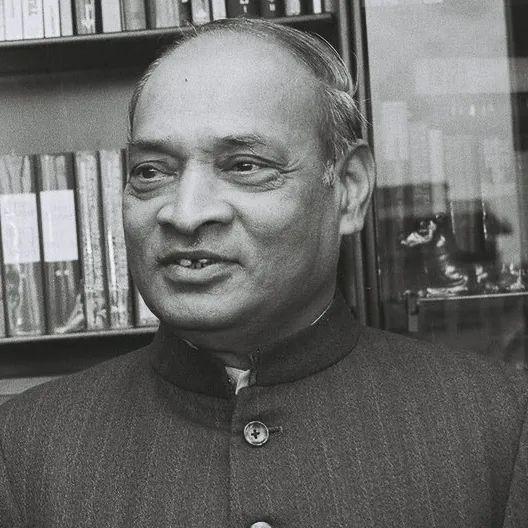
P. V. Narasimha Rao: Chief Minister when the agitation began; his ministry fell in January 1973.
Credit: Christian Lambiotte - European Commission · CC BY 4.0 · source
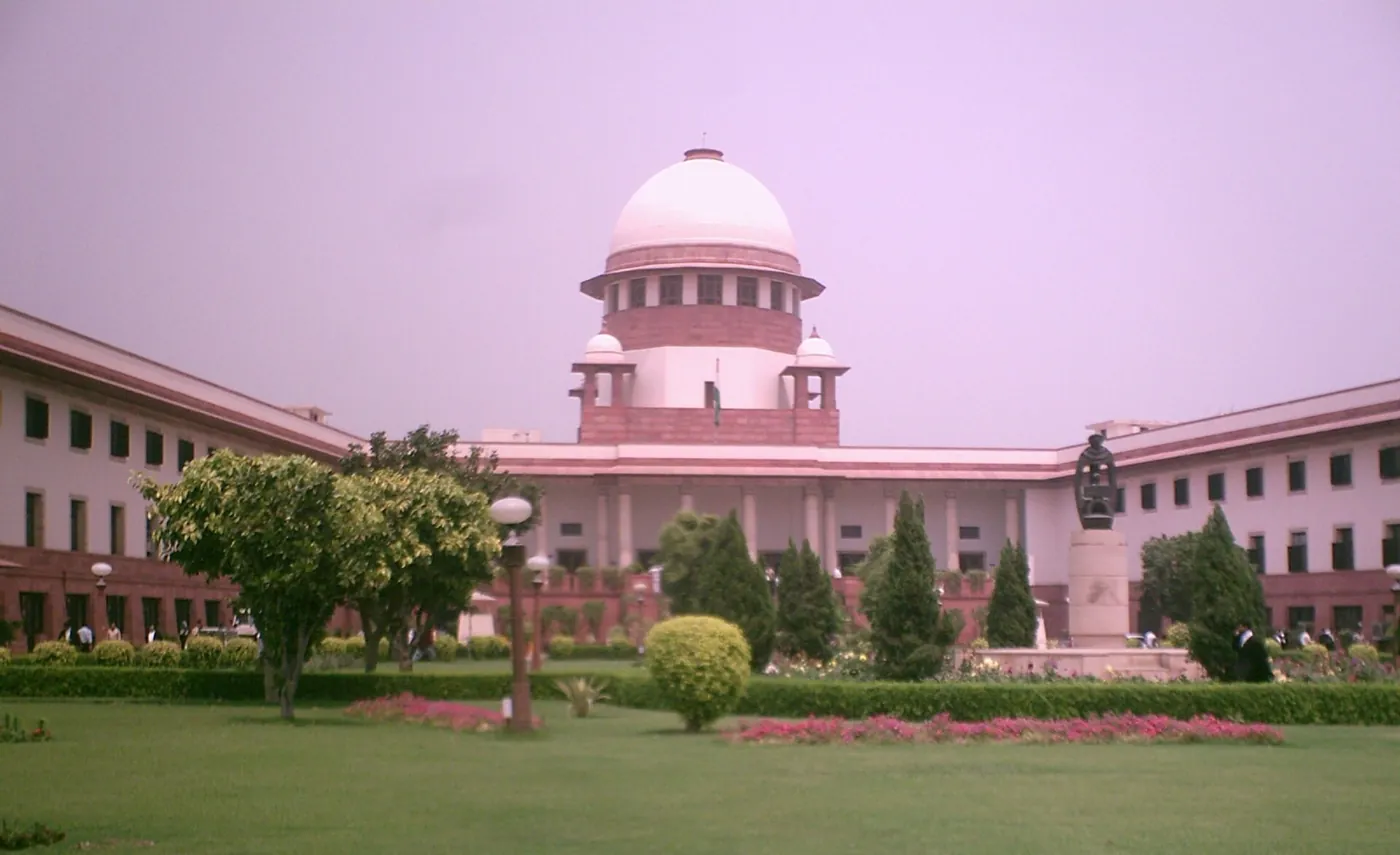
The court that upheld the Mulki rules on 3 October 1972, the verdict that triggered the agitation.
Credit: Legaleagle86 at English Wikipedia · CC BY-SA 3.0 · source
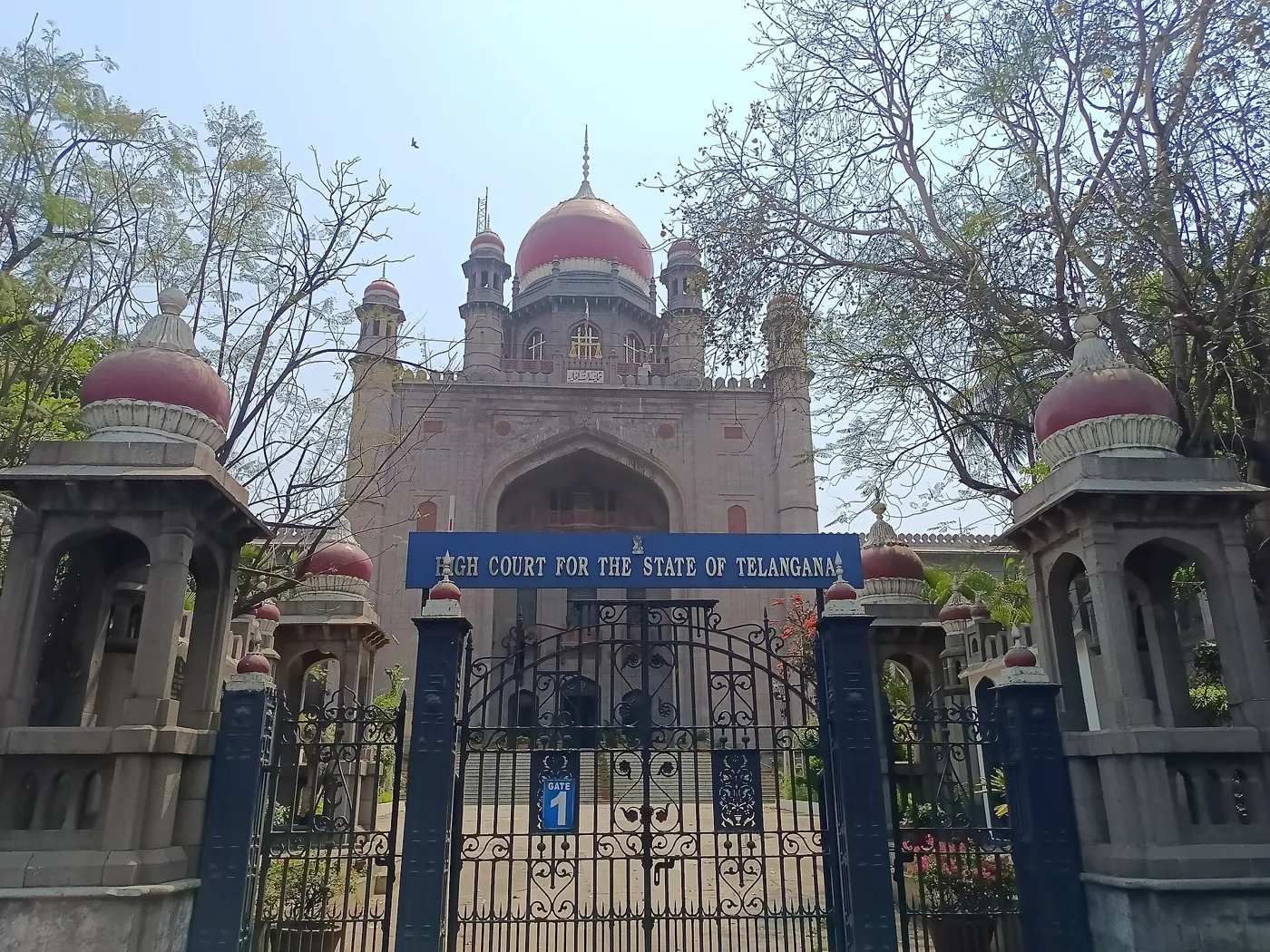
Seat of the Andhra Pradesh High Court, whose Full Bench had rejected the Mulki rules in February 1972.
Credit: Tarunsamanta · CC BY-SA 4.0 · source
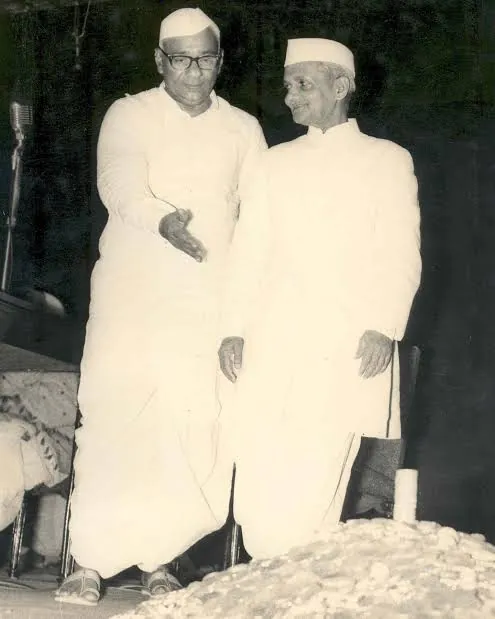
Rao’s predecessor (seen with Lal Bahadur Shastri), who resigned as Chief Minister in September 1971.
Credit: Vara Naveen Reddy · CC0 · source
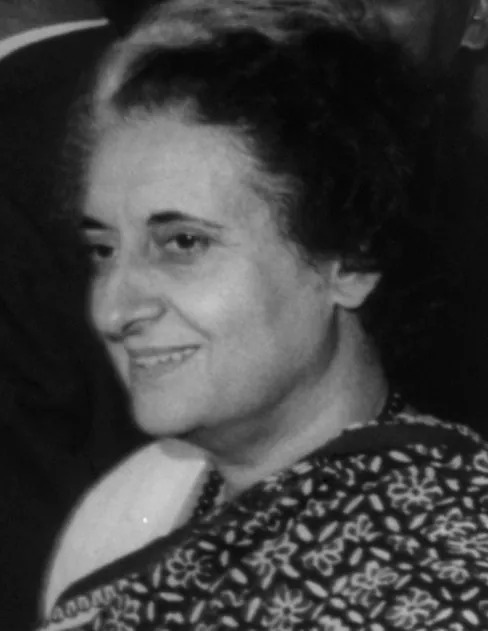
The Prime Minister backed Rao’s land-ceiling drive as part of her national land-reform push.
Credit: United States Information Agency Cropped by User:Berdea · Public domain · source
1. Why the united state faced another regional crisis
The Andhra Pradesh formed in 1956 combined a common linguistic identity with unequal regional histories and differing expectations about protection. Telangana supporters regarded employment safeguards and regional oversight as conditions of an acceptable union. Many people in coastal Andhra and Rayalaseema, however, expected access to the institutions and opportunities of their state capital. The 1969 Telangana agitation had already demonstrated that linguistic unity could not, by itself, resolve disagreements over public resources, educational access or the credibility of political assurances.
Jai Andhra should therefore be understood as a new regional challenge within an already unsettled union, not as the continuation of a single unanimous Telugu political position. Its demand for a separate Andhra state became especially forceful after the 1972 Mulki judgment. Neither region was politically homogeneous: parties, employees, students and landed groups had overlapping but different priorities. A balanced historical explanation identifies the competing expectations before evaluating the particular legal arrangements through which governments attempted to reconcile them.
- Distinguish the 1969 Telangana agitation from the 1972–73 Jai Andhra movement.
- Treat regional perceptions as historically significant without endorsing every allegation.
- Explain why access to Hyderabad carried economic as well as symbolic weight.
Timeline
30 September 1971
P.V. Narasimha Rao becomes Chief Minister after Kasu Brahmananda Reddy.
February 1972
High Court Full Bench majority rejects the continuing validity of the Mulki rules; the appealed judgment is dated 18 February.
3 October 1972
The Supreme Court upholds the continuing force of the Mulki rules.
27 November 1972
Indira Gandhi announces the Five-Point Formula.
30 December 1972
The Mulki Rules Act receives assent.
18 January 1973
President’s Rule begins in Andhra Pradesh.
21 September 1973
The Six-Point Formula sets out the new regional settlement.
10 December 1973
Jalagam Vengala Rao becomes Chief Minister; President’s Rule ends.
3 May 1974
The 32nd Amendment receives presidential assent.
1 July 1974
The 32nd Amendment comes into force.
1974
Parliament establishes the University of Hyderabad through its own statute.
18 October 1975
G.S.R.524(E) issues the local-cadre Public Employment Order.
20 October 1975
G.O.Ms.No.674 republishes the Presidential Order in Andhra Pradesh.
30 December 1985
G.O.Ms.No.610 addresses grievances concerning local cadres in Zones V and VI.
2. The Mulki verdict as a political trigger
The Supreme Court’s judgment in Director of Industries and Commerce, Government of Andhra Pradesh v. V. Venkata Reddy was delivered on 3 October 1972 by a five-judge bench headed by Chief Justice S.M. Sikri. It upheld the continuing force of the relevant Mulki provisions. The judgment recounts an earlier five-judge High Court Full Bench majority against their validity and identifies the appealed High Court judgment as dated 18 February 1972. The Full Bench opinion and the consequential appellate judgment should not be casually collapsed into an unverified single hearing date.
The political consequence mattered more immediately than the technical legal reasoning. Telangana supporters could read the ruling as recognition of an inherited assurance; Andhra opponents could read the same outcome as a barrier to employment in their own state’s capital. This contrast explains how a court decision became a mobilisation issue. The judgment did not order state division, create the Jai Andhra organisations or establish that every public post was covered. Detailed constitutional litigation belongs to the next chapter; here the focus is the transmission from legal outcome to political agitation.
- Remember 3 October 1972 for the Supreme Court decision.
- Use the judgment itself to distinguish the High Court procedural stages.
- Do not confuse the 1972 ruling with the separate 1969 residence-requirement litigation.
How a regional dispute became an administrative settlement
- 1. Older safeguards generate competing expectations about regional security.
- 2. The Mulki judgment sharpens opposition and a separate-Andhra demand.
- 3. The first compromise fails and the elected ministry gives way to President’s Rule.
- 4. The Six-Point Formula trades disputed older institutions for development and local opportunity.
- 5. Constitutional amendment and statutory measures supply implementing authority.
- 6. Local cadres and recruitment rules become the new arena for monitoring and dispute.
3. Rao’s ministry, land reform and the protest coalition
P.V. Narasimha Rao became Chief Minister on 30 September 1971, following Kasu Brahmananda Reddy. His appointment preceded the February 1972 High Court controversy and the October Supreme Court ruling. His ministry also pursued land-ceiling reform, giving sections of the landed elite a material reason to resist his leadership. The eventual statute was the Andhra Pradesh Land Reforms (Ceiling on Agricultural Holdings) Act, 1973. Its title should not obscure the policy initiatives and legislative struggle that had developed during the previous year.
A class explanation is useful but insufficient. Opposition to redistribution could intersect with Congress factional rivalry and regional discontent, yet students and government employees had their own anxieties about education and careers. Leaders associated with the agitation included Gouthu Latchanna and Tenneti Viswanadham, alongside dissident Congress figures. University towns, administrative centres, public meetings, bandhs and strikes connected these participants. The Tirupati meeting of 31 December 1972, with its call for a no-tax campaign, illustrates the widening repertoire of pressure beyond petitions or courtroom argument.
- Correct the accession date before constructing a chronology.
- Analyse landlord resistance as one component of a broader coalition.
- Locate coastal mobilisation and Rayalaseema participation without assuming unanimity.
| Instrument | Primary function | Essential distinction |
|---|---|---|
| Supreme Court judgment, October 1972 | Recognised the continuing legal force of the Mulki rules | A judgment, not a plan for dividing the state |
| Five-Point Formula, November 1972 | Attempted a limited employment and capital-city compromise | Not the Six-Point settlement |
| Mulki Rules Act, December 1972 | Limited operation, validated appointments and envisaged phased repeal | A parliamentary statute, not merely a political announcement |
| Six-Point Formula, September 1973 | Combined development, education, employment and institutional replacement | Needed constitutional and administrative implementation |
| 32nd Amendment, effective July 1974 | Created constitutional authority under 371D and 371E | Did not itself prescribe every recruitment roster |
| University of Hyderabad Act, 1974 | Established the Central University by parliamentary law | Distinct from the enabling Article 371E |
| Presidential Employment Order, October 1975 | Organised local cadres and regulated direct recruitment | Employment order; do not substitute it for the separate educational-admissions framework |
| G.O.610, December 1985 | Responded to Telangana local-cadre grievances | A corrective response, not a fresh statehood settlement |
4. The Five-Point compromise and its failure
Indira Gandhi’s Five-Point Formula of 27 November 1972 attempted to preserve the united state by narrowing the contested restrictions rather than removing all local preference immediately. It addressed the categories of employment covered, recruitment in mixed offices, regionalisation of service opportunities, educational expansion in the twin cities and a common police arrangement. The compromise sought to reconcile access to the capital with transitional protection for Telangana. Its weakness was political: groups demanding stronger safeguards and groups demanding their abolition could both regard a partial concession as unacceptable.
The Mulki Rules Act, 1972 supplied a statutory response and received assent on 30 December 1972. Its stated purposes included limiting the rules’ operation, validating specified appointments and providing phased repeal. The envisaged timetable distinguished the capital area, where restrictions would end after 1977, from other covered areas, where the endpoint was after 1980. These were provisions of an attempted transitional settlement, not evidence that all parties accepted it or that the later framework simply followed this schedule unchanged. The subsequent Six-Point settlement altered the institutional direction.
- Five-Point Formula: 27 November 1972.
- Mulki Rules Act: Act 79 of 1972, assented to on 30 December.
- Distinguish an announced compromise, its statute and its political reception.
5. Resignations, President’s Rule and negotiated restoration
By December 1972, ministerial resignations and sustained agitation had seriously weakened the Rao government. Employee action imposed administrative pressure while public mobilisation made an ordinary cabinet adjustment an inadequate answer. Kakani Venkataratnam’s death added an emotionally charged dimension to the crisis. Rao’s resignation must nevertheless be distinguished from the constitutional proclamation that followed it. The Governor’s report of 17 January 1973 recorded the resignation; President’s Rule began on 18 January. An examination answer should not assert that these were necessarily simultaneous events.
President’s Rule lasted until 10 December 1973. The interval allowed negotiations to proceed without a functioning state council of ministers, but Union administration was not itself a solution to regional distrust. The crucial political development was agreement on a replacement framework, expressed in the Six-Point Formula of September. Jalagam Vengala Rao’s appointment as Chief Minister on 10 December restored ministerial government within the united state. Thus the crisis produced neither immediate separation nor simple restoration of the pre-agitation arrangements: it led to a substantially redesigned bargain.
- President’s Rule: 18 January–10 December 1973.
- Differentiate resignation, the Governor’s report and the proclamation.
- Jalagam Vengala Rao headed the restored ministry.
6. Reading the Six-Point Formula as an integrated bargain
The Six-Point Formula of 21 September 1973 linked regional opportunity to a broader development strategy. Its first component envisaged accelerated development of backward areas and planned development of the capital, with resources and representative planning machinery. Its second sought uniform educational arrangements with adequate local preference and a Central University at Hyderabad. The third addressed public employment through local opportunities and appropriate cadre organisation. These elements were connected: a promise about jobs alone could not answer concerns about uneven investment, access to education or the concentration of opportunity.
The remaining components concerned the institutions needed to make that bargain credible. A specialised Administrative Tribunal would handle specified service disputes; constitutional changes would confer the powers required for implementation. Once the replacement arrangements operated, the Mulki rules and Telangana Regional Committee were considered unnecessary. This final provision explains why the formula was controversial in Telangana even as it offered new protections. The interpretive question is whether region-specific political oversight was adequately replaced by enforceable local opportunity and development commitments, not whether the formula contained no protections at all.
- Point 1: development and planning; point 2: education and a Central University.
- Point 3: public employment; point 4: administrative adjudication.
- Point 5: constitutional authority; point 6: discontinuation of older arrangements.
7. Constitutional authority, the tribunal and the university
The Constitution (Thirty-second Amendment) Act, 1973 translated important parts of the settlement into constitutional authority. Despite its statutory year, it received assent on 3 May 1974 and came into force on 1 July 1974. It inserted Articles 371D and 371E and removed the earlier Article 371(1), associated with the Regional Committee framework. Article 371D enabled special arrangements for equitable opportunities in education and public employment, including local cadres. Its original provisions also established the constitutional basis for an Administrative Tribunal dealing with specified service matters.
Article 371E had a different function: it enabled Parliament to legislate for a university in Andhra Pradesh. The University of Hyderabad was established under a separate parliamentary statute in 1974; the constitutional article did not itself construct or administer the institution. This distinction between enabling power and implementing measure is central to the chapter. Likewise, constitutional permission to organise cadres is not identical to the subsequent order fixing administrative units and recruitment preferences. A strong answer identifies the political agreement, constitutional amendment, parliamentary legislation and Presidential Orders as connected but distinct instruments.
- 371D concerns regional opportunities and the original tribunal framework.
- 371E concerns a university established through parliamentary law.
- Do not confuse the amendment’s 1973 title with its 1974 assent and commencement.
8. The 1975 employment order: six zones and local recruitment
The Andhra Pradesh Public Employment (Organisation of Local Cadres and Regulation of Direct Recruitment) Order, 1975 was issued as G.S.R.524(E) on 18 October 1975. The state republished it through G.O.Ms.No.674 dated 20 October, not 18 October. Zones I, II and III covered coastal Andhra; Zone IV covered Rayalaseema; Zones V and VI covered Telangana. The schedule grouped historical districts, so later district names or new district formations must not be projected backwards without explanation. Nor does the schedule designate a universal headquarters for every department in each zone.
The recruitment structure differentiated categories rather than prescribing one universal local quota. The basic pattern reserved 80% for covered district-cadre posts at junior-assistant level and below, 70% for other covered non-gazetted local cadres, and 60% for specified gazetted categories. Coverage and later amendments must be checked against the relevant provisions. The remaining share was open competition, not a reservation for non-locals. Local candidature generally depended on four years of study or residence under prescribed conditions, with alternative provisions; reducing eligibility to birthplace or replacing every residence rule with a single four-year slogan is misleading.
- Paragraphs 3–8 cover cadre organisation, allotment, transfers, local areas, candidature and reservation.
- First Schedule: Hyderabad city; Second Schedule: zones; Third Schedule: specified gazetted categories.
- An open vacancy can be won by an eligible local candidate.
- Employment recruitment and educational admission require separate implementing provisions.
9. Hyderabad and the limits of institutional replacement
Hyderabad requires careful separation of geographical and legal categories. Hyderabad district figured in Zone VI, while the scheduled City of Hyderabad received specific local-area treatment for notified cadres. Separate provisions and exemptions applied to establishments such as the Secretariat, heads of departments, specified state-level institutions and the City Police. It follows that neither a blanket free-zone description nor a claim that all capital-city posts belonged to one ordinary zonal cadre accurately captures the framework. The legal category of the post and establishment must be identified before evaluating eligibility or an alleged breach.
Telangana critics subsequently argued that cadre classification, transfers, deputation and recruitment practices reduced the protection available in practice. Allegations about false local certificates should be attributed and tested through records, not presented as a trait of any regional population. G.O.Ms.No.610 of 30 December 1985 addressed local-cadre grievances in Zones V and VI, demonstrating an official corrective response. The larger historical judgment is therefore conditional: the settlement replaced important older safeguards and temporarily stabilised the union, but its legitimacy continued to depend on transparent administration, credible monitoring and actual distribution of opportunities.
- Distinguish Hyderabad district, the scheduled city and specific exempt establishments.
- Separate an allegation, a documented irregularity and a lawful exemption.
- Use G.O.610 as a corrective response, not proof about every appointment.
- Assess the settlement through both its legal design and its implementation.
Real-world case studies
One judgment, opposing expectations
The October 1972 Mulki ruling illustrates the difference between legal validity and political legitimacy. Telangana supporters saw the protection of an inherited assurance, while Andhra opponents saw restrictions on access to employment within their state. Neither reaction can be inferred solely from the language of the judgment. For a Mains answer, first identify the legal outcome, then reconstruct the interests and expectations that turned it into a trigger for collective action. Avoid claiming that the Court demanded division or that regional residents all reacted identically.
How a date error changes the institutional story
The Presidential instrument is G.S.R.524(E), dated 18 October 1975. The state’s G.O.Ms.No.674, dated 20 October 1975, republished that instrument. Combining the two dates erases the distinction between a constitutional order issued by the President and its state-level republication. This is a useful example of source criticism: record the instrument’s issuing authority, title, number and date separately before compressing it into an objective fact or a timeline entry.
Why quota percentages do not establish compliance
A nominal 80% district-cadre preference cannot by itself reveal whether a particular recruitment protected local candidates correctly. One must identify the cadre, the vacancy category, the candidate’s status under the applicable rules and the treatment of the open share. Transfers and exempt establishments require their own legal analysis. The later G.O.610 response shows that implementation became an official policy issue, but a specific allegation still requires evidence. This provides an analytical bridge from the 1973–75 settlement to the grievances discussed in later chapters.
Previous year questions
No source-linked PYQ is available here yet. Use the practice questions below.
Practice questions
Practice MCQ 1 · Easy
Who immediately preceded P.V. Narasimha Rao as Chief Minister when he took office on 30 September 1971?
- Jalagam Vengala Rao
- Kasu Brahmananda Reddy
- Burgula Ramakrishna Rao
- N.T. Rama Rao
Practice MCQ 2 · Moderate
Which sequence places the following events in chronological order?
- Six-Point Formula → Mulki verdict → Five-Point Formula
- Five-Point Formula → Six-Point Formula → Mulki verdict
- Mulki verdict → Five-Point Formula → Six-Point Formula
- Mulki verdict → Six-Point Formula → Five-Point Formula
Practice MCQ 3 · Easy
Which statement about the 32nd Amendment is correct?
- Article 371E provided for the Administrative Tribunal.
- It created a separate Andhra state.
- It made every government vacancy a local reservation.
- It inserted Articles 371D and 371E.
Practice MCQ 4 · Moderate
Which statement correctly identifies the two October 1975 instruments?
- The Presidential Order was dated 18 October and G.O.Ms.No.674 was dated 20 October.
- Both instruments were dated 18 October.
- The state G.O. was dated 18 October and the Presidential Order 20 October.
- G.O.Ms.No.674 was the constitutional amendment.
Practice MCQ 5 · Moderate
Under the historical local-recruitment framework, which interpretation of the open share is correct?
- Only candidates from outside the local area could compete.
- Eligible local candidates could also compete for it.
- It was available only through promotion.
- It eliminated all local reservation.
Practice MCQ 6 · Difficult
Consider these statements: 1. The historical order created six zones. 2. Every job in Hyderabad was automatically outside local-area arrangements. Which is correct?
- Both 1 and 2
- Neither 1 nor 2
- 1 only
- 2 only
Mains practice · Explain how the Jai Andhra agitation revealed the limits of linguistic unity as a basis for regional integration.
- Establish the 1956 settlement and the unresolved experience of 1969.
- Explain the opposing regional readings of the October 1972 judgment.
- Analyse student, employee, elite and party interests without reducing the movement to one group.
- Discuss the failure of the first compromise and the intervention of President’s Rule.
- Conclude with the shift toward constitutionally enabled local opportunities.
Mains practice · The Six-Point Formula was an institutional replacement rather than a simple abolition of safeguards. Critically examine.
- Outline the six components and their interdependence.
- Identify the discontinuation of the Mulki rules and Regional Committee.
- Explain the roles of Articles 371D and 371E and the 1975 employment order.
- Assess the difference between separate political oversight and administrative protection.
- Evaluate implementation concerns, carefully distinguishing criticism from documented irregularity.
Mains practice · Why did local-cadre employment arrangements remain contentious after 1975? Discuss with reference to Hyderabad.
- Define cadres, local areas and local candidature.
- State the category-specific 80–70–60 pattern and clarify open competition.
- Distinguish Hyderabad district, scheduled city and exempt establishments.
- Discuss classification, transfers, deputation and roster implementation as separate channels.
- Use G.O.610 as a later corrective response and suggest the importance of transparent monitoring.
Further reading
- https://api.sci.gov.in/jonew/judis/6695.pdf
- https://www.legislative.gov.in/static/uploads/2025/07/86861e79e41f499cf994f1f13da1df46.pdf
- https://mcrhrdi.gov.in/amvi/PPT's/Presidentail%20Order.pdf
- https://eparlib.nic.in/bitstream/123456789/761237/1/Presidents_Rule_in_St_UT_Eng_9th_ed_2016.pdf
- https://vlex.in/vid/mulki-rules-act-1972-545547066
- https://www.uohyd.ac.in/about/act-and-statutes
Preparing for TGPSC Group 1 or Group 2? See the TGPSC Groups coaching course at Pragnya IAS Academy for fees, batches and registration.
Long study hours taking a toll? Try the free breathing exercise and self check-in in Pragnya’s student wellness programme for UPSC aspirants.