
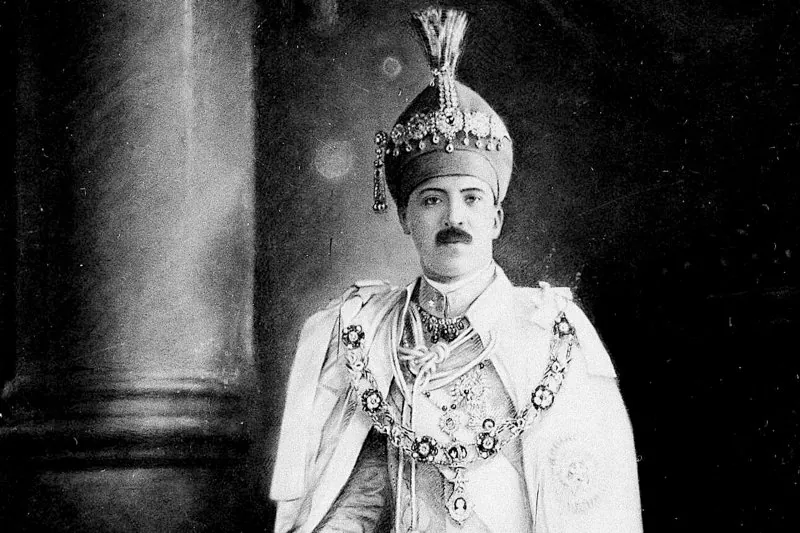
The seventh Nizam, under whom the 1919 Mulki firman was issued.
Credit: Bourne & Shepherd · Public domain · source
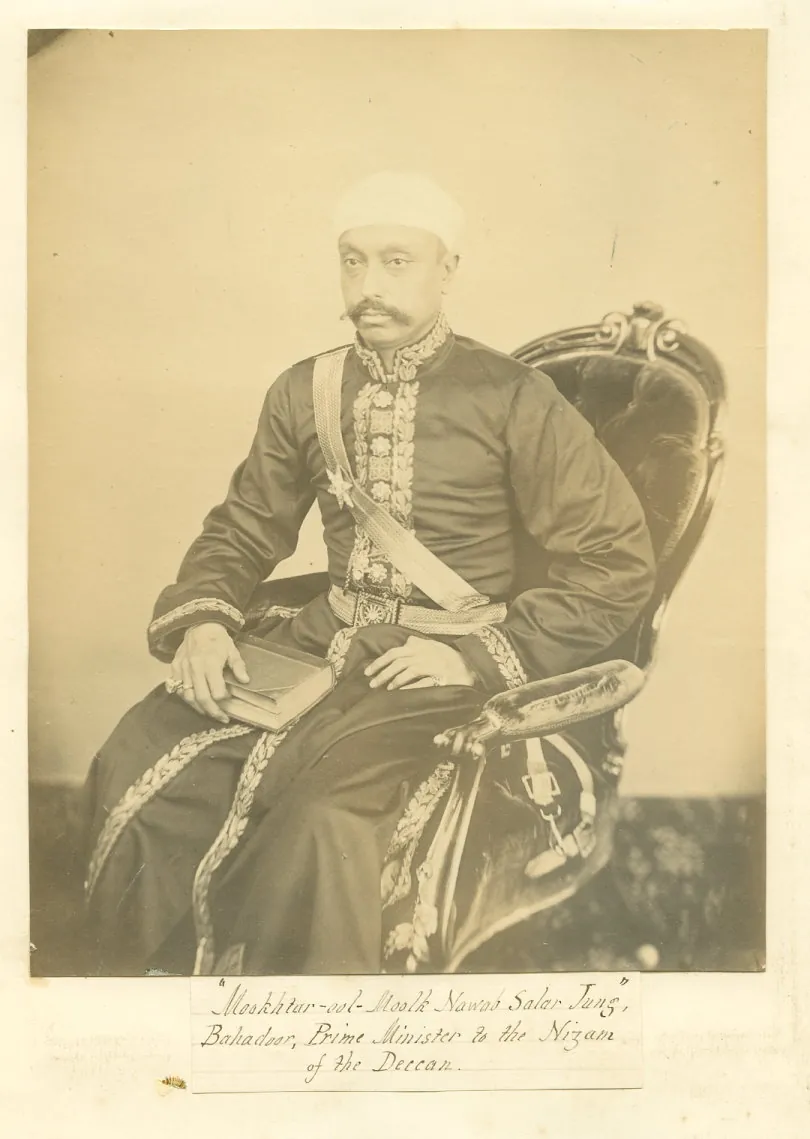
The Diwan whose reforms first brought outside officials into Hyderabad’s service.
Credit: Unknown photographer · Public domain · source
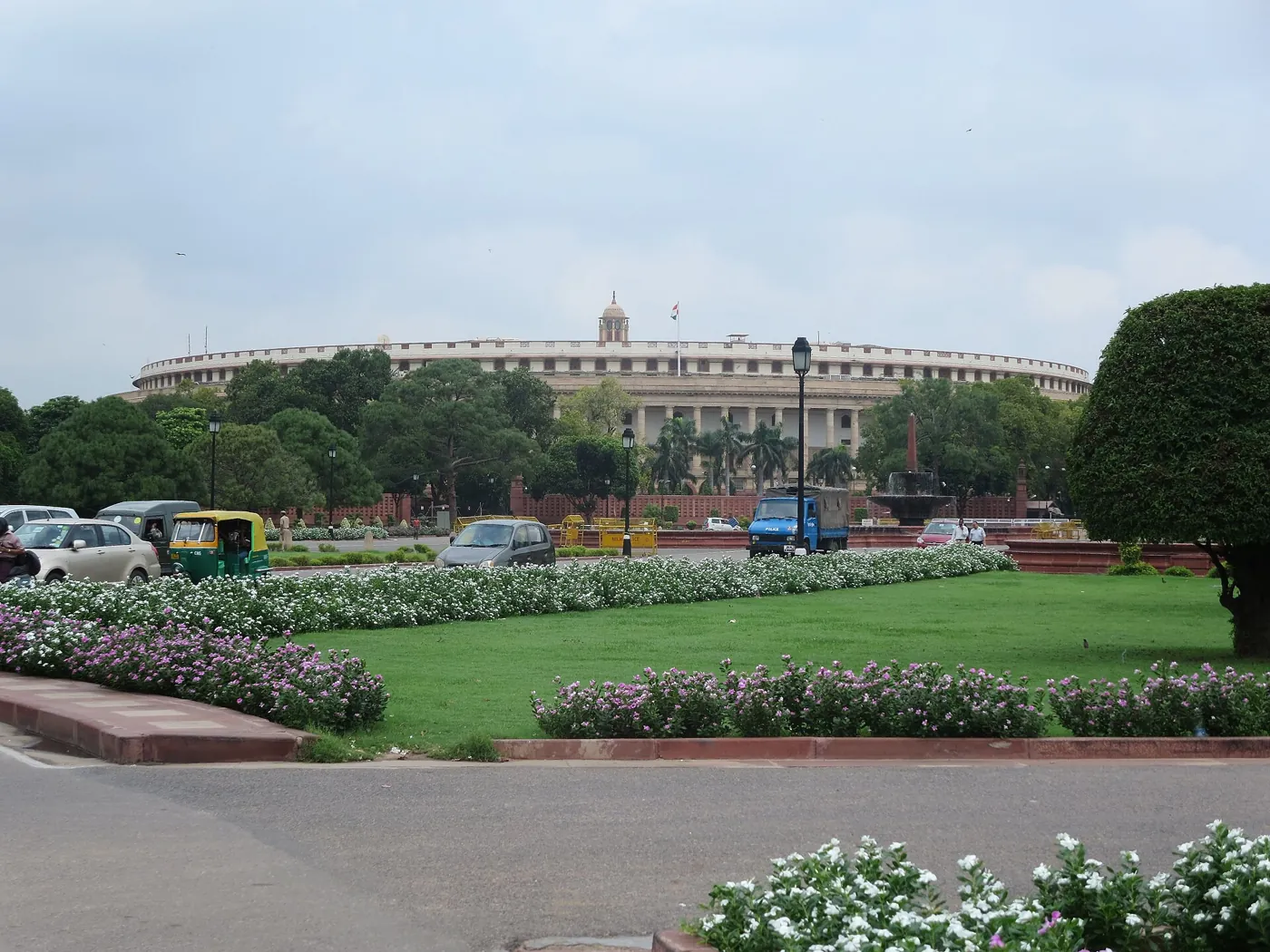
Parliament enacted the Public Employment (Requirement as to Residence) Act in 1957.
Credit: Nikhilb239 · CC BY-SA 4.0 · source
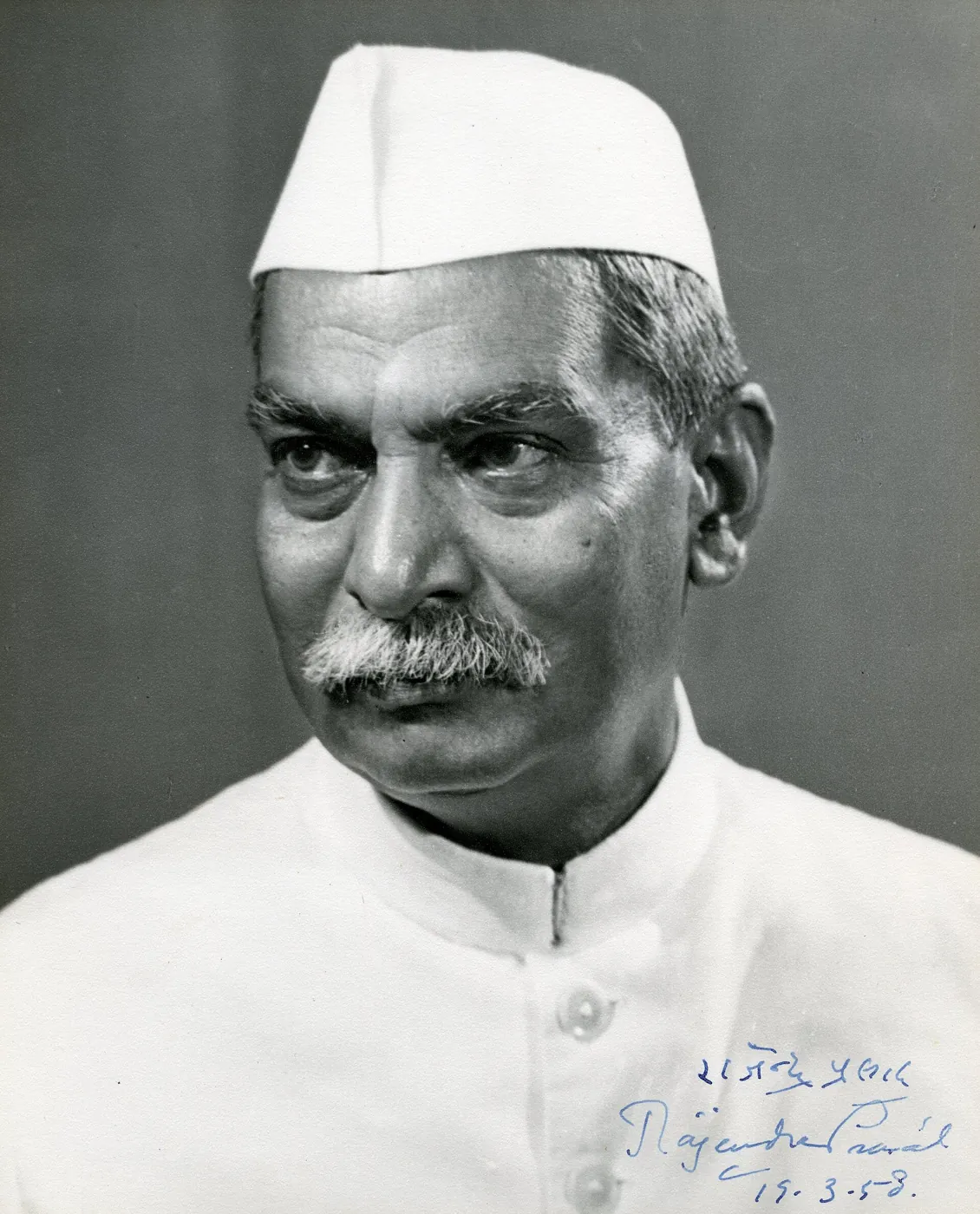
President of India when the 1957 residence law received assent.
Credit: Archives New Zealand from New Zealand · CC BY-SA 2.0 · source
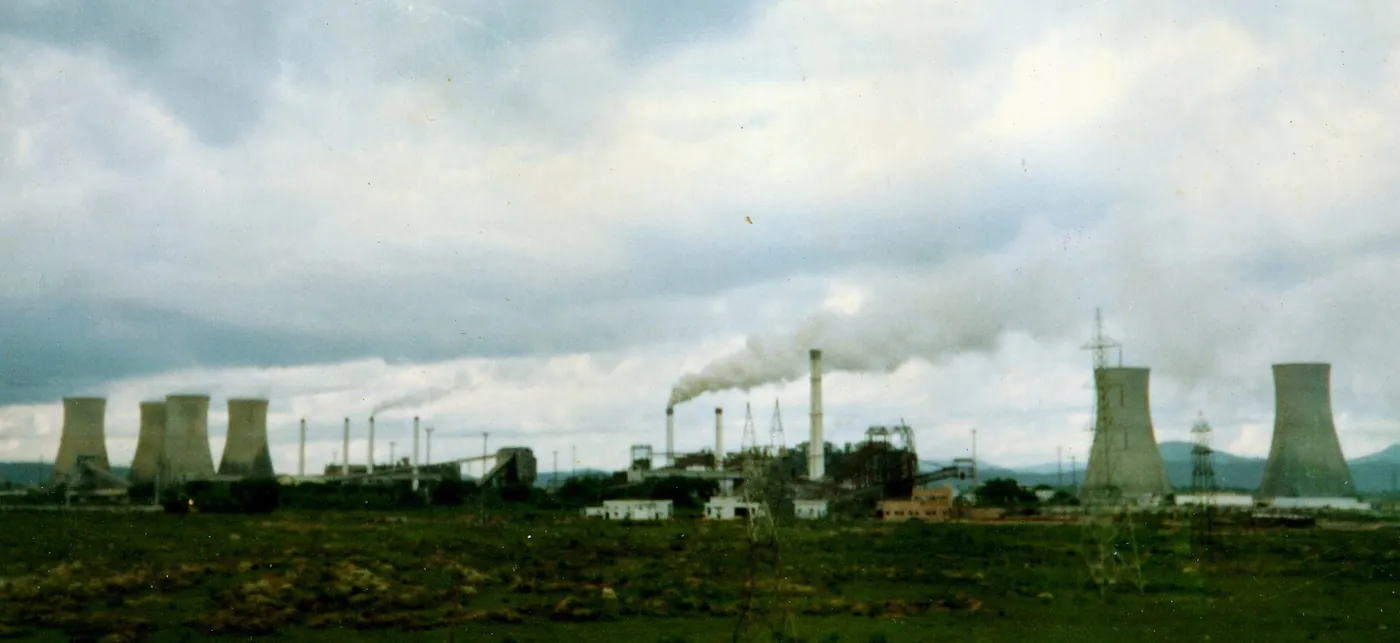
The power station where the January 1969 employment dispute began; a later photograph.
Credit: Adityamadhav83 · CC BY-SA 4.0 · source
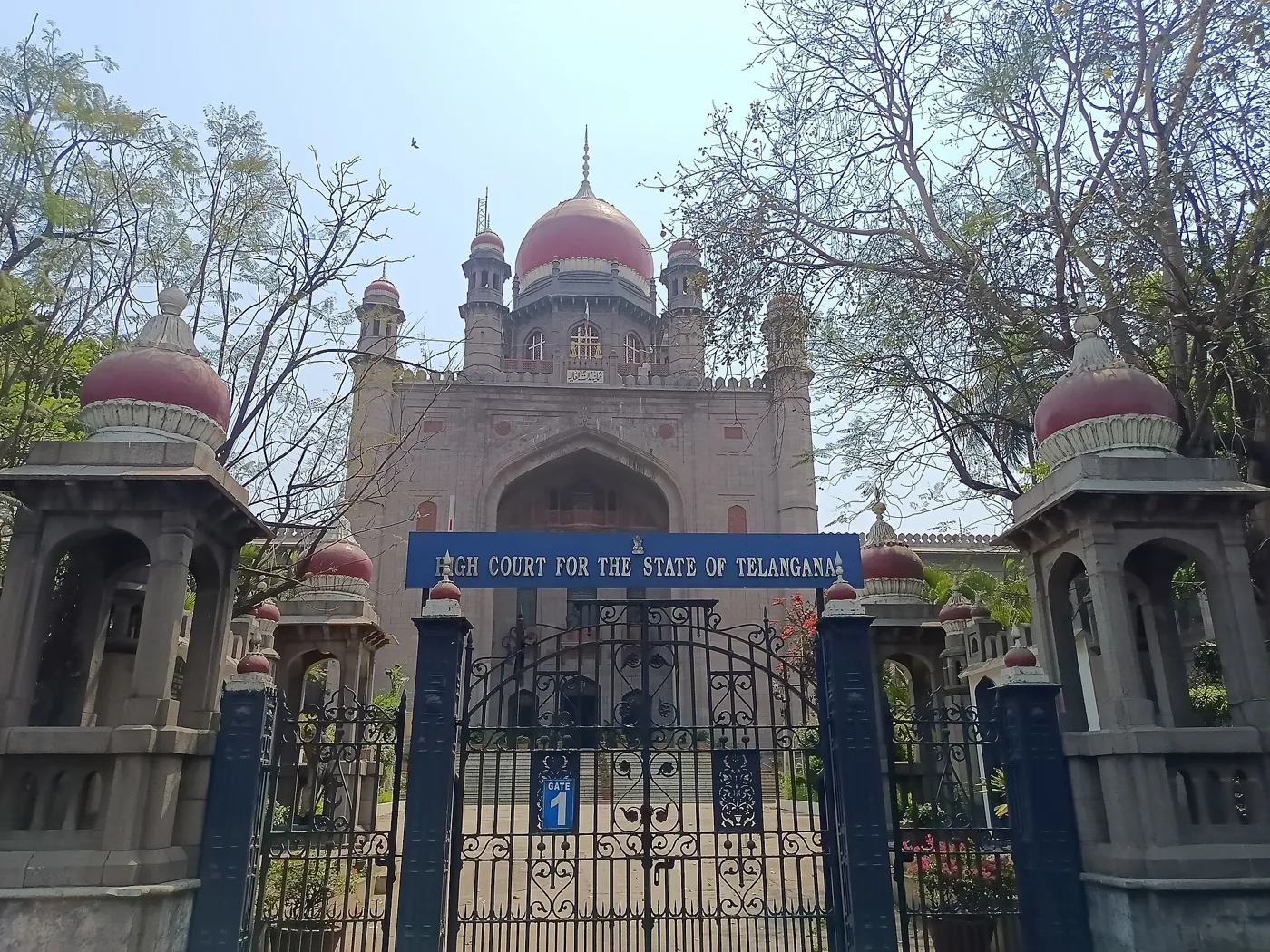
Seat of the Andhra Pradesh High Court, which heard the 1969 employment cases.
Credit: Tarunsamanta · CC BY-SA 4.0 · source
Mulki safeguards and the constitutional transition
Local-employment protection in Hyderabad State emerged from a specific administrative history. The Mulki rules linked eligibility to recognised local status, including a long residence requirement in the relevant formulation. After the Constitution and the formation of Andhra Pradesh, the central question became whether this inherited protection continued and how it related to equal opportunity in public employment. An answer should therefore identify the legal instrument before describing the political demand. Residence, birthplace and linguistic identity are not interchangeable tests, and the historical category of Mulki should not be casually equated with later zonal local status.
The Public Employment (Requirement as to Residence) Act, 1957 attempted to manage residence requirements within the constitutional scheme. Article 16(3) authorises Parliament, not an ordinary state executive order acting alone, to prescribe the relevant residence requirement. The legislation and rules for Telangana subsequently faced judicial review. This explains why a political assurance could not necessarily survive merely because it enjoyed regional support: the competence of the law-making authority and the territorial scope of its rule also had to satisfy the Constitution.
- Identify the historical source of a safeguard.
- Separate residence from community identity.
- Connect Article 16(3) with parliamentary competence.
Timeline
1957
Public employment law: Parliament legislated on residence requirements.
1967
Naxalbari: Peasant uprising in West Bengal.
1969
Supreme Court and Wanchoo: Statutory residence protections faced a setback; legal remedies were examined.
February 1972
Full Bench: High Court rejected Mulki validity.
3 October 1972
Supreme Court: Mulki rules upheld.
1976
ST recognition: Lambadas included through the parliamentary amendment.
September 1978
Jagtial: Major agrarian mobilisation.
1980
PWG: Kondapalli Seetharamaiah founded the organisation.
20 April 1981
Indravelli: Police firing; competing casualty accounts.
30 December 1985
G.O. 610: Corrective directions for local-cadre violations.
2001–2004
Girglani: Appointment and final report.
The 1969 and 1972 judgments: distinguish the legal questions
The Supreme Court’s A.V.S. Narasimha Rao decision in 1969 addressed the statutory arrangement permitting residence requirements for part of a state. The legal difficulty centred on the constitutional scope of Article 16(3), not a general judicial declaration that every form of local protection was impossible. High Court proceedings over implementation and employment orders formed part of the same atmosphere of uncertainty. The Wanchoo Committee examined legal possibilities after the setback. Its inquiry should be understood as a search for constitutionally sustainable remedies, not as a judgment capable of overruling the courts.
In February 1972, the Andhra Pradesh High Court Full Bench rejected the validity of the Mulki rules. On 3 October 1972, the Supreme Court in Director of Industries and Commerce v V. Venkata Reddy upheld their continuing force. The surviving pre-Constitution rules and their protection under the constitutional transition supplied a different foundation from the statutory residence arrangement examined in 1969. Politically, the verdict intensified conflict over employment and regional expectations. Analytically, the important lesson is that opposite-looking outcomes may concern different legal sources rather than simple inconsistency.
- 1969: statutory residence arrangement.
- 1972: survival of inherited Mulki rules.
- Judicial relief did not eliminate political disagreement.
Build an analytical answer
- 1. Identify the grievance and affected institutions.
- 2. Name the governing legal or organisational framework.
- 3. Explain the implementation gap or mobilisation process.
- 4. Attribute contested evidence and assess rights.
- 5. Conclude with accountability and effective remedies.
From officers’ inquiry to G.O. 610
Employment safeguards required an administrative audit, not merely a political assurance. Article 371D and the 1975 Presidential Order, rather than the old Mulki residence test, governed local cadres. A frequently cited figure of 58,962 non-local employees must not automatically be read as 58,962 individually adjudicated illegal appointments. The issue is best studied by connecting institutions with the practical experience of affected people. A formal rule or organisational declaration establishes a starting point, but it cannot by itself explain how officials, workers, cultivators and local organisations acted. Distinguishing these levels prevents an answer from becoming either a list of dates or an unsupported account of collective blame.
Review recruitment, local status and cadre allocation; repatriate appointments actually contrary to the order. No. Open competition and permitted appointments must be distinguished from breaches of local-cadre rules. In evaluating consequences, consider access to remedies, the reliability of administrative evidence and the position of people who did not control political or armed organisations. Constitutional analysis requires both substantive protection and fair procedures. Historical analysis likewise requires a clear separation between documented chronology, attributed allegations and disputed estimates. This approach allows regional grievances to be explained without treating every participant as identical or assuming that every official response was necessarily lawful or unlawful.
- 1984–85: Officers’ inquiry.
- 30 December 1985: Corrective order.
- 31 March 1986: Implementation target.
| Instrument or body | Purpose | Do not confuse with |
|---|---|---|
| 1957 Act | Residence requirements in public employment | A state executive order |
| 1969 judgment | Review of statutory residence arrangement | 1972 Mulki judgment |
| 1972 judgment | Continuing force of Mulki rules | 1975 zonal system |
| G.O. 610 | Correct local-cadre violations | Blanket dismissal by origin |
| Girglani | Investigate systemic departures | A headcount alone |
| Regulation 1/70 | Restrict Scheduled Areas land transfers | ST-list amendment |
| Article 342 | ST specification and parliamentary amendment | Individual land title |
Why implementation remained contested
Issuing a repatriation order did not itself identify every employee liable to transfer. Identify the proper cadre and receiving authority; arrange posts where necessary rather than indiscriminate dismissal. Check appointment dates, recruitment units, local-status documents, transfers and appeals. The issue is best studied by connecting institutions with the practical experience of affected people. A formal rule or organisational declaration establishes a starting point, but it cannot by itself explain how officials, workers, cultivators and local organisations acted. Distinguishing these levels prevents an answer from becoming either a list of dates or an unsupported account of collective blame.
Department-wise compliance records and reasoned decisions matter more than a single aggregate claim of implementation. No. It addressed appointments and placements contrary to applicable local-cadre provisions, not regional origin by itself. In evaluating consequences, consider access to remedies, the reliability of administrative evidence and the position of people who did not control political or armed organisations. Constitutional analysis requires both substantive protection and fair procedures. Historical analysis likewise requires a clear separation between documented chronology, attributed allegations and disputed estimates. This approach allows regional grievances to be explained without treating every participant as identical or assuming that every official response was necessarily lawful or unlawful.
- 1985: Order issued.
- 1986: Deadline missed.
- 2001: Renewed scrutiny.
Girglani and the structure of non-compliance
Girglani investigated mechanisms of non-compliance rather than merely counting persons from other regions. Improper classification of offices and posts could remove appointments from effective local scrutiny. Transfers, deputations, promotions and compassionate appointments could bypass applicable cadre restrictions. The issue is best studied by connecting institutions with the practical experience of affected people. A formal rule or organisational declaration establishes a starting point, but it cannot by itself explain how officials, workers, cultivators and local organisations acted. Distinguishing these levels prevents an answer from becoming either a list of dates or an unsupported account of collective blame.
Local-status verification, recruitment-unit selection and incomplete departmental returns complicated enforcement. No. The widely cited report count concerns findings or deviations, commonly grouped into categories; it is not a headcount of displaced workers. In evaluating consequences, consider access to remedies, the reliability of administrative evidence and the position of people who did not control political or armed organisations. Constitutional analysis requires both substantive protection and fair procedures. Historical analysis likewise requires a clear separation between documented chronology, attributed allegations and disputed estimates. This approach allows regional grievances to be explained without treating every participant as identical or assuming that every official response was necessarily lawful or unlawful.
- 2001: Commission appointed.
- 2004: Final report.
- After the report: Remedies required.
Naxalism: origins, regions and organisation
Naxalite politics developed through ideological divisions, agrarian grievances and changing organisational strategies. Tribal and agrarian mobilisation in northeastern Andhra Pradesh was a separate regional struggle, not a Telangana district movement. Land concentration, low wages, caste domination and weak remedies supported rural mobilisation; students and cultural organisations also mattered. The issue is best studied by connecting institutions with the practical experience of affected people. A formal rule or organisational declaration establishes a starting point, but it cannot by itself explain how officials, workers, cultivators and local organisations acted. Distinguishing these levels prevents an answer from becoming either a list of dates or an unsupported account of collective blame.
Armed attacks and coercion harmed civilians; state policing and alleged unlawful killings also require scrutiny under constitutional standards. No. Naxalbari belongs to 1967, CPI(ML) to 1969, and the People’s War Group to 1980. In evaluating consequences, consider access to remedies, the reliability of administrative evidence and the position of people who did not control political or armed organisations. Constitutional analysis requires both substantive protection and fair procedures. Historical analysis likewise requires a clear separation between documented chronology, attributed allegations and disputed estimates. This approach allows regional grievances to be explained without treating every participant as identical or assuming that every official response was necessarily lawful or unlawful.
- 1967: Naxalbari.
- 1969: CPI(ML).
- 1980: People’s War Group.
Jagtial and the politics of agrarian mobilisation
The Jagtial mobilisation brought land, wages and village power into a large public demonstration. Demands concerned access to land, higher wages and an end to coercive practices. Student activists, rural labour organisations and cultural activity linked villages with wider political networks. The issue is best studied by connecting institutions with the practical experience of affected people. A formal rule or organisational declaration establishes a starting point, but it cannot by itself explain how officials, workers, cultivators and local organisations acted. Distinguishing these levels prevents an answer from becoming either a list of dates or an unsupported account of collective blame.
Distinguish public mobilisation from underground armed action; evaluate state restrictions for necessity and effects on lawful participation. No. Jagtial and Sircilla were then within the undivided Karimnagar district; present district boundaries should not be projected backward. In evaluating consequences, consider access to remedies, the reliability of administrative evidence and the position of people who did not control political or armed organisations. Constitutional analysis requires both substantive protection and fair procedures. Historical analysis likewise requires a clear separation between documented chronology, attributed allegations and disputed estimates. This approach allows regional grievances to be explained without treating every participant as identical or assuming that every official response was necessarily lawful or unlawful.
- 1970s: Village organising.
- September 1978: Jagtial rally.
- 1978: Disturbed areas.
Indravelli: land, assembly and accountability
Indravelli is central to understanding the relationship between tribal land grievances, mobilisation and police accountability. Permission for the meeting was withdrawn; information did not reach everyone travelling from distant villages. Accounts differ over confrontation and police conduct. A police constable’s death was reported in the clash. The issue is best studied by connecting institutions with the practical experience of affected people. A formal rule or organisational declaration establishes a starting point, but it cannot by itself explain how officials, workers, cultivators and local organisations acted. Distinguishing these levels prevents an answer from becoming either a list of dates or an unsupported account of collective blame.
The Hindu’s retrospective distinguishes the government’s 13 Adivasi deaths from civil-liberties estimates of 60; neither should be silently substituted for the other. No. Bheem’s resistance belongs to the Hyderabad State period; Indravelli occurred in independent India in 1981. In evaluating consequences, consider access to remedies, the reliability of administrative evidence and the position of people who did not control political or armed organisations. Constitutional analysis requires both substantive protection and fair procedures. Historical analysis likewise requires a clear separation between documented chronology, attributed allegations and disputed estimates. This approach allows regional grievances to be explained without treating every participant as identical or assuming that every official response was necessarily lawful or unlawful.
- 1940s: Earlier context.
- 1970s: Land grievances.
- 20 April 1981: Police firing.
Tribal land protection and ST recognition
Land-transfer protection and Scheduled Tribe recognition are different legal mechanisms. Christoph von Fürer-Haimendorf studied the Gonds and advised Hyderabad’s tribal administration; his work links ethnography with land, education and welfare policy. Transfers generally must favour an ST person or an eligible cooperative composed solely of ST members; special authorities handle restoration proceedings. The issue is best studied by connecting institutions with the practical experience of affected people. A formal rule or organisational declaration establishes a starting point, but it cannot by itself explain how officials, workers, cultivators and local organisations acted. Distinguishing these levels prevents an answer from becoming either a list of dates or an unsupported account of collective blame.
Some Adivasi organisations allege unequal access to education, employment and benefits after Lambada inclusion. Attribute these claims and avoid treating a community’s legal status as void by allegation. No. Article 342 provides for specification by Presidential notification and subsequent inclusion or exclusion by parliamentary law. In evaluating consequences, consider access to remedies, the reliability of administrative evidence and the position of people who did not control political or armed organisations. Constitutional analysis requires both substantive protection and fair procedures. Historical analysis likewise requires a clear separation between documented chronology, attributed allegations and disputed estimates. This approach allows regional grievances to be explained without treating every participant as identical or assuming that every official response was necessarily lawful or unlawful.
- 1959: Land-transfer regulation.
- 1970: Regulation 1/70.
- 1976: ST-list change.
Real-world case studies
An order is not implementation
G.O. 610 illustrates why a directive needs reliable service records, valid cadre classification, reasoned individual decisions and follow-up. Continued complaints do not establish that every non-local appointment was unlawful, but they do expose the limits of announcing a remedy without demonstrating compliance.
Two casualty narratives at Indravelli
The official count of 13 Adivasi deaths differs from civil-liberties estimates of about 60 reported by The Hindu. An examination answer should state the date and context, attribute each figure, and discuss public assembly and proportionate policing without inventing a reconciled total.
Previous year questions
No source-linked PYQ is available here yet. Use the practice questions below.
Practice questions
Practice MCQ 1 · Moderate
Which date or period matches Officers’ inquiry?
- 1984–85
- 1950
- 1999
- 2014
Practice MCQ 2 · Moderate
Which date or period matches Commission appointed?
- 2001
- 1950
- 1999
- 2014
Practice MCQ 3 · Moderate
Which date or period matches Naxalbari?
- 1967
- 1950
- 1999
- 2014
Practice MCQ 4 · Moderate
Which date or period matches Village organising?
- 1970s
- 1950
- 1999
- 2014
Practice MCQ 5 · Moderate
Which date or period matches Earlier context?
- 1940s
- 1950
- 1999
- 2014
Practice MCQ 6 · Moderate
Which date or period matches Land-transfer regulation?
- 1959
- 1950
- 1999
- 2014
Mains practice · Explain the different foundations of the 1969 and 1972 Supreme Court rulings.
- Article 16(3)
- 1957 statutory arrangement
- Pre-Constitution Mulki rules
- Political repercussions
Mains practice · Why did G.O. 610 remain politically significant?
- Local-cadre framework
- Verification problems
- Departmental compliance
- Girglani findings
Mains practice · Discuss land and rights in tribal mobilisation.
- Alienation and debt
- Regulation 1/70
- Indravelli and casualty attribution
- ST recognition distinct from land titles
Further reading
- https://indiankanoon.org/search/?formInput=Director%20Industries%20Venkata%20Reddy%201972%20Mulki
- https://www.mcrhrdi.gov.in/IAS2013/PPTs/IAS%20Trg-Land%20Issues%20in%20Scheduled%20Areas%20of%20A%20P%20-%20MCRHRD.pdf
- https://mcrhrdi.gov.in/images/publications/Reading%20Material/Training%20Course%20on%20Overview%20of%20Tribal%20Welfare%20Department.pdf
- https://www.thehindu.com/news/national/telangana/why-are-adivasis-and-lambadas-fighting-over-indervelli-martyrs-column/article61864595.ece
- https://www.rediff.com/news/2002/apr/12jafri.htm
- https://www.iosrjournals.org/iosr-jhss/papers/Vol19-issue1/Version-1/M1901019299.pdf
Preparing for TGPSC Group 1 or Group 2? See the TGPSC Groups coaching course at Pragnya IAS Academy for fees, batches and registration.
Long study hours taking a toll? Try the free breathing exercise and self check-in in Pragnya’s student wellness programme for UPSC aspirants.