
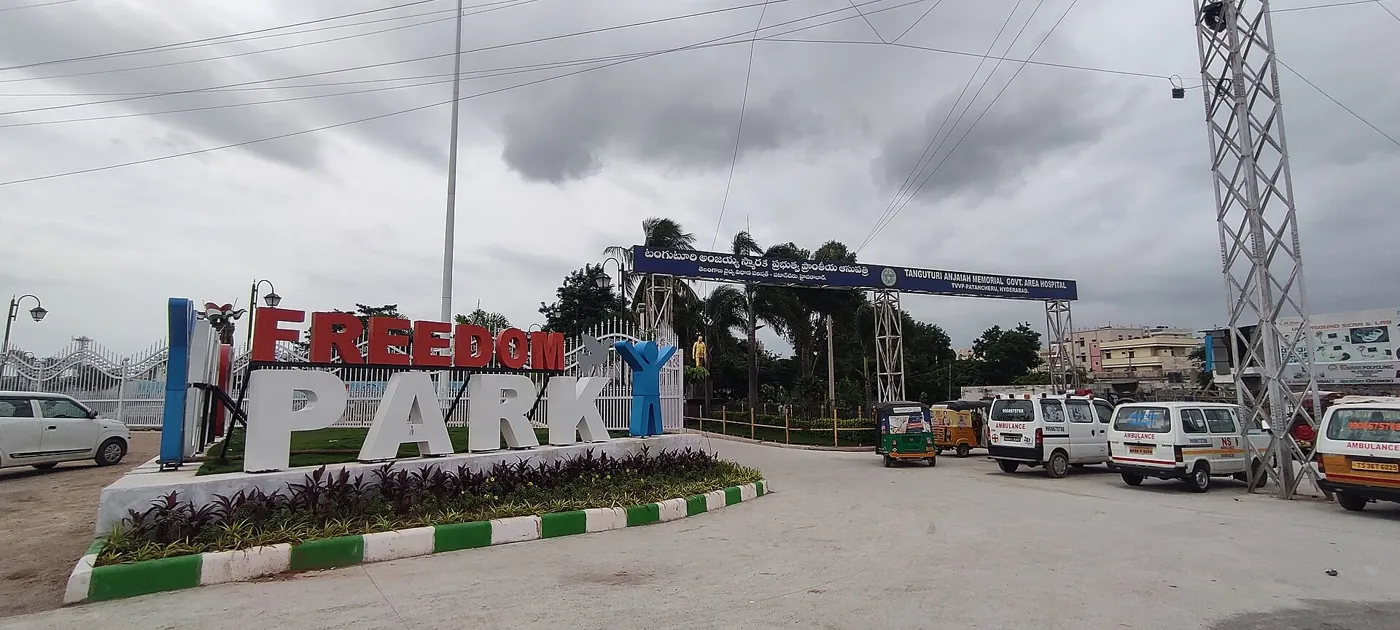
Named after T. Anjaiah, the Chief Minister at the centre of the February 1982 Begumpet airport episode.
Credit: Kasyap · CC BY-SA 4.0 · source
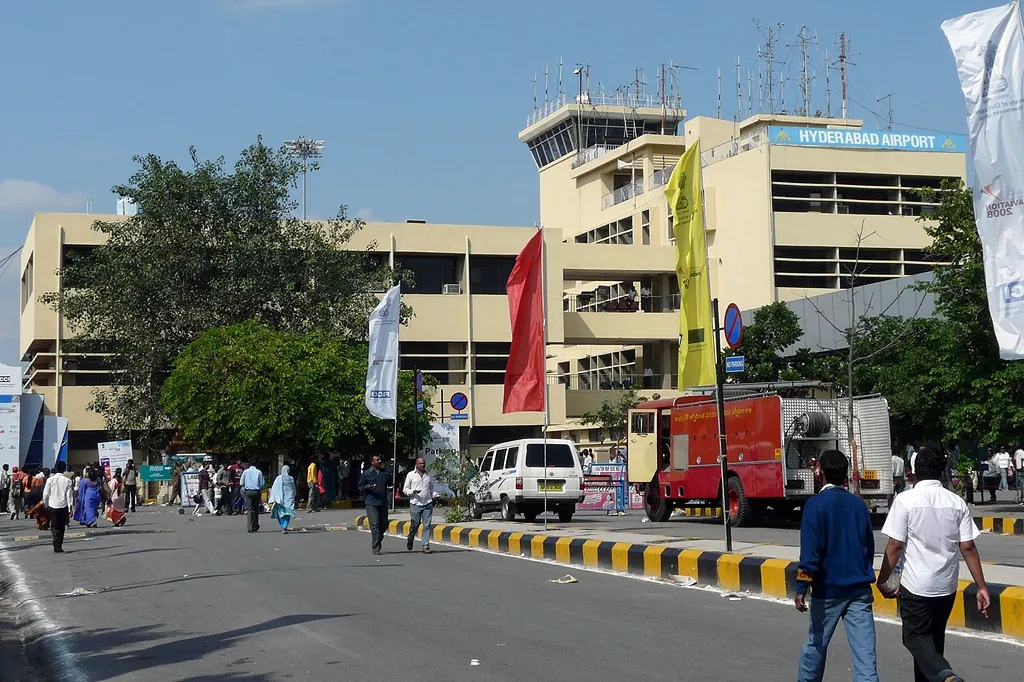
The airport where the 1982 episode involving Chief Minister Anjaiah took place; a later photograph.
Credit: Sean D Silva · GFDL 1.2 · source
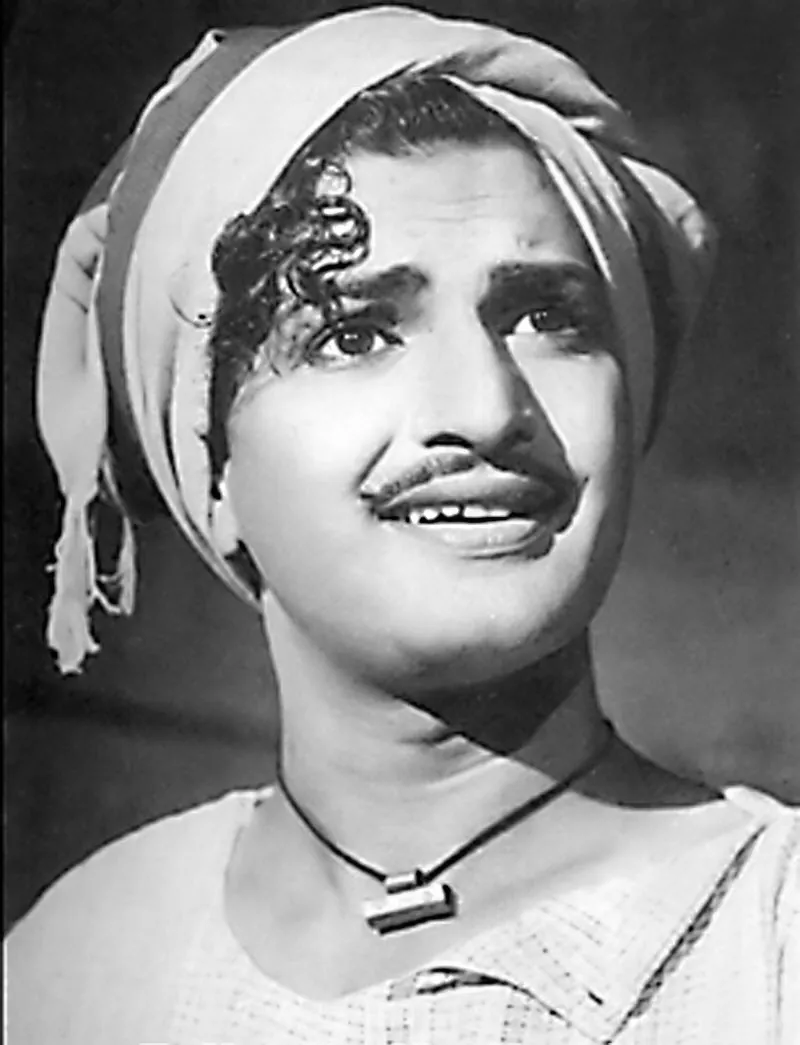
The film star who founded the Telugu Desam Party on 29 March 1982; a 1952 film still.
Credit: Unknown photographer · Public domain · source
Briefly replaced NTR as Chief Minister during the August–September 1984 crisis; a later photograph.
Credit: Batthini Vinay Kumar Goud · CC BY-SA 4.0 · source
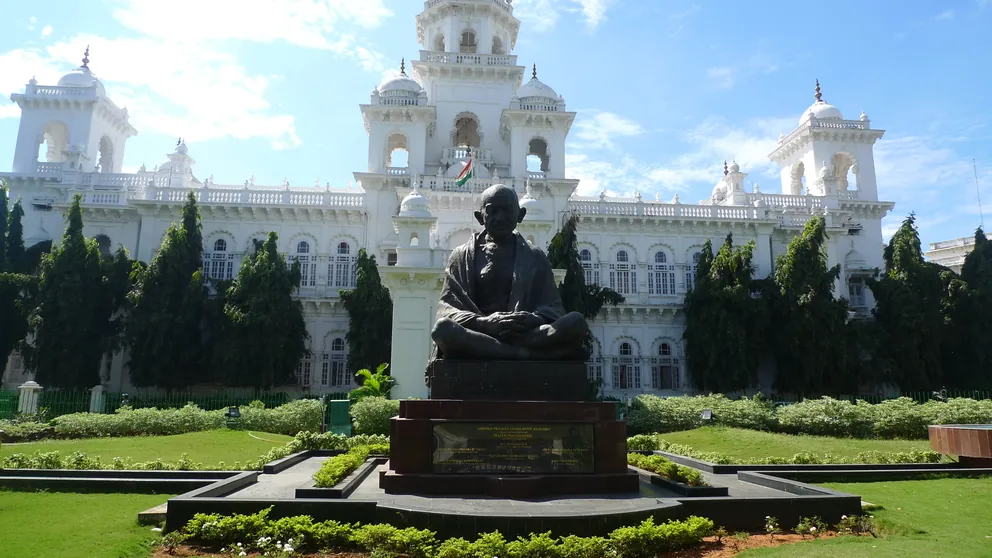
Where the NTR-era laws on village offices and mandals were passed.
Credit: Sissssou · CC BY-SA 2.0 · source
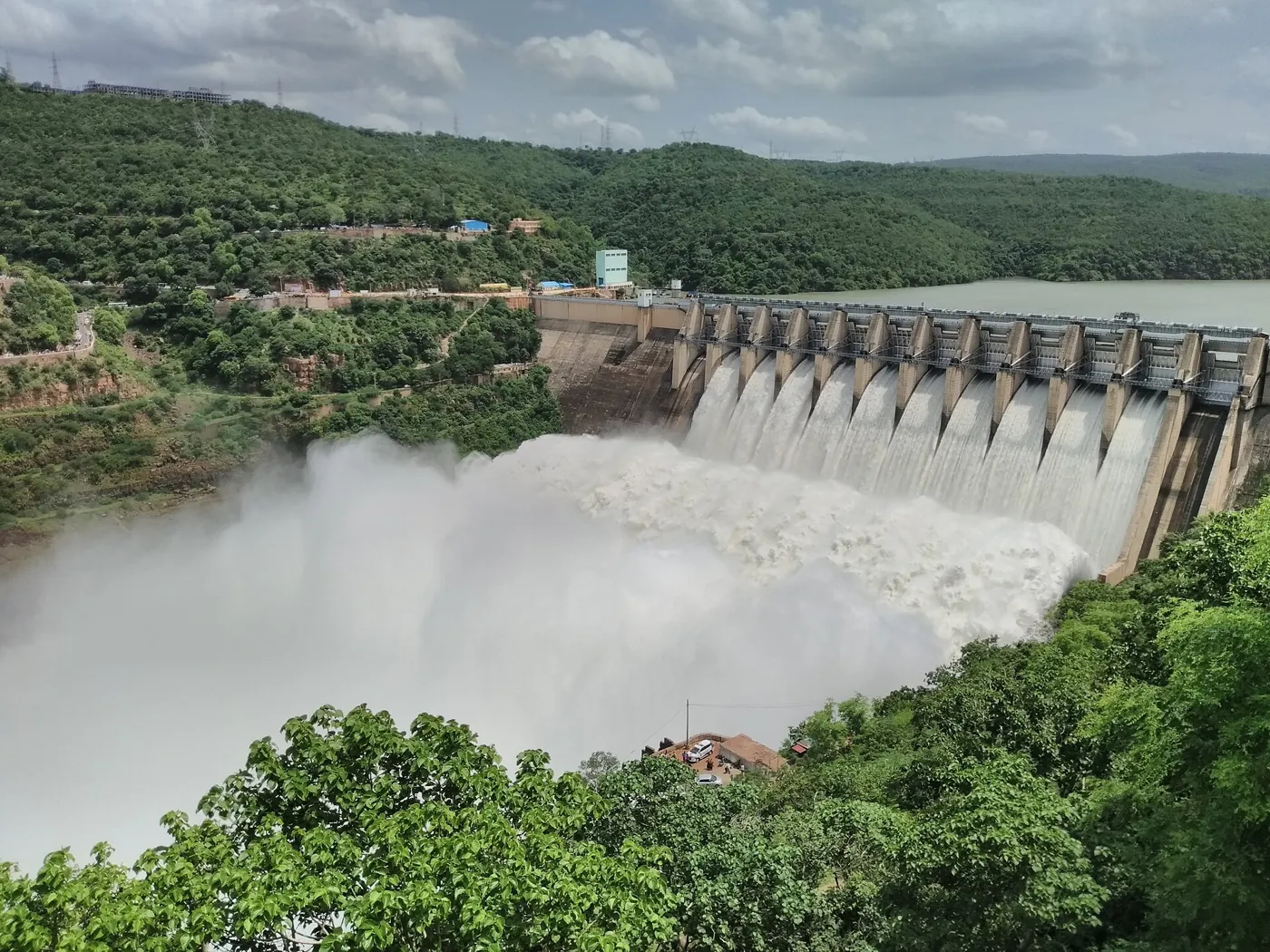
Krishna storage and hydropower infrastructure linked to several irrigation schemes.
Credit: Munna Aawara · CC BY-SA 4.0 · source
1. Congress predominance and the regional-party breakthrough
Congress dominance weakened through the cumulative effects of incumbency, factional competition and repeated changes of leadership. The succession from Marri Chenna Reddy to T. Anjaiah, Bhavanam Venkatarami Reddy and Kotla Vijaya Bhaskara Reddy made high-command intervention a persuasive opposition theme. The public rebuke of Anjaiah by Rajiv Gandhi at Begumpet airport in 1982 became an emblem of perceived humiliation. Nevertheless, a statewide electoral realignment requires a broader explanation than one incident: welfare expectations, organisation, campaign communication and an effective alternative leadership were also essential.
N.T. Rama Rao founded the Telugu Desam Party on 29 March 1982 and assumed office on 9 January 1983. His campaign translated cinematic familiarity into political mobilisation through Telugu self-respect and concrete welfare promises. The result strengthened regional-party competition and challenged Congress predominance. Its federal significance should not be confused with a separate Telangana programme: the TDP’s linguistic regionalism operated at the scale of united Andhra Pradesh. Support for the party could therefore coexist with unresolved disagreements over resources, local opportunities and cultural recognition within the state.
- Connect identity, welfare and organisation.
- Separate the party’s 1982 foundation from its 1983 victory.
- Do not treat communities as unanimous electoral blocs.
Timeline
1956
Andhra Pradesh formed on 1 November.
1982
TDP founded on 29 March.
1983
NTR assumed office on 9 January.
1984
NTR removed and subsequently restored amid the majority controversy.
1980s
Mandals and hereditary village-office changes reshaped administration.
1991
Rao and Singh led the national economic reform package.
1995
Naidu became Chief Minister on 1 September.
1998
APERP appraisal and the state electricity reform law.
1999
APSEB unbundling began on 1 February; Vision 2020 is associated with this publication period.
2000
Bashir Bagh firing on 28 August.
2002
Selected Nizam Sugars units entered a majority-private joint venture.
2004
Farmers’ welfare commission report submitted on 11 December.
2. NTR’s administrative changes and welfare politics
NTR’s administrative initiatives sought visible departures from inherited arrangements. Smaller mandal units promised closer access to government, while abolition of hereditary village offices challenged established forms of local authority. These changes should be assessed through democratic access, administrative capacity and continuity of public functions. Removing an office did not necessarily remove every service associated with it; responsibilities could be reassigned, unevenly performed or contested. Claims that one administrative measure alone caused tank deterioration therefore require independent evidence about maintenance institutions, budgets, local management and longer-term environmental conditions.
Subsidised rice gave the promise of political dignity a material expression in household consumption. Welfare helped assemble support across regional and social boundaries, even where objections to other policies persisted. The removal and restoration of NTR in 1984 introduced a different issue: who commanded a legislative majority and how governors should exercise discretion. For examination purposes, distinguish welfare, local institutional reform and the federal controversy. Together they explain the TDP’s durability, but none establishes that its administration met every demand for decentralisation or equitable regional development.
- Mandals concern administrative scale and access.
- Office abolition and service delivery are separate analytical questions.
- The 1984 crisis concerns majority, legitimacy and gubernatorial discretion.
Build a defensible regional-history answer
- 1. Identify the policy and its stated objective.
- 2. Trace implementation through institutions and budgets.
- 3. Compare effects across locations and social groups.
- 4. Attribute the interpretations of governments, writers and organisations.
- 5. Assess alternatives using evidence and explicit safeguards.
3. Krishna waters, Hyderabad growth and the land question
Water disputes combined legal allocation with political judgments about investment and implementation. Basin area, tribunal awards, dependable flows, project clearances and actual utilisation are not interchangeable measures. Telangana organisations argued that delays and project priorities disadvantaged their region, especially where cultivators remained dependent on uncertain rainfall or private wells. A strong answer identifies the particular project, period and benchmark before assessing such a claim. It also distinguishes interstate water allocation from distribution within Andhra Pradesh and avoids treating a single geographical percentage as decisive proof of every grievance.
Hyderabad’s expansion created employment, housing, infrastructure and new investment opportunities, but also increased the stakes of land ownership. Disputes concerned allotment procedures, assigned and common lands, compensation and the distribution of gains from appreciation. Neither investment nor migration is inherently unlawful; allegations against particular transactions require land records and procedural evidence. The central question is whether metropolitan development was transparent and inclusive. Growth in the capital cannot alone establish balanced development across Telangana’s districts, just as regional origin cannot establish the legality or social effects of an individual investment.
- Separate allocation, construction and utilisation.
- Assess land claims using records, not collective attribution.
- City-level growth is not a sufficient measure of regional equity.
| Issue | Main claim or objective | Evidence to examine |
|---|---|---|
| Party change | Self-respect and responsive government | Campaign organisation, promises and election results |
| Administrative reform | Closer public access | Staffing, jurisdiction and service outcomes |
| Water | Regional fairness | Awards, project design, completion and utilisation |
| Land | Inclusive metropolitan development | Allotment procedure, records and compensation |
| Power | Viability with affordable supply | Tariffs, subsidies, voltage and reliability |
| Public enterprises | Revival or reduced liabilities | Ownership, valuation, losses and worker outcomes |
| Agriculture | Resilient rural livelihoods | Net returns, credit access and water security |
4. Telugu pride, media and Telangana’s literary response
Telugu self-respect offered a powerful unifying vocabulary, but cultural representation within the linguistic community remained disputed. Telangana writers criticised the assumption that one regional register alone constituted proper Telugu and objected to repetitive comic or villainous portrayals of their speech. This position did not require rejection of the shared language. Standard registers can facilitate textbooks and administration while institutions also recognise regional variation. The analytical question concerns whose vocabulary, historical experience and social world received authority in publishing, cinema, education and public commemoration, rather than whether cultural exchange itself was undesirable.
Telangana’s literary self-assertion long preceded the TDP. Suravaram Pratap Reddy’s 1934 Golconda Kavula Sanchika documented poetic achievement against cultural dismissal. Kaloji’s accessible poetry and Dasarathi’s engagement with Hyderabad State’s political experience offered distinct connections between language and public life. Cinema and newspapers subsequently amplified both linguistic pride and disputes over stereotypes. Their political role must be dated carefully: media organisations founded after 2004 cannot be used as evidence for earlier decades. Likewise, a writer’s criticism should be attributed rather than presented as the unanimous view of a region.
- A dialect is not a defective language.
- Documentation, performance and publishing can produce recognition.
- Distinguish Telugu linguistic identity from Telangana’s subregional claims.
5. Festivals as lived culture and public identity
Bathukamma centres on floral arrangements, women’s collective songs and seasonal celebration around the autumn festival period. Bonalu involves prepared food offered to the goddess, especially during Ashada, with prominent celebrations in Hyderabad and Secunderabad. Their offerings, calendars and ritual forms should not be interchanged. Golconda, Ujjaini Mahankali and Lal Darwaza illustrate important urban Bonalu centres, not the geographical limits of the tradition. Both festivals connect household practice with neighbourhood space, but participation varies and neither should be treated as the sole cultural experience of every Telangana resident.
Public celebrations acquired wider significance when cultural organisations used them to express regional dignity and belonging. Political symbolism did not erase their religious and social meanings or make all participants supporters of one organisation. Telangana’s recognition of Bathukamma and Bonalu as state festivals in 2014 belongs to a later phase, outside the principal chronology here. Unsupported claims about festival budgets, restrictions or comparative neglect are unnecessary for explaining cultural assertion. A balanced account describes observable practices, distinguishes devotional origin traditions from historical evidence and recognises the diversity of regional public life.
- Bathukamma: flowers, songs and collective celebration.
- Bonalu: food offerings to the goddess.
- 2014 recognition must not be projected into the NTR period.
6. Liberalisation, APERP and Vision 2020
The national reform package of 1991 provides the setting for later state strategies. Prime Minister P.V. Narasimha Rao and Finance Minister Manmohan Singh led changes in industrial, trade and financial policy amid a balance-of-payments crisis. Chandrababu Naidu, who became Chief Minister on 1 September 1995, did not initiate national liberalisation but developed a distinctive state programme emphasising investment, technology and institutional reform. Vision 2020, prepared with McKinsey assistance and commonly associated with 1999, had already circulated in draft form during 1998; preparation and publication require careful chronological distinction.
The official vision presented economic growth as a way to create incomes and generate resources for education, health and poverty reduction. The World Bank-supported Andhra Pradesh Economic Restructuring Project was appraised in 1998 and included selected social and infrastructure sectors. Critics questioned adjustment costs and the balance between metropolitan investment and vulnerable rural livelihoods. Both sides require accurate representation: the government’s stated strategy was not simply the abandonment of welfare, but anticipated future benefits did not resolve immediate problems of affordability, job security or unequal capacity to benefit from market opportunities.
- National reforms: 1991; Naidu’s accession: 1995.
- APERP appraisal: 1998, not 1994.
- Distinguish a strategy’s objectives from demonstrated outcomes.
7. Power, education and public employment
The Andhra Pradesh Electricity Reform Act, 1998 provided the framework for restructuring. Generation and transmission functions moved into APGENCO and APTRANSCO from 1 February 1999, with distribution reorganised subsequently. The government emphasised viability and service improvement; opponents stressed affordability and vulnerability. Functional separation is not equivalent to complete privatisation. On 28 August 2000, police firing during the Left-led tariff protest at Bashir Bagh made policing and democratic accountability central issues. Later reports record three deaths, whereas initial accounts recorded two, illustrating why casualty figures must be dated and attributed.
Education and staffing reforms raised related questions about access and security. Self-financing courses and private provision could expand capacity but also increase reliance on household income. Contract appointments differed from regular recruitment in continuity and service conditions, while vacancies did not automatically establish violations of local-cadre rules. Secondary examination accounts associate Koneru Ramakrishna Rao with higher education and Gangopadhyay with salaries and pensions. Without original reports, however, precise recommendations, dramatic claims about abolishing subjects and numerical staff-cut targets should not be treated as established facts. Evidence of implementation requires government orders and administrative records.
- Keep the 1998 law, 1999 unbundling and 2000 firing distinct.
- Affordability and quality of supply both matter to pump users.
- Committee recommendations, government adoption and implementation are separate stages.
8. Industrial restructuring and the interconnected rural crisis
Enterprise restructuring included rehabilitation, divestment, winding-up decisions and voluntary retirement, not one uniform process. Contemporary reporting in 1997 recorded decisions affecting Allwyn, Republic Forge and the Fisheries Development Corporation. The 2002 Nizam Sugars transaction covered selected units through a joint venture with 51% private and 49% public participation; it was not an outright sale of the entire enterprise. Azam Jahi Mills at Warangal belonged to the National Textile Corporation system and requires a separate ownership history. Compensation, legal closure and sustained worker rehabilitation also need to be distinguished.
Agrarian distress linked rainfall uncertainty, weak shared-water systems, costly groundwater investment, credit constraints and unstable crop returns. The Commission on Farmers’ Welfare chaired by Jayati Ghosh submitted its report on 11 December 2004, emphasising policy and implementation failures. Its approach connected credit, irrigation, extension, inputs, prices and diversified employment. Tank deterioration could affect fishers, livestock keepers and village services as well as cultivators, while artisans also faced changing demand and competing materials. These mechanisms explain interconnected vulnerability without claiming that one reform caused every suicide or that every rural occupation declined identically.
- Classify closure, ownership transfer and VRS separately.
- Examine workers, growers and suppliers as distinct affected groups.
- Combine water, credit, extension and employment policy in remedies.
Real-world case studies
Bashir Bagh: beyond tariff arithmetic
The August 2000 firing turned an electricity-pricing conflict into a question of legitimacy, protest and accountability. A useful analysis connects the government’s financial rationale with supply quality and household vulnerability. Later reporting identifies three deaths; early accounts recording two should not be silently treated as the final total.
Nizam Sugars: why the transaction form matters
The selected-unit joint venture of 2002 retained a public minority while transferring majority participation to private interests. Workers, seasonal employees and cane growers faced different risks. The case calls for scrutiny of the actual unit package, valuation and livelihood consequences rather than a general assertion that every Nizam Sugars asset was sold outright.
Tanks as shared livelihood infrastructure
A functioning tank can support irrigation, recharge, livestock and fishing. Its deterioration may encourage private groundwater investment while weakening other occupations and village demand. This demonstrates linked vulnerability; it is not evidence that every district experienced identical tank decline or that one administrative change caused the entire rural crisis.
Previous year questions
No source-linked PYQ is available here yet. Use the practice questions below.
Practice questions
Practice MCQ 1 · Easy
Which sequence is chronologically correct?
- TDP foundation → national reforms → Bashir Bagh firing
- National reforms → TDP foundation → Bashir Bagh firing
- Bashir Bagh firing → APERP appraisal → TDP foundation
- Vision 2020 → Andhra Pradesh formation → TDP foundation
Practice MCQ 2 · Easy
Who edited Golconda Kavula Sanchika?
- Kaloji Narayana Rao
- Suravaram Pratap Reddy
- N.T. Rama Rao
- Manmohan Singh
Practice MCQ 3 · Moderate
Which pairing is correct?
- APGENCO — transmission
- APERP — literary anthology
- Bonalu — food offerings to the goddess
- Bathukamma state recognition — 1983
Practice MCQ 4 · Moderate
What was the private share in the selected-unit Nizam Sugars joint venture reported in 2002?
- 10%
- 49%
- 100%
- 51%
Practice MCQ 5 · Moderate
Which conclusion follows from APSEB unbundling alone?
- Every subsidy ended
- Functional responsibilities were institutionally separated
- Every asset was privately sold
- All electricity became free
Practice MCQ 6 · Easy
Who chaired the Andhra Pradesh Commission on Farmers’ Welfare that reported in December 2004?
- Koneru Ramakrishna Rao
- N.T. Rama Rao
- Jayati Ghosh
- Suravaram Pratap Reddy
Mains practice · Why did Telugu regional-party mobilisation not resolve all Telangana grievances?
- Explain the TDP’s linguistic self-respect appeal.
- Assess welfare and administrative changes.
- Distinguish statewide identity from intra-state distribution.
- Discuss water, employment and cultural representation.
- Avoid equating criticism of policies with rejection by every voter.
Mains practice · Assess the social and regional dimensions of Andhra Pradesh’s reform strategy during 1995–2004.
- State the official rationale of growth and improved services.
- Locate APERP and Vision 2020 chronologically.
- Use electricity reform and Bashir Bagh as a case.
- Compare urban opportunities with rural and employment risks.
- Evaluate transparency, affordability and social protection.
Mains practice · Explain the connections between agrarian distress and traditional occupations in Telangana.
- Trace shared-water deterioration and private groundwater costs.
- Explain credit, input and crop-price exposure.
- Include fishers, artisans, livestock keepers and labourers.
- Attribute the 2004 commission’s policy assessment.
- Recommend coordinated water, credit, extension and employment measures.
Further reading
- https://www.mcrhrdi.gov.in/images/publications/Reading%20Material/Vision-2020-%20Swarna%20Andhra%20Pradesh.pdf
- https://www.macroscan.org/pol/apr05/pdf/Full_Report_Commission_Farmer_AP.pdf
- https://documents1.worldbank.org/curated/en/865491468772781649/txt/multi0page.txt
- https://hyderabad.telangana.gov.in/festival/bonalu/
Preparing for TGPSC Group 1 or Group 2? See the TGPSC Groups coaching course at Pragnya IAS Academy for fees, batches and registration.
Long study hours taking a toll? Try the free breathing exercise and self check-in in Pragnya’s student wellness programme for UPSC aspirants.