
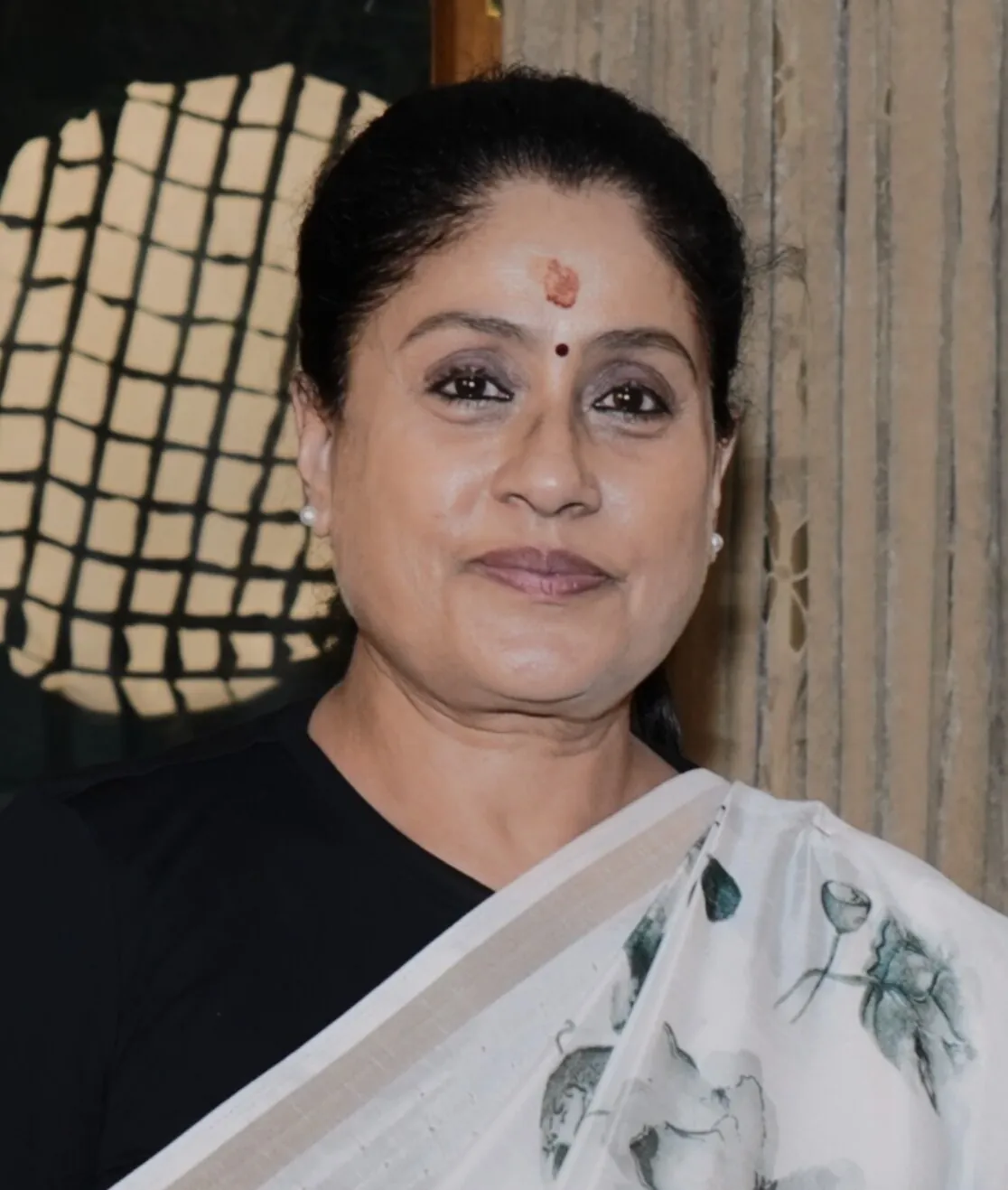
Vijayashanti: founder of Talli Telangana.
Credit: Bathula Ganesh Goud · CC0 · source
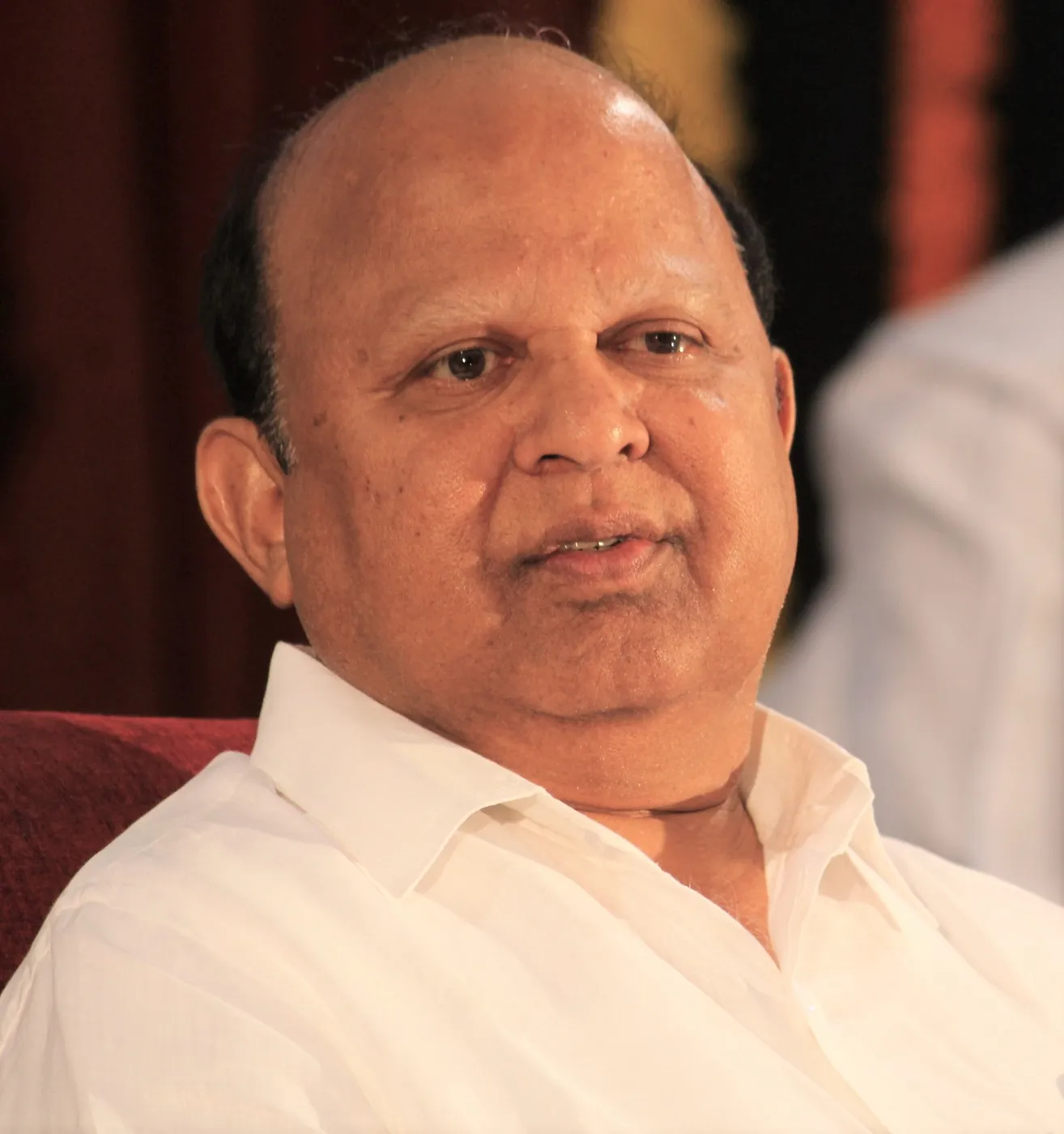
T. Devender Goud: founder of Nava Telangana Praja Party.
Credit: Batthini Vinay Kumar Goud · CC BY-SA 4.0 · source
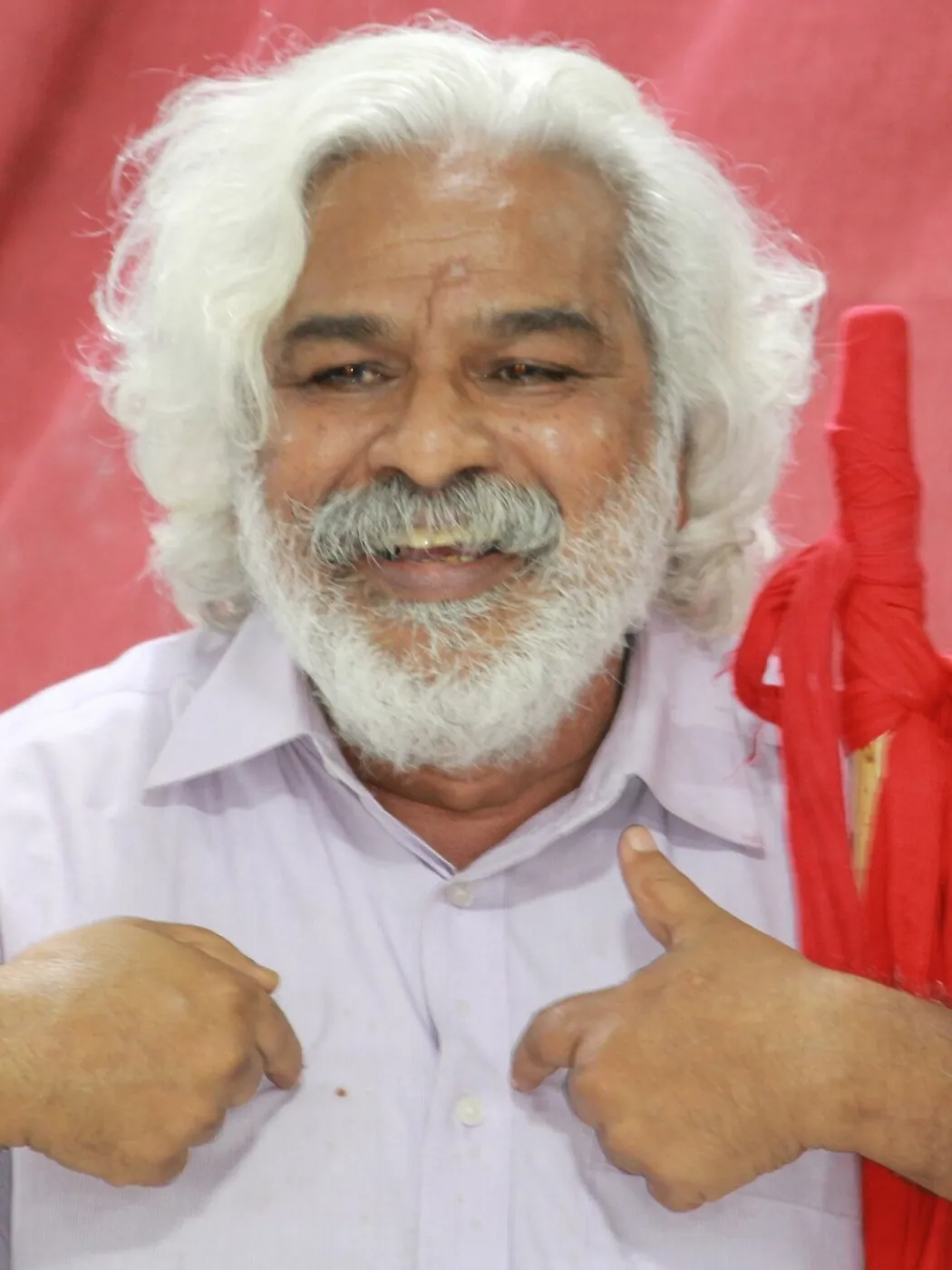
Gaddar: founding president of Telangana Praja Front.
Credit: Batthini Vinay Kumar Goud · CC BY-SA 4.0 · source
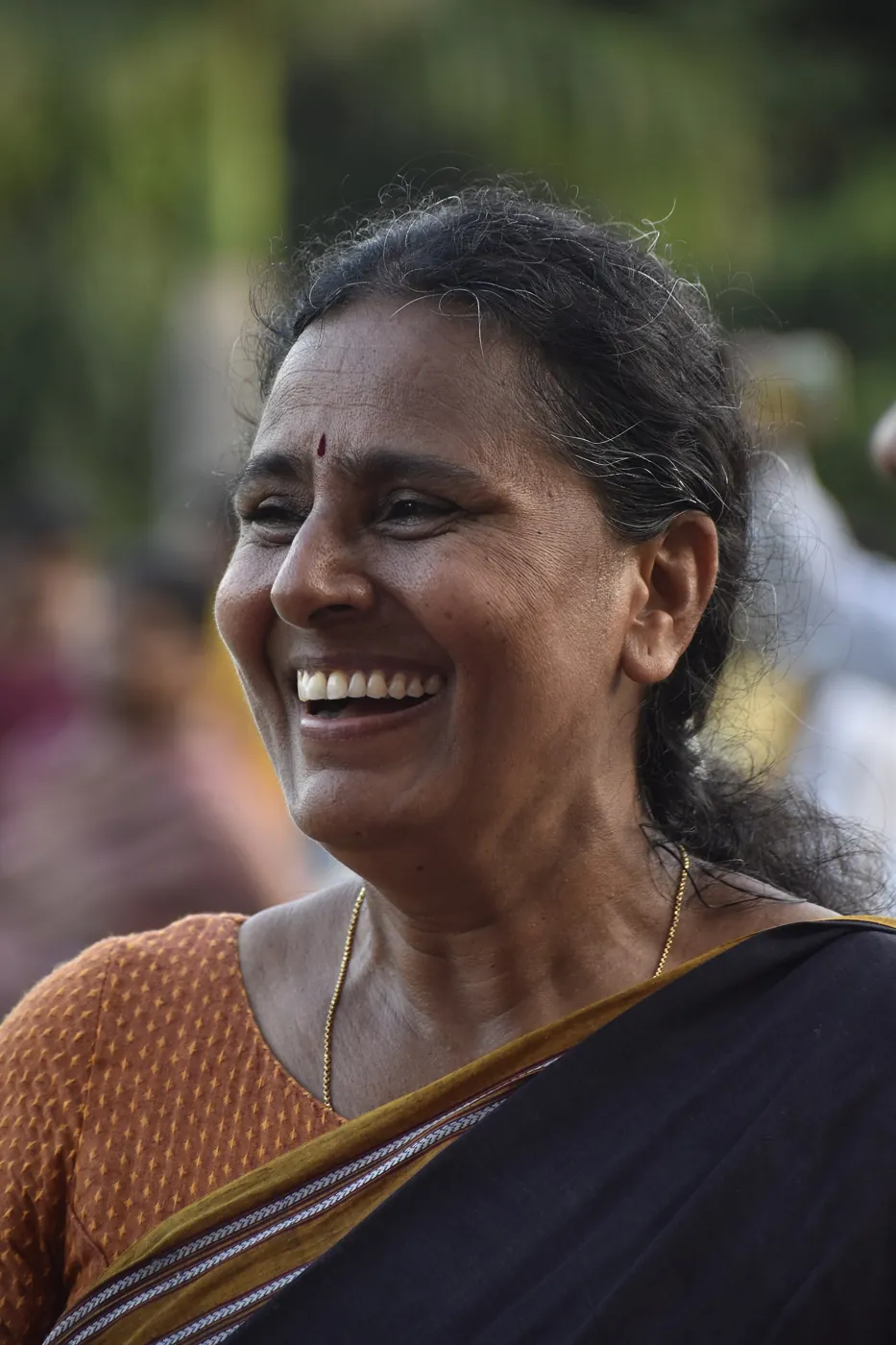
Vimalakka: cultural activism and social-justice advocacy.
Credit: అరవింద్ ఏవి · CC BY-SA 4.0 · source
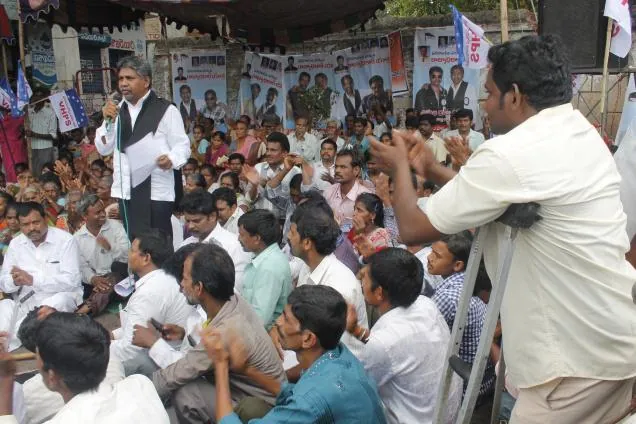
Manda Krishna Madiga: founder of Mahajana Socialist Party.
Credit: Shankereflu · CC BY-SA 4.0 · source
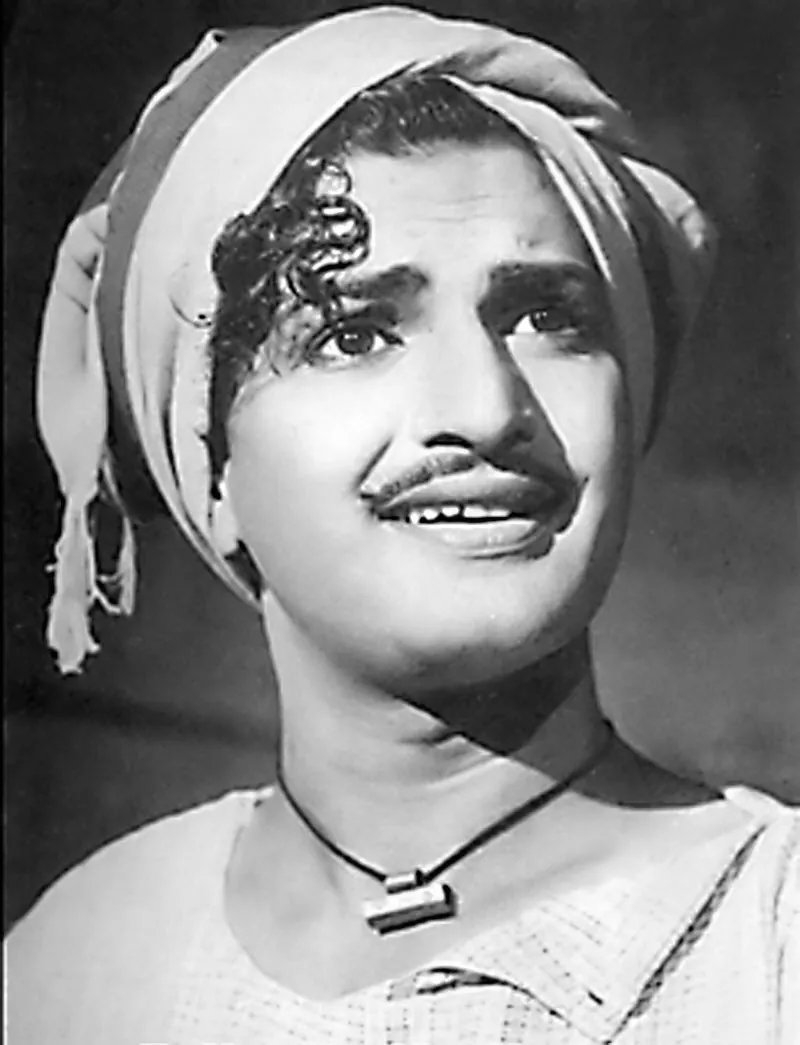
N. T. Rama Rao: founder of TDP.
Credit: Unknown photographer · Public domain · source
1. Reading party positions as a changing political process
The final phase cannot be reduced to a permanent list of supporters and opponents. A party might recognise Telangana’s grievances, endorse statehood in principle, contest an election with a statehood organisation and still disagree over timing or safeguards. A regional leader could also differ from the party’s central leadership. For TGPSC answers, distinguish an official resolution, a leader’s statement, an electoral alliance and a parliamentary vote. They are different kinds of evidence, each answering a different question about the movement’s political development.
Three overlapping processes provide a useful structure: the multiplication of statehood platforms, the conversion of regional pressure into party commitments, and the movement from commitments to legislation. Smaller organisations kept the demand visible, while established parties possessed legislative access and national bargaining capacity. Telangana supporters emphasised regional self-government and unmet safeguards; many Seemandhra participants raised concerns over Hyderabad, public employment, water and the distribution of assets. Explaining these perspectives does not require accepting every allegation made by either side or assigning collective motives to entire regions.
- Separate party policy from individual regional voices.
- Date every claim about a changing stand.
- Distinguish electoral cooperation from ideological agreement.
- Assess public mobilisation and constitutional action together.
Timeline
1997
Jai Telangana Party appears in the renewed political mobilisation; BJP adopts its Kakinada resolution.
2001–2002
Ale Narendra forms Telangana Sadhana Samithi; it merges with TRS the following year.
2004
Congress and TRS contest in alliance; statehood enters UPA coalition commitments.
2 October 2006
Jayaprakash Narayan launches Lok Satta Party.
2007
Mana Party emerges under Kasani Gnaneshwar’s leadership.
11 July 2008
Devender Goud launches Nava Telangana Praja Party.
26 August 2008
Chiranjeevi launches Praja Rajyam at Tirupati.
October 2008
TDP adopts its statehood resolution on 9 October and sends its letter on 18 October.
January 2009
Talli Telangana and TRS announce their merger.
December 2009
The Union’s 9 December announcement is followed by PRP’s united-state turn and the 23 December consultation statement.
9 October 2010
Gaddar launches Telangana Praja Front.
12 March 2011
YSR Congress is formally launched under Jagan Mohan Reddy’s leadership.
30 July 2013
Congress Working Committee endorses Telangana statehood.
2014
MSP launches on 4 January; Parliament passes reorganisation in February; assent follows on 1 March and statehood on 2 June.
2. Jai Telangana, Talli Telangana and Telangana Sadhana Samithi
P. Indra Reddy’s Jai Telangana Party illustrates the late-1990s attempt to build a separate political vehicle for statehood. Contemporary reporting places his Telangana party in existence in 1997, although later summaries disagree on precise registration details. Its subsequent movement towards Congress demonstrates the difficulty small organisations faced in maintaining independent electoral space. Vijayashanti’s Talli Telangana similarly connected a recognisable public personality with the regional demand. Reports associate its origins with her departure from BJP in 2005; an exact foundation day is not asserted here because accounts vary.
Ale Narendra established Telangana Sadhana Samithi in 2001 after breaking with BJP. Its merger with TRS on 11 August 2002 shows consolidation around a larger statehood party rather than the disappearance of the demand. Talli Telangana’s merger with TRS was announced in January 2009, with contemporary reports also describing later formal joining events that month. Keep the organisation’s foundation, merger announcement and individual membership ceremony separate. These trajectories show that shared objectives could encourage unity, but leadership, candidate selection and organisational autonomy also influenced political realignment.
- Jai Telangana Party: P. Indra Reddy, late-1990s revival.
- Talli Telangana: Vijayashanti; statehood advocacy and January 2009 merger.
- Telangana Sadhana Samithi: Ale Narendra, 2001.
- TSS–TRS merger: 11 August 2002, not a 2003 foundation.
How a regional demand became a legal state
- 1. Dedicated organisations and public platforms sustain the statehood demand.
- 2. Regional pressure influences party resolutions, alliances and internal debates.
- 3. Union consultations expose competing regional interests and safeguard demands.
- 4. The governing coalition commits to reorganisation and prepares legislation.
- 5. Parliament passes the Bill; presidential assent and the appointed day complete state formation.
3. Nava Telangana and Mana Party: regional and social representation
T. Devender Goud launched Nava Telangana Praja Party on 11 July 2008 after leaving TDP. Contemporary launch reporting explicitly identifies separate Telangana as its objective. The full name matters because abbreviated references to Nava Telangana Party can obscure its identity. Goud argued that established parties had not adequately represented the region; this was his political assessment, not an uncontested historical verdict. The organisation’s later merger with Praja Rajyam before the next general election illustrates the tension between maintaining a specialised regional platform and seeking a broader electoral alliance.
Mana Party emerged in 2007 through backward-class organisational networks, with Kasani Gnaneshwar as its leading figure. Its central contribution to this chapter is the question of social representation: a regional movement also contains demands about who receives political voice within the region. Mana should not automatically be classified as a single-issue statehood party merely because it appears alongside Telangana organisations. Nor should a leader’s electoral understanding be treated as proof that an entire party legally merged. Claims of a pre-election merger with Praja Rajyam are not adopted here without adequate verification.
- Nava Telangana Praja Party: Goud, 11 July 2008.
- NTPP later entered Praja Rajyam.
- Mana Party: 2007, Kasani Gnaneshwar and BC networks.
- Regional autonomy and social representation are related but distinct agendas.
| Party or front | Founder / founding leadership | Year or phase | Position relevant to Telangana |
|---|---|---|---|
| Jai Telangana Party | P. Indra Reddy | Active by 1997 | Separate Telangana; later moved into Congress |
| Talli Telangana | Vijayashanti | Origins reported in 2005; precise day not asserted | Statehood; merged with TRS in January 2009 |
| Telangana Sadhana Samithi | Ale Narendra | 2001 | Statehood; merged with TRS in 2002 |
| Nava Telangana Praja Party | T. Devender Goud | 11 July 2008 | Statehood; later merged with Praja Rajyam |
| Mana Party | BC organisational platform; Kasani Gnaneshwar | 2007 | BC representation; not reduced here to a single statehood label |
| Telangana Praja Front | Gaddar and participating social organisations | 9 October 2010 | Statehood through mass mobilisation; launched as a front |
| Mahajana Socialist Party | Manda Krishna Madiga | 4 January 2014 | Social justice and political inclusion; social Telangana context |
| TDP | N. T. Rama Rao | 29 March 1982 | United-state origins; formal statehood support in 2008, later regional divergence |
| Congress / BJP | National-party collective leadership; see separate historical trajectories | 2004 alliance / 1997 Kakinada commitment | Congress-led UPA sponsored reorganisation; BJP supported the 2014 legislation |
| CPI / CPI(M) | Separate communist organisations, not a single founding leadership | Final-phase comparison | CPI supported statehood; CPI(M) favoured united AP |
4. Telangana Praja Front and the demand for social Telangana
Gaddar launched Telangana Praja Front on 9 October 2010. At its launch he described it as a political front rather than a party and emphasised people’s mobilisation over elections as the means of securing statehood. This distinction is essential: a front can coordinate social groups without becoming an electoral organisation. Its emergence also expressed dissatisfaction with the pace and methods of established parties. It widened the debate over strategy by asking whether parliamentary bargaining alone could deliver the movement’s objectives and whether autonomous public organisation remained necessary.
Manda Krishna Madiga launched Mahajana Socialist Party on 4 January 2014, drawing on social-justice activism associated with MRPS and campaigns for disadvantaged groups. Its programme foregrounded representation, welfare and participation in governance. In the Telangana setting, the analytical issue was whether territorial reorganisation would also produce social inclusion. Do not confuse MSP with Telangana Praja Front, or either organisation with earlier parties carrying similar regional names. A mains answer should treat social Telangana as a debate about the distribution of power within the proposed state, not as a synonym for the boundary demand.
- TPF: Gaddar; 9 October 2010; political front.
- Movement strategy and electoral strategy need not coincide.
- MSP: Manda Krishna Madiga; 4 January 2014.
- Social inclusion concerns extend beyond state formation.
5. TDP: Telugu identity, the NTR legacy and Naidu’s recalibration
N. T. Rama Rao founded Telugu Desam Party on 29 March 1982 and became Andhra Pradesh’s first non-Congress Chief Minister in 1983. Its appeal to Telugu self-respect challenged Congress dominance while treating the united linguistic state as the principal political arena. Telangana critics argued that a common language did not resolve unequal regional power or the implementation of safeguards. NTR’s record should therefore be assessed through specific policies and evidence, not through a blanket assumption that Telugu identity either eliminated or necessarily denied every regional grievance within the state.
N. Chandrababu Naidu assumed the chief ministership in 1995. Under his leadership the party moved from opposition to bifurcation towards an explicit pro-statehood commitment in 2008. The politburo resolution was adopted on 9 October, while the letter to Pranab Mukherjee was dated 18 October. These dates are often incorrectly collapsed. Naidu reiterated in 2012 that the letter had not been withdrawn. Nevertheless, regional leaders spoke differently after December 2009, and subsequent objections over bifurcation and safeguards made the party’s practical position contested. State the formal commitment alongside this internal divergence.
- TDP foundation: 1982; first government: 1983.
- Naidu’s leadership transition: 1995.
- Resolution: 9 October 2008; letter: 18 October 2008.
- Formal support did not remove regional tensions within TDP.
6. CPI and CPI(M): a divided Left
CPI and CPI(M) should not be treated as having one Telangana policy simply because both belonged to the Left. In the final phase CPI supported separate statehood, while CPI(M) maintained its preference for a united Andhra Pradesh. Their different positions reflected different assessments of regional aspirations, linguistic reorganisation and the likely consequences of division. The history of communist participation in Telangana’s agrarian struggles provided an important background, but it did not mechanically determine a single constitutional position for every later communist organisation or every phase of the movement.
The practical consequence was that alliance politics could bring together parties with incompatible statehood policies. Cooperation against a common electoral opponent did not amount to agreement on every regional issue. This is particularly important when interpreting the opposition alignment involving TDP, TRS and the Left before the 2009 elections. An objective answer should identify the CPI–CPI(M) contrast directly. A mains answer should go further and explain how territorial identity cut across conventional ideological categories, forcing parties to balance class programmes, federal principles, regional pressure and calculations of political representation.
- CPI: supported Telangana in the final phase.
- CPI(M): favoured continuation of the united state.
- Do not project their final-phase positions onto every earlier decade.
- An electoral alliance is not a common constitutional doctrine.
7. Praja Rajyam, Lok Satta and YSR Congress
Chiranjeevi launched Praja Rajyam on 26 August 2008 at Tirupati. Its social-justice appeal initially accommodated Telangana aspirations, but on 17 December 2009 he publicly announced support for a united Andhra Pradesh. The shift produced disagreement among supporters from different regions; the party later merged with Congress. Jayaprakash Narayan launched Lok Satta Party on 2 October 2006, following an earlier civic reform movement. Its submission to the Srikrishna Committee emphasised decentralisation, regional institutions and citizen-centred governance. This institutional approach deserves explanation rather than classification through a single slogan.
YSR Congress became a major electoral organisation under Y. S. Jagan Mohan Reddy’s leadership in 2011, with a formal launch on 12 March. A precise account must distinguish that launch from the party’s earlier registration by Siva Kumar; Jagan was not the original registrant. During the final bifurcation debate the organisation opposed division and campaigned for a united state. Taken together, these parties show that a new party was not necessarily a statehood party. Leadership appeal, reform programmes and regional electoral bases shaped their responses to the Telangana question in different ways.
- PRP launch: Chiranjeevi, 26 August 2008.
- PRP’s united-state turn: 17 December 2009.
- Lok Satta Party launch: Jayaprakash Narayan, 2 October 2006.
- YSRCP: distinguish Siva Kumar’s earlier registration from Jagan’s 2011 launch.
8. AIMIM: Hyderabad, minority safeguards and alternative arrangements
AIMIM’s contribution to the debate centred on Hyderabad and the security, welfare and political representation of minorities. These concerns must be presented as the party’s stated position, not as the unanimous preference of Muslims or any other community. Its memorandum to the Srikrishna Committee preferred a united Andhra Pradesh with guarantees addressing regional concerns. As an alternative if division became unavoidable, it advocated an arrangement combining Telangana and Rayalaseema. This conditional proposal is commonly discussed as Rayala Telangana and must not be confused with the state ultimately created.
AIMIM also opposed separating Hyderabad from its regional setting through Union Territory status in its 2010 submissions. This position illustrates why the debate involved more than a binary choice between unity and separation: parties argued over the proposed territory, the capital and institutional safeguards. The history of the present organisation should not be collapsed into that of every earlier organisation using the Majlis name. For this chapter, its documented final-phase submissions are more useful than unverified foundation anecdotes or broad communal characterisations that distract from the actual constitutional choices under discussion.
- Attribute minority-security arguments to AIMIM.
- Preferred united AP in its Srikrishna Committee submission.
- Conditional alternative: Telangana with Rayalaseema.
- Opposed Hyderabad being detached as a Union Territory in that submission.
9. Congress: from managing regional dissent to sponsoring reorganisation
Congress was both the governing organisation during earlier phases of the dispute and a political arena containing competing regional demands. The Telangana Praja Samithi associated with the 1969 mobilisation later merged with Congress after its success in the 1971 parliamentary election. Renewed advocacy within Congress did not automatically make statehood the settled policy of every regional leader. The Congress–TRS alliance in 2004 brought the issue into national coalition negotiations. The UPA’s programme referred to consultations and consensus, a qualification that helps explain the later conflict over the pace of implementation.
On 9 December 2009 Union Home Minister P. Chidambaram announced that the process of forming Telangana would be initiated. The statement of 23 December emphasised changed circumstances and wider consultations, slowing the immediate process rather than creating or abolishing a state. Congress’s Working Committee endorsed Telangana on 30 July 2013, but that party decision still required governmental and parliamentary action. Congress leaders from Telangana and Seemandhra remained divided. A balanced assessment recognises both the Union government’s eventual sponsorship of reorganisation and the prolonged uncertainty experienced by people and representatives in both regions.
- Separate TPS from TRS; they belong to different phases.
- Congress–TRS alliance: 2004.
- 9 December announcement and 23 December consultation statement: 2009.
- CWC endorsement: 30 July 2013; not the date of state formation.
10. BJP, Parliament and the limits of single-party explanations
The BJP’s Kakinada resolution in 1997 brought support for Telangana into its regional programme; the later electoral slogan linking one vote with two states should not obscure the resolution’s year. The demand was not implemented during the earlier BJP-led coalition government, demonstrating that an expressed preference and governmental delivery are separate questions. In 2014 the BJP supported the Andhra Pradesh reorganisation legislation while also pressing concerns about Seemandhra’s interests. Its parliamentary contribution was important, but neither that contribution nor any other party’s role alone explains the movement’s entire social and political history.
Lok Sabha passed the Bill on 18 February 2014 and Rajya Sabha on 20 February. The Andhra Pradesh Reorganisation Act received presidential assent on 1 March, and Telangana came into existence on 2 June. These are successive stages, not interchangeable dates. The outcome combined public pressure, regional organisation, a Union government decision and support across party lines in Parliament. The strongest conclusion is therefore institutional and multi-causal: statehood required political mobilisation to change the agenda and constitutional action to give that demand legal effect, while leaving substantial questions of resources and inter-state cooperation to be addressed.
- Kakinada resolution: 1997.
- Congress-led UPA sponsored the legislation; BJP supported it.
- Passage: 18 and 20 February 2014; assent: 1 March.
- Formation day: 2 June 2014.
Real-world case studies
The TDP date distinction
The 9 October 2008 politburo resolution and the 18 October letter to Pranab Mukherjee were connected but separate acts. The party’s 2012 reiteration confirms the letter date. This case teaches a general method: identify the document and institutional action before memorising a date, and distinguish official policy from later statements by regional leaders.
Gaddar’s front and the electoral question
At the October 2010 launch, Gaddar expressly distinguished Telangana Praja Front from an electoral party. Its demand for a statehood Bill nevertheless addressed Parliament. Extra-parliamentary mobilisation and constitutional legislation were therefore not mutually exclusive: the disagreement concerned how pressure should be generated and who should represent the movement.
Two regions, a common legislative settlement
Telangana advocates sought self-government while Seemandhra representatives raised questions about the capital, investment, resources and public opportunities. Congress-led sponsorship and BJP support enabled the 2014 parliamentary settlement, but the passage of a law did not make these concerns disappear. A balanced answer distinguishes legitimacy of regional concerns from endorsement of any particular party’s claims.
Previous year questions
No source-linked PYQ is available here yet. Use the practice questions below.
Practice questions
Practice MCQ 1 · Easy
Which pair is correctly matched?
- Telangana Sadhana Samithi — Ale Narendra
- Talli Telangana — Devender Goud
- Nava Telangana Praja Party — Gaddar
- Telangana Praja Front — Indra Reddy
Practice MCQ 2 · Moderate
Which statement correctly distinguishes the TDP’s two October 2008 actions?
- The resolution was on 9 October and the letter on 18 October.
- The letter was on 9 October and the resolution on 18 October.
- Both actions occurred on 18 October.
- Neither action supported statehood.
Practice MCQ 3 · Easy
Consider the final phase: 1. CPI supported Telangana statehood. 2. CPI(M) favoured a united Andhra Pradesh. Which is correct?
- 1 only
- 2 only
- Both 1 and 2
- Neither 1 nor 2
Practice MCQ 4 · Moderate
Which organisation did its launch leader explicitly describe as a political front rather than a party?
- Praja Rajyam
- Lok Satta Party
- Telugu Desam Party
- Telangana Praja Front
Practice MCQ 5 · Moderate
Which sequence is chronological?
- CWC endorsement → presidential assent → parliamentary passage → formation day
- CWC endorsement → parliamentary passage → presidential assent → formation day
- Parliamentary passage → CWC endorsement → formation day → presidential assent
- Presidential assent → CWC endorsement → parliamentary passage → formation day
Practice MCQ 6 · Difficult
Which statement about YSR Congress is the most precise?
- Its original registration and Jagan Mohan Reddy’s public launch were necessarily the same event.
- It was launched as Gaddar’s non-electoral front.
- Siva Kumar’s earlier registration must be distinguished from the 2011 launch under Jagan Mohan Reddy.
- It originated as the BJP’s Kakinada resolution.
Mains practice · Examine how small parties and non-electoral fronts broadened the Telangana movement without replacing established political parties.
- Distinguish a party, a social organisation and an umbrella front.
- Use Jai Telangana, TSS and NTPP to discuss specialised regional representation.
- Explain mergers as both consolidation and loss of organisational autonomy.
- Use TPF and MSP to analyse mobilisation strategy and social inclusion.
- Conclude with the relationship between public pressure and parliamentary capacity.
Mains practice · Party positions on Telangana were neither uniform nor static. Discuss with reference to TDP, the Left and newer parties.
- Explain TDP’s united-state origins and its documented 2008 change.
- Contrast formal commitments with regional divergence after December 2009.
- Distinguish CPI from CPI(M), including the limits of electoral alliances.
- Trace PRP’s turn towards unity and Lok Satta’s institutional approach.
- Distinguish YSRCP’s organisational origins from its final-phase opposition to division.
Mains practice · Assess the respective roles of Congress and BJP in translating Telangana statehood advocacy into the 2014 constitutional outcome.
- Begin with Congress’s internal regional tensions and the 2004 TRS alliance.
- Trace the December 2009 statements and the July 2013 CWC decision.
- Explain the BJP’s 1997 Kakinada commitment and 2014 parliamentary support.
- Acknowledge Seemandhra concerns and the importance of safeguards.
- Separate party decisions, parliamentary passage, assent and formation day.
- Avoid attributing the entire outcome to any single party.
Further reading
- https://www.business-standard.com/article/specials/polls-make-for-great-party-time-in-andhra-197122201079_1.html
- https://www.newindianexpress.com/states/andhra-pradesh/2009/Jan/17/talli-telangana-party-merges-with-trs-18599.html
- https://en.wikipedia.org/wiki/Telangana_Sadhana_Samithi
- https://en.wikipedia.org/wiki/Mana_Party_(India)
- https://en.wikipedia.org/wiki/Telugu_Desam_Party
- https://www.thehindu.com/news/states/Chiranjeevi-quits-as-MLA-for-united-Andhra-Pradesh/article16853903.ece
- https://timesofindia.indiatimes.com/india/jayaprakash-narayan-launches-lok-satta/articleshow/2066441.cms
- https://www.rediff.com/news/report/jagan-reddy-to-launch-ysr-congress-today/20110312.htm
- https://www.rediff.com/news/report/separate-telangana-may-marginalise-minorities-mim/20100418.htm
- https://www.thehindu.com/news/national/andhra-pradesh-bifurcation-congress-bjp-will-find-the-going-tough/article5703680.ece
Preparing for TGPSC Group 1 or Group 2? See the TGPSC Groups coaching course at Pragnya IAS Academy for fees, batches and registration.
Long study hours taking a toll? Try the free breathing exercise and self check-in in Pragnya’s student wellness programme for UPSC aspirants.