
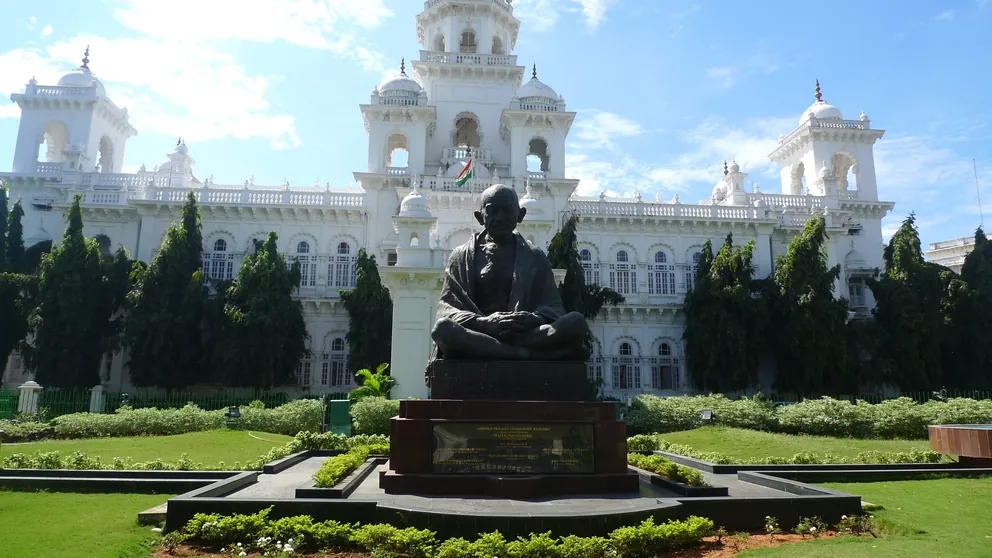
Where regional disparities were debated throughout the united state’s history.
Credit: Sissssou · CC BY-SA 2.0 · source
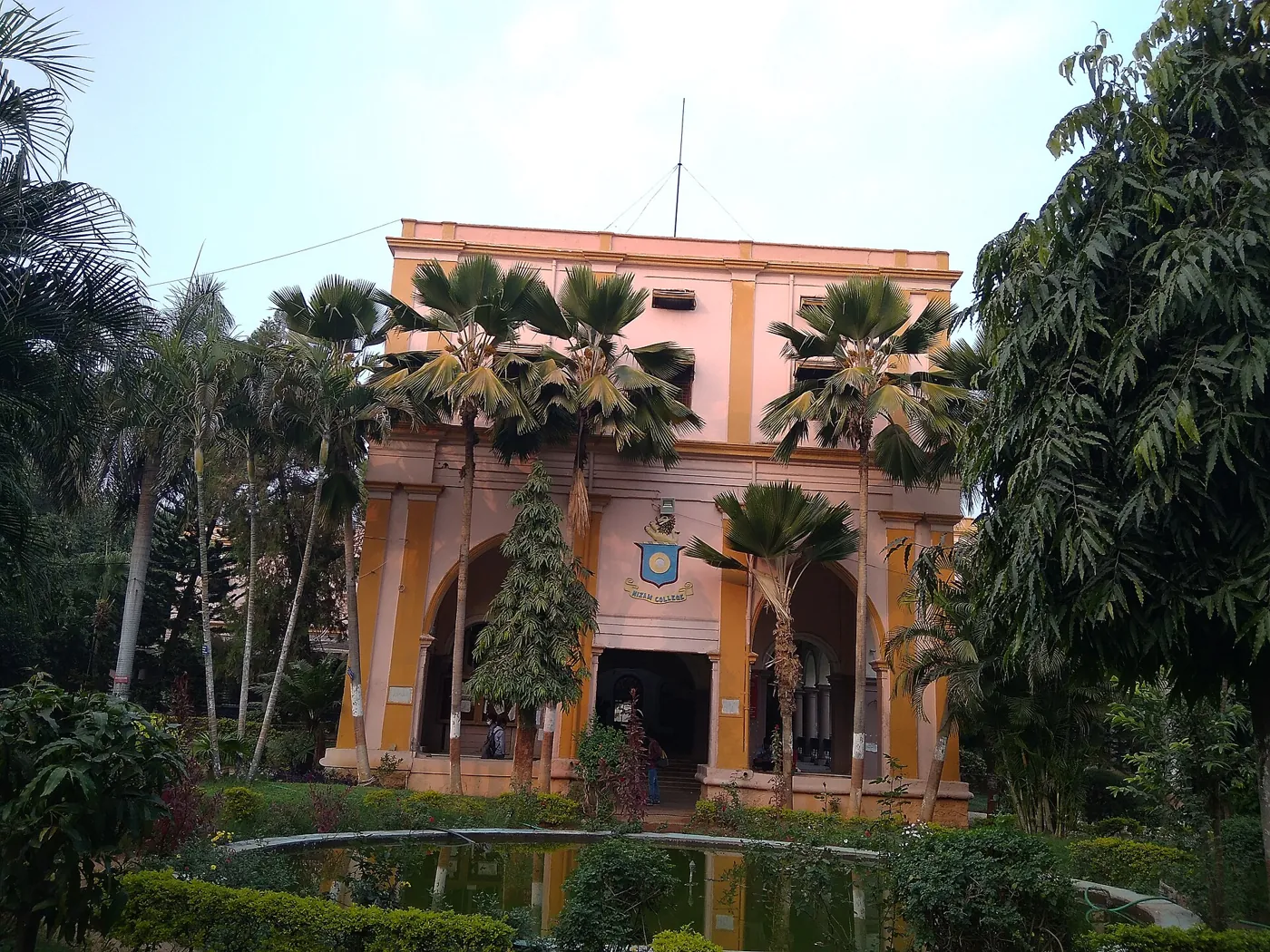
Hyderabad’s historic colleges contrasted with low literacy in rural Telangana at the time of the 1956 merger.
Credit: Adbh266 · CC BY-SA 4.0 · source
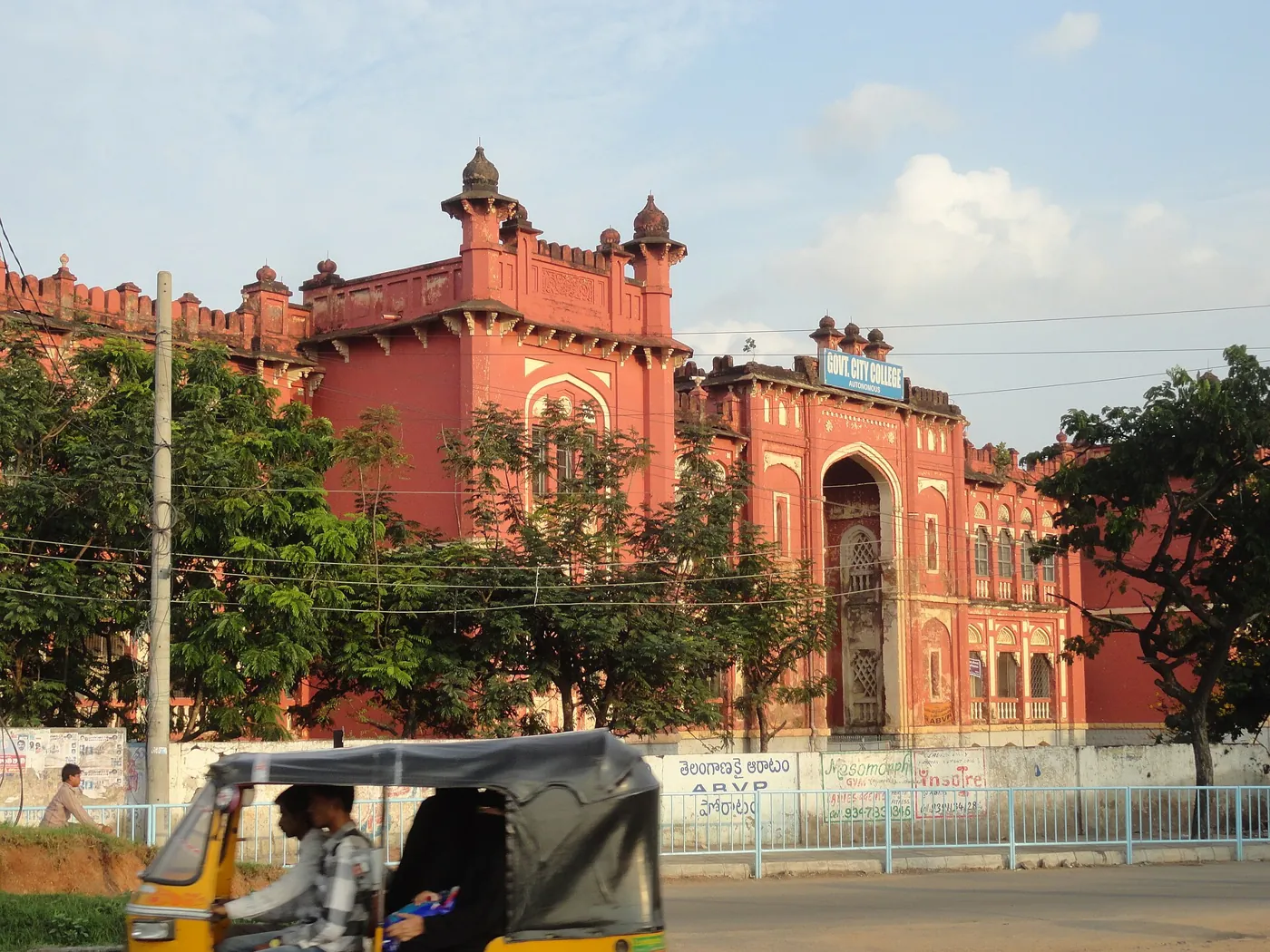
Historic educational architecture alongside wider rural schooling deficits.
Credit: Bhaskaranaidu · CC BY-SA 3.0 · source
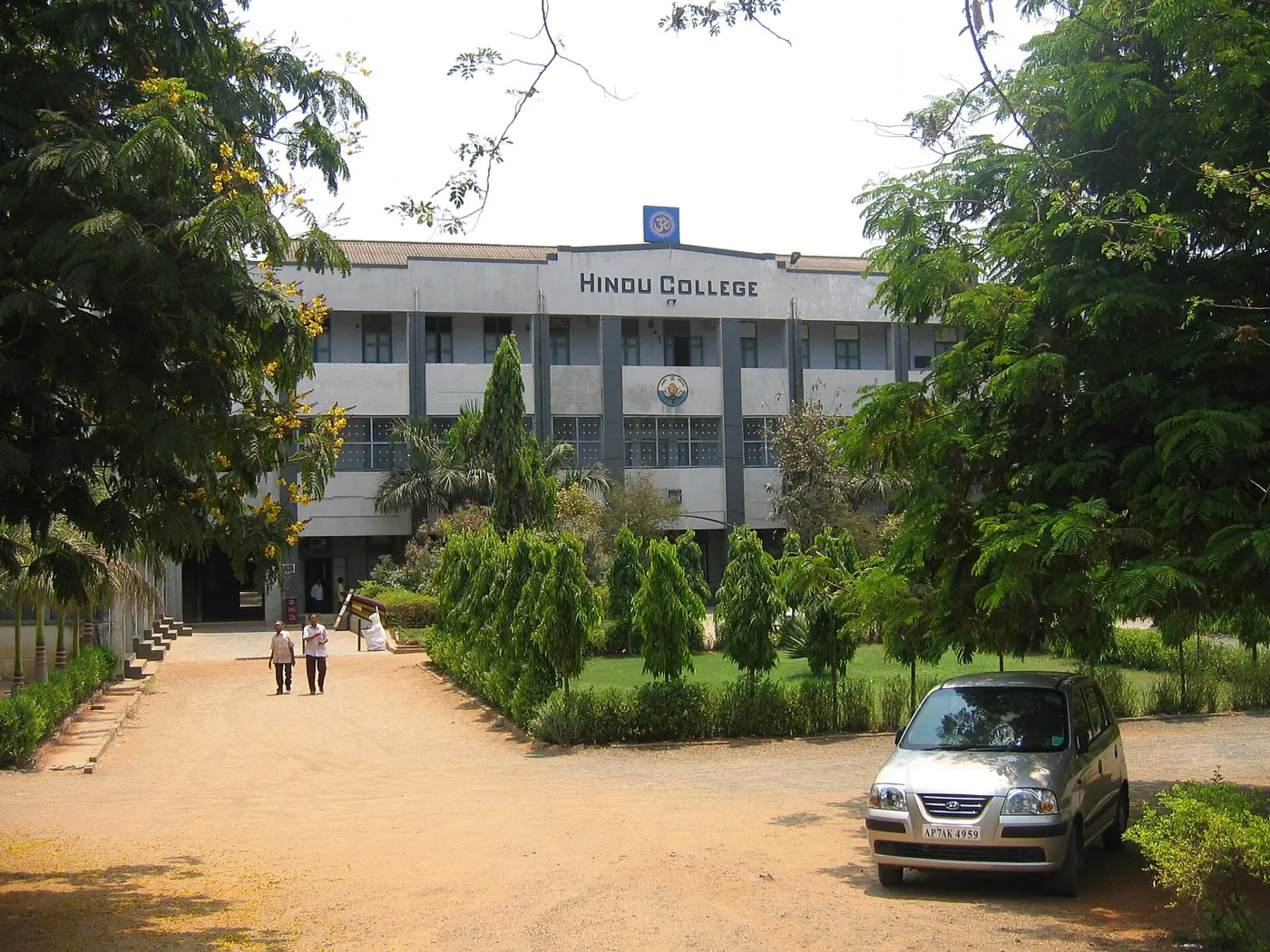
An established coastal college in the broader institutional comparison.
Credit: Gpics at English Wikipedia · CC BY-SA 3.0 · source
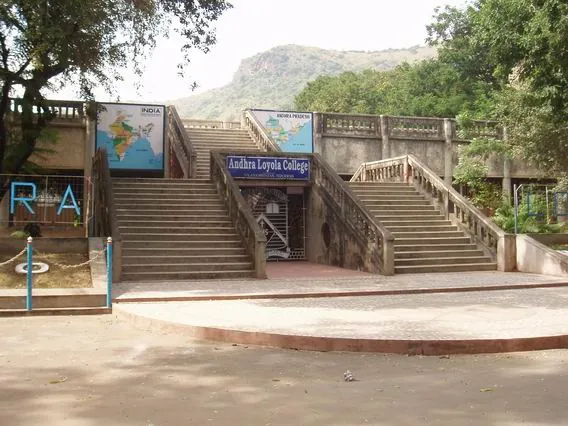
One of the long-established aided colleges of coastal Andhra cited in funding comparisons.
Credit: Balajirakonda · CC BY-SA 3.0 · source
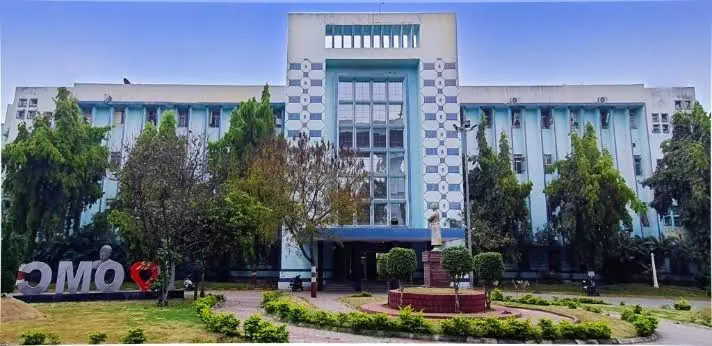
Capital-based medical education.
Credit: Osmania Medical College Hyd · CC0 · source
1. Defining inequality without reducing it to income
Regional inequality was a dispute over capabilities, public investment and the authority to set development priorities. Telangana activists connected education, irrigation and employment with the perceived failure of safeguards. These claims cannot be assessed through income alone: a household may live within a growing economy while lacking affordable schooling or reliable water. Equally, a low indicator does not independently establish intentional discrimination. A sound answer separates the measured gap, the proposed explanation and the political remedy, then identifies the evidence appropriate to each question.
Srikrishna sections 2.15.02–03 describe robust improvement in Telangana even outside Hyderabad, while recognising service deficits and inequalities within the region. Including the capital strengthens several aggregate comparisons, but its concentration of institutions can leave other places poorly served. These findings qualify a blanket decline narrative without eliminating demands for fair access. Rayalaseema’s disadvantage on several measures also requires acknowledgement. Regional justice therefore involves comparison between regions and examination of differences by class, gender, social group and location within each region.
- Specify indicator, geography and reference year.
- Compare Telangana with and without Hyderabad where appropriate.
- Distinguish outcomes from claims about discriminatory intent.
- Recognise internal inequality as well as regional averages.
Timeline
1956
Formation of Andhra Pradesh brings regions with different institutional histories into one administration.
1959
Kakatiya Medical College is established in Warangal.
1969
Telangana agitation foregrounds safeguards, opportunity and regional voice.
1971–73
P. V. Narasimha Rao serves as Chief Minister.
1978–80
Marri Chenna Reddy’s first chief-ministerial term.
1980–82
T. Anjaiah serves as Chief Minister.
2001
Census benchmark later used in the committee’s regional literacy comparison.
2002
Union government closure decision across FCIL units, according to the company profile.
2008–09
Reference year for the committee’s government and aided degree-college comparison.
December 2010
Srikrishna Committee report assesses development, water and social questions.
January 2011
Hanumantha Rao’s EPW critique questions the relationship between analysis and preferred settlement.
2013–14
Later context: Nizamabad medical college admits its first MBBS batch.
2. Literacy: historical disadvantage and educational catch-up
Literacy reflects the accumulated educational opportunities of different generations. A region beginning with weak mass schooling may improve rapidly while its adult population remains behind. Srikrishna Table 3.1 reports rounded 2001 literacy values of 58% for Telangana including Hyderabad and 55% excluding it, compared with 63% for coastal Andhra and 60% for Rayalaseema. The table identifies Census data as its source. These are the committee’s rounded regional values, not newly calculated exact estimates, and they must not be labelled as 2011 Census findings.
The committee also found that the regional gap narrowed and that younger cohorts showed particularly strong Telangana progress. Youth literacy responds to recent school expansion sooner than an aggregate still affected by older people denied schooling. Rural residence, gender and social disadvantage further differentiate outcomes. The Telangana Statistical Year Book 2015 provides later Census-based context, while the AP Statistical Abstract 2011 supplies district and sector evidence. Publication year, observation year and boundaries must be checked separately before using these compilations to extend a historical comparison.
- Literacy is not the same as enrolment or completion.
- Do not average district percentages without population weights.
- A persistent level gap can coexist with faster improvement.
- The 2010 committee could not use the completed 2011 Census results.
Construct an evidence-led mains answer
- 1. Define region, period and indicator.
- 2. Establish the gap with a named source.
- 3. Explain historical, geographical and policy mechanisms.
- 4. Test counter-findings and within-region differences.
- 5. Link remedies to capabilities, voice and accountability.
3. Aided institutions, school finance and staffing
Public support to aided institutions often follows an inherited network of privately managed colleges. Srikrishna Table 3.3, for 2008–09, lists 101 aided degree colleges in coastal Andhra and 53 in Telangana including Hyderabad; the Telangana count excluding the capital is 17. Yet government degree colleges are more numerous in Telangana including Hyderabad than in coastal Andhra in the same table. The comparison therefore demonstrates uneven institutional composition rather than a uniform absence of public provision. Management category and the reference year are essential to interpreting these figures.
The committee explained the aided pattern partly through older coastal institutions and funding-policy changes affecting later entrants. Such path dependence can preserve unequal coverage even under formally common rules. It also identified staffing pressures through higher student–lecturer ratios in Telangana and Rayalaseema. School-level comparisons need separate evidence about actual expenditure, working teachers and school-age populations. Degree-college grants cannot establish primary-school neglect, and sanctioned posts cannot be treated as filled posts. Affordability, remoteness and educational quality connect institutional statistics to students’ real opportunities.
- Separate government ownership from public aid.
- Use actual spending rather than budget announcements alone.
- Compare enrolment with working teaching staff.
- Exclude precise grant-share claims without the original departmental table.
| Domain | Evidence required | Misleading shortcut |
|---|---|---|
| Literacy | Same Census round, definition and geography | A simple average of district rates |
| College finance | Management category, students, staffing and actual grants | Treating aided colleges as government-owned |
| Medical access | Dated institutions, seats, cost and distance | Moving later colleges into an earlier period |
| Representation | Tenure rules, portfolio control and policy records | Equating birthplace with every policy outcome |
| Culture | Dated orders, comparable spending and amenities | Inferring neglect from visibility alone |
| Water | Dependability, allocation and actual distribution | Using catchment as the sole entitlement rule |
| Migration | Duration, motive, period and district boundaries | Adding incompatible totals |
| Industry | Ownership, decision date and unit status | Calling every restructuring a state-ordered closure |
4. Universities, medical colleges and metropolitan concentration
Hyderabad’s higher-education and health institutions were substantial assets, but a capital-city location did not guarantee equal access across Telangana. Students elsewhere faced differences in school preparation, transport, accommodation and household resources. Srikrishna Chapters 2 and 3 recognise the concentration of services and opportunities in the metropolis. A meaningful comparison examines seats, fees, specialist facilities and beneficiaries rather than counting institutions alone. Warangal also possessed important educational facilities, making a simple contrast between one developed city and an entirely institution-free hinterland historically misleading.
Accurate chronology prevents exaggerated claims about medical education. The state Directorate of Medical Education dates Kakatiya Medical College to 1959, after the united state was formed. Nizamabad’s government medical college records its first MBBS batch in 2013–14, outside a pre-2009 comparison. Establishment, recognition, takeover and expansion are different events. Similarly, an institution’s physical location does not settle its admission or employment rules. Claims about local safeguards and employees’ regional origins require the relevant legal provisions and institution-specific records, not inference from a campus address.
- Kakatiya Medical College is a post-merger foundation.
- Keep Nizamabad’s later first intake outside the core period.
- Assess public access alongside institutional presence.
- Do not assume all universities had identical recruitment rules.
5. Leadership, safeguards and substantive representation
Political inequality concerned influence over decisions rather than the complete absence of Telangana politicians from office. P. V. Narasimha Rao, Marri Chenna Reddy and T. Anjaiah served as chief ministers, but office-holding alone does not establish effective control over every budget or administrative choice. Cabinet portfolios, party organisation and implementation structures mattered. Conversely, a leader’s origin outside Telangana does not prove discriminatory intent in every policy. Descriptive representation and substantive influence must be evaluated separately and then related through evidence about particular decisions and their beneficiaries.
Aggregate tenure comparisons are especially sensitive to classification and cutoff dates. Jalagam Vengala Rao’s birthplace and political base can produce different regional classifications, so the rule must be explicit. Srikrishna Chapter 1 supplies context for leadership and safeguard disputes. Statehood supporters argued that repeated implementation conflicts revealed an accountability problem requiring a government answerable to regional priorities. This was a political interpretation of institutional experience, not an arithmetic consequence of a single tenure total. Unsourced remarks attributed to individual leaders should not substitute for documented administrative history.
- Define the regional-classification rule before calculating tenure.
- Separate political identity from measured policy consequences.
- Study safeguards through implementation records.
- Do not repeat the unverified Neelam Sanjiva Reddy remark.
6. Cultural dignity, festivals and pilgrimage amenities
The cultural dimension concerned equal standing in public life. Telangana participants challenged the ridicule of regional speech and sought recognition for local festivals, songs and histories. Srikrishna Chapter 7 addresses the sociological setting of these grievances. EPW’s On the Telangana Trail records accounts connecting resources and livelihoods with dignity and self-rule. Such testimony illuminates political meaning and lived experience, but does not establish an exact spending deficit at every cultural site. Recognition should therefore be analysed as a distinct dimension of justice without exempting administrative claims from verification.
Pushkaram expenditure requires a clearly identified river, festival year and spending category. Permanent roads, sanitation works and temporary arrangements are not interchangeable, nor are sanctioned and actual expenditure. Basar, Dharmapuri, Kaleshwaram and Bhadrachalam illustrate the Godavari pilgrimage geography, while Alampur belongs to a different sacred-river context. Bathukamma, Bonalu and the Sammakka–Saralamma Jatara have their own cultural and administrative histories. Claims about the first year of official recognition need the relevant order. A map locates these issues; it cannot itself demonstrate neglect or establish a funding comparison.
- Distinguish cultural recognition from aggregate income.
- Keep river festivals and other celebrations conceptually separate.
- Compare expenditure for specified events and years.
- Exclude an unverified first-recognition date.
7. Water allocation and dependable irrigation
Activists compared Telangana’s river catchments with the irrigation benefits reaching its cultivators. Their grievance concerned project priorities, delays and reliance on costly groundwater. Srikrishna Chapter 4 recognises the dispute while explaining that catchment contribution is not the sole allocation criterion. Established use, population, land and dependable water also matter. Interstate awards, distribution within the former state and operational releases are distinct questions. Treating them as one regional percentage obscures both the legal framework and the practical problem of ensuring reliable water at the farm level.
Topography affects costs without determining every policy choice. Plateau irrigation may require lifting water and paying for energy, whereas some older downstream systems benefit from gravity supply. Canal completion, maintenance and release management determine whether created potential becomes actual irrigation. Nagarjuna Sagar and Srisailam belong to the Krishna system; Sriram Sagar at Pochampad is on the Godavari. Reservoir location alone does not identify beneficiaries. Strong analysis follows distribution to small cultivators and tail-end farms, while distinguishing sanctioned capacity, utilisation and dependable seasonal supply.
- Catchment and command area are different concepts.
- Potential is not equivalent to actual utilisation.
- Account for pumping and maintenance costs.
- Do not infer legal entitlements from unsupported basin percentages.
8. Drought, insecure livelihoods and labour migration
Palamuru, associated with historical Mahbubnagar, became a prominent symbol of migration for work. Agricultural uncertainty could weaken local employment and interact with debt, contractor networks and urban labour demand. This makes mobility relevant to the development debate without establishing one explanation for every migrant. EPW’s field-based account helps explain how livelihood insecurity informed support for political change. Qualitative testimony should be combined with appropriately defined survey or Census evidence, rather than converted into an unsupported district headcount or a presumed universal route to particular destinations.
Migration may supply remittances and opportunity while exposing families to insecure work, interrupted schooling and separation. Seasonal circulation differs from permanent relocation, and broad migration categories include marriage and education. Historical district boundaries create additional problems when compared with later administrative units. Policy should address both origin and destination through local livelihoods, reliable water where feasible, portable welfare and protection from exploitative recruitment. A balanced answer neither treats all movement as prosperity nor assumes that every migrant household experienced identical distress or permanent displacement.
- Specify historical district geography.
- State duration, motive and reference period.
- Do not combine incompatible migration totals.
- Pair local investment with migrant-worker protection.
9. Industrial restructuring and the interpretation of development
Older industrial job losses created concentrated hardship even where regional output increased. Workers could lose wages and employment security while surrounding businesses lost demand. Ramagundam demonstrates why responsibility must be identified: FCIL’s company profile records the Union government’s 2002 decision to close operations across its units and subsequent revival initiatives. Azam Jahi workers’ disputes provide a different enterprise context. Sickness, production stoppage, privatisation and legal closure are not synonyms. Each case requires its own ownership history, decision date and employment evidence before it supports a wider regional explanation.
Chronology also limits the use of later examples. The reported Sirpur Paper Mills shutdown in 2014 and reopening in 2018 belong to a post-statehood comparison, not a pre-2009 closure tally. More broadly, the committee’s growth findings can coexist with serious worker distress, just as literacy catch-up can coexist with unequal access. C. H. Hanumantha Rao’s 2011 EPW critique challenged the relationship between the report’s analysis and preferred political settlement. Attribute that interpretation rather than presenting it as an uncontested official finding or the only possible reading of the evidence.
- Identify enterprise ownership and the deciding authority.
- Separate national restructuring from state-specific decisions.
- Test finance, technology, management and policy explanations.
- Conclude with inclusive capabilities and accountable institutions.
Real-world case studies
The capital-city paradox
Hyderabad strengthens regional service and income aggregates, yet concentrated institutions can impose access costs on rural residents. The committee recognised both the metropolitan contribution and underserved places outside it. Reporting inclusive and exclusive aggregates helps, but the final question concerns actual beneficiaries rather than the statistical treatment of the capital alone.
Aided colleges and institutional path dependence
The 2008–09 comparison shows why management categories matter. An older aided network can attract continuing support while another region relies more heavily on government colleges. Uniform rules may preserve uneven coverage unless staffing, remoteness and household costs are considered. Institutional counts are the beginning of an access analysis, not its conclusion.
Ramagundam and the allocation of responsibility
FCIL’s record places its 2002 closure decision at Union level. Local hardship remains significant, but attribution to the correct authority prevents a general allegation from replacing enterprise history. Industrial expansion elsewhere does not automatically compensate displaced workers, and a later revival policy does not erase the earlier employment shock.
Previous year questions
No source-linked PYQ is available here yet. Use the practice questions below.
Practice questions
Practice MCQ 1 · Easy
Which source underlies Srikrishna Table 3.1 on literacy?
- Census data
- A water tribunal award
- A party manifesto
- A factory balance sheet
Practice MCQ 2 · Moderate
Which statement best reflects the committee’s economic counter-finding?
- There was no Telangana improvement outside Hyderabad
- Growth outside Hyderabad coexisted with inequality
- Every district had identical services
- Only capital-city income mattered
Practice MCQ 3 · Easy
Which pair is correctly matched?
- Kakatiya Medical College — 1959
- Nizamabad first MBBS batch — 1969
- Srikrishna report — 2001
- Table 3.3 reference year — 2014–15
Practice MCQ 4 · Moderate
Which distinction is necessary when assessing college access?
- All aided colleges are government-owned
- Campus location proves staff origin
- Government and aided colleges are separate categories
- Institution counts alone establish equal quality
Practice MCQ 5 · Moderate
Which proposition about irrigation is defensible?
- Catchment is the only legal allocation rule
- A dam guarantees all potential irrigation
- Tribunal awards equal actual farm supply
- Allocation and dependable delivery involve several considerations
Practice MCQ 6 · Easy
Why must Sirpur’s cited 2014 shutdown be excluded from a pre-2009 tally?
- Paper manufacturing is not industry
- It falls outside the specified period
- The mill was outside India
- All later evidence is invalid
Mains practice · Regional growth did not resolve Telangana’s demand for regional justice. Critically examine.
- Distinguish income, capability, recognition and accountability.
- Include the committee’s growth counter-findings.
- Explain capital concentration and internal inequality.
- Connect educational and livelihood gaps with political trust.
- Avoid deriving a constitutional remedy from one indicator alone.
Mains practice · Assess educational inequality in united Andhra Pradesh through literacy and institutional finance.
- Establish inherited educational differences.
- Explain catch-up and cohort effects.
- Separate government and aided colleges using the dated comparison.
- Assess staffing, affordability and rural reach.
- Correct medical-college chronology and avoid unverified grant totals.
Mains practice · Explain how irrigation insecurity, migration and industrial restructuring shaped the regional debate.
- Distinguish water allocation from delivery.
- Explain groundwater costs and dry-land risk.
- Separate distress circulation from other migration.
- Identify ownership and authority in industrial decisions.
- Suggest accountable investment and worker protection.
Further reading
- https://www.oneindia.com/common/documents/srikrishna-committee-report-telangana-andhra.pdf
- https://telangana.gov.in/wp-content/uploads/2023/05/Statistical-Year-Book-2015.pdf
- http://des.ap.gov.in/jsp/social/Statistical%20Abstract,%20Andhra%20Pradesh%20-%202011.pdf
- https://www.epw.in/journal/2011/05/insight/srikrishna-committee-telangana-recommendations-variance-analysis.html
- https://www.epw.in/journal/2010/13/special-articles/telangana-trail.html
Preparing for TGPSC Group 1 or Group 2? See the TGPSC Groups coaching course at Pragnya IAS Academy for fees, batches and registration.
Long study hours taking a toll? Try the free breathing exercise and self check-in in Pragnya’s student wellness programme for UPSC aspirants.