
Kaziranga National Park
Brahmaputra Valley, Assam
Kaziranga National Park: Construction in wildlife corridors flagged
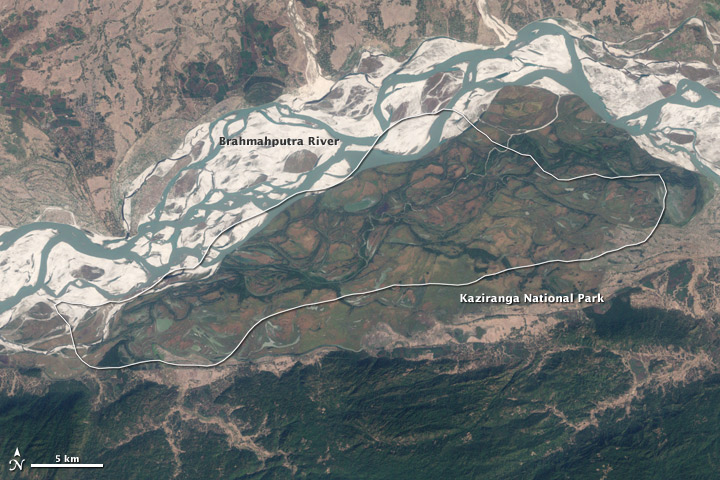
Kaziranga National Park is a floodplain protected area in Assam's Brahmaputra Valley. A UNESCO World Heritage Site, it is renowned for the greater one-horned rhinoceros and its grassland–wetland ecosystem.
Position matched with OpenStreetMap; the dashed outline shows its mapped extent. Other numbered pins are the day's other places — tap one to open it.
Why in the news
An Eastern Assam-based environment activist has flagged construction activities in Kaziranga's wildlife corridors. The concerns were raised in a letter to the Supreme Court-constituted Central Empowered Committee.
State
Assam
Major river
Brahmaputra
National park status
1974
UNESCO World Heritage inscription
1985
Flagship species
Greater one-horned rhinoceros (Rhinoceros unicornis)
Location
- Located in Assam in north-eastern India, east of Guwahati.
- Occupies the floodplain along the southern bank of the Brahmaputra.
- Lies north of the Karbi Anglong hills, which provide higher ground for wildlife during floods.
- Bokakhat is a nearby town associated with access to the park.
Neighbouring geographical features
- Brahmaputra River to the north
- Karbi Anglong hills to the south
Key features
- Alluvial floodplain
- River deposition and erosion continually reshape the park's low-lying terrain.
- Seasonal inundation
- Monsoon floods influence habitat renewal and drive wildlife towards higher ground.
- Tall grasslands
- Extensive tall alluvial grasslands form a major component of the landscape.
- Wetland mosaic
- Beels, river channels and marshes occur alongside grasslands and woodland.
- Hill–floodplain connectivity
- Wildlife corridors link the floodplain habitats with higher terrain towards Karbi Anglong.
Flora, fauna & ecology
- Flagship fauna
- The park supports greater one-horned rhinoceroses, Asian elephants, wild water buffaloes, swamp deer and tigers.
- Vegetation
- Tall grasses, aquatic vegetation and tropical broadleaf forests create varied habitats.
- Monsoonal ecosystem
- Heavy seasonal rainfall and Brahmaputra flooding strongly influence ecological processes.
History & significance
- Kaziranga's formal conservation history began with its designation as a proposed reserve forest in 1905.
- It became a national park in 1974 and a UNESCO World Heritage Site in 1985.
UPSC angle
- GS I: Locate Kaziranga within the Brahmaputra Valley and relate its floodplain terrain to the Karbi Anglong hills.
- GS III: Examine wildlife corridors, habitat fragmentation and infrastructure pressures around protected areas.
- GS III: Understand the ecological role of floods and the importance of high-ground refuges for wildlife.
- Prelims: Match protected areas with rivers, states, flagship species and UNESCO status.
Also locate on your map
- Brahmaputra River
- Karbi Anglong hills
- Bokakhat
- Majuli
- Orang National Park
- Pobitora Wildlife Sanctuary
- Manas National Park
Test yourself
Q1. Which of the following best describes the geographical setting of Kaziranga National Park?
Q2. Consider the following statements about Kaziranga National Park: 1. Seasonal flooding is an important ecological process in the park. 2. Connectivity towards the Karbi Anglong hills helps wildlife reach higher ground during floods. 3. Alpine meadows are its dominant habitat. Which of the statements given above are correct?
Sources
Background maps and imagery © Esri and partners (English labels); place positions checked with OpenStreetMap (ODbL). Boundaries are for study reference only. Prepared by Pragnya IAS Academy for exam revision.