
Taj Mahal
Agra, Uttar Pradesh
Taj Mahal: Marble slab attributed to the monument to be auctioned in UK
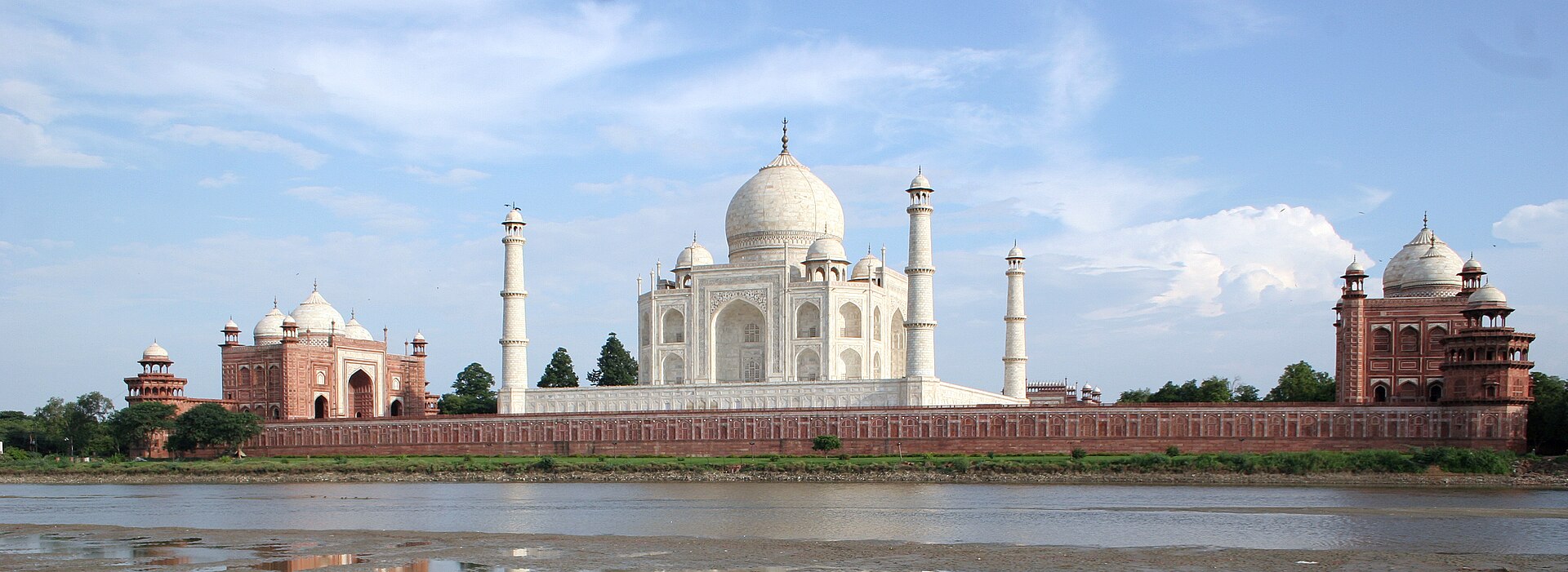
The Taj Mahal is a Mughal marble mausoleum and UNESCO World Heritage Site in Agra, Uttar Pradesh. Built by Shah Jahan in memory of Mumtaz Mahal, it stands beside the Yamuna.
Position matched with OpenStreetMap. Other numbered pins are the day's other places — tap one to open it.
Why in the news
The Hindu reports that a 200-year-old rectangular marble slab described as being from the Taj Mahal is to be auctioned in the United Kingdom. Its estimated auction value is £20,000–30,000, approximately ₹24–36 lakh.
City
Agra
State
Uttar Pradesh
River
Yamuna
UNESCO inscription
1983
Commissioned by
Shah Jahan
Site type
Mughal mausoleum; UNESCO cultural World Heritage Site
Location
- Located in Agra in western Uttar Pradesh, south-east of Delhi.
- Stands on the southern, right bank of the Yamuna River.
- Lies on the Indo-Gangetic alluvial plain within the Ganga drainage basin.
- Situated east of Agra Fort, with Mehtab Bagh across the Yamuna.
Key features
- River setting
- The Yamuna flows beside the complex before continuing towards its confluence with the Ganga at Prayagraj.
- Alluvial terrain
- Agra occupies the low-relief alluvial plains of northern India.
- Building stone
- The mausoleum's white marble was sourced from Makrana in Rajasthan.
- Garden layout
- The complex has a formal charbagh garden, with the main mausoleum at its river-facing end.
Flora, fauna & ecology
- Climate
- Agra experiences hot summers, cool winters and rainfall concentrated in the southwest monsoon season.
- Environmental pressures
- Air pollution and the condition of the adjoining Yamuna are important concerns for the monument and its setting.
History & significance
- Construction began in 1632 under Shah Jahan to commemorate Mumtaz Mahal.
- The mausoleum contains the tombs of both Mumtaz Mahal and Shah Jahan.
UPSC angle
- GS I: Locate Agra on the Yamuna and distinguish the Yamuna's course from that of the Ganga.
- GS I: Connect Mughal architecture, charbagh planning and the use of Makrana marble.
- GS III: Examine air pollution, river degradation and heritage conservation through the Taj Trapezium Zone.
- Prelims: Match Indian UNESCO World Heritage Sites with their cities, states and nearby rivers.
Also locate on your map
- Agra Fort
- Mehtab Bagh
- Fatehpur Sikri
- Yamuna River
- Makrana
- Prayagraj
Test yourself
Q1. The Taj Mahal stands on the bank of which river?
Q2. Consider the following statements about the Taj Mahal's geographical setting: 1. It lies on the Indo-Gangetic alluvial plain. 2. Makrana, associated with its white marble, is located in Rajasthan. Which of the statements given above is/are correct?
Sources
Background maps and imagery © Esri and partners (English labels); place positions checked with OpenStreetMap (ODbL). Boundaries are for study reference only. Prepared by Pragnya IAS Academy for exam revision.