
Cyclone Arnab: Flood Risks, Forecasting and Resilient Recovery
Revise the static topic: UPSC Geography notes · UPSC Disaster Management notes
In short: Cyclone Arnab crossed the Andhra Pradesh coast near Narsapur, causing flooding and infrastructure damage before weakening into a depression. Andhra Pradesh reported preliminary losses of ₹4,600 crore, while a fresh Andaman Sea low-pressure system raised the risk of further rain during recovery. The disaster highlights the need to connect cyclone forecasts with inclusive evacuation, resilient infrastructure, inter-state assistance and transparent recovery financing.
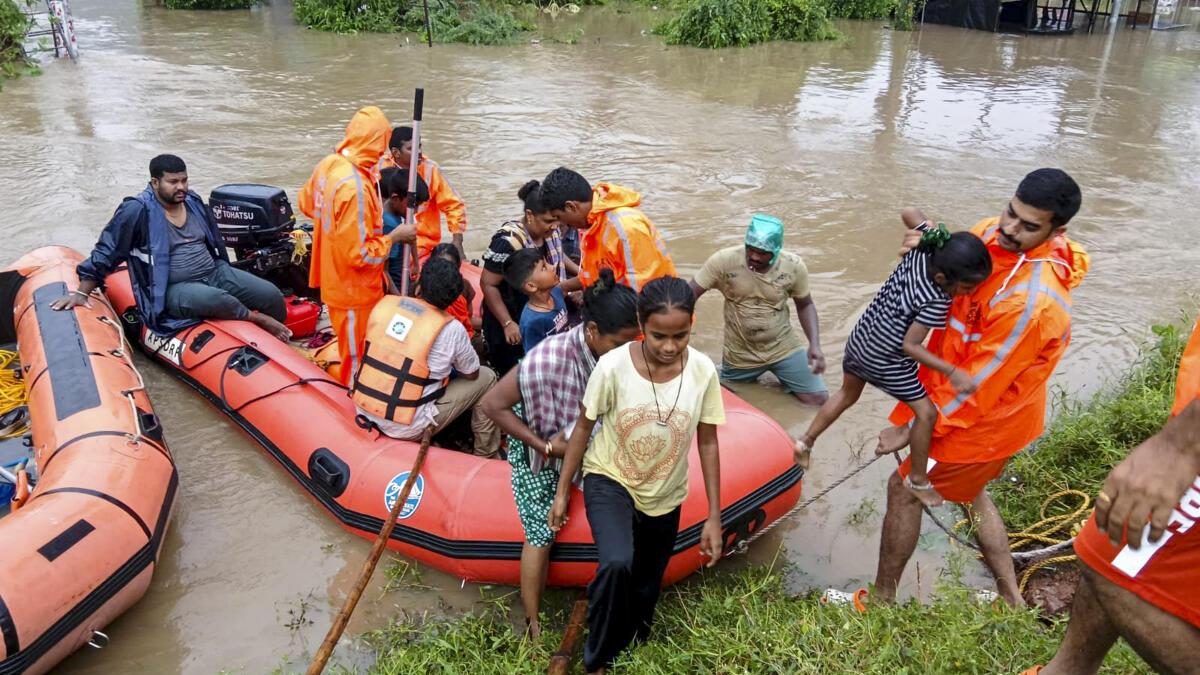
Photo from the source report: Cyclone Arnab: Flood Risks, Forecasting and Resilient Recovery
Image: The Hindu
Why in news
Andhra Pradesh announced its preliminary damage assessment, with a Central assessment team scheduled to visit on October 30, 2026. Meanwhile, IMD forecast possible strengthening of a separate low-pressure system and further heavy rain along coastal Andhra Pradesh.
₹4,600 crore
Preliminary Andhra Pradesh loss estimate
Approximately ₹500 crore
Preliminary electricity infrastructure losses
About 300
Villages cut off in Ganjam
3,100
Pregnant women shifted to hospitals
At least 8,000
Electric poles uprooted in Konaseema
1,000
Power-restoration personnel requested from Telangana
Background
Tropical cyclones are organised low-pressure systems sustained by heat and moisture from warm oceans. The Bay of Bengal exposes India’s eastern coast to destructive winds, heavy rainfall and storm surges, while river basins carry flood risks inland and across State boundaries. IMD provides cyclone forecasts and warnings; disaster preparedness and response involve Union, State, district and local institutions under the Disaster Management Act. Effective risk reduction therefore requires meteorological services, land-use planning, public health, infrastructure management and fiscal preparedness to function together.
What happened: a cyclone became a wider flood emergency
Arnab crossed the Andhra Pradesh coast near Narsapur in West Godavari district. By October 29, it had weakened into a depression over the Chhattisgarh–Odisha region, but rainfall extended to West Bengal, Jharkhand and Madhya Pradesh.
About 300 villages were cut off in Odisha’s Ganjam district. The Bahuda flooded Ichchapuram in north Andhra Pradesh, a submerged railway bridge disrupted trains, and a landslide at Taptapani Ghat obstructed road movement. These impacts show why wind-based cyclone categories alone cannot describe the full disaster footprint.
- A weakening cyclone can continue to produce damaging rainfall and inland flooding.
- Flooded transport links delay rescue, damage assessment and the movement of repair teams.
- Blocked drains and saturated catchments can prolong inundation after coastal winds subside.
Infographic
Anticipate
Track wind, rainfall, inland flooding and subsequent systems.
Protect
Evacuate vulnerable residents and maintain medical care.
Coordinate
Share personnel, equipment and river-basin information.
Restore
Prioritise electricity, water, health and connectivity.
Rebuild
Finance verified needs and reduce future vulnerability.
AI-assisted infographic by Pragnya IAS Academy, based on the cited sources.
Intensification and forecasting: communicate uncertainty without delaying action
Warm ocean waters, sufficient ocean heat content, moist air and low vertical wind shear generally favour cyclone development. Land interaction and unfavourable atmospheric conditions can weaken a system. The supplied reports do not establish whether Arnab underwent rapid intensification or quantify any climate-change contribution to this event.
IMD reported a separate low-pressure area over the south Andaman Sea on October 29. It was expected to concentrate into a depression around October 31 and move towards Andhra Pradesh, with coastal heavy rain possible on November 1 and 2. The possibility of another cyclone remained uncertain; a forecast of development is not confirmation of cyclogenesis.
- Use impact-based forecasts linking weather warnings to likely inundation, transport disruption and power failure.
- Update evacuation and restoration decisions as track, intensity and rainfall forecasts evolve.
- Maintain flood warnings after cyclone weakening and distinguish the remnant system from the fresh low-pressure area.
Evacuation and inter-state coordination: protect people and sustain services
Andhra Pradesh shifted 3,100 pregnant women to medical facilities before the cyclone; the health department subsequently recorded 367 deliveries among them. This illustrates anticipatory, vulnerability-sensitive evacuation rather than reliance on general shelter relocation alone.
Odisha deployed more than 300 disaster-response teams for flood rescue. Andhra Pradesh requested 1,000 personnel from Telangana for electricity restoration and indicated that further help could be sought from Tamil Nadu and Karnataka. These were requests and proposed arrangements, not evidence that every deployment had occurred.
- Evacuation plans should include pregnant women, older persons, persons with disabilities and people requiring continuous treatment.
- Neighbouring States should pre-arrange personnel sharing, equipment compatibility, safe deployment and reimbursement procedures.
- River-basin coordination should integrate rainfall alerts, water-level information and downstream warnings.
Infrastructure resilience: restore quickly, but avoid recreating vulnerability
The State’s preliminary electricity infrastructure losses were approximately ₹500 crore, while the Chief Minister reported at least 8,000 uprooted electric poles in Konaseema alone. Electricity disruption can cascade into failures of water supply, communications, healthcare and economic activity.
The State indicated that it would examine underground cabling in cyclone-prone areas. Such investment requires location-specific assessment: reduced wind exposure must be weighed against inundation risks, drainage conditions, repair access and lifecycle costs. Strengthened overhead networks, protected substations and backup supply remain important alternatives or complements.
- Prioritise hospitals, drinking-water systems, shelters and communications during power restoration.
- Rebuild roads, bridges and drainage systems using flood and slope-risk assessments.
- Protect wetlands and suitable coastal vegetation as complements to engineered defences.
- Treat restoration of basic service and completion of resilient reconstruction as separate milestones.
Recovery finance: separate preliminary losses, relief and reconstruction
Andhra Pradesh’s ₹4,600 crore estimate was preliminary, and a Central team was scheduled to assess damage on October 30. The announced ₹1,500 compensation for each fallen coconut or oil palm tree was distinct from the wider crop-damage enumeration and input-subsidy exercise.
A reported loss estimate does not automatically become an equivalent Central grant. State Disaster Response Fund resources and eligible supplementary National Disaster Response Fund assistance operate within prescribed norms and assessment procedures. Longer-term reconstruction requires a separately costed plan drawing on appropriate budgets and financing channels.
Assessment should distinguish physical damage to assets, economic losses from interrupted activity and the cost of recovery. Transparent beneficiary verification, livelihood assessment and public reporting are necessary to prevent both exclusion and duplication.
- Release urgent relief without waiting for complete reconstruction estimates.
- Assess informal livelihoods, tenant cultivation and prolonged income losses, not only visible asset damage.
- Link reconstruction expenditure to safer designs, maintenance commitments and independent audit.
| Stage | Priority | Essential safeguard |
|---|---|---|
| Preparedness | Translate forecasts into evacuation and resource positioning | Communicate uncertainty and reach vulnerable households |
| Response | Rescue isolated communities and maintain essential services | Continue flood surveillance after cyclone weakening |
| Damage assessment | Verify infrastructure, housing, crop and livelihood impacts | Keep preliminary estimates distinct from final assessments |
| Relief financing | Provide admissible emergency support and household assistance | Apply fund norms and transparent beneficiary verification |
| Reconstruction | Rebuild infrastructure and restore sustainable livelihoods | Use risk-informed designs rather than replacing vulnerability |
- 1. Monitor cyclone development, rainfall and catchment conditions.
- 2. Translate forecasts into local impact warnings and evacuation triggers.
- 3. Move vulnerable people and position rescue teams and essential supplies.
- 4. Maintain rescue, flood surveillance and critical services through the remnant phase.
- 5. Verify damage and livelihood losses while releasing urgent relief.
- 6. Finance risk-informed reconstruction and monitor recovery outcomes.
October 27–29, 2026
Andhra Pradesh’s disaster response and fire services department activated preparedness and emergency-response measures across affected districts.
October 28, 2026
Arnab crossed the Andhra Pradesh coast near Narsapur, according to the following day’s report.
October 29, 2026
Arnab weakened into a depression; Andhra Pradesh reported preliminary losses of ₹4,600 crore, and a separate low-pressure area formed over the south Andaman Sea.
October 30, 2026
A Central team was scheduled to visit cyclone-affected districts in Andhra Pradesh for damage assessment.
Around October 31, 2026
IMD forecast that the fresh low-pressure system could concentrate into a depression.
November 1–2, 2026
Further heavy rainfall was forecast for coastal Andhra Pradesh as the new system moved towards the coast.
Significance, challenges & way forward
Significance
- Arnab demonstrates that cyclone management must address inland flooding and landslides alongside coastal wind hazards.
- Pre-emptive hospital relocation shows how evacuation can incorporate continuity of maternal and emergency healthcare.
- Requests for neighbouring States’ power personnel highlight the operational value of cooperative federalism.
- The fresh weather system makes recovery planning inseparable from preparedness for renewed disruption.
- Reconstruction offers an opportunity to reduce future service failures rather than merely replace damaged assets.
Challenges
- Marooned villages and disrupted transport restrict access for rescuers, survey teams and relief supplies.
- Further rain could delay repairs and expose already damaged infrastructure to additional stress.
- Preliminary loss estimates may change as inaccessible areas are surveyed.
- Power-network failures create cascading risks for health, water supply and communications.
- Asset-based compensation can overlook informal workers and households suffering prolonged income interruption.
- Rapid restoration targets can conflict with safe working conditions and resilient rebuilding.
Way forward
- Integrate IMD warnings with river-level monitoring, local inundation maps and actionable district advisories.
- Institutionalise assisted evacuation and medical referral plans for vulnerable residents.
- Create standing inter-state mutual-aid arrangements for power utilities, rescue services and specialised equipment.
- Undertake risk-based audits of substations, poles, bridges, drainage channels and critical public facilities.
- Publish verified damage assessments, eligibility rules, assistance disbursements and grievance-redress outcomes.
- Prepare a costed recovery plan that separates immediate relief, service restoration and resilient reconstruction.
- Keep response teams and shelters operational where renewed rainfall is forecast.
Key terms
- Vertical wind shear
- Change in wind speed or direction with height; strong shear can disrupt a tropical cyclone’s organised circulation.
- Ocean heat content
- Heat stored through the ocean’s upper layers that can help sustain a cyclone, beyond surface warmth alone.
- Impact-based forecasting
- Forecasting that explains likely consequences for people, infrastructure and livelihoods rather than weather conditions alone.
- Storm surge
- An abnormal rise in sea level generated by a storm, distinct from rainfall-driven river or surface flooding.
- Cascading disaster risk
- Risk arising when one disruption, such as power failure, triggers failures across dependent services.
- State Disaster Response Fund
- A State-level fund for admissible disaster-response expenditure; it is distinct from a State Disaster Response Force.
- Build Back Better
- Using recovery and reconstruction to reduce future disaster risk and improve resilience.
Link with static syllabus
Prelims practice MCQs
Q1. With reference to tropical cyclones, consider the following statements: 1. Low vertical wind shear generally favours their development. 2. Weakening into a depression necessarily ends their flood risk. 3. Ocean heat content can influence their intensification. Which of the statements given above are correct?
Q2. Which of the following best describes impact-based forecasting?
Q3. Consider the following statements about post-disaster recovery: 1. A State’s preliminary damage estimate automatically determines an equivalent Central grant. 2. Immediate relief and long-term resilient reconstruction have different objectives and financing requirements. Which of the statements given above is/are correct?
Q4. Consider the following pairs: 1. Storm surge — Abnormal storm-generated rise in sea level. 2. Cascading risk — Failure of one service causing disruption in dependent services. 3. Build Back Better — Restoring damaged assets without considering future hazards. Which of the pairs given above are correctly matched?
Mains practice questions
GS 3 · 15 marks · 250 words
Cyclone preparedness must extend beyond evacuation to resilient infrastructure and inclusive recovery. Examine in the context of Cyclone Arnab.
Frequently asked questions
Why did flooding continue after Cyclone Arnab weakened?
Weakening reduces cyclone intensity but does not immediately remove its moisture or rainfall potential. Continued rain, saturated catchments and restricted drainage can sustain flooding.
Was another cyclone confirmed after Arnab?
No. The reports described a separate low-pressure area that could strengthen; the possibility of another cyclone remained uncertain.
Does the ₹4,600 crore estimate represent approved Central assistance?
No. It was Andhra Pradesh’s preliminary loss estimate; assessment, eligibility norms and approval procedures govern assistance.
Are underground power cables always the best cyclone-resilience solution?
No. They reduce exposure to wind but require assessment of flood vulnerability, maintenance access and lifecycle costs alongside other network-strengthening options.
Sources
- The Hindu: Cyclone Arnab LIVE: New Bay system likely to head for Andhra coast; 300 villages marooned in Ganjam
- The Hindu: Coastal Andhra Pradesh may receive heavy rain from November 1 as low-pressure area brewing over Bay of Bengal
- The Hindu: Cyclone Arnab: Andhra Pradesh puts estimated loss at ₹4,600 crore
- The Hindu: Andhra Pradesh Minister tells official to expedite restoration works in cyclone-hit towns
Analysis prepared by the Pragnya IAS Academy current-affairs desk with AI assistance from the cited reports. Verify figures with the original sources.
Turn current affairs into marks
Join Pragnya IAS Academy's mentorship for daily answer-writing evaluation on stories like this — classroom programmes from a trusted name in IAS coaching in Hyderabad.