
India’s Heatwave Exposure: Lancet Countdown Findings and Public-Health Priorities
Revise the static topic: UPSC Economy notes · UPSC International Relations notes
In short: The tenth indicator report of the Lancet Countdown on Health and Climate Change places India among countries with the highest total heatwave exposure among infants and older adults. Although global exposure fell from its 2024 peak, 2025 remained the second-highest year on record for the two groups combined, highlighting the need for targeted heat action plans and climate-resilient healthcare.
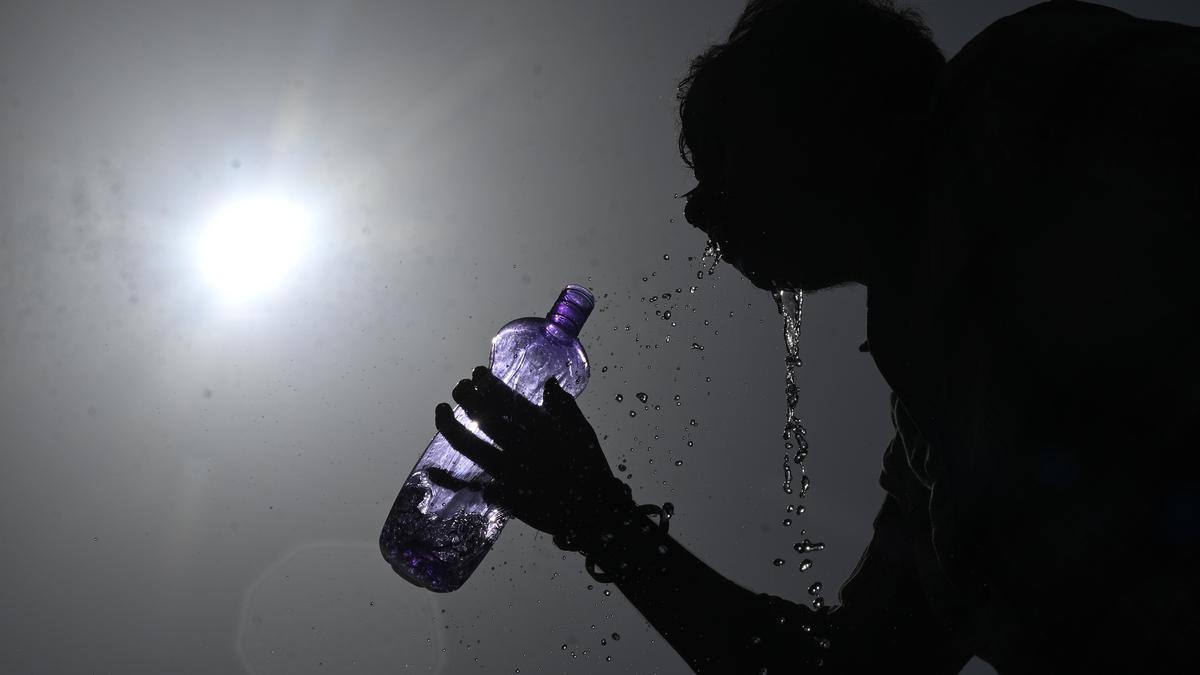
Reference image accompanying The Hindu’s coverage of India’s high heatwave exposure among infants and older adults, highlighting the need for targeted heat protection.
Image: The Hindu
Why in news
The Hindu reported the Lancet Countdown’s findings on heatwave exposure among vulnerable age groups. The authors have called for climate change to be formally recognised as a global health emergency and for health to be central to climate decisions.
15.3 billion person-days
Global older-adult exposure, 2024
2.3 billion person-days
Global infant exposure, 2024
10.8 billion person-days
Global older-adult exposure, 2025
1.1 billion person-days
Global infant exposure, 2025
12.8 days
Global exposure per older adult, 2025
8.7 days
Global exposure per infant, 2025
Background
Heatwaves are episodes of unusually high temperatures assessed against meteorological criteria. Their health effects depend not only on temperature but also on humidity, exposure duration, housing, access to cooling and individual susceptibility. Infants depend on caregivers and have developing temperature-regulation mechanisms, while older adults may face impaired thermoregulation, chronic illness and reduced mobility. In India, the India Meteorological Department provides heat warnings; public-health agencies, disaster-management authorities and local governments must translate these warnings into protective action.
What the report establishes
India, China, the United States and Russia were identified among countries with the highest heatwave exposure for infants and older adults. The supplied account does not provide India-specific exposure totals, a precise rank or population-normalised figures for India.
Global exposure in 2025 declined from the historical highs recorded in 2024, but remained the second-highest on record for the two vulnerable groups combined. A decline from an exceptional peak does not, by itself, establish a sustained reduction in climate-related health risk.
- The exposure totals and per-person averages cited here are global figures, not Indian estimates.
- The source does not specify the age thresholds used to define infants and older adults.
- The authors acknowledge progress in clean energy and health-system readiness but assess the overall response as insufficient.
Infographic
Read indicators correctly
Separate total exposure, per-person exposure and health outcomes.
Identify vulnerability
Map age, housing, water access and cooling constraints.
Activate early action
Connect warnings with responsibilities and targeted outreach.
Prepare healthcare
Ensure recognition, treatment, referral and service continuity.
Build thermal safety
Expand shade, passive cooling and accessible cooling spaces.
AI-assisted infographic by Pragnya IAS Academy, based on the cited sources.
How to interpret heat-exposure indicators
Person-days combine the number of people exposed with the duration of exposure. A large aggregate can reflect a large vulnerable population, prolonged heatwaves or both; it should not automatically be interpreted as the highest individual exposure.
Population-normalised exposure expresses the average number of heatwave days experienced per individual within the relevant age group. It improves comparison across populations of different sizes, but averages can conceal severe local inequalities.
Exposure is not equivalent to illness or mortality. Health outcomes also depend on physiological vulnerability, housing, occupational and household conditions, access to cooling and timely treatment. Estimates of deaths attributable to climate change require additional modelling and cannot be read directly from person-day totals.
- Use aggregate person-days to understand the scale of exposure and plan services.
- Use per-person exposure alongside local vulnerability data to prioritise protection.
- Do not infer India's per-person ranking or heat-death burden from the reported aggregate exposure finding.
Turning heat action plans into targeted protection
A heat action plan should connect forecasts to predefined responsibilities, resources and actions. It must move beyond public advisories to ensure that households at greatest risk can actually access safer indoor conditions, appropriate care and emergency support.
For infants, preparedness should involve caregiver communication, maternal and child-health services, and safer thermal conditions in homes and childcare facilities. Older adults may require proactive check-ins, continuity of medicines and clinical care, accessible cooling spaces and assistance with transport.
- Map vulnerable neighbourhoods using housing conditions, water access, local heat exposure and age-related vulnerability.
- Prepare frontline workers to recognise heat illness and activate referral pathways.
- Keep health facilities ready with trained staff, cooling arrangements, essential supplies and reliable water and electricity.
- Tailor hydration advice to age and medical conditions rather than issuing uniform instructions.
- Link local warning thresholds to outreach, staffing and service-continuity measures.
Governance, health rights and climate responsibility
Article 21 provides the constitutional foundation for protection of life and health, while Article 47 directs the State to improve public health. Public health and sanitation, hospitals and dispensaries fall within the State List. Effective heat preparedness nevertheless requires coordination across Union agencies, States, districts and urban and rural local bodies.
The report’s authors seek formal recognition of climate change as a global health emergency and a new WHO instrument for coordinated action. These are proposals reported by the source, not evidence that such a declaration or instrument has already been adopted.
The authors also advocate fair emissions reductions, sustained investment in science and health-related climate finance through grants rather than loans. Adaptation can reduce immediate harm, but mitigation remains necessary to limit the growth of future heat hazards.
- Integrate heat-health preparedness with disaster management, housing, urban planning, water supply and social protection.
- Treat thermal safety as a public-health concern rather than solely a matter of private cooling purchases.
- Combine equitable cooling access with energy efficiency and cleaner electricity.
| Indicator | What it shows | What it does not establish |
|---|---|---|
| Total heatwave person-days | Combined population exposure across heatwave days | Average exposure or clinical severity for each person |
| Heatwave days per individual | Population-normalised average exposure | Distribution of exposure within an age group or locality |
| Estimated heat-related deaths | Mortality burden estimated using a specified method | Deaths directly counted from exposure totals alone |
| Climate-attributable heat deaths | Estimated mortality linked to human-induced climate change | All heat deaths regardless of their underlying drivers |
- 1. Combine weather forecasts with local vulnerability mapping.
- 2. Activate predefined departmental and facility-level actions.
- 3. Reach caregivers and older adults through accessible communication and outreach.
- 4. Provide safe cooling, age-appropriate care and continuity of essential services.
- 5. Identify heat illness early and arrange rapid referral and treatment.
- 6. Review health outcomes and service gaps to revise the plan.
2024
Global heatwave exposure reached historical highs for older adults and infants in the reported series.
2025
Exposure declined from the previous year's peak but remained the second-highest on record for the two groups combined.
Significance, challenges & way forward
Significance
- The findings frame climate change as an immediate public-health and equity challenge rather than only a future environmental threat.
- Age-specific exposure indicators help identify populations that cannot rely on self-directed adaptation.
- Separating total exposure from per-person exposure improves comparisons and prevents misleading country rankings.
- Targeted heat preparedness can connect disaster-risk reduction with primary healthcare and social protection.
Challenges
- National and global averages can conceal neighbourhood-level heat exposure and unequal access to cooling.
- Infants and older adults may be unable to act on warnings without caregiver or community support.
- Poor housing, unreliable electricity and water scarcity can make standard heat advisories difficult to follow.
- Heat-related illness and deaths can be difficult to identify where surveillance and clinical documentation are weak.
- Fragmented departmental responsibilities can leave warnings disconnected from operational action.
- Cooling strategies centred only on air conditioning can deepen affordability gaps and increase energy demand.
Way forward
- Develop locally tailored heat action plans with clear responsibilities, dedicated resources and verifiable preparedness milestones.
- Use age-disaggregated exposure and health data alongside housing and service-access indicators to identify priority areas.
- Integrate caregiver outreach and older-adult support into primary healthcare and community-level preparedness.
- Strengthen heat-illness surveillance, clinical protocols, referral systems and continuity of essential treatment.
- Expand passive cooling, shade, cool roofs and accessible public cooling spaces while safeguarding water and electricity supply.
- Evaluate plans through health outcomes, response timeliness and protection of vulnerable households, not merely advisories issued.
- Pursue health-centred climate finance and emissions reductions alongside immediate adaptation.
Key terms
- Person-days of exposure
- A cumulative measure that adds the number of people exposed across the days on which exposure occurs.
- Population-normalised exposure
- Exposure expressed per person in the relevant population, enabling comparison across populations of different sizes.
- Heat vulnerability
- Susceptibility to heat-related harm arising from physiological, social and environmental conditions.
- Heat action plan
- An operational framework linking heat warnings with coordinated preparedness, outreach and health-protection measures.
- Climate attribution
- Assessment of how human-induced climate change influences a hazard or its consequences relative to a counterfactual climate.
- Passive cooling
- Building and design measures that reduce indoor heat without relying primarily on powered mechanical cooling.
Link with static syllabus
Prelims practice MCQs
Q1. With reference to heatwave exposure indicators, consider the following statements: 1. Total person-days are influenced by both the number of people exposed and the duration of exposure. 2. A country with higher total person-days necessarily has higher exposure per individual. Which of the statements given above is/are correct?
Q2. According to the supplied account of the Lancet Countdown report, consider the following statements: 1. India was among countries with the highest heatwave exposure for infants and older adults. 2. The reported global exposure per older adult in 2025 was higher than that per infant. 3. The account provides India's exact population-normalised exposure ranking. Which of the statements given above are correct?
Q3. Which of the following Directive Principles specifically addresses the State's duty to improve public health?
Q4. Consider the following measures for heat-health preparedness: 1. Linking forecasts to predefined departmental actions. 2. Mapping households with vulnerable age groups and poor access to cooling. 3. Maintaining referral pathways and essential health services during heatwaves. Which of the above are appropriate components of a heat action plan?
Mains practice questions
GS 3 · 15 marks · 250 words
Heatwave exposure is a public-health and equity challenge, not merely a meteorological concern. Discuss with reference to infants and older adults, and suggest measures to strengthen India's heat action plans.
Frequently asked questions
Does the report establish that India has the world's highest heatwave exposure?
No. The supplied account places India among the highest-exposure countries but provides neither an exact rank nor India-specific per-person exposure figures.
Do heatwave person-days measure deaths?
No. They measure cumulative exposure across people and days; estimating illness or deaths requires additional health data and analysis.
Does lower exposure in 2025 mean the heat-health crisis is easing?
Not necessarily. Exposure fell from the 2024 peak, but 2025 remained the second-highest year on record for the two vulnerable groups combined.
Has climate change been declared a global health emergency in this report?
The authors call for such formal recognition and a new WHO instrument. The supplied source does not report that either has been adopted.
Sources
- The Hindu: India among top countries with highest heatwave exposure for infants, older adults: Report
Analysis prepared by the Pragnya IAS Academy current-affairs desk with AI assistance from the cited reports. Verify figures with the original sources.
Turn current affairs into marks
Join Pragnya IAS Academy's mentorship for daily answer-writing evaluation on stories like this — classroom programmes from a trusted name in IAS coaching in Hyderabad.