
Supreme Court on Pharma Markets: Medicine Affordability and Public Accountability
Revise the static topic: UPSC Social Justice notes · UPSC Science & Technology notes
In short: The supplied Times of India headline reports the Supreme Court questioning whether the pharmaceutical industry can be allowed to operate without restraint in the name of a free market. The issue highlights the need to preserve incentives for innovation and reliable supply while protecting patients against unaffordable medicines and inappropriate commercial influence.
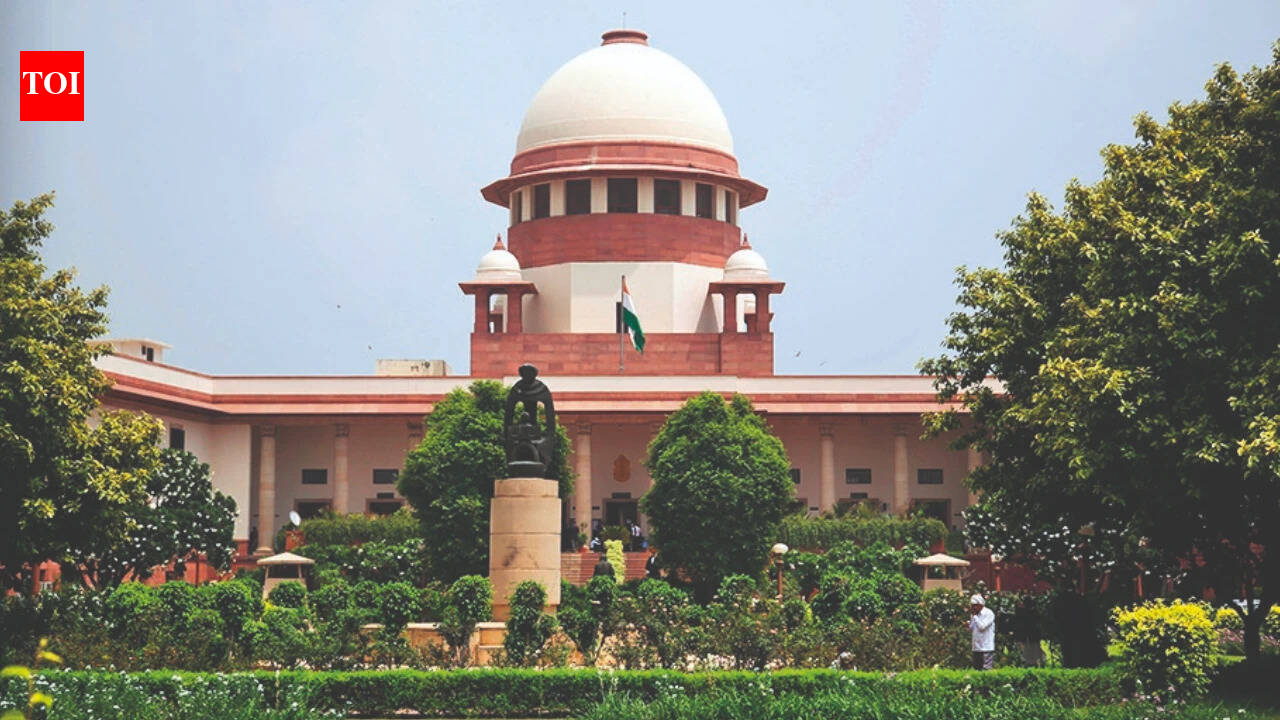
The Times of India report on the Supreme Court’s concern about pharmaceutical market freedom, medicine affordability and public accountability.
Image: Times of India
Why in news
The Supreme Court’s reported observation has brought pharmaceutical market regulation into focus. The supplied extract does not contain substantive case details or an operative order; it cannot establish that the Court introduced any new regulatory requirement.
Background
Medicines are commercial products with a direct bearing on life and health. Unlike ordinary consumer markets, pharmaceutical markets involve information asymmetry: patients often depend on prescribers to choose products and cannot independently assess quality or therapeutic necessity. India’s regulatory framework distributes responsibilities across drug-quality regulation, pharmaceutical price control, competition law, professional ethics and public provisioning. The National Pharmaceutical Pricing Authority administers pharmaceutical price-control functions, while the Central Drugs Standard Control Organisation and State drug authorities perform distinct responsibilities under drug law.
What the reported judicial concern establishes
The supplied headline attributes to the Supreme Court a concern that free-market reasoning cannot justify an unrestrained pharmaceutical industry. Its public-policy significance lies in the tension between commercial freedom and patients’ dependence on essential treatment.
However, the source extract largely consists of website notices. It does not identify the litigation, disputed conduct, judicial reasoning or directions issued. The reported observation must therefore be distinguished from a binding finding or a new legal rule.
- Do not infer a nationwide price-control order from the headline.
- Treat the discussion of existing institutions and policy options as background analysis, not as directions attributed to the Court.
Infographic
Affordability
Targeted price oversight and affordable alternatives.
Quality
Effective drug regulation and quality-assured procurement.
Accountability
Transparent marketing and enforceable professional duties.
Availability
Reliable supplies and accessible public provision.
Innovation
Predictable rules and sustainable investment incentives.
AI-assisted infographic by Pragnya IAS Academy, based on the cited sources.
Why medicines cannot be treated as an ordinary market
In pharmaceutical markets, the person choosing the medicine, the person consuming it and the person paying for it may be different. Patients may also lack the knowledge, time or bargaining power needed to compare products, especially during emergencies.
Patents can support innovation by providing temporary exclusivity, while competition can improve affordability after entry barriers are overcome. Neither mechanism alone guarantees access: prices, supply reliability, prescribing practices and public financing must be considered together.
- Information asymmetry can prevent patients from judging necessity, quality and value.
- Commercial influence on prescribing can create conflicts between professional judgement and sales incentives.
- High prices or unavailable medicines can interrupt treatment and deepen inequalities.
Existing regulatory architecture
The Drugs (Prices Control) Order, issued under the Essential Commodities Act, provides the framework for pharmaceutical price regulation. The National Pharmaceutical Pricing Authority fixes or revises applicable controlled prices, monitors prices and acts against overcharging under this framework. Scheduled formulations are subject to ceiling-price regulation; non-scheduled formulations are not wholly outside price oversight.
Price regulation is distinct from drug-quality regulation. The Central Drugs Standard Control Organisation and State authorities have differentiated responsibilities under the Drugs and Cosmetics Act. The Competition Commission of India addresses anti-competitive conduct under competition law, while professional regulation and pharmaceutical marketing standards address separate accountability concerns.
- A medicine’s presence in the market does not mean its price has been individually approved by the drug-quality regulator.
- Price compliance does not establish clinical appropriateness or quality compliance.
- Effective oversight requires coordination without confusing institutional mandates.
Constitutional balance: commercial freedom and public health
The Supreme Court’s established interpretation of Article 21 recognises health as integral to the right to life. Article 47 places improvement of public health among the State’s primary duties, although Directive Principles are not independently enforceable in the same manner as Fundamental Rights.
Article 19 protects citizens’ freedom to practise a profession or carry on an occupation, trade or business, subject to constitutionally permissible reasonable restrictions in the public interest. The policy task is therefore neither unrestricted commercial freedom nor indiscriminate intervention, but lawful, evidence-based and proportionate regulation.
- Affordability should be pursued alongside quality, availability and continuity of treatment.
- Predictable regulation can protect patients while preserving legitimate returns and investment incentives.
- Judicial scrutiny cannot substitute for sustained executive capacity and regulatory enforcement.
Beyond price caps: building equitable access
A lower notified price is insufficient if a medicine is unavailable, poorly prescribed or of unreliable quality. Access policy must combine affordable prices with quality-assured procurement, dependable public supplies and rational prescribing.
Poorly calibrated controls can create risks of withdrawal or shortages where production becomes unviable. Conversely, weak enforcement can leave formal protections ineffective. Regulatory design should therefore track both patient expenditure and actual availability rather than treating either price control or deregulation as a complete solution.
- Strengthen quality-assured generic competition and affordable dispensing.
- Improve public procurement, stock management and essential-medicine availability.
- Make marketing relationships and prescribing conflicts more transparent.
- Use lawful patent flexibilities where justified, rather than assuming every high price requires the same remedy.
| Policy problem | Principal instrument or institution | Important limitation |
|---|---|---|
| Overcharging and regulated prices | Drugs (Prices Control) Order and National Pharmaceutical Pricing Authority | Price compliance alone does not ensure availability. |
| Safety, quality and applicable drug approvals | Central Drugs Standard Control Organisation and State drug authorities | Quality regulation does not replace price oversight. |
| Anti-competitive market conduct | Competition Commission of India | A high price alone does not automatically establish a competition-law violation. |
| Commercial influence on prescribing | Professional ethics and pharmaceutical marketing standards | Rules require credible disclosure, monitoring and enforcement. |
| Unequal access to treatment | Public procurement, essential-medicine provision and affordable dispensing | Low prices cannot compensate for stock-outs or weak health infrastructure. |
- 1. Commercial incentives influence pricing, promotion and product positioning.
- 2. Prescribers and suppliers shape the medicines available to patients.
- 3. Information gaps and urgent treatment needs constrain patient choice.
- 4. Costly or inappropriate treatment can increase financial hardship and disrupt adherence.
- 5. Coordinated price, quality, competition and access measures can reduce these risks.
Significance, challenges & way forward
Significance
- The reported concern reinforces that pharmaceutical market freedom must be assessed against its consequences for life and health.
- Affordable treatment can reduce financial barriers and support continuity of care.
- Transparent prescribing and marketing relationships can strengthen trust in healthcare.
- Predictable public-interest regulation can support both patient protection and responsible industry investment.
Challenges
- Fragmented responsibilities can weaken coordination between pricing, quality, professional and competition regulators.
- Patients cannot easily assess whether a prescribed medicine is necessary, appropriately priced or substitutable.
- Price controls that overlook production viability can create supply risks.
- Weak procurement and stock management can undermine access even when medicines are affordable.
- The incomplete source prevents conclusions about the specific litigation or any binding judicial directions.
Way forward
- Apply targeted, evidence-based price regulation while monitoring availability, product withdrawals and production viability.
- Strengthen coordination among pharmaceutical pricing authorities, drug regulators, competition authorities and professional bodies.
- Expand reliable public supplies of quality-assured essential medicines through transparent procurement and better inventory management.
- Improve disclosure of industry relationships and establish credible mechanisms to address inappropriate promotion.
- Support rational prescribing through independent drug information, treatment guidelines and professional education.
- Preserve innovation incentives through predictable rules while using competition and legally available public-health safeguards.
Key terms
- Information asymmetry
- A situation in which one participant has more relevant information than another, limiting informed market choice.
- Scheduled formulation
- A formulation listed in the schedule to the Drugs (Prices Control) Order and subject to applicable ceiling-price regulation.
- Ceiling price
- The maximum price fixed under the applicable pharmaceutical price-control framework for a scheduled formulation.
- Rational use of medicines
- Use of medicines appropriate to clinical needs, in suitable doses and duration, at an appropriate cost.
- Conflict of interest
- A situation in which secondary interests, such as financial benefits, risk compromising a primary professional duty.
- Compulsory licensing
- A legal mechanism permitting use of a patented invention without the patent holder’s consent, subject to statutory conditions.
Link with static syllabus
Prelims practice MCQs
Q1. With reference to pharmaceutical regulation in India, consider the following statements: 1. The National Pharmaceutical Pricing Authority administers pharmaceutical price-control functions. 2. The Central Drugs Standard Control Organisation is the principal authority for fixing medicine ceiling prices. Which of the statements given above is/are correct?
Q2. With reference to health and the Constitution of India, consider the following statements: 1. The right to health has been recognised through judicial interpretation of Article 21. 2. Article 47 places improvement of public health among the State’s primary duties. 3. Directive Principles are independently enforceable in courts in the same manner as Fundamental Rights. Which of the statements given above are correct?
Q3. The Drugs (Prices Control) Order derives its statutory basis from which of the following?
Q4. Consider the following statements about pharmaceutical markets: 1. The prescriber, consumer and payer may be different persons or entities. 2. Compliance with a medicine’s ceiling price necessarily establishes its quality. 3. Non-scheduled formulations are wholly outside pharmaceutical price oversight. Which of the statements given above is/are correct?
Mains practice questions
GS 2 · 15 marks · 250 words
Pharmaceutical markets require public-interest regulation without undermining innovation and reliable supply. Discuss with reference to medicine affordability, accountability and equitable access in India.
Frequently asked questions
Did the Supreme Court introduce new pharmaceutical price controls?
The supplied material does not establish any new price-control measure or binding direction. It reports a judicial concern but provides no substantive case details or operative order.
Why is ordinary consumer choice insufficient in medicine markets?
Patients often depend on prescribers and cannot independently evaluate necessity, quality or alternatives. Urgent treatment needs can further limit comparison and bargaining.
Are price caps enough to ensure access to medicines?
No. Affordable prices must be accompanied by reliable supply, quality assurance, rational prescribing and accessible health services.
How can regulation protect patients without discouraging innovation?
Regulation should be predictable, proportionate and evidence-based, combining targeted price oversight with competition, accountable marketing and support for reliable supply.
Sources
- Times of India: SC: Cannot let pharma industry ‘run amok’ in name of free market
Analysis prepared by the Pragnya IAS Academy current-affairs desk with AI assistance from the cited reports. Verify figures with the original sources.
Turn current affairs into marks
Join Pragnya IAS Academy's mentorship for daily answer-writing evaluation on stories like this — classroom programmes from a trusted name in IAS coaching in Hyderabad.