
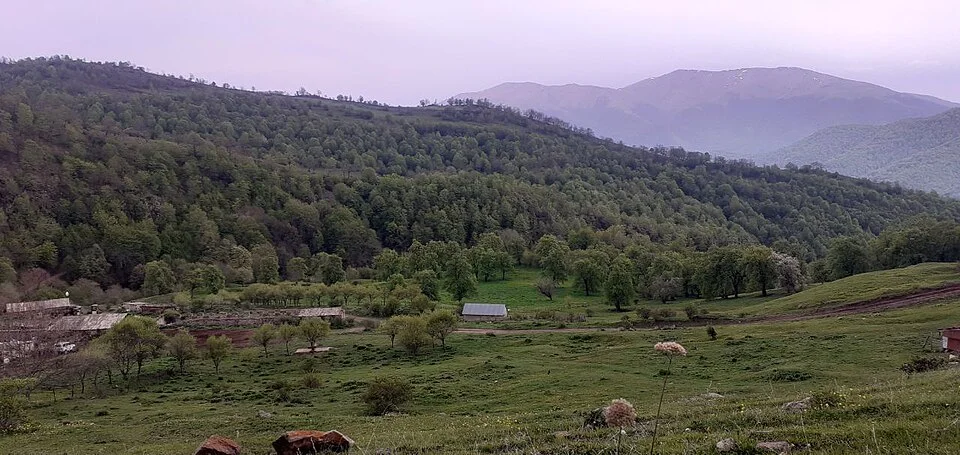
Animal husbandry in Tavush, Armenia: a comparative example of seasonal livestock movement.
Credit: Օֆելյա Հակոբյան · CC BY-SA 4.0 · sourceResized and converted to WebP; uncropped.
1. Scope and importance in the rural economy
Animal husbandry includes cattle and buffalo rearing, sheep and goat husbandry, piggery, poultry and the management of animals such as camels, yaks and equines. Dairy farming is only one component. Livestock supply food, manure, hides, fibres, transport and agricultural power. Poultry provides eggs and meat but is enumerated separately from livestock in India's livestock censuses.
Crop–livestock integration is central to Indian agriculture. Crop residues become animal feed, while dung supplies manure and biogas. Livestock can convert grasses and agricultural by-products that humans cannot directly consume into nutrient-rich food. However, low-quality residues alone cannot meet the nutritional needs of high-yielding animals.
Livestock provide relatively frequent cash receipts, unlike the seasonal returns from many crops. They support smallholders, landless households and women, who perform substantial feeding, cleaning and milking work. Animals also function as household assets during emergencies. Their protective role has limits: drought simultaneously reduces fodder and water availability, increases maintenance costs and can force distress sales.
- Mixed farming combines crop cultivation and livestock rearing within a farm system.
- Pastoralism relies substantially on grazing resources; transhumance involves seasonal movement between grazing areas.
- Livestock numbers, total output and productivity per animal are different indicators and should not be treated as interchangeable.
2. Geographical distribution and important breeds
Livestock distribution reflects climate, terrain, feed availability, water, cultural preferences and access to markets. Cattle have a wide distribution. Buffalo husbandry is especially important in the northern plains and western India, where irrigated agriculture provides fodder and crop residues. Buffaloes require effective cooling in hot weather because of their relatively poor sweating capacity.
Sheep are prominent in the dry and semi-arid regions of Rajasthan, the Deccan plateau and Himalayan grazing systems. Goats occur widely and browse shrubs and tree foliage, making them useful in diversified smallholder systems. Their adaptability does not imply that they can sustain productivity without adequate feed or water. Pig rearing is important in several northeastern states, where local food preferences support demand.
Poultry has both commercial and backyard forms. Commercial production clusters near feed supplies, hatcheries, veterinary services and urban markets; Andhra Pradesh, Tamil Nadu and Telangana are important centres. Backyard poultry provides supplementary household income and nutrition. Yak husbandry is adapted to the cold, high-altitude Himalaya, while camels are associated particularly with arid western India.
Indigenous cattle such as Gir, Sahiwal and Red Sindhi are recognised dairy breeds. Kankrej and Tharparkar have traditionally served dual purposes. Exotic breeds such as Holstein Friesian and Jersey are used in crossbreeding programmes. Higher genetic milk potential must be matched by feed, healthcare and climatic suitability; indiscriminate crossbreeding can undermine locally adapted genetic resources.
- Murrah buffalo: Haryana; Jaffarabadi buffalo: Saurashtra, Gujarat.
- Gir cattle: Gujarat; Ongole cattle: Andhra Pradesh; Vechur cattle: Kerala.
- Changthangi goats of Ladakh produce fine pashmina undercoat; Angora goats produce mohair, not pashmina.
Smallholder dairy value chain
- 1. Fodder planning, balanced feeding and preventive healthcare
- 2. Hygienic milking at the farm
- 3. Collection, quality testing and transparent payment
- 4. Rapid chilling and refrigerated transport
- 5. Pasteurisation, processing and packaging
- 6. Distribution to consumers
3. Production systems, feeding and breeding
Extensive systems depend mainly on grazing over relatively large areas, whereas intensive systems rely more on purchased or cultivated feed, housing and controlled management. Semi-intensive systems combine grazing with supplementary feeding. Commercial poultry is commonly intensive, while many pastoral sheep and goat systems are extensive. No system is automatically sustainable: outcomes depend on stocking pressure, feed sourcing, waste management and animal welfare.
Ruminants, including cattle, buffaloes, sheep and goats, use microbial fermentation to digest fibrous plant material. Poultry and pigs are non-ruminants and generally require more nutrient-dense feed. Roughages include grasses, hay and crop residues; concentrates include cereal grains, bran and oilseed cakes. Balanced feeding supplies energy, protein, minerals, vitamins and water according to maintenance and production needs.
Hay is fodder preserved mainly by drying. Silage is moist forage preserved through fermentation under oxygen-limited conditions, commonly using maize or sorghum. Berseem and lucerne are important leguminous fodders. Fodder banks, pasture restoration and residue enrichment can reduce seasonal shortages.
Artificial insemination facilitates the use of selected breeding males and can accelerate genetic improvement. Sex-sorted semen increases the probability of offspring of the desired sex but does not guarantee it. Breeding programmes require reliable animal identification, pedigree and performance records, fertility management and conservation of indigenous breeds.
- Broilers are poultry raised primarily for meat; layers are maintained primarily for egg production.
- Clean milk production requires healthy animals, clean udders and equipment, safe water and prompt cooling.
- A cooperative or producer-owned dairy network can aggregate small quantities and provide feed, veterinary care and market access.
| Breed | Animal | Principal association | Exam-relevant feature |
|---|---|---|---|
| Gir | Cattle | Gujarat | Indigenous dairy breed |
| Murrah | Buffalo | Haryana | Important dairy buffalo breed |
| Ongole | Cattle | Andhra Pradesh | Known for draught capability and tropical adaptation |
| Changthangi | Goat | Ladakh | Fine pashmina undercoat |
| Vechur | Cattle | Kerala | Small-bodied indigenous breed |
4. Animal health, environment and One Health
Foot-and-mouth disease is a highly contagious viral disease of cloven-hoofed animals. It causes substantial production losses and is not the same as human hand, foot and mouth disease. Brucellosis is a bacterial zoonosis associated with reproductive losses; humans may acquire infection through infected animal material or unpasteurised dairy products. Peste des petits ruminants is a viral disease primarily affecting sheep and goats.
Avian influenza affects birds and some strains can infect humans. Lumpy skin disease is a viral disease mainly of cattle, spread chiefly through blood-feeding arthropods. Disease control combines vaccination where appropriate, surveillance, quarantine, movement controls and farm biosecurity. Antibiotics do not treat viral infections, and their misuse contributes to antimicrobial resistance.
The One Health approach recognises links among human, animal and environmental health. Veterinary surveillance, safe food handling, pasteurisation and responsible antimicrobial use are therefore public-health measures as well as livestock interventions. Environmental concerns include enteric methane, manure emissions, water pollution and degradation of overstocked commons. Improved feeding, animal health, manure composting and biogas can reduce impacts, although lower emissions per unit of milk do not necessarily mean lower total emissions.
- Heat stress reduces feed intake, fertility and milk yield; shade, ventilation, drinking water and suitable cooling are important adaptations.
- Seasonal grazing can use landscapes unsuitable for crops, but sustainable stocking levels and access to grazing routes remain essential.
5. Institutions, programmes and policy priorities
The Department of Animal Husbandry and Dairying, under the Ministry of Fisheries, Animal Husbandry and Dairying, handles major Union-level livestock programmes. The National Dairy Development Board supports dairy development, while ICAR institutions undertake livestock research. The ICAR–National Bureau of Animal Genetic Resources at Karnal is important for documenting and registering breeds.
Rashtriya Gokul Mission, launched in 2014, focuses on bovine genetic improvement and indigenous breed development and conservation. The restructured National Livestock Mission supports entrepreneurship in rural poultry, sheep, goats and pigs, alongside feed and fodder development. The Animal Husbandry Infrastructure Development Fund supports eligible infrastructure such as dairy processing, meat processing and animal feed plants.
The National Animal Disease Control Programme was launched in 2019 to control foot-and-mouth disease and brucellosis through vaccination. Kisan Credit Card facilities were extended to animal husbandry and fisheries for working-capital needs. Effective development additionally requires accessible veterinary services, reliable breeding inputs, livestock insurance, producer organisations, cold chains and protection of common grazing resources.
- The Prevention of Cruelty to Animals Act, 1960 provides the central legal framework against cruelty.
- The Prevention and Control of Infectious and Contagious Diseases in Animals Act, 2009 provides for animal disease prevention and control.
- Policy should prioritise productivity, health and farmer returns rather than merely increasing animal numbers.
Seasonal Herding and Livestock Resource Management
The supplied metadata identifies this image with the tradition of seasonal livestock movement in Tavush, Armenia. It is relevant as a comparative example of pastoral animal husbandry, not as evidence of Indian livestock practices. Transhumance involves recurring movement between seasonal grazing grounds, often across altitude zones. Such mobility helps herders match livestock needs with changing pasture and water availability; it should not be confused with permanent migration or unrestricted wandering.
In India, seasonal pastoral movements occur in Himalayan regions, while mobile herding also operates in arid and semi-arid landscapes. Animal husbandry therefore depends not only on animal breeds and veterinary care but also on access to grazing commons, migration routes, crop residues and reliable water sources. Mixed crop–livestock farming links these resources: residues can provide feed, while dung supplies manure. However, residues alone may not constitute a nutritionally balanced ration. The metadata does not establish the animals’ species, breed, health, productivity or environmental impacts, so these cannot be inferred from this example.
- Prelims distinction: pastoralism centres on livestock-based livelihoods; transhumance is a specific pattern of seasonal movement. Neither term describes all animal husbandry.
- Indian relevance: conserving grazing commons and maintaining route access can complement fodder cultivation, vaccination and animal-health services.
- Mains caution: assess grazing pressure alongside stocking levels, seasonality and pasture recovery; mobile herding is not automatically evidence of land degradation.
Real-world case studies
Amul and the Anand cooperative model
The Kaira District Cooperative Milk Producers' Union, established in Gujarat in 1946, demonstrated producer-owned milk procurement and marketing. The Anand pattern links village societies, district unions and state federations. Operation Flood, launched by the National Dairy Development Board in 1970, expanded cooperative dairying and milk-market linkages. The key lesson is that productivity services and assured procurement must develop together.
Changpa pastoralism in Ladakh
Changpa pastoral communities rear Changthangi goats in the cold, arid Changthang region. Seasonal movement helps use scattered high-altitude pastures, while pashmina connects pastoral livelihoods with textile markets. Severe winters and restricted grazing access illustrate the importance of fodder reserves, veterinary support and protection of pastoral mobility.
Previous year questions
UPSC Mains 2015 · GS-III
Livestock rearing has considerable potential to provide non-farm employment and income in rural areas. Discuss and suggest suitable measures to promote this sector in India.
- Explain regular income, women's employment and benefits to smallholders and landless households.
- Identify feed shortages, low productivity, disease risks and weak market infrastructure.
- Recommend breeding services, preventive healthcare, fodder development, credit and producer organisations.
- Integrate sustainability, animal welfare and value addition.
Practice questions
Practice MCQ 1
Consider the following pairs: 1. Changthangi goat — Pashmina 2. Angora goat — Mohair 3. Murrah buffalo — Haryana. How many pairs are correctly matched?
- A. Only one
- B. Only two
- C. All three
- D. None
Practice MCQ 2
With reference to animal nutrition, consider the following statements: 1. Silage is preserved through fermentation under oxygen-limited conditions. 2. Ruminants utilise fibrous feed through microbial fermentation. 3. Hay is preserved primarily by keeping fodder submerged in water. Which statements are correct?
- A. 1 and 2 only
- B. 2 and 3 only
- C. 1 and 3 only
- D. 1, 2 and 3
Practice MCQ 3
Which one of the following statements is correct?
- A. Brucellosis is a viral disease confined to poultry.
- B. Foot-and-mouth disease primarily affects cloven-hoofed animals.
- C. Antibiotics are the primary treatment for all viral livestock diseases.
- D. Peste des petits ruminants primarily affects commercial laying hens.
Mains practice · Animal husbandry can strengthen smallholder resilience, but expansion without ecological and public-health safeguards creates new vulnerabilities. Discuss with reference to India. (250 words)
- Explain income diversification, nutrition, manure and crop–livestock integration.
- Discuss regional resource constraints, fodder shortages and pastoral livelihoods.
- Analyse zoonoses, antimicrobial resistance, methane and manure pollution.
- Suggest balanced feeding, vaccination, One Health surveillance and climate-adapted breeding.
- Link producer institutions, cold chains and women's access to services with sustainable returns.
Further reading
- Department of Animal Husbandry and Dairying: 20th Livestock Census, 2019.
- Department of Animal Husbandry and Dairying: Basic Animal Husbandry Statistics 2024.
- NCERT: Indian Economic Development, chapter on Rural Development.
- National Dairy Development Board: Operation Flood and dairy development resources.
- ICAR–National Bureau of Animal Genetic Resources: registered livestock and poultry breeds.
- Department of Animal Husbandry and Dairying: official scheme guidelines and annual reports.
- https://commons.wikimedia.org/wiki/File:Animal_husbandry,_Tavush.jpg
Preparing for UPSC Civil Services? Get classroom teaching, answer-writing evaluation and mentorship at Pragnya IAS Academy, Ashok Nagar — see why aspirants choose us for IAS coaching in Hyderabad.