
ECI Caps Form 7 Objections: Electoral-Roll Accuracy and Protection Against Wrongful Deletion
Revise the static topic: UPSC Polity notes · UPSC Governance notes
In short: The Election Commission of India has limited individual electors to 10 Form 7 applications during the entire claims-and-objections period of electoral-roll revision and five per month during continuous updation, applicable to online and offline submissions. The decision seeks to curb unsubstantiated bulk objections while preserving lawful roll correction through individual scrutiny, hearings and action against knowingly false declarations.
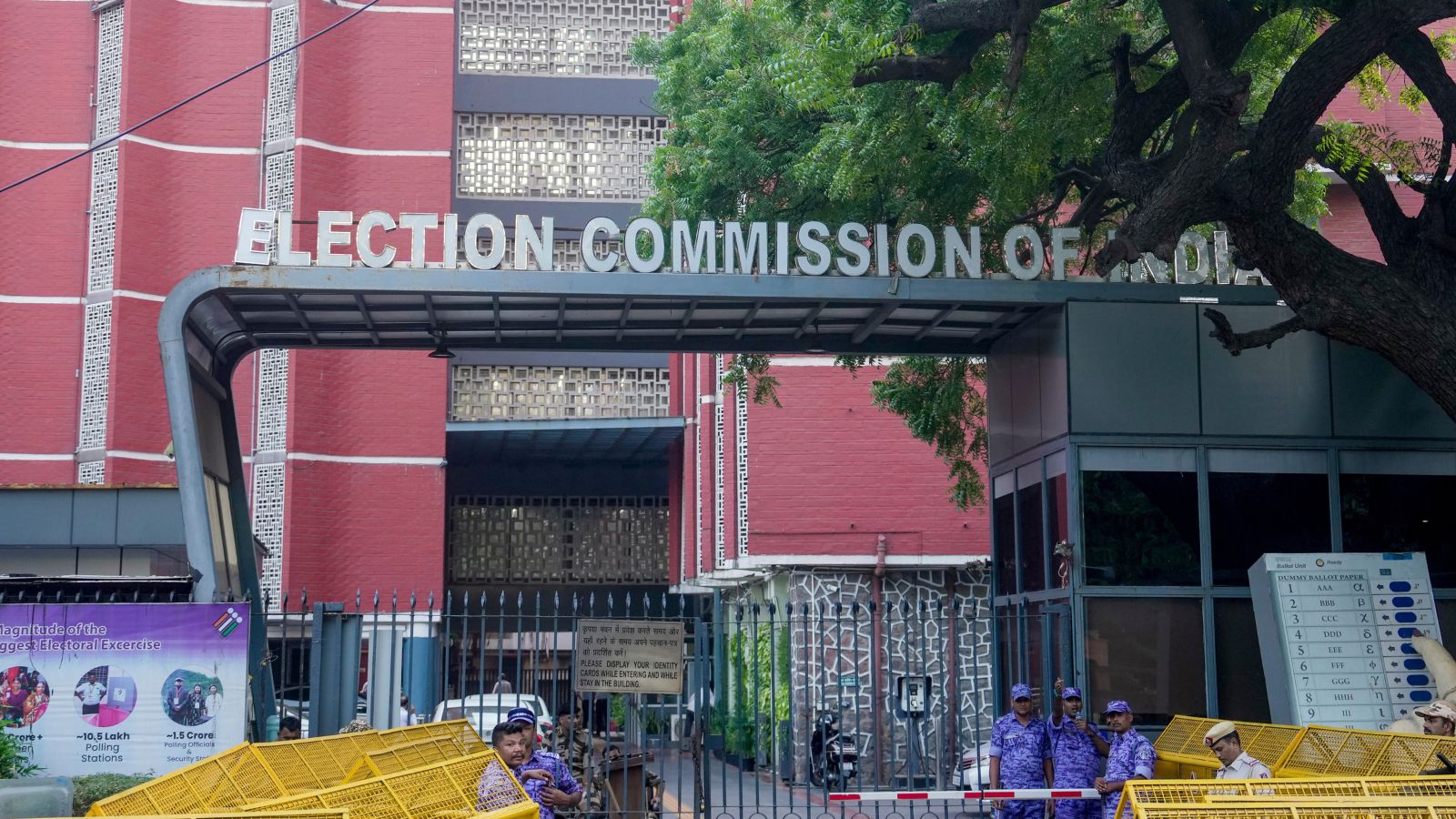
Why in news
The ECI issued instructions to Chief Electoral Officers after acknowledging that bulk Form 7 objections on unsubstantiated grounds had inconvenienced voters and increased field-level workload. It also reiterated procedural safeguards before deletion and liability for knowingly false declarations.
10
Individual Form 7 cap during the entire claims-and-objections period
5
Individual Form 7 cap per month during continuous updation
6
Earlier online filing limit at a time, subject to disposal
Background
Electoral rolls identify eligible electors constituency-wise. Article 324 places the superintendence, direction and control of their preparation with the ECI, while Article 326 establishes adult suffrage for elections to the Lok Sabha and State Legislative Assemblies. The Representation of the People Act, 1950 and the Registration of Electors Rules, 1960 govern registration, correction and deletion. The Electoral Registration Officer is the statutory authority responsible for the constituency’s roll. Revision provides a structured opportunity to update it, while continuous updation allows changes outside revision, subject to statutory restrictions.
What the ECI has changed
An individual elector may now submit a maximum of 10 Form 7 applications during the entire claims-and-objections period following publication of a draft electoral roll. During continuous updation, the limit is five applications per month. The instructions apply to online and offline filing.
Previously, online submissions were limited to six at a time, subject to disposal, but no numerical ceiling had been prescribed for physical bulk submissions. Their handling was left to the judgement of EROs. The new directions address this regulatory gap.
- The revision-period limit is not a daily allowance; it covers the entire claims-and-objections period.
- A filing limit regulates applications by individuals; it does not authorise deletion without verification.
- The ECI has separately prescribed facilitation arrangements for Booth Level Agents during the Special Intensive Revision; these should not be confused with ordinary individual filing limits.
Infographic
Limit bulk filing
10 during revision claims and objections; five monthly during continuous updation.
Verify individually
Hear the objector and record each objection separately.
Protect the elector
Provide an opportunity of hearing before deciding a validly raised objection.
Deter false declarations
Apply Section 31 where declarations are knowingly false.
Secure administration
Strengthen credential security, audit trails and accessible remedies.
AI-assisted infographic by Pragnya IAS Academy, based on the cited sources.
Form 7 and safeguards against wrongful deletion
Form 7 is the prescribed form for objecting to the inclusion of a name or seeking deletion from an electoral roll. Under the Registration of Electors Rules, the objector must be registered as an elector in the same Assembly constituency.
The ECI reiterated that EROs must issue notice to the objector, hear the objector personally and record statements separately for each Form 7. If satisfied about the validity of an objection, the ERO must give the affected elector an opportunity of hearing before passing an order.
Section 31 of the Representation of the People Act, 1950 addresses knowingly false statements or declarations connected with electoral-roll preparation, revision, correction, inclusion or exclusion. The ECI directed action under this provision where an applicant knowingly submits a false or fabricated declaration.
- A Form 7 application initiates scrutiny; it is not proof that the elector is ineligible.
- Separate examination of each objection prevents batch processing from substituting for adjudication.
- An unsuccessful objection should not automatically be equated with a knowingly false declaration.
Constitutional balance: accurate rolls and meaningful franchise
Roll accuracy and voter inclusion are complementary democratic objectives. Ineligible or duplicate entries undermine electoral integrity, while wrongful deletion can prevent an eligible citizen from exercising the franchise. Administrative convenience cannot substitute for lawful decision-making.
Article 325 provides for a general electoral roll for each territorial constituency and prohibits exclusion solely on grounds of religion, race, caste or sex. Article 326 anchors adult suffrage, subject to constitutional and legal conditions. These principles require roll correction to be impartial and attentive to the risk of discriminatory exclusion.
The numerical cap is a preventive administrative safeguard within the existing legal framework, not an amendment to the Representation of the People Act or the registration rules. Its effectiveness depends on compliance with notice, hearing, verification and accountability requirements.
- Natural justice requires a meaningful opportunity to respond before an adverse decision in a contested deletion proceeding.
- Electoral integrity must be assessed through both removal of invalid entries and retention of eligible voters.
- Procedural burdens may affect mobile workers and citizens with limited documentation or digital access more severely.
Implementation risks and institutional accountability
An individual cap can discourage concentrated bulk filing but may not prevent coordinated submissions through multiple electors. Effective protection therefore requires scrutiny of the substance and provenance of objections, not merely counting applications.
The supplied report describes an Odisha episode in which BLOs complained that forms had been uploaded in their names without their knowledge. It reports that the ECI removed the Assistant ERO concerned over alleged misuse of their login credentials. This illustrates why access controls and audit trails matter alongside procedural safeguards.
BLOs are electoral field functionaries, whereas BLAs are representatives appointed by recognised political parties. Keeping these roles distinct is essential: political-party participation can assist scrutiny, but statutory decisions remain with the competent electoral authorities.
- Patterns suggesting coordinated abuse should trigger verification, not automatic rejection of otherwise valid objections.
- Authenticated submissions and secure credentials are necessary to establish responsibility.
- Public communication must explain that a deletion request does not itself remove a voter’s name.
| Stage or arrangement | Limit | Key distinction |
|---|---|---|
| Individual filing during revision | 10 Form 7 applications | Applies during the entire claims-and-objections period, in online and offline modes |
| Individual filing during continuous updation | Five Form 7 applications per month | Applies outside the revision process, in online and offline modes |
| Earlier online arrangement | Six applications at a time, subject to disposal | Physical bulk filing previously had no prescribed numerical ceiling |
| Separate BLA arrangement during SIR | Up to 50 forms per day before the draft roll and 10 per day thereafter | Covers forms for claims and objections submitted through the specified party-agent arrangement |
- 1. An eligible same-constituency elector files Form 7 within the applicable limit.
- 2. The ERO issues notice to the objector and hears the objector personally.
- 3. Statements are recorded separately and the basis of each objection is examined.
- 4. Where the objection is found valid for further consideration, the affected elector receives an opportunity of hearing.
- 5. The ERO decides the case and passes an order after considering the material.
- 6. A knowingly false or fabricated declaration attracts action under Section 31.
1950
The Representation of the People Act, 1950 established the statutory framework governing electoral rolls.
1960
The Registration of Electors Rules, 1960 prescribed procedures and forms for electoral registration.
Before the latest instructions
Online Form 7 filing was capped at six applications at a time, subject to disposal, while physical bulk filing lacked a prescribed numerical ceiling.
Latest reported instructions
The ECI prescribed individual filing limits for revision and continuous updation and reiterated hearings and action against knowingly false declarations.
Significance, challenges & way forward
Significance
- The cap addresses the previously undefined scope for physical bulk Form 7 submissions.
- Limiting unsubstantiated objections can reduce avoidable burdens on voters and election personnel.
- Reiteration of individual hearings reinforces procedural fairness in electoral-roll maintenance.
- Accountability for knowingly false declarations can deter strategic misuse of deletion procedures.
Challenges
- Coordinated applicants may distribute objections across multiple electors to circumvent individual limits.
- Poor notice delivery or inaccessible hearings can make procedural protection ineffective in practice.
- Workload pressure may encourage mechanical disposal unless EROs receive adequate administrative support.
- Credential misuse can compromise application authenticity and obscure responsibility.
- Political allegations can erode trust unless complaints are examined impartially and outcomes communicated clearly.
Way forward
- Track individual filing limits across digital and physical channels without creating duplicate allowances.
- Require case-specific verification and reasoned orders rather than relying on standardised allegations.
- Provide accessible notices, hearing arrangements and assistance for affected electors.
- Maintain secure access controls and auditable submission histories for electoral officials.
- Publish aggregate disposal information while protecting personal voter data.
- Publicise statutory appeal and correction avenues so that wrongful exclusion can be challenged effectively.
Key terms
- Form 7
- The prescribed application for objecting to inclusion of a name or seeking deletion from an electoral roll.
- Electoral Registration Officer
- The statutory authority responsible for preparing and revising a constituency’s electoral roll.
- Claims-and-objections period
- The specified window after publication of a draft roll for seeking inclusion and raising objections.
- Continuous updation
- Updating electoral rolls outside a revision exercise, subject to statutory restrictions.
- Booth Level Officer
- An electoral field functionary assisting with local verification and roll-related work.
- Booth Level Agent
- A representative appointed by a recognised political party to assist participation in electoral-roll processes.
- Natural justice
- Principles of fair decision-making, including impartiality and an opportunity to be heard before an adverse decision.
Link with static syllabus
Prelims practice MCQs
Q1. With reference to the ECI’s latest instructions on individual Form 7 filing, consider the following statements: 1. The limit during revision is 10 applications for the entire claims-and-objections period. 2. During continuous updation, the limit is five applications per month. 3. The latest limits apply only to online submissions. Which of the statements given above are correct?
Q2. Consider the following pairs: 1. Article 324 — ECI’s supervision of preparation of electoral rolls 2. Article 325 — General electoral roll and prohibition of exclusion solely on specified grounds 3. Article 326 — Adult suffrage for Lok Sabha and State Legislative Assembly elections How many pairs are correctly matched?
Q3. Which of the following provisions addresses knowingly false statements or declarations relating to inclusion in or exclusion from electoral rolls?
Q4. With reference to electoral-roll administration, consider the following statements: 1. A Booth Level Agent and a Booth Level Officer perform identical institutional roles. 2. Filing Form 7 automatically results in deletion of the challenged entry. 3. The ECI has reiterated that statements must be recorded separately for each Form 7 objection. Which of the statements given above is/are correct?
Mains practice questions
GS 2 · 15 marks · 250 words
Electoral-roll accuracy and universal adult franchise are complementary objectives, but deletion procedures can become instruments of exclusion. Examine in the context of the ECI’s limits on individual Form 7 applications.
Frequently asked questions
What are the new individual Form 7 limits?
The limit is 10 applications during the entire claims-and-objections period of revision and five per month during continuous updation. The instructions cover online and offline filing.
Does a Form 7 objection automatically delete a voter’s name?
No. The ERO must examine the objection and provide the affected elector an opportunity of hearing before deciding a validly raised objection.
Who can file a Form 7 objection against an electoral-roll entry?
The objector must be registered as an elector in the same Assembly constituency. Political-party BLAs operate under separately prescribed facilitation arrangements.
What action is possible against a false Form 7 declaration?
The ECI has directed action under Section 31 of the Representation of the People Act, 1950 for knowingly false declarations. Mere rejection of an objection does not by itself establish deliberate falsity.
Sources
- Indian Express: Admitting ‘instances of bulk Form 7 filing for voter deletion’, EC sets limit
- Times of India: Amid Form 7 bulk filing row, Election Commission limits it to 10 per elector
Analysis prepared by the Pragnya IAS Academy current-affairs desk with AI assistance from the cited reports. Verify figures with the original sources.
Turn current affairs into marks
Join Pragnya IAS Academy's mentorship for daily answer-writing evaluation on stories like this.