
Quad Manila Meeting: Maritime Security, ASEAN Centrality and India’s Strategic Autonomy
Revise the static topic: UPSC International Relations notes
In short: Quad leaders are scheduled to meet in Manila on the sidelines of the ASEAN and East Asia summits, ahead of reported US–China–Russia talks in Shenzhen. The meeting signals continued Indo-Pacific coordination, while testing whether India can deepen maritime cooperation without compromising strategic autonomy or ASEAN centrality.
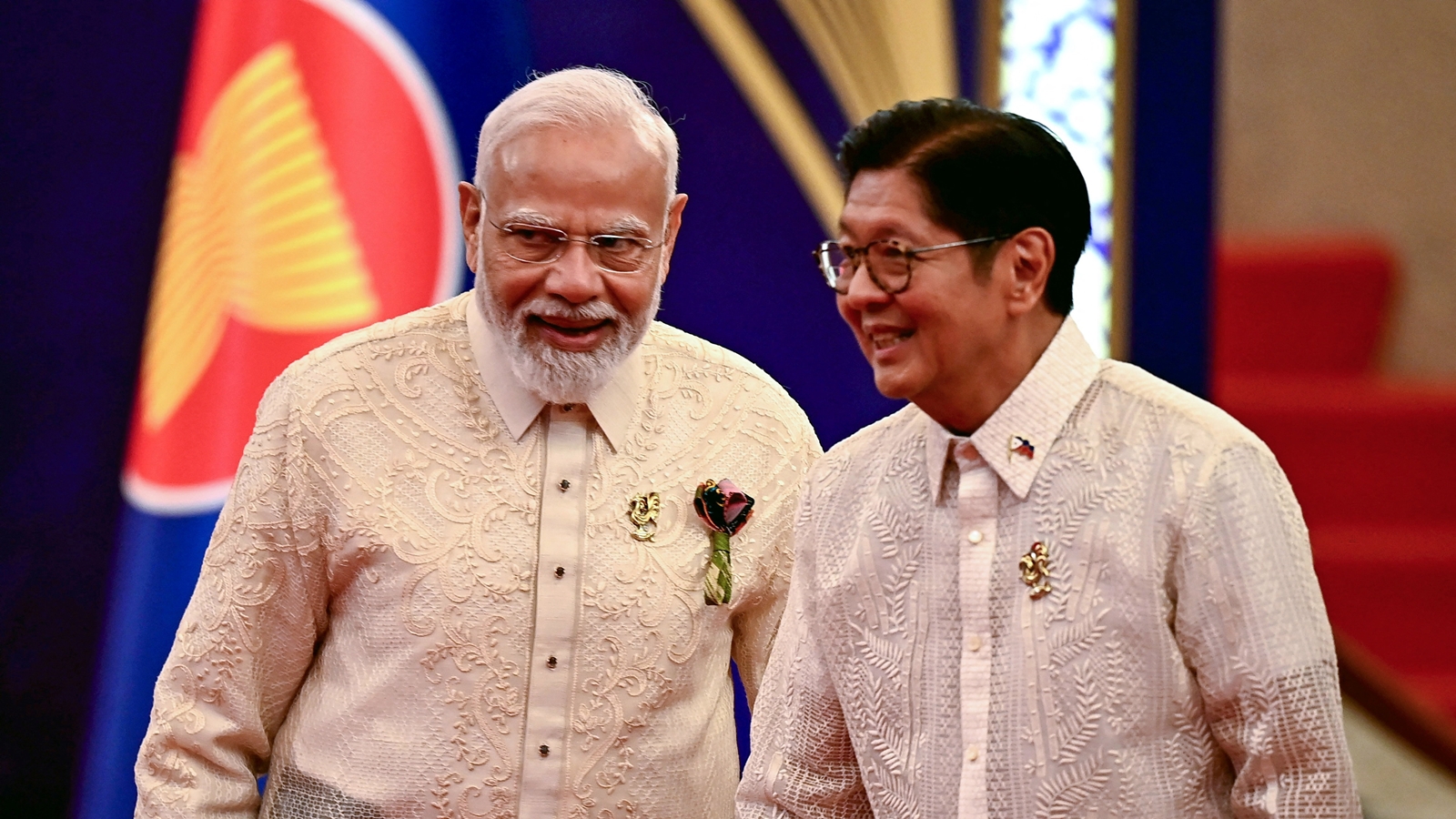
Reference image accompanying coverage of the proposed Quad meeting in Manila, where maritime cooperation, India’s strategic autonomy and ASEAN centrality are key issues.
Image: Indian Express
Why in news
The Indian Express reports that the Manila meeting would be Donald Trump’s first Quad leaders’ meeting since beginning his second presidential term in January 2025. A possible fact sheet on deliverables is reported, but the supplied material does not establish that the meeting has concluded or any new measures have been adopted.
4
Quad members
2021
Elevation to leaders’ level
September 2024
Previous leaders’ meeting reported
November 19
Reported Shenzhen trilateral date
Background
The Quadrilateral Security Dialogue brings together India, the United States, Japan and Australia. It is a consultative partnership rather than a treaty-based collective-defence alliance. Its Indo-Pacific agenda combines strategic coordination with practical cooperation, while India links its regional engagement to the Act East Policy, its partnership with ASEAN and a maritime outlook centred on security and shared prosperity. The United Nations Convention on the Law of the Sea provides the principal legal framework for maritime rights, jurisdiction and navigational freedoms.
What the proposed Manila meeting signals
According to the report, Narendra Modi, Donald Trump, Sanae Takaichi and Anthony Albanese are scheduled to discuss peace, prosperity and security in the Indo-Pacific. The meeting’s timing, before reported talks involving the US, China and Russia, makes reassurance among partners an important analytical lens.
The source describes Manila as the first proposed venue outside a Quad member country for a leaders’ meeting since the grouping’s elevation in 2021. Meeting alongside ASEAN-led summits offers diplomatic visibility, but does not make the Quad an ASEAN institution or establish ASEAN endorsement of its agenda.
The distinction between signalling and delivery is crucial: a meeting demonstrates political attention; sustained projects, operational coordination and regional acceptance determine its strategic value.
- The meeting is scheduled, not confirmed as completed in the supplied report.
- A possible fact sheet should not be treated as an adopted declaration.
- India is reported as a possible host next year, but that arrangement remains conditional.
Infographic
Maritime security
Improve awareness, safety and coastal-state capacity.
Strategic autonomy
Cooperate on shared interests without automatic alignment.
ASEAN centrality
Complement regional institutions and locally defined priorities.
International law
Support lawful maritime rights and peaceful dispute settlement.
Credible delivery
Judge commitments by verified projects and outcomes.
AI-assisted infographic by Pragnya IAS Academy, based on the cited sources.
Maritime security: From shared concerns to practical cooperation
The report links Quad coordination to concerns about China’s assertive behaviour in the Indo-Pacific. For India, the central maritime interests are secure sea lanes, lawful access to maritime spaces, protection of commerce and resistance to coercive changes to the regional order.
The Quad’s comparative advantage lies in coordinating complementary capabilities without requiring a collective-defence commitment. Better maritime domain awareness, information-sharing, capacity-building and humanitarian assistance can strengthen regional resilience while providing benefits beyond the membership.
Such cooperation must distinguish lawful navigation from an unrestricted right to conduct every activity at sea. Maritime entitlements and jurisdiction vary across maritime zones under the law of the sea.
- Maritime domain awareness can improve detection of suspicious vessel movements and support coordinated responses.
- Coastal-state capacity-building can address illegal fishing, maritime crime and gaps in surveillance.
- Humanitarian assistance and disaster relief can demonstrate the Quad’s public-goods role.
- Naval interoperability is useful, but the Malabar exercise should not be described as a formal Quad collective-defence mechanism.
India’s strategic autonomy: Cooperation without automatic alignment
Strategic autonomy means retaining the capacity to make independent choices; it does not require equal distance from all major powers. India can cooperate with Quad partners where interests converge while maintaining independent positions and diplomatic channels with other countries.
The source identifies tariffs, visa restrictions, deportations and Washington’s proximity to Islamabad as strains affecting India–US ties. These illustrate why a shared maritime outlook does not eliminate bilateral differences or guarantee predictable summit diplomacy.
The reported US–China–Russia talks underline the need for India to avoid assuming that any partner’s wider diplomacy will automatically reflect Indian preferences. Durable autonomy requires both diversified partnerships and stronger domestic maritime, technological and economic capabilities.
- Participation in the Quad does not create an automatic obligation to join a conflict.
- Issue-based cooperation allows India to support common objectives without accepting every partner’s policy.
- Partnerships strengthen autonomy when they expand capabilities and options rather than create exclusive dependence.
ASEAN centrality and an inclusive Indo-Pacific
ASEAN centrality means recognising ASEAN-led institutions as important convening platforms for regional dialogue and cooperation. The Quad can complement this architecture through focused delivery, but should avoid presenting smaller regional states with a compulsory choice between competing powers.
The source places ASEAN at the heart of India’s Act East Policy and MAHASAGAR vision, expanded as Mutual and Holistic Advancement for Security and Growth Across Regions. India’s challenge is to connect strategic coordination with locally relevant priorities such as connectivity, maritime safety, technology and resilience.
ASEAN countries have differing security perceptions and economic relationships. Demand-driven cooperation, transparency and respect for sovereignty are therefore more effective foundations for regional legitimacy than assuming a uniform regional response to China.
- ASEAN centrality does not mean ASEAN membership in, or control over, the Quad.
- An inclusive regional approach can uphold maritime rules while keeping diplomatic engagement open.
- Regional states should be treated as partners shaping projects, not merely as recipients of major-power strategy.
| Platform | Character and purpose | Key examination distinction |
|---|---|---|
| Quad | Consultative partnership of India, the US, Japan and Australia | Not a treaty-based collective-defence alliance |
| ASEAN | Regional organisation of Southeast Asian states | India is a dialogue partner, not a member |
| East Asia Summit | ASEAN-led leaders’ forum for regional dialogue and cooperation | Broader regional platform, distinct from the Quad |
| Malabar | Naval exercise involving the navies of the Quad countries | Participation overlap does not make it a formal Quad institution |
- 1. Identify shared maritime risks and priorities with regional partners.
- 2. Improve surveillance and maritime information-sharing.
- 3. Build coastal-state capacity and coordination procedures.
- 4. Support lawful responses, disaster relief and maritime safety.
- 5. Review outcomes to strengthen trust and sustain cooperation.
2017
The Quad was revived, renewing consultation among its members.
2021
The Quad was elevated to the leaders’ level.
September 2024
Joe Biden hosted the Quad leaders in Wilmington, Delaware.
2025
India was expected to host a leaders’ summit; the report links uncertainty to strains in India–US relations.
November 17, 2026
Quad leaders are scheduled to meet in Manila alongside the ASEAN and East Asia summits.
November 19, 2026
The source reports planned US–China–Russia talks in Shenzhen on the sidelines of the APEC summit.
Significance, challenges & way forward
Significance
- The meeting can reassure partners that Indo-Pacific coordination remains relevant amid wider major-power diplomacy.
- Maritime cooperation can protect sea-lane security and strengthen resistance to coercion without creating a formal alliance.
- Practical regional projects can make the Quad relevant to countries beyond its membership.
- For India, cooperation can reinforce Act East engagement while expanding strategic options and maritime capabilities.
Challenges
- Differences in threat perceptions and domestic priorities can limit consensus and follow-through.
- Bilateral trade and mobility disputes can spill over into wider strategic cooperation.
- Uncertainty about major-power bargaining can weaken confidence in long-term commitments.
- An exclusively anti-China image could narrow regional support and intensify pressure on Southeast Asian states.
- Sensitive maritime information-sharing requires trust, secure systems and safeguards for national control.
- Summit declarations may lose credibility if projects lack clear responsibilities, resources and measurable outcomes.
Way forward
- Prioritise achievable maritime projects with clear responsibilities and transparent progress reviews.
- Align regional initiatives with priorities identified by ASEAN members and other participating coastal states.
- Strengthen Indian naval, coast guard and maritime surveillance capabilities to make cooperation more reciprocal.
- Develop secure information-sharing arrangements that preserve sovereignty and protect sensitive data.
- Keep bilateral disputes from paralysing shared maritime and humanitarian priorities.
- Combine firm support for international law with diplomatic engagement and crisis-management channels.
- Assess any eventual Manila fact sheet on verified commitments rather than treating pre-meeting expectations as decisions.
Key terms
- Quad
- A consultative partnership comprising India, the United States, Japan and Australia.
- Strategic autonomy
- The capacity to make independent foreign-policy choices while cooperating selectively with other states.
- Maritime domain awareness
- An informed understanding of activities and developments in the maritime domain relevant to security, safety, the economy and the environment.
- ASEAN centrality
- Recognition of ASEAN’s central convening role in the regional diplomatic and institutional architecture.
- Minilateralism
- Cooperation among a small group of countries around selected shared interests.
- UNCLOS
- The United Nations Convention on the Law of the Sea, which establishes the legal framework for maritime zones, rights and responsibilities.
- MAHASAGAR
- Mutual and Holistic Advancement for Security and Growth Across Regions, described in the source as India’s expanded global maritime doctrine.
Link with static syllabus
Prelims practice MCQs
Q1. With reference to the Quad, consider the following statements: 1. It comprises India, the United States, Japan and Australia. 2. Its members are bound by a collective-defence treaty under the Quad framework. 3. It was elevated to the leaders’ level in 2021. Which of the statements given above are correct?
Q2. Consider the following pairs: 1. East Asia Summit — ASEAN-led regional forum 2. Malabar — Formal collective-defence mechanism of the Quad 3. UNCLOS — Legal framework governing maritime rights and jurisdiction Which of the pairs given above are correctly matched?
Q3. Which of the following best describes strategic autonomy in India’s foreign policy?
Q4. With reference to ASEAN centrality, consider the following statements: 1. It recognises the importance of ASEAN-led platforms in regional diplomacy. 2. It implies that ASEAN is a member of the Quad. 3. It can coexist with issue-based cooperation through smaller groupings. Which of the statements given above are correct?
Mains practice questions
GS 2 · 15 marks · 250 words
Assess the Quad’s role in Indo-Pacific maritime security. How can India deepen cooperation within the grouping while preserving strategic autonomy and supporting ASEAN centrality?
Frequently asked questions
What has the Manila Quad meeting decided?
The supplied report describes a scheduled meeting and a possible fact sheet. It does not confirm adopted decisions or completed outcomes.
Is the Quad an Asian NATO?
No. The Quad is not a treaty-based collective-defence alliance and does not impose an automatic mutual-defence obligation.
Does participation in the Quad compromise India’s strategic autonomy?
Not inherently. It can expand India’s capabilities and choices, provided cooperation remains based on independent judgement and avoids exclusive dependence.
Why does ASEAN centrality matter to the Quad?
ASEAN-led platforms are central to regional dialogue, and Southeast Asian states are important partners in maritime cooperation. Complementing their priorities can strengthen the Quad’s legitimacy and effectiveness.
Sources
Analysis prepared by the Pragnya IAS Academy current-affairs desk with AI assistance from the cited reports. Verify figures with the original sources.
Turn current affairs into marks
Join Pragnya IAS Academy's mentorship for daily answer-writing evaluation on stories like this — classroom programmes from a trusted name in IAS coaching in Hyderabad.