
COP31: Climate Finance, Emissions Equity and the Future of the 1.5°C Goal
Revise the static topic: UPSC Environment notes
In short: COP31 negotiations in Antalya, Turkiye, have exposed differences over developed-country emissions cuts, climate finance and how to retain the Paris Agreement’s 1.5°C ambition amid growing overshoot concerns. For India, the central negotiating challenge is to link stronger climate action with historical responsibility, predictable support and a country-driven just transition; the reported draft proposals are not agreed outcomes.
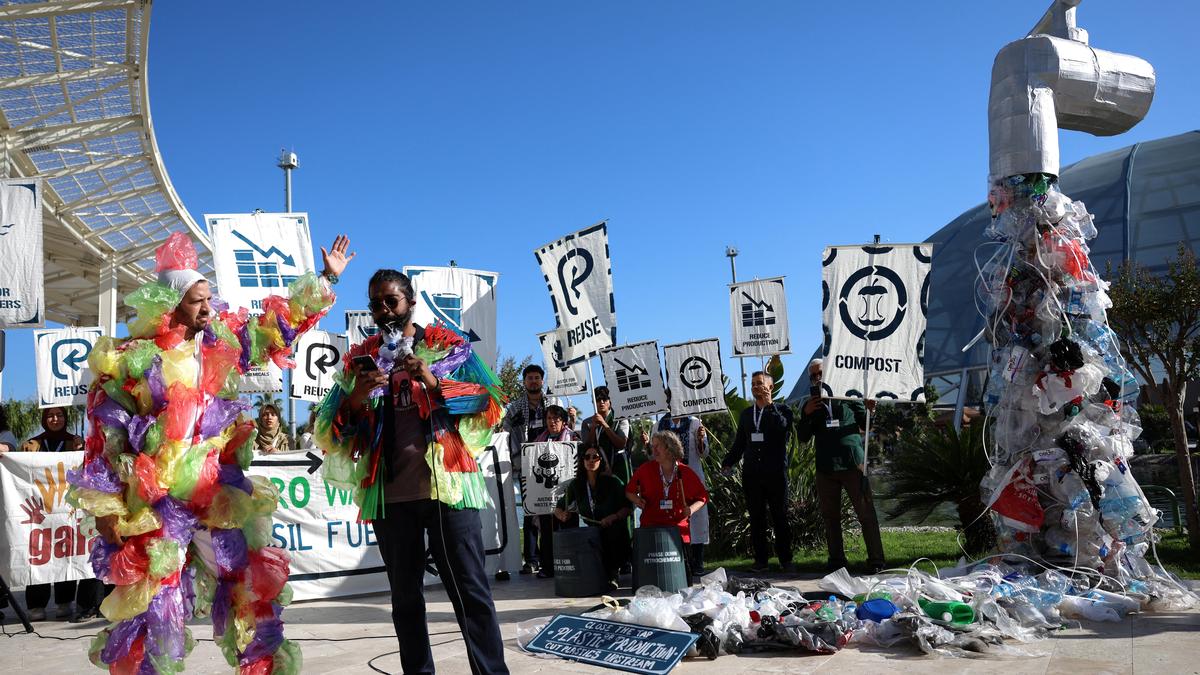
Photo from the source report: COP31: Climate Finance, Emissions Equity and the Future of the 1.5°C Goal
Image: The Hindu
Why in news
As of the November 17, 2026 edition, the reported COP31 draft cover text contains competing proposals on emissions timelines, voluntary developing-country finance and electrification. Vulnerable countries are simultaneously demanding faster access to finance for resilience and climate-related losses.
1.5°C
Paris Agreement’s lower temperature ambition
About 1.4°C
Warming reported above pre-industrial levels
$300 billion annually
Developed-country-led finance goal by 2035
$1.3 trillion annually
Broader finance scale-up goal by 2035
$840 billion
Projected gap against broader finance goal
2070
India’s net-zero target
Background
The United Nations Framework Convention on Climate Change provides the institutional framework for global climate cooperation. The Paris Agreement combines collective temperature goals with nationally determined contributions, adaptation and support for developing countries. It seeks to hold warming well below 2°C above pre-industrial levels while pursuing efforts to limit it to 1.5°C. Its implementation reflects equity and common but differentiated responsibilities and respective capabilities, in the light of different national circumstances. This means universal participation does not require identical obligations: historical emissions, capabilities and development needs remain relevant to allocating effort.
What the COP31 draft does—and does not—establish
The reported cover text compiles competing negotiating proposals rather than recording a settled agreement. Developing countries have called for developed nations to achieve net-zero emissions by 2030 and net-negative emissions by 2045. These are negotiating demands, not existing Paris Agreement deadlines.
Other proposals concern voluntary climate-finance contributions from developing countries, removal of measures such as the European Union’s Carbon Border Adjustment Mechanism by the end of 2027, and sourcing 35% of energy use from electricity by 2035. Some parties oppose making the electrification objective obligatory.
- An electrification target measures electricity’s role in energy use; it is not the same as a renewable-electricity target.
- The reported finance proposal for developing countries is voluntary, not an agreed mandatory contribution requirement.
- Host country Turkiye and negotiating lead Australia have emphasised implementation of existing pledges.
Infographic
Temperature integrity
Retain ambition and minimise overshoot.
Differentiated effort
Align action with responsibility and capability.
Finance delivery
Make support predictable, accessible and transparent.
Resilience
Support adaptation and address unavoidable losses.
Just transition
Protect workers and enable country-driven implementation.
AI-assisted infographic by Pragnya IAS Academy, based on the cited sources.
The 1.5°C goal: Preserve ambition without assuming easy reversal
The supplied reporting places warming at about 1.4°C above pre-industrial levels and reports a UN warning that crossing 1.5°C is imminent and unavoidable. Some parties want COP31 to reaffirm the lower temperature goal and support returning to it after an overshoot. A short-term temperature exceedance should not be confused with a sustained breach of a long-term warming threshold.
Overshoot means temporarily exceeding a temperature threshold before subsequently returning below it. Such a return would require rapid emissions reductions alongside carbon dioxide removal. However, large-scale technological removal remains uncertain, while some ecological damage may not be reversed merely by lowering temperatures later.
The policy implication is to minimise both the magnitude and duration of overshoot, not to treat it as permission to delay mitigation. Adaptation and support for unavoidable losses must strengthen alongside emissions cuts.
- The Paris Agreement contains both the well-below-2°C objective and the pursuit of 1.5°C.
- Net-zero CO2 emissions balance human-caused CO2 emissions with human-caused removals; sustained net-negative CO2 emissions mean removals exceed emissions.
- Carbon removal should complement deep emissions reductions rather than substitute for them.
Equity and legal differentiation: Who should act first?
Equity concerns the distribution of the remaining atmospheric space, mitigation costs and adaptation burdens. Developed countries’ greater historical responsibility and stronger capabilities underpin demands that they cut emissions earlier and provide finance and technology. Differentiation is compatible with progressively stronger action by all parties.
Under the Paris framework, developed-country parties are required to provide financial resources to assist developing countries with mitigation and adaptation; other parties are encouraged to provide support voluntarily. Voluntary South–South cooperation should therefore be distinguished from developed-country responsibilities.
The source reports observer claims that some negotiating blocs seek to weaken references to 1.5°C. These claims should not be presented as an independently established Indian position. India’s directly reported intervention instead stresses an inclusive, equitable and country-driven just transition.
- Nationally determined contributions are country-defined climate commitments, not identical externally allocated emissions quotas.
- Collective temperature ambition does not automatically create a uniform national net-zero deadline.
- A defensible equity position links differentiated effort with credible implementation rather than indefinite delay.
Climate finance: The dispute is about quality and access as well as volume
The sources distinguish a developed-country-led annual finance goal of $300 billion by 2035 from a broader annual scale-up goal of $1.3 trillion drawing on public and private sources. These should not be treated as equivalent public-budget commitments. Analysis released by Brazil reportedly projects an $840 billion shortfall against the broader goal under current trends.
Small island states describe repeated disaster recovery as a drain on fiscal space. Complex lender procedures can prevent limited administrative capacity from translating available finance into actual projects. A shift from grants towards loans can also increase debt pressures where adaptation projects generate social benefits but limited commercial returns.
Multilateral funds have announced greater reliance on each other’s assessments in co-financed operations to reduce duplication. Risk-sharing and clearer links between national plans and budgets could mobilise investment, but private finance cannot be presumed to meet every adaptation or loss-and-damage need.
- Mitigation finance supports emissions reduction or enhancement of carbon sinks.
- Adaptation finance reduces exposure and vulnerability to climate impacts.
- Loss-and-damage support addresses adverse impacts that are not avoided through mitigation and adaptation.
- Reported mobilisation, future commitments and actual disbursements are different measures of delivery.
India’s negotiating balance: Development, resilience and a just transition
India’s reported net-zero target is 2070. Environment Minister Bhupender Yadav has called for the global just transition agenda to move beyond dialogue towards practical, country-driven implementation. The emphasis is on ensuring that workers and communities are not excluded from the transition.
For India, an equitable negotiating approach can combine domestic low-emission development with demands for affordable finance, technology access and adaptation support. It should recognise energy access, employment and development needs while maintaining credible climate action.
Developing-country opposition to CBAM reflects concerns about unequal industrial capabilities and the costs imposed on carbon-intensive exports. However, a demand to remove CBAM is a negotiating position, not a legal finding that the mechanism violates international trade rules. India’s response should combine diplomatic engagement with cleaner production and reliable emissions measurement.
- Adaptation priorities should connect climate finance with agriculture, water security, public health and resilient infrastructure.
- Just transition planning should address skills, livelihoods, social protection and local economic diversification.
- Electrification must be supported by cleaner electricity, dependable grids and affordable access.
| Issue | Established framework or reported context | COP31 proposal or dispute |
|---|---|---|
| Temperature ambition | Hold warming well below 2°C and pursue efforts towards 1.5°C. | Whether and how to reaffirm 1.5°C and frame a return after overshoot. |
| Emissions differentiation | Equity and differentiated responsibilities guide implementation. | Developing countries demand developed-country net zero by 2030 and net-negative emissions by 2045. |
| Climate finance | Developed-country finance responsibilities coexist with voluntary support from other parties. | Draft language proposes voluntary developing-country contributions; delivery and accessibility remain contested. |
| Electrification | Electricity’s share in energy use differs from renewables’ share in electricity generation. | Presidency proposal seeks 35% of energy use from electricity by 2035; some oppose an obligation. |
| Carbon border measures | CBAM links charges on covered imports to production-related emissions. | Developing countries seek removal of such measures by the end of 2027. |
- 1. Identify national mitigation, adaptation and livelihood priorities.
- 2. Match responsibilities and support with historical emissions, capabilities and needs.
- 3. Provide predictable finance, technology access and capacity support.
- 4. Simplify project assessment and disbursement without weakening safeguards.
- 5. Implement country-driven projects with worker and community participation.
- 6. Track emissions outcomes, resilience benefits and actual financial delivery.
2024
According to the sources, climate talks established the $300 billion annual finance goal and the broader $1.3 trillion annual scale-up goal for 2035.
September 2026
The supplied reporting describes a UN warning about crossing 1.5°C and a UNEP study examining overshoot scenarios.
November 2026
COP31 in Antalya brings competing positions on finance, emissions equity, electrification and temperature ambition into the draft cover text.
Significance, challenges & way forward
Significance
- Retaining the 1.5°C ambition preserves pressure for rapid mitigation while recognising the existential risks faced by vulnerable island states.
- Differentiated responsibilities connect global ambition with fairness, making cooperation more politically sustainable.
- Accessible adaptation finance can protect development gains and reduce recurring disaster-recovery burdens.
- A country-driven just transition links climate policy with employment, social protection and energy security.
- Distinguishing negotiating proposals from agreed obligations prevents misleading interpretations of India’s commitments.
Challenges
- Geopolitical conflict, security expenditure and domestic cost-of-living pressures are weakening political attention to climate finance.
- The reported US withdrawal from the Paris Agreement and international funding adds uncertainty to collective action.
- Loan-heavy finance can deepen debt stress without adequately supporting non-commercial resilience needs.
- Overlapping approval procedures and limited administrative capacity delay access for vulnerable countries.
- Overreliance on future carbon removal risks postponing immediate emissions reductions.
- Carbon border measures can intensify trade tensions when producers have unequal access to clean technology and affordable capital.
Way forward
- Preserve the Paris temperature goals while pairing stronger ambition with differentiated effort and credible support.
- Prioritise predictable, grant-based public finance for vulnerable countries’ adaptation and loss-and-damage needs.
- Report finance transparently by instrument, grant-equivalent value, purpose and actual disbursement to avoid overstating delivery.
- Expand mutual recognition of fund assessments while retaining environmental, social and fiduciary safeguards.
- Use risk-sharing to mobilise private investment where viable without substituting it for public responsibilities.
- Develop India’s country-driven transition plans through worker participation, reskilling and support for affected regions.
- Address carbon-border concerns through multilateral dialogue alongside domestic industrial decarbonisation and credible emissions accounting.
Key terms
- CBDR-RC
- Common but differentiated responsibilities and respective capabilities: shared climate action with differentiated effort reflecting responsibility and capacity.
- Nationally determined contribution
- A party’s nationally determined climate commitment under the Paris Agreement, subject to successive updating.
- Overshoot
- A pathway in which warming exceeds a specified threshold before subsequently returning below it.
- Net-zero CO2 emissions
- A balance between human-caused CO2 emissions and human-caused CO2 removals over a specified period.
- Net-negative CO2 emissions
- A condition in which human-caused CO2 removals exceed human-caused CO2 emissions.
- Just transition
- A shift towards a low-emission economy that protects workers, communities and vulnerable groups.
- Loss and damage
- Adverse climate impacts that are not avoided through mitigation and adaptation.
- CBAM
- The European Union’s Carbon Border Adjustment Mechanism, which links carbon charges on covered imports to their embedded emissions.
Link with static syllabus
Prelims practice MCQs
Q1. With reference to the Paris Agreement, consider the following statements: 1. It seeks to hold warming well below 2°C while pursuing efforts to limit it to 1.5°C. 2. It requires all parties to achieve net-zero emissions by an identical deadline. 3. Its implementation reflects equity and differentiated responsibilities in the light of different national circumstances. Which of the statements given above are correct?
Q2. Consider the following pairs: 1. Mitigation: Reduction of emissions or enhancement of sinks 2. Adaptation: Adjustment to actual or expected climate impacts 3. Net-negative CO2 emissions: Human-caused removals exceeding human-caused emissions Which of the pairs given above are correctly matched?
Q3. With reference to the climate-finance framework discussed in the supplied COP31 reports, consider the following statements: 1. The $300 billion annual goal and the broader $1.3 trillion annual goal are distinct. 2. The entire $1.3 trillion goal is an obligation to provide public grants alone. 3. Voluntary developing-country contributions automatically replace developed-country finance responsibilities. Which of the statements given above is/are correct?
Q4. Consider the following statements about electrification and temperature overshoot: 1. Increasing electricity’s share in energy use necessarily means all additional electricity is renewable. 2. Returning below a temperature threshold after overshoot does not guarantee reversal of every ecological impact. 3. A draft COP proposal should not be treated as an adopted commitment merely because it appears in the negotiating text. Which of the statements given above are correct?
Mains practice questions
GS 3 · 15 marks · 250 words
Climate ambition without equity and accessible finance cannot deliver an effective global transition. Discuss in the context of COP31 negotiations and India’s priorities.
Frequently asked questions
Has COP31 adopted a developed-country net-zero deadline of 2030?
No adopted deadline is established by the supplied material. Net zero by 2030 and net-negative emissions by 2045 are reported developing-country demands in the draft negotiations.
Does crossing 1.5°C make the Paris Agreement irrelevant?
No. Limiting further warming remains essential, and a short-term exceedance is different from a sustained breach of the long-term threshold; overshoot also strengthens the case for rapid mitigation and adaptation.
Why do grants and loans matter in climate-finance negotiations?
Grants do not create repayment obligations, whereas loans can add to debt pressures. This distinction is particularly important for adaptation and recovery activities that generate public benefits but limited financial returns.
What is India’s directly reported position at COP31?
India has called for practical, country-driven implementation of an inclusive and equitable just transition. Observer claims about broader negotiating blocs should not automatically be treated as official Indian statements.
Sources
- The Hindu: Divergent positions mark draft text of COP31 under way in Turkiye
- The Hindu: Urgent climate finance pleas at COP31 face a non-urgent response
- The Hindu: Nations grapple with loss of 1.5°C target at UN climate summit
- Indian Express: Let’s work to get back to 1.5° C target: COP31 draft agreement
Analysis prepared by the Pragnya IAS Academy current-affairs desk with AI assistance from the cited reports. Verify figures with the original sources.
Turn current affairs into marks
Join Pragnya IAS Academy's mentorship for daily answer-writing evaluation on stories like this — classroom programmes from a trusted name in IAS coaching in Hyderabad.