
US Sanctions on ICC: UN Condemnation, Jurisdiction Limits and India’s Position
Revise the static topic: UPSC International Relations notes
In short: UN Secretary-General António Guterres has condemned new US sanctions against the International Criminal Court, which the supplied report describes as targeting the institution itself. The confrontation highlights the vulnerability of international criminal justice to political pressure and the ICC’s dependence on state cooperation despite its judicial independence.
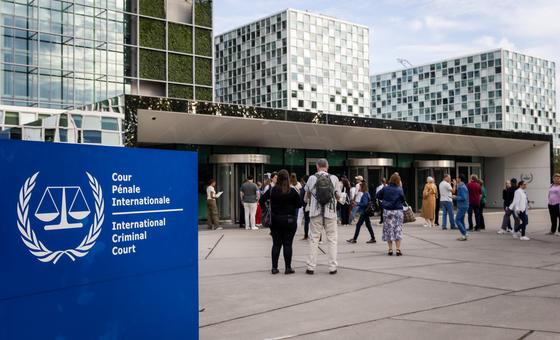
Image: UN News
Why in news
According to UN News, the United States imposed sanctions on the ICC, while Secretary of State Marco Rubio threatened to dismantle the institution unless it ended what Washington regards as a threat to its citizens. Guterres condemned the sanctions as a serious blow.
Background
The ICC is a permanent, treaty-based criminal court established under the Rome Statute and located in The Hague, Netherlands. It prosecutes individuals, not states, for genocide, crimes against humanity, war crimes and the crime of aggression, subject to jurisdictional requirements. It is independent of the United Nations, although the UN Security Council can refer situations to it. Its jurisdiction is complementary to national criminal jurisdictions: it does not ordinarily replace genuine domestic investigations and prosecutions. Neither India nor the United States is a State Party to the Rome Statute.
What the report establishes—and what remains unspecified
The supplied report describes sanctions against the ICC as an institution and links them to Washington’s objections concerning its citizens. Rubio’s threat and the Secretary-General’s condemnation place the dispute within the wider contest between national sovereignty and international accountability.
The excerpt does not identify the sanctions’ legal instrument, operational scope, exemptions or effects on particular proceedings. Consequently, specific claims about asset freezes, travel restrictions, affected officials or disrupted investigations cannot be established from this source.
- The stated US objection should be distinguished from a legal determination that the ICC lacks jurisdiction.
- UN condemnation signals institutional concern but does not itself remove sanctions or confer enforcement powers on the Court.
Infographic
Mandate
Individual accountability for core international crimes.
Jurisdiction
Defined legal gateways, not unrestricted universal reach.
Complementarity
Genuine national proceedings ordinarily take priority.
Enforcement
State cooperation substitutes for an independent police force.
Sanctions risk
Political pressure may weaken operational independence.
India
Not a Rome Statute party; sovereignty and institutional safeguards remain central.
AI-assisted infographic by Pragnya IAS Academy, based on the cited sources.
Jurisdiction: why non-membership is not blanket immunity
For genocide, crimes against humanity and war crimes, the ordinary jurisdictional gateways include conduct on the territory of a State Party or conduct by its nationals, subject to the Statute’s other requirements. A non-party state may also accept jurisdiction for a situation. Thus, a national of a non-party state can potentially fall within ICC jurisdiction for alleged crimes committed on a State Party’s territory.
The Security Council can refer a situation under its UN Charter powers, potentially enabling jurisdiction beyond the ordinary territorial or nationality gateways. Investigations may also arise through State Party referrals or the Prosecutor’s own initiative, subject to the applicable judicial safeguards. The crime of aggression has a distinct jurisdictional regime and should not be treated as identical to the other core crimes.
Jurisdiction is different from admissibility. Even where a jurisdictional basis exists, the Court must assess matters such as genuine national proceedings and gravity. Complementarity generally leaves a case to national authorities unless they are unwilling or unable genuinely to carry out the relevant proceedings.
- The ICC prosecutes individual criminal responsibility rather than determining the responsibility of states.
- Non-membership does not automatically exclude every possible route to ICC jurisdiction.
- The Court does not possess unrestricted universal jurisdiction.
Enforcement and judicial independence under sanctions pressure
The ICC has no independent police force. Arrests, surrender of suspects, access to evidence and witness protection depend substantially on state cooperation. States Parties have cooperation obligations under the Rome Statute, while obligations of non-party states depend on the applicable legal basis.
Institution-directed sanctions can create risks for financial transactions, service provision, travel and cooperation by third parties, depending on their actual design. Such pressure may raise the cost of conducting investigations or supporting the Court. These are potential mechanisms of disruption, not effects demonstrated by the supplied excerpt.
Judicial independence requires decisions to follow applicable law and evidence rather than threats of retaliation. At the same time, the ICC must maintain procedural fairness, reasoned decisions and credible scrutiny of its own jurisdiction. Legal disagreement should be addressed through lawful processes rather than coercion aimed at dictating outcomes.
- A judicial warrant does not guarantee the arrest or surrender of a suspect.
- Security Council politics can constrain referrals and collective support for accountability.
- Perceived selective enforcement can weaken legitimacy even where particular proceedings have a legal basis.
India’s position: non-party status with wider accountability interests
India has neither signed nor ratified the Rome Statute. Its established concerns include the role of the Security Council in the ICC framework, possible political influence and implications for sovereign criminal jurisdiction. These concerns must not be confused with a claim that all international criminal accountability is illegitimate.
India’s non-party status means that it does not assume Rome Statute treaty obligations merely by virtue of the Statute’s existence. However, non-membership is not a categorical jurisdictional shield in every conceivable situation. Territorial jurisdiction and Security Council referrals remain important qualifications.
The supplied source does not report an Indian response to these sanctions. A policy option for India is to support impartial accountability and judicial independence while continuing to seek institutional safeguards and strengthening domestic justice mechanisms.
- Distinguish India’s established Rome Statute position from any response to this particular episode.
- Separate debate over joining the ICC from support for preventing and prosecuting grave international crimes.
| Concept | Meaning and limitation |
|---|---|
| Territorial or nationality link | Ordinary gateways for genocide, crimes against humanity and war crimes include State Party territory or nationality; non-party nationals are not automatically excluded. |
| Non-party acceptance | A non-party state may accept the Court’s jurisdiction without becoming a State Party. |
| Security Council referral | Can enable jurisdiction beyond ordinary territorial or nationality gateways, but depends on Security Council decision-making. |
| Complementarity | Genuine national proceedings ordinarily take priority; jurisdiction alone does not make a case admissible. |
| Crime of aggression | Subject to special jurisdictional conditions that differ from those governing the other core crimes. |
| Enforcement | The Court relies on state cooperation rather than an independent police force. |
- 1. An alleged crime must fall within the Court’s subject-matter and temporal jurisdiction.
- 2. An applicable jurisdictional gateway and a lawful trigger for investigation must exist.
- 3. The Court assesses admissibility, including complementarity and gravity.
- 4. Investigation and judicial processes may lead to charges and requests for arrest or surrender.
- 5. State cooperation enables custody, evidence collection and witness protection.
- 6. Trial and subsequent judicial processes determine individual responsibility and applicable consequences.
Significance, challenges & way forward
Significance
- The confrontation tests whether an international court can exercise its mandate independently when a powerful state rejects its actions.
- Institutional pressure can affect victims’ access to justice by weakening the practical capacity of accountability mechanisms.
- The episode exposes the gap between international legal authority and the political cooperation needed to enforce it.
- For India, the issue connects sovereignty, institutional reform and the credibility of a rules-based international order.
Challenges
- Dependence on states can leave arrest warrants and cooperation requests unexecuted.
- Sanctions may generate operational disruption or excessive caution among service providers, depending on their scope.
- Security Council power asymmetries can foster perceptions of selective accountability.
- Disputes over jurisdiction and procedural fairness can weaken confidence if they are not addressed transparently.
- The limited source material does not permit a definitive assessment of the sanctions’ practical consequences.
Way forward
- States should pursue jurisdictional objections through available legal procedures rather than pressure intended to dictate judicial outcomes.
- The ICC should reinforce transparent reasoning, due process and consistent application of admissibility standards.
- Cooperating states should examine lawful measures to preserve essential judicial functions and protect witnesses and victims.
- National authorities should strengthen credible domestic investigations and prosecutions in accordance with complementarity.
- India should evaluate ICC-related developments on their legal merits while advocating safeguards against politicisation and selective accountability.
Key terms
- Rome Statute
- The treaty establishing the ICC and defining its crimes, jurisdiction, procedures and cooperation framework.
- Complementarity
- The principle that the ICC supplements national criminal jurisdictions rather than ordinarily replacing genuine domestic proceedings.
- Jurisdiction
- The legal authority of a court to address particular crimes, persons, territories and periods.
- Admissibility
- The assessment of whether a case may proceed before the ICC, including consideration of national proceedings and gravity.
- State Party
- A state bound by a treaty through the applicable process of consent, such as ratification or accession.
- Judicial independence
- The ability of judges and judicial institutions to decide matters according to law without improper external pressure.
Link with static syllabus
Prelims practice MCQs
Q1. Consider the following statements about the International Criminal Court: A. It prosecutes individuals for specified international crimes. B. It is a principal judicial organ of the United Nations. C. It possesses an independent police force to execute arrest warrants. Which of the statements given above is or are correct?
Q2. Which of the following best describes complementarity under the Rome Statute?
Q3. Consider the following statements: A. A national of a non-party state may potentially fall within ICC jurisdiction for alleged war crimes committed on a State Party’s territory. B. The UN Security Council can refer a situation to the ICC. C. India is a State Party to the Rome Statute. Which of the statements given above are correct?
Q4. Which of the following pairs is correctly matched?
Mains practice questions
GS 2 · 15 marks · 250 words
Sanctions against international judicial institutions expose the tension between state sovereignty and global accountability. Discuss with reference to the ICC’s jurisdiction, enforcement limitations and India’s position.
Frequently asked questions
Can the ICC prosecute citizens of countries that have not joined it?
Potentially, yes: relevant territorial jurisdiction, non-party acceptance or a Security Council referral may provide a basis. The applicable conditions must still be satisfied, and the crime of aggression has special rules.
Is the ICC part of the United Nations?
No. It is an independent treaty-based court, although it has a relationship with the UN and can receive Security Council referrals.
What is India’s position on the Rome Statute?
India has neither signed nor ratified the Rome Statute. The supplied report does not establish India’s response to these US sanctions.
Why are sanctions a concern if the ICC is judicially independent?
Legal independence does not ensure operational self-sufficiency. Depending on their scope, sanctions can impede essential services and cooperation without formally changing the Court’s mandate.
Sources
Analysis prepared by the Pragnya IAS Academy current-affairs desk with AI assistance from the cited reports. Verify figures with the original sources.
Turn current affairs into marks
Join Pragnya IAS Academy's mentorship for daily answer-writing evaluation on stories like this.