
ECI Caps Bulk Form 7 Filings: Voter Deletion, Due Process and Electoral Rights
Revise the static topic: UPSC Polity notes · UPSC Governance notes
In short: The Election Commission of India has capped individual Form 7 filings at 10 during the entire claims-and-objections period of electoral-roll revision and five per month during continuous updation, covering online and offline submissions. The measure seeks to curb unsubstantiated bulk objections while preserving lawful roll correction through individual scrutiny, notice, hearing and accountability for knowingly false declarations.
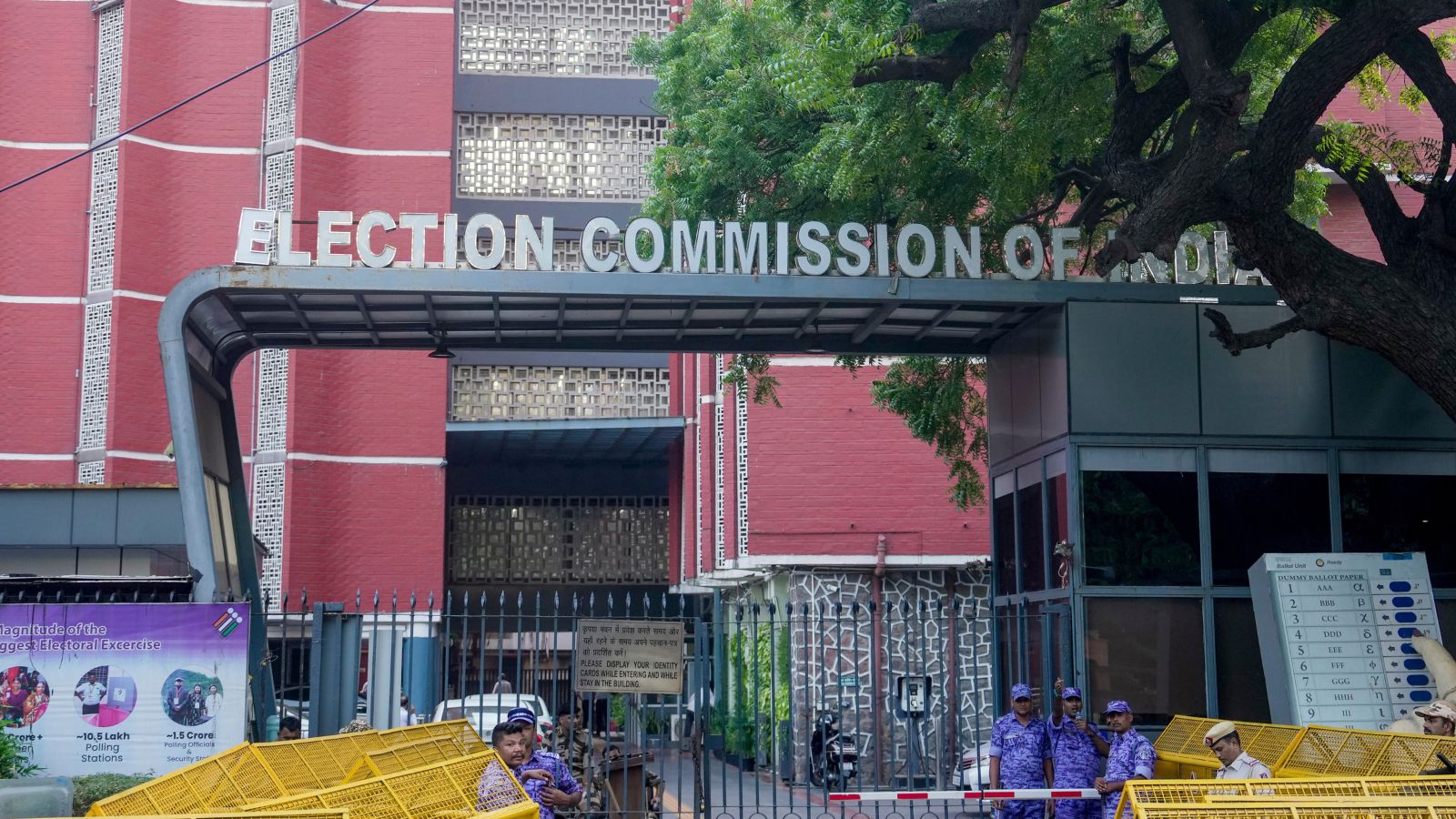
Image: Indian Express
Why in news
The ECI issued instructions to Chief Electoral Officers after acknowledging that bulk Form 7 objections on unsubstantiated grounds had inconvenienced voters and increased the workload of election officials. It also reiterated procedural safeguards and action against knowingly false or fabricated complaints.
10
Individual Form 7 cap per revision claims period
5
Individual Form 7 cap per month during continuous updation
6
Earlier online filing limit at a time, subject to disposal
Background
Electoral rolls identify persons entitled to vote in a constituency. Article 324 places their preparation under the superintendence, direction and control of the Election Commission, while Article 326 provides for adult suffrage in elections to the Lok Sabha and State Legislative Assemblies, subject to constitutional and legal qualifications. The Representation of the People Act, 1950 and the Registration of Electors Rules, 1960 govern registration, correction and deletion. The Electoral Registration Officer is the statutory decision-maker for roll entries; field verification assists, but does not replace, this responsibility.
What the ECI has changed
An individual may now submit up to 10 Form 7 applications during the entire claims-and-objections period of a revision exercise and up to five per month during continuous updation. The instructions cover online and offline modes, addressing the earlier absence of a defined numerical ceiling on physical bulk submissions.
Previously, online applications were limited to six at a time, subject to disposal, while physical bulk filings were left to EROs' judgement. A filing ceiling regulates access to the objection process; it does not make applications within the ceiling presumptively valid.
- The revision-period ceiling applies to the whole claims-and-objections period, not to each day.
- The continuous-updation ceiling operates monthly.
- Each Form 7 still requires examination on its own merits.
Infographic
Limit
10 per revision claims period; five per month during continuous updation.
Verify
Examine each Form 7 separately; filing is not proof.
Hear
Hear the objector and provide the affected elector an opportunity to respond.
Remedy
Enable access to the applicable statutory appeal.
Accountability
Act against knowingly false declarations under Section 31.
AI-assisted infographic by Pragnya IAS Academy, based on the cited sources.
Form 7 and the safeguards before deletion
Form 7 is the statutory form used to object to the inclusion of a name or seek deletion from an electoral roll. The source cites Rule 13(2) of the Registration of Electors Rules, 1960 and the requirement that an objector be registered in the same Assembly constituency.
The ECI has reiterated that EROs must issue notice to the objector, hear the objector personally and record statements separately for each Form 7. After being satisfied about the validity of an objection, the ERO must give the elector concerned an opportunity of hearing before passing an order.
- An objection initiates scrutiny; it is not itself a deletion order.
- Separate examination prevents a bundle of allegations from becoming a collective presumption of ineligibility.
- Notice and a meaningful hearing protect the elector's opportunity to contest adverse claims.
Legal accountability and appeal mechanisms
Section 22 of the Representation of the People Act, 1950 addresses correction of entries, transposition and deletion, subject to its statutory conditions and safeguards. Section 31 provides for penal consequences for knowingly false written statements or declarations connected with electoral-roll preparation, revision, correction, inclusion or exclusion. The ECI has directed EROs to initiate action where Form 7 complaints are found to be knowingly false or fabricated.
Appeal provisions must be understood according to the stage and legal basis of the order. The Registration of Electors Rules provide appeals against specified decisions during revision. Section 24 of the 1950 Act provides appeals against ERO orders under Sections 22 and 23 to the designated appellate authority, with a further appeal to the Chief Electoral Officer.
The filing cap does not replace statutory remedies. Communication of the decision, its reasons and the applicable appeal route is essential for an elector to challenge wrongful deletion effectively.
- Rejection of an objection alone does not establish that the applicant knowingly made a false declaration.
- A hearing before the ERO and an appeal against an adverse order serve distinct protective functions.
- The new instructions must operate within the Act and Rules rather than substitute for them.
Institutional roles and the risk of coordinated misuse
The source distinguishes individual electors from Booth Level Agents appointed by recognised political parties. For the Special Intensive Revision, the ECI had allowed eligible BLAs to submit up to 50 claims-and-objections forms per day before publication of the draft roll and 10 per day afterwards. These are separate arrangements and should not be confused with the new individual Form 7 ceilings.
Booth Level Officers are election field functionaries, whereas Booth Level Agents represent political parties. The source reports complaints in Odisha about Form 7 applications uploaded using BLO credentials without their knowledge, followed by action against the Assistant ERO concerned. Allegations of targeted deletion across states underline the need for scrutiny, but do not establish the merits of every disputed application.
- Numerical caps may be circumvented if coordinated applicants distribute objections among themselves.
- Secure official credentials and auditable submission records are necessary safeguards.
- Party participation can assist roll verification, but statutory decisions must remain with election authorities.
Balancing accurate rolls with universal adult suffrage
Accurate rolls require lawful removal of entries relating to deceased, duplicate or otherwise ineligible electors. Equally, wrongful deletion prevents an eligible citizen from exercising the vote. Administrative efficiency must therefore be measured by the legality and accuracy of decisions, not merely by the number of applications disposed of.
Article 326 supplies the constitutional foundation of adult suffrage, while Article 325 prohibits exclusion from electoral rolls on grounds only of religion, race, caste or sex. Allegations of targeted objections make impartial verification especially important. However, an allegation of targeting must be tested through evidence rather than treated as an established constitutional violation.
- The right to vote is a statutory right situated within the constitutional framework of democratic elections.
- Temporary absence does not by itself end ordinary residence under the electoral-registration framework.
- Numerical controls work best when combined with accessible notice, fair hearings and effective appeals.
| Aspect | Earlier position reported | Latest instruction or continuing safeguard |
|---|---|---|
| Online individual filings | Six at a time, subject to disposal | New phase-specific ceilings cover online submissions |
| Physical individual filings | No defined numerical cap; left to ERO judgement | New phase-specific ceilings cover offline submissions |
| Revision claims-and-objections period | No corresponding individual period-wide ceiling reported | Maximum 10 Form 7 applications during the entire period |
| Continuous updation | No corresponding individual monthly ceiling reported | Maximum five Form 7 applications per month |
| Decision on deletion | Governed by the Act and Rules | Separate scrutiny, required notice and hearing remain necessary |
- 1. A same-constituency registered elector files Form 7 within the applicable ceiling.
- 2. The ERO checks the application and issues notice to the objector.
- 3. The ERO hears the objector personally and records statements separately for each application.
- 4. If satisfied about the objection's validity, the ERO gives the elector concerned an opportunity of hearing.
- 5. The ERO assesses the material and passes an order; knowingly false declarations invite action under Section 31.
- 6. An aggrieved person may use the applicable statutory appeal mechanism.
Earlier arrangement
Online individual Form 7 filings were capped at six at a time, subject to disposal; physical bulk submissions had no defined numerical ceiling.
During the ongoing Special Intensive Revision
Political parties in several states alleged targeted bulk objections; the ECI received reports of inconvenience to electors and additional field-level workload.
Latest instructions
The ECI prescribed individual filing ceilings for revision and continuous updation, while reiterating hearings and action against knowingly false declarations.
Significance, challenges & way forward
Significance
- The limits address the regulatory gap between controlled online filings and previously uncapped physical bulk submissions.
- Individual scrutiny reduces the risk that unsubstantiated objections become an instrument of wrongful exclusion.
- Reiterated hearings reinforce natural justice in an administrative process central to democratic participation.
- Deterrence against knowingly false declarations can protect voters while conserving field-level administrative capacity.
Challenges
- Coordinated applicants may distribute objections to evade individual ceilings.
- Poor notice delivery can make a formally available hearing ineffective for migrant workers and temporarily absent electors.
- Heavy workloads may encourage mechanical decisions unless EROs receive adequate verification and administrative support.
- Credential misuse can undermine the reliability of application records and accountability.
- Excessively rigid implementation could discourage legitimate reporting of electoral-roll errors.
Way forward
- Track individual submissions across online and offline channels to enforce the applicable ceiling consistently.
- Require case-specific verification and recorded reasons before accepting contested deletion requests.
- Improve notice delivery and clearly communicate hearing details, decisions and applicable appeal procedures.
- Audit suspicious filing patterns and credential use without presuming that every cluster of objections is fraudulent.
- Apply Section 31 where knowing falsehood is established, while protecting bona fide objections.
- Train officials to distinguish temporary absence from loss of ordinary residence and to assess each case under the law.
Key terms
- Form 7
- The statutory form for objections to inclusion or requests for deletion of names from electoral rolls.
- Electoral Registration Officer
- The statutory authority responsible for preparing and revising the electoral roll of a constituency and deciding relevant applications.
- Continuous updation
- The process of updating electoral rolls outside a scheduled revision exercise, subject to statutory restrictions.
- Claims-and-objections period
- The notified stage of revision during which claims for inclusion and objections concerning the draft roll are received.
- Booth Level Officer
- An election field functionary who assists electoral-roll work, including local verification.
- Booth Level Agent
- A representative appointed by a recognised political party to assist its participation in electoral-roll processes.
- Ordinary residence
- The statutory connection with a constituency relevant to registration, which is not automatically lost through temporary absence.
- Audi alteram partem
- The natural-justice principle requiring an opportunity to be heard before an adverse decision.
Link with static syllabus
Prelims practice MCQs
Q1. With reference to the ECI's latest limits on individual Form 7 filings, consider the following statements: 1. An individual may file up to 10 applications during the entire claims-and-objections period of revision. 2. During continuous updation, an individual may file up to five applications per month. 3. The new ceilings apply only to online applications. Which of the statements given above are correct?
Q2. Consider the following pairs: 1. Article 324 — Election Commission's control over electoral-roll preparation 2. Article 325 — Prohibition of exclusion from electoral rolls on grounds only of religion, race, caste or sex 3. Article 326 — Elections to the Lok Sabha and State Legislative Assemblies on the basis of adult suffrage How many of the above pairs are correctly matched?
Q3. With reference to electoral-roll administration, consider the following statements: 1. A Booth Level Agent is a representative appointed by a recognised political party. 2. A Booth Level Officer may independently order deletion merely because a Form 7 application has been submitted. 3. The Electoral Registration Officer must examine objections individually rather than treat bulk applications as automatically valid. Which of the statements given above are correct?
Q4. Which provision is specifically relevant to knowingly false written statements or declarations in connection with electoral-roll preparation, revision, correction, inclusion or exclusion?
Mains practice questions
GS 2 · 15 marks · 250 words
Electoral-roll accuracy and universal adult suffrage are complementary objectives, but defective deletion procedures can place them in conflict. Examine in the context of the ECI's limits on bulk Form 7 filings.
Frequently asked questions
What is the new limit on individual Form 7 applications?
The limit is 10 during the entire claims-and-objections period of revision and five per month during continuous updation. The instructions cover online and offline submissions.
Does filing Form 7 automatically delete a voter?
No. The ERO must examine the objection and follow the prescribed notice and hearing process before passing an order.
Can a wrongful deletion be appealed?
Yes, electoral law provides appeal mechanisms according to the stage and legal basis of the order. Section 24 covers appeals against ERO orders under Sections 22 and 23, including a further appeal to the Chief Electoral Officer.
What happens if a Form 7 declaration is knowingly false?
The ECI has directed action under Section 31 of the Representation of the People Act, 1950. An unsuccessful objection alone does not prove that the applicant knowingly made a false declaration.
Sources
Analysis prepared by the Pragnya IAS Academy current-affairs desk with AI assistance from the cited reports. Verify figures with the original sources.
Turn current affairs into marks
Join Pragnya IAS Academy's mentorship for daily answer-writing evaluation on stories like this.