
CAPF Administration Act, 2026: IPS Quota, Cadre Progression and Security Effectiveness
Revise the static topic: UPSC Internal Security notes
In short: According to the supplied Times of India reports, the Central Armed Police Forces (General Administration) Act, 2026, came into effect on October 8, providing for an IPS quota in senior CAPF posts. The central policy issue is how statutory staffing arrangements can balance inter-agency coordination with force-specific expertise, career progression and operational continuity.
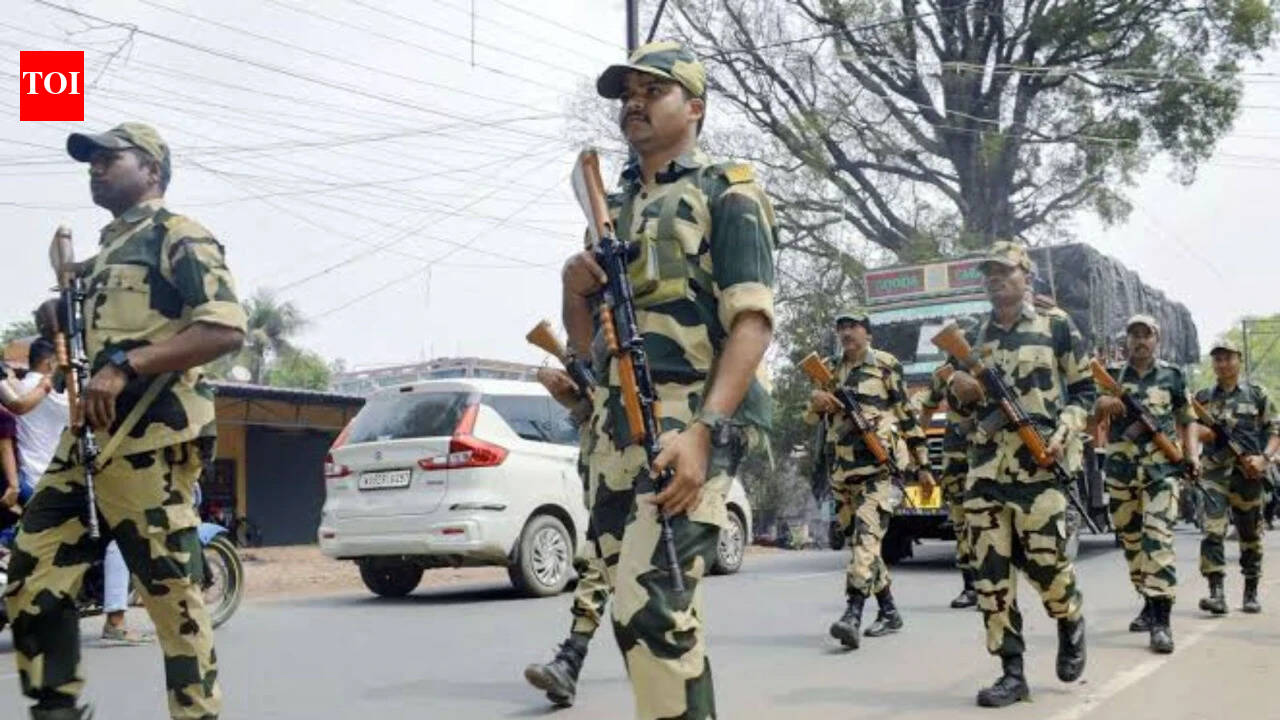
Why in news
The supplied reports state that the CAPF administration law has come into force with an IPS quota in senior posts. The available extracts do not disclose the quota percentage, designated ranks, force-wise coverage or transitional provisions.
Background
Central Armed Police Forces operate under the Union Ministry of Home Affairs and perform specialised security functions. For example, the Central Reserve Police Force assists in internal-security duties, the Border Security Force guards designated international borders, and the Central Industrial Security Force protects designated establishments and infrastructure. The Indian Police Service is an All India Service whose officers serve in state and Union assignments. CAPF cadre officers and IPS officers bring potentially complementary professional experience; the administrative challenge is to align leadership selection with each force’s mandate rather than treat all security assignments as interchangeable.
What is established, and what remains unverified
The supplied reporting establishes a limited factual core: the named Act came into effect on October 8, 2026, and mandates an IPS quota in senior CAPF posts. The extracts are incomplete and largely contain website boilerplate, so detailed statutory provisions cannot be reconstructed from them.
A statutory quota gives the staffing arrangement a legislative basis. However, its precise consequences depend on the enacted text, commencement notification and any applicable implementation rules. It would be premature to claim that particular ranks are exclusively reserved for IPS officers or that specific promotion routes have been closed.
- The quota percentage and rank-wise distribution are not available in the supplied material.
- The coverage of individual forces and treatment of existing appointments require verification.
- No legislative history, judicial ruling or implementation timetable beyond commencement is established by the extracts.
Infographic
Legal clarity
Verify covered posts, allocation rules and transitional arrangements.
Operational fit
Match leadership competence to each force’s specialised mandate.
Coordination
Strengthen cooperation with state police and other agencies.
Career fairness
Provide transparent progression and professional-development pathways.
Accountability
Assess preparedness, continuity and lawful operational performance.
AI-assisted infographic by Pragnya IAS Academy, based on the cited sources.
Leadership: coordination versus operational specialisation
IPS officers may contribute experience in state policing, intelligence coordination, investigation and inter-governmental administration. These capabilities are relevant when CAPFs work alongside state police and civil authorities in internal-security operations.
CAPF cadre officers can bring sustained exposure to a force’s operational environment, training systems, logistics and personnel needs. Such institutional knowledge matters because border guarding, protection of installations and internal-security deployment require distinct leadership competencies.
The policy choice is therefore not simply IPS leadership versus cadre leadership. It is whether appointments combine appropriate field experience, continuity and coordination skills, with clear accountability for performance.
- A service label alone is not a sufficient measure of suitability for a specialised command.
- Cross-service appointments can broaden coordination but require force-specific preparation.
- Leadership continuity can support institutional learning and long-term capability development.
Cadre progression and organisational incentives
Where senior posts are earmarked by recruitment source, the distribution of career opportunities becomes more predictable but potentially less flexible. If access to higher appointments for CAPF cadre officers narrows without compensating career pathways, promotion bottlenecks and perceptions of unequal opportunity could deepen.
These are possible effects, not outcomes established by the supplied reports. Actual consequences depend on the number and distribution of posts, vacancies, eligibility rules, promotion procedures and the treatment of existing officers.
Career management has operational implications. Officers’ confidence in fair progression can influence morale, willingness to acquire specialised skills and commitment to institutional development.
- Assess the entire promotion pipeline rather than only the composition of apex posts.
- Distinguish promotion within a cadre from appointment to a particular leadership position.
- Make eligibility, selection criteria and vacancy management transparent for both staffing streams.
Constitutional framework and the test of effectiveness
Article 309 provides the constitutional framework for legislation regulating recruitment and conditions of service in public employment, subject to the Constitution. Article 312 concerns All India Services, while Articles 14 and 16 provide the equality framework relevant to public-service classifications and opportunities.
A service-based staffing allocation is not automatically unconstitutional merely because it differentiates between recruitment streams. Its legal assessment would depend on the statutory scheme, the justification for the classification and applicable constitutional principles. The supplied material does not establish any judicial determination on this Act.
Police and public order are State List subjects, while the Union has constitutional responsibilities and powers relevant to internal security, including deployment of Union-controlled forces in aid of civil power. This makes effective coordination important, but staffing reform should ultimately be assessed through command quality, preparedness and lawful operational performance.
- Legal certainty in staffing does not by itself establish operational effectiveness.
- Equality of opportunity does not imply an automatic entitlement to every senior appointment.
- Operational accountability should apply uniformly, irrespective of an officer’s parent service.
| Dimension | Potential contribution of IPS appointments | Potential contribution of CAPF cadre appointments |
|---|---|---|
| Coordination | Experience of state policing and inter-agency working | Knowledge of force-specific coordination requirements |
| Operational expertise | Broader policing and administrative exposure | Sustained familiarity with specialised force duties |
| Institutional continuity | External perspective and cross-organisational learning | Retention of organisational memory and long-term experience |
| Career incentives | Opportunities for cross-service leadership assignments | Visible progression pathways for career force officers |
| Selection safeguard | Relevant operational experience and force-specific induction | Exposure to wider policing, policy and inter-governmental coordination |
October 8, 2026
According to the supplied Times of India reporting, the Central Armed Police Forces (General Administration) Act, 2026, came into effect with an IPS quota in senior posts.
Significance, challenges & way forward
Significance
- A legislative basis for senior staffing can provide greater predictability in leadership planning.
- A complementary mix of policing experience and force-specific expertise can strengthen joint internal-security operations.
- Transparent career pathways can connect personnel management with morale and institutional professionalism.
- The reform brings attention to a wider governance question: whether service-based allocations adequately reflect role-specific competence.
Challenges
- The incomplete source extracts prevent assessment of the quota’s scale, coverage and immediate personnel effects.
- Earmarking senior posts may create or intensify career bottlenecks if cadre structures are not reviewed alongside staffing allocations.
- Officers entering specialised commands may require preparation beyond general policing or administrative experience.
- Frequent leadership changes can weaken continuity in training, procurement and operational learning.
- Competition between staffing streams can undermine cooperation if selection procedures lack transparency and credibility.
Way forward
- Publish accessible explanations of the statutory provisions, covered posts and transitional arrangements.
- Map leadership competencies separately for different forces and commands before making appointments.
- Provide force-specific induction for incoming officers and wider administrative exposure for CAPF cadre officers.
- Review promotion pipelines, vacancies and career-development opportunities alongside the senior-post allocation.
- Support reasonable tenure stability while retaining mechanisms to address underperformance.
- Evaluate implementation through preparedness, coordination, personnel welfare and lawful operational outcomes rather than service representation alone.
Key terms
- Central Armed Police Forces
- Union security forces under the Ministry of Home Affairs with mandates such as border guarding, internal-security support and protection of designated installations.
- Indian Police Service
- An All India Service whose officers undertake policing and related leadership assignments in state and Union institutions.
- Cadre progression
- Advancement through a service’s hierarchy under applicable eligibility, vacancy and promotion rules.
- Deputation
- Temporary service in another organisation or post under prescribed terms while retaining a connection with the parent cadre.
- Statutory staffing arrangement
- An allocation or appointment framework grounded in legislation rather than solely in executive instructions.
- Operational specialisation
- Expertise tailored to a force’s particular mission, terrain, equipment and deployment conditions.
Link with static syllabus
Prelims practice MCQs
Q1. With reference to the Central Armed Police Forces (General Administration) Act, 2026, as described in the supplied reports, consider the following statements: 1. It came into effect on October 8, 2026. 2. It mandates an IPS quota in senior CAPF posts. 3. The supplied extracts specify the exact quota percentage. Which of the statements given above are correct?
Q2. Which constitutional provision specifically concerns the creation of All India Services?
Q3. Consider the following pairs: 1. Central Reserve Police Force — Assistance in internal-security duties. 2. Border Security Force — Guarding designated international borders. 3. Central Industrial Security Force — Protection of designated establishments and infrastructure. Which of the pairs given above are correctly matched?
Q4. With reference to public employment and security administration, consider the following statements: 1. Article 309 operates subject to the provisions of the Constitution. 2. Police and public order are State List subjects. 3. Equality of opportunity guarantees every eligible officer appointment to a senior post. Which of the statements given above are correct?
Mains practice questions
GS 3 · 15 marks · 250 words
Statutory staffing arrangements in Central Armed Police Forces must reconcile inter-agency coordination with operational specialisation and cadre aspirations. Discuss in the context of the reported IPS quota in senior CAPF posts.
Frequently asked questions
What has changed under the reported CAPF administration law?
The supplied reports state that the Central Armed Police Forces (General Administration) Act, 2026, came into effect on October 8 with an IPS quota in senior CAPF posts. The extracts do not provide the detailed allocation.
What percentage of senior posts is reserved for IPS officers?
The supplied material does not disclose the percentage or the ranks covered. These details require verification from the enacted law and relevant official notifications.
Does the IPS quota necessarily prevent CAPF cadre officers from obtaining senior appointments?
That conclusion cannot be drawn from the available extracts. The effect depends on the posts covered, the size of the allocation and the applicable career and appointment rules.
Why is this issue important for internal security?
Senior staffing influences coordination, command continuity, specialised expertise and career incentives. Its effectiveness depends on whether appointments meet operational requirements, not simply on which service supplies the officers.
Sources
- Times of India: IPS quota in CAPF posts comes into force
- Times of India: CAPF law comes into force, mandates IPS quota in senior posts
Analysis prepared by the Pragnya IAS Academy current-affairs desk with AI assistance from the cited reports. Verify figures with the original sources.
Turn current affairs into marks
Join Pragnya IAS Academy's mentorship for daily answer-writing evaluation on stories like this.