
CEC and EC Immunity: Section 16, Electoral Independence and Constitutional Accountability
Revise the static topic: UPSC Polity notes · UPSC Governance notes
In short: The Supreme Court has issued notice to the Centre on a challenge to Section 16 of the 2023 law governing the Chief Election Commissioner and Election Commissioners. The provision protects serving and former commissioners from civil or criminal proceedings for acts done or purportedly done in official duty, raising questions about equality, accountability and the appropriate safeguards for electoral independence.
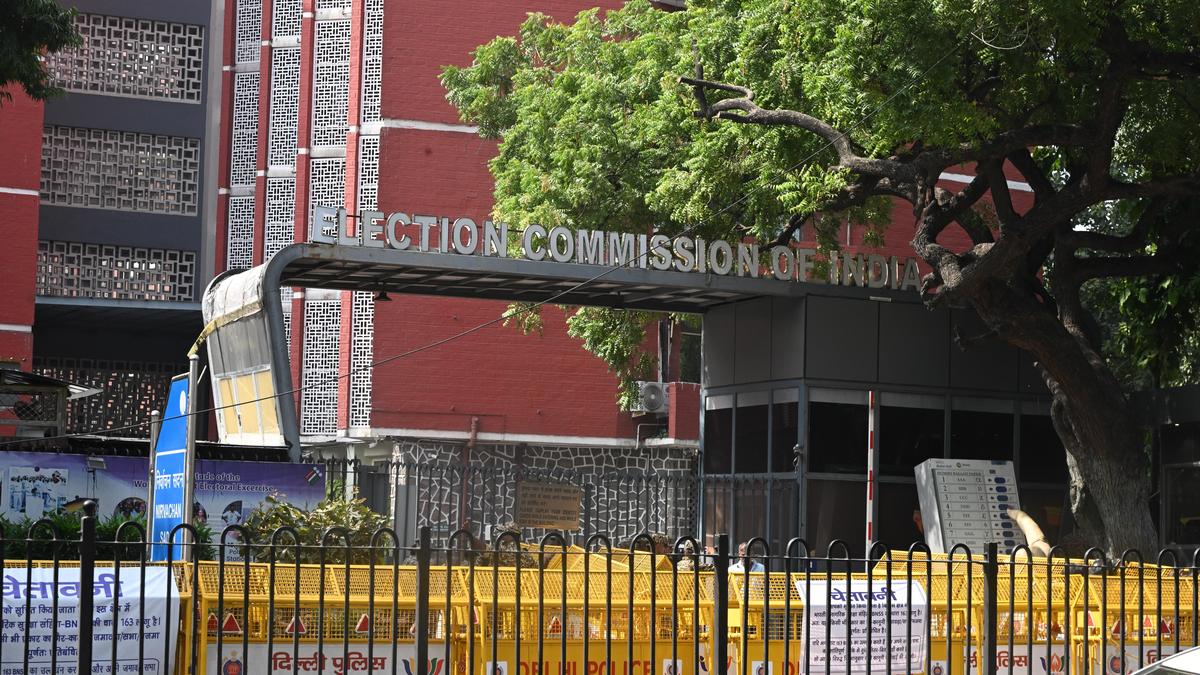
Photo from the source report: CEC and EC Immunity: Section 16, Electoral Independence and Constitutional Accountability
Image: The Hindu
Why in news
The Association for Democratic Reforms has challenged Section 16 before the Supreme Court. The reported development is the issuance of notice, not a final ruling on the provision’s constitutionality.
2023
Year of the challenged law
16
Section providing immunity
Background
Article 324 vests the superintendence, direction and control of elections to Parliament, State legislatures, and the offices of President and Vice-President in the Election Commission of India. It also provides institutional safeguards: the CEC cannot be removed except in the same manner and on the same grounds as a Supreme Court judge, while other Election Commissioners cannot be removed except on the CEC’s recommendation. The Chief Election Commissioner and Other Election Commissioners (Appointment, Conditions of Service and Terms of Office) Act, 2023 governs appointments and service-related matters. Statutory protections under this law remain subject to the Constitution.
What Section 16 protects
Section 16 bars courts from entertaining or continuing civil or criminal proceedings against a serving or former CEC or Election Commissioner for acts done or purportedly done in the discharge of official duties. Its express coverage of former commissioners means that leaving office does not end the protection.
The expression lifelong immunity describes this continuing protection, not immunity for every act in a commissioner’s life. The provision is tied to official or purported official conduct; it should not be presented as a general exemption for wholly private conduct.
- The protection covers both civil and criminal proceedings against the individual commissioner.
- The bar extends to proceedings already underway, as well as proceedings sought to be initiated.
- The phrase purportedly done broadens the issue beyond acts unquestionably within lawful official authority.
- The provision contains no express good-faith qualification.
Infographic
Protection
Serving and former commissioners; official and purported official acts.
Independence
Prevent retaliatory litigation from distorting electoral decisions.
Equality
Test the justification and breadth of special treatment under Article 14.
Accountability
Distinguish bona fide decisions from abuse of public power.
Judicial review
Separate personal immunity from review of institutional action.
AI-assisted infographic by Pragnya IAS Academy, based on the cited sources.
Legislative rationale and the independence argument
According to the supplied report, the immunity clause was absent from the Bill as introduced and was added through an amendment when the Rajya Sabha passed it. The original Statement of Objects and Reasons therefore did not explain this provision. The Union Law Minister justified it as necessary for commissioners to function independently and without hindrance.
The functional concern is legitimate: election administrators take politically contentious decisions and may face retaliatory litigation. Protection extending beyond retirement can also address the threat of future harassment. However, that objective does not by itself establish the necessity of a broadly worded bar on both civil and criminal proceedings.
- The earlier 1991 law governing commissioners’ service conditions contained no equivalent provision, according to the report.
- Independence requires protection against intimidation, but accountability requires remedies against abuse.
- The relevant policy question is whether narrower safeguards could achieve the same protective purpose.
Article 14 and the limits of statutory immunity
Article 14 guarantees equality before the law and equal protection of the laws. It permits reasonable classification where there is an intelligible differentia and a rational connection between that distinction and the legislative objective. A special protection for election commissioners is therefore not unconstitutional merely because it treats them differently.
The constitutional scrutiny concerns the breadth and justification of that distinction. Does the provision reasonably protect independent electoral administration, or does it confer excessive protection without adequately distinguishing bona fide decisions from abuse? Its continuing operation, coverage of civil and criminal proceedings, and absence of an express good-faith condition are relevant to this assessment.
For an ordinary statute, the challenge must be anchored in constitutional limitations, particularly fundamental rights such as Article 14. Rule of law, free and fair elections, and judicial review provide important constitutional context; disagreement with the policy alone is not a sufficient ground for invalidation.
- Electoral independence is a legitimate objective, but the means adopted must withstand constitutional scrutiny.
- Comparison with other independent public authorities helps test the justification for this particular protection.
- The Supreme Court has not yet resolved these questions in the reported proceedings.
Constitutional immunities require precise comparison
Article 361 provides distinct protections to the President and Governors. Criminal proceedings and arrest or imprisonment are barred during their tenure. Separately, Article 361 protects them from being answerable to courts for the exercise of official powers and duties, while preserving appropriate proceedings against the Union or State government. It is therefore inaccurate to describe every protection under Article 361 as merely tenure-bound.
Articles 105 and 194 protect legislators against court proceedings for anything said or any vote given in the legislature or its committees. These are function-specific protections, not a general immunity for official conduct. Their protection for covered speech or votes does not simply disappear when a legislative session ends.
Section 16 is statutory rather than constitutional. Its post-tenure reach is broader in duration than the tenure-bound criminal-process protection under Article 361, but comparisons must distinguish personal liability, official non-answerability and review of governmental action.
- Constitutional immunities are defined exceptions, not an automatic template for unrestricted statutory protection.
- Diplomatic immunity serves a different framework of international relations, functional necessity and reciprocity.
- The duration of protection and the conduct protected must be examined separately.
Personal immunity is not immunity of electoral decisions from review
Proceedings seeking personal civil or criminal liability against a commissioner are conceptually different from proceedings questioning the legality of an Election Commission decision. Section 16 should not automatically be read as making every Commission action immune from judicial scrutiny.
Judicial review under Articles 32 and 226 remains part of the constitutional framework, subject to applicable constitutional limits. Article 329 channels challenges to elections through election petitions and restricts judicial interference in electoral matters within its scope. These limits arise from the Constitution, not simply from personal immunity under Section 16.
Possible judicial responses include upholding the provision, adopting a constitutionally permissible narrow interpretation, or invalidating it if it violates the Constitution. The issuance of notice does not indicate which outcome will follow.
- Institutional independence does not mean institutional infallibility.
- Protection of office-holders and the availability of remedies against unlawful decisions are separate questions.
- Any interpretation must preserve constitutional supremacy and legally available electoral remedies.
| Provision | Protected subject | Scope and limitation |
|---|---|---|
| Section 16 of the 2023 Act | Serving and former CEC and Election Commissioners | Bars civil or criminal proceedings for official or purported official acts; protection continues after office. |
| Article 361: criminal-process protection | President and Governors | Bars criminal proceedings and arrest or imprisonment during tenure. |
| Article 361: official non-answerability | President and Governors | Protects against personal answerability for official powers and duties; appropriate proceedings against the government remain available. |
| Articles 105 and 194 | Members of Parliament and State legislatures | Protect legislative speech and votes from court proceedings; do not confer general immunity for all conduct. |
- 1. Identify whether the proceedings seek personal liability or review of an institutional decision.
- 2. Determine whether the conduct is official, purportedly official or wholly private.
- 3. Examine the justification for special protection under Article 14.
- 4. Assess whether the breadth of protection reasonably serves electoral independence.
- 5. Consider the effect on accountability and constitutionally available remedies.
- 6. Determine whether the provision can be upheld, narrowly interpreted or must be invalidated.
1991
The earlier law governing Election Commissioners’ service conditions and transaction of business did not contain an equivalent immunity provision.
During passage of the 2023 Bill
The immunity clause was added through an amendment when the Rajya Sabha passed the Bill, according to the supplied report.
December 2023
The Chief Election Commissioner and Other Election Commissioners (Appointment, Conditions of Service and Terms of Office) Act, 2023 was passed.
Recent development reported in the source
The Supreme Court issued notice to the Centre on ADR’s challenge to Section 16.
Significance, challenges & way forward
Significance
- The case can clarify the boundary between protection necessary for electoral independence and excessive insulation from legal accountability.
- Its resolution may guide legislative design of immunities for other independent public authorities.
- Effective protection against harassment can support impartial decision-making in politically sensitive elections.
- Clear avenues for reviewing unlawful action can strengthen public confidence in the Election Commission.
Challenges
- The phrase purportedly done may generate disputes over the connection between alleged misconduct and official duties.
- The absence of an express good-faith qualification raises concerns about insufficient differentiation between honest error and abuse.
- Overbroad immunity can weaken remedies, while inadequately designed safeguards can expose commissioners to vexatious litigation.
- Public debate may conflate personal immunity with a complete bar on judicial review of Election Commission decisions.
- The source provides no final judicial determination of the provision’s meaning or validity.
Way forward
- Parliament should articulate a clear, evidence-based justification for the scope of any special immunity.
- Consider replacing broadly worded protection with safeguards expressly linked to bona fide performance of official functions.
- Any revised framework should distinguish honest official decisions from corruption, mala fides and conduct lacking a genuine connection with duty.
- Independent screening or judicial scrutiny of complaints could deter harassment without creating an absolute accountability barrier.
- The law should clearly preserve constitutionally available review of institutional decisions and appropriate electoral remedies.
- Reasoned decisions, transparent procedures and reliable records should complement legal safeguards for electoral independence.
Key terms
- Official immunity
- Legal protection against specified proceedings or liability arising from the performance of public functions.
- Purported official act
- An act represented as performed under official authority, even where the legality or extent of that authority is disputed.
- Intelligible differentia
- A discernible distinction separating persons or things grouped together by law from those excluded.
- Rational nexus
- A reasonable connection between a legal classification and the objective the law seeks to achieve.
- Judicial review
- The power of constitutional courts to examine legislation and public action for conformity with constitutional requirements.
- Reading down
- Adopting a permissible narrow interpretation of a provision to keep it within constitutional limits.
- Mala fides
- Bad faith in exercising power, including action driven by an improper purpose.
Link with static syllabus
Prelims practice MCQs
Q1. With reference to Section 16 of the 2023 law governing the CEC and Election Commissioners, consider the following statements: 1. It covers serving as well as former commissioners. 2. It applies only to criminal proceedings. 3. It includes acts purportedly done in the discharge of official duties. Which of the statements given above are correct?
Q2. Consider the following statements about constitutional immunities: 1. Article 361 bars criminal proceedings against the President or a Governor during their term of office. 2. Articles 105 and 194 protect covered legislative speech and votes against court proceedings. 3. Article 361 places every governmental decision beyond judicial review. Which of the statements given above are correct?
Q3. Under the reasonable-classification test associated with Article 14, which of the following are required? 1. An intelligible differentia distinguishing the classified group from others. 2. A rational relation between the differentia and the legislative objective. 3. Identical treatment of every public office irrespective of its functions. Select the correct answer.
Q4. Consider the following pairs: 1. Article 324: Superintendence, direction and control of specified elections by the Election Commission 2. Article 329: Restrictions on judicial interference in electoral matters 3. Article 194: Immunities of the President and Governors Which of the pairs given above are correctly matched?
Mains practice questions
GS 2 · 15 marks · 250 words
Electoral independence requires protection from intimidation, not insulation from accountability. Examine this statement in the context of Section 16 of the 2023 law governing the CEC and Election Commissioners.
Frequently asked questions
Has the Supreme Court struck down Section 16?
No final ruling is reported in the supplied source. The Court has issued notice to the Centre on ADR’s challenge.
Does lifelong immunity mean protection for all private conduct?
No. Section 16 concerns acts done or purportedly done in official duty; lifelong refers to the protection continuing after the commissioner leaves office.
Why is Article 14 relevant?
Article 14 permits justified legal distinctions but prohibits constitutionally impermissible unequal treatment. The issue is whether this special protection bears a reasonable relationship to electoral independence without becoming excessively broad.
Does Section 16 automatically prevent challenges to Election Commission decisions?
No such conclusion follows automatically from a provision protecting commissioners against personal proceedings. Review of institutional action is a separate question, governed by constitutional provisions and applicable electoral remedies.
Sources
- The Hindu: The debate over immunity to CEC, ECs
Analysis prepared by the Pragnya IAS Academy current-affairs desk with AI assistance from the cited reports. Verify figures with the original sources.
Turn current affairs into marks
Join Pragnya IAS Academy's mentorship for daily answer-writing evaluation on stories like this — classroom programmes from a trusted name in IAS coaching in Hyderabad.