
Internet Access as a Fundamental Right: Children, Inclusion and Constitutional Limits
Revise the static topic: UPSC Polity notes · UPSC Governance notes
In short: A Times of India headline reports that the Supreme Court affirmed internet access as a fundamental right, including for children. The issue concerns access to education, expression and public services alongside lawful restrictions and child protection; however, the supplied extract does not contain the judgment needed to verify the precise holding.
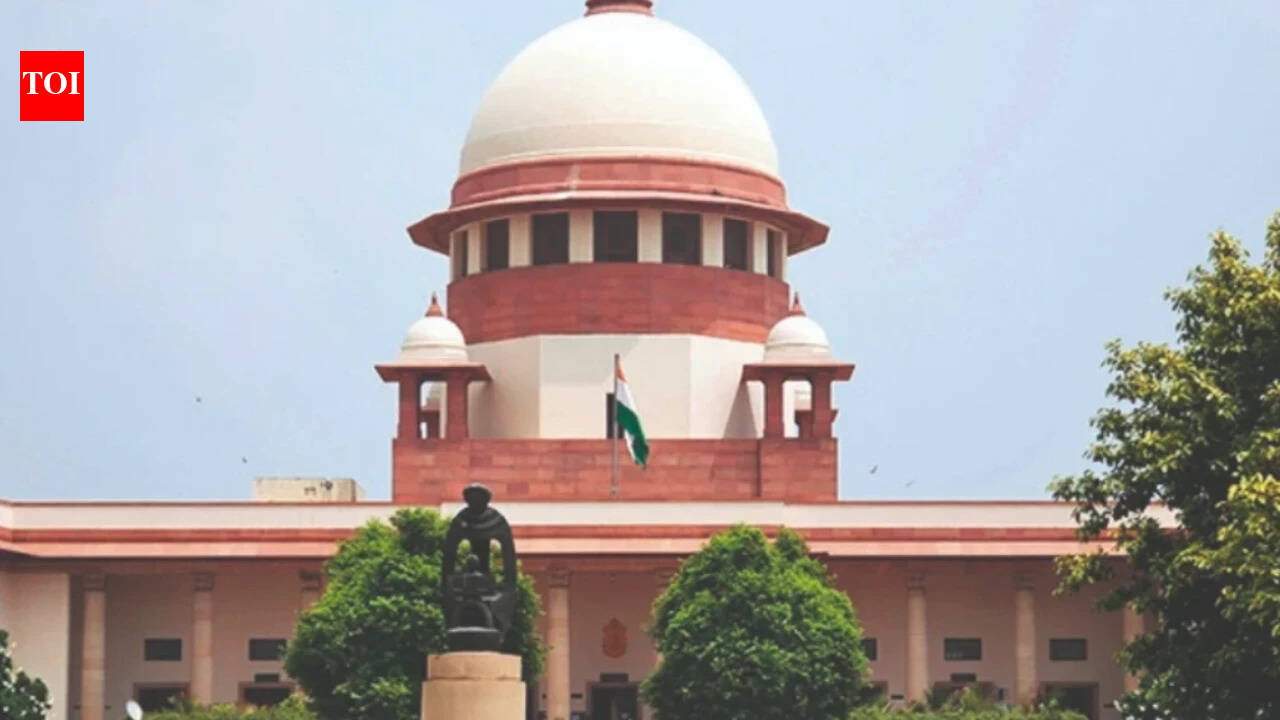
The Times of India report on internet access as a fundamental right, including for children. The supplied extract does not include the judgment needed to verify the precise holding.
Image: Times of India
Why in news
The reported Supreme Court position brings children's internet access into the debate on fundamental rights and digital inclusion. The supplied material contains only the headline and website notices, so the case details, reasoning and operative directions cannot be established from it.
Background
The Constitution does not expressly enumerate a right to internet access. Its constitutional protection is examined through rights that digital connectivity enables: equality under Article 14, speech and expression under Article 19(1)(a), occupation and business under Article 19(1)(g), life and personal liberty under Article 21, and education under Article 21A. In Anuradha Bhasin v. Union of India, the Supreme Court protected speech and expression and trade or business conducted through the internet, while expressly leaving open the question of declaring internet access itself a fundamental right. This distinction remains essential when interpreting any subsequent reported ruling.
What the report establishes—and what remains unverified
The supplied headline attributes to the Supreme Court a position that internet access is a fundamental right for everyone, including children. It does not disclose whether this was an oral observation, part of the judgment's reasoning, or an enforceable direction.
The full judicial text is necessary before concluding that the Court has recognised a standalone right, imposed universal connectivity obligations, or invalidated a particular restriction. A newspaper headline is not a substitute for identifying the binding legal principle.
- Verify the case, issues before the Court and final directions before citing the report as a new constitutional precedent.
- Distinguish protection of existing rights exercised online from a positive entitlement to publicly funded internet access.
- Do not infer that recognition of a right makes every age-based safeguard or internet restriction unconstitutional.
Infographic
Constitutional foundation
Expression, equality, dignity, privacy and education.
Meaningful inclusion
Affordable connectivity, devices, skills and accessibility.
Lawful limits
Legal authority, permissible aims and proportionality.
Child protection
Age-appropriate access without excessive surveillance.
Accountability
Reasoned decisions, applicable transparency and effective remedies.
AI-assisted infographic by Pragnya IAS Academy, based on the cited sources.
Constitutional foundations: access enables several rights
Article 19(1)(a) protects citizens' speech and expression, including its exercise through the internet. Article 19(1)(g) protects citizens' occupational and commercial freedoms, which can also be exercised online. Restrictions must satisfy the applicable constitutional provision; the grounds governing speech cannot simply be replaced by a general claim of public interest.
Article 21 connects the debate to dignity, privacy and personal autonomy. Article 14 subjects State action to equality and non-arbitrariness requirements. Where educational delivery depends on connectivity, Article 21A strengthens the case for ensuring that eligible children are not excluded because they lack devices, accessible content or affordable data.
- Article 19 protects citizens, whereas Articles 14 and 21 extend to persons.
- Article 21A concerns free and compulsory education within its constitutionally specified age group, not an unlimited entitlement to every digital service.
- A positive duty to provide connectivity requires careful identification of the legal basis, beneficiaries and applicable obligations.
Reasonable restrictions: legality and proportionality
Internet-enabled expression is not absolute. Article 19(2) permits restrictions imposed by law on specified grounds, including public order, security of the State, decency or morality, and incitement to an offence. A restriction must have a constitutionally permissible basis and cannot rest merely on administrative convenience.
Anuradha Bhasin established important safeguards for internet suspension, including publication of suspension orders, proportionality and the impermissibility of indefinite suspension. Authorities must justify the necessity and scope of restrictions rather than treating broad disconnection as a routine response.
An internet shutdown, an order blocking particular content and a school rule governing device use are different interventions. Each needs examination under its applicable legal framework, affected rights and practical impact.
- Assess the legal authority, legitimate objective and connection between the measure and the identified harm.
- Examine whether a less rights-restrictive measure could achieve the same objective.
- Consider duration, geographical reach, affected services and opportunities for review.
- Assess collateral effects on education, livelihoods, healthcare and access to public services.
Children's rights: protection without digital exclusion
Children are rights-holders, not merely subjects of supervision. Connectivity can support learning, communication and participation, but online environments can expose them to sexual exploitation, harassment, intrusive data collection and harmful content.
The appropriate policy response is age-appropriate access with safeguards, rather than an automatic choice between unrestricted access and complete exclusion. The Information Technology Act and the Protection of Children from Sexual Offences Act provide relevant legal frameworks for addressing specified online harms; their application must follow their respective provisions.
Child protection also has a privacy dimension. Age checks and parental tools should not become a pretext for excessive identity collection or continuous surveillance. Schools and public authorities should preserve alternative channels so that children without reliable connectivity are not penalised.
- Promote digital literacy, privacy awareness and accessible reporting mechanisms.
- Use proportionate, age-appropriate safeguards while preserving access to educational resources.
- Address affordability, disability access, language barriers and unequal household access to devices.
- Combine platform accountability with support for parents, teachers and children.
| Provision | Relevance to internet access | Important qualification |
|---|---|---|
| Article 14 | Equality and protection against arbitrary State action | Differential treatment requires constitutional justification. |
| Article 19(1)(a) | Speech and expression exercised online | Restrictions must satisfy Article 19(2). |
| Article 19(1)(g) | Online occupation, trade and business | Subject to Article 19(6). |
| Article 21 | Privacy, dignity and personal liberty in digital life | Does not by itself establish an unlimited entitlement to every online service. |
| Article 21A | Educational inclusion where learning depends on connectivity | Applies within its constitutionally specified scope. |
- 1. Identify the intervention and the rights it affects.
- 2. Verify its legal basis and the authority imposing it.
- 3. Identify the constitutionally permissible objective.
- 4. Test necessity and less rights-restrictive alternatives.
- 5. Balance benefits against rights burdens, including effects on children.
- 6. Ensure applicable transparency, review and remedies.
Significance, challenges & way forward
Significance
- A rights-based approach places digital access within constitutional governance rather than treating it solely as a commercial service.
- Educational inclusion requires attention to connectivity, devices, accessibility and meaningful learning opportunities together.
- Protection of online expression strengthens democratic participation and access to information.
- Recognising children as rights-holders supports safeguards that protect them without unnecessarily excluding them.
- Reasoned and reviewable restrictions improve accountability in digital administration.
Challenges
- The supplied headline does not establish the precise scope or enforceability of the reported judicial position.
- Network availability alone cannot overcome unaffordable services, inaccessible interfaces or lack of suitable devices.
- Broad restrictions can disrupt lawful activities far beyond the harm they seek to prevent.
- Intrusive age-verification and monitoring systems can create new privacy and data-security risks.
- Unequal digital literacy can limit children's ability to recognise harm and obtain effective remedies.
Way forward
- Obtain and examine the full judgment before attributing new legal duties or a standalone constitutional right to the Court.
- Treat affordable connectivity, accessible content and device access as complementary priorities for digital inclusion.
- Retain workable offline channels for essential education and public services to prevent exclusion.
- Require internet restrictions to satisfy legality, necessity, proportionality and applicable procedural safeguards.
- Encourage privacy-preserving, age-appropriate platform design with simple reporting and grievance mechanisms.
- Build digital citizenship education around consent, privacy, misinformation, online abuse and help-seeking.
Key terms
- Digital divide
- Unequal ability to access and effectively use digital technologies, including gaps in connectivity, devices, skills and accessibility.
- Proportionality
- A constitutional assessment of whether a rights restriction serves a legitimate aim through suitable, necessary and appropriately balanced means.
- Positive obligation
- A duty requiring the State to take measures to enable a right, rather than merely refrain from interfering with it.
- Ratio decidendi
- The legal principle necessary to a judicial decision that constitutes its binding basis.
- Age-appropriate design
- Designing digital services and safeguards around children's developmental needs and risks.
- Data minimisation
- Limiting personal-data collection and use to what is necessary for a specified purpose.
Link with static syllabus
Prelims practice MCQs
Q1. With reference to Anuradha Bhasin v. Union of India, consider the following statements: 1. The Supreme Court protected speech and expression and trade or business exercised through the internet. 2. The Court conclusively declared a standalone fundamental right to internet access. 3. The Court held that indefinite suspension of internet services is impermissible. Which of the statements given above are correct?
Q2. Which of the following is not an expressly enumerated ground for restricting speech and expression under Article 19(2)?
Q3. Consider the following statements: 1. Article 19 freedoms are guaranteed to citizens. 2. Articles 14 and 21 protect persons, not only citizens. 3. Article 21A expressly guarantees unrestricted access to every internet platform. Which of the statements given above are correct?
Q4. Which of the following best describes proportionality in the assessment of a restriction on internet-enabled rights?
Mains practice questions
GS 2 · 15 marks · 250 words
Internet access is increasingly a condition for exercising constitutional rights. Discuss its constitutional foundations and suggest a framework that reconciles children's digital inclusion with reasonable restrictions and online safety.
Frequently asked questions
Does the supplied source establish a new standalone fundamental right to internet access?
The headline reports such an affirmation, including for children, but the extract does not contain the judgment. Its exact scope and binding directions therefore remain unverified.
Does constitutional protection make internet access unrestricted?
No. Internet-enabled rights remain subject to applicable constitutional limits, and restrictions must have a lawful basis and satisfy relevant safeguards.
Does recognising children's digital rights prevent child-safety regulation?
No. Proportionate, age-appropriate safeguards can protect children while preserving legitimate educational and communicative access.
Does a right to internet access automatically mean free internet for everyone?
No such entitlement can be inferred from the supplied headline. Any positive provisioning duty would depend on the precise judicial holding and applicable law.
Sources
Analysis prepared by the Pragnya IAS Academy current-affairs desk with AI assistance from the cited reports. Verify figures with the original sources.
Turn current affairs into marks
Join Pragnya IAS Academy's mentorship for daily answer-writing evaluation on stories like this — classroom programmes from a trusted name in IAS coaching in Hyderabad.