
Delimitation Debate: Federal Balance, Population Equity and Women’s Reservation
Revise the static topic: UPSC Polity notes · UPSC Governance notes
In short: The Congress has proposed retaining the Lok Sabha’s existing strength and State-wise seat distribution, reserving one-third of seats for women, and freezing these arrangements for 25 years. The proposal reopens the debate over balancing population-based representation with interstate equity, while highlighting the constitutional linkage between women’s reservation, the Census and delimitation.
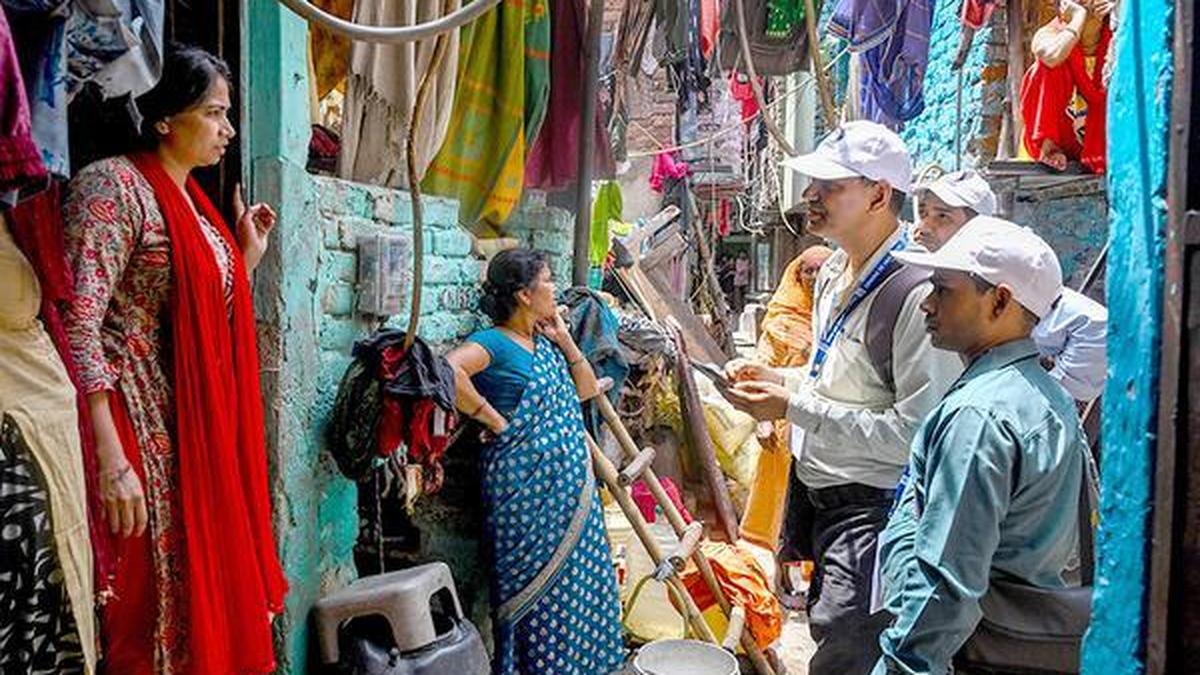
Congress proposes retaining the Lok Sabha’s existing strength and State-wise seat distribution, reserving one-third of seats for women, and freezing these arrangements for 25 years.
Image: The Hindu
Why in news
Congress leader Jairam Ramesh outlined a four-point delimitation formula and claimed that INDIA bloc parties supported it. He called for consultations with political parties and stakeholders, particularly over concerns that population-based redistribution could disadvantage southern States.
543
Lok Sabha seats proposed to be retained
One-third
Proposed reservation for women
25 years
Proposed freeze on the arrangements
Background
Delimitation determines the territorial boundaries of electoral constituencies and, where constitutionally permitted, readjusts seat allocation using population data. Article 81 governs the composition of the Lok Sabha and population-based representation, while Article 82 provides for readjustment after a Census through an authority and procedure determined by Parliament. Article 170 addresses corresponding issues for State Legislative Assemblies. The existing constitutional freeze protects interstate Lok Sabha allocation until publication of the relevant figures of the first Census taken after 2026. Separately, the constitutional provisions for women’s reservation link their implementation to a delimitation exercise undertaken for that purpose after publication of the relevant figures of the first Census taken after the reservation amendment’s commencement.
The proposal: protect existing representation while introducing women’s reservation
The Congress formula combines continuity in parliamentary representation with a commitment to women’s reservation. It proposes retaining the present Lok Sabha strength, preserving the existing allocation among States and freezing the proposed arrangements for 25 years.
This is a political proposal, not an enacted constitutional settlement. The reported support of other INDIA bloc parties is attributed to Jairam Ramesh; the source does not establish a government-approved delimitation plan.
- Retain the existing strength of 543 Lok Sabha seats.
- Maintain the current State-wise distribution of seats.
- Reserve one-third of existing seats for women; the report describes the proposed number as 182.
- Freeze all three proposed arrangements for 25 years.
- Distinguish the reported seat figure from a final legal allocation, which would require detailed constitutional and implementation rules.
Infographic
Democratic equality
Address population disparities in representation.
Federal equity
Assess both absolute seats and relative State influence.
Gender inclusion
Provide a legally clear roadmap for women’s reservation.
Constitutional legitimacy
Follow Census triggers, amendment rules and transparent consultation.
AI-assisted infographic by Pragnya IAS Academy, based on the cited sources.
Constitutional framework: a Census is a trigger, not a complete mechanism
Article 82 is already in force; it does not newly commence when Census results are published. The legally relevant question is when the constitutional restriction on readjustment ceases to apply and how Parliament provides for the ensuing exercise. Publication after 2026 alone is not the test: the interstate allocation freeze refers to the first Census taken after 2026.
Interstate allocation and constituency boundary revision are distinct. The former determines how many Lok Sabha seats a State receives; the latter determines how voters are grouped within the State. Preserving State-wise seat shares therefore need not mean permanently retaining outdated constituency boundaries.
Extending the constitutional freeze or altering the constitutional conditions governing women’s reservation would require a constitutional amendment. Under Article 368, an amendment seeking to change the representation of States in Parliament also requires ratification by at least half of the State legislatures, alongside the prescribed parliamentary special majority.
- The present strength of the Lok Sabha is not a permanent constitutional requirement.
- Census publication does not, by itself, create new constituencies or immediately alter the composition of a sitting House.
- A delimitation authority must act within the constitutional framework and the law governing its mandate.
- Any legislative package must identify separately the changes to seat allocation, boundaries and reservation.
Population equality versus interstate equity
Population-based redistribution supports the democratic principle that citizens should have broadly comparable representation. Where population growth differs across States, a prolonged freeze can leave MPs representing substantially different population sizes, weakening equality of representation.
The competing federal concern is that States with slower population growth may lose relative parliamentary influence despite progress in demographic transition. Southern States’ concerns therefore relate not only to absolute seats but also to their share of the Lok Sabha and their ability to influence national decisions.
Neither a permanent freeze nor mechanically population-driven redistribution resolves every concern. A freeze protects existing State shares but preserves representational disparities; expansion can prevent absolute seat losses without necessarily preventing a decline in relative influence.
- Population equality concerns representation of citizens, whereas interstate equity concerns the distribution of political influence across States.
- Slower population growth reflects demographic transition shaped by health, education, social change and policy.
- Boundary revision within States can address some local disparities but cannot resolve unequal representation between States.
- The Rajya Sabha provides a federal chamber, but it does not give every State equal representation.
Women’s reservation: constitutional linkage and implementation choices
The constitutional framework provides reservation, as nearly as may be, of one-third of seats for women in the Lok Sabha, State Legislative Assemblies and the Legislative Assembly of the National Capital Territory of Delhi. It also provides reservation for women within seats reserved for Scheduled Castes and Scheduled Tribes. It does not extend this reservation to the Rajya Sabha or State Legislative Councils.
Article 334A links operationalisation to a delimitation exercise undertaken for this purpose after publication of the relevant figures of the first Census taken after the reservation amendment’s commencement. Consequently, implementation involves more than a political announcement: the relevant Census figures, delimitation and applicable legal arrangements must align.
The Census trigger for women’s reservation and the trigger governing the interstate allocation freeze are separately worded and should not be conflated. Delinking women’s reservation from its existing constitutional trigger would require constitutional change; retaining existing State shares while implementing reservation would require a legally coherent delimitation design.
- Reservation need not logically imply an increase in the total strength of the Lok Sabha.
- A freeze on State seat shares is analytically distinct from identifying constituencies reserved for women.
- The proposal needs clarity on whether its freeze concerns the reservation proportion, particular reserved constituencies, or both.
- Women’s representation should not become indefinitely contingent on resolving every dispute over interstate redistribution.
| Dimension | What it determines | Core policy concern |
|---|---|---|
| Interstate seat allocation | The number of Lok Sabha seats assigned to each State | Population-based representation versus preservation of State influence |
| Constituency delimitation within States | The territorial boundaries and population distribution of constituencies | Comparable representation, geographical coherence and administrative practicality |
| Women’s reservation | The seats reserved for women under the constitutional framework | Timely implementation, transparent allocation and applicable rotation arrangements |
| Total Lok Sabha strength | The overall size of the House | Representational workload, parliamentary functioning and distribution of any additional seats |
- 1. Conduct the first Census taken after commencement of the women’s reservation amendment.
- 2. Publish the relevant Census figures.
- 3. Establish and apply the legally required arrangements for delimitation.
- 4. Undertake delimitation for the purpose of implementing women’s reservation.
- 5. Bring reservation into electoral operation in accordance with the Constitution, without disrupting representation in an existing House before its dissolution.
Constitutional foundation
The Constitution establishes population-linked representation and a framework for readjustment after a Census.
Subsequent constitutional amendments
Interstate Lok Sabha allocation is frozen to address concerns arising from uneven population growth; constituency boundaries and interstate allocation remain legally distinguishable.
Women’s reservation amendment
Reservation for women is constitutionally provided, with implementation linked to relevant Census figures and delimitation.
Current reported proposal
Congress proposes retaining 543 Lok Sabha seats and existing State allocations, introducing one-third reservation for women and freezing the arrangements for 25 years.
Future constitutional trigger
Publication of relevant figures of the first Census taken after 2026 is the trigger specified for ending the existing protection against interstate seat readjustment.
Significance, challenges & way forward
Significance
- The debate concerns the distribution of political power within the Union, not merely the technical drawing of constituency boundaries.
- A credible settlement must reconcile citizens’ claims to comparable representation with States’ concerns about demographic transition and political influence.
- Implementing women’s reservation can make representative institutions more inclusive and widen access to legislative decision-making.
- Separating interstate allocation from boundary revision can create space for reform without treating every aspect of delimitation as indivisible.
- An agreed framework can strengthen the legitimacy of future electoral arrangements and reduce interregional mistrust.
Challenges
- A prolonged freeze can deepen population disparities between constituencies and States.
- Population-driven redistribution can reduce the relative parliamentary influence of slower-growing States.
- Increasing the total number of seats may avoid absolute losses while still altering State shares substantially.
- The reported formula does not fully explain how a long freeze would interact with constituency boundaries, reservation duration and rotation.
- Treating all Census-related constitutional triggers as identical risks legal and public confusion.
- Political agreement on broad principles may not translate into agreement on the detailed allocation of seats.
Way forward
- Initiate structured consultations with State governments, political parties and constitutional experts before settling the reform framework.
- Publish alternative scenarios covering continued allocation, population-based redistribution and expansion, showing both absolute seats and relative State shares.
- Distinguish the constitutional treatment of total House strength, interstate allocation, intrastate boundaries and women’s reservation.
- Provide a clear implementation roadmap for women’s reservation, identifying legal dependencies without announcing unsupported election deadlines.
- Ensure transparent delimitation criteria, publication of draft proposals and meaningful opportunities for objections.
- Subject any freeze or transitional safeguard to a reasoned review mechanism rather than presenting it as a permanent solution.
- Follow the applicable constitutional amendment and State-ratification requirements for any change affecting State representation in Parliament.
Key terms
- Delimitation
- The determination or redrawing of electoral constituency boundaries under the applicable constitutional and statutory framework.
- Interstate seat allocation
- The distribution of Lok Sabha seats among States, distinct from drawing constituency boundaries within a State.
- Delimitation freeze
- A constitutional restriction on specified readjustments of representation despite changes in population.
- Demographic transition
- The shift towards lower mortality and fertility associated with wider social and economic change.
- Equality of representation
- The principle that population differences should not produce unjustifiably unequal representative weight.
- Relative parliamentary influence
- A State’s share of the overall House, which can decline even if its absolute seat count is unchanged.
- Article 334A
- The constitutional provision governing the commencement and related operation of women’s legislative reservation.
Link with static syllabus
Prelims practice MCQs
Q1. With reference to delimitation in India, consider the following statements: 1. Interstate seat allocation and the redrawing of constituency boundaries within a State are distinct exercises. 2. Article 82 becomes operative for the first time only after the forthcoming Census results are published. 3. Publication of Census figures automatically changes the composition of the sitting Lok Sabha. Which of the statements given above is/are correct?
Q2. With reference to the constitutional framework for women’s reservation, consider the following statements: 1. It covers the Lok Sabha and State Legislative Assemblies. 2. It extends reservation to the Rajya Sabha and State Legislative Councils. 3. Its operationalisation is linked to relevant Census figures and a delimitation exercise undertaken for this purpose. Which of the statements given above are correct?
Q3. The existing constitutional protection against interstate Lok Sabha seat readjustment refers to which of the following triggers?
Q4. Consider the following statements about representation and federalism: 1. A State can retain its existing number of Lok Sabha seats while losing a share of the House’s total strength. 2. Every State has equal representation in the Rajya Sabha. 3. Under Article 368, an amendment seeking to change the representation of States in Parliament requires State ratification in addition to the prescribed parliamentary majority. Which of the statements given above are correct?
Mains practice questions
GS 2 · 15 marks · 250 words
Delimitation is a question of both democratic equality and federal accommodation. Examine this tension and discuss its implications for implementing women’s reservation.
Frequently asked questions
What is the Congress four-point delimitation proposal?
It proposes retaining 543 Lok Sabha seats, preserving the existing State-wise allocation, reserving one-third of seats for women and freezing these arrangements for 25 years. It remains a political proposal rather than an enacted settlement.
Does delimitation necessarily increase the number of Lok Sabha seats?
No. Constituency boundaries can be revised without increasing the total number of seats; changes to House strength and interstate allocation depend on the applicable constitutional and legal framework.
Why are southern States concerned about delimitation?
States with slower population growth fear that population-based redistribution could reduce their relative parliamentary influence. Retaining their existing seats would not necessarily preserve their share if the total House expands.
Can women’s reservation be implemented by political agreement alone?
No. The existing Constitution links implementation to relevant Census figures and delimitation; changing that linkage would require constitutional amendment.
Sources
Analysis prepared by the Pragnya IAS Academy current-affairs desk with AI assistance from the cited reports. Verify figures with the original sources.
Turn current affairs into marks
Join Pragnya IAS Academy's mentorship for daily answer-writing evaluation on stories like this — classroom programmes from a trusted name in IAS coaching in Hyderabad.