
Electoral Roll Revision: SSR, SIR and Due Process in Voter Re-enrolment
Revise the static topic: UPSC Polity notes · UPSC Governance notes
In short: The Election Commission of India has announced Special Summary Revision in 14 States and three Union Territories alongside a special drive to re-enrol eligible voters left out during Special Intensive Revision. In West Bengal, eligible deleted voters have been invited to apply through Form 6, but access to this route for people with pending tribunal appeals remains unclear. The central issue is how to maintain accurate rolls without denying eligible citizens timely and accessible voting rights.
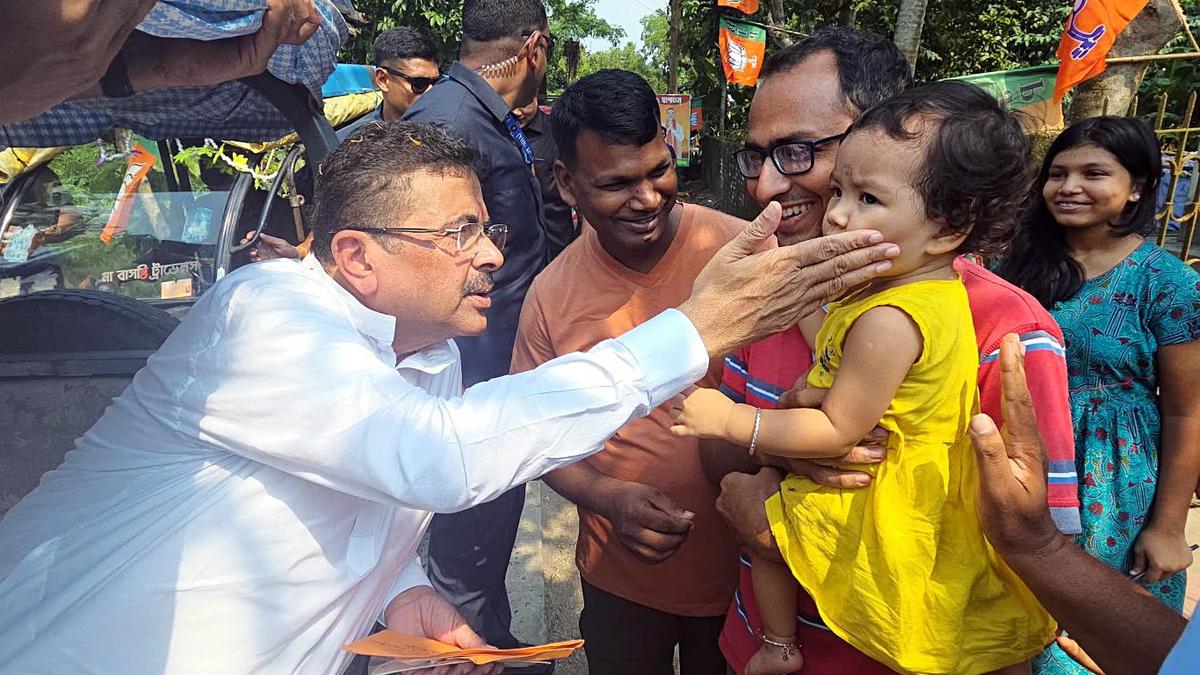
Eligible voters deleted from West Bengal’s electoral rolls have been invited to apply for re-enrolment through Form 6; access for those with pending tribunal appeals remains unclear.
Image: The Hindu
Why in news
The West Bengal Chief Electoral Officer has sought ECI clarification on whether voters with pending appellate tribunal cases can participate in the re-enrolment drive. Separately, the announced Special Summary Revision uses January 1, 2027 as its qualifying date.
14
States covered by the announced SSR
3
Union Territories covered by the announced SSR
38.31 lakh
West Bengal tribunal appeals reported
1.26 lakh
Tribunal appeals cleared, as reported
16
Tribunals remaining functional out of 19
93%
Restoration rate in decided cases, according to the editorial
Background
Electoral rolls identify the persons entitled to vote in a constituency. Article 324 places their preparation under the ECI’s superintendence, direction and control; Article 325 provides for a general electoral roll and prohibits exclusion solely on religion, race, caste or sex; and Article 326 establishes adult suffrage for Lok Sabha and State Assembly elections. The Representation of the People Act, 1950 and the Registration of Electors Rules, 1960 govern registration and roll revision. Eligibility rests on citizenship, the qualifying age, ordinary residence and the absence of applicable disqualifications. The Electoral Registration Officer decides inclusion and deletion, while Booth Level Officers undertake field-level assistance and verification.
What has been announced: revision and remedial enrolment
The announced SSR and the special re-enrolment drive are related but distinct exercises. SSR updates electoral rolls for the specified qualifying date; the special drive seeks to identify and restore eligible persons left out during SIR.
According to The Hindu’s reporting, the ECI’s October 2 direction asked the relevant CEOs to compare pre-SIR rolls with current rolls and enrol eligible omitted persons through Form 6 within one month. At the October 6 meeting, it called for enrolment camps followed by door-to-door BLO visits.
The West Bengal CEO has published access to the ASDD list and stated that eligible persons on it may submit Form 6 online or through BLOs. The Additional CEO clarified that Form 6 applicants need not be mapped to the 2002 roll. The editorial also reports limits on Form 7 objections and searchable text-PDF rolls for parties and candidates, but does not specify the numerical objection limit.
- Submitting Form 6 initiates consideration of inclusion; it does not automatically restore a name.
- The re-enrolment drive should not be confused with the disposal of an existing tribunal appeal.
- Eligibility verification remains necessary even when ancestry declarations and older-roll mapping are not required.
Infographic
Revise accurately
Distinguish SSR updates from intensive fresh preparation.
Verify fairly
Treat objections and ASDD labels as matters for inquiry, not conclusive proof.
Assist inclusion
Use Form 6, camps and BLO visits for eligible omitted electors.
Clarify remedies
Resolve uncertainty between fresh applications and tribunal appeals.
Act in time
Complete corrections early enough to protect actual participation.
Report transparently
Separate fresh enrolments, restorations, rejections and pending cases.
AI-assisted infographic by Pragnya IAS Academy, based on the cited sources.
SSR versus SIR: updating an existing roll or rebuilding it intensively
A summary revision normally proceeds from the existing roll, published in draft with proposed amendments, and invites claims and objections. An intensive revision entails preparation afresh through more extensive enumeration and verification. The Registration of Electors Rules permit intensive, summary or partly intensive and partly summary revision.
The word 'special' does not create an exemption from statutory eligibility requirements or procedural safeguards. Nor are ancestry declarations or mapping to a historical roll universal requirements for every intensive revision: they must be distinguished from the underlying legal framework.
The editorial argues that the present corrective drive reduces burdens associated with the reported SIR process. This is an editorial assessment, not a judicial finding that every SIR deletion was unlawful.
- SSR primarily updates the existing electoral database through claims, objections and corrections.
- SIR involves wider field verification and can create greater exclusion risks if documentary demands or verification errors are not addressed.
- Both methods must protect eligible electors while removing genuinely invalid entries.
Due process: an objection or an ASDD label is not a final finding
Section 22 of the Representation of the People Act, 1950 governs correction and deletion of entries after the prescribed inquiry. Its safeguards include a reasonable opportunity of being heard where action concerns ordinary residence, entitlement to registration or specified adverse corrections. Notice, verification and a reasoned decision are particularly important when eligibility is disputed.
The ASDD grouping combines absent, shifted, deceased and duplicate entries, but these categories require different factual inquiries. Temporary absence does not by itself terminate ordinary residence. A duplicate entry calls for correction of multiple registration, not automatic exclusion of the eligible person from every roll.
Form 7 is a means of seeking deletion or objecting to inclusion; it is not proof of ineligibility. Even where objections are restricted to prevent bulk misuse, each adverse decision must rest on verified grounds rather than the volume of objections.
- An unvisited house or an unsuccessful contact attempt should not substitute for an adequate eligibility inquiry.
- An affected elector should be able to understand the ground of proposed deletion and respond with relevant evidence.
- A reasoned order and clear information on remedies make the opportunity to challenge deletion meaningful.
West Bengal’s tribunal bottleneck and the limits of Form 6
The Hindu reports that 1.26 lakh of 38.31 lakh appeals have been cleared and that only 16 of the 19 appellate tribunals remain functional. These special tribunals arose from Supreme Court-supervised arrangements; they should not be treated as the ordinary statutory appeal structure applicable to every electoral-roll dispute.
The supplied reports use different figures for deleted electors, adjudicated cases and appeals. These populations should not be treated as interchangeable. The editorial’s reported restoration rate of 93% applies to decided cases and cannot establish that the same proportion of all pending appeals will succeed.
The unresolved question is whether a person already pursuing a tribunal appeal may also seek inclusion through the new drive. The sources do not establish either an unrestricted parallel route or a final prohibition. A written clarification consistent with applicable court orders is therefore essential.
- Section 23 provides the statutory route for inclusion of names in electoral rolls.
- Section 24 provides appeals against specified ERO orders, with an initial designated district-level appellate authority and a further appeal to the CEO.
- Fresh inclusion, appeal against deletion and judicial review are distinct remedies and should not be presented as interchangeable.
Voting rights: accuracy must be accompanied by timely inclusion
The right to vote is statutory in its exercise, with a constitutional foundation in adult suffrage. Electoral administration must therefore combine roll integrity with non-arbitrary procedures and effective remedies. ECI supervision under Article 324 operates within the constitutional and statutory framework.
Restoring an eligible voter after an election protects future participation but cannot return the opportunity to vote in the election already concluded. Further, statutory restrictions on roll changes between the last date for nominations and completion of the election make early verification and timely decisions crucial.
The policy test is not merely how many invalid entries are removed, but whether eligible citizens can remain registered or obtain correction without disproportionate costs. The re-enrolment drive is consequently a remedial opportunity, not by itself a complete answer to procedural failures or institutional accountability.
- Separate reporting of fresh enrolments and post-deletion restorations would reveal whether exclusion is actually being corrected.
- Women changing residence after marriage, migrants, elderly persons and persons with disabilities require accessible assistance.
- A high restoration rate among decided appeals warrants scrutiny of initial decisions without prejudging every pending case.
| Dimension | Special Summary Revision | Special Intensive Revision | Special re-enrolment drive |
|---|---|---|---|
| Primary purpose | Update the existing roll for the qualifying date | Prepare the roll through intensive enumeration and verification | Include eligible persons left out during SIR |
| Starting point | Existing roll and proposed amendments | Fresh preparation through intensive fieldwork | Comparison of pre-SIR and current rolls |
| Reported mechanism | Draft publication, claims, objections and disposal | Extensive verification under the notified exercise | Form 6, enrolment camps and BLO visits |
| Main procedural risk | Missed claims or inadequately examined objections | Wrongful exclusion through verification errors or excessive burdens | Unclear treatment of persons with pending tribunal appeals |
| Essential safeguard | Accessible claims and fair decisions | Verified grounds, hearing where required and effective remedies | Assisted applications, eligibility scrutiny and appeal-route clarity |
- 1. Check the current electoral roll and, where relevant, the published ASDD list; do not rely only on possession of a voter identity card.
- 2. Identify whether the case concerns omission, deletion, shifting, duplication or an existing tribunal appeal.
- 3. For inclusion covered by the drive, submit Form 6 online or with assistance from a BLO or enrolment camp.
- 4. If a tribunal appeal is pending, seek written guidance from the competent election authority on the permissible route; the sources do not resolve parallel access.
- 5. Participate in the prescribed verification and obtain the application reference and the ERO’s decision.
- 6. Confirm actual inclusion in the roll; if refused, use the applicable appeal mechanism within the prescribed period.
December 2025
The first draft roll reportedly identified over 58 lakh ASDD electors in West Bengal.
March 10, 2026
The Supreme Court directed creation of a separate appellate body to challenge decisions of judicial officers in the West Bengal SIR process.
October 2, 2026
The ECI directed relevant CEOs to compare pre-SIR and current rolls and enrol eligible omitted electors through Form 6 within one month.
October 6, 2026
The ECI called for camps followed by BLO house visits; the West Bengal CEO sought clarity on coverage of pending tribunal cases.
January 1, 2027
Qualifying date specified for the announced SSR in 14 States and three Union Territories.
Significance, challenges & way forward
Significance
- Re-enrolment can restore prospective electoral participation for eligible persons omitted during revision.
- Comparing pre-SIR and current rolls enables the administration to identify omissions rather than waiting only for individual complaints.
- Camps and door-to-door assistance can reduce digital, mobility and information barriers.
- Searchable rolls can facilitate scrutiny by parties and candidates, provided personal data are handled responsibly.
- Clear separation of inclusion and appellate remedies strengthens legal certainty and public confidence.
Challenges
- Pending tribunal cases may leave eligible applicants uncertain about which remedy is available.
- Tribunal vacancies and slow disposal can make an otherwise valid remedy ineffective before an election.
- Temporary absence, migration and residential changes can be misclassified without careful field verification.
- Requiring affected citizens to repeatedly prove eligibility can transfer the cost of administrative errors to voters.
- Restoration after polling cannot retrospectively remedy the lost opportunity to vote.
- Different reported case totals and categories complicate assessment unless the ECI publishes clearly defined, comparable data.
Way forward
- Issue a public clarification on the interaction between Form 6 applications and pending tribunal appeals, consistent with court directions.
- Restore tribunal capacity and prioritise timely adjudication without diluting fair hearing requirements.
- Standardise notices, verification records and reasoned orders so that electors can understand and challenge adverse decisions.
- Use BLO visits and camps proactively, with assistance for migrants, women changing residence, elderly persons and persons with disabilities.
- Publish separate figures for fresh enrolments, restorations after deletion, rejected applications and pending appeals.
- Audit samples of deletions and successful appeals to identify recurring errors and improve verification practices.
- Protect personal information while providing sufficient roll access for meaningful public and party scrutiny.
Key terms
- Special Summary Revision
- A revision exercise that updates the existing electoral roll through draft publication, claims, objections and their disposal.
- Special Intensive Revision
- An intensive exercise involving fresh preparation of electoral rolls through extensive enumeration and verification.
- ASDD
- Absentee, Shifted, Dead and Duplicate: administrative categories requiring category-specific verification.
- Form 6
- The application for inclusion in an electoral roll, used in the reported drive for eligible omitted or deleted electors.
- Form 7
- The form for objecting to inclusion or seeking deletion of a name from an electoral roll.
- Form 8
- The application used by registered electors for shifting residence, correcting entries and specified voter-card-related requests.
- Ordinary residence
- The statutory connection between an elector and a constituency; temporary absence alone does not end it.
- Electoral Registration Officer
- The statutory authority responsible for preparation and revision of a constituency’s electoral roll and decisions on registration.
Link with static syllabus
Prelims practice MCQs
Q1. With reference to electoral-roll revision, consider the following statements: 1. Summary revision normally proceeds from the existing electoral roll. 2. Intensive revision involves preparation afresh through extensive enumeration and verification. 3. Calling a revision 'special' exempts it from statutory eligibility requirements. Which of the statements given above are correct?
Q2. Consider the following pairs: 1. Article 324 — ECI’s superintendence, direction and control over preparation of electoral rolls 2. Article 325 — General electoral roll and prohibition of exclusion solely on religion, race, caste or sex 3. Article 326 — Adult suffrage for Lok Sabha and State Assembly elections Which of the pairs given above are correctly matched?
Q3. With reference to electoral registration, consider the following statements: 1. Temporary absence from a place does not, by itself, terminate ordinary residence there. 2. Submission of Form 7 conclusively establishes that the person objected to is ineligible. 3. Form 6 is being used in the reported special drive for inclusion of eligible electors left out during SIR. Which of the statements given above are correct?
Q4. Which one of the following most accurately describes remedies concerning electoral rolls under the Representation of the People Act, 1950?
Mains practice questions
GS 2 · 15 marks · 250 words
Electoral-roll integrity requires both the removal of invalid entries and protection against wrongful exclusion. Examine this statement in the context of SSR, SIR and remedies for deleted electors.
Frequently asked questions
Can an eligible voter deleted during SIR apply again?
The West Bengal CEO has invited eligible deleted voters covered by the drive to apply through Form 6 online or through BLOs. Inclusion remains subject to verification and the competent authority’s decision.
Can someone with a pending tribunal appeal also use Form 6?
The supplied reports leave this unresolved. The West Bengal CEO has sought ECI clarification, so an unrestricted parallel route should not be assumed.
Is mapping to the 2002 roll required for Form 6 in this drive?
The West Bengal Additional CEO stated that such mapping is not required for Form 6 applicants. The editorial likewise describes the corrective drive as using the original Form 6 without an ancestry declaration.
Does holding a voter identity card guarantee the right to vote at a polling station?
No. The elector’s name must be included in the relevant electoral roll, subject to applicable legal conditions; possession of the card alone is insufficient.
Sources
- The Hindu: West Bengal CEO seeks clarity on re-enrolment of voters stuck in tribunal cases
- The Hindu: West Bengal CEO says eligible deleted voters can apply through Form 6 to restore name in rolls
- The Hindu (Editorial): A necessary corrective: On the SSR, the special summary revision of electoral rolls
- Indian Express: Election Commission to conduct annual revision of electoral rolls in states where SIR is over
Analysis prepared by the Pragnya IAS Academy current-affairs desk with AI assistance from the cited reports. Verify figures with the original sources.
Turn current affairs into marks
Join Pragnya IAS Academy's mentorship for daily answer-writing evaluation on stories like this — classroom programmes from a trusted name in IAS coaching in Hyderabad.