
Gaganyaan Separation Tests: Validating Safety Before the First Uncrewed Mission
Revise the static topic: UPSC Science & Technology notes
In short: ISRO has completed a series of Crew Module–Service Module separation tests ahead of Gaganyaan’s first uncrewed mission, G1. The tests validated the separation system’s design adequacy and demonstrated the shock-survivability of critical Crew Module subsystems, strengthening confidence in a safety-critical operation before atmospheric re-entry.
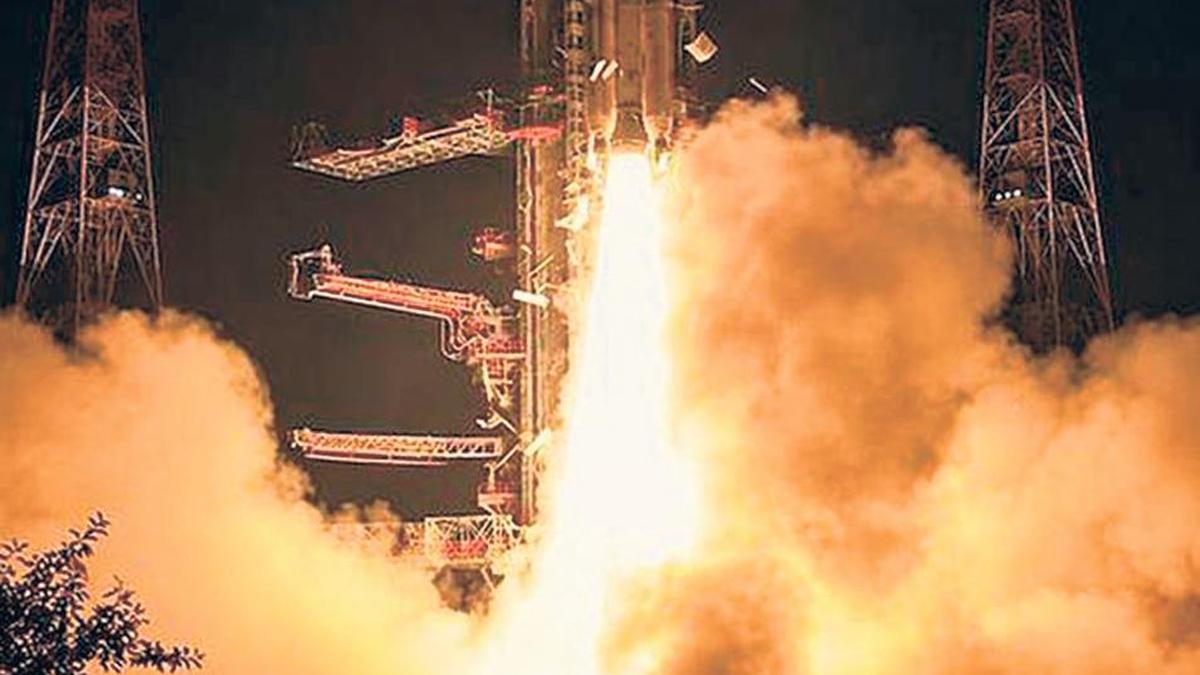
Photo from the source report: Gaganyaan Separation Tests: Validating Safety Before the First Uncrewed Mission
Image: The Hindu
Why in news
ISRO conducted instrumented tests at the Vikram Sarabhai Space Centre, Thiruvananthapuram, to simulate separation of Gaganyaan’s Crew Module from its Service Module. The results support preparations for G1; they do not establish that the uncrewed mission has already flown or that all crewed-flight requirements have been validated.
3 members
Envisaged crew
400 km
Envisaged orbital altitude
3 days
Envisaged mission duration
Background
Gaganyaan is India’s programme to demonstrate human spaceflight capability, encompassing launch, orbital operations and safe return. The mission envisages taking three crew members to an orbit of 400 km for three days and returning them safely to Indian sea waters. These are the stated crewed-mission objectives, not the crew complement or confirmed flight profile of G1, which is uncrewed. Human spaceflight requires systems engineering across propulsion, navigation, thermal protection, environmental control and recovery; successful access to orbit alone is insufficient.
What ISRO tested and established
Gaganyaan’s Orbital Module comprises the Crew Module and Service Module, joined through a separation system. Electrical and fluid servicing between them is provided through umbilical connections. They operate as an integrated assembly from launch until completion of the on-orbit phase.
At the Vikram Sarabhai Space Centre, ISRO realised an extensively instrumented setup simulating the overall Crew Module–Service Module assembly. The tests reproduced separation events, including severing several umbilical connections, to assess the design adequacy of the separation system.
The tests also demonstrated the robustness and shock-survivability of specified critical Crew Module subsystems. This provides evidence for a defined mission operation rather than a blanket certification of the entire spacecraft.
- Subsystems assessed included avionics and inertial navigation systems.
- Thermal protection systems in the aft and conical heat shields were among the systems covered.
- The Crew Module deployable umbilical shield was also assessed.
- The reported coverage included pyrotechnic devices of the Crew Module uprighting system and the thermal and humidity control system.
Infographic
Precise separation
Sequence releases and sever servicing connections before re-entry.
Shock resilience
Verify that critical Crew Module systems withstand separation loads.
Ground validation
Use instrumented simulations to assess design and interfaces.
Uncrewed flight
Assess integrated performance without exposing a crew.
Indigenous capability
Build domestic strengths in engineering, testing and assurance.
AI-assisted infographic by Pragnya IAS Academy, based on the cited sources.
Why separation before re-entry is safety-critical
Before atmospheric re-entry begins, the Crew Module must separate from the Service Module. This changes the spacecraft from an integrated orbital assembly into the configuration required for the Crew Module’s return.
Separation involves several precisely sequenced events using pyrotechnic devices and jettisoning systems. A successful operation requires both physical disengagement and proper release of servicing connections, without disabling essential onboard systems.
The engineering challenge is therefore twofold: components must separate as intended, while the Crew Module must withstand the resulting mechanical shocks. Navigation equipment, electronics and protective structures must remain capable of performing their subsequent functions.
- A separation command alone does not establish that every interface has disengaged correctly.
- Shock-survivability matters because a successful release can still generate stresses on nearby equipment.
- The reported test concerns planned module separation before re-entry, not a demonstration of emergency crew escape.
How staged testing and uncrewed missions reduce risk
Staged testing builds evidence progressively, from individual components and subsystems to integrated assemblies and flight operations. Ground tests permit extensive instrumentation and controlled examination of a specific event, helping engineers identify weaknesses before exposing a crew to risk.
Uncrewed missions extend this approach into the flight environment. They allow assessment of system interactions and mission operations under conditions that cannot all be reproduced together on the ground. Their safety value lies in generating evidence without carrying people.
G1 should therefore be understood as part of the validation pathway, not merely a ceremonial precursor to a crewed launch. Findings from testing should feed back into design changes, further verification and readiness reviews wherever necessary.
- Component success does not automatically establish integrated-system reliability.
- Ground separation tests and uncrewed flight tests provide complementary evidence.
- Each milestone reduces particular uncertainties; no isolated test eliminates every mission risk.
- Crewed-flight readiness should depend on demonstrated performance and closure of safety-critical issues.
What the milestone means for indigenous space capability
Human spaceflight demands reliable integration of hardware, software, materials, test facilities and operational procedures. The reported milestone demonstrates ISRO’s ability to simulate and assess a complex interface operation using an instrumented domestic test setup.
Its strategic significance extends beyond the separation mechanism itself. Developing such validation capabilities can strengthen expertise in precision engineering, avionics, protective materials and quality assurance. These capabilities may support future space programmes, but wider technological benefits depend on sustained investment and effective knowledge transfer.
The appropriate assessment is neither to understate the milestone nor to equate it with completion of Gaganyaan. It is a specific, consequential step in establishing a dependable human-spaceflight system.
- Indigenous capability includes the ability to test and diagnose systems, not only manufacture them.
- Interface engineering is essential because individually functional systems can fail when integrated.
- The source does not establish a localisation percentage or claim that every component is domestically sourced.
| Validation stage | Principal question | What it cannot establish alone |
|---|---|---|
| Component and subsystem testing | Does an individual device or subsystem meet its requirements? | The reliability of all interactions in the integrated spacecraft. |
| Reported CM–SM separation tests | Does the separation design work under simulated conditions, and can assessed Crew Module systems withstand the shocks? | The performance of the complete mission in flight. |
| Uncrewed flight testing | How do integrated systems and operations perform in the actual flight environment without a crew? | Every requirement associated with carrying and supporting people. |
| Crewed-flight readiness review | Does the accumulated evidence justify proceeding with people onboard? | The elimination of all residual risk. |
- 1. Crew Module and Service Module are integrated before launch, with electrical and fluid umbilical connections.
- 2. The modules function as a single Orbital Module during launch and the on-orbit phase.
- 3. Before re-entry, precisely sequenced pyrotechnic and jettisoning events initiate separation.
- 4. Umbilical connections are severed and the Crew Module separates from the Service Module.
- 5. The Crew Module proceeds to atmospheric re-entry and subsequent return to Earth.
Significance, challenges & way forward
Significance
- The tests provide evidence for a critical transition between orbital operations and atmospheric re-entry.
- Demonstrated shock-survivability strengthens confidence that assessed Crew Module subsystems can endure separation-related stresses.
- The milestone reinforces a safety approach based on progressive validation before human exposure.
- Domestic test and instrumentation capabilities strengthen technological autonomy alongside spacecraft development.
- The programme encourages integration of expertise across navigation, electronics, thermal protection and precision mechanisms.
Challenges
- Multiple separation events and servicing connections must function in the correct sequence.
- Separation mechanisms must achieve reliable release without compromising essential Crew Module equipment.
- Ground simulations cannot reproduce every aspect of the complete flight environment simultaneously.
- Uncrewed flight findings may reveal integration issues requiring redesign and additional testing.
- Public expectations and launch schedules must not substitute for evidence-based safety decisions.
Way forward
- Use ground-test data to refine separation models and compare predictions with subsequent flight observations.
- Treat uncrewed missions as opportunities to validate integrated performance and resolve anomalies before crewed flight.
- Maintain traceability between safety requirements, test results, corrective actions and readiness decisions.
- Apply rigorous review to critical interfaces, sequencing logic and possible common-cause failures.
- Strengthen indigenous suppliers, instrumentation facilities and quality-assurance capabilities without diluting qualification standards.
- Communicate precisely what each milestone establishes and which mission requirements remain to be demonstrated.
Key terms
- Crew Module
- The part of Gaganyaan intended to carry the crew and return them safely to Earth.
- Service Module
- The module connected to the Crew Module during launch and orbital operations, from which the Crew Module separates before re-entry.
- Orbital Module
- The integrated assembly of Gaganyaan’s Crew Module and Service Module.
- Umbilical connection
- An interface providing services such as electrical connections or fluid transfer between connected modules.
- Pyrotechnic device
- A device using a controlled energetic reaction to perform an engineering action, such as releasing or separating hardware.
- Shock-survivability
- The ability of a component or subsystem to withstand sudden mechanical loads without unacceptable damage or loss of function.
- Inertial navigation system
- A navigation system that uses inertial sensors to estimate motion and orientation without relying continuously on external references.
- Thermal protection system
- Materials and structures designed to protect a spacecraft from severe heating, particularly during atmospheric re-entry.
Link with static syllabus
Prelims practice MCQs
Q1. With reference to Gaganyaan’s Orbital Module, consider the following statements: 1. It comprises the Crew Module and Service Module. 2. Electrical and fluid servicing between these modules is provided through umbilical connections. 3. The two modules remain connected throughout the Crew Module’s atmospheric re-entry. Which of the statements given above are correct?
Q2. The recently reported Crew Module–Service Module separation tests for Gaganyaan were conducted using an instrumented setup at which institution?
Q3. Consider the following statements about staged validation in human spaceflight: 1. Ground tests can provide detailed evidence about a particular separation event. 2. Uncrewed flight tests can assess integrated systems in the actual flight environment without exposing a crew. 3. Successful completion of a subsystem test establishes that every crewed-mission safety requirement has been met. Which of the statements given above are correct?
Q4. With reference to Gaganyaan, consider the following statements: 1. The stated crewed-mission objective involves three crew members in an orbit of 400 km for three days. 2. G1 is identified as the first uncrewed mission. 3. The reported CM–SM separation tests demonstrate that G1 has already completed atmospheric re-entry. Which of the statements given above are correct?
Mains practice questions
GS 3 · 15 marks · 250 words
Human-spaceflight capability requires more than the ability to reach orbit. Discuss the role of staged testing and uncrewed missions in ensuring Gaganyaan’s safety and strengthening India’s indigenous technological capabilities.
Frequently asked questions
What was the key Gaganyaan test completed by ISRO?
ISRO completed a series of Crew Module–Service Module separation tests using an instrumented setup at the Vikram Sarabhai Space Centre. These validated separation-system design adequacy and demonstrated the shock-survivability of specified Crew Module subsystems.
Why must the Crew Module separate from the Service Module?
Gaganyaan’s mission sequence requires the Crew Module to separate before atmospheric re-entry. The operation releases the physical interfaces and servicing connections so that the Crew Module can proceed with its return.
Why are uncrewed missions needed after successful ground tests?
Uncrewed missions assess integrated performance in the actual flight environment without carrying people. Ground tests remain essential, but they cannot reproduce every aspect of a complete mission together.
Do these tests mean Gaganyaan is ready to carry astronauts?
No. They establish confidence in a specific separation system and the tested subsystems, while overall crewed-flight readiness requires broader evidence across the mission.
Sources
Analysis prepared by the Pragnya IAS Academy current-affairs desk with AI assistance from the cited reports. Verify figures with the original sources.
Turn current affairs into marks
Join Pragnya IAS Academy's mentorship for daily answer-writing evaluation on stories like this — classroom programmes from a trusted name in IAS coaching in Hyderabad.