
Likely Manila Quad Summit: Supply Chains, Maritime Security and India’s Stakes
Revise the static topic: UPSC International Relations notes
In short: Quad leaders are expected to meet in Manila on November 17, 2026, with critical-mineral supply chains, energy shipping security and seafarer safety likely to feature prominently. The proposed summit would test whether India, the United States, Japan and Australia can translate continuing operational cooperation into sustained strategic cohesion despite uncertainty over Washington’s priorities.
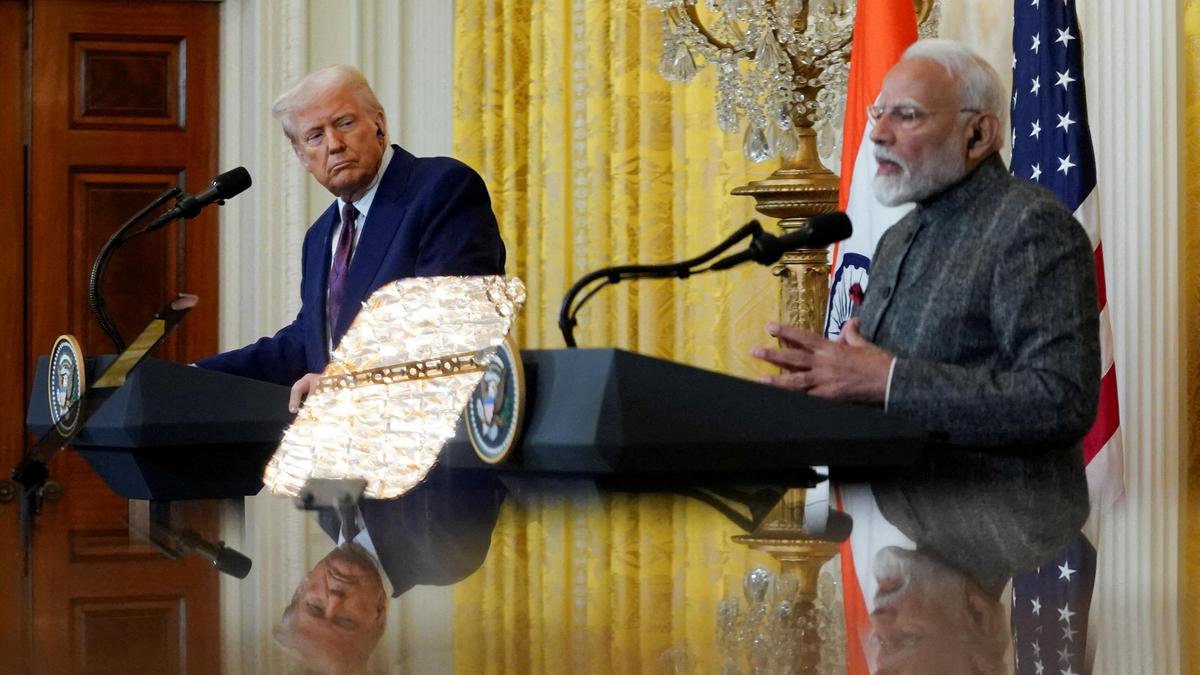
Reference image from reporting on a possible Quad summit in Manila, not a photograph of the proposed event. The November 17, 2026 meeting remains unconfirmed.
Image: The Hindu
Why in news
The Hindu reports that officials expect a Quad leaders’ meeting in Manila alongside ASEAN-related summits, although formal timing and the official host remained unclear as of November 15, 2026. If held, it would be the first Quad summit since 2024 and the first in a non-member country.
November 17, 2026
Expected Manila meeting
4
Quad member countries
At least 30
Indian seafarer deaths reported
2024
Previous leaders’ summit
2017
Revival of Quad cooperation
2021
Elevation to leaders’ meetings
Background
The Quadrilateral Security Dialogue brings together India, the United States, Japan and Australia for cooperation in the Indo-Pacific. It is a diplomatic partnership, not a treaty-based collective-defence alliance. Its contemporary agenda combines maritime cooperation with practical initiatives addressing regional resilience and development. India uses the Quad to strengthen partnerships and support an open, inclusive and rules-based maritime order while retaining strategic autonomy. ASEAN centrality remains an important regional principle: smaller cooperative arrangements should complement, rather than displace, ASEAN-led institutions.
What is expected, and what remains unconfirmed
According to The Hindu, the proposed Manila meeting is expected to bring together the leaders of India, the United States, Japan and Australia on November 17. Holding it alongside ASEAN-related meetings would enable leaders to meet without a separate summit visit, but the report leaves the official hosting arrangement unresolved.
Critical minerals, secure commercial shipping routes for energy supplies and attacks on commercial vessels are expected agenda items. Earlier reports also suggested a Quad Business Forum mechanism. These are reported expectations, not adopted decisions or announced summit outcomes.
A Philippine venue would not make the Philippines a Quad member. Nor would meeting in Manila automatically resolve India’s pending opportunity to host a leaders’ summit domestically; the source reports that a possible meeting in Delhi next year remains under consideration.
- Separate the physical venue, the official host and the summit chairship; these are not interchangeable.
- Treat the proposed Business Forum as unconfirmed until a formal announcement is issued.
- Assess the summit through deliverables and implementation commitments, not its occurrence alone.
Infographic
Strategic cohesion
Maintain political backing despite bilateral friction.
Mineral resilience
Diversify extraction, processing and recycling.
Maritime safety
Connect awareness with lawful, timely assistance.
Regional legitimacy
Respect ASEAN centrality and partner priorities.
India’s autonomy
Build capabilities without automatic alliance obligations.
AI-assisted infographic by Pragnya IAS Academy, based on the cited sources.
Strategic cohesion: Operational continuity is necessary, but insufficient
The central question is whether the members share sufficiently stable priorities to sustain cooperation across political transitions and bilateral disagreements. The supplied editorial identifies Washington’s shifting geopolitical priorities and strains in relations with members, especially India, as sources of turbulence during 2025.
Yet a gap in leaders’ summits does not establish institutional collapse. The editorial reports that operational initiatives continued, including the elevation of the Indo-Pacific Maritime Domain Awareness initiative into an Indo-Pacific Maritime Surveillance Collaboration framework launched in New Delhi in May 2026.
This distinction matters: operational continuity can preserve cooperation during political uncertainty, but long-term investment and credible regional commitments require consistent political backing. India should therefore favour mechanisms that remain functional even when leaders’ schedules or bilateral relationships become difficult.
- Shared interests do not imply identical threat perceptions or uniform policies towards China.
- A non-alliance structure preserves flexibility but cannot provide automatic collective-defence guarantees.
- Working-level continuity should be matched by clear political direction and implementation accountability.
Critical minerals and energy: Connecting economic security with maritime security
Critical minerals are inputs whose economic importance and supply risks make disruption strategically consequential. Resilience requires attention not merely to mineral deposits, but also to processing, refining, technology, logistics and recycling. Diversifying extraction alone cannot remove a bottleneck elsewhere in the value chain.
The Quad could connect Australia’s mineral resources, Japanese and American technology and finance, and India’s industrial demand and manufacturing ambitions. This is a potential division of strengths, not a confirmed Manila arrangement. Commercial viability, environmental safeguards and predictable policy would determine whether such complementarities produce actual projects.
Energy security similarly extends beyond purchasing fuel. It depends on safe shipping routes and the protection of commercial vessels and crews. The source reports that at least 30 Indian seafarers have been killed in attacks aboard ships in the Strait of Hormuz, the Sea of Oman and the Black Sea during the Iran and Ukraine conflicts. This gives India’s maritime agenda an immediate human-security dimension.
- Pursue diversification and resilience rather than assume complete economic separation is feasible.
- Link mineral partnerships with processing capacity, recycling and technology access.
- If announced, a Business Forum should facilitate viable projects rather than remain a consultative platform without follow-through.
- Treat seafarer protection, distress response and commercial shipping safety as core economic-security concerns.
India’s Indo-Pacific policy: Autonomy, ASEAN centrality and maritime law
For India, the Quad offers an issue-based platform to improve maritime awareness, strengthen economic resilience and shape regional rules without accepting alliance obligations. Its value lies in expanding India’s policy options and capabilities, not in requiring alignment on every international dispute.
A Manila meeting could signal engagement with Southeast Asia, but venue symbolism cannot substitute for ASEAN consultation. Regional credibility depends on responding to partner countries’ priorities, respecting sovereignty and avoiding the impression that smaller states must choose between competing blocs.
The United Nations Convention on the Law of the Sea provides the principal legal framework for maritime zones, navigation and coastal-state rights. Maritime information sharing can improve awareness, but it does not itself authorise boarding, interdiction or the use of force. Any enforcement activity requires a separate lawful basis, with navigation rights and coastal-state jurisdiction assessed according to the maritime zone concerned.
- Use the Quad to complement ASEAN-led regional mechanisms rather than claim to replace them.
- Maintain issue-based cooperation alongside independent diplomatic choices.
- Distinguish maritime surveillance from military enforcement and collective defence.
- Anchor regional engagement in practical benefits, consent and international law.
| Area | Strategic purpose | Implementation test |
|---|---|---|
| Critical-mineral supply chains | Reduce exposure to concentrated supply and processing bottlenecks | Secure commercially viable projects across extraction, processing and recycling |
| Energy shipping security | Protect the movement of energy supplies through maritime routes | Translate information sharing into timely, lawful coordination |
| Seafarer safety | Protect crews exposed to conflict-related attacks | Improve warnings, distress communication and emergency assistance |
| Maritime surveillance cooperation | Build a clearer picture of maritime activity | Ensure useful information reaches partners with response capacity |
| Possible Business Forum | Connect strategic priorities with private investment | Confirm the mechanism and establish project-level follow-through |
- 1. Collect relevant information on vessel movements and maritime threats.
- 2. Share and assess information through agreed cooperation arrangements.
- 3. Communicate actionable warnings to vessels and competent authorities.
- 4. Coordinate lawful assistance, distress response and protective measures.
- 5. Review incidents to improve future warnings and response capacity.
2017
The four countries revived Quad cooperation in the Indo-Pacific.
2021
Quad cooperation was elevated to leaders’ meetings during the COVID-19 pandemic.
2024
The previous Quad Leaders’ Summit was held in Wilmington.
2025
The supplied editorial describes strategic turbulence linked to changing US priorities and bilateral political dynamics.
May 2026
The editorial reports the launch of the Indo-Pacific Maritime Surveillance Collaboration framework in New Delhi.
November 14, 2026
Officials cited by The Hindu indicated that the Manila meeting was expected, while formal timing remained awaited.
November 17, 2026
Expected date of the Manila Quad meeting; the summit had not occurred as of this edition.
Significance, challenges & way forward
Significance
- A leaders’ meeting would renew political engagement after a summit-level gap, without by itself resolving differences among members.
- Critical-mineral cooperation could connect India’s industrial ambitions with more diversified and resilient supply chains.
- Shipping security links the Indo-Pacific agenda directly with energy availability, trade continuity and the protection of Indian seafarers.
- Continuing maritime cooperation shows that practical initiatives can retain value despite uncertainty at the political level.
- Engagement in Southeast Asia offers an opportunity to demonstrate that Quad cooperation can address regional public needs.
Challenges
- Uncertainty over US strategic priorities can weaken confidence in long-term commitments.
- Different national interests and bilateral frictions may limit agreement on sensitive security questions.
- Mineral diversification requires viable processing capacity, finance, technology and environmental compliance, not merely diplomatic declarations.
- Maritime surveillance cannot guarantee protection where partners lack timely response capabilities or legal authority.
- Ambiguity over hosting arrangements and delayed summits can distract attention from substantive cooperation.
- A narrowly confrontational regional narrative could undermine ASEAN confidence and reduce partner participation.
Way forward
- Adopt a focused implementation agenda that assigns responsibilities and provides transparent progress reviews.
- Build critical-mineral partnerships around processing, recycling, technology access and reliable commercial arrangements.
- If a Business Forum is established, connect it with project preparation, financing and regulatory problem-solving.
- Strengthen seafarer protection through coordinated warnings, emergency communication and assistance arrangements.
- Sustain ministerial and working-level cooperation so that implementation is less dependent on leaders’ availability.
- Consult ASEAN partners and tailor cooperation to their priorities while respecting sovereignty and international law.
- Preserve India’s strategic autonomy by assessing each initiative on its concrete contribution to national and regional resilience.
Key terms
- Quad
- A diplomatic partnership of India, the United States, Japan and Australia focused on cooperation in the Indo-Pacific.
- Minilateralism
- Cooperation among a small group of countries on selected shared objectives.
- Critical minerals
- Minerals whose economic or strategic importance, combined with supply risks, makes their availability a policy priority.
- Supply-chain resilience
- The capacity to anticipate, withstand and recover from disruptions across production and distribution networks.
- Maritime domain awareness
- An understanding of maritime activities and conditions relevant to security, safety, the economy and the environment.
- ASEAN centrality
- The principle that ASEAN should retain a central role in the evolving regional institutional architecture.
- Strategic autonomy
- The ability to make independent foreign-policy choices while cooperating with different partners.
- UNCLOS
- The United Nations Convention on the Law of the Sea, which establishes the principal legal framework governing ocean uses and maritime rights.
Link with static syllabus
Prelims practice MCQs
Q1. With reference to the Quad, consider the following statements: 1. Its members are India, the United States, Japan and Australia. 2. It is a treaty-based collective-defence alliance. 3. Holding a summit in a non-member country automatically grants that country membership. Which of the statements given above is/are correct?
Q2. Consider the following statements about critical-mineral supply chains: 1. Supply risks may arise at processing and refining stages even when mineral deposits are geographically dispersed. 2. Diversifying mining locations alone necessarily eliminates all supply-chain vulnerabilities. 3. Recycling can contribute to supply-chain resilience. Which of the statements given above are correct?
Q3. Which of the following best describes ASEAN centrality in the Indo-Pacific institutional architecture?
Q4. With reference to maritime security, consider the following statements: 1. Maritime domain awareness can support early warning and coordinated responses. 2. Sharing maritime surveillance information automatically creates legal authority to board foreign vessels. Which of the statements given above is/are correct?
Mains practice questions
GS 2 · 15 marks · 250 words
The Quad’s credibility depends less on summit symbolism than on sustained delivery of regional public goods. Discuss with reference to supply-chain resilience, maritime security and India’s strategic autonomy.
Frequently asked questions
Has the Manila Quad summit been officially completed or its outcomes announced?
No. As of November 15, 2026, the supplied reporting describes an expected meeting on November 17, with formal timing and hosting arrangements still unclear.
Would meeting in Manila make the Philippines a Quad member?
No. A meeting venue does not determine membership; the Quad comprises India, the United States, Japan and Australia.
Why are critical minerals and maritime security being discussed together?
Both concern economic resilience: critical minerals support industrial production, while secure shipping routes enable the movement of energy and other essential supplies. Disruptions can transmit geopolitical risks into the domestic economy.
Does Quad cooperation compromise India’s strategic autonomy?
It does not inherently do so because the Quad is not a collective-defence alliance. Its compatibility with strategic autonomy depends on India retaining independent choices and assessing initiatives on their merits.
Sources
- The Hindu: Quad Summit likely to be held in Manila on November 17, sources say
- The Hindu: The challenge of holding the Quad together
Analysis prepared by the Pragnya IAS Academy current-affairs desk with AI assistance from the cited reports. Verify figures with the original sources.
Turn current affairs into marks
Join Pragnya IAS Academy's mentorship for daily answer-writing evaluation on stories like this — classroom programmes from a trusted name in IAS coaching in Hyderabad.