
India’s Missed TB Target: Diagnosis Gains, Treatment Gaps and the Road to Elimination
Revise the static topic: UPSC Social Justice notes · UPSC Science & Technology notes
In short: India missed its tuberculosis elimination target for 2025, although the supplied report records declining mortality and wider access to rapid diagnostics. Further progress requires linking case detection with effective treatment, drug-resistance testing, nutritional support and stronger public-health capacity, while updated incidence estimates remain pending.
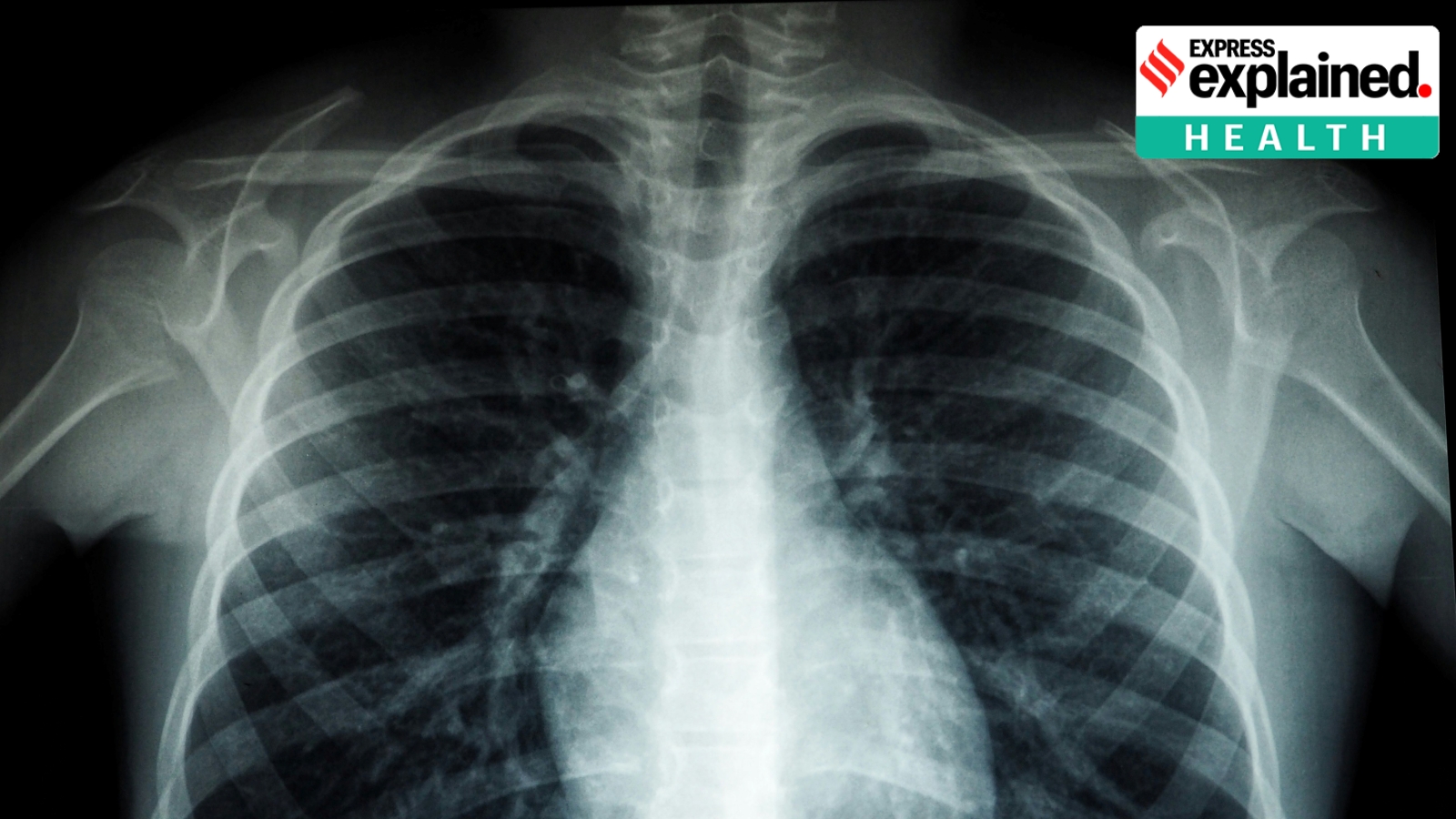
Photo from the source report: India’s Missed TB Target: Diagnosis Gains, Treatment Gaps and the Road to Elimination
Image: Indian Express
Why in news
The Indian Express reports that India missed its 2025 TB elimination target despite improvements in mortality and diagnosis. WHO has withheld updated Indian incidence estimates pending analysis of district-level surveillance data, with revisions expected in early 2027.
38%
Reported mortality reduction since 2015
75%
End TB mortality reduction target for 2025
46%
Cases diagnosed using rapid diagnostics in 2025
25 crore
People screened under the reported campaign
Nearly 49 lakh
New cases detected in the campaign
Almost 15 lakh
Asymptomatic cases detected in the campaign
Background
Tuberculosis is an infectious disease caused by Mycobacterium tuberculosis, usually affecting the lungs but also capable of affecting other organs. Pulmonary TB spreads through the air, and infection does not necessarily mean active disease. India’s National Tuberculosis Elimination Programme addresses prevention, diagnosis and treatment. India had set a national elimination target for 2025, ahead of the Sustainable Development Goal commitment to end the TB epidemic by 2030. WHO’s End TB Strategy separately specifies reductions in incidence and deaths against a 2015 baseline, alongside elimination of catastrophic household costs; these milestones should not be confused with literal eradication of the pathogen.
Progress is real, but the outcome gap remains substantial
The source reports a 38% reduction in India’s TB mortality compared with 2015. This surpassed the End TB mortality-reduction milestone of 35% for 2020, but only five years later, and remained far below the 75% reduction targeted for 2025.
Rapid diagnostics accounted for 46% of diagnosed cases in 2025, compared with 38% the previous year. Domestic funding also increased despite a decline in global TB funding. These are important gains, but neither greater expenditure nor higher detection alone establishes that transmission has fallen sufficiently.
The latest incidence estimate is pending and catastrophic-cost data are unavailable in the supplied report. Consequently, progress cannot yet be assessed comprehensively across all End TB dimensions.
- Assess mortality, incidence and household financial hardship together rather than treating any single indicator as proof of elimination.
- Distinguish programme outputs, such as screening and notification, from outcomes, such as sustained cure and reduced transmission.
Infographic
Detect
Reach missed patients and link screening to reliable diagnosis.
Treat
Ensure resistance-informed care and sustained adherence.
Nourish
Address undernutrition and protect household livelihoods.
Prevent
Strengthen contact investigation, preventive care and infection control.
Measure
Track incidence, mortality, treatment outcomes and household costs.
Enable
Sustain financing, staffing, laboratories and medicine supplies.
AI-assisted infographic by Pragnya IAS Academy, based on the cited sources.
Diagnosis: move from screening coverage to confirmed and linked care
According to the source, the TB Mukt Bharat Abhiyan began in November 2024 and screened 25 crore people. Reported screening activities included chest X-rays for 11 crore people and molecular testing for three crore; these categories should not be assumed to represent mutually exclusive groups.
The exercise detected nearly 49 lakh new cases, including almost 15 lakh asymptomatic cases. This demonstrates the importance of looking beyond symptom-driven attendance at health facilities. However, chest X-ray is a screening and diagnostic aid, not a stand-alone microbiological confirmation of TB.
The operational priority is a complete diagnostic pathway: identify presumptive disease, obtain appropriate samples, undertake rapid molecular testing where indicated, assess resistance and initiate appropriate treatment promptly.
- Expand accessible testing through reliable sample transport, laboratory capacity and timely communication of results.
- Ensure that screen-positive individuals are tracked until diagnostic evaluation and treatment linkage are completed.
- Recognise that increased notifications can reflect improved detection rather than an increase in underlying incidence.
Treatment adherence and drug resistance determine whether detection saves lives
TB treatment requires a prescribed combination of medicines and sustained adherence. Treatment interruption, inappropriate regimens and unreliable drug supply can contribute to poor outcomes and drug resistance; resistant TB can also be transmitted directly between people.
The source records improved testing for resistance to a commonly used antimicrobial but does not provide treatment-completion rates, resistance prevalence or outcomes for drug-resistant TB. It therefore supports a diagnosis-related improvement, not a claim that resistance or adherence problems have been resolved.
Patient-centred care should combine suitable regimens, counselling, management of adverse effects and uninterrupted medicine availability. Migrants and patients shifting between public and private providers need continuity of care rather than repeated registration without treatment follow-through.
- Use drug-susceptibility information to guide treatment rather than relying on an unsuitable standard regimen.
- Track treatment interruption and outcomes while protecting patient confidentiality.
- Strengthen private-provider engagement for notification, quality diagnosis and continuity of treatment.
Nutrition and financial protection are central to TB control
Undernutrition increases vulnerability to active TB, while illness can worsen nutritional status through reduced appetite, lost earnings and household expenditure. Nutritional support is therefore a public-health intervention, not merely an additional welfare benefit.
Free medicines alone cannot eliminate financial hardship. Transport, diagnostic expenses outside the public system and income loss may still undermine treatment completion. The End TB framework consequently includes zero catastrophic costs as an explicit objective.
The supplied report does not establish the coverage, adequacy or timeliness of nutritional assistance. These must be evaluated separately through benefit-delivery records and patient-level evidence rather than inferred from screening achievements.
- Combine nutritional assessment with timely support throughout treatment.
- Reduce administrative barriers that exclude vulnerable patients from assistance.
- Measure household expenditure and income loss to assess whether care is genuinely affordable.
Surveillance and health-system capacity must anchor the next phase
WHO has deferred India’s incidence estimates while new district-level sentinel surveillance data are finalised. The system covers 300 clusters in 50 districts, with an eligible population of about 150,000; its first round was completed in 2025 and subsequent rounds are planned every two to three years.
This surveillance measures population-level trends in TB disease and infection and can improve incidence estimation. Comparability with the 2020–21 national prevalence survey requires methodological review. Missing estimates should not be interpreted as either proof of deterioration or confirmation of elimination.
The source also notes the absence of India’s customary annual TB report. Regular publication of granular data, adequate staffing, functioning laboratories, dependable supply chains and accountable district management are essential to convert funding into measurable health gains.
- Explain revisions to estimates transparently so that methodological changes are not mistaken for sudden epidemiological changes.
- Interpret the gap between estimated incidence and notifications as an indicator of potentially missed or unreported disease, not an exact count of untreated people.
- Protect sustained domestic financing while linking expenditure to service quality and patient outcomes.
| Dimension | 2025 benchmark or objective | Evidence and limitation |
|---|---|---|
| TB mortality | 75% reduction from the 2015 baseline | Reported reduction of 38%; target not achieved |
| TB incidence | 50% reduction from the 2015 baseline | Updated Indian estimate pending surveillance review |
| Catastrophic household costs | Zero catastrophic costs | Indian data unavailable in the supplied report |
| Rapid diagnosis | Enabler of timely treatment, not a substitute for outcome targets | 46% of diagnosed cases used rapid diagnostics in 2025, up from 38% |
- 1. Reach vulnerable populations through community-based screening.
- 2. Evaluate presumptive TB using appropriate samples and rapid diagnostic tests.
- 3. Assess drug resistance and initiate an appropriate treatment regimen.
- 4. Provide adherence support, adverse-effect management, nutrition and financial protection.
- 5. Document treatment outcomes and evaluate eligible contacts for preventive care.
- 6. Use surveillance findings to improve district planning and resource allocation.
2015
Baseline year for WHO End TB incidence and mortality reduction targets.
2020
End TB milestones called for reductions of 35% in deaths and 20% in incidence.
2020–21
India conducted a national TB prevalence survey that informs assessment of subsequent surveillance findings.
November 2024
The TB Mukt Bharat Abhiyan began, according to the supplied report.
2025
India missed its national elimination target; the first district-level sentinel surveillance round was completed.
Early 2027
Updated incidence estimates are expected after finalisation and review of surveillance data.
2030
SDG horizon for ending the TB epidemic; End TB targets include 90% fewer deaths and 80% lower incidence than in 2015.
2035
End TB targets envisage 95% fewer deaths and 90% lower incidence than in 2015.
Significance, challenges & way forward
Significance
- Wider detection can bring previously missed patients into care and reduce opportunities for transmission when followed by effective treatment.
- Declining mortality shows progress, but the missed milestone underlines the need to accelerate delivery rather than merely restate targets.
- Stronger domestic financing can improve resilience when international health funding contracts.
- Repeatable district surveillance can support more responsive planning and improve the evidence base for incidence estimates.
- Integrating nutrition and financial protection advances both TB control and equitable access to healthcare.
Challenges
- Incomplete use of rapid diagnostics leaves scope for delayed diagnosis and missed resistance.
- Large screening volumes can overwhelm confirmatory testing, treatment linkage and follow-up unless capacity expands alongside them.
- Treatment interruption, adverse effects and fragmented care can undermine the benefits of early detection.
- Undernutrition, stigma and income insecurity can prevent patients from completing care.
- Pending incidence estimates and unavailable catastrophic-cost data limit a comprehensive assessment of progress.
- Increased funding will have limited impact without adequate staffing, functioning laboratories and reliable medicine supply.
Way forward
- Publish a transparent post-2025 assessment that separates verified achievements, unresolved gaps and revised milestones.
- Expand rapid molecular diagnosis and resistance testing while strengthening sample transport and laboratory quality assurance.
- Make treatment completion a shared health-system responsibility through counselling, adverse-effect care and portable support for migrants.
- Ensure timely nutritional assistance and assess household costs, including transport expenditure and income loss.
- Strengthen contact investigation, preventive care for eligible individuals and infection prevention in healthcare and community settings.
- Restore predictable reporting of national and state-level indicators, with clear explanations of surveillance methods and estimate revisions.
- Secure sustained domestic financing and monitor expenditure against diagnostic access, treatment outcomes and patient protection.
Key terms
- TB incidence
- New and recurrent episodes of TB disease arising in a population during a specified period.
- TB prevalence
- Existing TB disease in a population at a specified point or over a defined period.
- Case notification
- Reporting a diagnosed TB case to the public-health surveillance system.
- Rapid molecular diagnostic test
- A test that detects genetic material of TB bacteria and, depending on the assay, markers of drug resistance.
- Multidrug-resistant TB
- TB caused by bacteria resistant to at least isoniazid and rifampicin.
- Active case finding
- Proactively identifying possible TB in communities rather than waiting for patients to seek care.
- Catastrophic TB costs
- TB-related medical costs, non-medical costs and income losses that impose severe financial hardship relative to household resources.
- Sentinel surveillance
- Systematic monitoring in selected populations or locations to understand disease patterns and trends.
Link with static syllabus
Prelims practice MCQs
Q1. With reference to tuberculosis diagnosis, consider the following statements: 1. Chest X-ray alone provides microbiological confirmation of TB. 2. Molecular tests can detect TB bacterial genetic material and, depending on the assay, resistance markers. 3. The absence of symptoms necessarily excludes active TB disease. Which of the statements given above is/are correct?
Q2. With reference to WHO’s End TB framework, consider the following statements: 1. Its incidence and mortality reduction targets use 2015 as the baseline. 2. Its 2025 targets include a 75% reduction in deaths and a 50% reduction in incidence. 3. Protection against catastrophic household costs is outside its objectives. Which of the statements given above are correct?
Q3. Multidrug-resistant tuberculosis is defined by resistance to at least which of the following combinations?
Q4. Consider the following statements about TB surveillance: 1. A rise in notifications necessarily proves a rise in underlying incidence. 2. Prevalence refers to existing disease in a population. 3. The difference between estimated incidence and notifications is an exact count of untreated infectious individuals. Which of the statements given above is/are correct?
Mains practice questions
GS 2 · 15 marks · 250 words
India’s missed TB elimination target highlights the limits of a diagnosis-centred approach. Discuss the role of treatment continuity, nutrition and public-health capacity in accelerating progress.
Frequently asked questions
Did India eliminate TB by 2025?
No. The supplied report records progress in mortality reduction and diagnosis, but India’s national elimination target was missed.
Why is India’s latest TB incidence estimate unavailable?
WHO is reviewing new district-level surveillance data and their comparability with earlier evidence. Updated estimates are expected in early 2027.
Does detecting more TB cases mean TB transmission has increased?
Not necessarily. Increased detection can reflect better screening and reporting; underlying trends require incidence estimates and other population-level evidence.
Why is nutritional support important for TB elimination?
Undernutrition increases vulnerability to active TB, while illness can worsen nutrition and household poverty. Nutritional and financial support can help patients sustain treatment.
Sources
- Indian Express: India missed its 2025 TB target. How much progress has it made?
Analysis prepared by the Pragnya IAS Academy current-affairs desk with AI assistance from the cited reports. Verify figures with the original sources.
Turn current affairs into marks
Join Pragnya IAS Academy's mentorship for daily answer-writing evaluation on stories like this — classroom programmes from a trusted name in IAS coaching in Hyderabad.