
Autonomous Weapons: UN Push for Binding Rules, Human Control and Accountability
Revise the static topic: UPSC Internal Security notes
In short: UN Secretary-General António Guterres has urged States meeting in Geneva to move towards a legally binding instrument containing prohibitions and restrictions on lethal autonomous weapons systems. The central challenge is to preserve human judgement and legal accountability in warfare while overcoming disagreement among military powers; no new treaty or negotiating mandate has yet been agreed in the supplied reports.
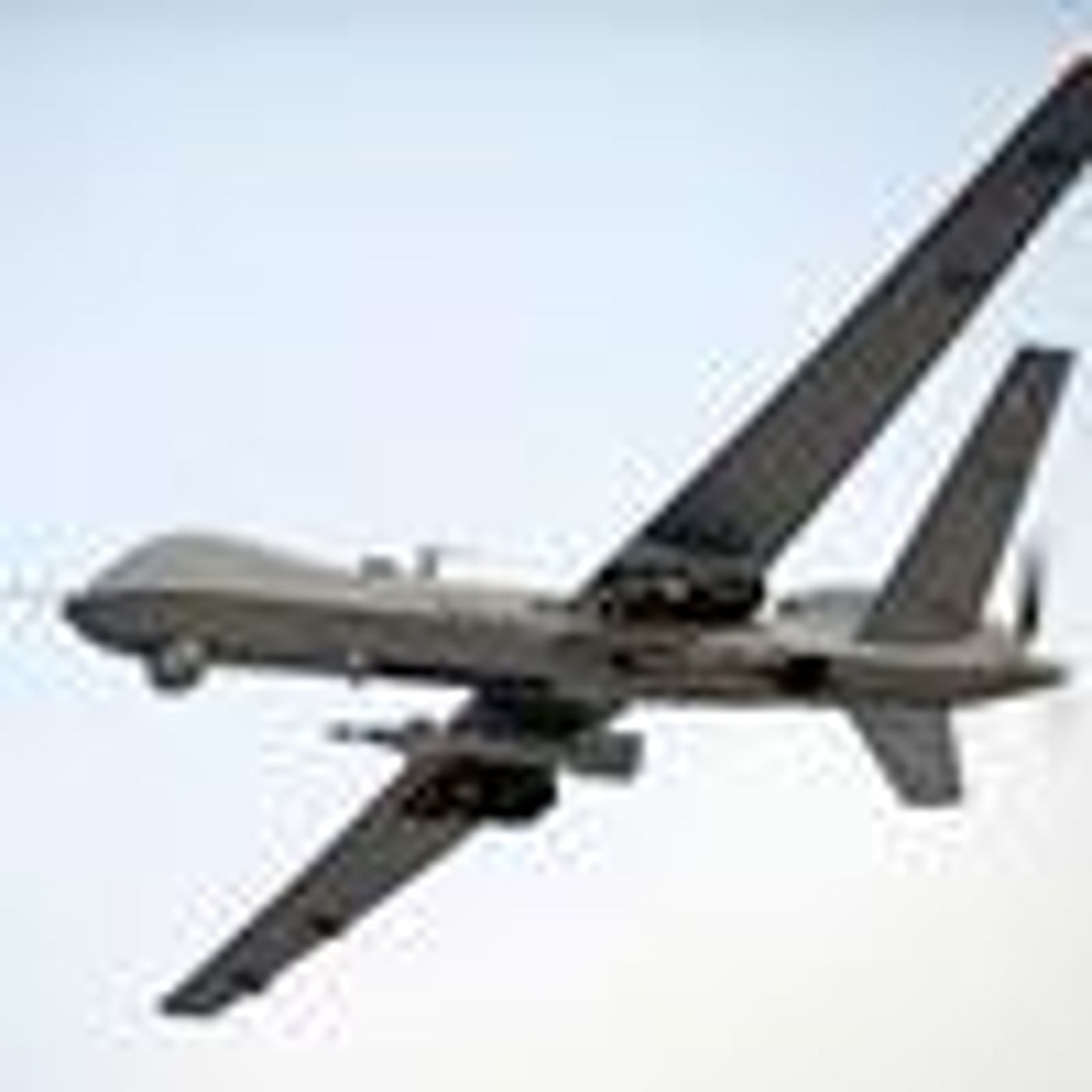
Reference view of an RAF MQ-9 Reaper carrying GBU-12 bombs and Hellfire missiles. This remotely piloted aircraft illustrates why armed drones must be distinguished from weapons that autonomously select and engage targets; it is not a photograph of the Geneva talks.
Image: UN News
Why in news
The seventh Review Conference of the Convention on Certain Conventional Weapons is considering whether to launch negotiations on autonomous weapons. A proposal from seven countries and appeals from UN leaders have intensified pressure for binding rules.
128
CCW High Contracting Parties
130
Countries supporting new rules, according to Stop Killer Robots
152
Countries backing UNGA Resolution 78/241
7
Countries proposing binding negotiations
Background
Lethal autonomous weapons systems broadly refer to weapons capable of selecting and engaging targets without further human intervention after activation, although the precise regulatory definition remains contested. Autonomy is a function rather than a particular platform: a drone may be remotely piloted, partly automated or autonomous. The Convention on Certain Conventional Weapons, commonly called the CCW, addresses conventional weapons considered excessively injurious or indiscriminate through a framework convention and protocols. International humanitarian law already governs the use of weapons in armed conflict, including new technologies; the present debate concerns additional, technology-specific prohibitions and restrictions.
What is being considered in Geneva?
The immediate question is whether States will agree to begin negotiations, not whether a completed autonomous-weapons treaty will enter into force. According to UN News, States have not agreed on the nature of a possible instrument, its legally binding character or its timeframe.
Austria, Belgium, Brazil, Ireland, Mexico, New Zealand and Panama have proposed negotiations on a legally binding agreement. Guterres has called for clear prohibitions and restrictions, while UN High Commissioner for Human Rights Volker Türk has advocated prohibiting autonomous weapons that target people and weapons whose functions and effects cannot be adequately understood, predicted, explained and controlled by human users.
These are proposals and advocacy positions, not agreed treaty provisions. The UN Office for Disarmament Affairs organises the discussions, but States must decide the outcome.
- The CCW operates by consensus, allowing a single country to prevent an agreement.
- The precedent of the CCW protocol on blinding laser weapons demonstrates that specific weapon characteristics can be prohibited.
- UN General Assembly Resolution 78/241 affirmed the relevance of the laws of war but did not establish a binding autonomous-weapons treaty.
Infographic
Clear boundaries
Define prohibited functions and restrict other autonomous uses.
Human judgement
Require informed decisions, operational limits and effective oversight.
IHL compliance
Apply distinction, proportionality and precautions.
Accountability
Preserve records, trace decisions and investigate unlawful harm.
Strategic cooperation
Build credible rules with broad participation and practical verification.
AI-assisted infographic by Pragnya IAS Academy, based on the cited sources.
Meaningful human control: more than a human pressing a button
Meaningful human control is a proposed regulatory standard, not a universally settled treaty definition. Its purpose is to ensure that humans can make informed, context-sensitive decisions about force and retain responsibility for the consequences.
Formal human involvement is insufficient if an operator lacks reliable information, has no realistic time to assess a recommendation or cannot prevent an unlawful engagement. Conversely, autonomous navigation does not by itself mean that a weapon independently decides whom to attack. Regulation should focus on the critical functions of selecting and engaging targets.
- Before deployment, humans should understand system capabilities, limitations, foreseeable failures and intended operating conditions.
- During deployment, target types, geographical area, duration and conditions of use should be bounded.
- Human supervision should include a credible ability to intervene, suspend or deactivate the system where required and technically feasible.
- After an engagement, records should permit investigation of system behaviour and human decisions.
International humanitarian law and the accountability problem
Autonomous weapons do not operate in a legal vacuum. Distinction requires attacks to be directed at lawful military targets rather than civilians or civilian objects. Proportionality prohibits attacks expected to cause incidental civilian harm excessive in relation to the concrete and direct military advantage anticipated. Precautions require feasible measures to avoid or minimise civilian harm.
These obligations demand contextual assessment. Identifying surrender, recognising a person who is hors de combat or assessing changing civilian presence cannot be reduced to object-recognition accuracy alone. Technical precision is therefore not equivalent to legal compliance.
A machine cannot itself bear criminal responsibility. State responsibility and individual criminal responsibility remain relevant, but opaque software, distributed decision-making and unpredictable behaviour can complicate attribution and proof. Liability is not automatically shared equally by commanders, operators and developers; it depends on the applicable law, conduct, knowledge and other required legal elements.
- Article 36 of Additional Protocol I requires its States Parties to review the legality of new weapons, means and methods of warfare.
- Legal review should be complemented by testing, operational restrictions and reassessment after significant software changes.
- The accountability challenge concerns evidence and attribution, not the disappearance of existing law.
Strategic obstacles and implications for India
The supplied reporting identifies reluctance by the United States and Russia to accept constraints on developing and deploying these capabilities. Russia has described restrictive or prohibitive measures as premature. Consensus can preserve participation by major military powers, but it also creates opportunities for delay and weak compromises.
Verification is particularly difficult because autonomy often resides in software, can be altered through updates and may draw on civilian technologies. Rules must distinguish legitimate civilian AI research and non-lethal automation from autonomy in the use of lethal force. Faster machine-mediated engagements could also compress decision time and increase escalation risks.
For India, a CCW party, the policy challenge is to reconcile defence preparedness and technological development with civilian protection, legal compliance and strategic stability. The supplied sources do not establish India's position on the present proposal; the priorities below are analytical recommendations rather than a statement of official policy.
- Support function-based definitions that cannot be evaded simply by changing platform labels.
- Develop domestic testing, weapons-review and procurement safeguards for military AI.
- Seek international rules that are verifiable, non-discriminatory and capable of attracting major military powers.
- Preserve space for legitimate innovation while retaining human responsibility over lethal force.
| Issue | Existing position | Proposed regulatory direction |
|---|---|---|
| Civilian protection | IHL rules on distinction, proportionality and precautions already apply. | Translate these duties into enforceable limits on autonomous targeting. |
| Unpredictable systems | Weapons and their use must comply with applicable international law. | Prohibit systems whose functions and effects cannot be adequately understood, predicted and controlled. |
| Targeting people | Attacks remain subject to IHL protections and targeting rules. | The UN human rights chief advocates prohibiting autonomous weapons that target people. |
| Human control | Humans and States retain legal obligations. | Specify information, supervision and intervention requirements. |
| Legal instrument | No dedicated binding autonomous-weapons instrument is reported as agreed. | Negotiate clear, binding prohibitions and restrictions. |
- 1. Define permitted missions, target categories and prohibited uses.
- 2. Conduct legal review and realistic technical testing.
- 3. Authorise deployment within clear operational limits.
- 4. Maintain informed human supervision and feasible intervention.
- 5. Record system outputs, commands and engagement decisions.
- 6. Investigate incidents and reassess the system before further use.
December 2023
UN General Assembly Resolution 78/241 received support from 152 countries, affirming that lethal autonomous weapons systems must respect the laws of war.
October 2026
Seven countries submitted a proposal to launch negotiations on a legally binding autonomous-weapons agreement.
13 November 2026
ICRC President Mirjana Spoljaric urged States to prevent the future of warfare from being handed over to machines; the UN human rights chief also called for binding rules.
November 2026
The seventh CCW Review Conference opened in Geneva, with Guterres urging movement towards a legally binding instrument.
Significance, challenges & way forward
Significance
- Binding rules could clarify which autonomous targeting functions are unacceptable before their widespread deployment.
- Meaningful human control would preserve human judgement in decisions with irreversible consequences for life.
- Common safeguards could strengthen civilian protection and confidence that military AI remains subject to law.
- An effective agreement could reduce incentives for an unconstrained arms race in autonomous lethal capabilities.
Challenges
- Consensus allows resistant States to block negotiations or dilute substantive obligations.
- Disagreement over definitions can blur the boundary between ordinary automation and autonomous lethal targeting.
- Software opacity and unpredictable behaviour can hinder testing, explanation and post-incident investigation.
- Dual-use technologies and software updates complicate verification and proliferation controls.
- A treaty without major developers may have limited coverage, while excessive compromise may leave critical risks unaddressed.
- Human oversight can become nominal when operators face automation bias or insufficient decision time.
Way forward
- Pursue a differentiated framework that prohibits unacceptable autonomous functions and tightly regulates other uses.
- Define human control through operational requirements rather than merely requiring a human somewhere in the decision chain.
- Require documented legal reviews, realistic testing and reassessment after material changes to software or operating conditions.
- Build auditability through secure logs, traceable authorisations and clear command responsibilities.
- Combine binding negotiations with interim national safeguards, transparency measures and exchanges on testing standards.
- For India, integrate legal, military and technical expertise into procurement and deployment decisions without assuming that autonomy itself guarantees precision.
Key terms
- Lethal autonomous weapons systems
- Weapons capable of selecting and engaging targets without further human intervention after activation; precise regulatory boundaries remain contested.
- Meaningful human control
- A proposed standard requiring informed and effective human judgement over the use of force, rather than merely nominal involvement.
- Distinction
- The IHL obligation to distinguish civilians and civilian objects from lawful military targets.
- Proportionality in attack
- The prohibition of attacks expected to cause incidental civilian harm excessive relative to the concrete and direct military advantage anticipated.
- Precautions in attack
- Feasible measures required to avoid or minimise incidental civilian harm during military operations.
- High Contracting Party
- A State that has formally joined a treaty and accepted its legal obligations.
- Automation bias
- The tendency of human users to over-rely on automated recommendations despite contrary evidence or contextual concerns.
Link with static syllabus
Prelims practice MCQs
Q1. With reference to the current UN discussions on lethal autonomous weapons systems, consider the following statements: 1. The seventh CCW Review Conference is considering whether to launch negotiations on rules for such weapons. 2. States have already agreed that the proposed instrument will be legally binding. 3. Decisions under the CCW are made by consensus. Which of the statements given above are correct?
Q2. Consider the following statements about autonomous weapons and international humanitarian law: 1. Existing international humanitarian law applies to the use of autonomous weapons in armed conflict. 2. Technical targeting precision alone establishes compliance with proportionality. 3. A machine can itself bear individual criminal responsibility for a war crime. Which of the statements given above is/are correct?
Q3. Which of the following best illustrates meaningful human control over an autonomous weapon?
Q4. Consider the following pairs: 1. UNODA — Organising the reported CCW discussions 2. Article 36 of Additional Protocol I — Review of new weapons by its States Parties 3. UN General Assembly Resolution 78/241 — A binding treaty prohibiting all autonomous weapons Which of the pairs given above are correctly matched?
Mains practice questions
GS 3 · 15 marks · 250 words
Meaningful human control is central to regulating lethal autonomous weapons, but it is insufficient without accountability and strategic cooperation. Discuss.
Frequently asked questions
Has the UN already banned lethal autonomous weapons?
No new binding autonomous-weapons treaty is reported as agreed. The Geneva discussions concern whether and how to begin negotiations, while existing international humanitarian law continues to apply.
Are all armed drones autonomous weapons?
No. A remotely piloted drone may leave target selection and engagement decisions to humans; autonomy in navigation alone does not make it an autonomous targeting system.
Why is human approval alone not enough?
Approval is not meaningful if the operator lacks information, understanding or sufficient decision time. Effective control requires informed judgement and operational safeguards, not a ceremonial authorisation.
Who is accountable if an autonomous weapon causes unlawful harm?
States and relevant individuals may bear responsibility under applicable law, depending on the circumstances and required legal elements. A machine cannot itself bear criminal responsibility, and developers or commanders are not automatically liable merely because of their role.
Sources
- The Hindu: UN-backed talks consider possible rules on lethal autonomous weapons
- UN News: Guterres calls for a legally binding instrument for ‘killer robots'
Analysis prepared by the Pragnya IAS Academy current-affairs desk with AI assistance from the cited reports. Verify figures with the original sources.
Turn current affairs into marks
Join Pragnya IAS Academy's mentorship for daily answer-writing evaluation on stories like this — classroom programmes from a trusted name in IAS coaching in Hyderabad.