
Deepathoon Lamp Order: Religious Freedom, Essential Practices and Interim Relief
Revise the static topic: UPSC Polity notes · UPSC Governance notes
In short: On November 20, 2026, the Supreme Court permitted ceremonial lamp-lighting at the disputed deepathoon on Thirupparankundram Hill for November 24 as a limited, one-time arrangement, while staying the Madras High Court’s conclusive findings. The permission neither recognises an essential religious practice nor settles ownership, customary usage or access rights, illustrating the distinction between interim accommodation and final adjudication.
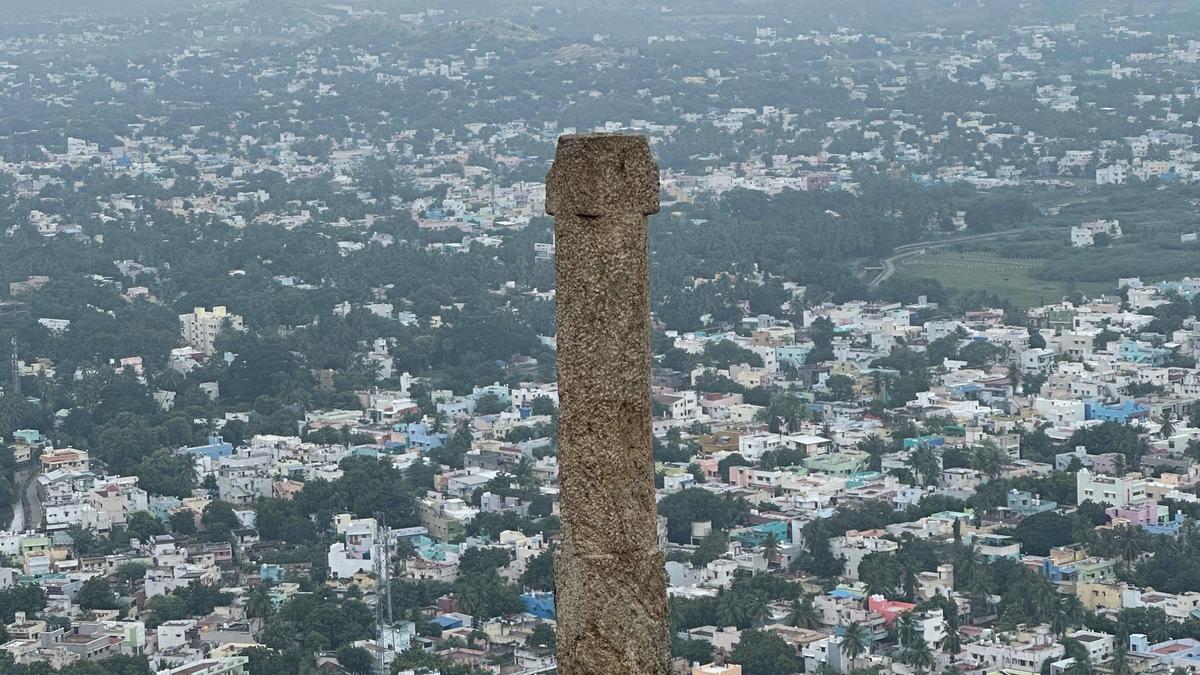
Photo from the source report: Deepathoon Lamp Order: Religious Freedom, Essential Practices and Interim Relief
Image: The Hindu
Why in news
The Supreme Court issued notice on the State’s appeals and allowed a tightly controlled ceremony for the approaching Karthigai Deepam festival. Questions concerning religious entitlement, the disputed site and earlier decrees remain open for adjudication.
Approximately 50 metres
Pillar’s distance from the dargah
November 24, 2026
Date permitted for the ceremony
Three days
Post-event status-report deadline
Background
Thirupparankundram Hill in Madurai, Tamil Nadu, contains overlapping religious and historical associations: the Subramaniya Swamy Temple at its base, Jain rock beds and caves, and a dargah near the summit. The dispute combines questions of property, access, customary worship and heritage protection. Constitutionally, Article 25 protects freedom of conscience and religious profession, practice and propagation, while Article 26 protects specified rights of religious denominations. Neither provision automatically determines ownership of a contested site or grants unrestricted access to it.
What the Supreme Court permitted—and what it did not decide
A Bench headed by Justice Aravind Kumar, also comprising Justice P.B. Varale, allowed lamp-lighting at the disputed stone pillar only for the approaching Karthigai Deepam occasion. It stayed the conclusive findings of the Madras High Court’s January 6 judgment, including its recognition of lamp-lighting at the site as an essential practice.
The Court expressly declined to determine whether the pillar was historically a place of customary religious observance or whether any person, denomination or institution possessed an enforceable right there. The arrangement cannot be invoked as evidence of established custom, possessory rights, access entitlement or a precedent for permission in subsequent years.
- Title, possession, customary usage, religious entitlement, temple administration and access remain undecided.
- The State’s challenges concerning earlier decrees and institutional statutory authority remain open.
- A stay suspends the operation of the findings concerned; it is not a final reversal on merits.
Infographic
Limited permission
One ceremony on November 24 through an authorised team.
Rights unresolved
Essentiality, custom, title and access remain open.
No future entitlement
The ceremony cannot establish custom or annual permission.
Shared-site safeguards
Protect the dargah, worshippers and monuments.
Administrative accountability
Collector-led coordination and a post-event status report.
AI-assisted infographic by Pragnya IAS Academy, based on the cited sources.
Operational safeguards: controlled access, not a public event
The Temple Devasthanam will exclusively select the team members. The Madurai Collector will settle the team’s composition and number in consultation with the temple’s Executive Officer, the Archaeological Survey of India and the Commissioner of Police. The Collector will act as the nodal officer.
The Police Commissioner must provide security, with the Centre supplementing arrangements through CRPF personnel if required. The safeguards seek to confine the permission to the ceremony while protecting the dargah, other worshippers and the physical character of the site.
- Only authorised persons may access the site for lamp-lighting.
- Processions, public congregations, demonstrations, slogan-raising and unrelated activities are prohibited.
- The team must leave immediately after the ceremony without leaving temporary or permanent installations or objects.
- No religious monument may be damaged or altered, and worshippers’ access to and enjoyment of the dargah must remain undisturbed.
- The Collector must submit a status report within three days of the event.
Religious freedom and the essential religious practices doctrine
Article 25 protects religious freedom subject to public order, morality, health and the other provisions of Part III. Article 25 also permits regulation of economic, financial, political and other secular activities associated with religion, alongside measures for social welfare and reform. Article 26 protects denominational rights, including management of affairs in matters of religion, subject to public order, morality and health.
The essential religious practices doctrine examines whether a claimed practice is essential or integral to a religion for constitutional protection. Associated with the Supreme Court’s Shirur Mutt decision, the doctrine requires examination of the religious character and significance of the practice; a party’s assertion alone does not settle the issue.
In this dispute, a crucial distinction is between the religious significance of lighting a festival lamp and an asserted entitlement to light it at this particular contested location. Essentiality, historical custom, property title and lawful access are distinct questions. The Supreme Court’s interim permission answers none of them conclusively.
- A religious practice does not, by itself, establish ownership of the place where it is proposed.
- Administrative control over crowds and access must be distinguished from adjudication of religious doctrine.
- An interim accommodation cannot substitute for evidence-based determination of a site-specific religious claim.
Interim relief versus final adjudication
Interim relief regulates the position while litigation remains pending; final adjudication determines the disputed legal questions after fuller consideration. Courts commonly consider a prima facie case, balance of convenience and irreparable injury when assessing interim protection.
Here, the Court identified competing irreversible consequences. If permission were refused, the opportunity to perform the ceremony on that festival day could not later be restored. If permission were granted, the performance itself could not be undone. A limited ceremony with stringent safeguards was the chosen response.
The non-prejudice conditions are therefore central, not incidental. They seek to prevent a temporary arrangement from becoming evidence supporting the very rights still under challenge. Permitting an act pending appeal is legally different from affirming a permanent entitlement to perform it.
- The order manages immediate circumstances without finally resolving the merits.
- The ceremony cannot be relied upon to alter the existing legal position pending adjudication.
- The restriction against future reliance concerns this site-specific arrangement, not a general prohibition on courts considering interim relief.
Property, statutory authority and shared heritage
The dispute has a separate civil-law history. A suit filed in 1920 led to a 1923 trial-court ruling allocating most unoccupied portions of the hill and the pilgrim path to the temple, while recognising specified areas associated with the mosque as Muslim property. The interpretation and effect of earlier decrees remain relevant to the pending litigation.
The State and the Hindu Religious and Charitable Endowments Department argued that disputes over custom and usage should be addressed under the applicable HR&CE law rather than through writ proceedings. This is a contention in the litigation, not a question conclusively settled by the present order.
The hill’s protected-monument context adds a heritage dimension. Coordination with the Archaeological Survey of India, prohibition of physical alterations and protection of the neighbouring dargah demonstrate why religious accommodation must also account for conservation and the rights of other users.
- Property adjudication, religious-rights adjudication and heritage regulation require distinct legal inquiries.
- District administration must implement the judicial arrangement without treating it as a transfer of title or permanent access.
- Mutual respect among faiths is an express consideration in the Court’s approach.
| Issue | Position under the interim order | Question left for adjudication |
|---|---|---|
| Lamp-lighting | Permitted only for November 24 under safeguards | Whether an enforceable entitlement exists |
| Essential religious practice | No judicial recognition through this permission | Whether the site-specific practice qualifies |
| Historical custom | The ceremony cannot establish customary usage | Nature and proof of the alleged custom |
| Title and possession | No determination of ownership or possession | Legal character of the site and effect of earlier decrees |
| Future access | No vested right or basis for annual permission | Lawful scope of access and institutional authority |
| High Court findings | Conclusive findings stayed | Their validity in the pending appeals |
- 1. The Devasthanam selects the persons who will perform the ceremony.
- 2. The Collector settles team composition and number through the prescribed consultations.
- 3. Police secure authorised access, with CRPF supplementation if required.
- 4. The team lights the lamp without public congregation or unrelated activity.
- 5. The team immediately withdraws without leaving objects or altering the site.
- 6. The Collector files a status report within three days; the legal disputes remain pending.
1920
The Temple Devasthanam filed a civil suit claiming title over the entire hill.
1923
The trial court allocated different portions of the hill to temple and Muslim property interests.
1996
The High Court directed festival lamp-lighting near the Uchipillaiyar Temple and allowed consideration of alternative locations subject to distance conditions.
December 2025
A single judge permitted lighting at the hilltop pillar; subsequent implementation disputes and appeals followed. The lamp was not lit there on the festival day.
January 6, 2026
The Madras High Court upheld lamp-lighting at the deepathoon through a limited team and recognised it as an essential practice.
November 20, 2026
The Supreme Court allowed a one-time ceremony while staying the High Court’s conclusive findings.
November 24, 2026
The proposed ceremony may take place under the Supreme Court’s safeguards.
Second week of January 2027
Further hearing is scheduled before the Supreme Court.
Significance, challenges & way forward
Significance
- The order accommodates a time-sensitive religious observance without conclusively endorsing the claimed right.
- It separates essentiality, custom, ownership and access rather than treating them as interchangeable.
- Protection of dargah worshippers places mutual religious freedom within the operational safeguards.
- The arrangement illustrates the role of district administration in implementing judicial directions at sensitive heritage sites.
- The prohibition on future reliance seeks to prevent temporary relief from hardening into a permanent entitlement.
Challenges
- Public narratives may portray the permission as a final judicial endorsement despite the express legal limitations.
- A performed ceremony may create social expectations even when the order denies it evidentiary value as custom or entitlement.
- Overlapping claims about property, religious usage and institutional authority require careful examination of different kinds of evidence.
- Security arrangements must protect both the authorised ceremony and uninterrupted worship at the dargah.
- Conservation requirements and restricted access must be enforced without administrative improvisation that exceeds the order.
Way forward
- The administration should communicate that the permission is one-time, conditional and unrelated to any final determination of rights.
- The Collector should maintain a clear record of authorisations, safeguards, compliance and the condition of the site.
- Final adjudication should separately examine earlier decrees, evidence of custom, statutory jurisdiction and constitutional claims.
- Public-order measures should rest on credible assessments and remain proportionate to the risks involved.
- Heritage authorities and representatives of the religious institutions should coordinate implementation without treating consultation as a settlement of title.
- Further judicial consideration should preserve an opportunity for all affected parties to present their evidence and legal arguments.
Key terms
- Deepathoon
- A stone lamp pillar; the character and historical usage of the disputed structure remain matters for adjudication.
- Essential religious practices doctrine
- A judicial approach examining whether a claimed practice is essential or integral to a religion for constitutional protection.
- Interim relief
- Temporary judicial protection or regulation pending final determination of a dispute.
- Stay
- A judicial suspension of the operation of an order or specified findings, without necessarily reversing them finally.
- Vested right
- An accrued legal entitlement; the Court expressly denied creation of such an entitlement through this arrangement.
- Customary usage
- An established pattern of practice whose existence and legal consequences must be proved where disputed.
- Non-prejudice condition
- A limitation ensuring that temporary relief does not determine or compromise parties’ claims in pending litigation.
Link with static syllabus
Prelims practice MCQs
Q1. With reference to the Supreme Court’s November 2026 Deepathoon arrangement, consider the following statements: 1. It recognises lamp-lighting at the disputed pillar as an essential religious practice. 2. It leaves questions of title and customary usage open. 3. It cannot be relied upon to claim similar permission in subsequent years. Which of the statements given above are correct?
Q2. Consider the following statements regarding religious freedom under the Constitution: 1. Article 25 is subject to public order, morality, health and the other provisions of Part III. 2. Article 26 protects specified rights of religious denominations, subject to public order, morality and health. 3. Article 25 prohibits regulation of secular activities associated with religious practice. Which of the statements given above are correct?
Q3. Which of the following best describes the effect of the Supreme Court’s interim order in the Deepathoon dispute?
Q4. With reference to the safeguards for the Deepathoon ceremony, consider the following statements: 1. The Madurai Collector is the nodal officer. 2. CRPF personnel may supplement security arrangements if required. 3. The authorised team may leave a temporary installation at the site after the ceremony. Which of the statements given above are correct?
Mains practice questions
GS 2 · 15 marks · 250 words
A temporary judicial accommodation of religious observance is not a final recognition of religious entitlement. Discuss with reference to the Supreme Court’s Deepathoon order and the constitutional protection of religious freedom.
Frequently asked questions
Has the Supreme Court declared Deepathoon lamp-lighting an essential religious practice?
No. It expressly stated that the one-time permission does not recognise an essential religious practice and stayed the High Court’s conclusive findings.
Does the order settle ownership of the hilltop or pillar?
No. Title, possession, customary usage, access and the effect of earlier decrees remain open for adjudication.
Can the November 24 ceremony establish a right to light the lamp every year?
No. The order prohibits reliance on either the permission or the ceremony as evidence of custom, entitlement or a precedent for subsequent years.
Why did the Court allow the ceremony before deciding the appeals?
The Court considered the approaching festival and the impossibility of restoring that particular opportunity later. It balanced this urgency against the irreversible nature of the ceremony through a limited arrangement with safeguards.
Sources
- The Hindu: Supreme Court allows lighting of lamp on deepathoon at Thirupparankundram as limited one-time arrangement
- Indian Express: Karthigai Deepam row: The century-old dispute over a hill in Tamil Nadu, explained
- Times of India: SC allows lighting of lamp at Deepathoon as one-time measure
Analysis prepared by the Pragnya IAS Academy current-affairs desk with AI assistance from the cited reports. Verify figures with the original sources.
Turn current affairs into marks
Join Pragnya IAS Academy's mentorship for daily answer-writing evaluation on stories like this — classroom programmes from a trusted name in IAS coaching in Hyderabad.